
joanna doesn’t treat pop as a format or a destination. It functions instead as infrastructure, a system of emotions, memories, and images people instinctively recognise. The music moves across pop, rap, electro, rock, and trap, but genre is never the point. Feeling is. Songs begin with images, settle into trance, and lock onto chords that feel familiar enough to trust.
Sound, fashion, and visuals operate as a single language: ways of locating a body in time, constructing a world, and inviting others inside. In this conversation, Joanna speaks about pop as collective memory, image as authorship, fashion as a political gesture, and the search for a softer, more restorative intensity, what’s described as healing pop, still driven by a beat.
You describe yourself as a pop explorer, writer, singer, and music producer. How do you see pop as a creative language rather than just a genre, and how has that shaped your sonic identity?
Yeah, totally. I think my vision of pop music isn’t about the charts or what everyone is listening to. Instead, it’s an emotion. I see it as a rope that links all humans together. I believe that we are all connected in a way; we all experience the same emotions and the same patterns in our lifetime. For me, pop is about linking.
Sometimes, I qualify a song as «pop» even if it’s not the definition for others, because I find a universal emotion in it. It reminds me of something from the past, and I think people love what they already know. It feels like home. Pop music is what we know; it’s a part of our collective history. In my work, it’s about the magical power of chords. When I want to create a new song, I need to find those specific chords. I need them to remind me of an emotion where I can navigate, because once I feel «at home» in the music, that’s when the creation truly begins.
Your work blends elements of pop, rap, electro, rock and trap. What draws you to these diverse musical worlds, and how do you ensure your own voice remains singular within them?
I can’t really explain what draws me into these genres, because for me, it’s not about musical genres, it’s about images. When I compose a song, I need to find the perfect chords that will bring me this feeling of transe. Once I’m there, my words and the emotions come easier. When everything is clear, I see images, and then I start looking for the best pattern to serve precisely the message of the song.
But I think, in a way, I’m connected to eras. There are always eras in music, in fashion, in everything. It’s like an eternal cycle and I feel connected to that. So, maybe it influences me unconsciously. I think it’s my sensitivity that links everything together. The way I translate it into music is singular because I mix everything together to make something new, no matter the genre. I love that.
Your visual identity is a strong part of your artistic signature. How do you approach fashion and imagery in relation to your music, are they collaborators, reflections, or provocations?
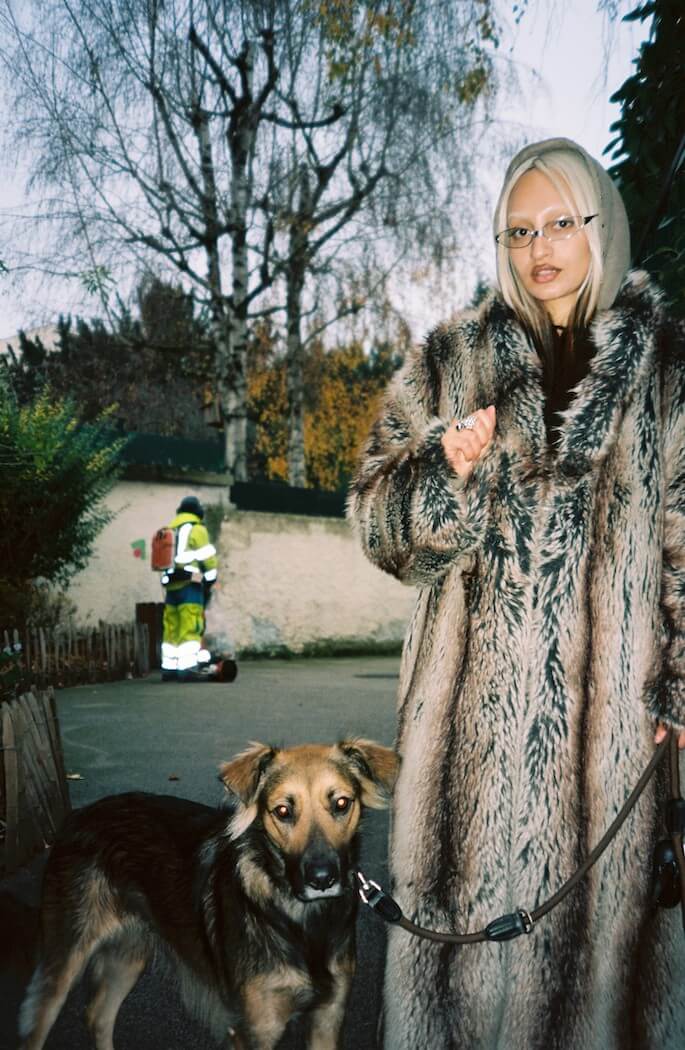
Most of the time, for me, a song is an image. The genese of it is an image. I have a very strong visual activity; my memory is visual. I remember so many things I’ve seen, I am full of images. My brain translates everything into images, so it’s a part of me. And dreams, too.
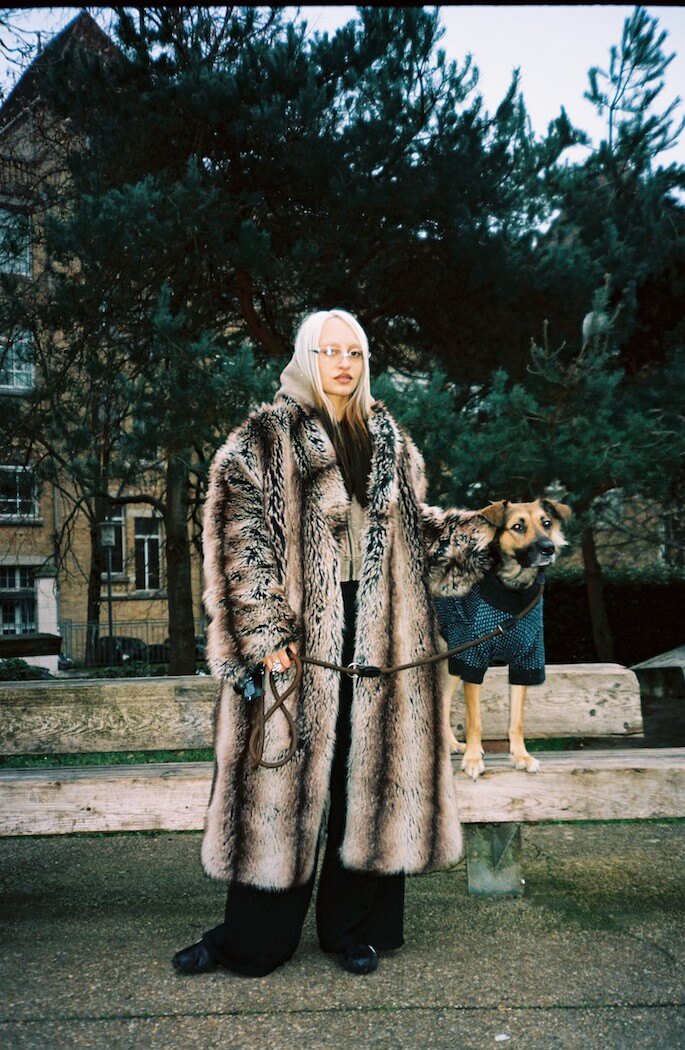
For me, fashion is the perfect way to express who you are; it’s a strategy to invite people into your world. I’ve always been in love with this art. People often think it doesn’t matter or that fashion isn’t necessary, but I think they’re totally wrong. Fashion is political. It’s a way to exist, especially in our world right now. I’m not talking about expensive things; just how you dress can be a way to send unconscious messages to others, and I like it. I like unconscious stuff, haha!
So yes, artistic direction and visual identity are a way of situating my music in a specific time and place. It’s like putting up a gate so people can enter your garden. If there’s no gate, there’s no point in putting up a fence. That’s how I see it. The image completes the circle.
France has a rich lineage of boundary-pushing pop and electronic artists. How does being a French artist inform your aesthetic, and how do you see it translating globally?
It’s funny how I still have blinders on when it comes to France. Sometimes I feel like France is stuck in its national mindset, but this question reminds me that there are many artists who have broken through the glass ceiling that I currently feel trapped under. I think my French heritage is simply that I love fashion… and I’m always rebelling against something! (haha). That’s very French, isn’t it?
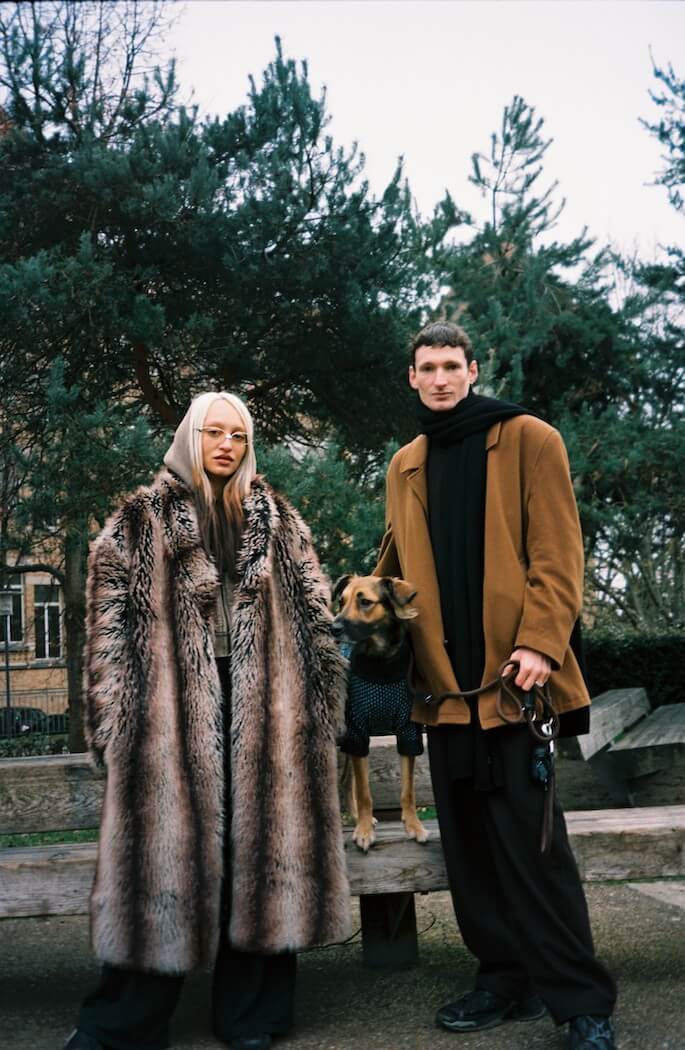
You’ve directed art and imagery for your own projects. How does working behind and in front of the camera influence your sense of authorship?
I like to split my brain into different parts. I like symbolism and analysing how a director sends messages through the scale of a shot, or how the light reveals something the story doesn’t tell. In a film, the music serves the film. In music, music videos serve the music, sometimes to reinforce hidden meanings, and sometimes just to establish an aesthetic that will be how people remember you. It’s a shortcut to entering your world.
Many musicians now think of music releases in 360° cycles: sound, visuals, performance, fashion. When you’re creating a new body of work, what comes first: the image, the sound, or the concept?
It depends. When I start a project like an EP or an album, I need a concept to put everything together. But most of the time, the music is where everything starts. As I said, I have images when I create music, so everything is fluid.
Fashion and aesthetics help me to «wear» my project. It protects me from the fear I can feel when I release something into the world. Sometimes, before a show, I’m like: «Why the fuck am I doing this? I just want to be nobody.» But what I built with image and my style helps me remember that I have the power to do this job, haha! Because, yeah, I feel protected.
Your tracks have amassed millions of views and resonated across cultures. What’s the role of authenticity in an era of curated feeds and digital personas?
Authenticity is the only thing that cannot be taken away from us. It is like our digital fingerprints; we are all unique. We can share ideas, music, aesthetics, opinions, senses of humor, and tastes, but when we are alone, we are unique.
Being authentic is a way to resist the world’s desire to standardise us in order to make us consume more. I think there are positive aspects to curated feeds because they can nourish you; however, staying close to real things, real conversations, real emotions, going to the cinema, attending a concert, touching a tree, or being connected to the people you love is an excellent way to remain authentic.
Interaction with others is a mirror. If your interactions are never authentic, if you don’t say what you really think, or if you copy others to fit in, you’ll never learn the lessons you need to learn. You’ll never really connect with pure emotions, you’ll never feel yourself, and you’ll lose your inner power and the real meaning of what life is. I know it’s deep, but I really think authenticity is needed, especially now.
Live performance and immersive spaces influence how fans experience your world. If you could build a multisensory installation inspired by one song in your catalogue, what would it look like and why?
I think the experience could be really memorable with my song «Fighting»! I imagine a space where the visual and the sound collide to create that feeling of transe I seek in my music, a place where people can finally enter the «garden» I’ve been building.
The notion of duality, fragile vs. powerful, introspective vs. celebratory, often emerges in your music. How does that tension show up in your fashion choices and visual collaborations?
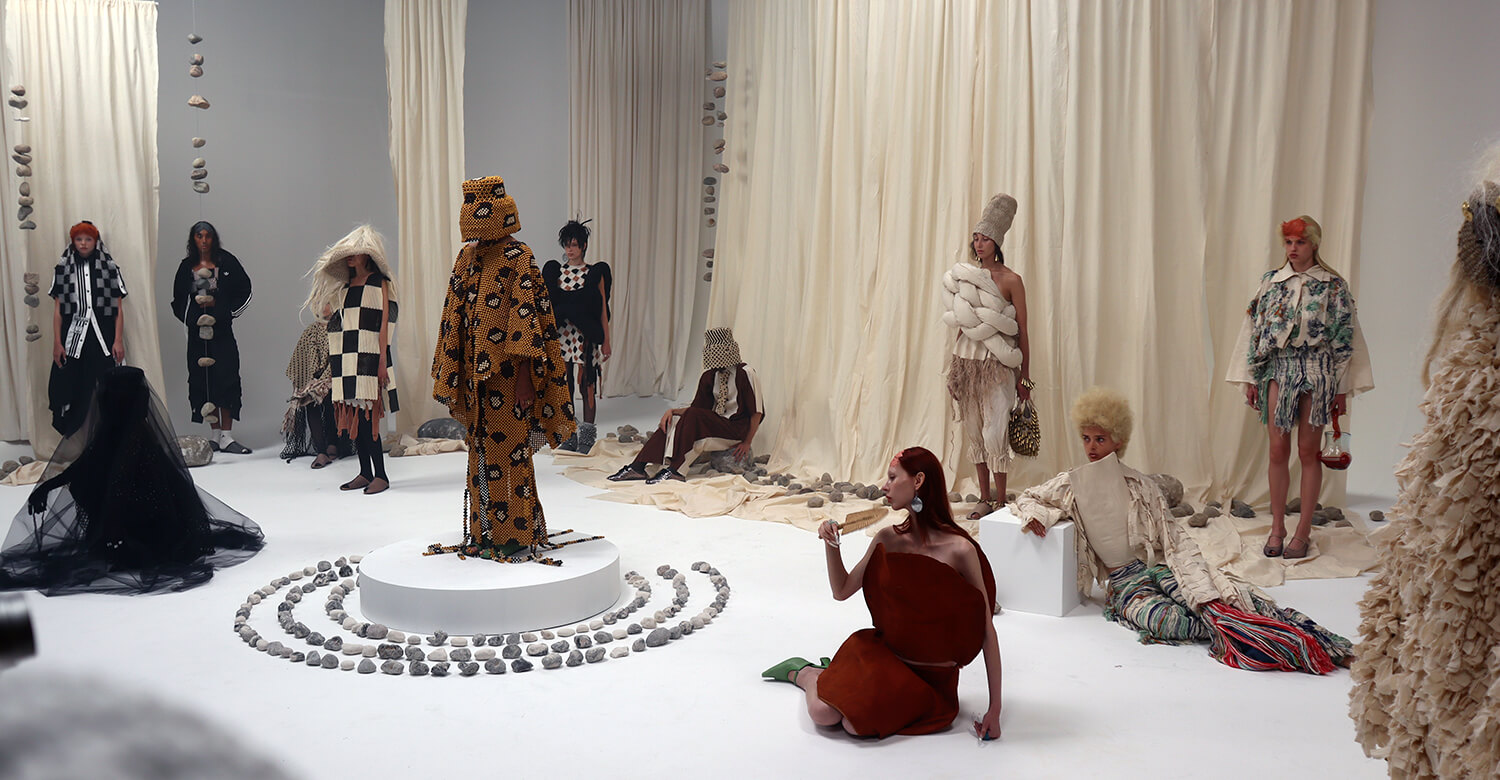
It’s a tough question! I think I’m not always conscious of it. I love working with young designers and the new generation of fashion; I love when it’s conceptual and pieces tell stories. Sometimes, a single piece can inspire me for my visuals. It’s about that balance between the story the clothes tell and the emotion I want to translate.
Looking ahead, what are you curious to explore next, sonically, visually, or emotionally, and how do you feel your world is evolving with each new release?
For what’s next, I’m exploring more instruments and more modular sounds. I’m obsessed with trip-hop music and DJ Shadow, but also meditative and ambient music. I’m looking for the best way to do «healing pop music» with a beat.
Photography by Andrei Zozulya @violentdodo