
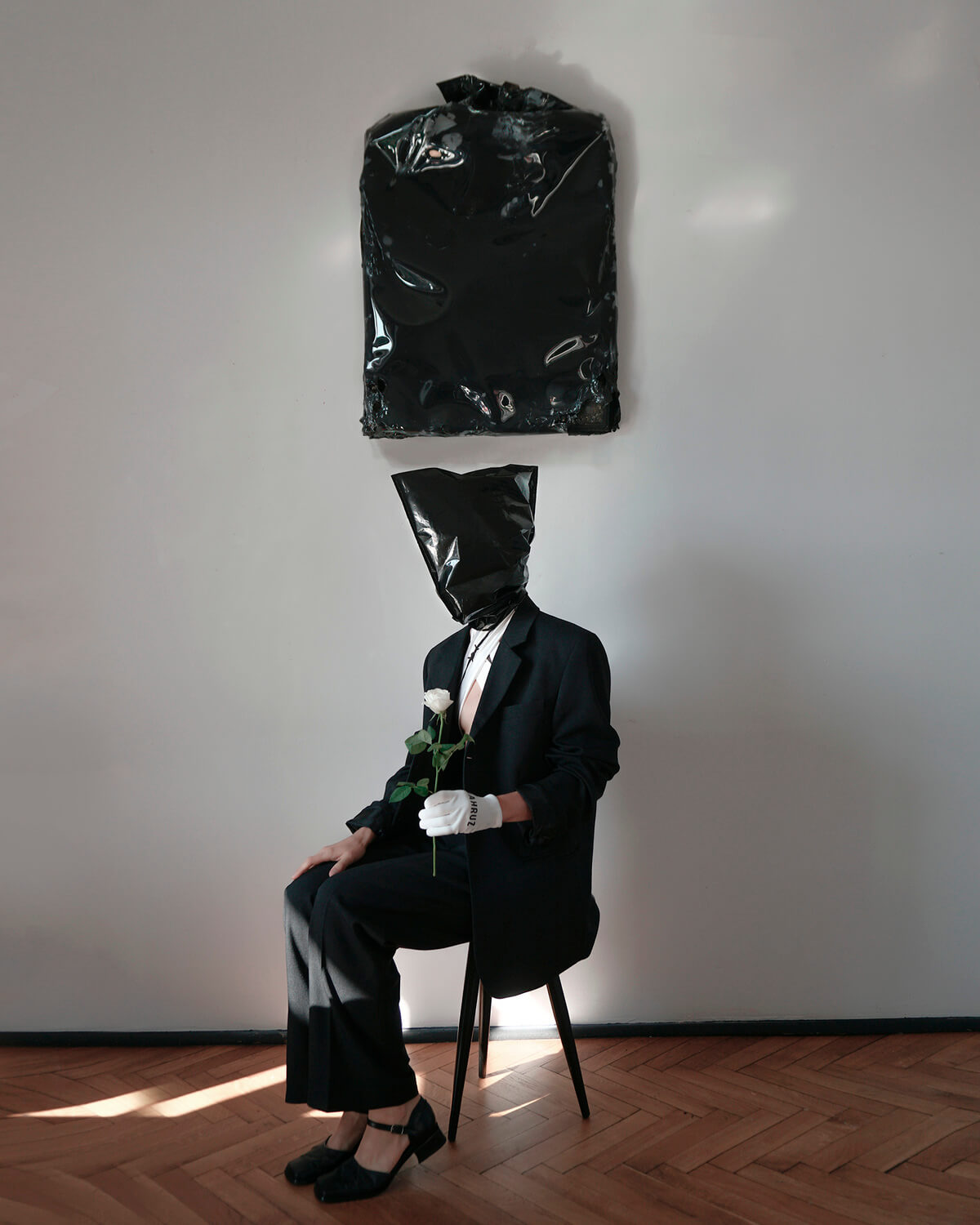
There are artists who turn the image into an event. And there are those who turn the very support of the image into an event: the canvas, the frame, the skin of the surface, its ability to retain a trace. Cemra works precisely at this point, where a “painting” ceases to be a flat statement and becomes a body that cannot be read from arm’s length.
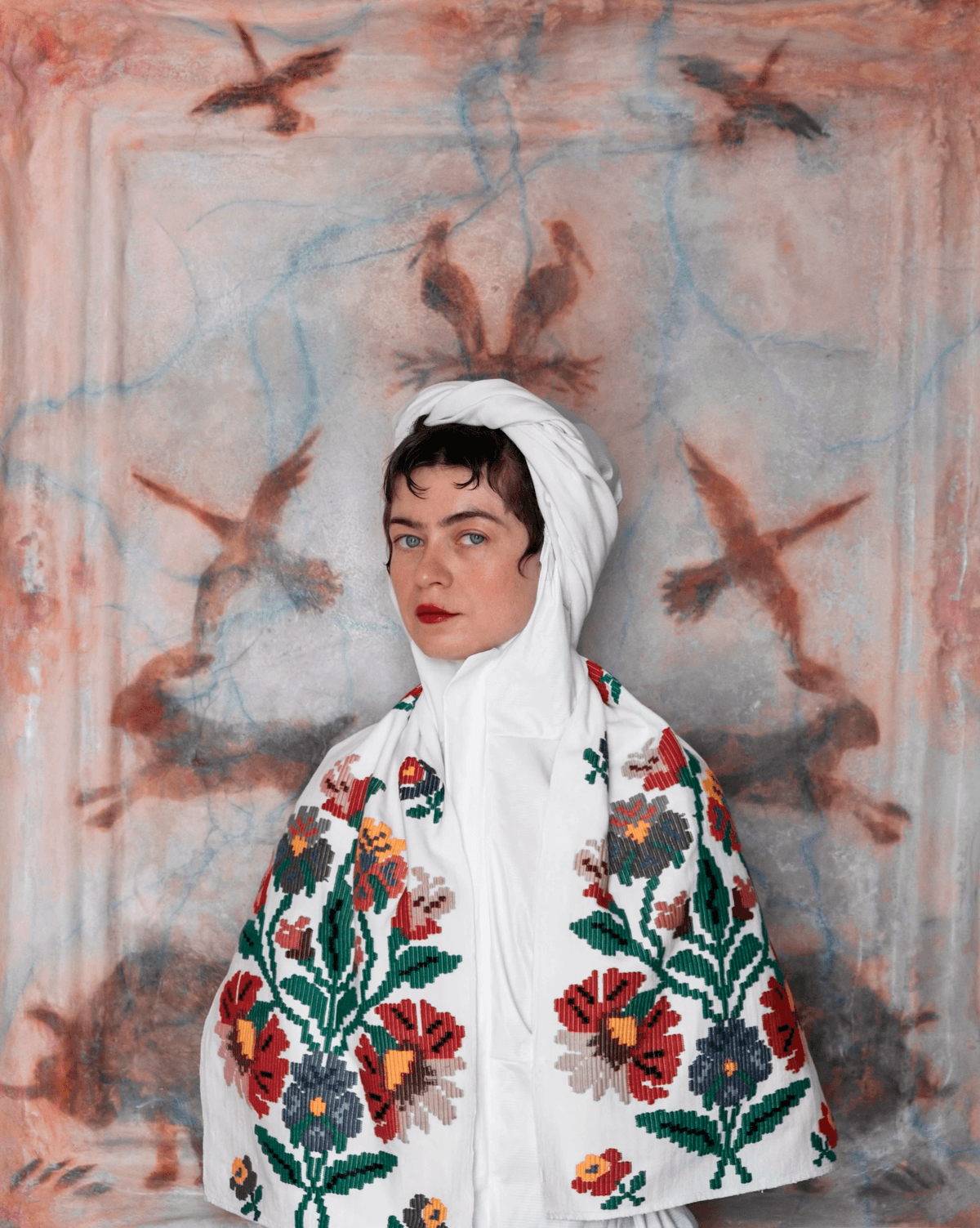
Her basic gesture is not painterly in the classical sense, but constructive. On her website, the artist formulates this as a principle: for her, the canvas is not a surface “for an image,” but an organism that can be assembled from layers, bound, compacted, protected, and exposed at once. In this vocabulary, plaster bandages and resins do not “add texture”; they define the mode of the work’s existence. The painting becomes an object, and the object acquires the near-medical gravity of a procedure.
What matters most in Cemra’s practice is that material does not serve the narrative. It is the narrative. The works look as if a quiet engineering is taking place inside them: the surface holds tension, but does not promise a final form. In Status Quo, this is articulated quite literally through composition: “sculptural painting” is placed on a wheelchair, and bandaging functions as a way to assemble form while simultaneously acknowledging its vulnerability.
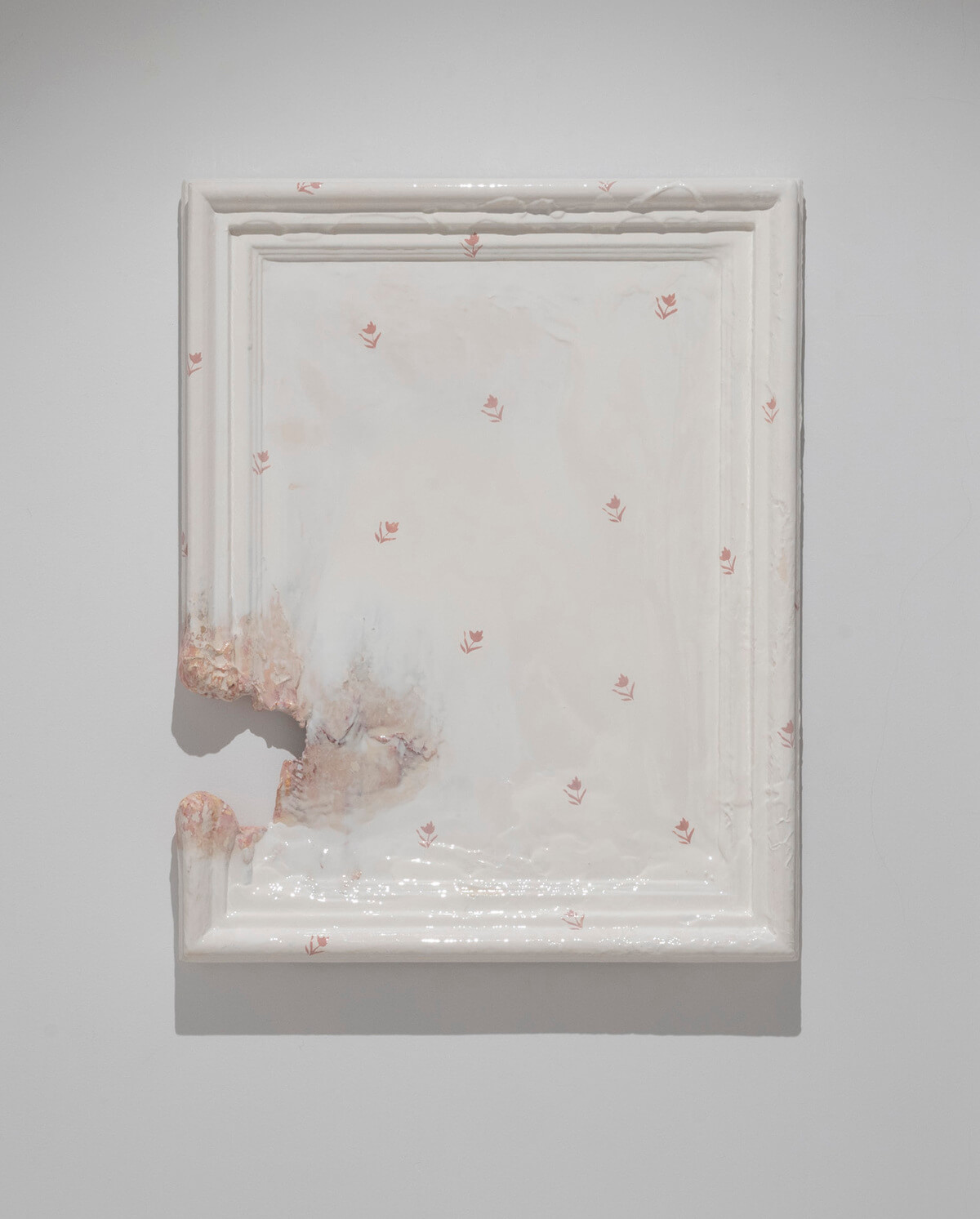
What would appear as metaphor in other artists’ work appears as protocol in hers. That is why, in her texts, major names do not appear as cultural signals, but as tools for mapping experience. In Lack, she unfolds “lack” as a mechanism of vision, referring to Jacques Lacan: the viewer is compelled to mentally complete what is missing, but completion remains a problem, not a solution.
In the Belarusian context, this language is especially precise. After 2020, against the backdrop of repression, violence, the destruction of an independent cultural environment, and mass forced emigration, the experience of pain ceased to be an abstraction for many artists. In Cemra’s work, bandage, fixation, trace, and skin function not as style, but as a form of utterance where direct language is often too blunt, too narrow, or simply unsafe. At the same time, her strength lies in the fact that she does not replace art with political illustration: she holds the viewer aesthetically, but does not simplify the experience.
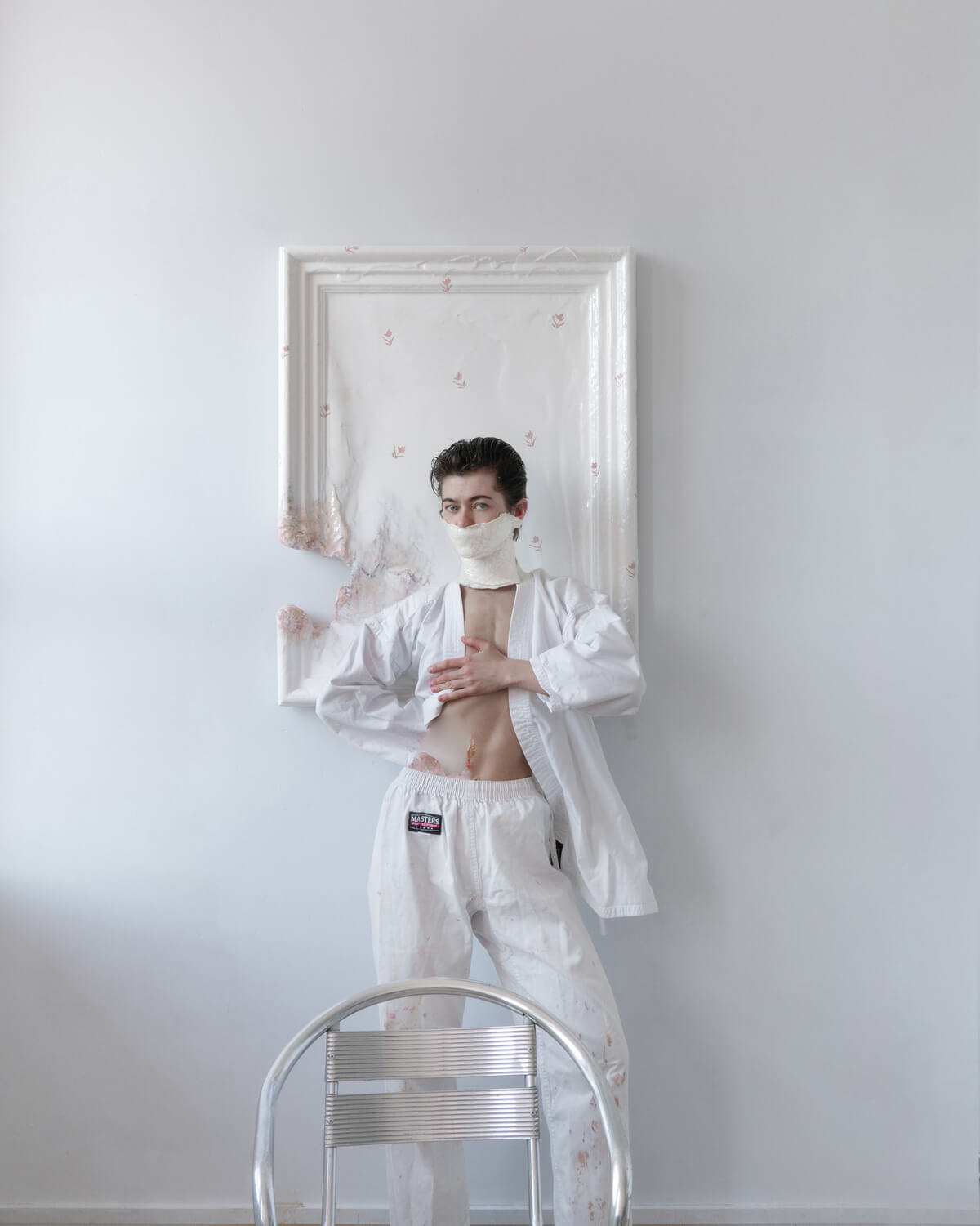
In interviews, the artist says that she does not make “ugly” work, but hides deep meaning inside a visually attractive form. This is a principled position. She does not remove pain from the agenda; she looks for a language for it that can be endured without turning away. A language in which the wound does not scream, but emerges through the surface.
But if one stops only at the language of the bandage, it is easy to miss the main thing: Cemra expands the field of what counts as visual research. In Ziamliačka, she takes a step toward smell and archiving, and does so with extreme precision. At Kunsthaus Graz in Austria, the project is structured as a coupling of performance, installation, and archival logic; the exhibition runs through March 15, 2026.
The project’s matter is soil. Not as a landscape metaphor, but as a transportable object and a carrier of smell. The quantity is specified: 225 kg of soil were transported to Poland, after which the artist extracted its scent through a multi-stage procedure – with cycles of application onto Vaseline, an alcohol phase, and evaporation. Here, not only the fact but the method matters. Ziamliačka is built as an operation in which “memory” ceases to be an abstraction and appears as substance.
The key to the work is also given by the artist herself: the project began in autumn 2024, in the fourth year of forced exile, from a state of complete exhaustion. From this experience emerges the thought that becomes the inner framework of the entire work: grounding comes not only from people, but from the ground beneath one’s feet. 225 kilograms of soil from the plot where the family home once stood become not merely a material, but a form of restoring connection with what has been lost. The personal here immediately opens onto a broader horizon of forced displacement, where the loss of ground beneath one’s feet ceases to be a metaphor.
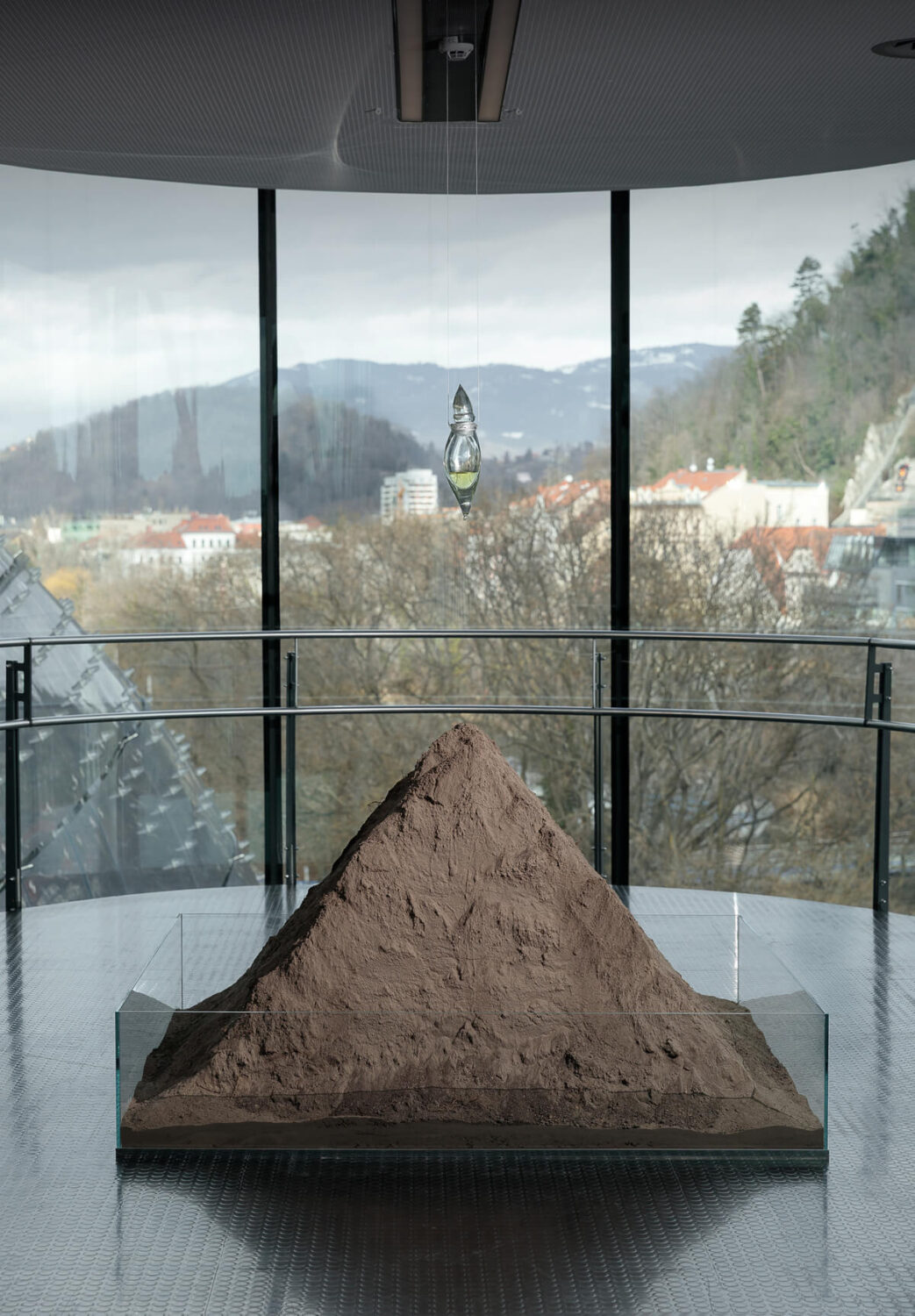
The project’s strongest move is hidden in the restriction of access. The extract remains visible, placed in a bottle, but the viewer is not given direct consumption of “meaning” through smell. This decision is both poetic and severe. It denies the audience a quick emotional resolution. You do not receive an “experience” as a service. You receive a form that shows the boundary of experience.
The installation is built on a minimalism that does not look sterile. The soil is placed in a glass cube, as if it were a laboratory sample, yet the scale and weight of the material do not allow it to turn into a “design object.” The bottle with the extract, by contrast, is almost jewel-like: hand-blown glass fixes the scent as a precious substance. Cemra makes this dual structure convincing: coarse matter and a delicate container do not compete, but substantiate one another.
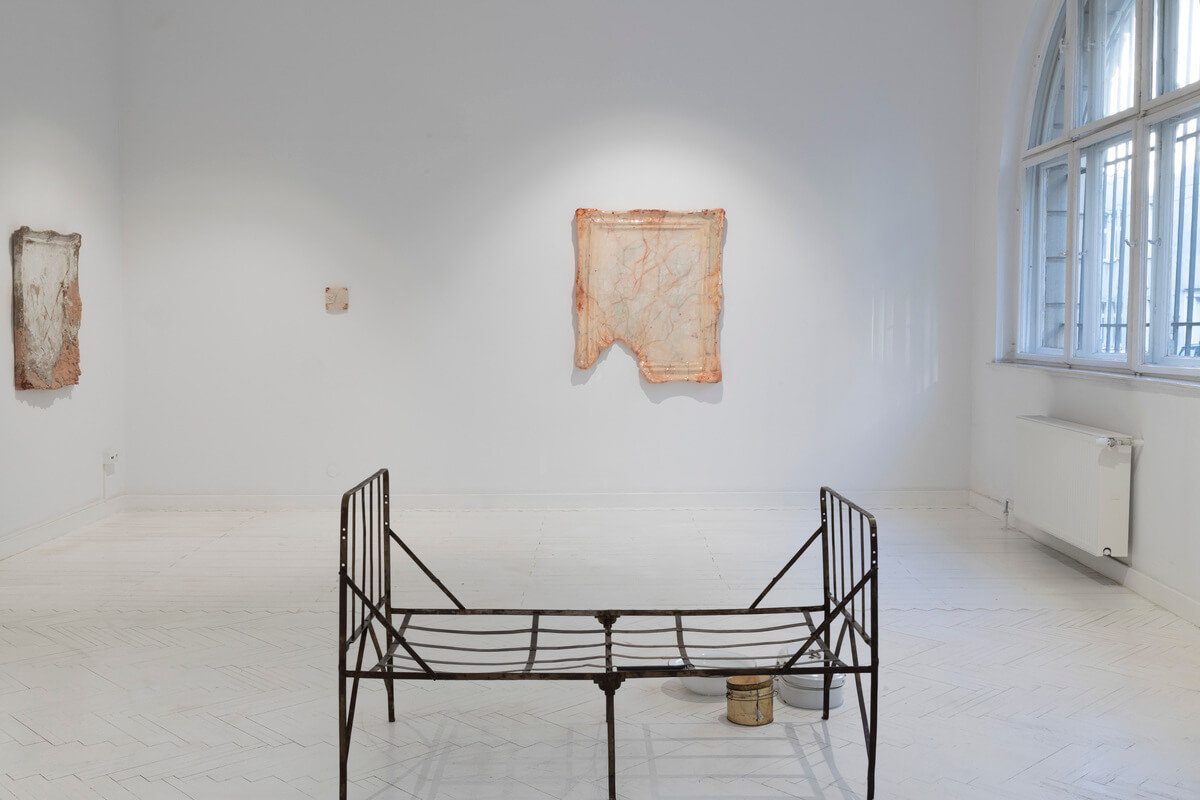
If one allows a small critical reservation, the risk of her artistic language is obvious: the repeatability of the “epidermal” motif could become a signature gesture that the viewer begins to recognize too quickly. In contemporary art, recognizability often substitutes for development. But Ziamliačka shows precisely that, for Cemra, recognizability is not a ceiling. She does not “repeat” the bandage in another format; she translates her logic into another register: from the tactile to the olfactory, from surface to archive, from the visible to the visibly inaccessible.
That is why what remains in the end is not simply the impression of an “interesting name,” but a rarer feeling: before you is an artist who truly reinvents a language. Cemra reinvents painting as object, and the object as testimony to method. And when, after this, you look at her visual sequences, you catch yourself not in the reaction of “I like it / I don’t like it,” but in a more exact state: you begin to look more slowly.
Watch ‘A Mourning Performance’ (2025) below:
Follow her for more: @cemradarya