

Curated by Janet Bishop, Thomas Weisel Family Chief Curator, SFMOMA, and Cara Manes, Associate Curator, Department of Painting and Sculpture, MoMA, in collaboration with Geaninne Gutiérrez-Guimarães, Curator, Guggenheim Museum Bilbao
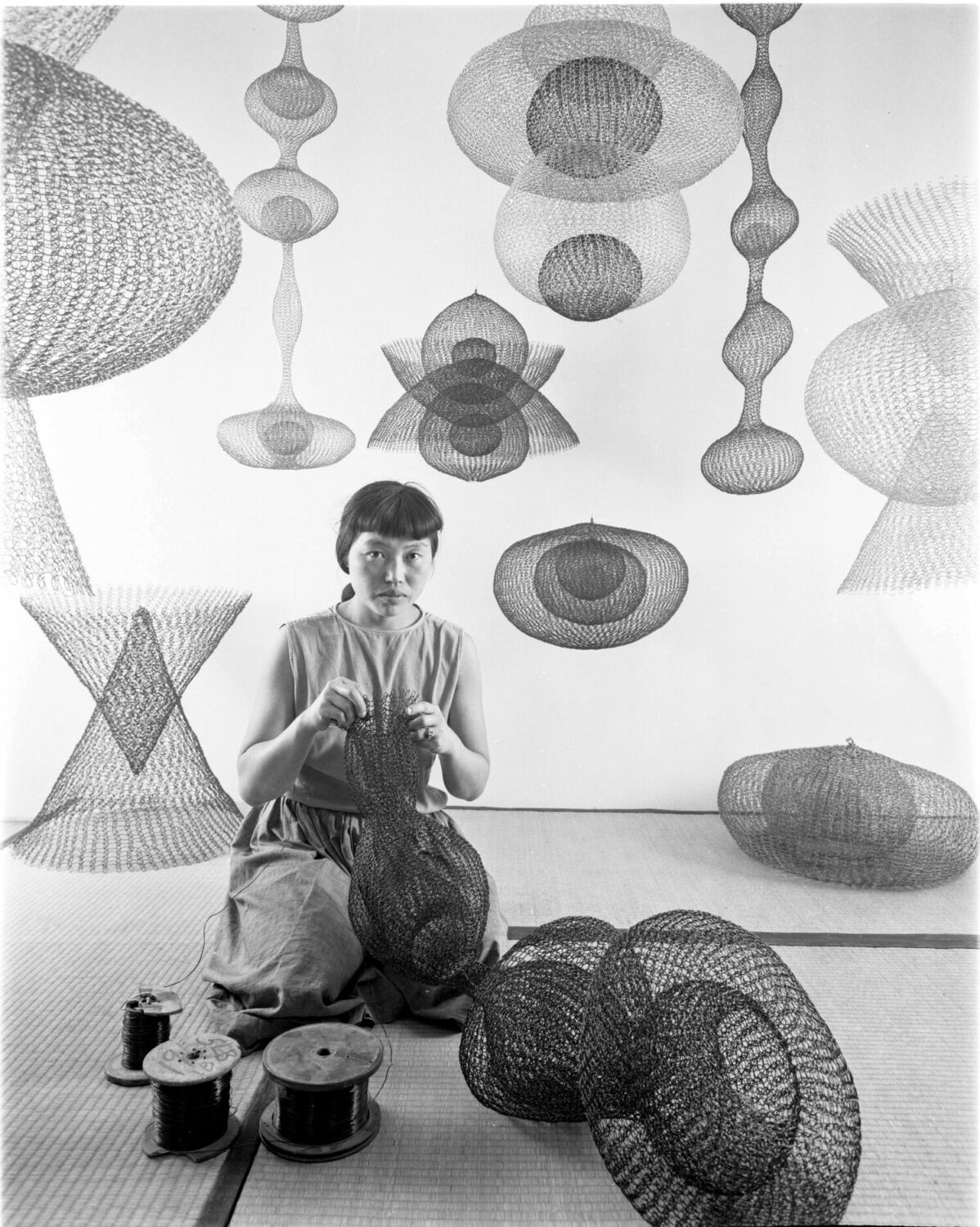
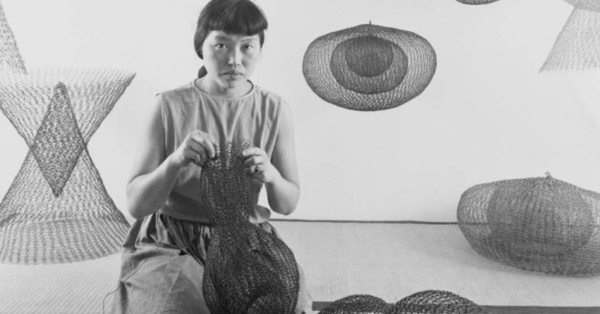
RUTH ASAWA. Artist Ruth Asawa making wire sculptures, California, United States, November 1954; image: Nat Farbman/The LIFE Picture Collection/Shutterstock; artwork: © 2026 Ruth Asawa Lanier, Inc., courtesy David Zwirner
At the Guggenheim Museum Bilbao, Ruth Asawa: Retrospective, running until September, traces nearly six decades of practice through Asawa’s celebrated suspended looped-wire sculptures alongside tied-wire works inspired by nature, drawings, paintings, prints, large-scale origami, sketchbooks, and bronze and clay casts.
Born in California in 1926 to Japanese immigrant parents, Ruth Asawa experienced one of the most painful and still insufficiently acknowledged chapters of American history firsthand. During World War II, following xenophobic U.S. policies targeting Japanese Americans, Asawa and her family were forcibly incarcerated in internment camps, she endured displacement and suspicion despite being an American citizen. I immediately thought of the ICE detention centers today and the American citizens born to immigrants. Revisiting Asawa’s childhood today serves as a reminder of how fragile inclusion can sometimes be, particularly during moments shaped by fear and political division. Yet the lasting power of her story lies not in bitterness, but in what she built afterward: a life devoted to creativity, education, and community.
That philosophy expanded during her years at Black Mountain College in North Carolina, the legendary experimental arts school that became one of the most influential creative communities of the twentieth century. During Asawa’s time there, the school counted figures such as Josef Albers, Buckminster Fuller, choreographer Merce Cunningham, composer John Cage, and artist Robert Rauschenberg among its faculty and students. Creativity was approached not as an isolated act of genius, but as a communal and interdisciplinary process. Asawa absorbed these ideas deeply, developing an artistic language grounded in continuity, transparency, experimentation, and interconnectedness.
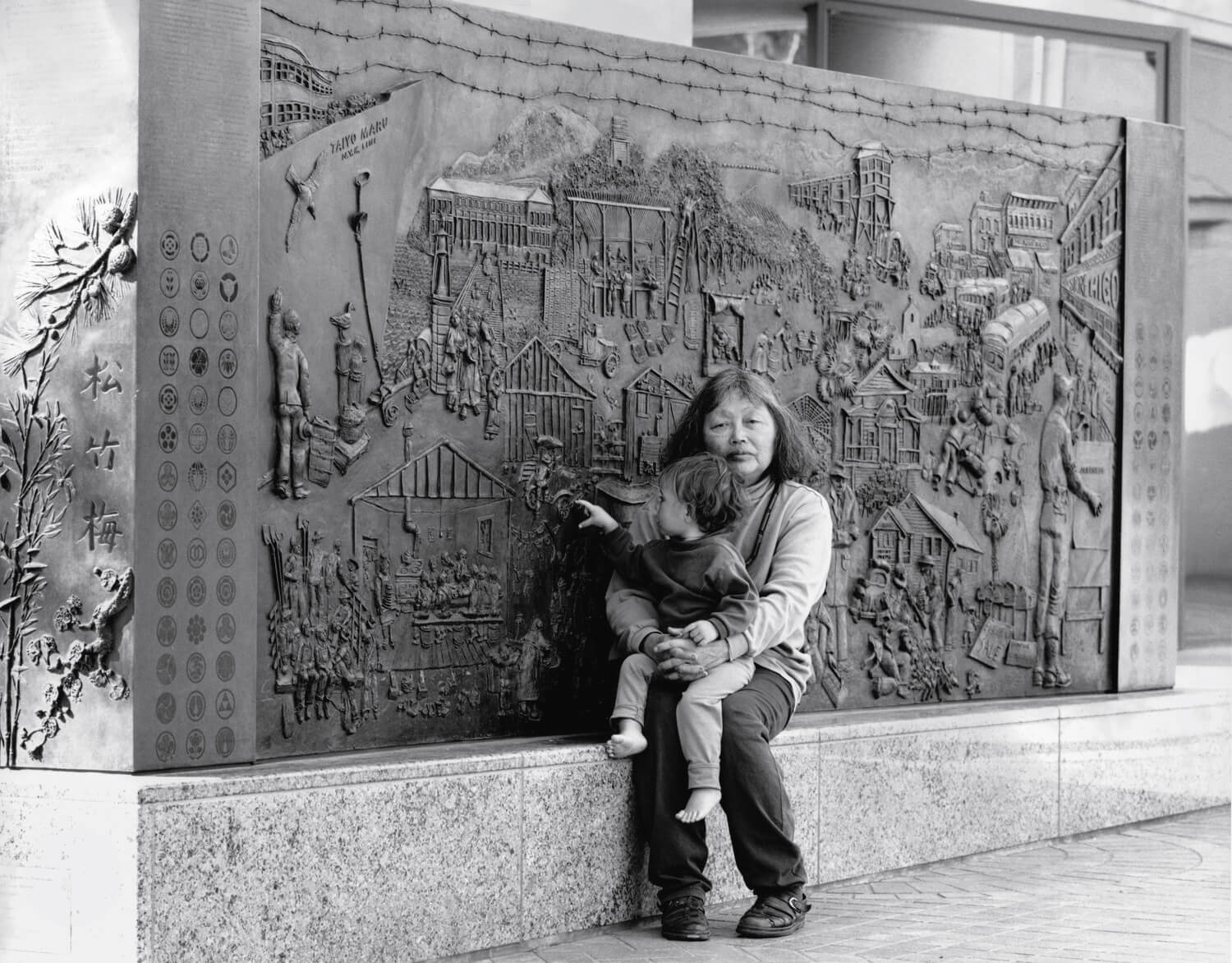
RUTH ASAWA. Ruth Asawa and her granddaughter with Japanese American Internment Memorial (PC.011), 1990-94, commissioned by the City of San José; 300 South First Street, San José; © 2026 Ruth Asawa Lanier, Inc., courtesy David Zwirner; photo: Laurence Cuneo
Inspired in part by basket-weaving techniques she encountered during an influential trip to Mexico in 1947, Asawa transformed repetitive hand labor into something radically modern and unexpectedly delicate in the suspended wire sculptures that would become her signature. Floating almost impossibly in space, the works blur the boundaries between drawing and sculpture, solidity and air. The sculptures appear almost weightless, yet their structures reveal extraordinary rigor and precision.
The retrospective also highlights how forward-thinking Asawa’s practice truly was. During the mid-twentieth century, artistic hierarchies often privileged monumental gestures associated with masculine modernism, while practices connected to weaving, craft traditions, or domestic labor were frequently dismissed as secondary. Asawa’s wire sculptures were at times criticized precisely because of their handmade qualities, with some critics categorizing them as “craft” rather than fine art. Today, however, those distinctions feel increasingly irrelevant. Contemporary audiences are far more attuned to the value of process, materiality, and tactile labor, making Asawa’s work feel not only contemporary, but prophetic especially when you look at success of the Loewe Craft Prize celebrating as artistry.
Though Asawa rarely described herself explicitly as a feminist, her life and work quietly challenged many of the assumptions surrounding women artists in postwar America. She rejected the notion that motherhood and serious artistic ambition existed in opposition to one another. A mother of six children, she integrated family life into her creative world rather than separating the two.
“Because I had the children, I chose to have my studio in my home. I wanted them to understand my work and learn how to work.” – Ruth Asawa
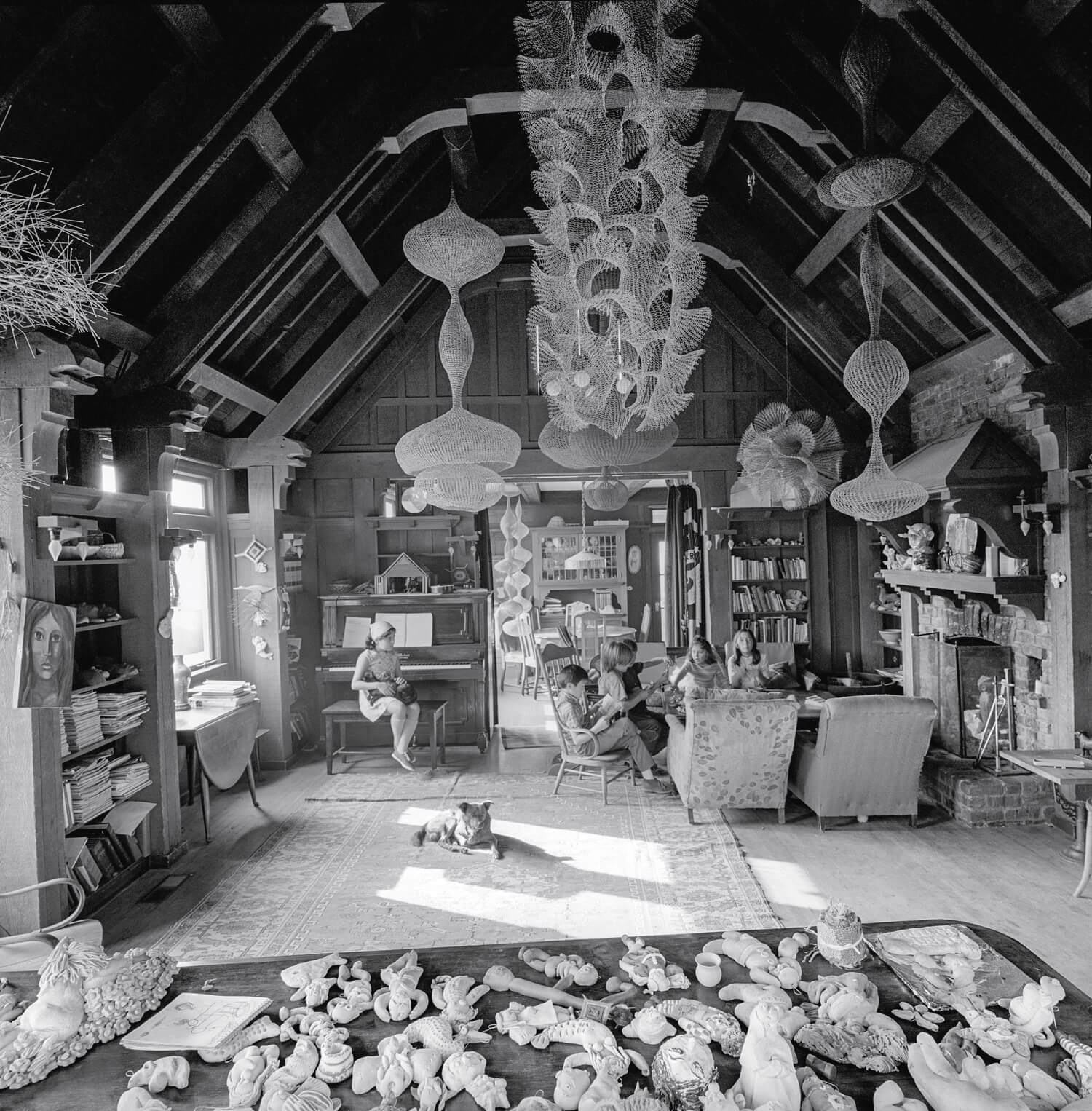
RUTH ASAWA. Living room of Ruth Asawa’s home in San Francisco’s Noe Valley neighborhood, 1969; photograph by Rondal Partridge; photo © 2026 Rondal Partridge Archives; © 2026 Ruth Asawa Lanier, Inc., courtesy David Zwirner
Her home became a gathering place for artists, students, and neighbors alike, reflecting her belief that art belonged within the fabric of daily life. In this sense, Asawa cultivated community as carefully as she constructed sculpture. Equally important was her lifelong advocacy for arts education and public access to creativity. She believed deeply in the role of art within society not as an elite luxury, but as something essential to emotional and civic well-being. Throughout her life, she fought to expand arts programs in schools and public institutions in San Francisco convinced that creative expression should be available at every level of society. That philosophy resonates strongly today as we have seen continuous cuts to public art projects and education. A younger generation is increasingly drawn to her practices that sees her extend beyond the studio and engage with ideas of care, accessibility, collaboration, and social connection.
I mostly move in the sphere of fashion, I found the enduring appeal in her work in suspended forms, with their woven geometries, transparency, and fluid structures, that felt aligned with contemporary conversations around more sustainable material innovation. Fashion designers could easily draw inspiration from her sculptures’ rhythmic silhouettes, metallic meshwork, and interplay between softness and structure. Long before fashion embraced artisanal construction and sculptural minimalism as modern luxury, Asawa was already exploring how repetition, movement, and tactility could create emotional and spatial transformation.
In an era often defined by division and speed along with the threat that AI proposes to many creatives today, Asawa’s work proposes another possibility, one rooted in patience, openness, interconnectedness, and the belief that art can bring people together.
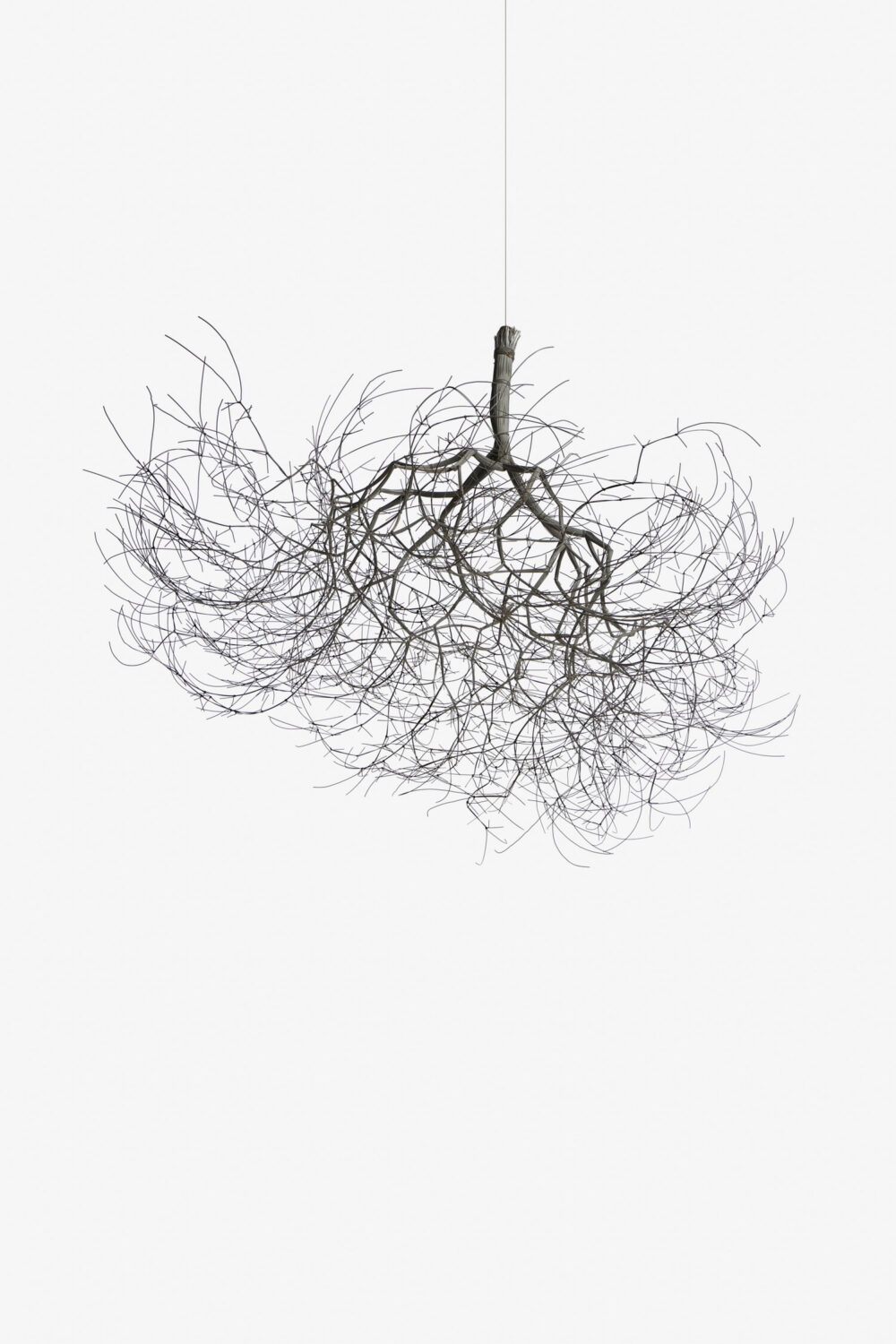
RUTH ASAWA. Untitled (S.184, Hanging Tied-Wire, Single-Stem, Multi-Branched Form Based on Nature), ca. 1962; galvanized steel wire; 76.2 × 101.6 × 101.6 cm; Collection of Diana Nelson and John Atwater; © 2026 Ruth Asawa Lanier, Inc., courtesy David Zwirner
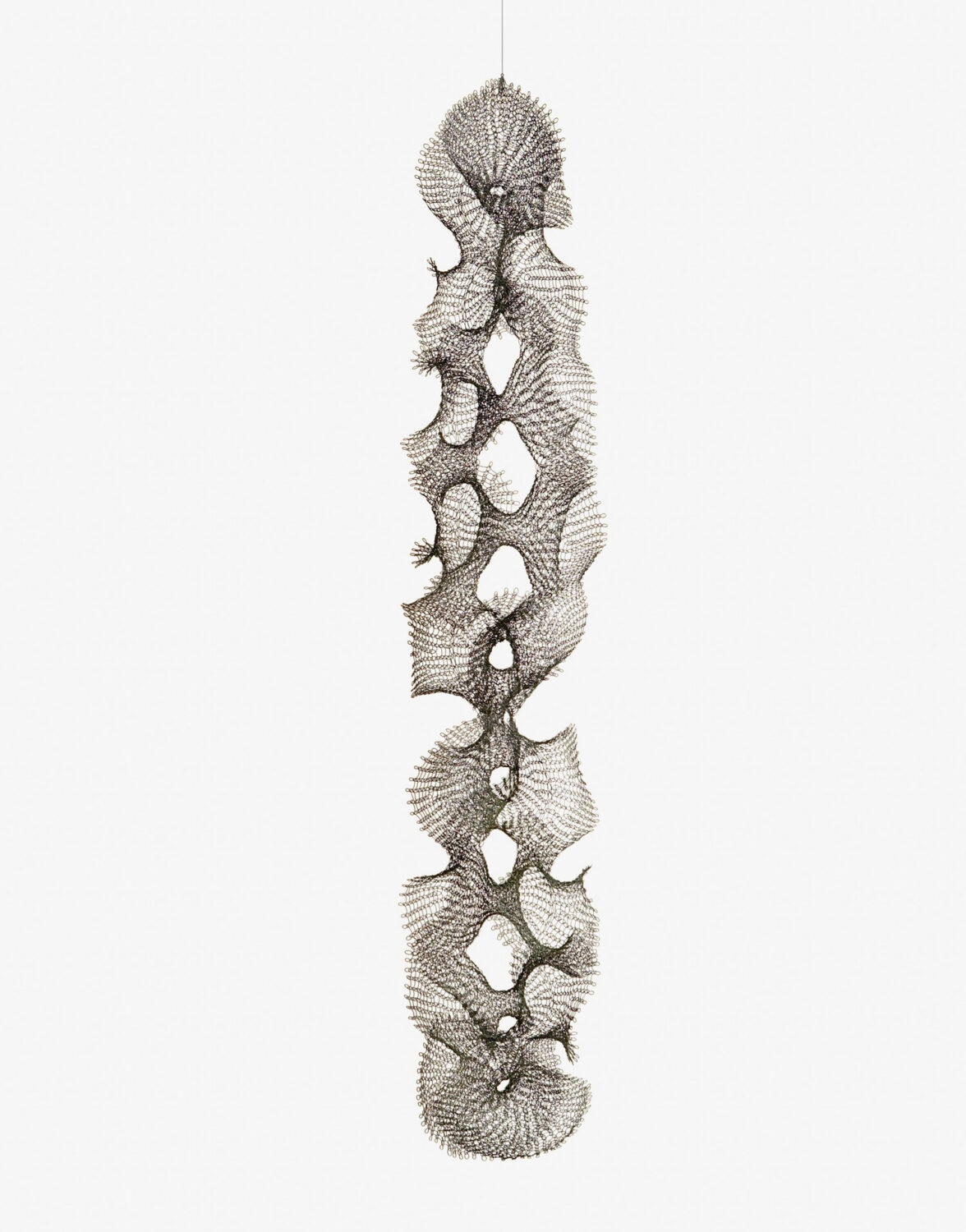
RUTH ASAWA. Untitled (S.433, Hanging Nine Open Hyperbolic Shapes Joined Laterally), ca. 1958; copper wire; 193 x 38.1 x 38.1 cm; William Roth Estate; © 2026 Ruth Asawa Lanier, Inc., courtesy David Zwirner; photo: Laurence Cuneo
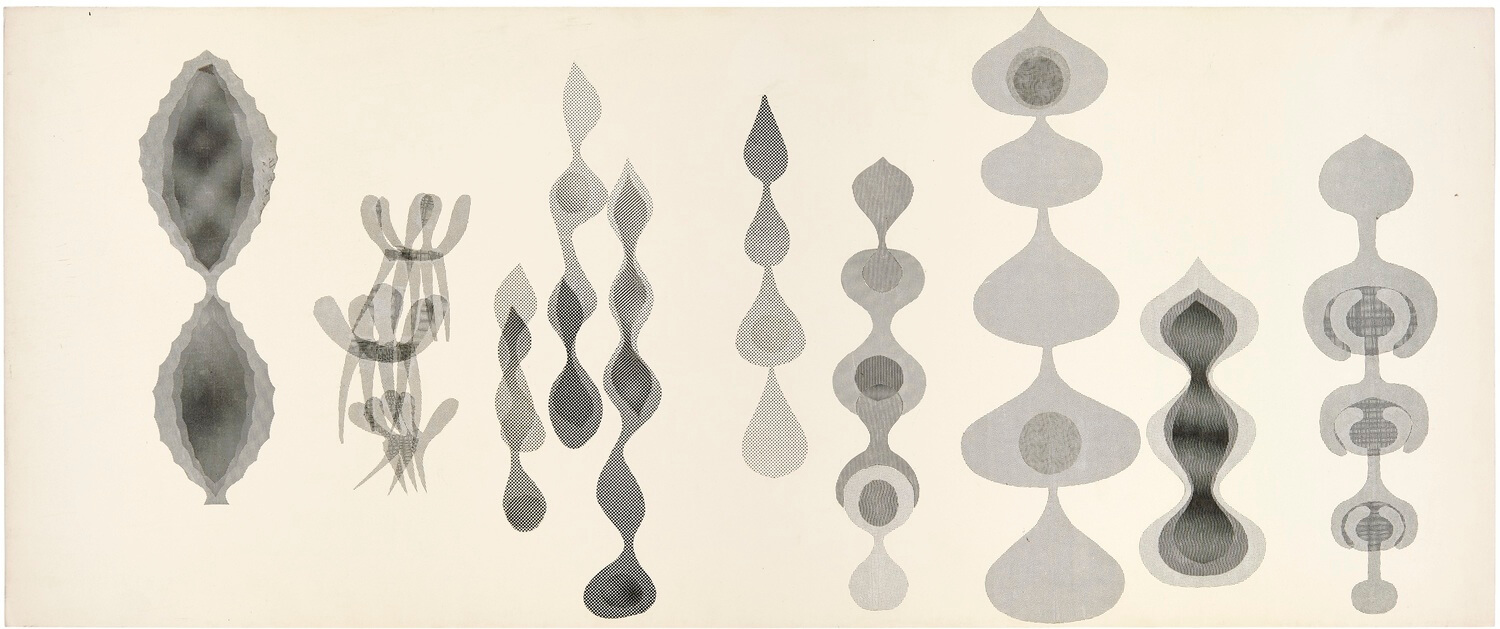
RUTH ASAWA. Untitled (ZP.16B, Twelve Looped-Wire Sculptural Forms), mid- to late 1950s; screentone on mat board; 25.4 x 61 cm; private collection; © 2026 Ruth Asawa Lanier, Inc., courtesy David Zwirner; photo: James Paonessa
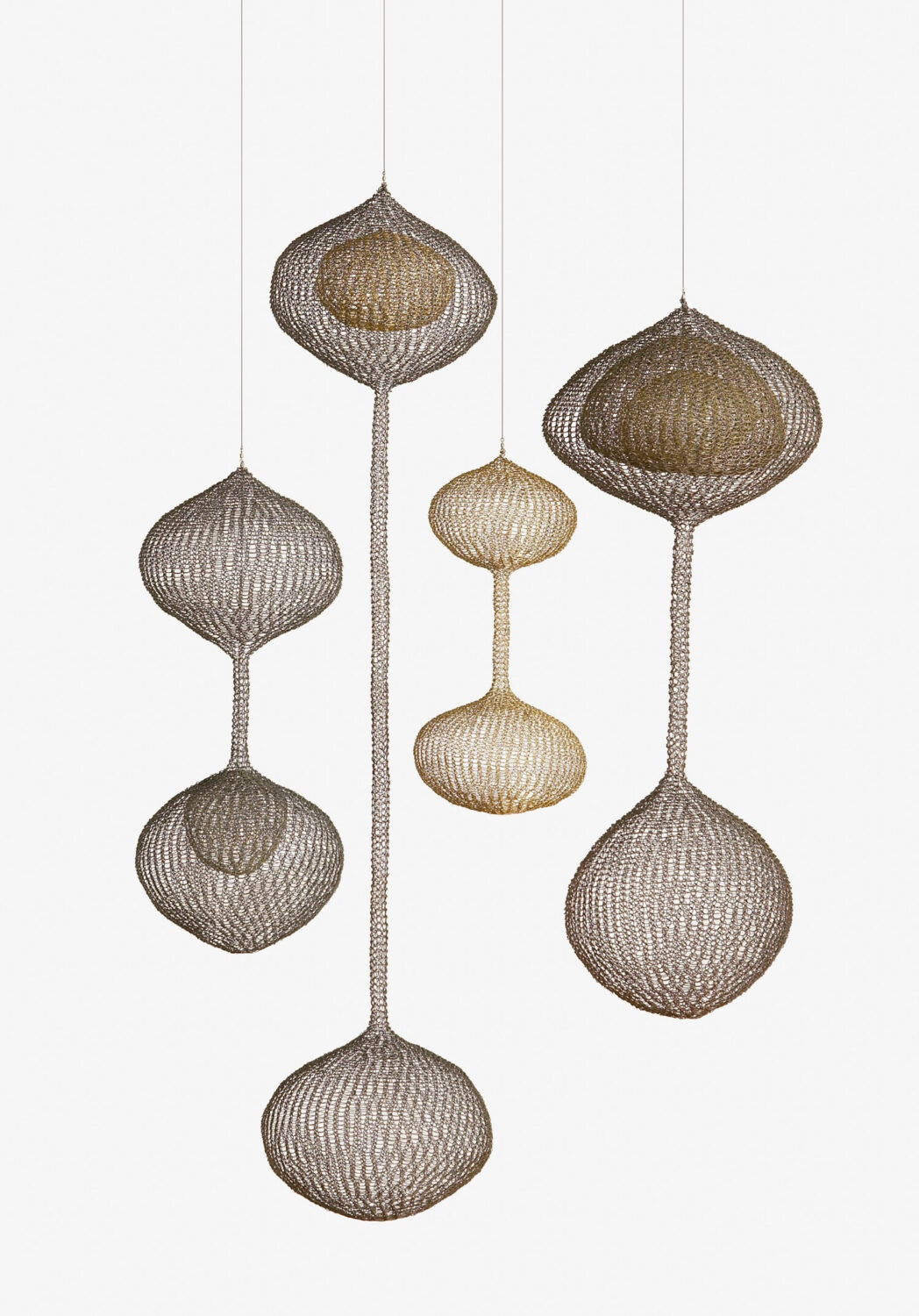
RUTH ASAWA. Untitled (S.046a-d, Hanging Group of Four, Two-Lobed Forms), 1961; copper and brass wire, (a): 152.4 × 43.2 × 17.8 cm; (b): 53.3 × 30.5 × 30.5 cm; (c): 81.3 × 33 × 33 cm; (d): 104.1 × 40.6 × 40.6 cm; Collection of Diana Nelson and John Atwater, promised gift to the San Francisco Museum of Modern Art; © 2026 Ruth Asawa Lanier, Inc., courtesy David Zwirner; photo: Laurence Cuneo
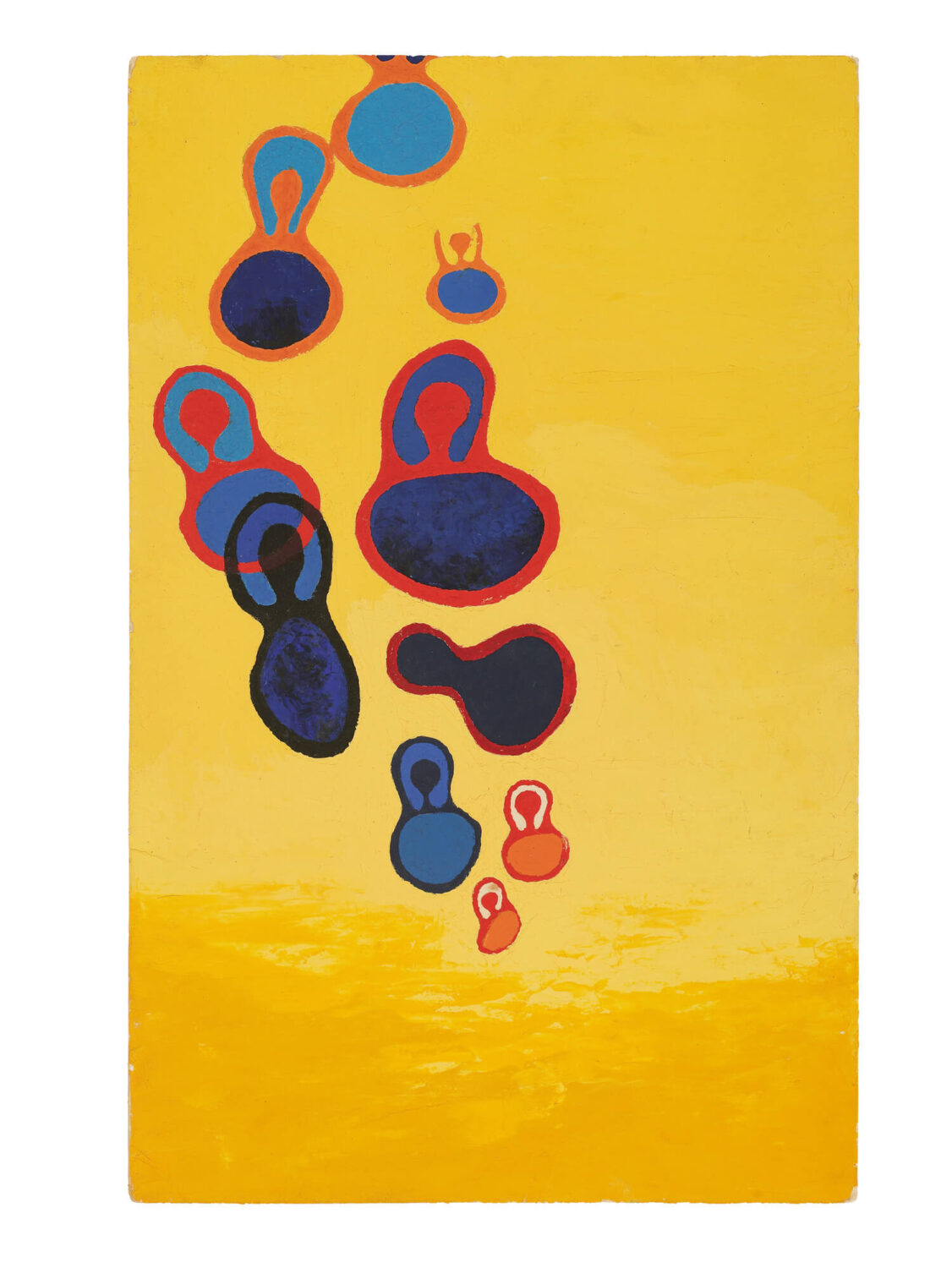
RUTH ASAWA. Untitled (BMC.52, Dancers), ca. 1948-49; oil on paper; 48.3 x 30.5 cm; private collection; © 2026 Ruth Asawa Lanier, Inc., courtesy David Zwirner; photo courtesy Fine Arts Museums of San Francisco
Ruth Asawa: Retrospective at the Guggenheim Bilbao runs until the 13th September 2026