

Contrast, pentimento, and the passage of time. Fall 2026 redefines menswear as a dialogue between heritage, modernity, and self-expression.

Dior/ Dries Van Noten/ Prada
If there is one idea that unites the following collections, it is the sense of a suspended moment where past, present, and future constantly intersect. Designers such as Dior, Prada, and Dries Van Noten look backward to revive garments, techniques, and references from earlier eras, celebrating their origins and the durability that allows them to endure. At the same time, the present becomes a space for reflection—an opportunity to question how we dress, consume, and define ourselves today. The future, meanwhile, is envisioned through timeless pieces meant to last, redefining luxury not as excess or novelty, but as permanence.
We may not be eternal, but the clothes we create can be—and within that ambition lies a powerful message about value, memory, and longevity in modern menswear.
Hermès
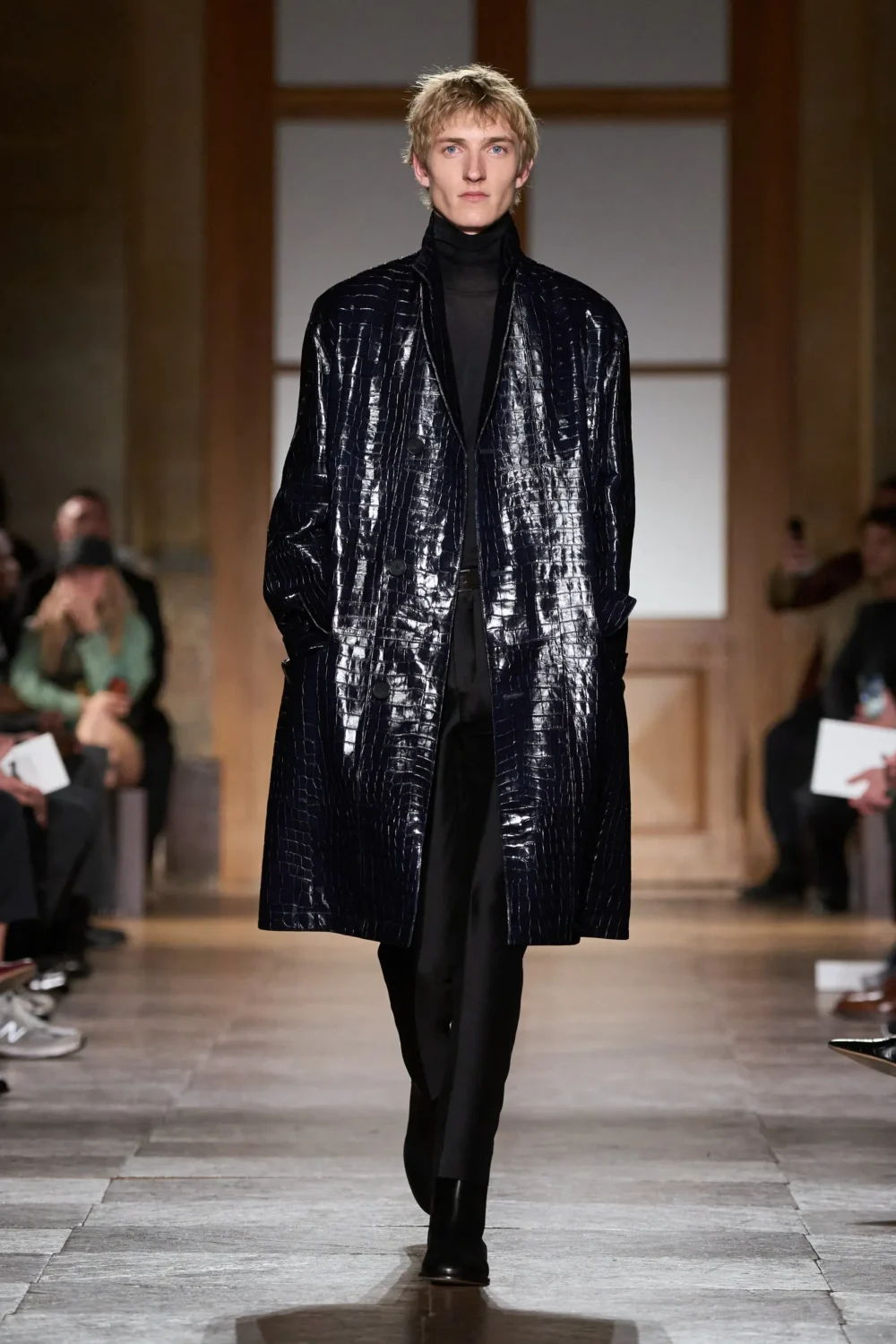
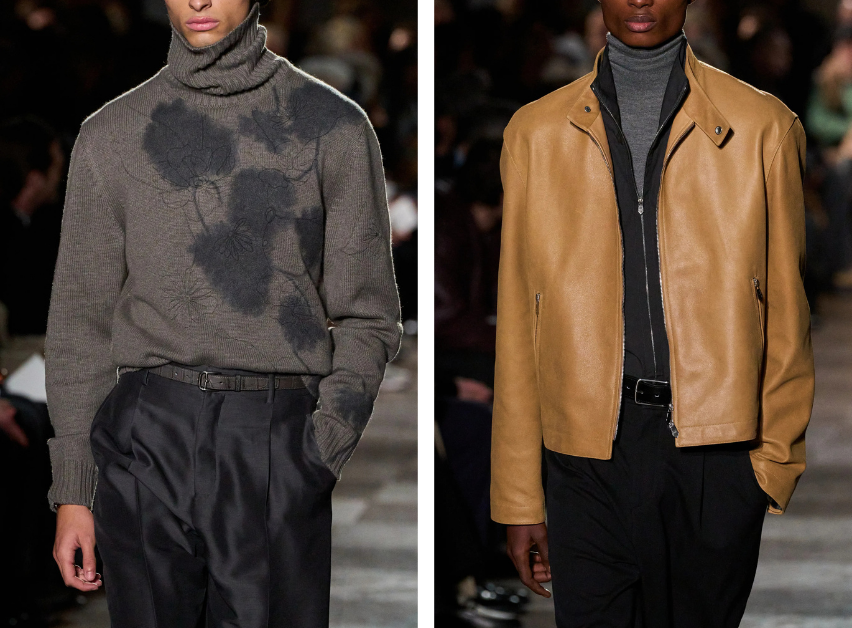
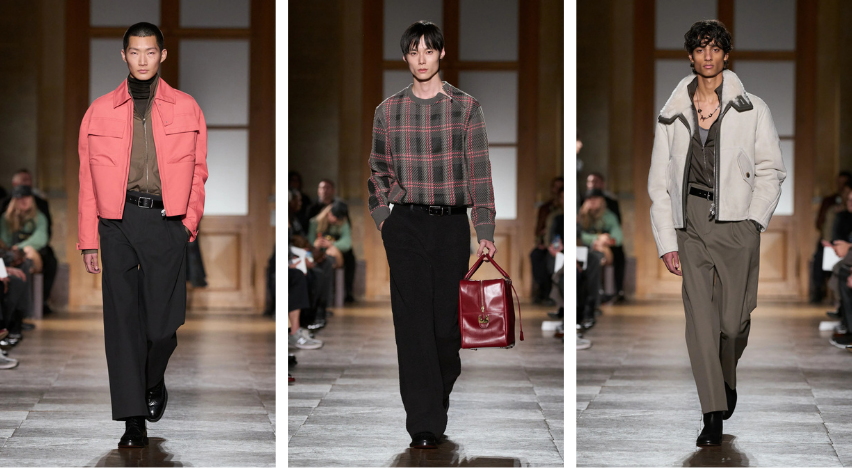
Véronique Nichanian marked her farewell as Hermès menswear designer after 37 years with a runway show that distilled her legacy into a single, powerful statement. Her final look—a long dark crocodile coat worn over slim black silk trousers and a high-neck sweater—captured the essence of her vision: refined, minimal, impeccably crafted, and quietly joyful.
The collection itself was a dialogue between past and present, underscoring the timelessness of Hermès design. Nichanian revived iconic pieces from the 1990s and early 2000s—a leather biker jumpsuit from 1991, outerwear from 2001 and 2004, and a leather pinstripe suit from 2003—alongside playful references such as a boombox-inspired leather bag. At the same time, she introduced new future classics, including coral-dyed shearling coats and overshirts, and orange-soled ankle boots destined to become coveted staples. It was a graceful, confident goodbye that celebrated durability, craftsmanship, and a singular, unwavering design line.
Dries Van Noten
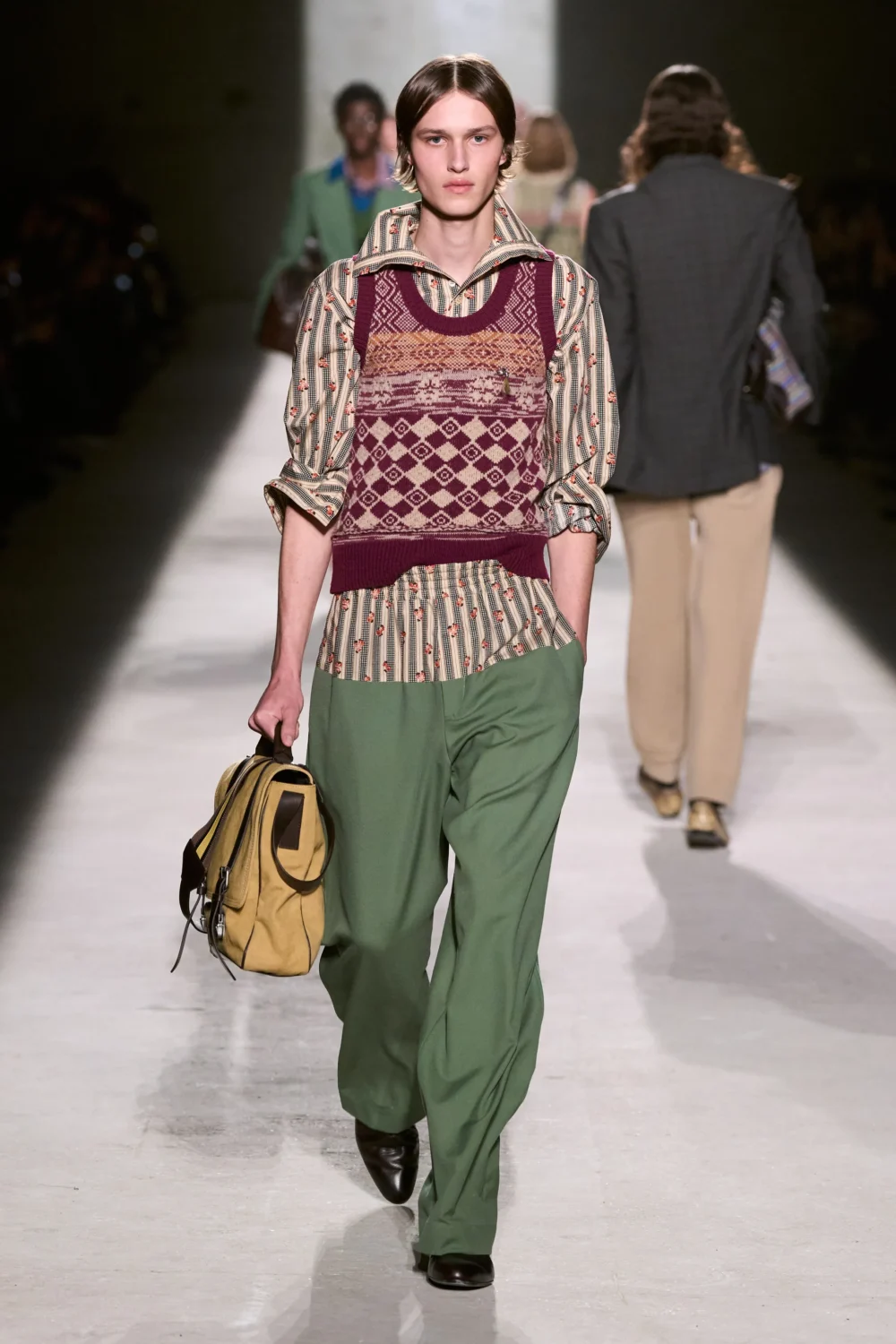
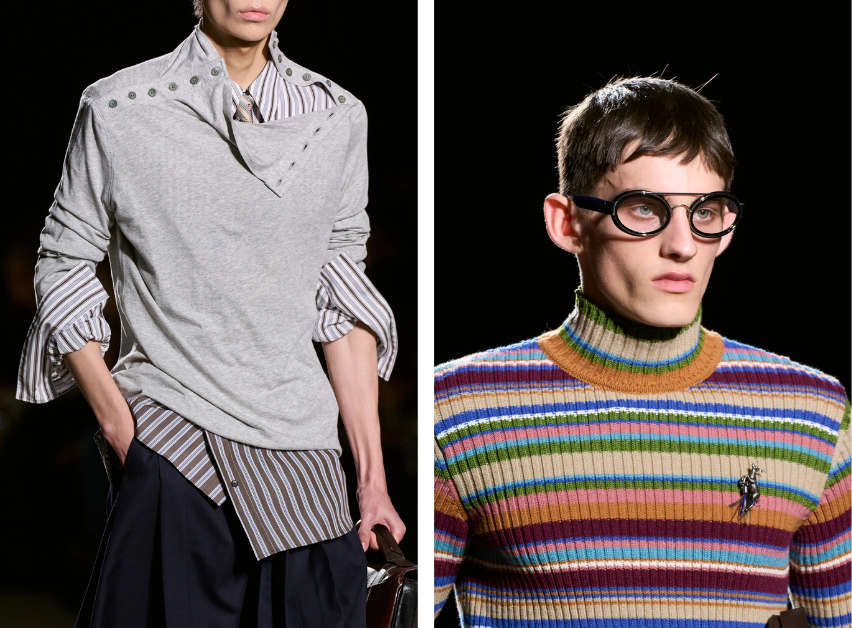
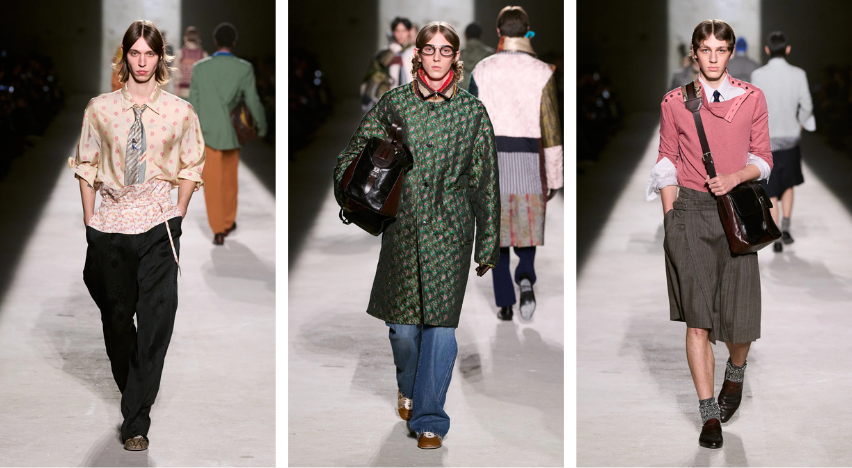
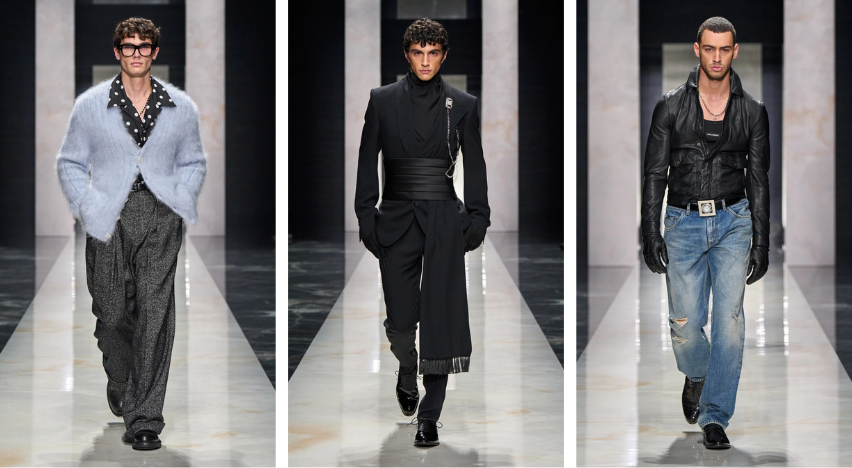
Julian Klausner’s menswear collection for Dries Van Noten reads as a study in transition, learning, and self-discovery. The collection is built around the idea of coming of age: young men leaving home, carrying inherited garments and emotional references, and navigating identities that are still forming. This narrative allows for experimentation with proportion, layering, and a sense of playful awkwardness. Kilts, hybrid pieces such as the skirt-shirt “shkirt,” almost clerical capelets, and subtle Victorian undertones coexist with collegiate crests, bold knit constructions, and unconventional silhouettes.
Dior
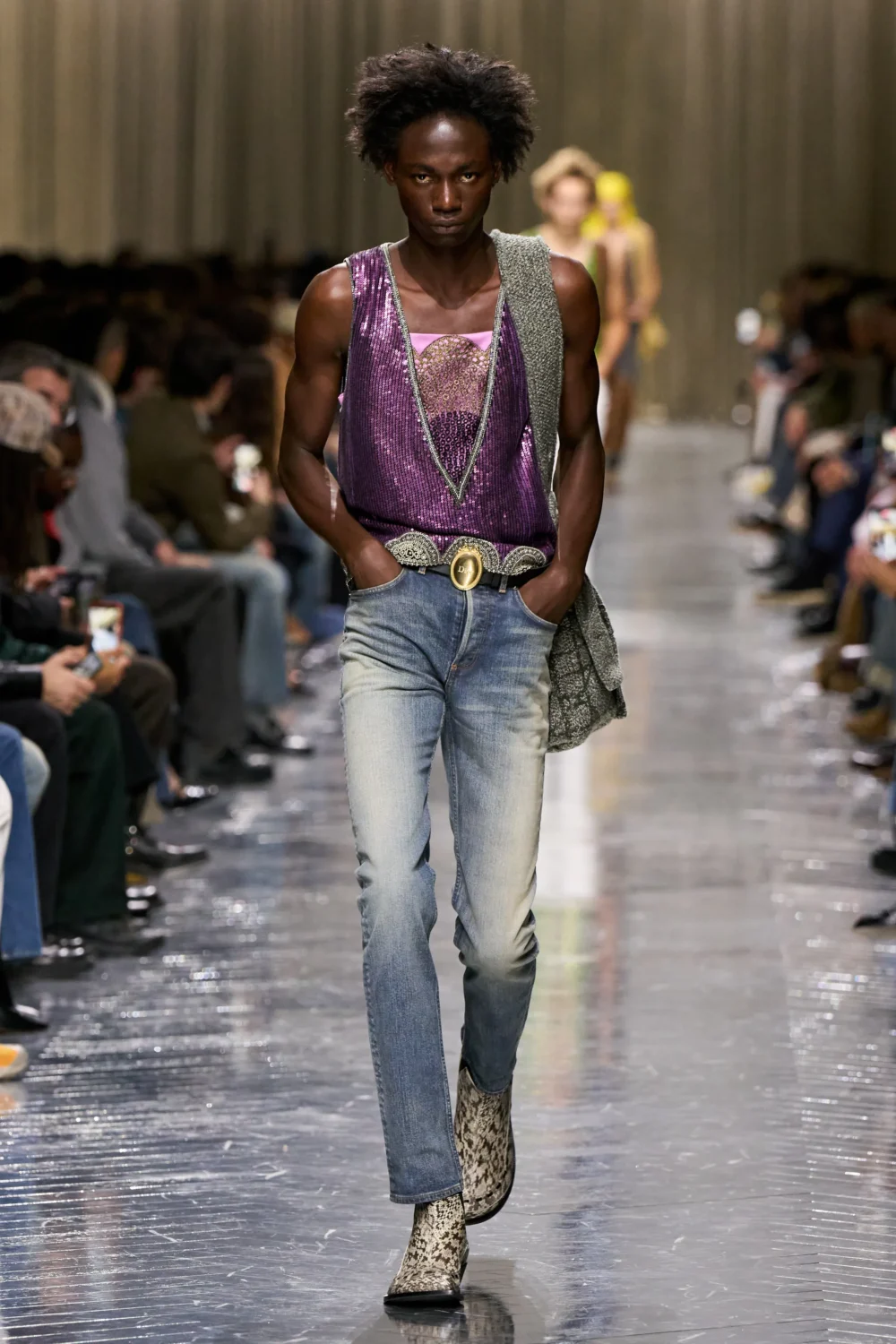
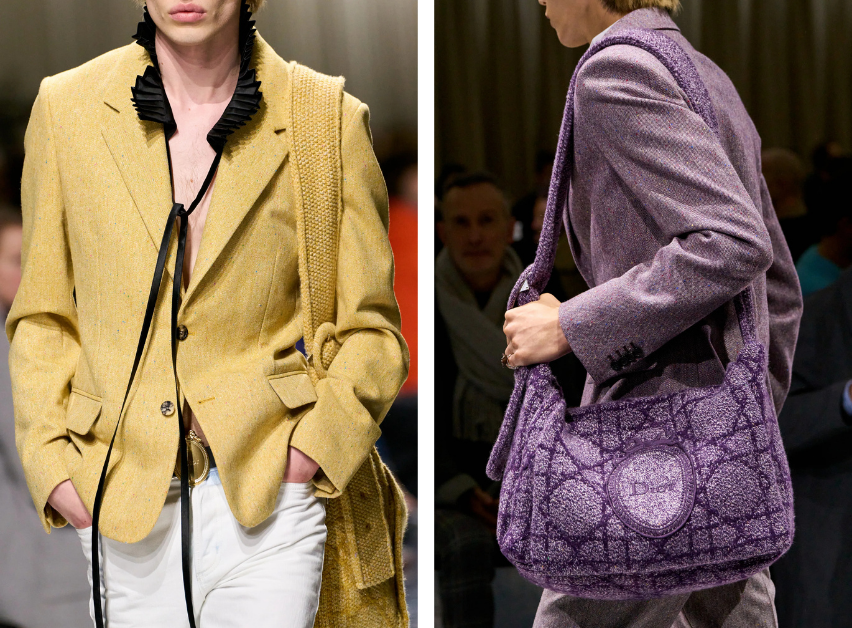
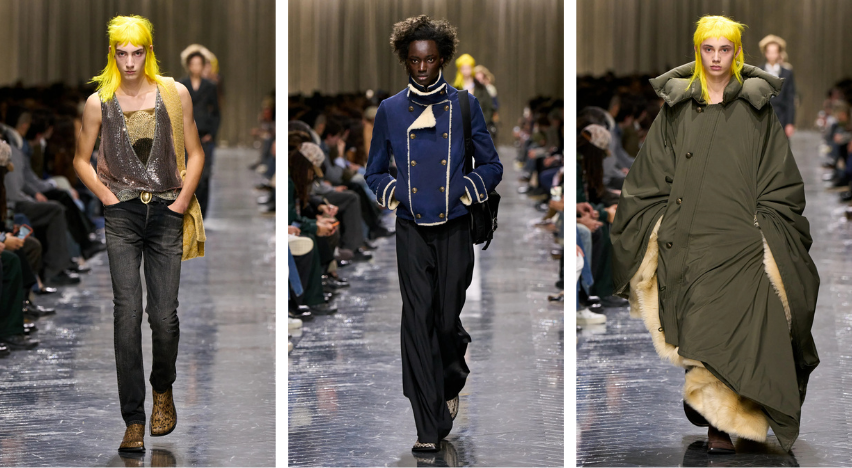
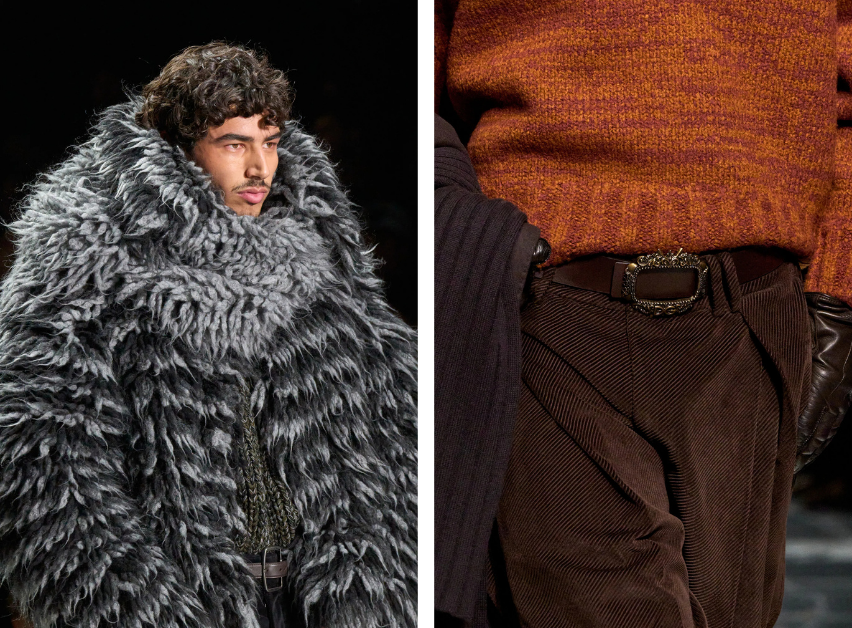
Jonathan Anderson’s collection for Dior rejects conventionality in favor of contrast, collage, and character-building, drawing inspiration from Paul Poiret’s radical legacy and the spirit of Belle Époque Paris. By reworking a 1922 Poiret dress and blending it with contemporary elements—denim, Cuban-heeled boots, and bold accessories—Anderson sets up a dialogue between heritage and modernity. Throughout the collection, tailoring is disrupted through altered proportions, distorted historical references, and radical reimaginings of everyday garments.
Archival Poiret fabrics are reintroduced in modern forms, from jacquard trousers to sculptural outerwear, reinforcing the balance between innovation and tradition. Details such as ruff collars, exaggerated knits, and cocooned puffers emphasize fashion’s role in shaping identity and attitude. The soundtrack, featuring music by Mk.gee, further informed the collection’s mood and silhouettes, with Anderson borrowing from the artist’s relaxed, layered style and slim lower-half proportions. The result is a conceptually rich yet wearable proposal that blends historical depth, contemporary culture, and strong commercial appeal.
Prada
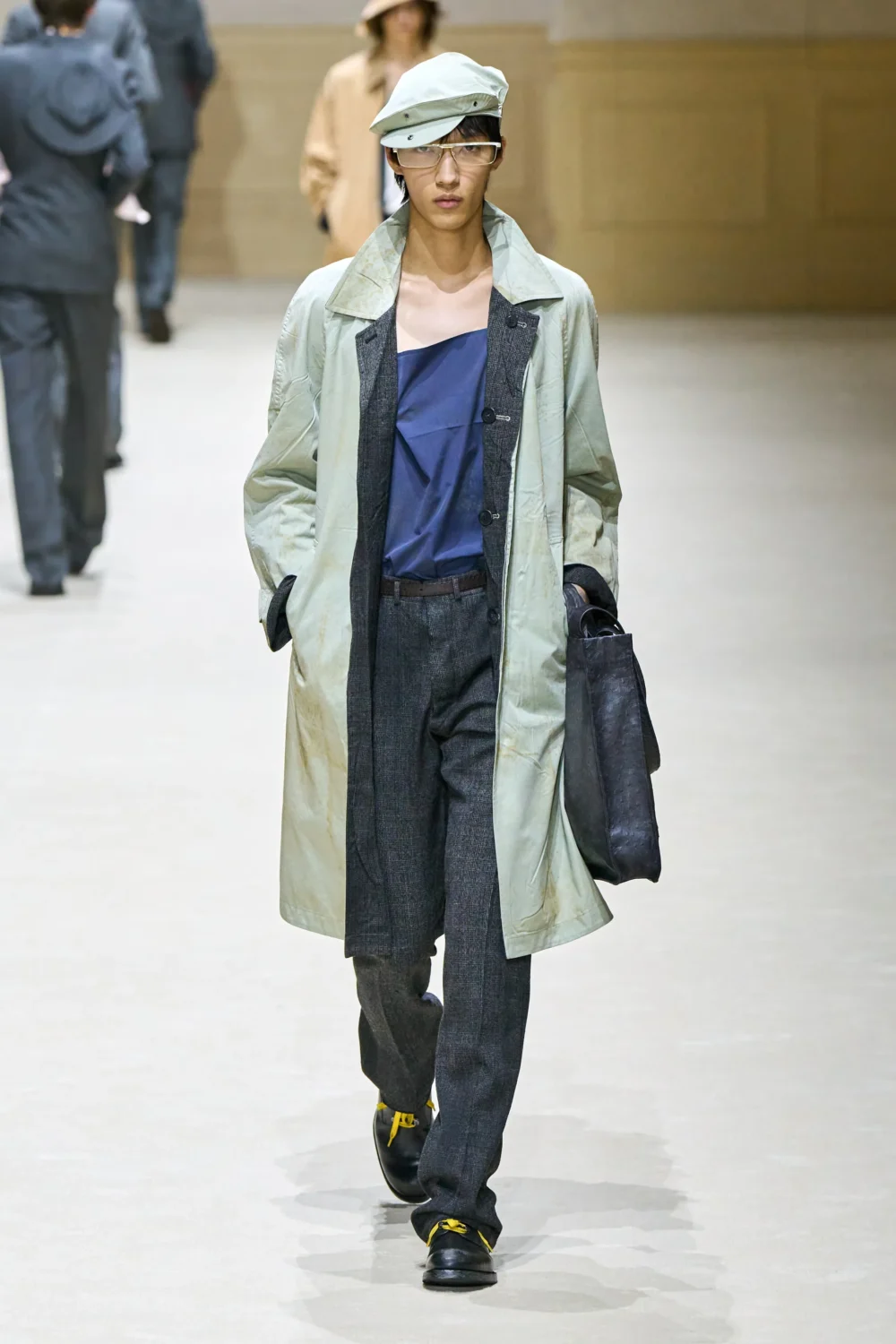
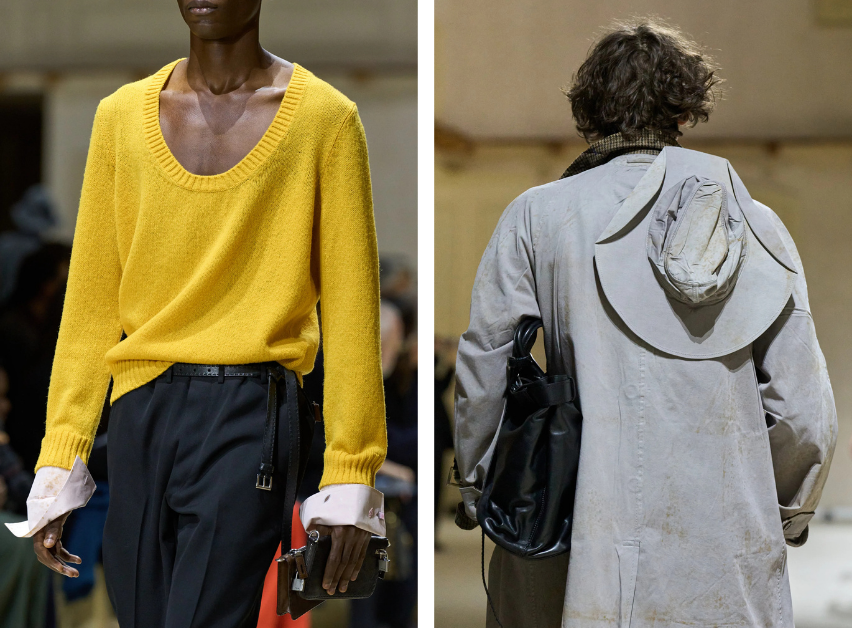
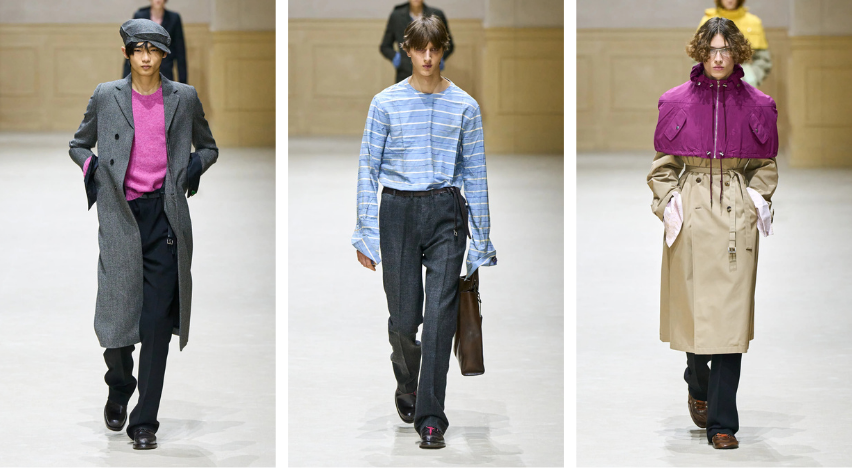
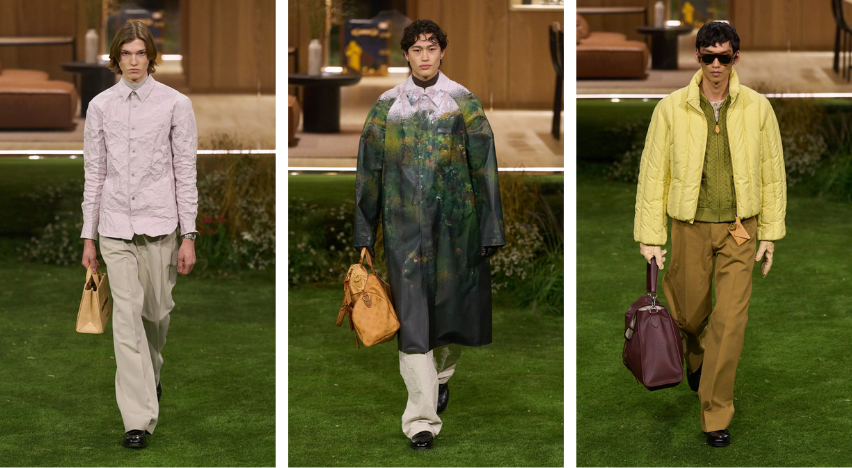
The menswear collection by Miuccia Prada and Raf Simons is built around the concept of pentimento—an Italian term meaning “repentance,” which describes the visible traces of an artist’s earlier alterations beneath the final layer of a painting. These traces reveal hidden histories, discarded ideas, and the evolution of a work, offering insight into the creative process. Folds, creases, patina, and wear suggest prior lives, making beauty emerge from time, use, and transformation rather than perfection.