
Taiwanese artist Yuan-Wen Wang reflects on a decade of painting through Huellas, on view at Herrera Gallery in Barcelona until April 25—a fresh new space reshaping the city’s contemporary art scene.
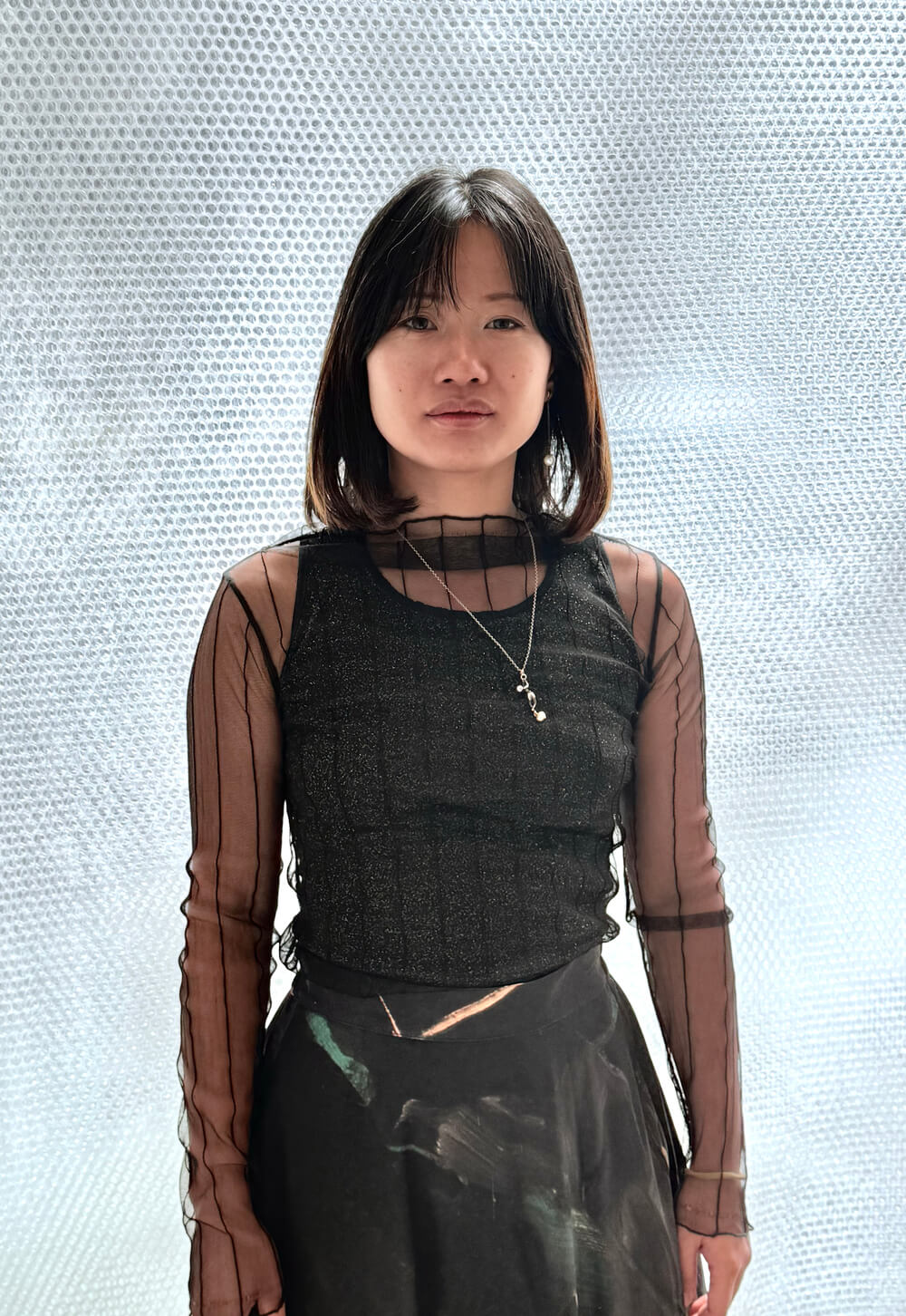
In this conversation, we sit down with Yuan-Wen Wang to delve into the thinking and processes behind her exhibition Huellas, currently on view at Herrera Gallery in Barcelona until April 25.
As one of the latest additions to the city’s contemporary art scene, Herrera Gallery brings a fresh and dynamic perspective, and Huellas reflects this spirit through a deeply introspective exploration of painting. Spanning more than a decade of work, Wang’s practice centers on the idea of traces—gestures, movements, and emotions that emerge, transform, and fade over time. Her process, often rooted in erasure rather than accumulation, reveals a delicate balance between presence and absence, control and intuition.
Through this interview, we explore how her cross-cultural background, her sensitivity to rhythm and nature, and her meditative approach to painting shape a body of work that invites viewers into a space of contemplation and personal reflection.
You have been living in Barcelona since 2008. How has the city transformed the way you see and paint over the years?
Before coming to Barcelona, I studied at an art university in Taiwan, although my major was not in fine arts. Being in that environment was very important for me. I was surrounded by creative people and exposed to many different ways of thinking and making. It was there that I began to realize that art could exist far beyond clear definitions or simple contrasts like black and white. That experience opened my curiosity toward many possibilities.
When I moved to Barcelona, that sense of openness expanded even further. The city is very diverse, culturally and visually, and it encouraged me to embrace experimentation and different forms of expression. Over time, this environment helped me reconnect with the passion for painting that I had felt since childhood.
It also led me to explore abstraction more deeply. In abstract painting, I found a language where I could focus on gesture, space and emotion in a more intuitive way.
Your exhibition Huellas spans more than a decade of work. When you look back, what traces do you recognize today in your own pictorial language?
When I look back at my work, I realize that the dialogue between emptiness and fullness has always been present. Empty space is never just empty, it allows the other elements to breathe. I’m very interested in how small gestures can gain strength through the space around them. This contrast between presence and absence creates a rhythm within the painting. Over time, this relationship between form and emptiness has become one of the central elements of my pictorial language.
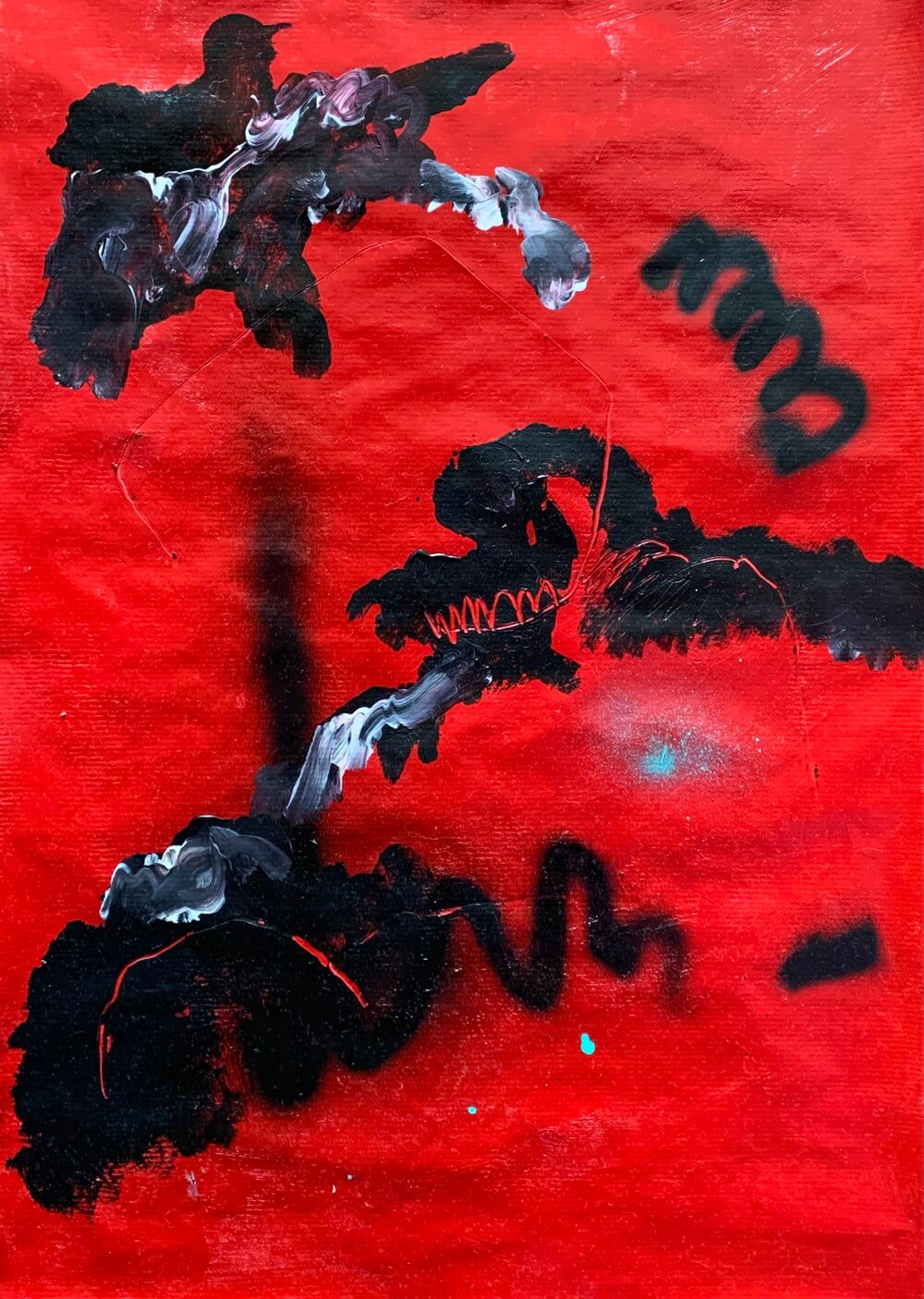
In several of your series you work through the gesture of erasing rather than adding. What initially drew you to the idea of constructing a painting through subtraction?
I started experimenting with erasing around 2010. At that time I became fascinated by the “mistakes” that appeared during the painting process. Instead of weakening the image, these unexpected marks often made the painting more interesting.
So I began reversing the process. Instead of building the image by adding paint, I would first cover the surface and then erase parts of it. In a way, the image would slowly appear through removal rather than construction. Last year, during the opening at Herrera Gallery, one of these works was shown at the first time. A close friend told me she could see “light” appearing through the erased areas of the dark paint. I loved that observation, and it encouraged me to continue developing this series further.
Erasing is often associated with correcting or removing, but in your work it seems to become a way of revealing. What appears when the paint disappears?
When the paint disappears, it never completely disappears. Even after erasing, small particles of pigment remain trapped in the fibers of the paper.
So what appears is not a perfectly blank space, but a trace of what used to be there. It feels like a faded memory and a quiet reminder of a previous moment. I like this idea that something can never be completely erased; it always leaves a subtle history behind.
The exhibition brings together works from 2010 alongside very recent pieces. What unexpected conversations emerged between them when you saw them together?
What surprised me most was realizing that some questions have stayed with me for much longer than I thought.
Even though the works were created more than a decade apart, there is a continuity in the gestures and in the way space is used. At the same time, the recent works feel calmer and more open. It’s as if the earlier paintings were searching, while the newer ones are listening more carefully.
Seeing them together made me realize that painting is not a straight line. It feels more like moving through different layers or dimensions, returning to similar ideas each time from a slightly different place.
In your work there are tensions between presence and emptiness, strength and delicacy. How do you find that fragile balance within your process?
I have always been inspired by traditional East Asian ink painting, where emptiness plays an active role in the composition.
For me painting often feels like a dialogue. Sometimes the elements are in harmony, and sometimes they feel slightly awkward or imbalanced. But both situations are meaningful. Instead of forcing a perfect balance, I try to listen to what the painting needs at that moment.
You also mention dance as a source of inspiration. Is there a direct relationship between the movement of the body and the pictorial gesture in your work?
For me the connection with dance is more about the movement of strokes than the movement of the body itself. When I paint, I often feel that the lines and marks are interacting with each other. Some respond to others, some create tension, some move gently. In a way they begin to “dance” within the space of the painting.
I enjoy observing how these elements relate to each other, almost like dancers sharing the same stage.
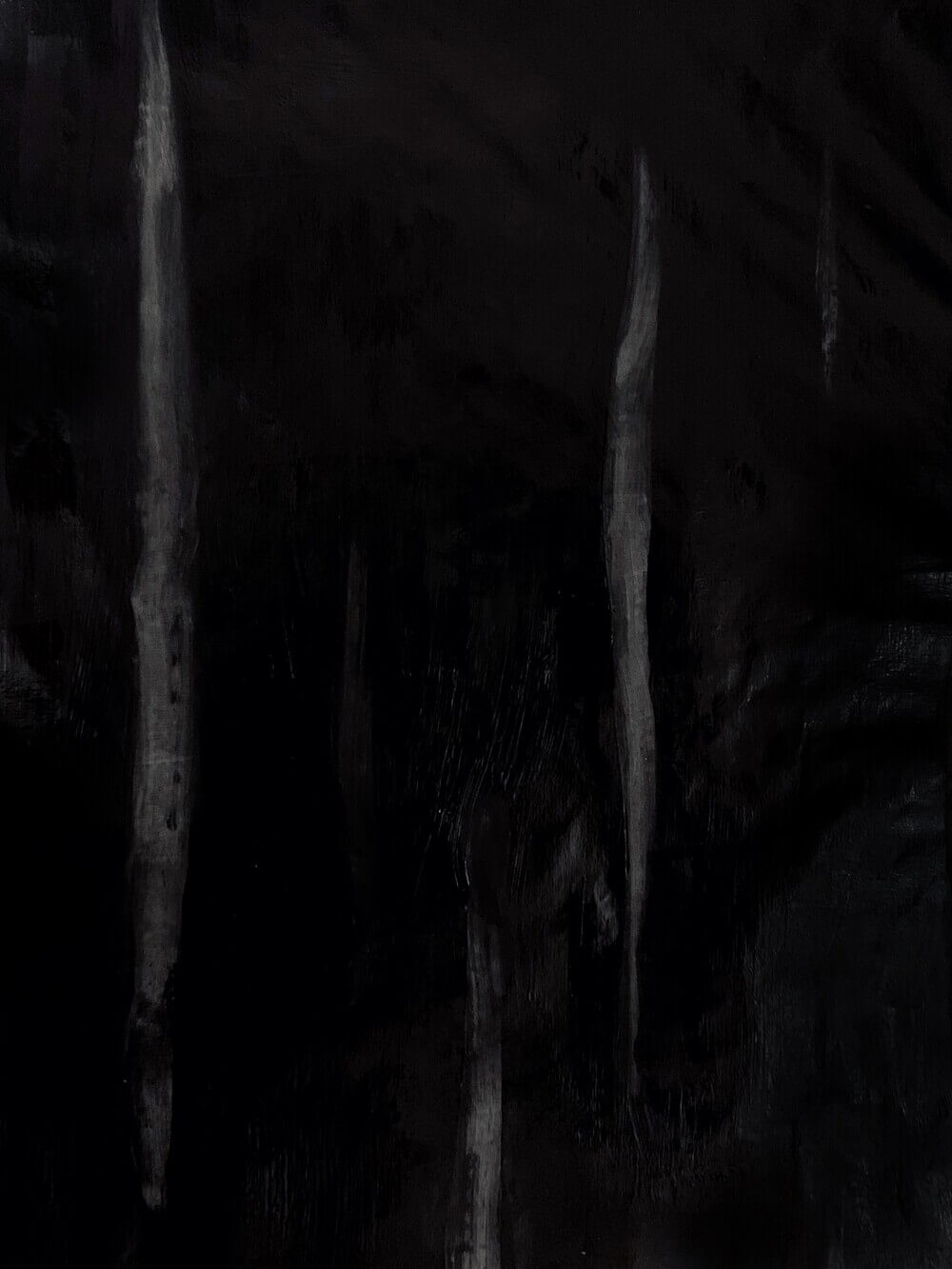
When you work with layers that are built and erased, do you feel that each painting holds an invisible memory of everything that happened within it?
Yes, definitely. It is both invisible and visible. Even when certain layers are erased, the painting still carries their presence. The surface remembers the gestures, decisions and accidents that happened during the process.
The viewer may not see every step, but the energy of those moments remains within the final image.
Your works do not offer fixed meanings. What kind of experience would you like viewers to have when standing in front of them?
I like viewers to approach the paintings with freedom. The titles are intentionally open, and I prefer not to guide the interpretation too strictly. Each person brings their own memories, emotions and imagination to the experience.
Sometimes people see things in the paintings that I never expected, and I find that very beautiful. In that moment the artwork becomes a shared space between the viewer and the painting.
If you had to describe the visual universe of Huellas in three words, which would you choose?
Trace, transformation, and breath.
Trace: the works are about marks that remain over time.
Transformation: the images emerge through erasing and changing the surface.
Breath: space and silence are essential elements within the paintings.
Barcelona is undergoing a transformation marked by tourism and gentrification. As an artist working here, how do you perceive the place of art in the city today?
Barcelona is definitely changing, and sometimes those changes can be complex. But I also see opportunities.
The city has always been a place where different cultures meet. Tourism can also create connections with an international audience. If this energy is used thoughtfully, it can help Barcelona continue developing as a city with a strong artistic presence. 🙂
For artists, the challenge is to continue creating meaningful spaces within that changing landscape.
After this decade of pictorial research, do you feel you are closing a cycle or opening a new one?
I think it is both. Some cycles naturally come to a close when certain questions reach a point of clarity. But painting, for me, is a continuous rhythm.
The works in Huellas return to ideas I began exploring more than a decade ago, yet they also open new directions that I am only beginning to discover.
«HUELLAS» by Yuan-Wen Wang at HERRERA GALLERY until next 25th April @herrera.gallery