

Milena Pavlović Barili’s dreams took shape through painting and poetry. The Serbian artist built an oneiric world where inner life, fashion and art flowed together as interconnected forms of expression, shaping a seductive and deeply personal form of surrealism that remains vibrant today.
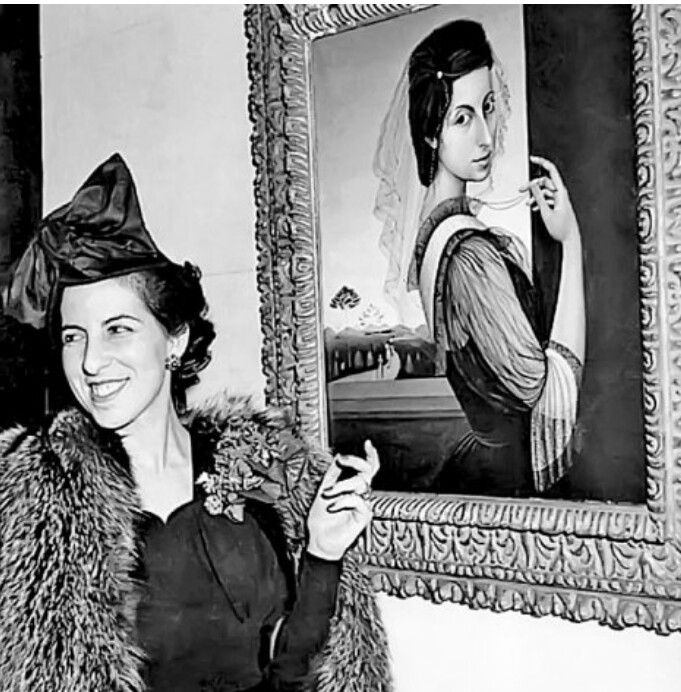
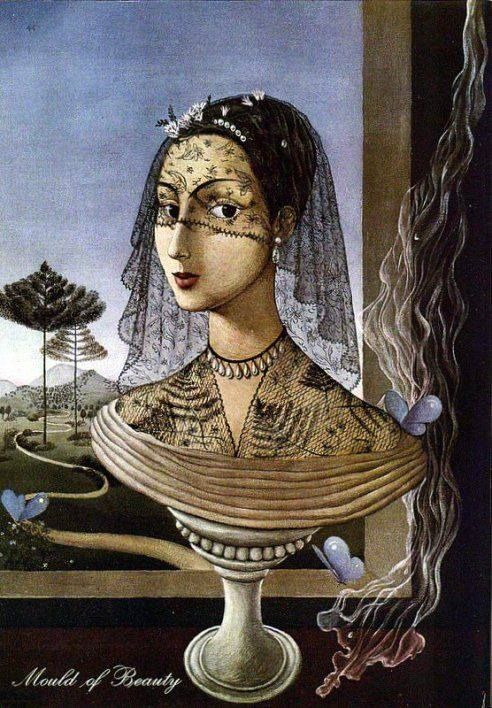
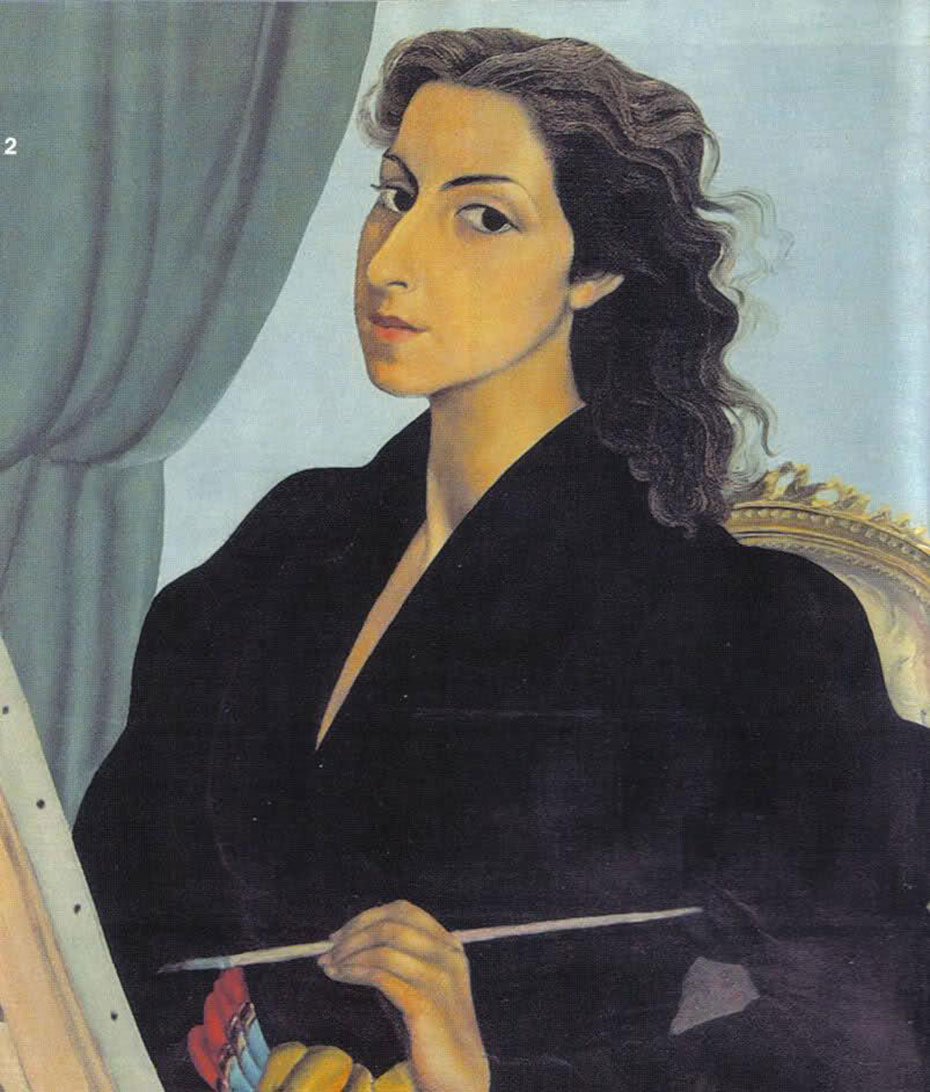
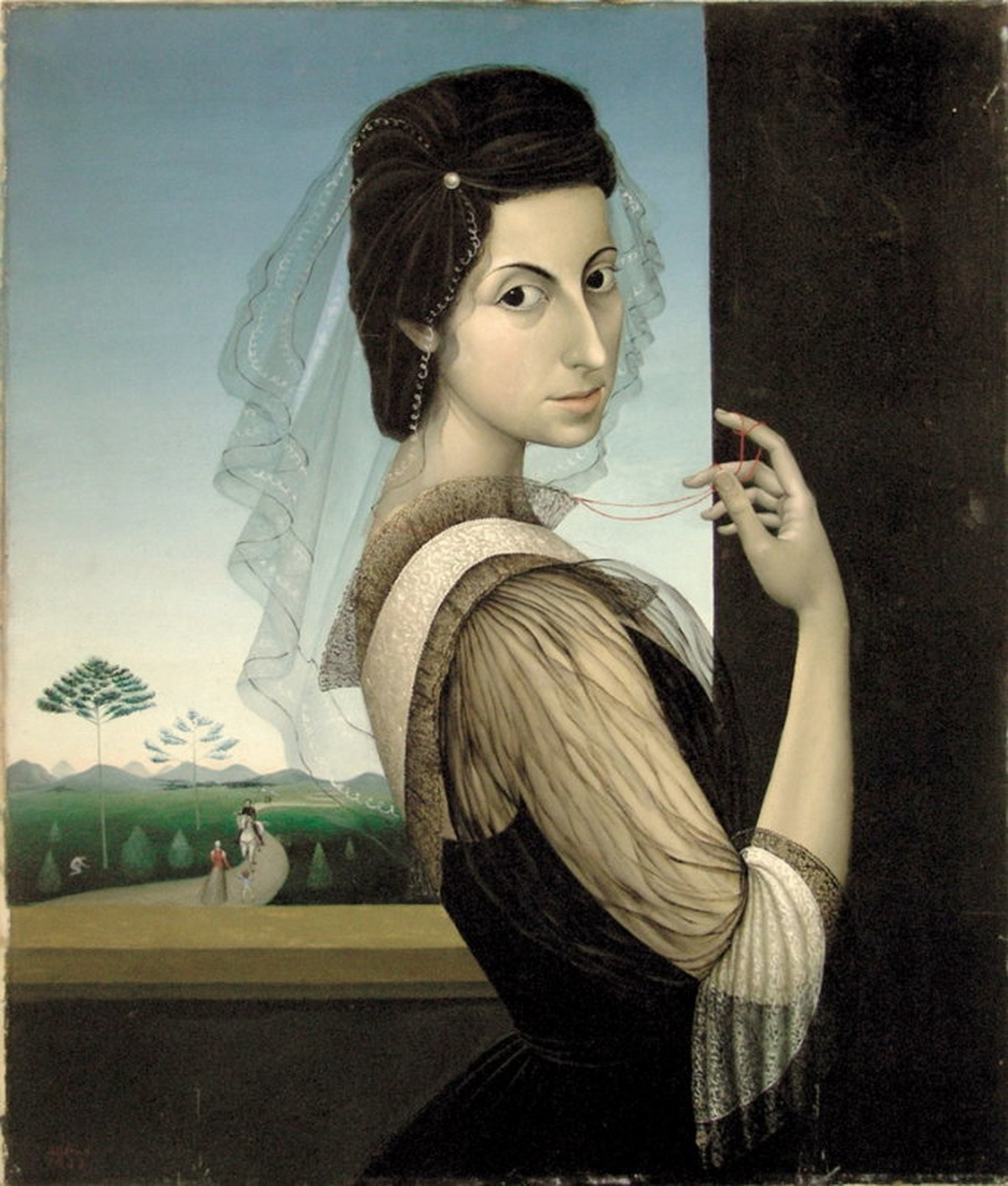
When Milena Pavlović Barili enters the cultural landscape of the early twentieth century, she does so through a practice shaped by travel, theatrical self representation and a sustained engagement with classical and surrealist imagery. Born in Požarevac in 1909 and deceased in New York in 1945, her life unfolded between Belgrade, Munich, Paris, Rome and the United States. These trajectories informed a visual language that merges Renaissance references, metaphysical spaces and an acute awareness of fashion into a singular imaginative system.
This sensibility situates her within surrealism as an avant garde language that, since the 1920s, articulated dreams, pleasure and the unconscious across artistic and cultural practices. Figures such as Leonora Carrington, Dora Maar and Meret Oppenheim, alongside André Breton, Salvador Dalí and Jean Cocteau, shaped this shared visual and symbolic field. In the field of fashion, the brilliant Elsa Schiaparelli understood surrealism as a language capable of shaping objects, garments and everyday imagery. Pavlović Barili operated within these same surrealist codes, where imagination, symbolism and self construction shaped a shared visual culture.
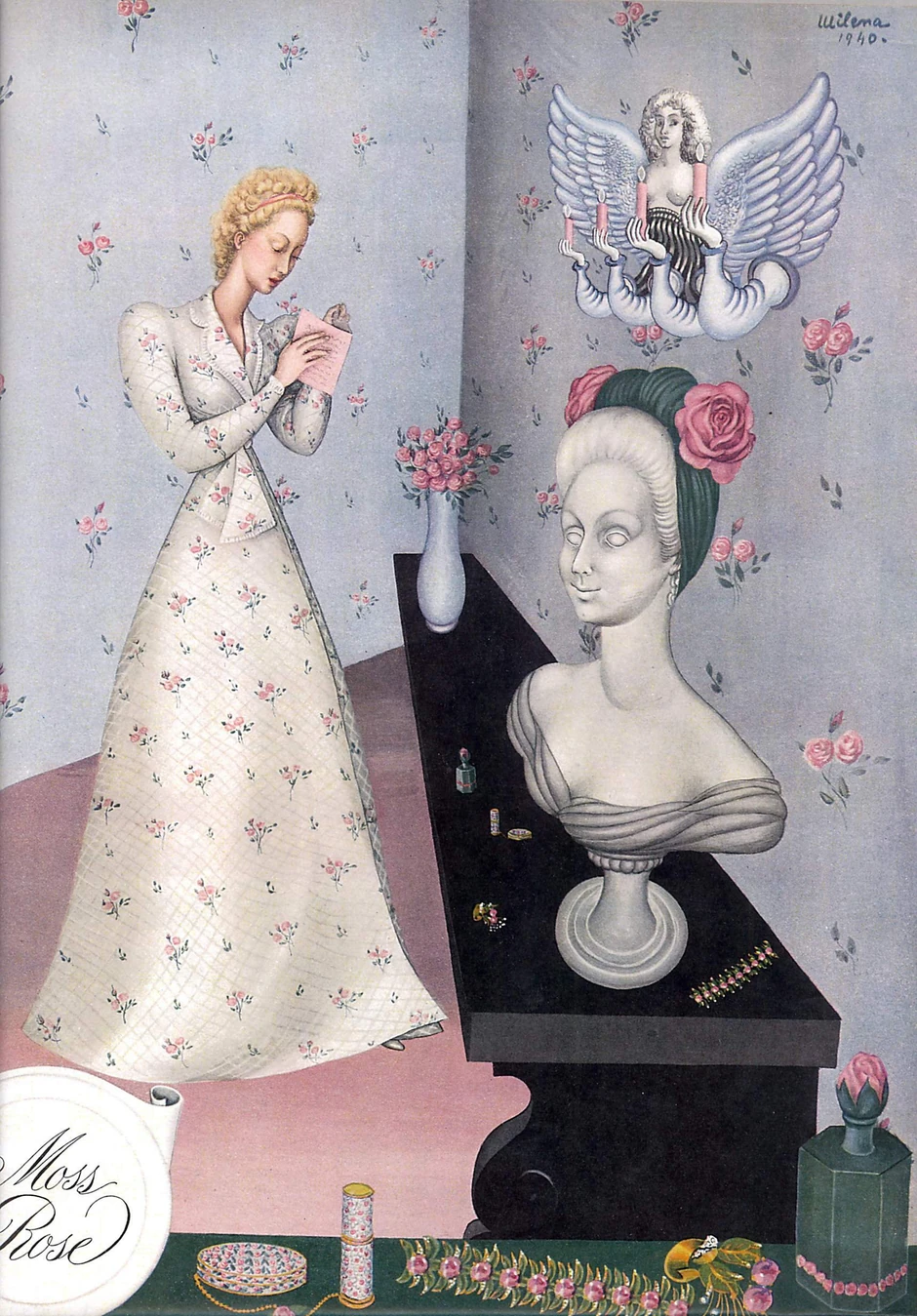
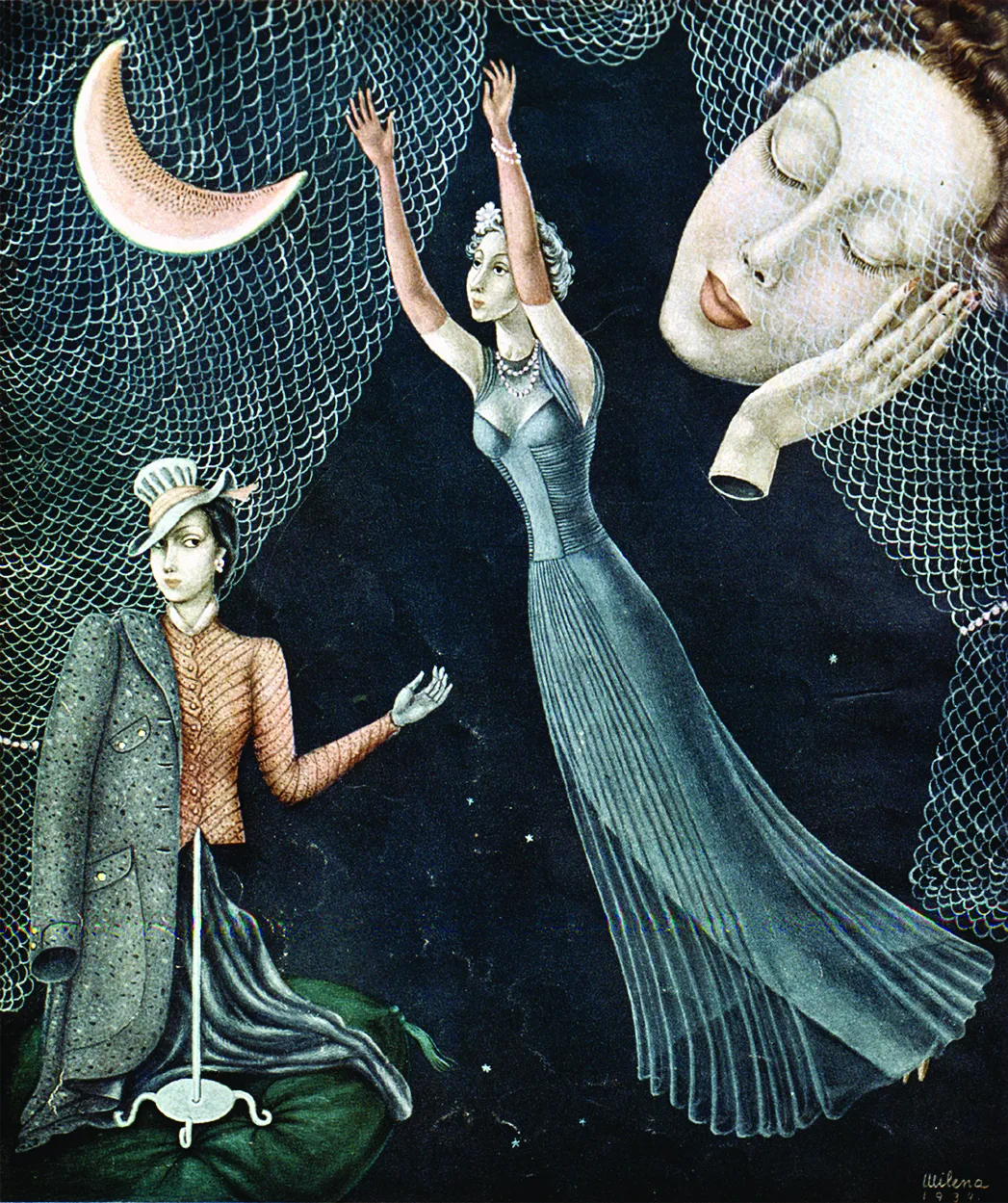
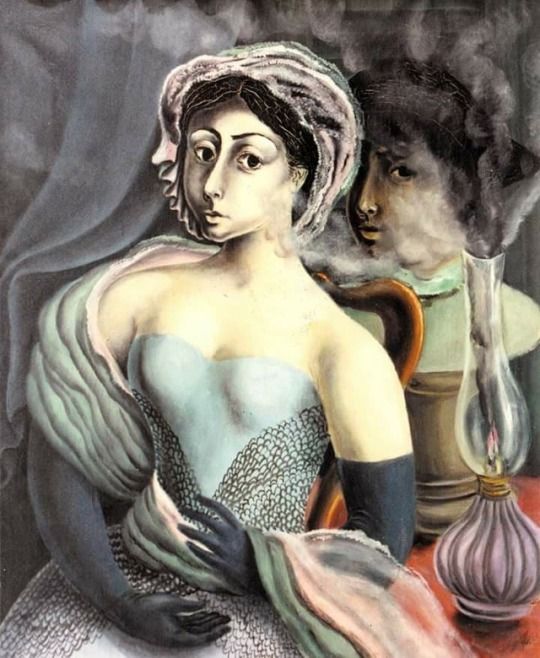
Identity occupies a central place in her work. Through repeated self representations, Milena Pavlović Barili constructs the self as image, presence and symbol, often situating her figure within dreamlike settings that blur interior and exterior space. She frequently appears against open skies populated by fragments of domestic life: draperies, ribbons, roses and elements reminiscent of bedrooms or intimate rooms, suspended in an oneiric atmosphere. Birds, the moon and marine motifs recur alongside classical architecture, statues and veils, forming a symbolic landscape where sea and sky, interior and memory coexist.
Her move to New York in the late 1930s opened a sustained dialogue with the fashion press. She collaborated as an illustrator with leading magazines such as Harper’s Bazaar and Vogue, translating her painterly universe into editorial imagery. In these works, fashion appears as an extension of her dreamlike imagery, reinforcing a vision in which clothing functions as another symbolic surface within her surreal imagination.
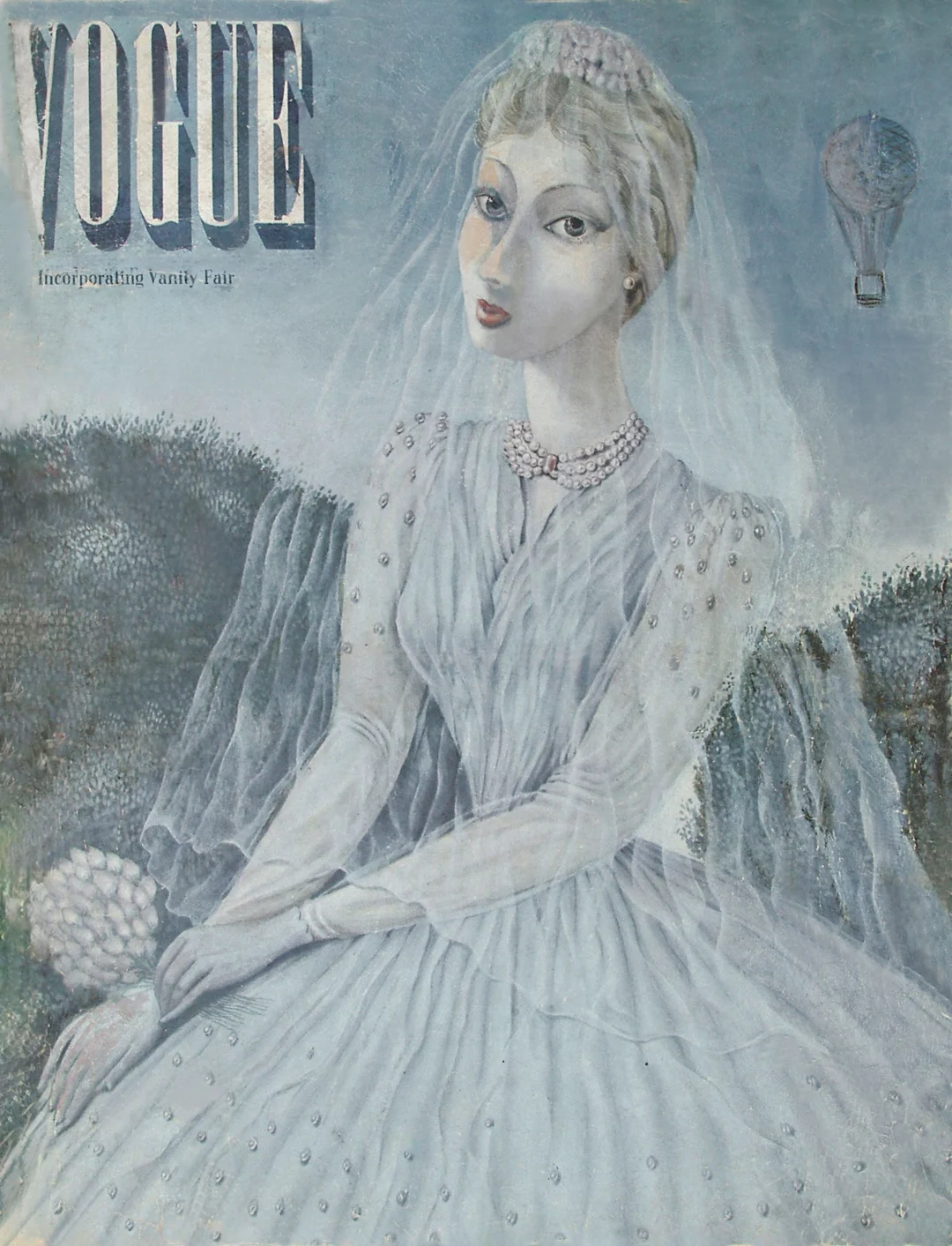
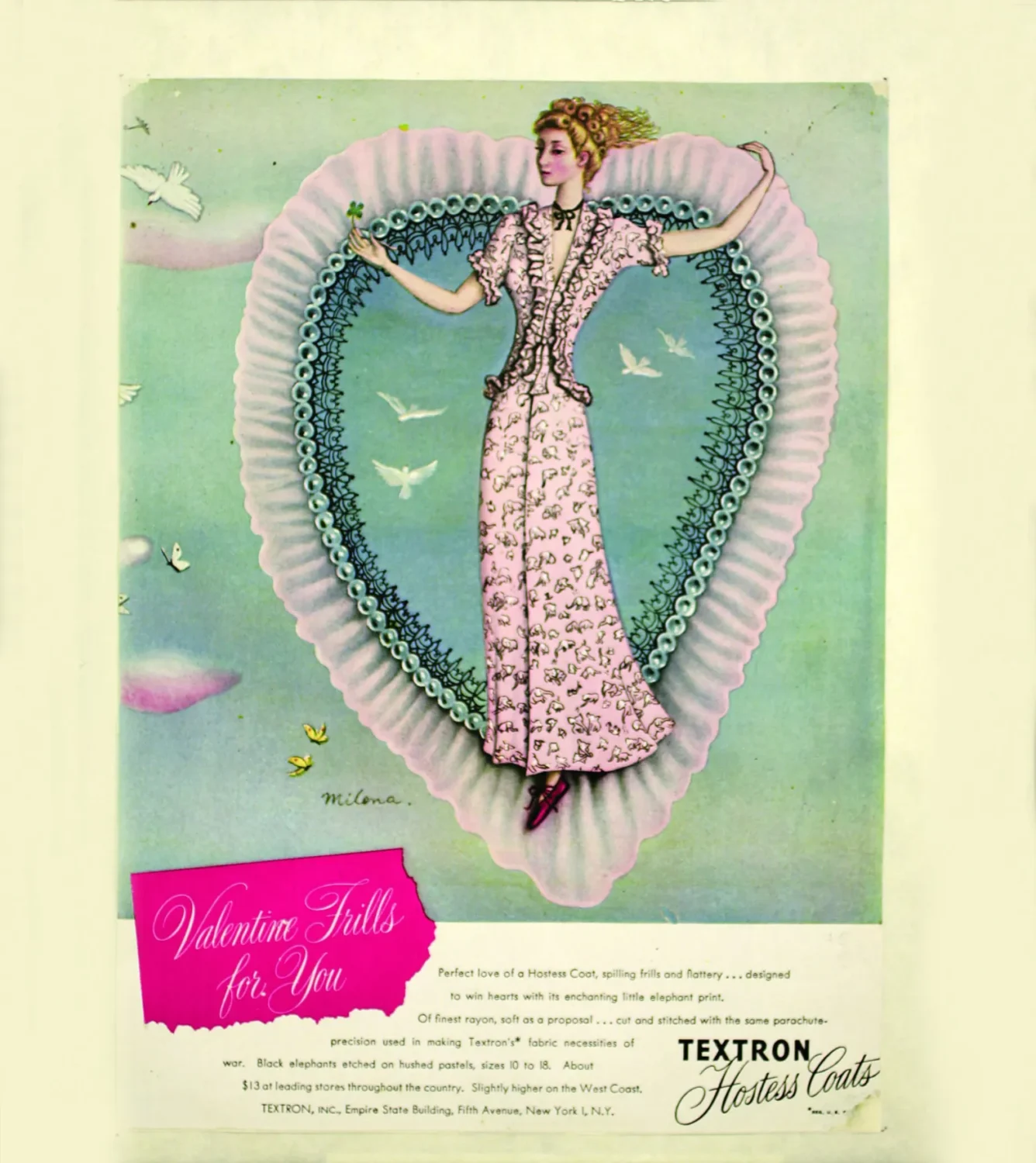
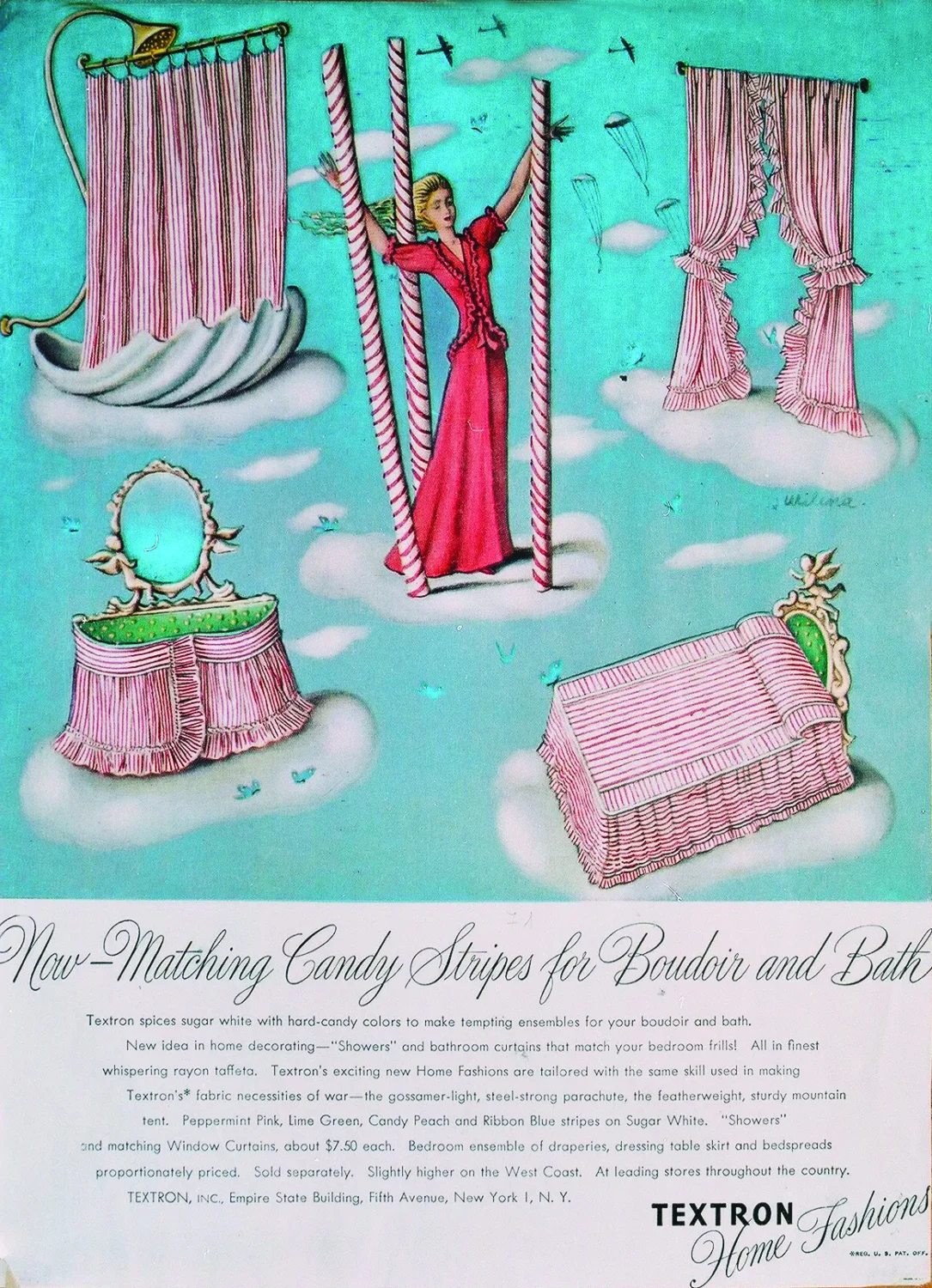
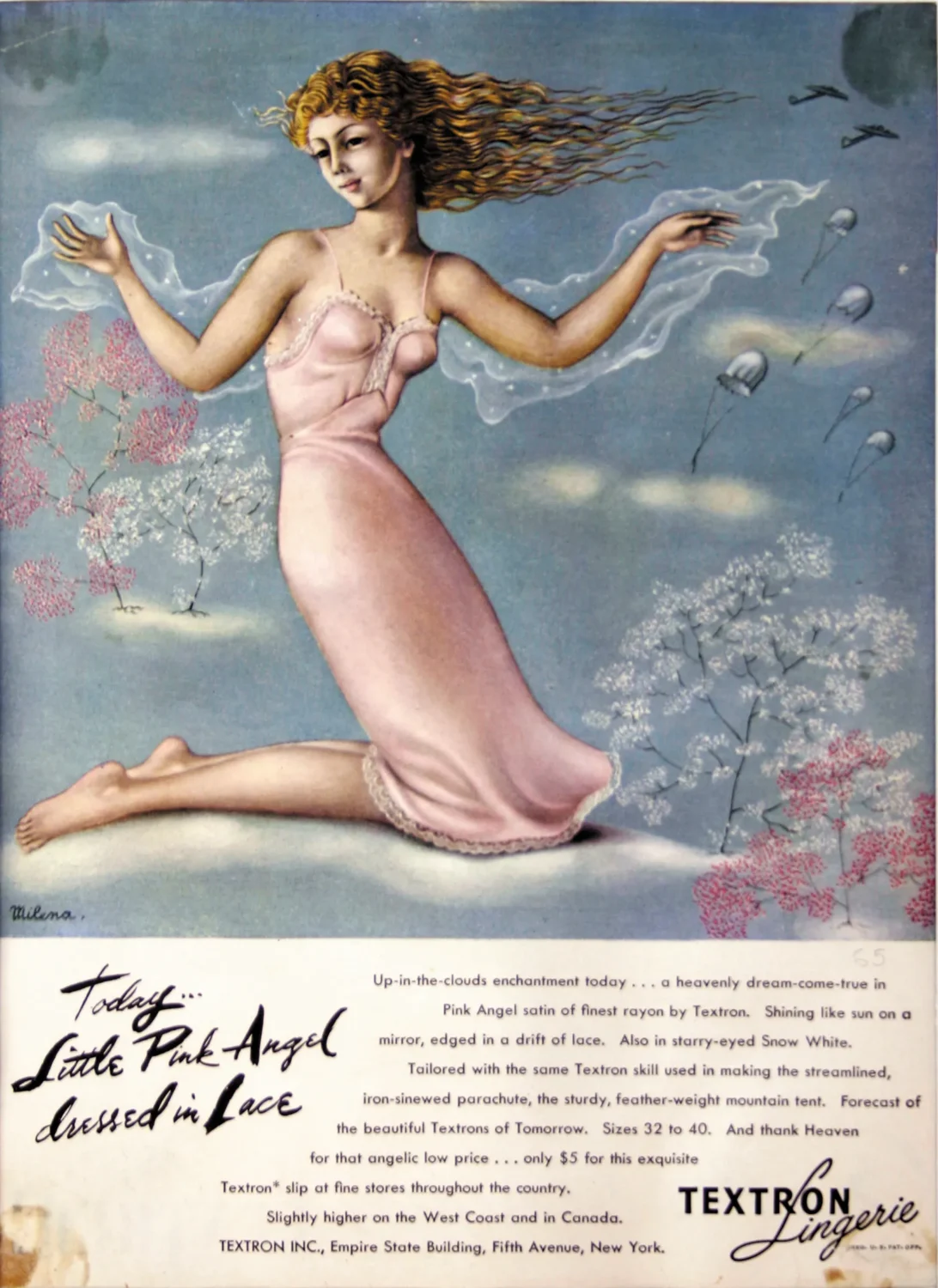
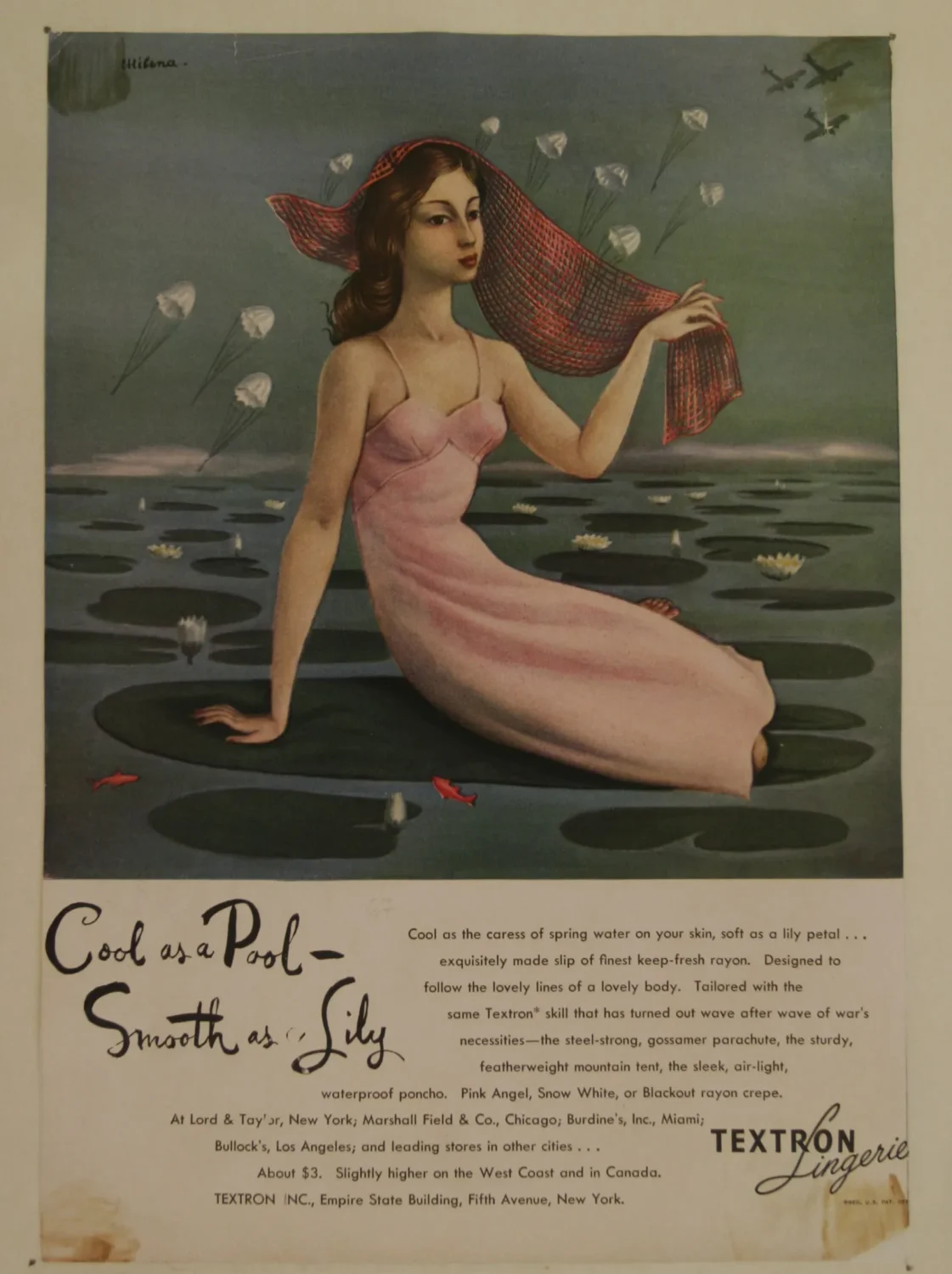
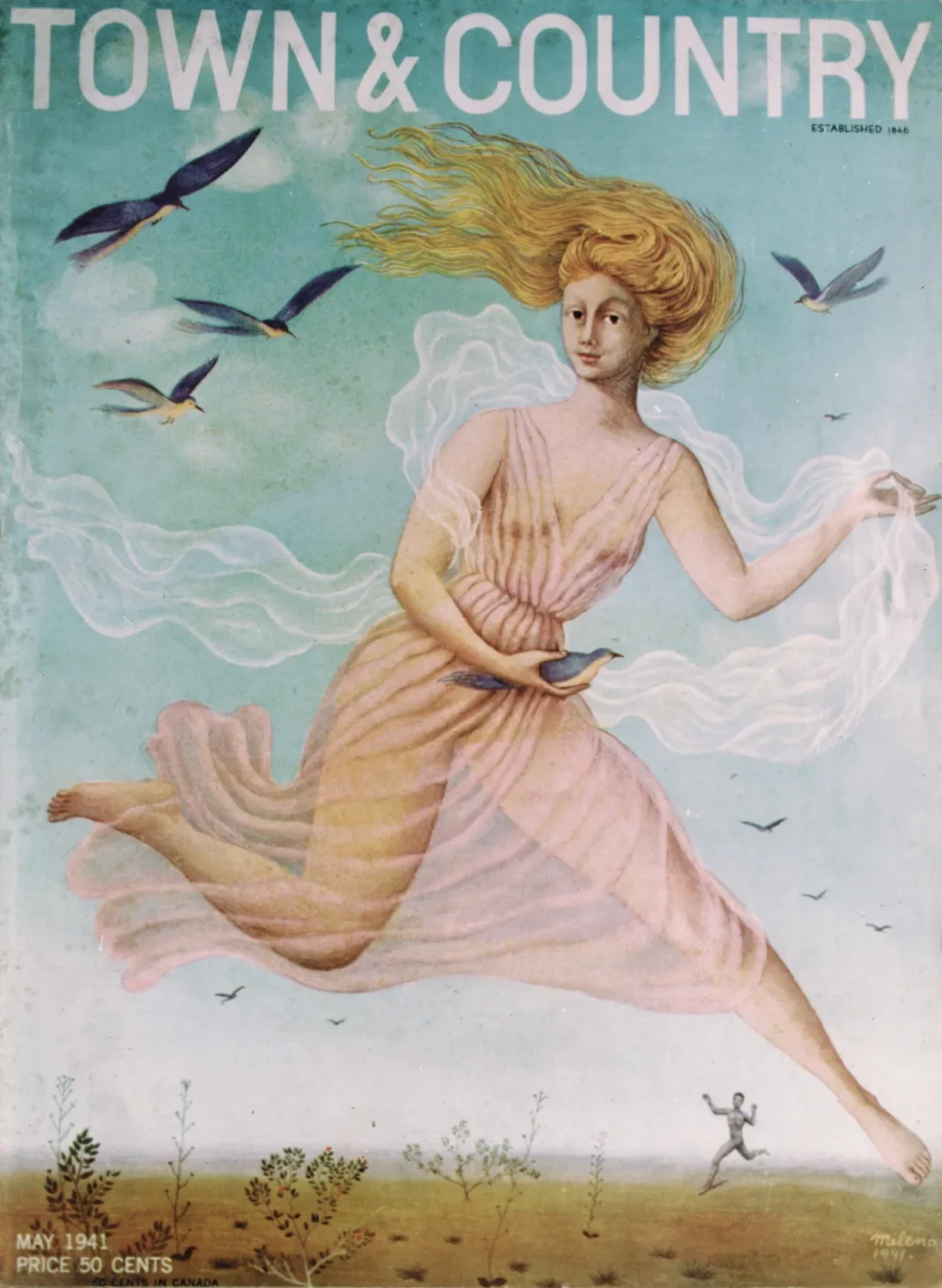
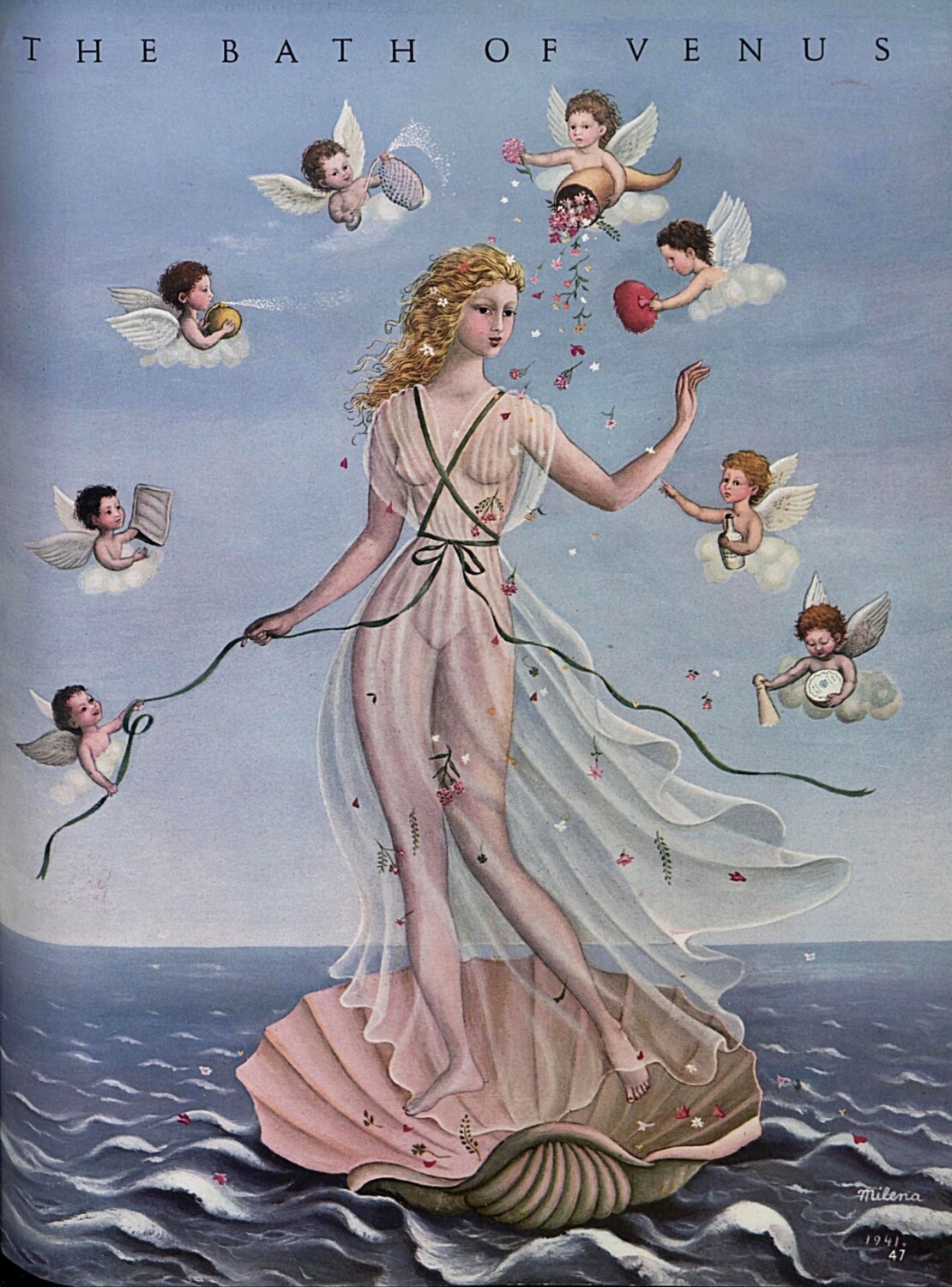
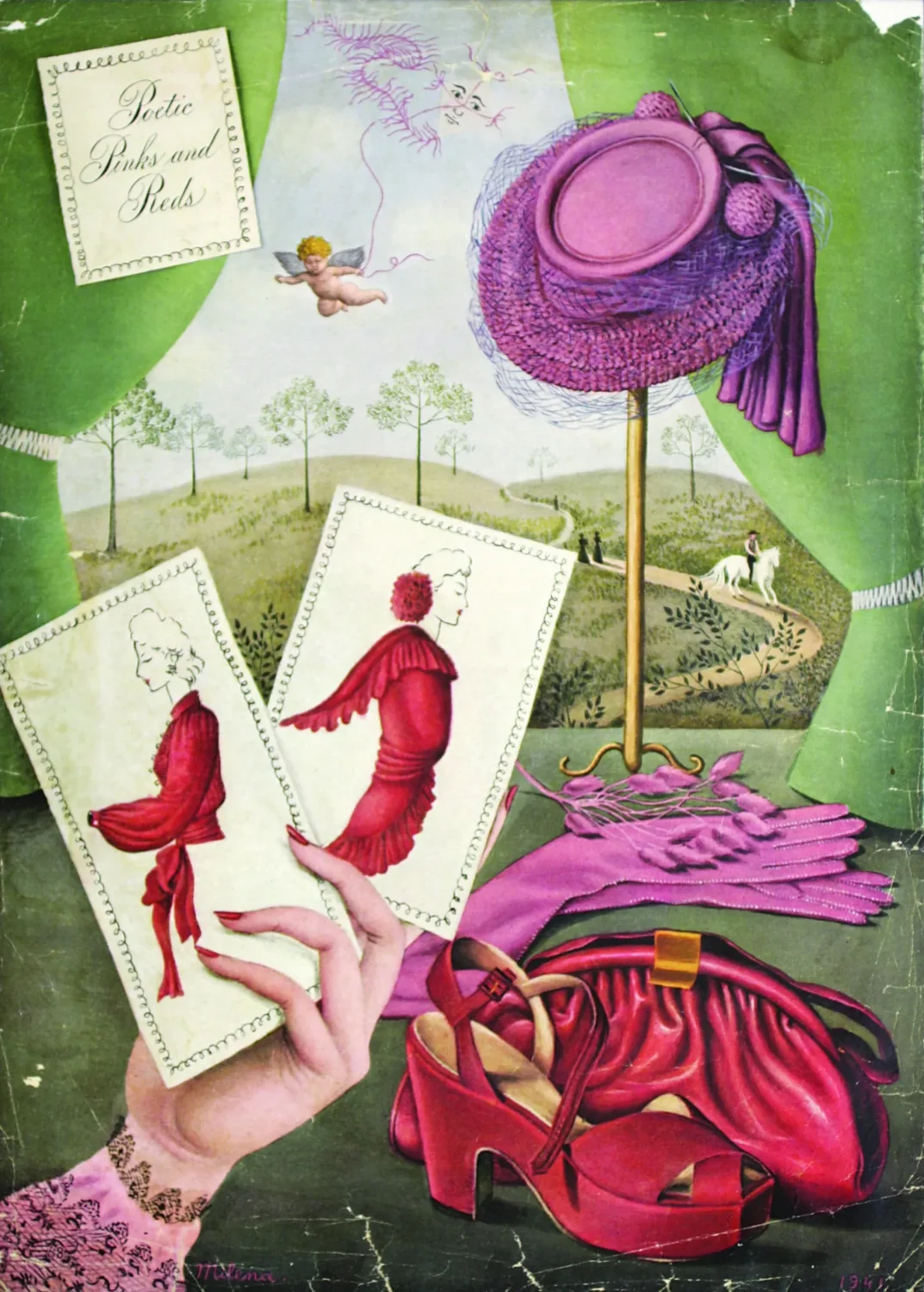
Also poetry formed a parallel and deeply connected strand of her practice. She wrote in Serbian, Italian and French, and her poems were later collected in volumes such as ‘Poezija’ and ‘Neverni anđeli’. Angels, open skies, the sea and the moon recur across her poems, drawings and illustrations, alongside a persistent sense of solitude and displacement. Through painting, illustration and poetry, Pavlović Barili reveals a way of shaping feminine subjectivity through self-representation, the experience of pleasure and imaginative experimentation.
“I would to love you
More than I’m able
Turned away from the world –
with no time, no space –
to be carved in your reflection.
In an anxiety of existence,
I would,
to immerse my consciousness
into your serenity
setting every tear free
which I must still cry
at the terrible margin
of an imaginary relation.”
– Milena Pavlović Barili
–
Follow us on TikTok @veinmagazine