


From the perspective of domestic life and ritual, fashion form and its afterlives, and the construction of femininity, three Paris museums -Musée des Arts Décoratifs, Palais Galliera, Musée Cognacq-Jay- reveal the 18th century as a contemporary archive that shapes bodies, identities and representations today.

Dress, 1780 / Polonaise dress and skirt, c. 1770–1775 / Portrait of Marie-Adélaïde of France, daughter of Louis XV, known as Madame Adélaïde, circa 1750-
Paris in the 18th century shaped fashion as a language of hierarchy, taste and representation. The court of Louis XVI articulated dress as an instrument of power, where clothing expressed rank, etiquette and identity through codified forms of appearance. Figures such as Marie Antoinette and Madame de Pompadour shaped visual culture, while dressmakers like Rose Bertin defined the silhouette and spectacle of court fashion.
These codes extended into city life through ritualised sequences that organised both time and appearance, from the intimacy of the morning déshabillé to visits and evening gatherings. ‘Une journée au XVIIIe siècle, chronique d’un hôtel particulier’ at the Musée des Arts Décoratifs reconstructs this domestic and social framework. ‘La mode au XVIIIe siècle, un héritage fantasmé’ at the Palais Galliera examines the formal construction of dress and its continued reinterpretation. ‘Révéler le féminin. Mode et apparences au XVIIIe siècle’ at the Musée Cognacq-Jay analyses how femininity was shaped through dress, posture and image.
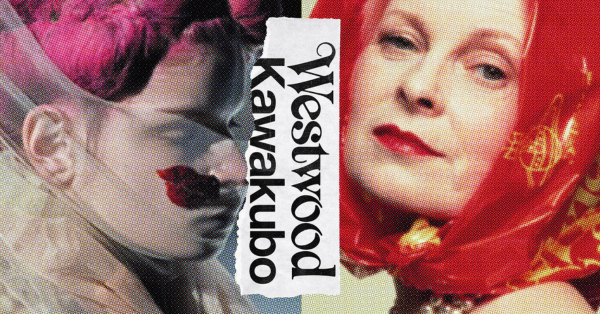
The 18th century provides a framework to examine how fashion organises bodies, constructs femininity and produces systems of representation. Since the late 20th century, designers such as Vivienne Westwood and Rei Kawakubo have revisited its structures, and in the early 21st century a new generation — from Simone Rocha to Pauline Dujancourt, among others — continues to reinterpret its codes through corsetry, volume and ornament, echoed in contemporary aesthetics such as balletcore or coquette. Within this continuum, these three Parisian museums reopen these histories as unfinished archives, where past forms remain in circulation and continue to shift in meaning.
Domestic life and ritual
A day in 18th-century Paris unfolds through small, repeated gestures that organise both time and appearance, from the intimacy of the morning déshabillé to visits and evening gatherings. Within the hôtel particulier, rooms structure these transitions, moving from private to social spaces where dress shifts with each moment and setting. At the Musée des Arts Décoratifs, ‘Une journée au XVIIIe siècle, chronique d’un hôtel particulier‘ (until 5 July 2026), this rhythm takes shape through interiors, objects and everyday actions, showing how mirrors, textiles, screens and gestures — sitting, receiving, writing — frame appearance and regulate visibility.
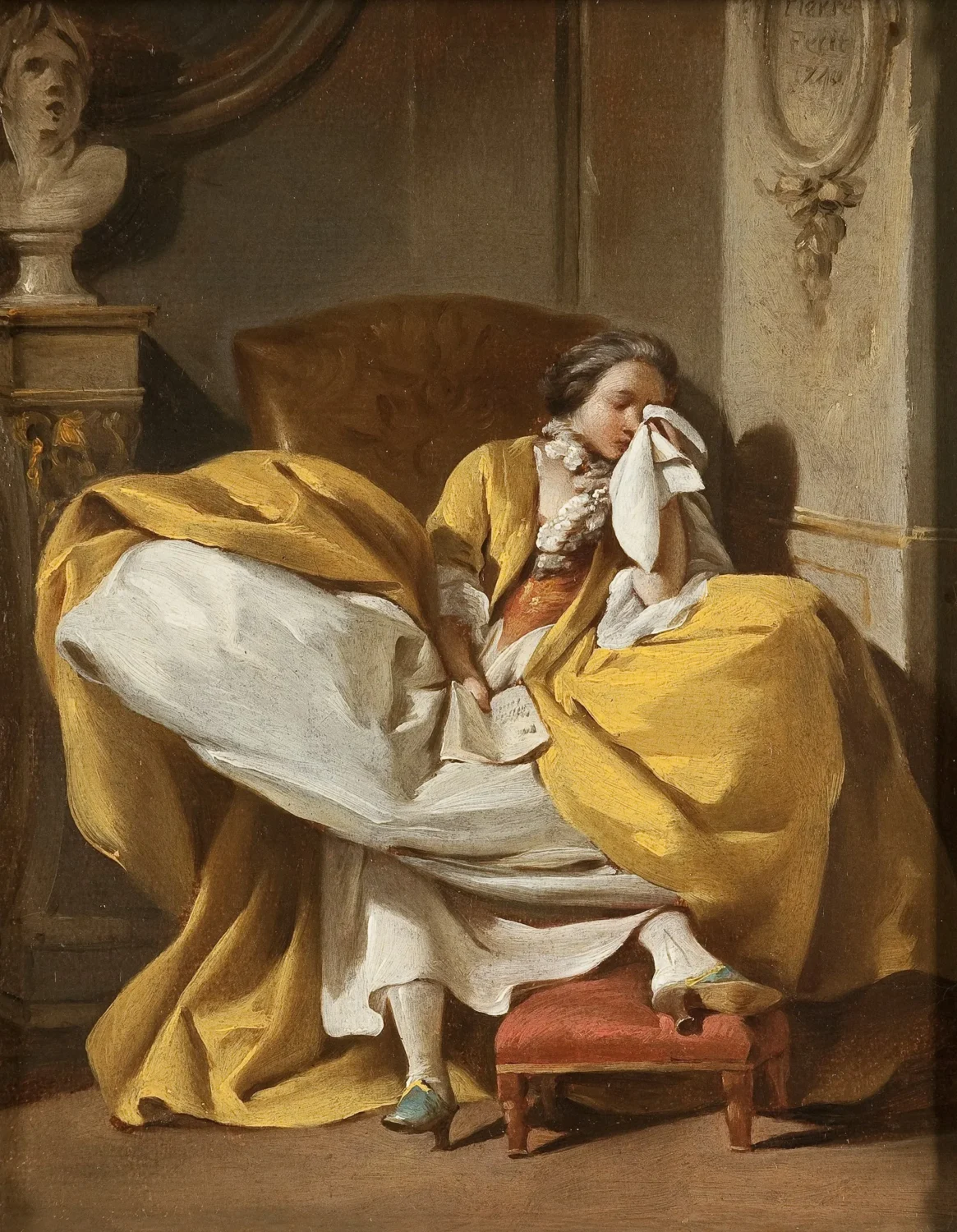
La Mauvaise Nouvelle, Jean-Baptiste-Marie Pierre, oil on canvas © Les Arts Décoratifs / Jean Tholance
Fashion form and its afterlives
In 18th-century dress, form emerges through structure, volume and ornament. At the Palais Galliera, ‘La mode au XVIIIe siècle, un héritage fantasmé’ (until 12 July 2026), garments such as the robe à la française, panniers, corsetry and embroidered silks reveal how construction and decoration shape the silhouette. That vocabulary lives on in designers such as Christian Dior, Jean Paul Gaultier and John Galliano, who continue to revisit and transform its codes. The exhibition reads the 18th century as an imagined legacy, where historical forms keep circulating and taking on new meanings.
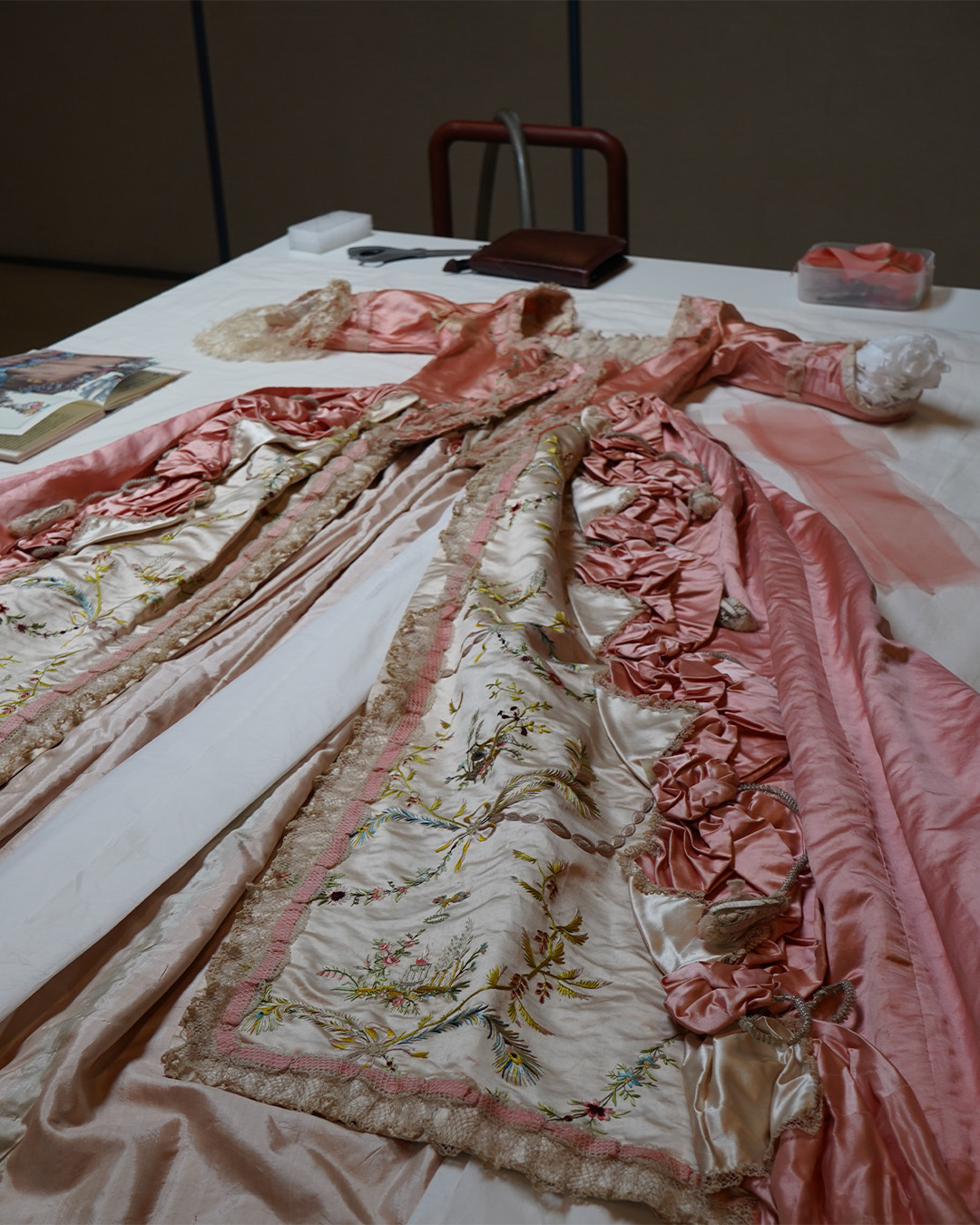
Dress, 1780. Palais Galliera / Paris Musées
The construction of femininity
Femininity in the 18th century takes shape through appearance, where dress, gesture and image define how the body is read and controlled. At the Musée Cognacq-Jay, ‘Révéler le féminin. Mode et apparences au XVIIIe siècle’ (until 20 September 2026), garments and portraiture show how corsetry, fabric and ornament restrict movement and shape the body into a compliant, legible form. Works by Élisabeth Vigée Le Brun and Jean-Marc Nattier frame femininity as a constructed ideal sustained through dependence and passivity, extending beyond the court into bourgeois contexts where appearance encodes virtue, morality and social order.
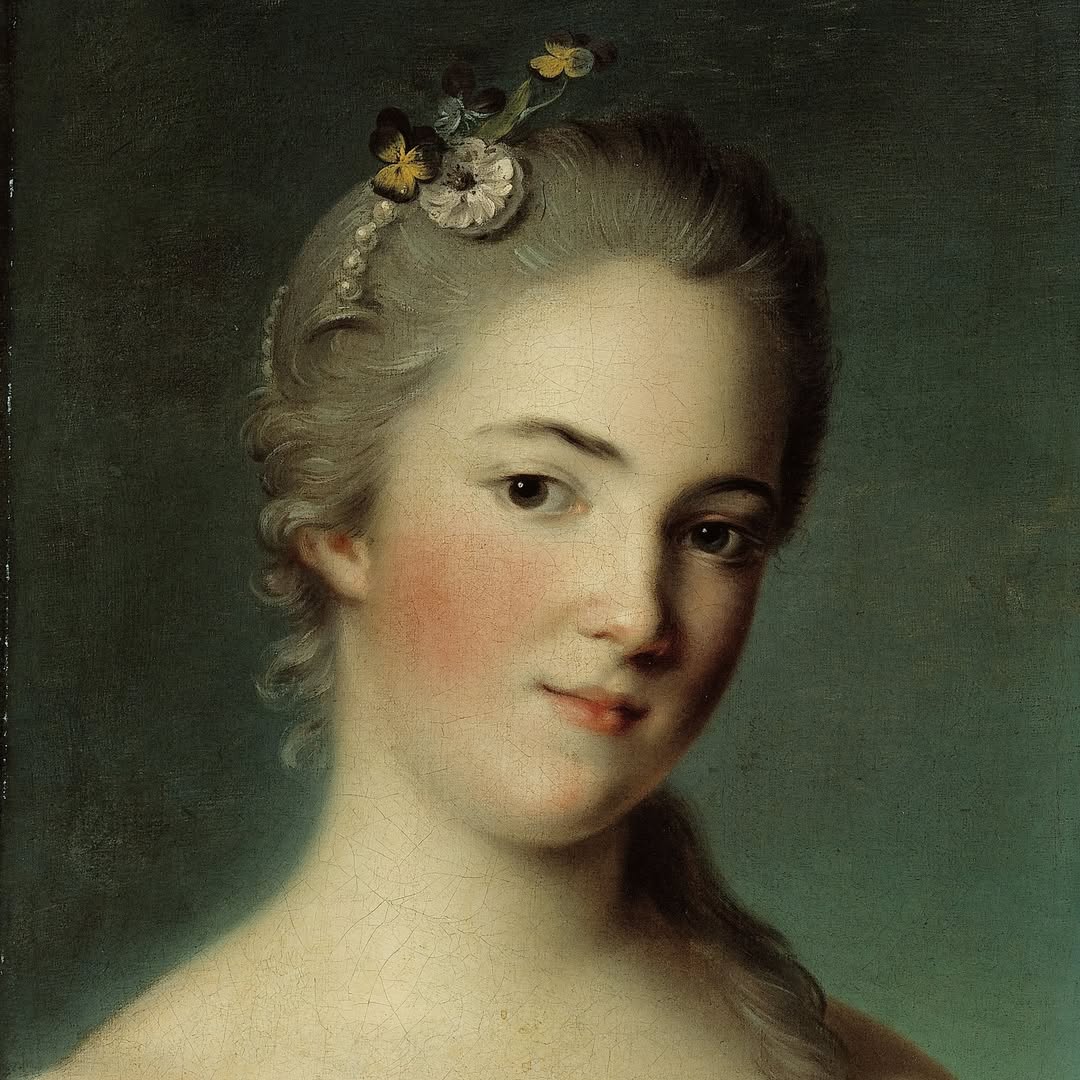
Portrait of Marie-Geneviève Boudrey, second half of the 18th century © CCO Paris Musées
Looking at the 18th century today reveals how deeply its codes still inform the present. The ways bodies are shaped, displayed and read continue to draw from systems of control, ornament and visibility already in place. These exhibitions activate the past, allowing its forms to circulate, fracture and be reinterpreted. They open a space to question which structures persist, which can be transformed, and how fashion can evolve from them.
–
Follow us on TikTok @veinmagazine