
Lina Louisa Krämer is Program Director at Schinkel Pavillon. Dr. Luisa Seipp is curator at Schinkel Pavillon. Together they curated the exhibition “Lesia Vasylchenko – Sensing Ruptures of Time,” closing on May 31, 2026.
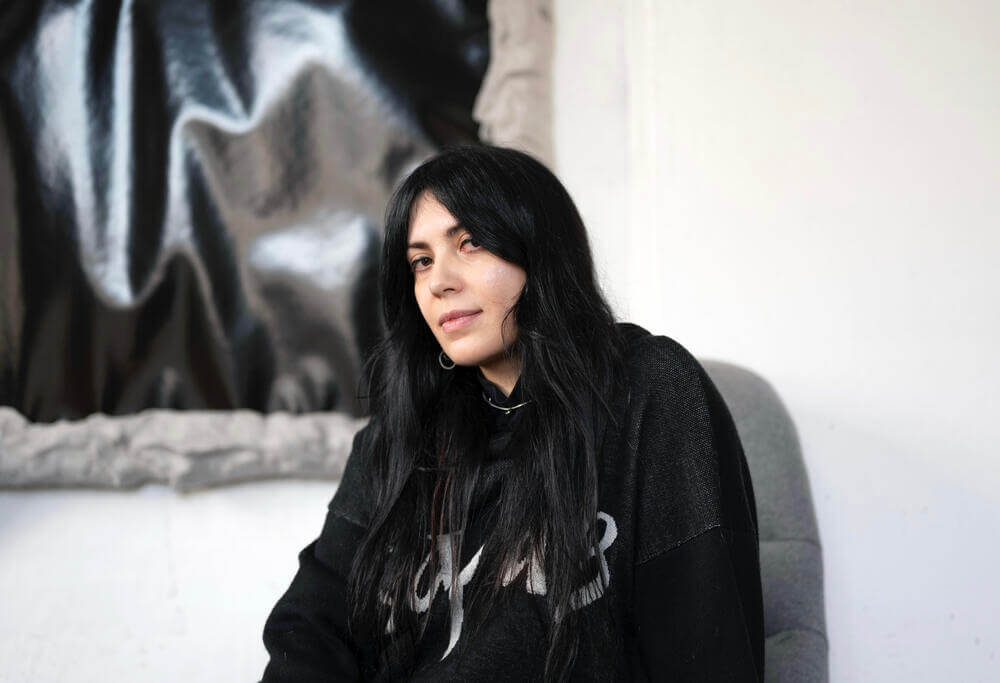
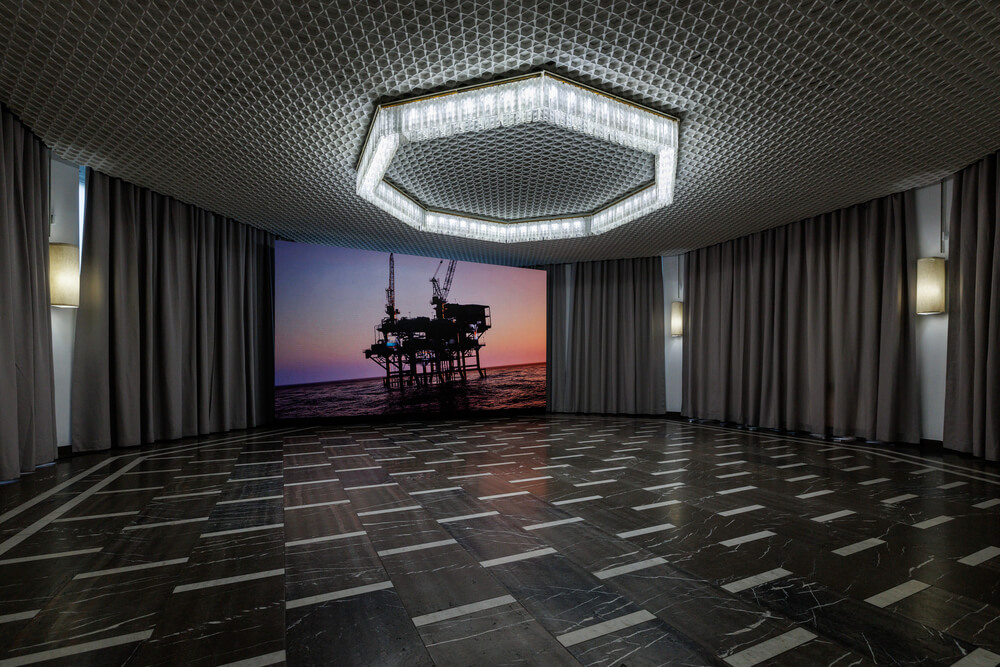
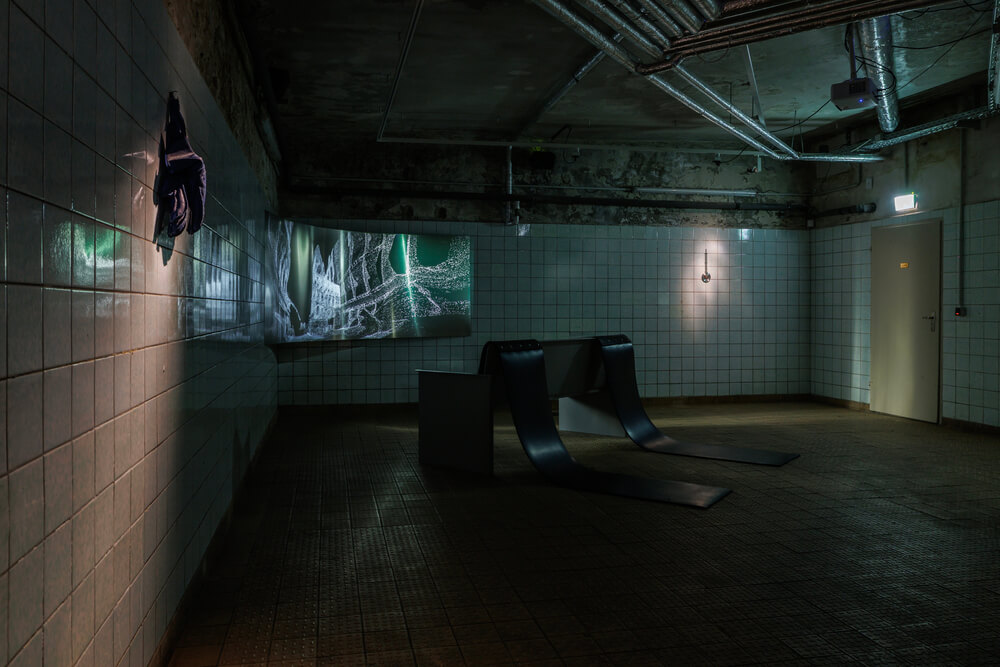
At Schinkel Pavillon, YesterLight – Sensing Ruptures of Time brings together new work by Ukrainian artist Lesia Vasylchenko in an exhibition that examines how time itself becomes a site of political, technological and perceptual tension. Across video, photography and installation, Vasylchenko develops a visual language in which chronology collapses into layered and unstable temporalities shaped by war, ecological crisis and algorithmic systems.
Central to the exhibition is the concept of chronopolitics that time as something that can be structured, manipulated and weaponzed. In dialogue with curator Luisa Seipp and Program Director Lina Louisa Krämer, Vasylchenko’s practice is framed through the conditions of contemporary warfare in Ukraine, where historical narrative, visibility and the production of futures are deeply contested. From satellite infrastructures and AI-driven perception to Ukrainian oral histories and folklore, YesterLight positions technological and ancestral systems of knowledge as parallel ways of registering reality. Works such as Chronosphere (2024) extend this inquiry into parafiction, staging time as something that exceeds linear comprehension and instead unfolds across overlapping scales, from microseconds of data transmission to deep ecological duration. We spoke with them about how the way we see and understand the world shifts in fragmented times, and how new ways of paying attention can emerge from a present shaped by disruption.
What does “YesterLight” mean to you, and how did it emerge as the conceptual anchor for this body of work?
Lesia Vasylchenko: “YesterLight” emerged from a long-standing interest in time not as chronology, but as a material condition and infrastructure, something that leaks, folds, persists, and becomes perceptible. The word itself is a kind of temporal distortion. It echoes “yesterday,” but replaces “day” with “light,” pointing to the fact that our understanding of the past is always mediated through signals, recordings, emissions, and delays. Light is never fully present; it always arrives late. Light from the surface of the Sun takes about eight minutes to reach our eyes, for example. In that sense, every act of perception is already an encounter with the past.
Lesia Vasylchenko’s practice engages with chronopolitics, the idea that time can be shaped and used as a form of power. How does this play out in today’s geopolitical reality, particularly in relation to Ukraine?
Lina Louisa Krämer: Chronopolitics becomes viscerally legible in the context of Russia’s war against Ukraine, particularly since the beginning of the full-scale invasion in 2022. Russia’s imperial project relies heavily on temporal manipulation, the fabrication of a deep historical continuity that positions Ukraine as always already part of a greater Russian civilization. This functions less as mere propaganda than as a political technology that instrumentalizes historical narrative to legitimize present violence and systematically foreclose Ukraine’s possibility of an autonomous future. Vasylchenko’s practice responds to this by refusing the temporality imposed by the aggressor. Her work insists on the right to narrate one’s own time, to grieve, to remember, and to imagine futures not dictated by colonial logic. In this sense, chronopolitics is not an abstract theoretical framework but a lived condition: whose history is recognized, whose present is made visible. What is at stake in Ukraine today is not only territory, but temporality itself, the right of a people to exist within their own historical time, and to define rupture and continuity on their own terms. Vasylchenko’s work makes this struggle perceptible, turning the exhibition space at Schinkel Pavillon into a site where compressed and contested temporalities can be held and examined.
In Vasylchenko’s work, time often appears fractured under conditions of war and technological acceleration. Do you see this fragmentation as a distinctly new condition, or as an intensification of historical patterns?
Lina Louisa Krämer: The fragmentation of time under conditions of war and technological acceleration is best understood not as a historical rupture, but as an intensification of longstanding patterns of temporal dislocation, patterns that have accompanied colonial violence, forced displacement, and political erasure for centuries. For Ukraine, this is not a novel condition: suppressed historiography, enforced amnesia, and cultural erasure have long produced a fractured relationship to collective memory and historical self-representation. What the current moment adds is a state of hypervisibility, in which the archive, the live feed, and the ruin coexist simultaneously, collapsing temporal distance and rendering the contest over narrative more urgent than ever. Vasylchenko’s practice does not simply reflect this condition, but makes legible the deeper historical grammar of fragmentation that was always already present, now rendered acute by the convergence of military violence and technological acceleration.
Chronosphere (2024) uses a parafictional narrative structure. What does fiction allow you to express that documentary or factual approaches cannot, especially when dealing with ongoing conflict?
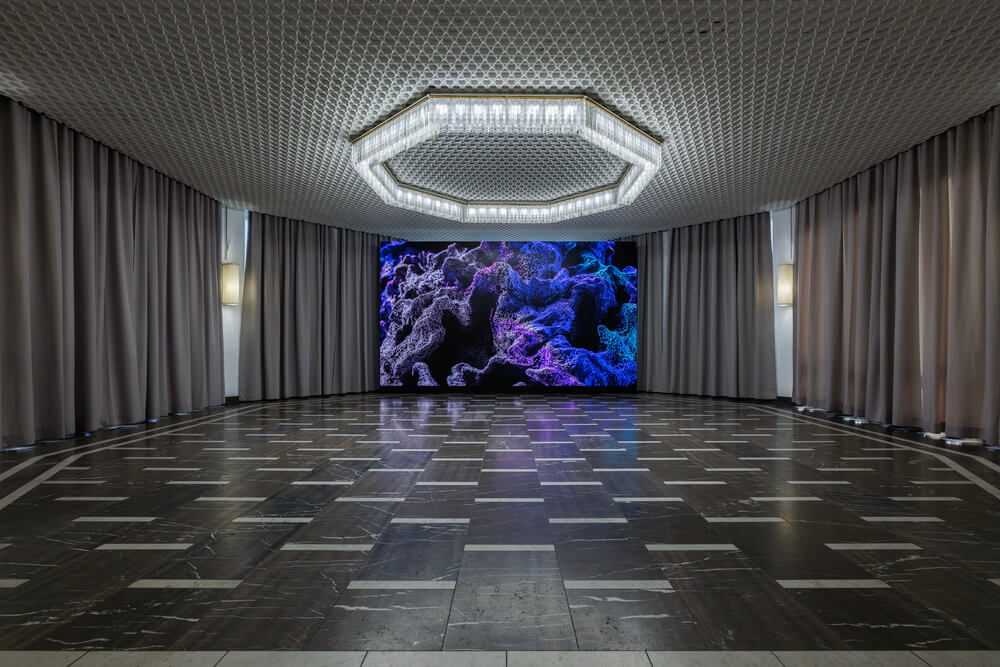
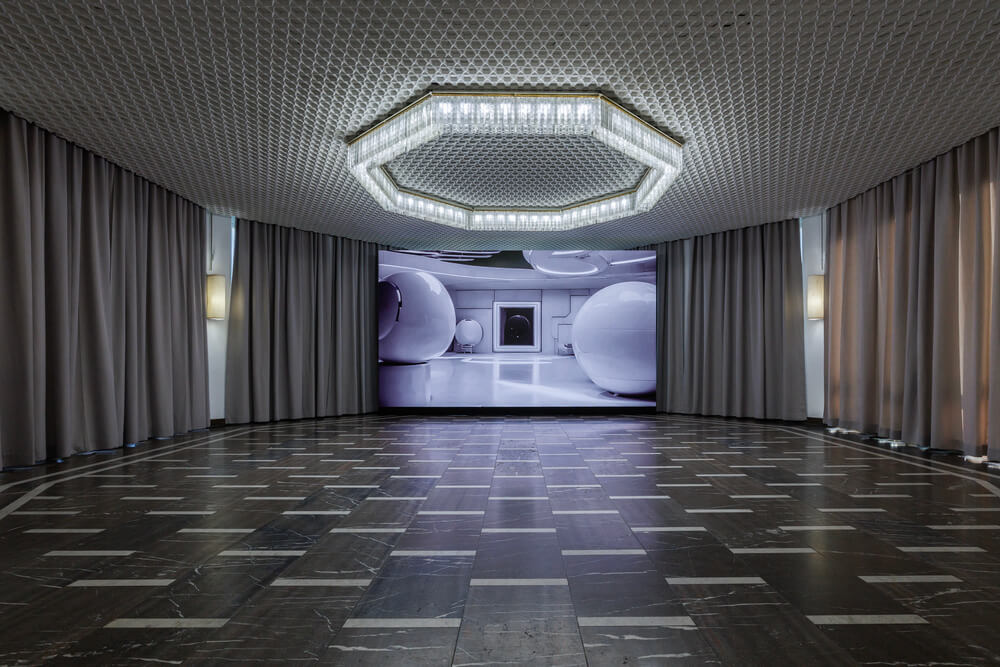
Lesia Vasylchenko: Documentary approaches typically depend on sequence, evidence, and stable causality, but the lived reality of ongoing war is often recursive, fragmented, anticipatory, and suspended between immediate violence and projected futures. In Chronosphere, fiction functions as a way to represent temporal and perceptual conditions that documentary language alone cannot fully contain. The current war in Ukraine exceeds linear comprehension because it unfolds simultaneously across incompatible scales of time: geological, computational, biological, historical, psychological, and predictive. The parafictional structure allows these scales to coexist within the same narrative space. Rather than documenting events chronologically, Chronosphere constructs a speculative framework, the “Chronosphere” itself, as a planetary temporal envelope in which memory, anticipation, technological mediation, trauma, and future catastrophe interact. This fictional construct makes visible something that factual discourse often struggles to articulate: that war is not experienced only as a sequence of events, but as a durational and ongoing condition that reshapes perception, memory, anticipation, and the experience of time itself.
Lesia describes a moment in which seeing itself becomes unstable, shaped by destruction, saturation, and algorithmic mediation. How can artistic practice respond when visibility can no longer be taken for granted?
Lina Louisa Krämer: When visibility itself becomes unstable, saturated by algorithmic mediation, distorted by the logics of the feed, or simply overwhelmed by the scale of destruction, artistic practice may need to abandon the ambition of making things visible in any straightforward sense. Instead, it can operate at the threshold of visibility, attending to what resists representation, what is structurally obscured, or what can only be approached obliquely. Vasylchenko’s practice works within this register: rather than producing images that compete within an already oversaturated visual economy, her work creates conditions for a different kind of attention, slower, more embodied, and resistant to the consumptive rhythms of algorithmic image circulation. In this sense, her art does not restore visibility, but transforms the terms under which something can be perceived at all.
Vasylchenko’s work moves between microtemporal satellite data and deep ecological time. How are these vastly different temporal scales held together within a single artistic language?
Lina Louisa Krämer: The capacity to hold microtemporal and deep ecological time within a single artistic language requires what might be termed a scalar sensibility, an attunement to the ways in which different temporal registers are not simply different in magnitude, but structurally incommensurable, operating according to distinct logics of duration, causality, and legibility. Vasylchenko navigates this incommensurability not by resolving it into a unified temporal framework, but by maintaining it as a productive tension within the work itself. Satellite data, with its real-time granularity and technological mediation, is placed in proximity to the vast, impersonal temporalities of ecological and geological processes, timescales that exceed human perception and resist narrative organization. Rather than reconciling these registers, her practice uses their friction to defamiliarize both: the technological becomes strange when held against deep time, while the ecological is rendered newly urgent when refracted through the precision of contemporary surveillance infrastructures. The result is an artistic language that does not synthesize but juxtaposes, allowing the viewer to inhabit the dissonance between scales as a form of critical and aesthetic experience.
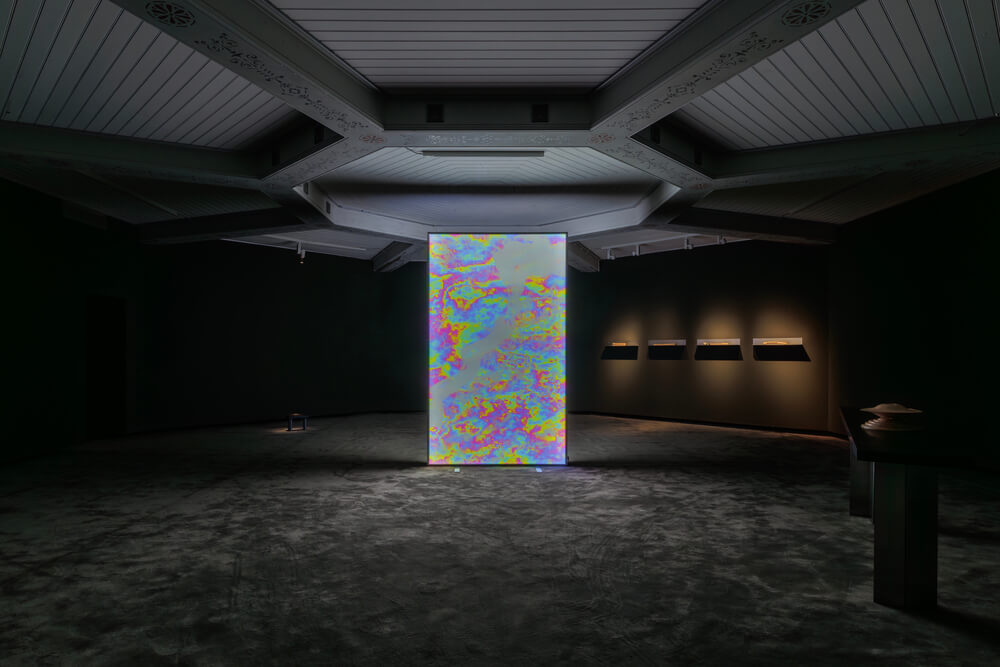
Satellite systems, sensors, and artificial intelligence appear as active elements in Vasylchenko’s thinking. Does she approach these technologies as extensions of human perception, or as systems that actively reshape reality itself?
Lina Louisa Krämer: Vasylchenko’s engagement with satellite systems, sensors, and artificial intelligence suggests a position that moves beyond an instrumental understanding of technology as a mere extension of human perception. Rather than treating these systems as neutral prosthetics that simply expand what the human eye can see, her practice attends to the ways in which they actively constitute the real, producing, filtering, and organizing what can appear as visible, knowable, or legible in the first place. In this sense, technology is not subordinate to human perception, but co-productive of the conditions under which perception becomes possible at all. This aligns with a broader critical understanding of algorithmic and sensing infrastructures as ontologically generative rather than merely epistemologically supplementary, systems that do not simply record reality, but participate in its ongoing construction. Vasylchenko’s work makes this dynamic perceptible, inviting critical scrutiny of the technological frameworks through which contemporary reality, particularly under conditions of war and environmental crisis, is mediated, represented, and ultimately shaped.
Ukrainian folklore and oral histories, including the symbol of the weeping willow, play an important role in Vasylchenko’s work. How do these ancestral narratives exist alongside the technological frameworks she engages with?
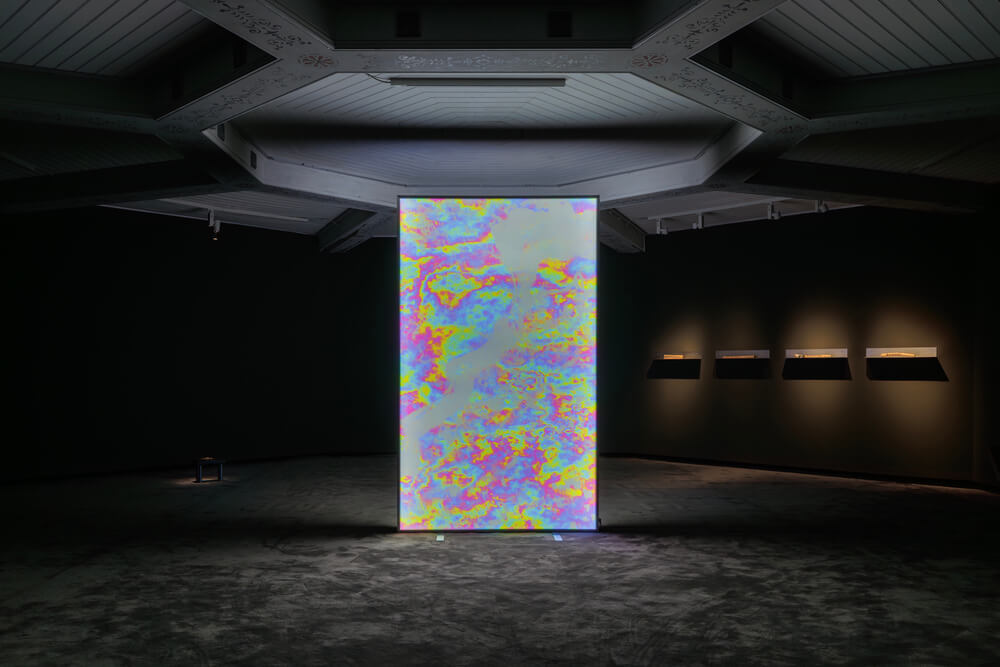
Luisa Seipp: In Vasylchenko’s practice, folklore and technology are not opposites, but parallel systems of memory and witnessing. Alongside satellite imaging, AI-generated imagery, and speculative data infrastructures, she draws on Ukrainian oral histories and myths as forms of knowledge that preserve collective experience across generations. From a curatorial perspective, this coexistence is central to the exhibition. Technologies such as InSAR satellites register ecological and political transformations beyond human perception, while folklore carries emotional, cultural, and spiritual memory. Together, they create an expanded understanding of time and remembrance that moves between human and more-than-human perspectives.
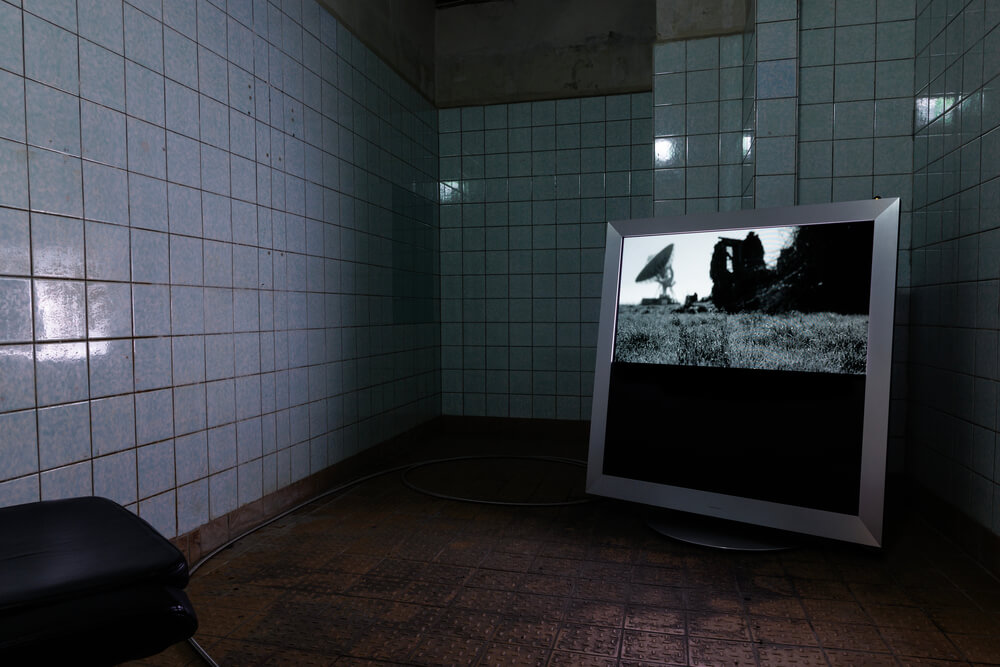
The weeping willow appears throughout the exhibition as a recurring motif of mourning and regeneration. What drew the artist to this symbol in relation to memory, loss, and continuity?
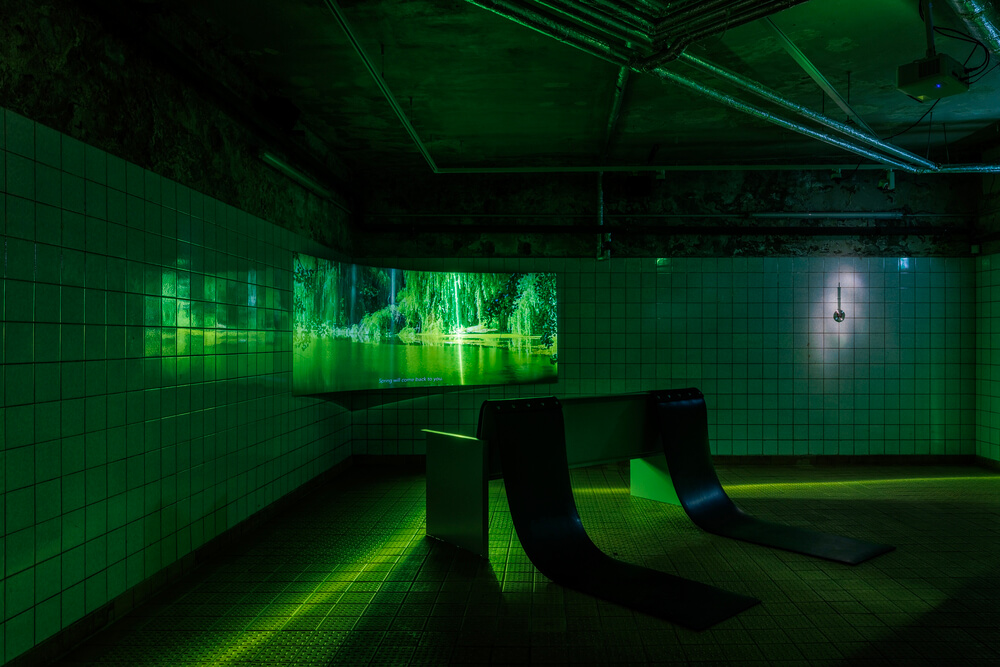
Luisa Seipp: The weeping willow functions throughout the exhibition as a symbol of both mourning and renewal. In Ukrainian folklore, it is associated with cyclical time, resurrection, and the preservation of memory and souls. For Vasylchenko, the motif became especially significant after the destruction of the Nova Kakhovka dam, when willow saplings began growing from the dried reservoir bed. This image of life re-emerging from ecological devastation reflects many of the exhibition’s central concerns: how landscapes carry trauma, how memory persists after violence, and how regeneration can emerge from rupture. Across the works, the willow becomes both a living archive and a witness to continuity through loss.
Working across video, photography, and installation, how do these different media help you articulate unstable or fractured time in ways a single medium could not?
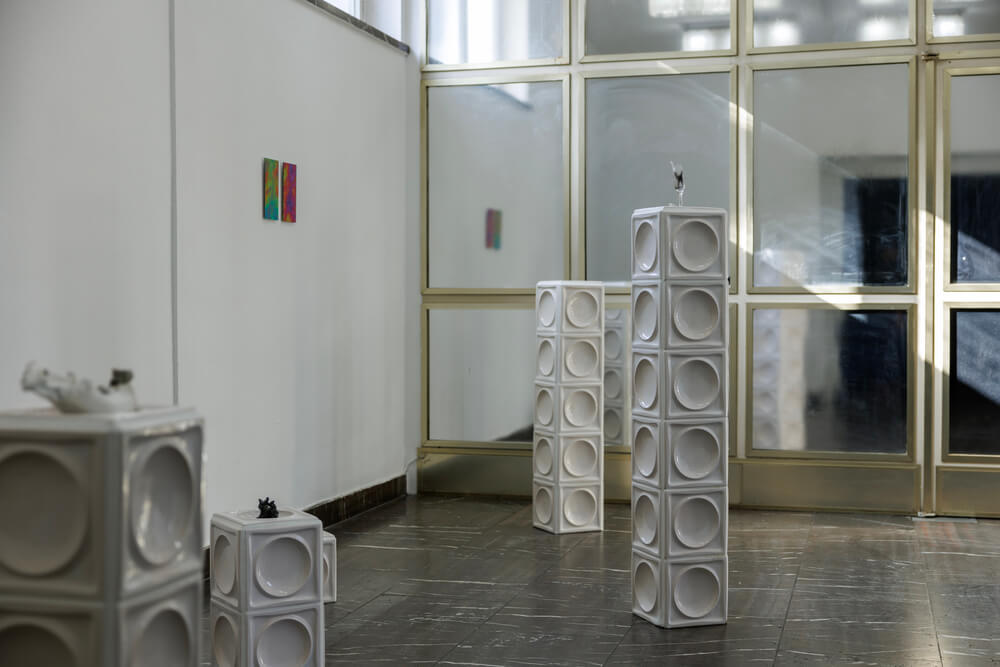
Lesia Vasylchenko: I think about my installations as exhibition environments. Each element carries a different temporal logic, and I am interested in the tensions that emerge between them. I often combine works that represent different scales of time, micro and macro. Video introduces duration, delay, looping, and temporal sequencing. It allows time to unfold, repeat, rupture, or suspend itself. In many of my works, moving images function less as cinematic storytelling and more as a temporal environment, something the viewer inhabits physically and psychologically. A single medium risks stabilising the experience too much. For me, temporality has to emerge through the dissonance between image, sound, space, duration, and material presence.
In a present that feels increasingly fragmented and accelerated, what possibilities do you see for reimagining collective time or shared perception?
Lesia Vasylchenko: I think one possibility lies in moving away from understanding time as a sequence of isolated moments and instead beginning to perceive it as duration, as something continuous, unfolding, relational, and processual. Ecological transformation, trauma, technological computation, political violence, and planetary sensing all unfold across durations that exceed immediate perception. They operate slowly, recursively, and sometimes invisibly. Developing sensitivity toward these unfolding processes becomes crucial. In my work, I often try to construct environments in which viewers become aware of multiple temporalities coexisting simultaneously: biological rhythms, machinic time, historical recurrence, geological duration, and computational prediction. This coexistence destabilizes the idea of a single universal “present.” I am interested in how shared perception might emerge not through synchronisation, but through a collective awareness of temporal complexity, an awareness that we are always embedded within overlapping biological, technological, historical, and planetary processes.
Follow us @veinmagazine