


I’m quite new to discovering the word-of-mouth label Calle del Mar, having just discovered it myself this past Paris Fashion Week. Calle del Mar, founded by Aza Ziegler, began as a luxury knitwear label for women, but under her vision, it has evolved into a modern, genderless brand that increasingly resonates with audiences that carry a deep respect for handmade. She designs with a gender-fluid silhouette, while still retaining the label’s signature nostalgia for surf, skate, and West Coast ease. Aza is transparent, like her pieces, as she shares her thoughts on her commitment to ethical, transparent production, a rare standard in an industry still grappling with sustainability.

What’s the first piece you ever stitched, crocheted, or sewed?
I grew up in a family where making things was a way of life. My grandmother taught me to knit and crochet when I was very young, and my mother taught me to sew. From the start, I was helping with everything — Halloween costumes, dresses for school dances, outfits for parties. I don’t remember the exact moment when I created my very first piece on my own, because the transition was so natural. One day, I was pinning seams for my mom, and before long, I was sketching designs and sewing them myself. What I do remember is how formative those early experiences were: going to fabric stores with my mom, sketching ideas together, flipping through magazines for inspiration. That environment sparked my love for design and making, and it’s been a part of me ever since.
I still remember the halter top and asymmetrical skirt I made with my mom for my brother’s no-parents bar mitzvah party — blue and yellow sequin dragon-print fabric, totally wild. At the time, I thought I had created something so cool. My mom always encouraged my wildness in my style. She never tried to tone me down. Instead, she helped me shine exactly the way I wanted to. I also remember piecing together vintage eyelet remnants and lace to create my 8th grade graduation dress, and finding a cherry print green chiffon for my party that we matched with red rhinestone buttons and a pair of vintage black 1960s heels.
Did you have a style icon growing up?
My style icon growing up and still to this day is definitely my mom. She has this incredible instinct for mixing vintage pieces with high-end items, and she taught me early on to consume thoughtfully rather than excessively. She showed me how to recognize quality and invest in pieces that last and have strong staples and signature pieces.
What’s funny is that our personal styles are actually quite different, I tend to be more colorful and feminine, while she’s always been more of a tomboy. But as I’ve gotten older, I find myself gravitating more toward her aesthetic. She’s still the person whose style I admire most. Of course, I was inspired by plenty of the ’90s and early 2000s icons as well, but she’s always been my forever icon.
Your work is deeply tied to memory. What’s one memory from childhood that still quietly influences your color palette or silhouettes?
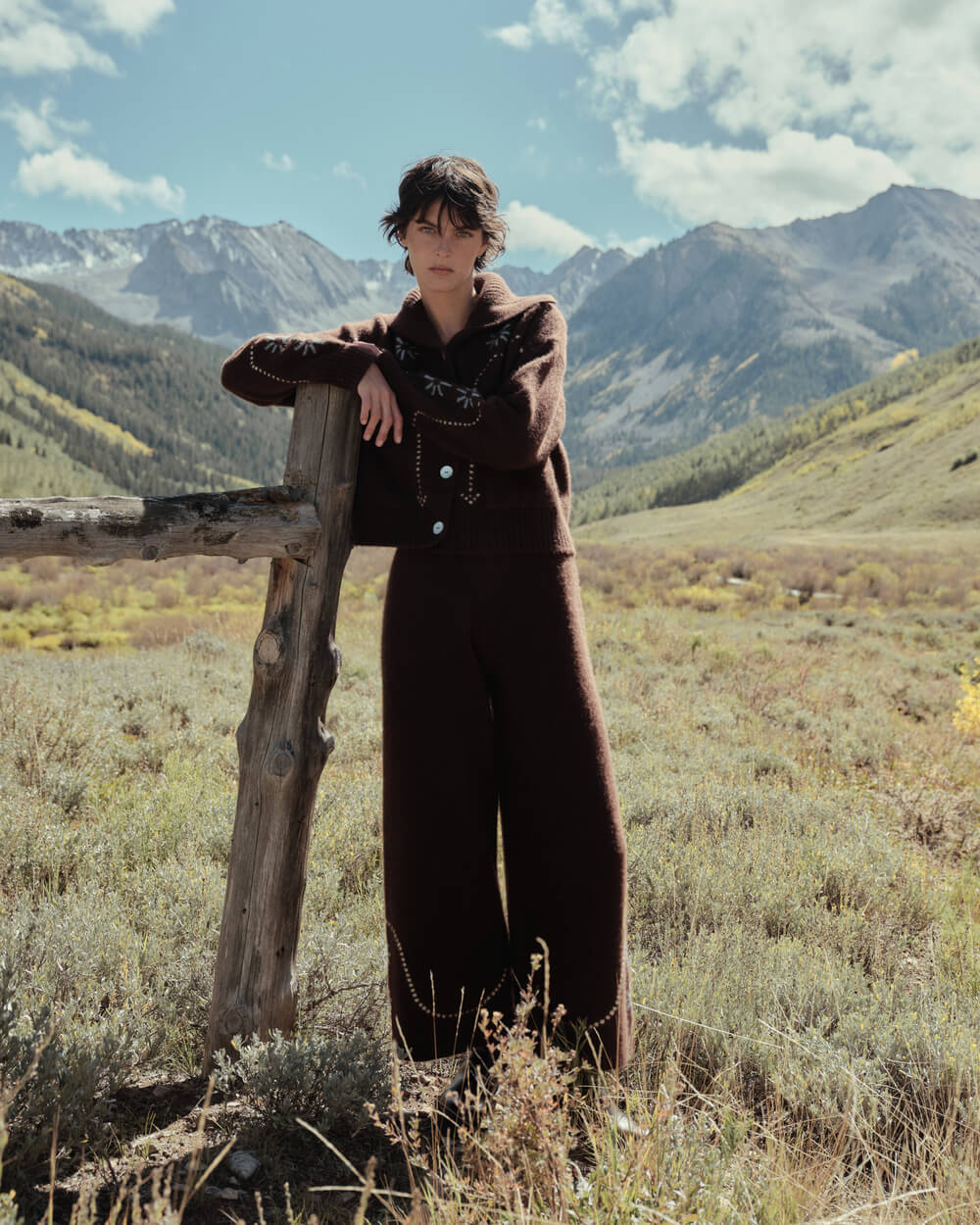
One of the memories that still shapes my palette and silhouettes comes from making things with my mom and grandmother. I grew up surrounded by the vintage crochet pieces my great-grandmother made, by afternoons spent digging through old fabric stores, flea markets, and by the thrill of discovering forgotten remnants that felt like little treasures. I picked up style instincts from my mom and my noni (grandmother) without even realizing it, an appreciation for things that feel lived-in, personal, and a little unexpected.
There’s also the palette of California that never left me: sun-washed colors, soft and bright, and the coziness that comes from always needing a sweater in San Francisco. Comfort, ease, and individuality were never opposites in my world, and those early memories still quietly guide the way I build color stories and silhouettes today.
Calle Del Mar evolved from a personal project at Pratt, where you studied. What was the moment when that “project” shifted into a vision for a sustainable brand?
It really shifted the moment I received my first order. I was one of 20 students selected out of a class of 80 to show my work in the senior show, which ended up getting a lot of attention from outlets like WWD. Almost immediately after the show, I was approached by several stores—including a major Japanese retailer—which was the first time the idea of turning my project into a real brand felt tangible. I was young, naive, and not afraid. Sometimes that’s the best way to be?
From there, it became about figuring out how to actually make it happen. Building Calle Del Mar had always been a dream, but for years I balanced it with multiple side jobs and freelance projects to support myself. It wasn’t until 2019, when I received my first substantial order, that I was finally able to focus on the brand full-time and truly envision it as a sustainable business.
You developed your signature viscose yarn in collaboration with a family-run Italian mill. What were you trying to achieve that conventional yarn simply couldn’t deliver?
I’ve been a collector of vintage since I was a little kid—my mom used to take me to a shop called Second Hand Bananas to pick out all my clothes, and I fell in love with the hunt and the history behind old pieces. My noni (grandmother) was also an incredible antiques sourcer and worked for a major company in the ’80s, sourcing antiques for their stores. So I was exposed to this creative sourcing young, and I grew up with a deep appreciation for craftsmanship and how things were made before my time.
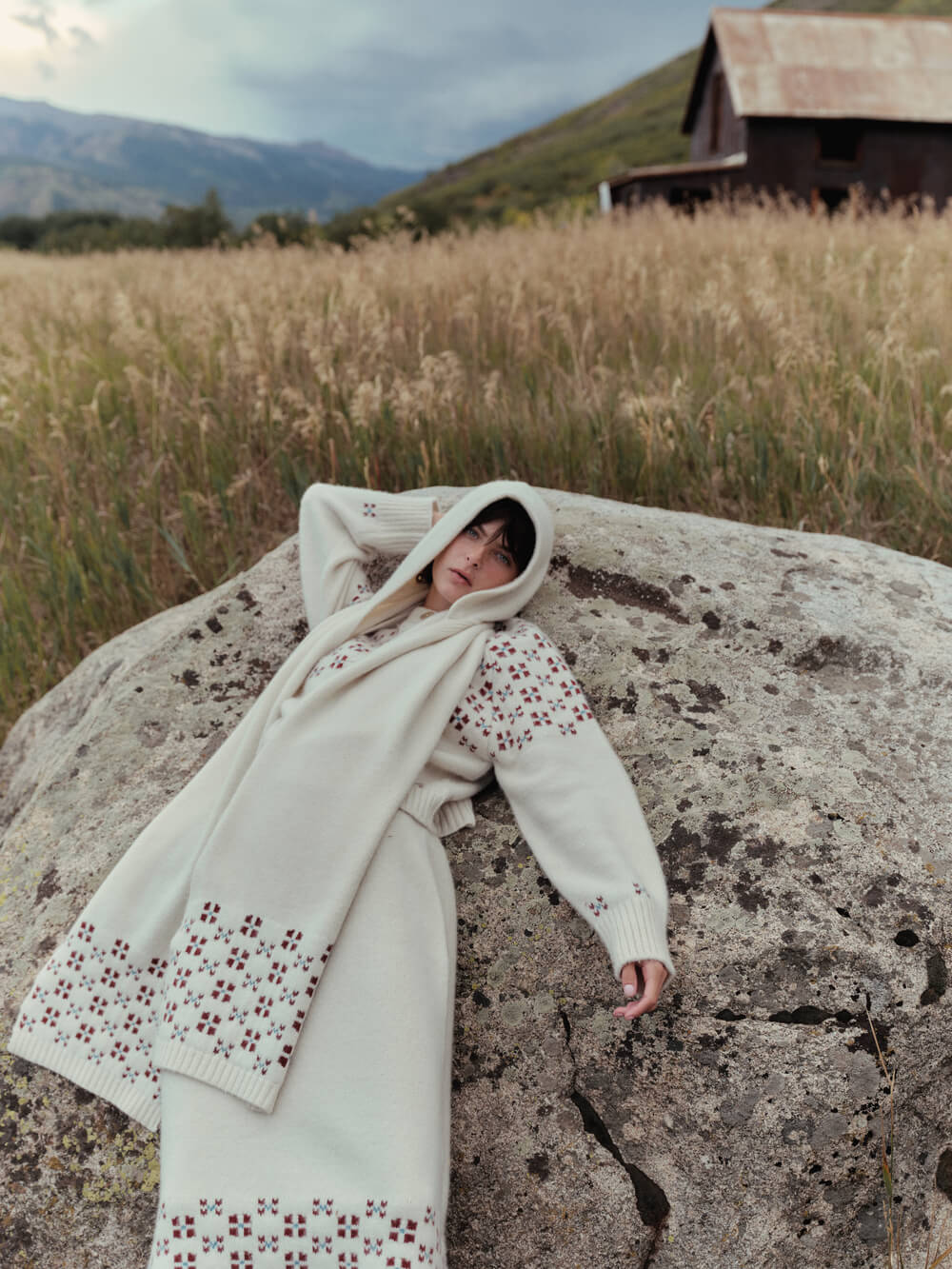
In 6th grade, I used to go to Haight Street in San Francisco to shop. In college, moving to New York, that fascination with vintage turned into a full obsession with niche categories of vintage – and in my later college years, around the time Calle Del Mar was dreamt up, the obsession was vintage athletic wear. I found this incredible vintage Varsity style T-shirt in a store in Greenpoint that became the spark for what eventually became our viscose yarn. From there, I started collecting vintage viscose athletic pieces and studying everything about them—the durability, the performance qualities, the sustainable aspects, and the unmistakable feel. Those garments had this soft, silky luxury and a sturdiness you just don’t see today.
When I tried to source a yarn that captured all of that—silky handfeel, elevated quality, durability, and genuine sustainability—I realized it simply didn’t exist anymore. Nothing on the market had that same weight, drape, or integrity. So I began working with a few hand-loom knitters with viscose alternatives and eventually connected with several Italian mills. I had found a yarn that had been previously discontinued and refined it. One of them even sponsored me to visit a yarn fair in Italy, which moved the development forward in a real way. Collaborating with a family-run mill allowed me to recreate a yarn that embodied everything I loved about those vintage pieces: the luxury of silkiness, the quality and resilience that lasts, and a sustainable foundation. That’s how our signature viscose was born, out of a desire to bring back a level of craftsmanship and material integrity that yarns simply couldn’t deliver. I also knew this yarn would set us apart.
Matching sets have become synonymous with Calle Del Mar. What does “a complete look” mean to you as a designer and as a stylist?
For me, it ties directly back to my obsession with vintage athletic wear. That world introduced me to the idea of uniform—a complete set that feels intentional, cohesive, and effortless. I’ve always loved the power of pieces that can be mixed and matched or worn together for maximum impact. As a designer, a “complete look” means creating garments that speak to each other: silhouettes that align, play off each other, colors that harmonize, and textures that elevate one another. There’s something really satisfying about offering someone a full head-to-toe moment that still feels relaxed and wearable.
And as a stylist, I love seeing how our customers make those sets their own, and even within our collection, show people all the ways they can be worn. People bring their personality, their energy, their lifestyle to the clothes, and the sets become a canvas for that. That’s the beauty of a complete look: it’s cohesive, but it can still be individualized without too much thought or effort.
You hand-style your own lookbooks. How does wearing both the designer and stylist hat influence the storytelling of each collection?
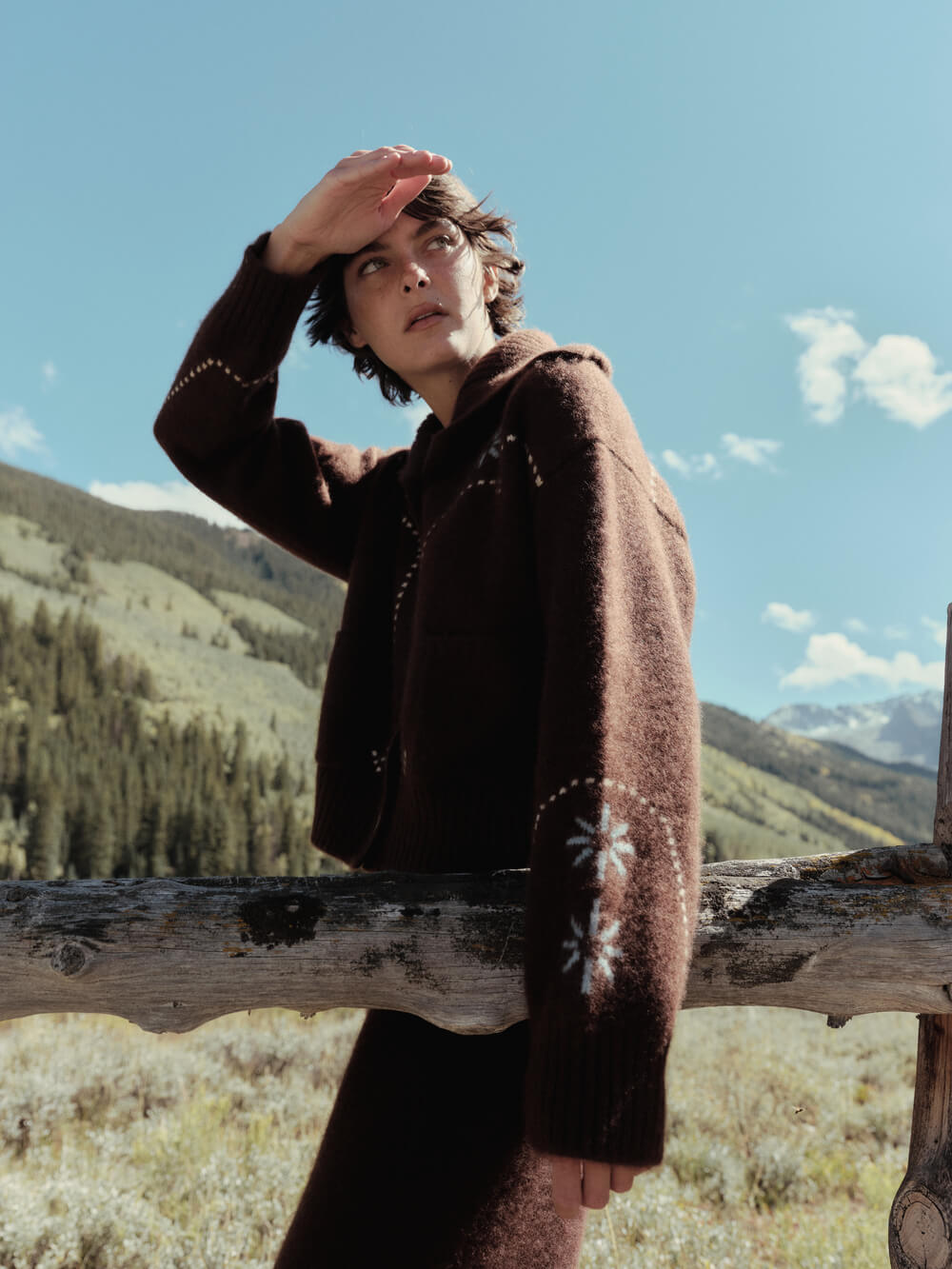
Storytelling is at the core of who I am as a designer. My collections always begin with narrative—vintage pieces I’ve found, family archives, memories, feelings. Because the clothes come from such personal stories, it’s important that the editorials and lookbooks reflect that same emotional world.
Styling and creative directing the shoots allows me to close the loop. I get to translate the inspiration behind each piece into a visual language—showing how I imagine the garments living, moving, and being worn. It’s a chance to guide people through the story, bring them into our world and demonstrate how the pieces can be styled in ways that feel true to the collection’s spirit.
Wearing both hats keeps me energized. It feels like the ultimate completion of the project. I also love to be face-to-face with the customer selling, when I can; for this reason, it’s so energizing! My favorite thing about business is that I love taking on multiple roles—it challenges me, keeps my brain sharp, and keeps inspiration running through my veins. It helps me stay connected to the customer as well and helps ensure that the world we present feels complete, intentional, and authentically ours.
Almost your entire production happens within 30 miles of your studio, in female, family-run workshops. What does working in that ecosystem give you that globalized manufacturing never could?
Producing locally gives us something globalized manufacturing simply can’t: true visibility into every step of the process and real relationships with the artisans who make our pieces. We’re in constant dialogue with every workshop, in the factories often, so nothing is abstract or distant—we know each hand that touches each piece.
That closeness creates an incredible level of quality control. Details don’t slip through the cracks because we’re physically present, collaborating, problem-solving, and refining in real time. It also helps us keep an eye on waste and make sure that we are utilizing every last drop of our materials. It’s a level of care, craftsmanship, and accountability that only comes from working within a tight, trusted, community-driven ecosystem. It also allows us to have a lower footprint. However, we are expanding our production globally – and finding creative ways to make sure we keep this integrity. Because of our time focused locally, we now know how to expand thoughtfully.
In an era when even major luxury houses struggle with transparency, what does an ethical supply chain actually look like day to day?
For us, an ethical supply chain is incredibly hands-on. It means regular visits to our factories and mills—our team travels often so we can see conditions, people, and processes firsthand. Transparency isn’t theoretical; it’s something we actively show up for. It also means constant communication with our partners. We’re always asking questions, sharing standards, and making sure there’s clarity around every step of production. Nothing gets taken for granted.
It starts with choosing the right partners—people and workshops who share our values and our commitment to fairness, safety, and craftsmanship. We vet rigorously, and we’re genuinely lucky to work with partners who don’t just meet our standards but wholeheartedly believe in and support our vision. In practice, an ethical supply chain is really a relationship-driven one: consistent presence, honest dialogue, and alignment of values every single day. It’s also about innovation and collaboration and always knowing when it’s time to find new creative ways to save, and do more.
The brand’s pieces are meant to be kept, worn, and eventually passed down. How do you design for longevity while capturing the current fashion zeitgeist?
I don’t think about trends or sometimes even seasons (maybe that’s the California in me). Longevity comes from quality, craftsmanship, and from emotion. I design from a place of feeling—nostalgia, memory, instinct. A piece is “good” when it makes me feel something, the same way art does. If it transports me, if it carries a certain energy or mood, then it has staying power. It has to make me feel something. It has to make me want it, or know who will. This is also not just about its visual appeal but its tactile feel. This is why we focus so much on things that are silky, or AFAP (As Fuzzy as Possible!), as my head of design and development recently said.
Because of that, the work ends up existing outside of trend cycles. It can resonate now, and it can resonate decades from now, because it’s rooted in something more timeless than whatever is happening this month in fashion. That emotional core becomes longevity. In a way, capturing the zeitgeist is less about chasing what’s current and more about being deeply present with what moves me. When you design from that place, the pieces naturally speak to their moment—but they’re built to live far beyond it.
What’s the hardest myth to break when it comes to sustainability at the luxury level?
The word sustainability itself is incredibly complex—and often misused. That’s why I prefer language like thoughtful, ethical, or responsible, because the reality is: creating anything new has an environmental footprint. What you can do is approach production with intention, responsibility, and respect for the earth.
At the luxury level, this kind of thoughtfulness genuinely costs money. It shows up in the price—whether through fair wages, better materials, responsible sourcing, or small-batch production. So rather than trying to “break a myth,” I think what really needs to change is the framing of the conversation. Instead of pretending sustainability is a binary (sustainable vs. not), we should rewrite the dialogue around how brands can make more thoughtful choices and how those choices manifest in the final product. Also, if you make things the way they are meant to be made, that is inherently sustainable because they last and people love them for a long time.
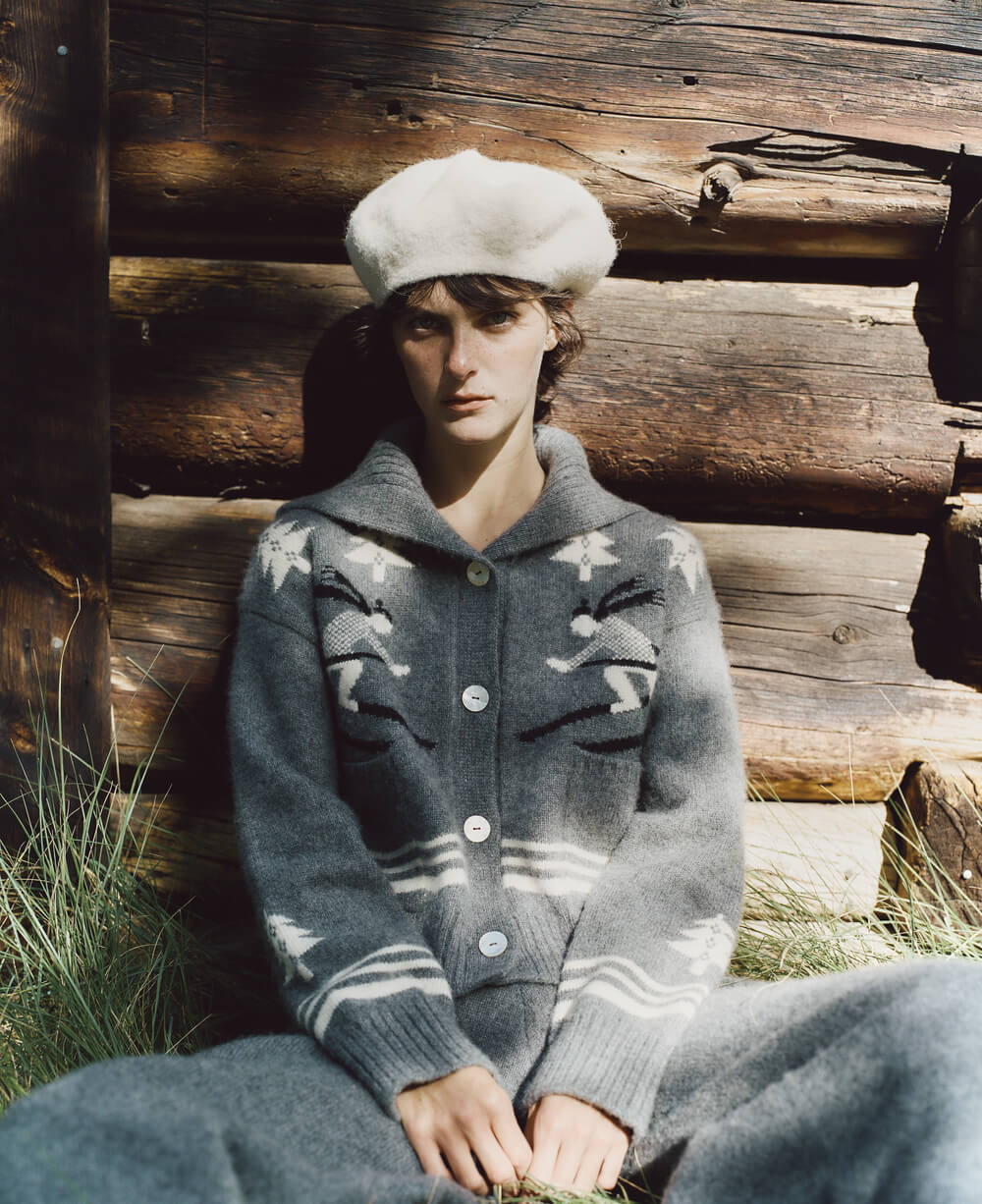
You’ve developed a loyal Hollywood following from Emma Chamberlain, Chrissy Teigen, Halle Bailey, to Zoë Saldaña. What do you think these women respond to in your work?
I’d like to believe, like any of our customers, they connect with the nostalgia, emotion of Calle Del Mar. The playfulness, color how the product feels on their body. The novelty and individuality of it.
Who surprised you the most by wearing Calle Del Mar, and how did it shift your understanding of the brand’s reach?
Pamela Anderson was a very iconic moment. What a Renaissance woman. Jennifer Aniston was also a highlight for me growing up in the 90s. Margot Robbie, or more recently, Zoe Saldana and Eva Mendes. I’ve been really lucky to see some incredible celebrities and creatives wear Calle Del Mar. It’s the successful creatives and strong women that I geek out over, and everyday people who truly get us and see the brand for what it is. I am so grateful that they see what we are about and feel empowered in our pieces. That’s what really expands my understanding of our reach.
Who would you love to see in Calle Del Mar next, someone whose energy feels aligned with the brand’s quiet confidence?
Would love to get Jeremy Allen White or Role Model in some CDM Cashmere. I see Role Model in a western and Jeremy in a perfect cashmere hoodie. Amie Lou Wood or more timeless celebrities such as Julianne Moore or Jane Fonda.
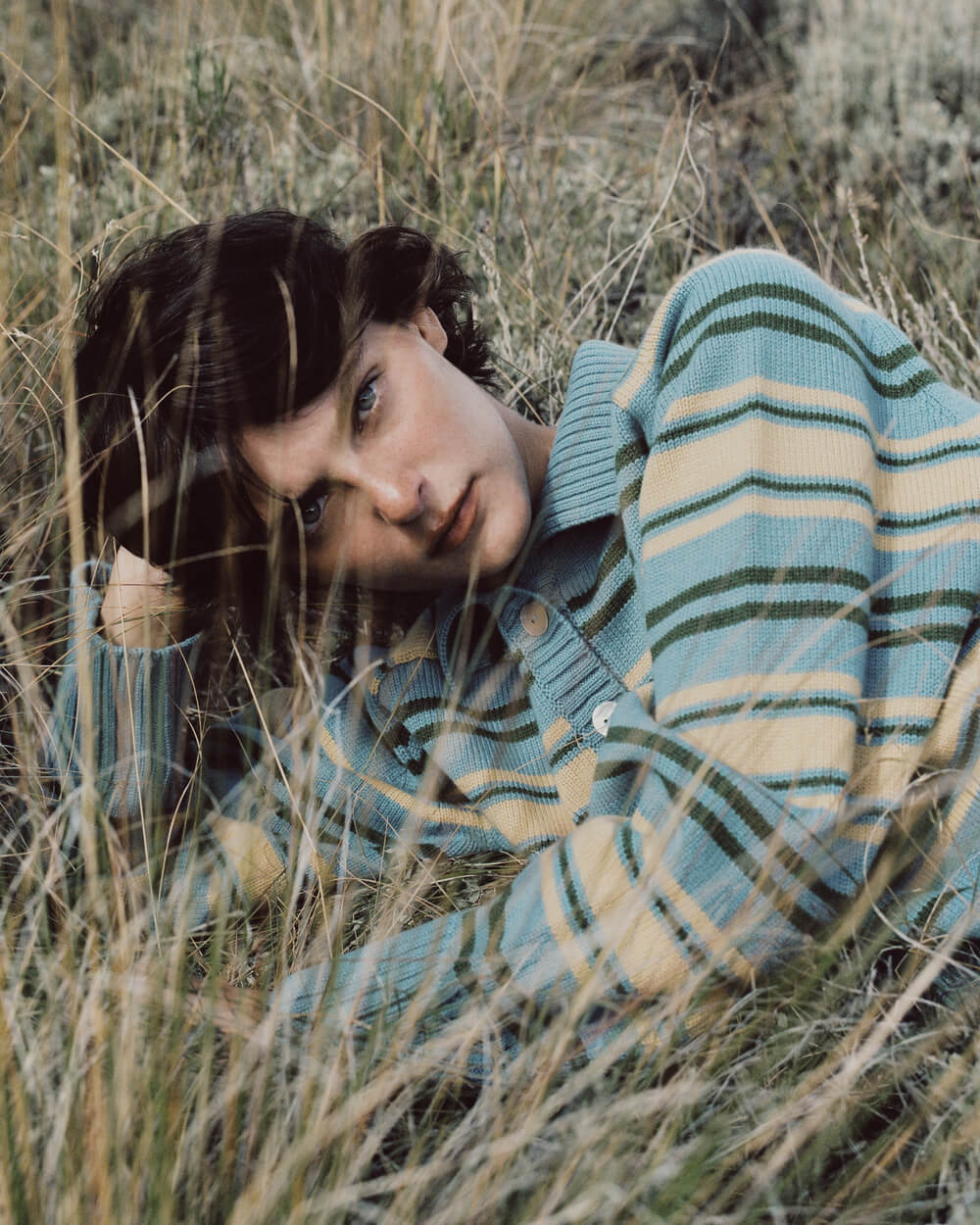
How do you protect the slowness and intentionality of your process as the demand grows?
Strong company standards and true alignment are everything, and I’m grateful to have an incredible team that cares deeply and feels like family. We’re thoughtful about hiring and make sure every person is genuinely connected to the vision. The same intention goes into vetting our factories — we only work with partners who match our values and commitment.
Let’s have some fun! What’s the most unusual place you’ve knitted, stitched, or sketched a design?
I always have a notebook in my bag, whether to write and clear my head or sketch my ideas. My notebooks have seen the subways of New York, trains in Italy, beaches, camp sites, and firesides.
If you could collaborate with any artist, musician, painter, filmmaker, or athlete, who would you choose and what would you make together?
The world of CDM is expansive to me beyond clothing. I’d love to do a full motion short film of CDM, create an immersive destination hotel experience, make a custom set for a musician, or collaborate with an iconic interior designer or homeware brand with history.
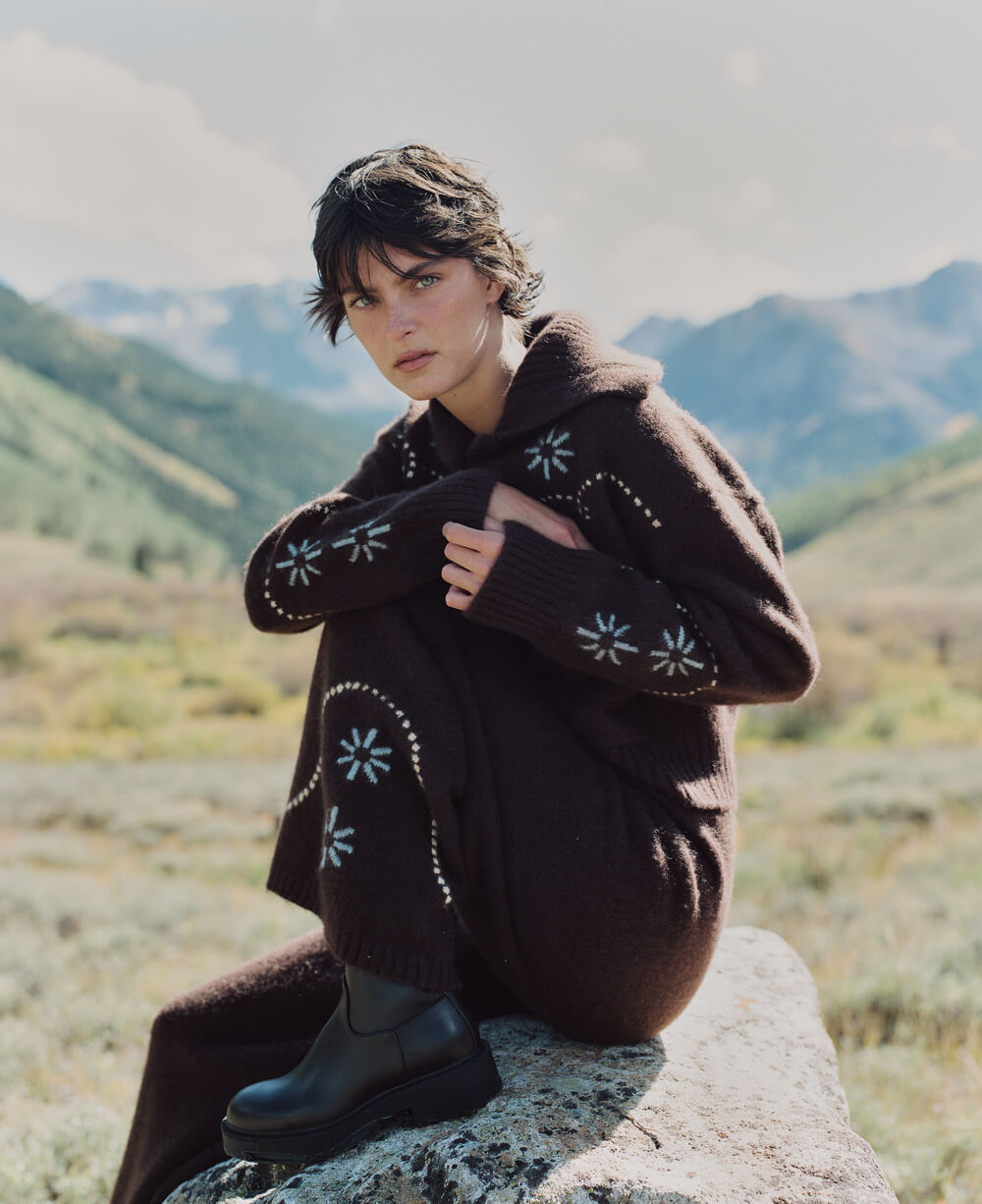
What’s one piece in your closet you’ll never part with?
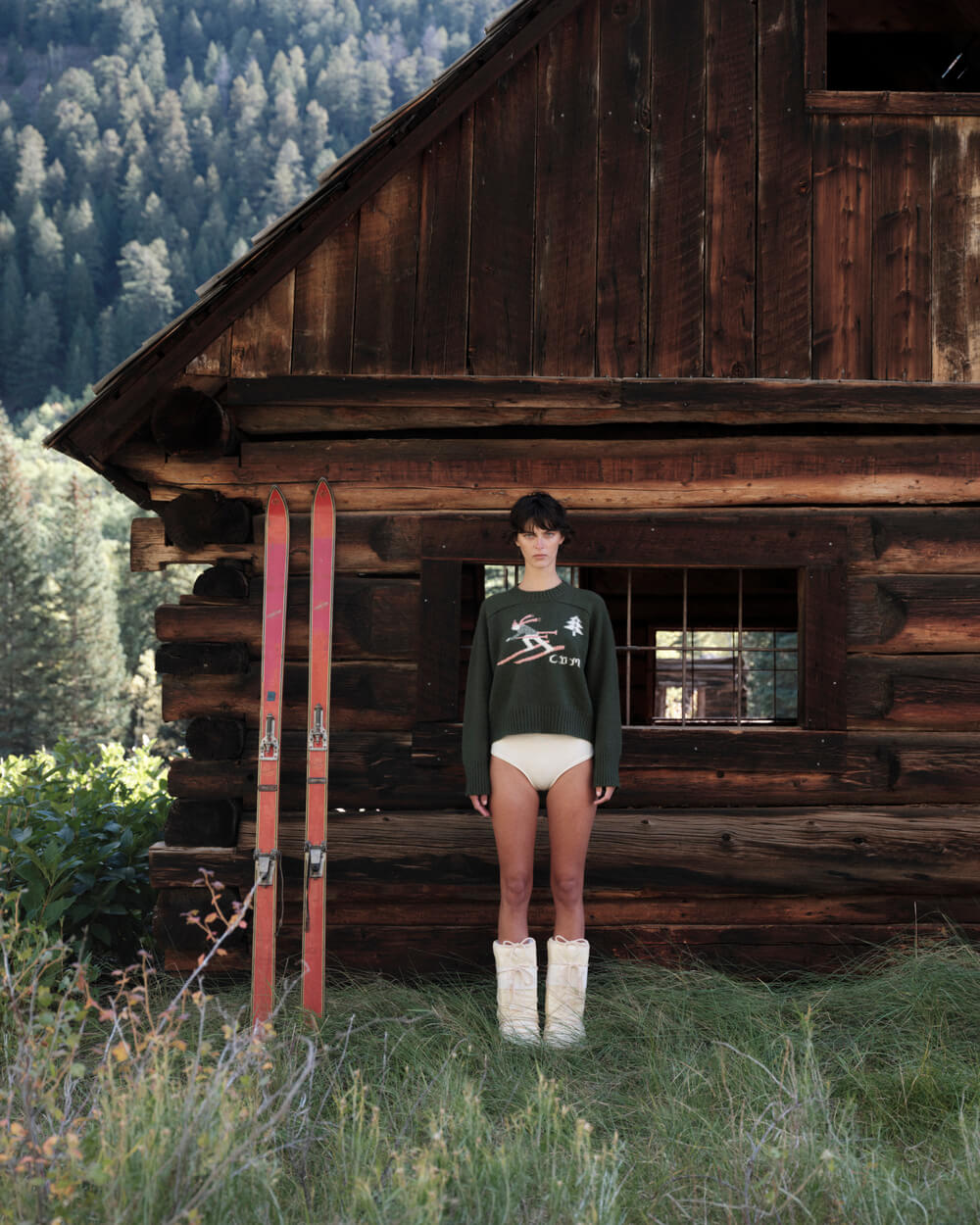
This is such a tough question, as I am very thoughtful about what I consume and love the things I have deeply. I have a pair of red satin Miu Miu shoes I bought myself for my 28th birthday. A shearling hat my mom hand stitched for me by hand, and a hand-painted leather floral bag she made me. My Calle Del Mar western sweater, I couldn’t even get one from the first run. They sold out too fast – so I savor being able to snatch one 🙂 A few pieces of gold jewelry from my Noni. A hand-crocheted cotton blouse my mom wore when she eloped with my dad. The list could go on. I love pieces with stories, meaning, and memory, that have been loved before me and will be loved after me.
If we visited you in your studio, what would be on your playlist?
Folk, Country, a bit of alt, and oldies:
Fade into you – Mazzy Star
Everybody’s Talking- Harry Nelson
Steal your Love – Lucinda Williams
Pink Moon – Nick Drake
Heart of Somebody – Caroline Spence
California Stars – Wilco
Gentle on my Mind – Glen Camel
Back Home Again – John Denver
Light of a clear blue morning – Dolly Parton
Thirteen – Big Star
After Midnight – JJ Cale
Santa Maria De Feira – Devendra Banhart
I wonder – Chris Isaak
Shark Smile – Big Thief
Pale Blue Eyes – Velvet Underground
Angel from Montgomery – John Prine
Sad Eyes – Bruce Bringstein
I’ll be here in the morning – Townes Van Zandt
When the stars go blue – Ryan Adams
Had to hear – Real estate
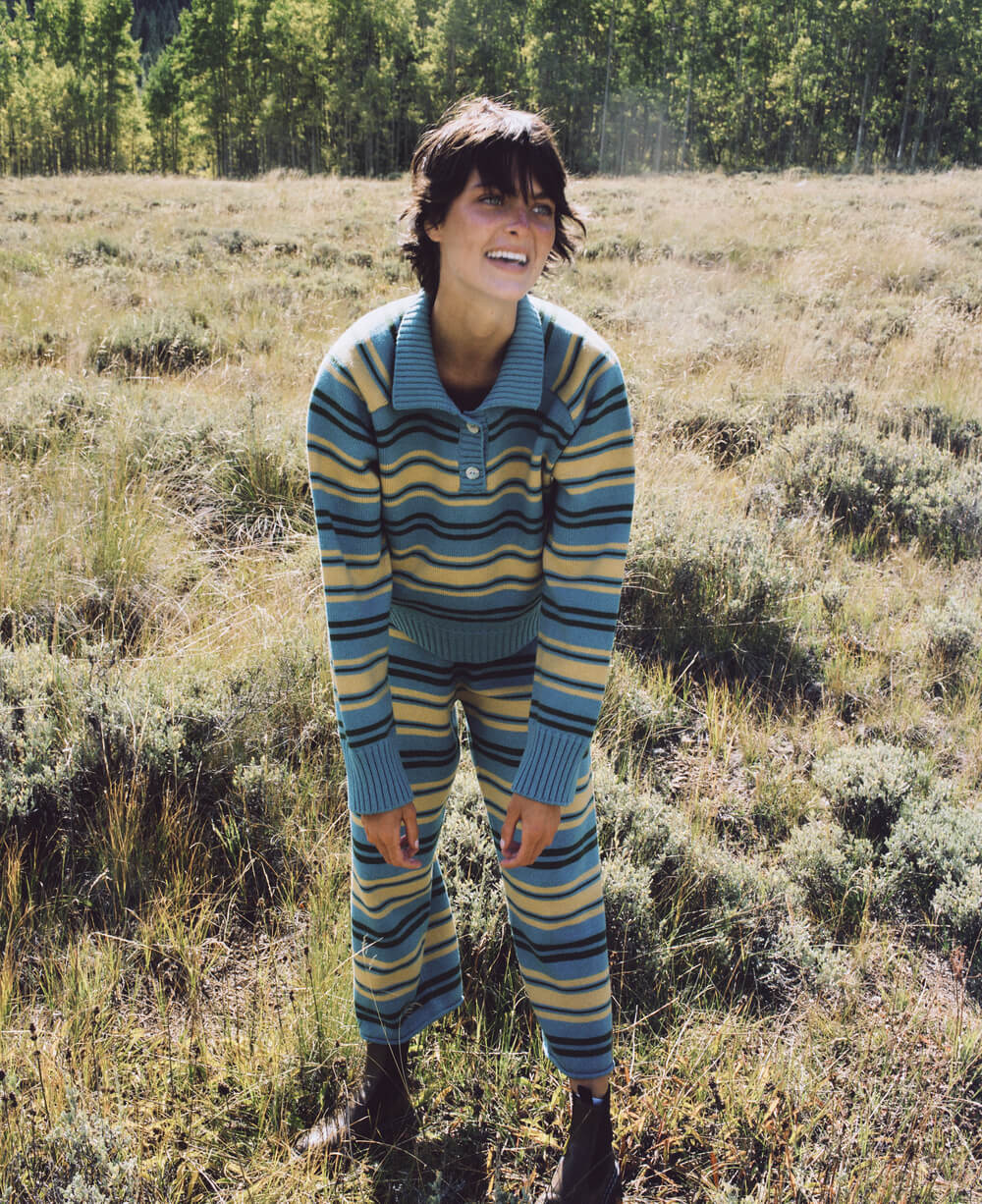
Do you have a go-to karaoke song?
“9 to 5” by Dolly Parton or “That don’t impress me much!” by Shania Twain.
And finally, what is the best piece of fashion advice you ever received?
Invest in quality pieces, fill in the rest with thrift or vintage, and really quality basics. You don’t need much. From my mother. And I have to say, my friends are always shocked by the size of my tiny closet.
For more @calledelmar