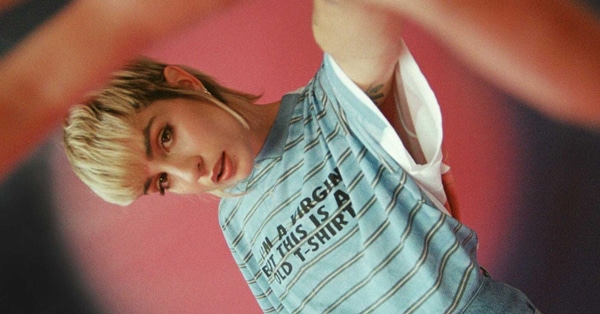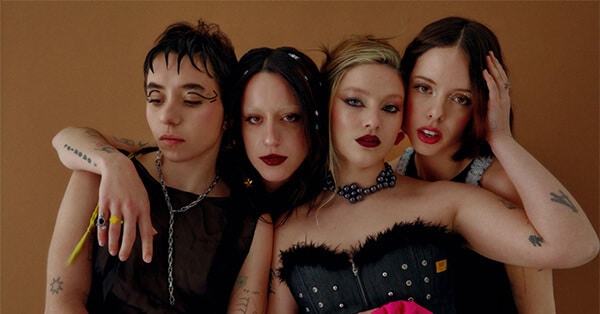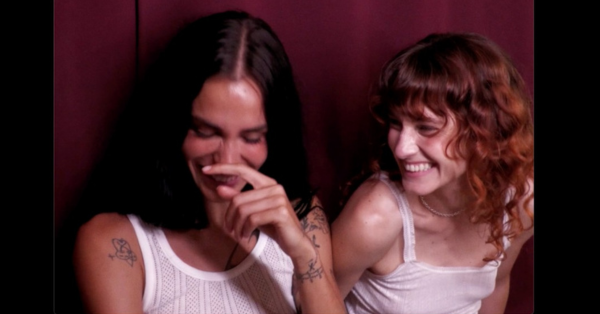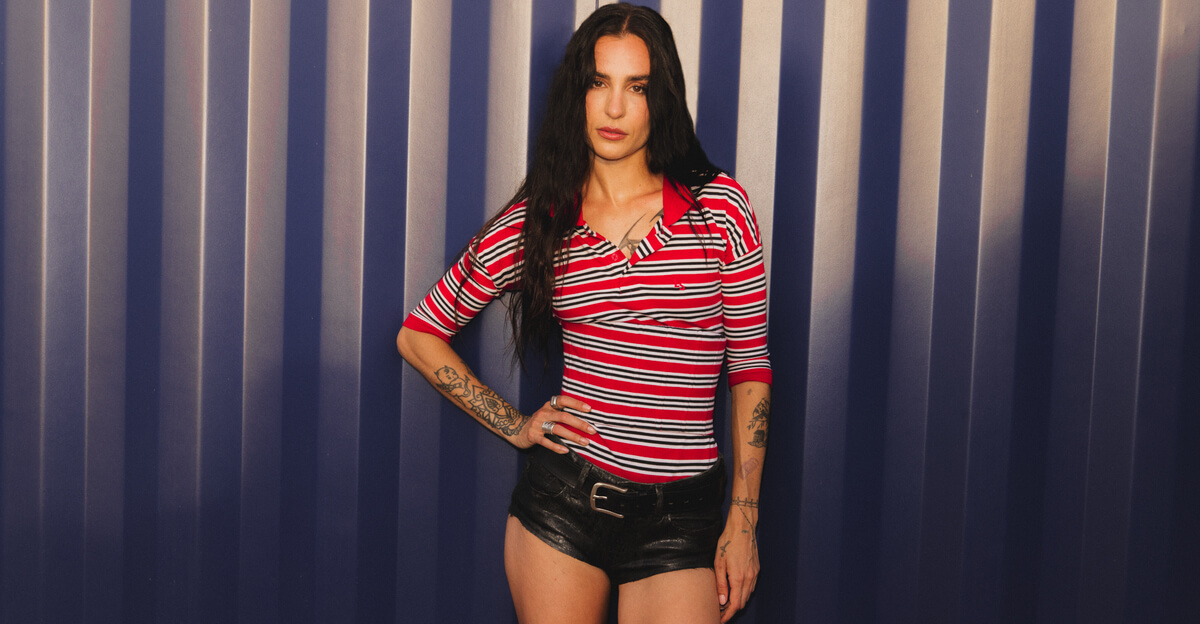

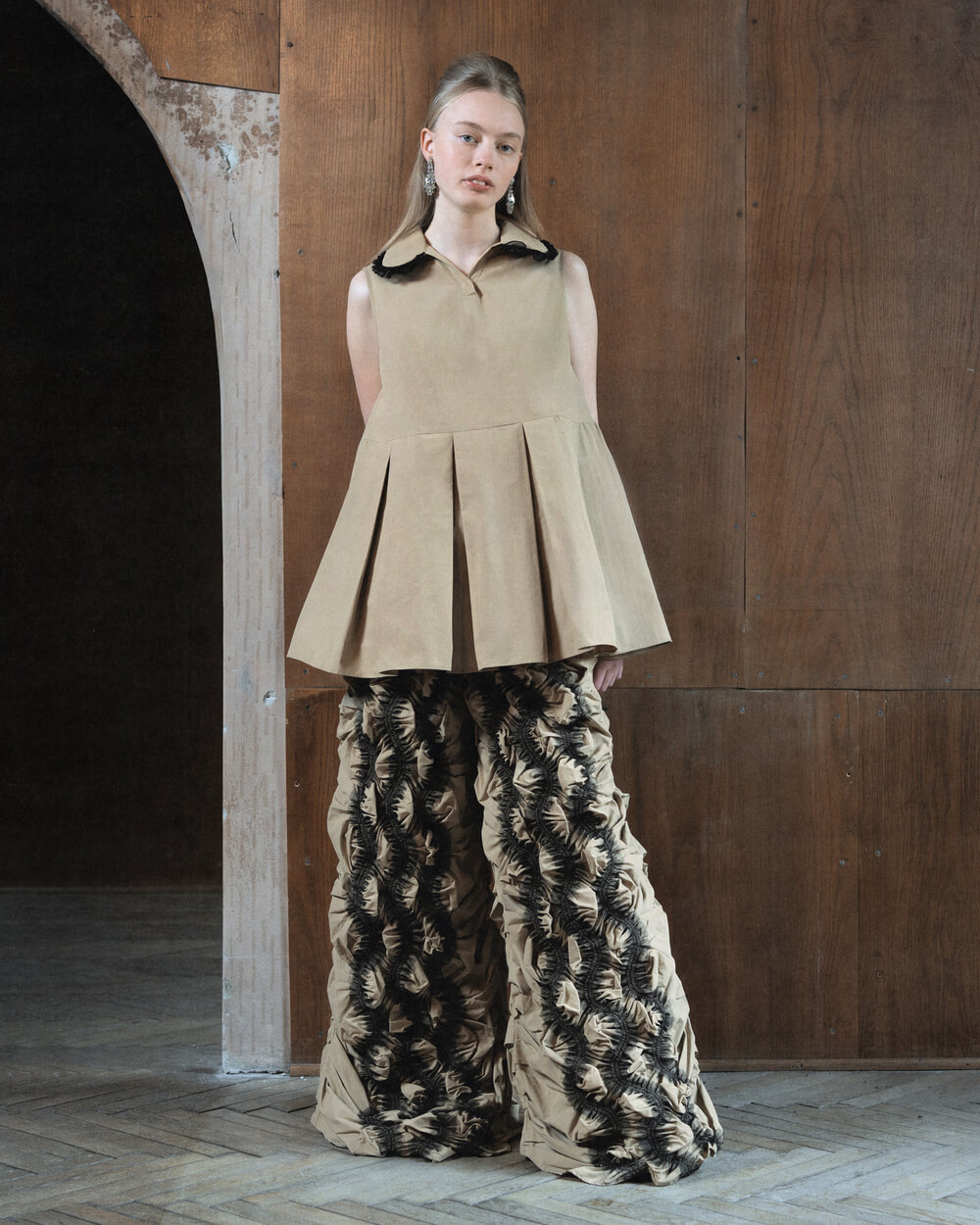
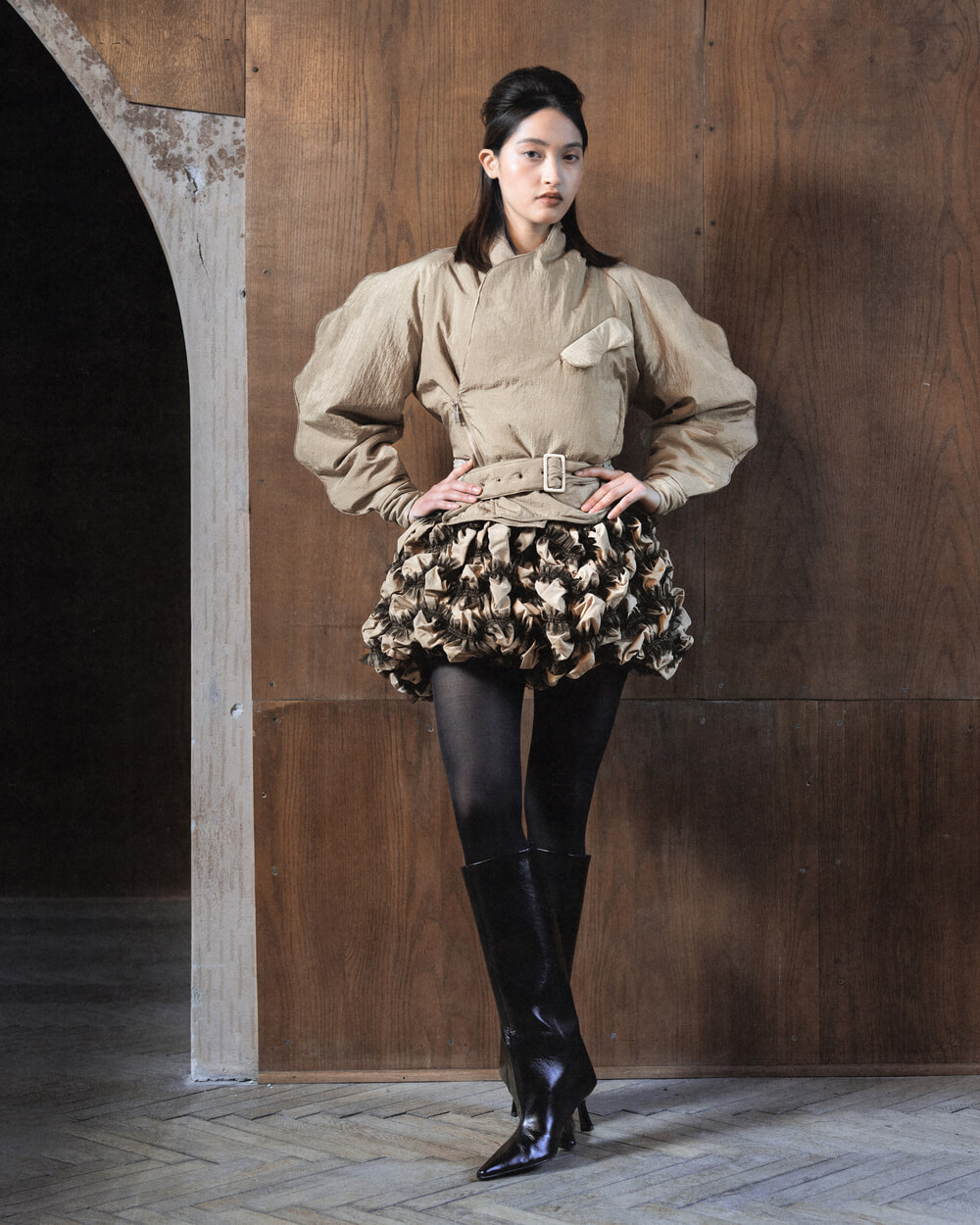
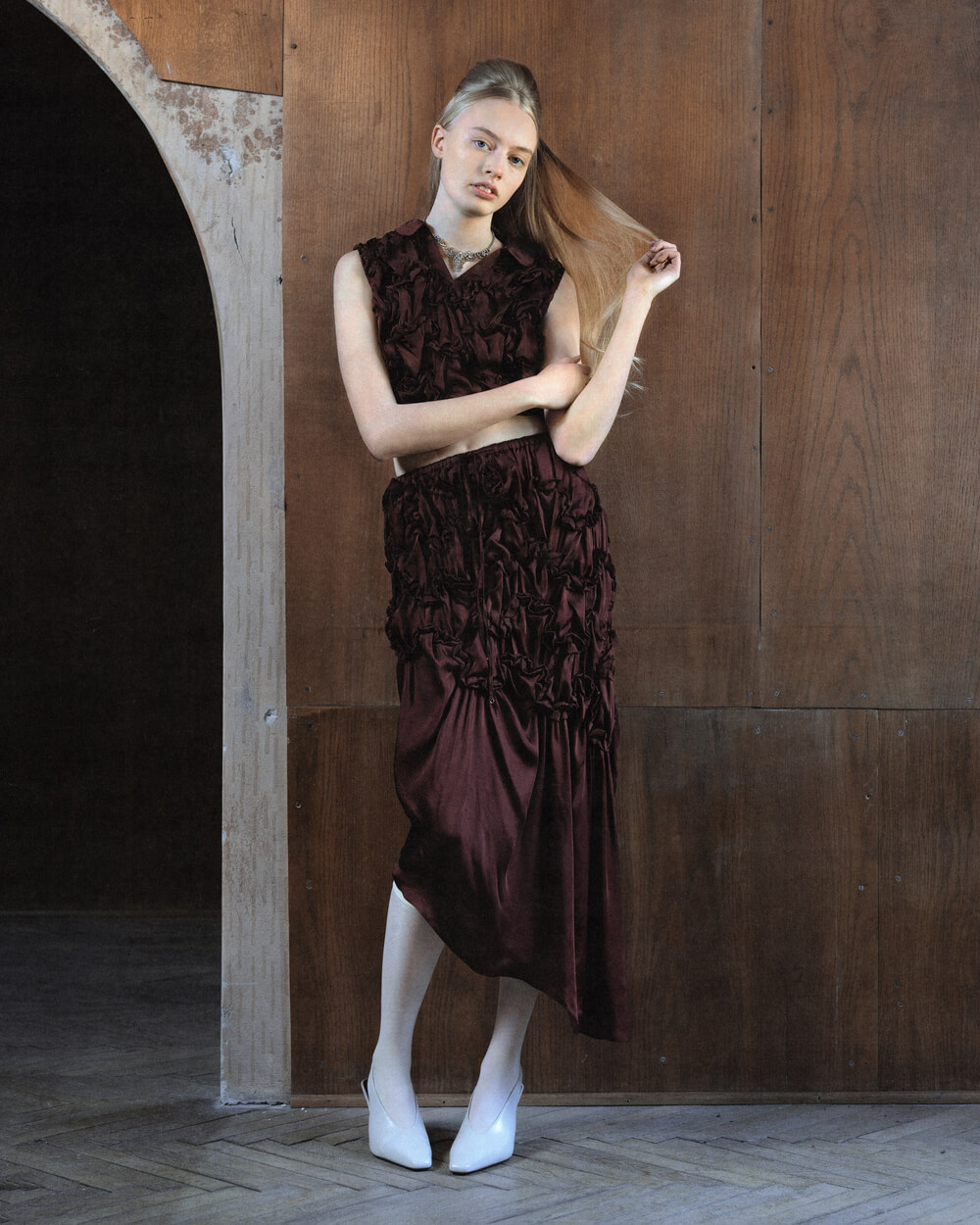
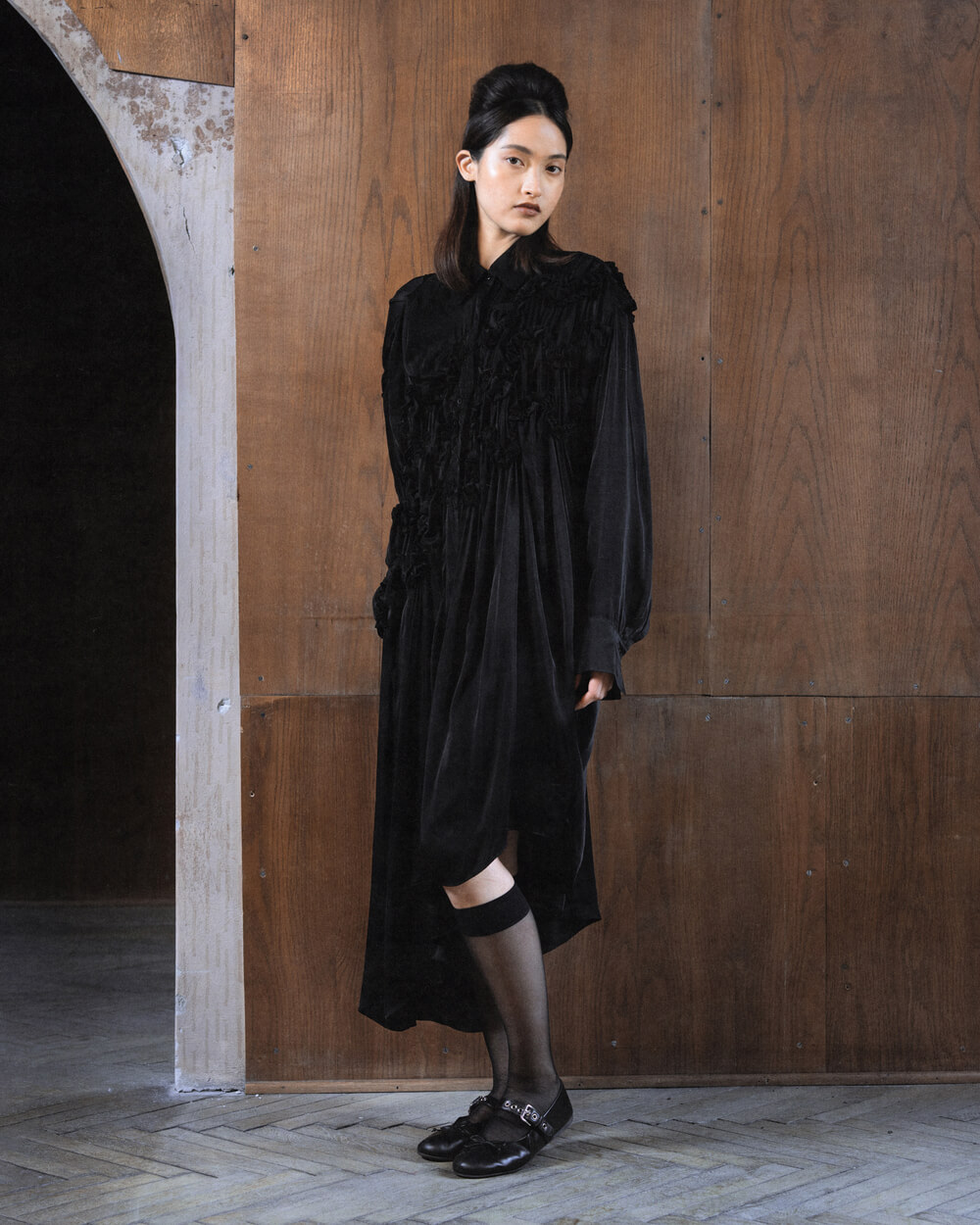
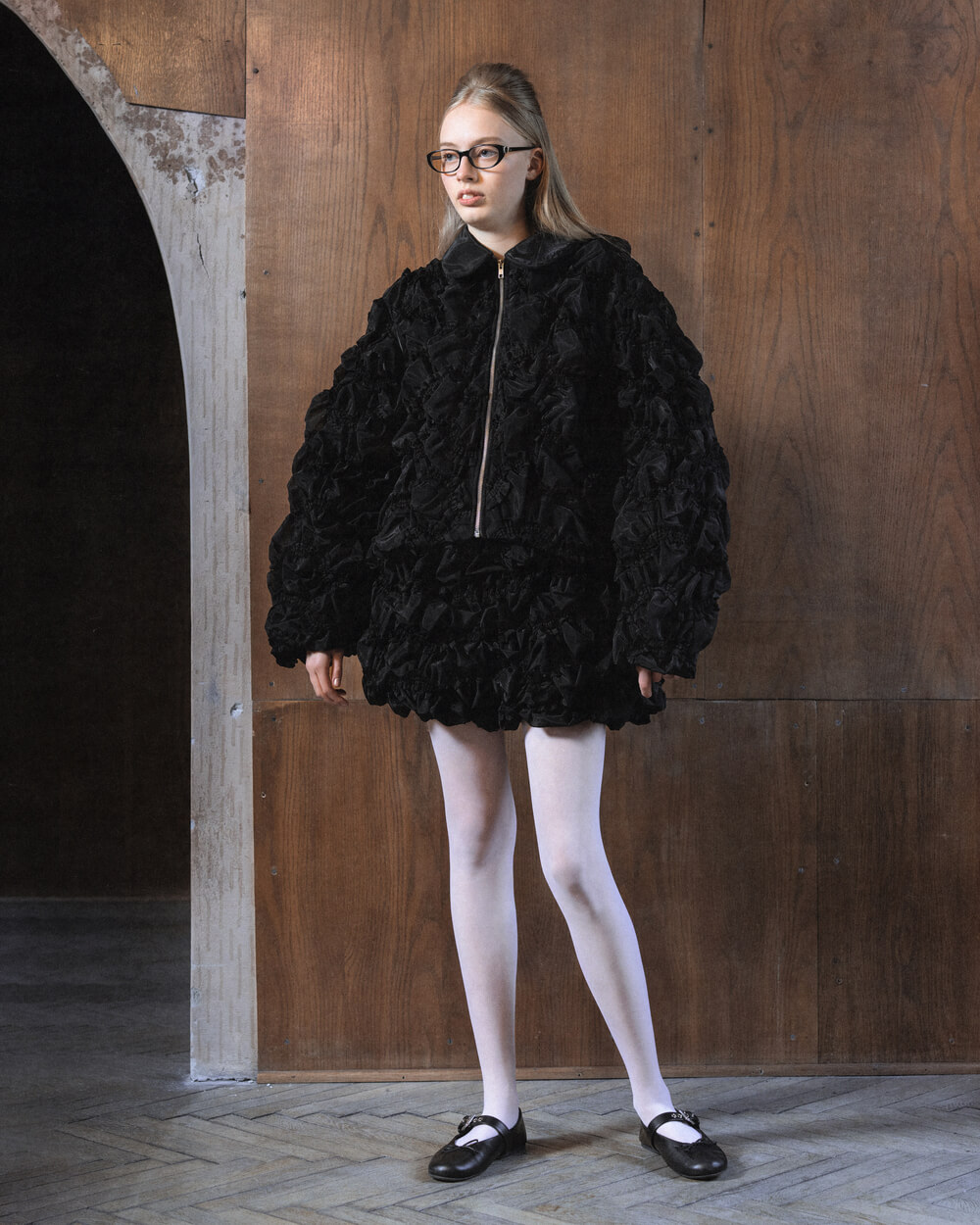
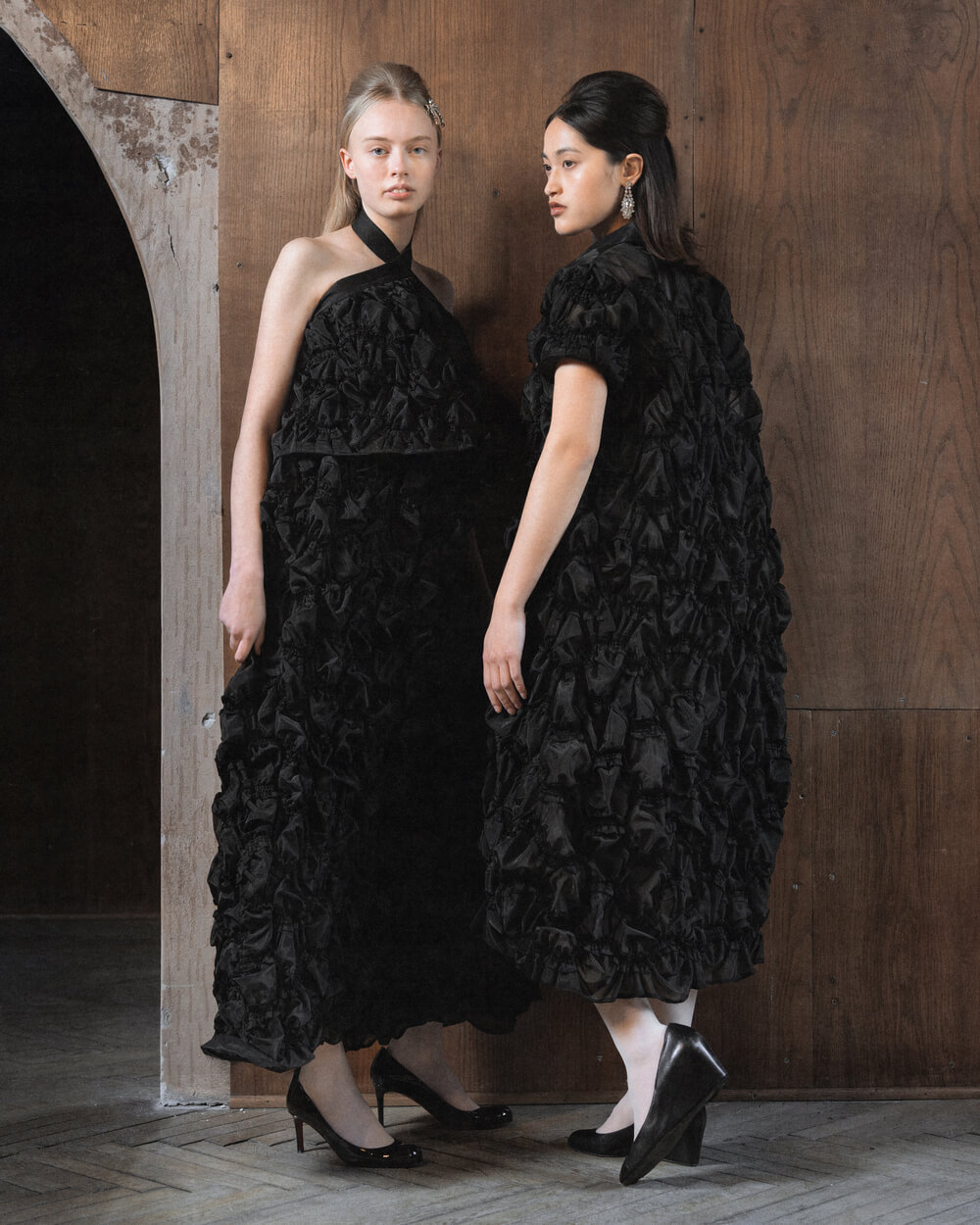
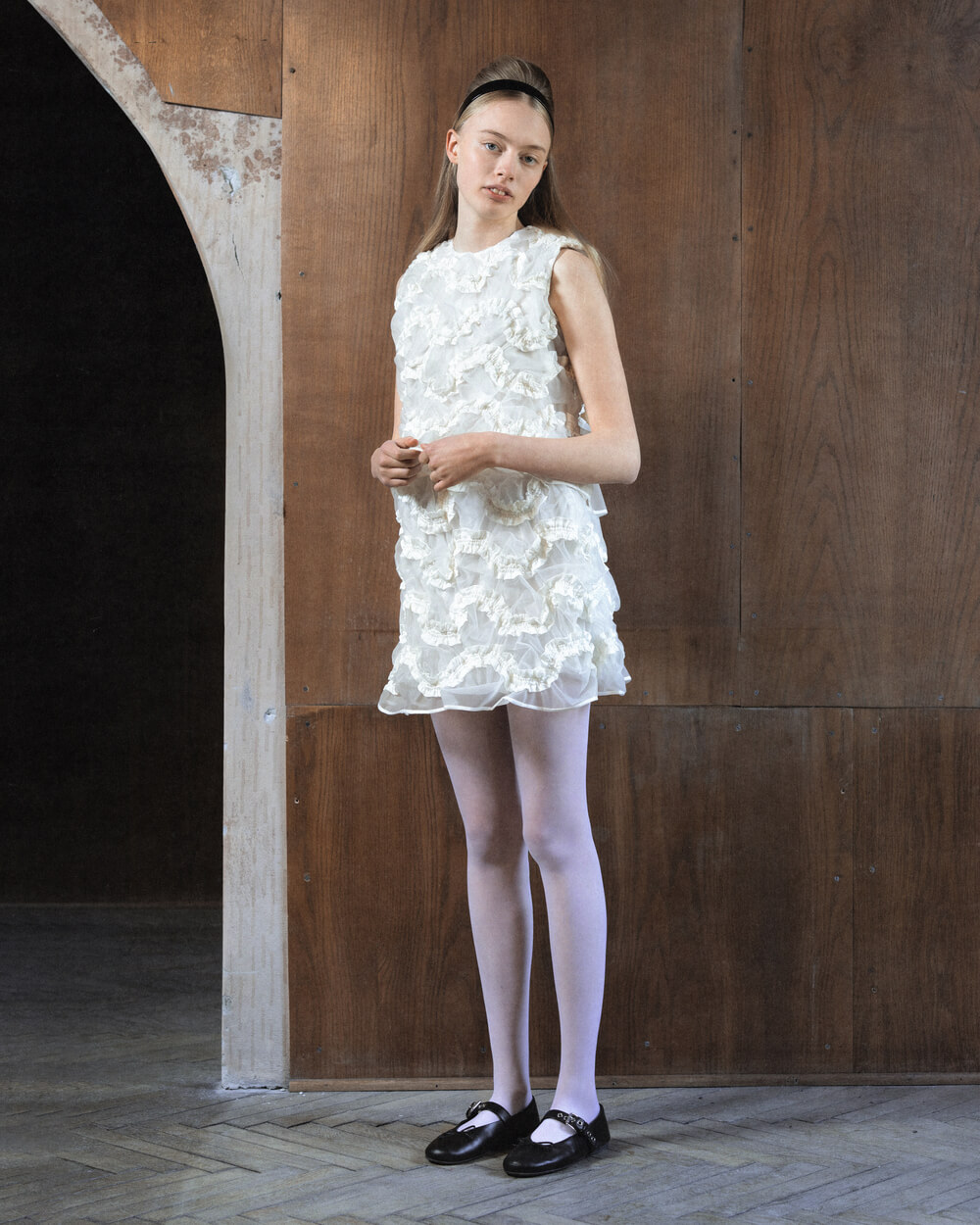
In an industry obsessed with irony and edge, Hisu Park is a breath of fresh air and part of the new wave of feminine power dressing (my words, not hers). The Korean-Austrian designer’s Vienna-based label, HISU PARK, has quickly carved out a space for womenswear that balances softness with strength, melding couture-level elegance with the pragmatism of ready-to-wear. For FW26, Park looks to movement itself, with die Welle (“The Wave”) translating the rhythms of emotional life into sculptural silhouettes that ebb between structure and fluidity. Raised in a family of musicians and shaped by her studies at Antwerp’s Royal Academy of Fine Arts, Park approaches fashion as both self-expression. As her label gathers momentum, we caught up with the designer.
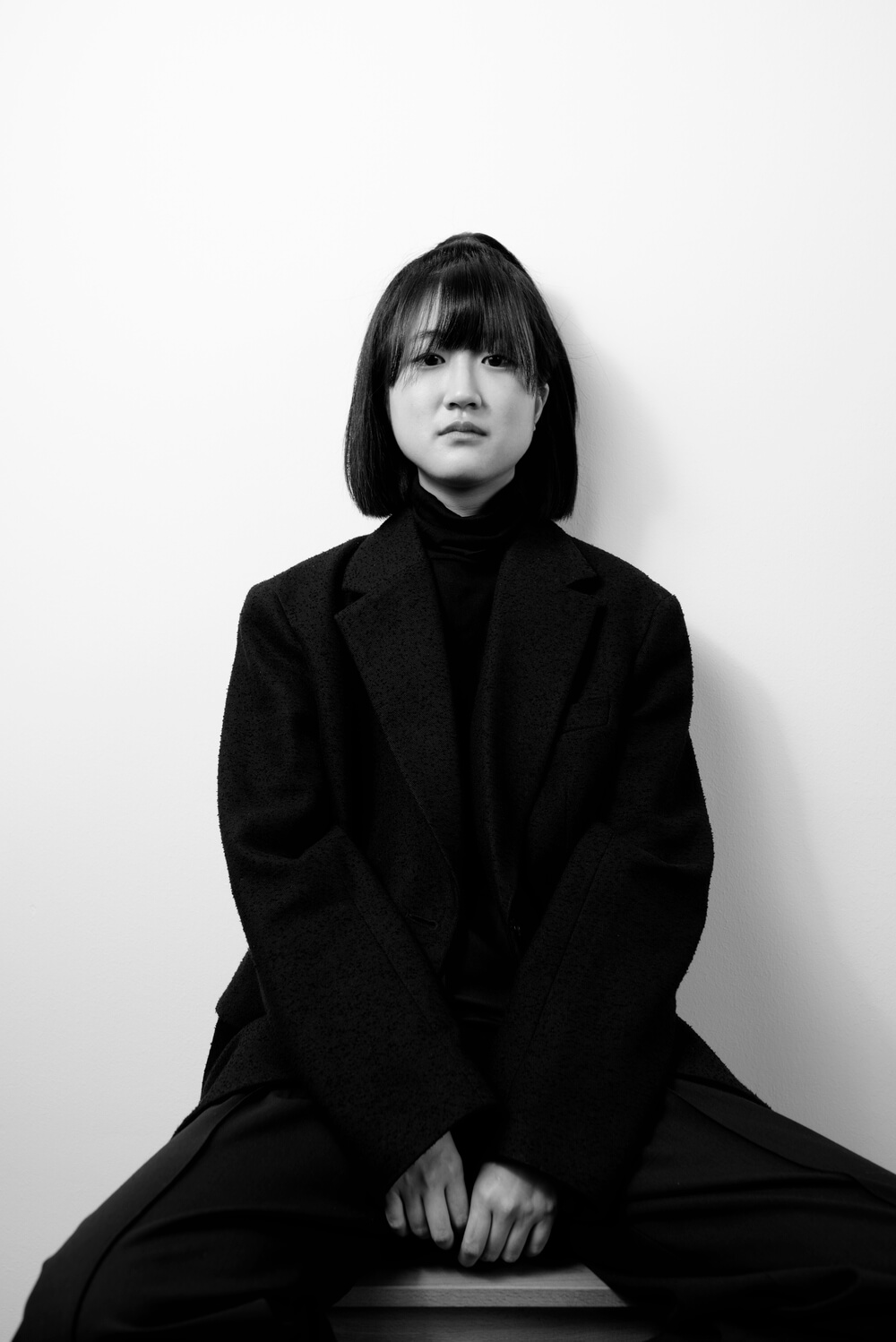
Before launching your label, where did you hone your craft, and how did those experiences shape your design language today?
I studied Fashion Design in Belgium. My studies exposed me to various facets and approaches to fashion design, providing me with a wealth of inspiration for my design language.
Were there particular houses or mentors that influenced your approach to construction or storytelling?
I have always been a great admirer of Rei Kawakubo’s work. Her approach to form and construction has deeply influenced me.
What pushed you to start your own brand rather than joining an established house long-term?
The decision to found my own label came from my desire to develop my own design language and express it freely. I have always enjoyed creating my own ideas and bringing them to life.
“Die Welle” explores rhythm, movement, and emotional flow. What was happening in your life that made this concept feel relevant, and what was your starting point?
What interested me about the concept was the fact that life is constantly moving up and down. Sometimes things move forward, and sometimes you feel completely stuck. Yet despite that, it always continues. I often have to remind myself, especially when facing major challenges, that I have always moved forward so far, and that this wave-like motion of forward and back, up and down, is the only thing that remains constant.
At the same time, I also wanted the wave to represent a sense of movement and an underlying vibration of joy for life. A certain feeling of vitality that runs through the collection.
What would we find on your moodboard if you use one ?
You would probably find a lot of cats on my moodboard.
If “die Welle” had a soundtrack, what would it sound like?
I love electronic music and club music. Anything that has energy, draws you in, and lifts the mood. That is the kind of soundtrack I imagine for my collection.
Can you walk us through one of the shrink or manipulation techniques used this season?
I work a lot with elastic yarn and with the idea of how fabric changes when it is in a gathered state. What I love about shrink techniques is that you can never control the result one hundred percent. Each fabric reacts differently to the shrink techniques.
I really like that thought. It feels liberating to me. I combined this idea with the notion of the wave, and that is how the fabrics for this collection came to life.
Is there a part of yourself you’re still trying to understand through your clothes?
Each collection is, for me, a new and intense engagement with my emotional world and with my sense of taste. As I continue to evolve, with every new collection, I am faced with the question of what I like, what I want to express, and what I want to present to the world.
Throughout the design process, I keep discovering new facets of myself.
Independent designers keep disappearing here in Paris, and I don’t even need to mention that men outnumber women in major design roles. What are the biggest challenges of remaining independent in today’s fashion system?
If I had known when I founded the label how much it actually takes to build one, I probably would have felt discouraged. I think one of the biggest challenges in the beginning is that everyone expects you to deliver and to provide the highest consistent quality at speed, while offering very little support to the label itself. Many people watch and want to see how far you can get entirely on your own. In practice, that means investing for years into something that gives very little profit in return. At the same time, you constantly have to keep evolving, not only on a creative level, but also in areas such as sales, PR, marketing, content creation, and more. But I also enjoy these challenges, and I find a lot of satisfaction in them.
Are there female designers or creatives who have inspired you in building your own path?
Alongside the work of Rei Kawakubo, I have always been deeply inspired by Marlene Dumas. I have always loved painting and spent a lot of time doing it myself. My mother, a classical pianist, supported me greatly in this, as she is also very creative and a major inspiration to me.
Who is the woman you’re designing for right now, and has she changed over time?
When I first started designing, I was mainly designing for myself, creating clothes that I would have wanted to wear or would have loved to find in a store. As I am rather petite myself and tend to be quite introverted, I wanted to create silhouettes that would make me appear stronger, while also feeling more confident.
That is still true today, but I think my perspective has expanded over time, and I now try to communicate emotional worlds through my clothing. Everyone who feels connected to those emotions and can see themselves in that sensibility is the person I design for.
Where do you see HISU PARK evolving next?
I am constantly searching for artistic growth. How can I capture and communicate my world even more clearly and precisely? How can I create garments that are both compelling and highly individual? These are the thoughts that occupy me. At the same time, I am currently trying to expand my reach, as I am a very introverted person. I have spent a lot of time with myself, but in the future I want to show more of who I am.
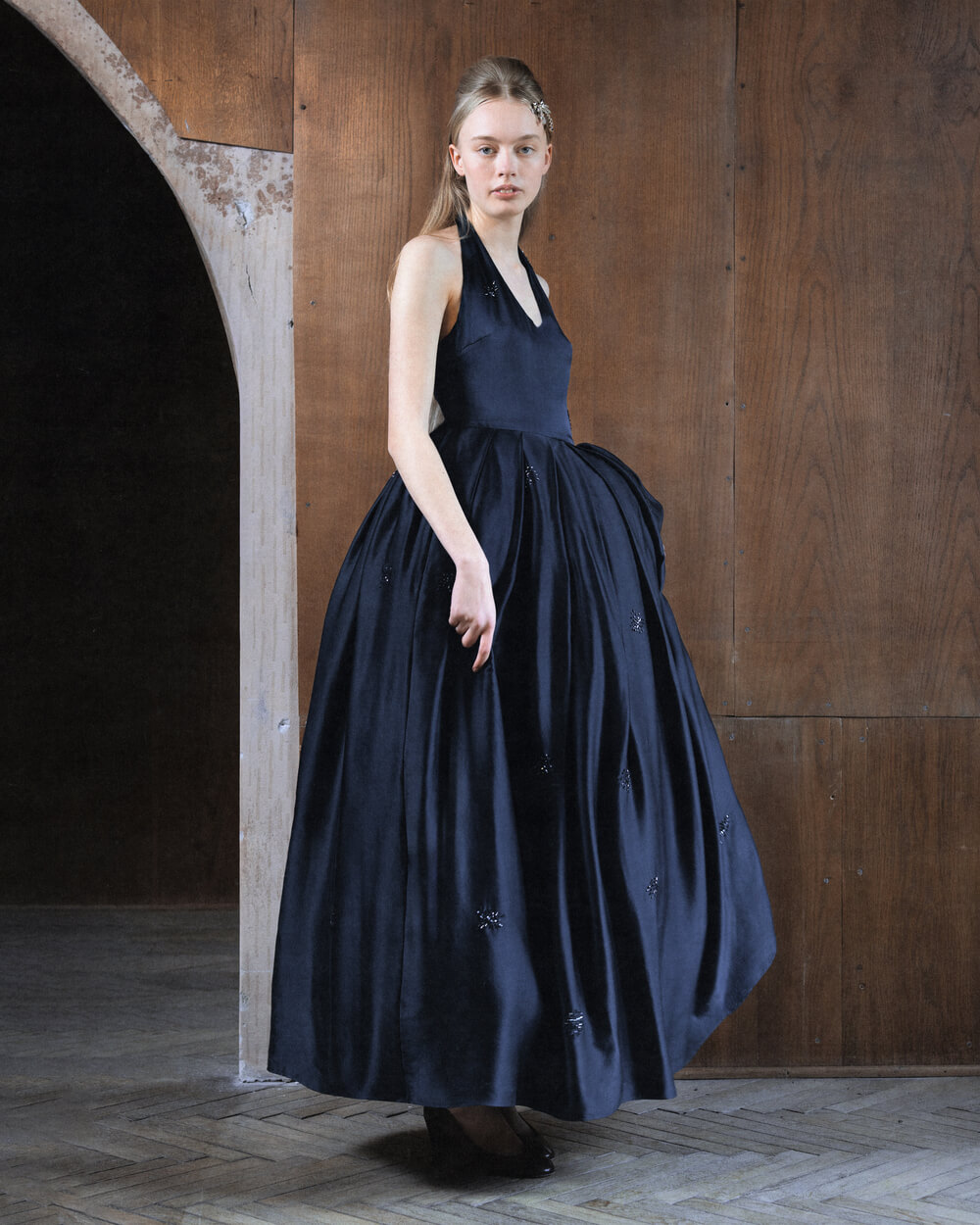
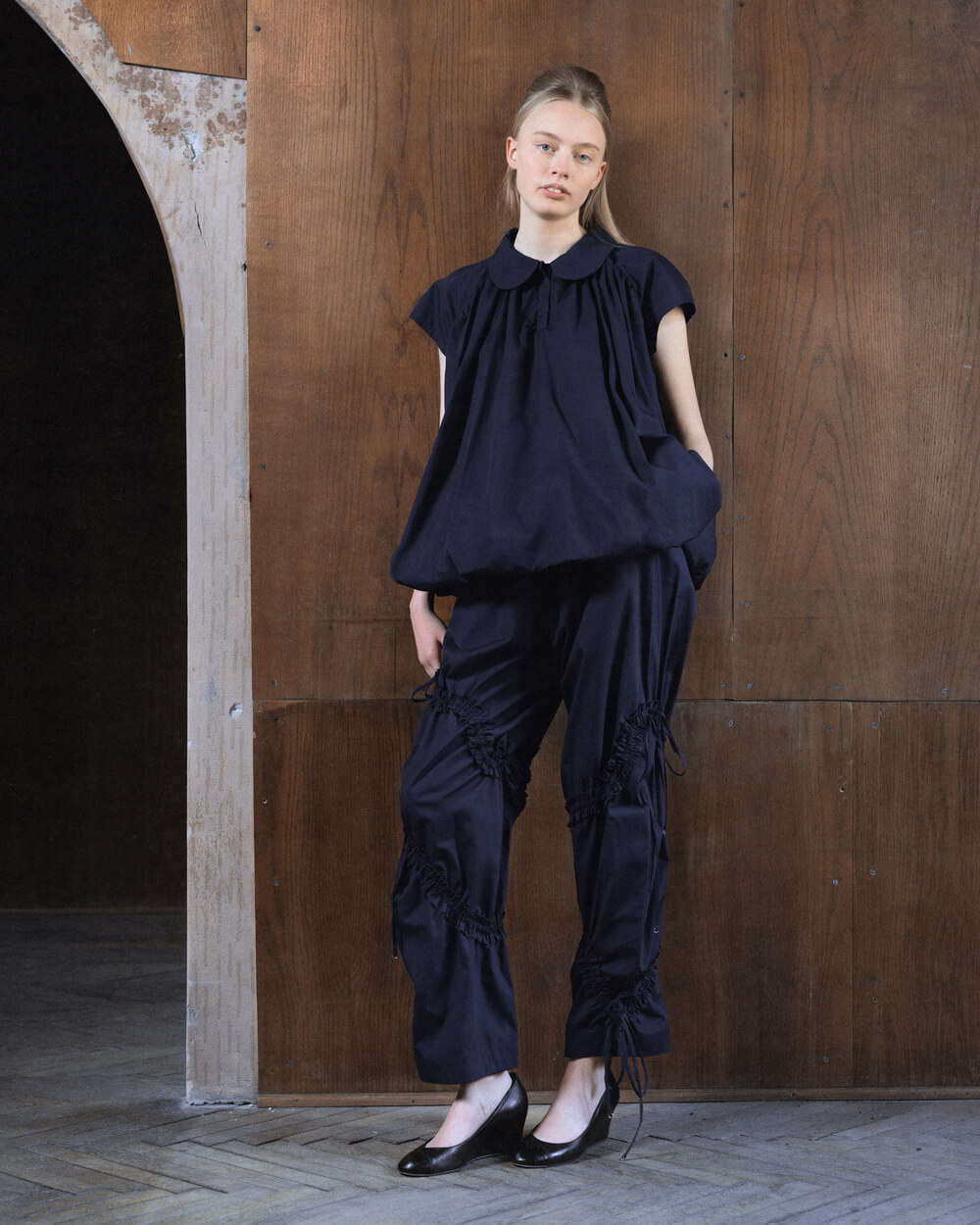
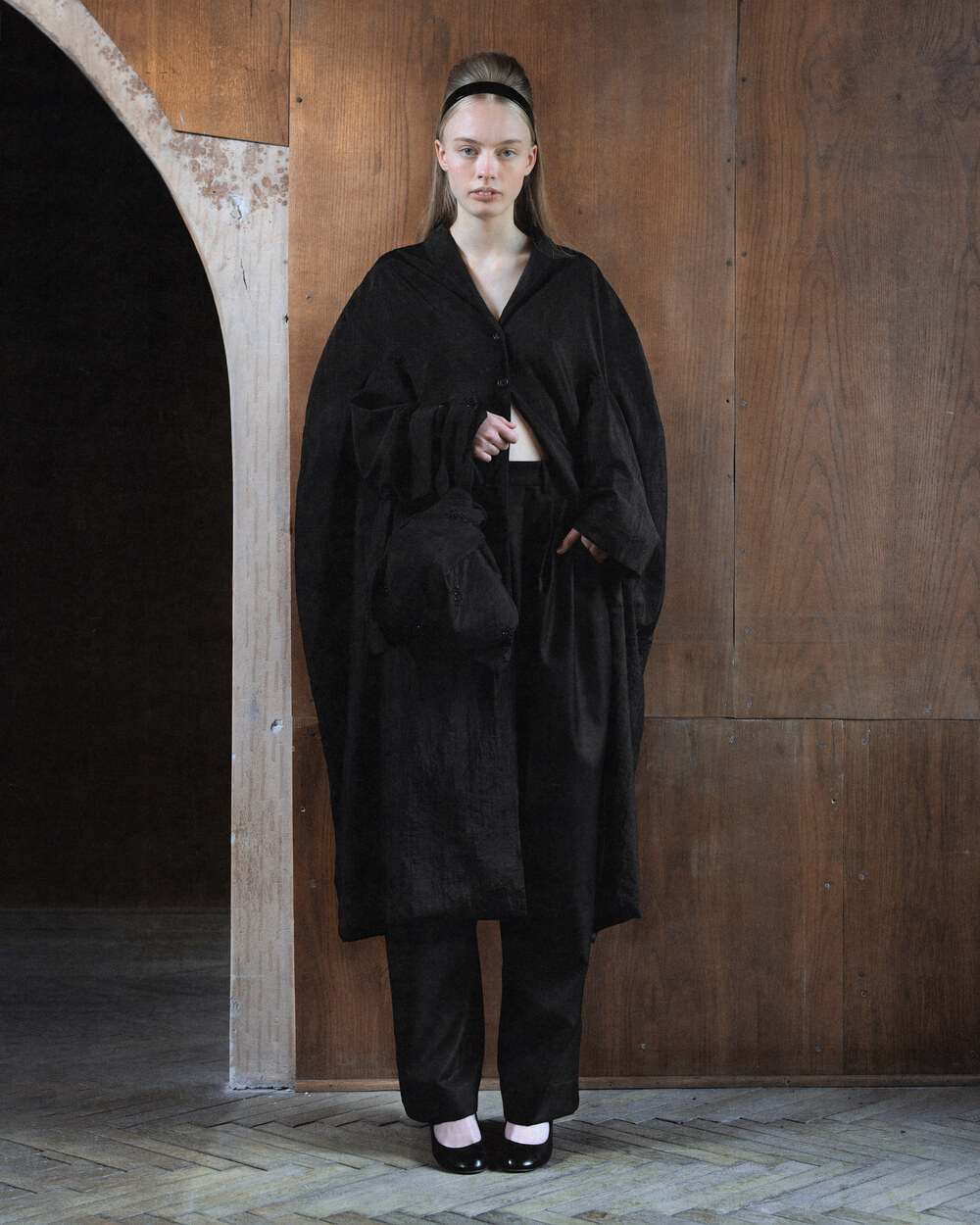
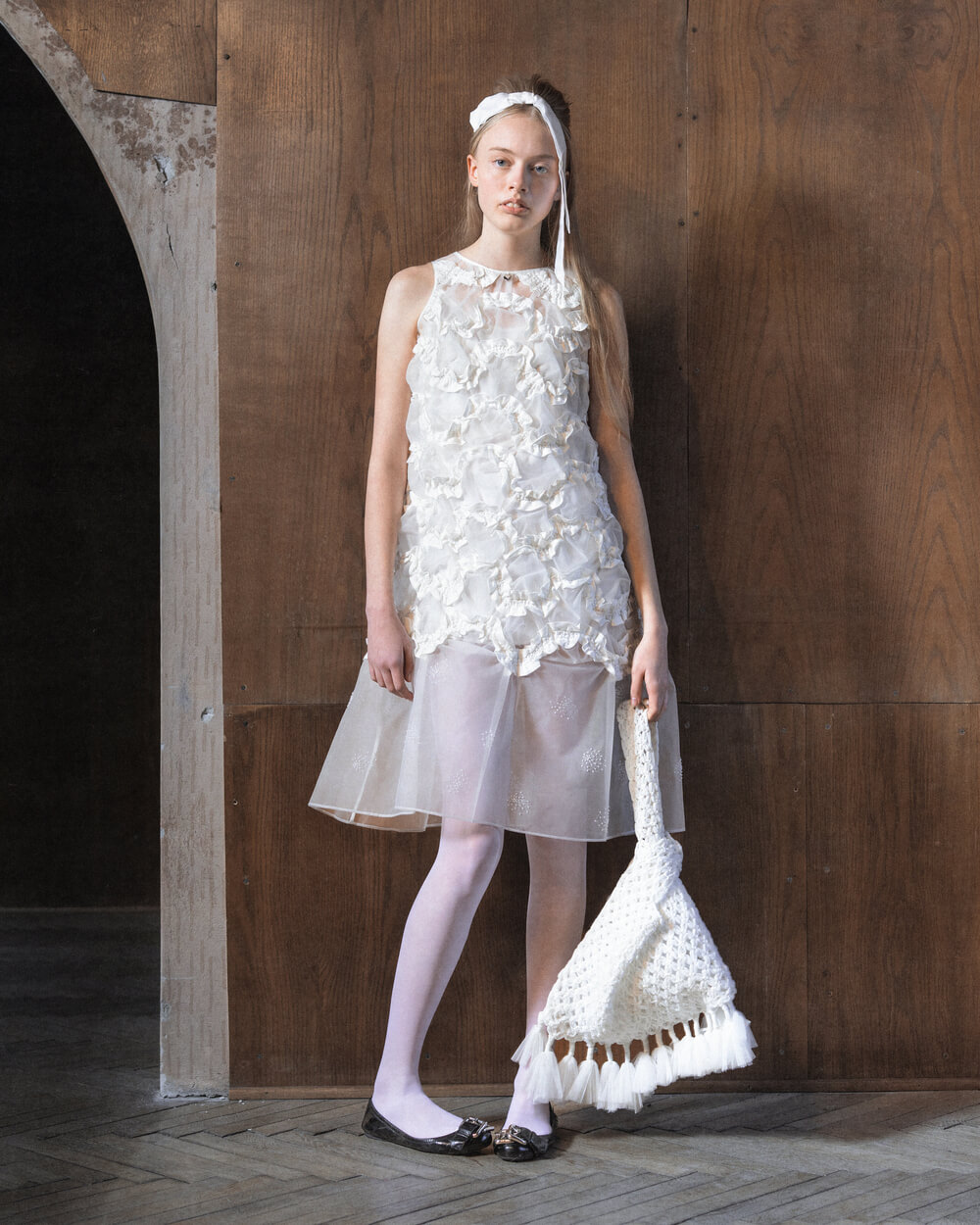
Imagery courtesy of Hisu Park. Photography by Elif Gündüz