At 080 Barcelona Fashion, the designer reimagines horror’s most iconic trope as a story of transformation, where innocence, tension, and identity collide.
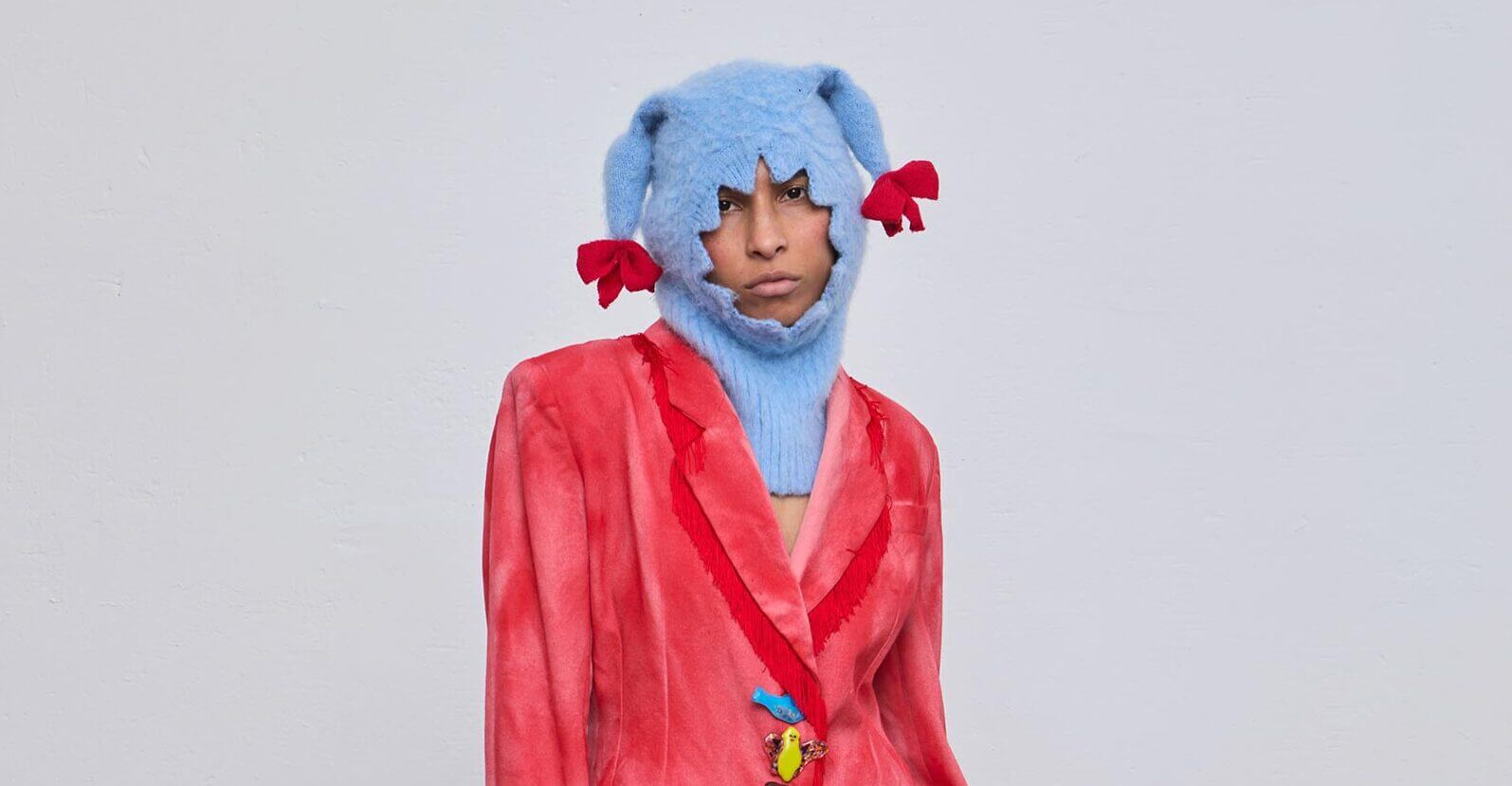
Reframing it through his own lens, Victor von Schwarz leans into a familiar cinematic trope at 080 Barcelona Fashion. His latest collection, Final Girl, draws on horror-film archetypes while pushing beyond them. This body of work is less about fear and more about what follows it. The survivor – the one who endures – emerges not only as a symbol of resilience, but of transformation.
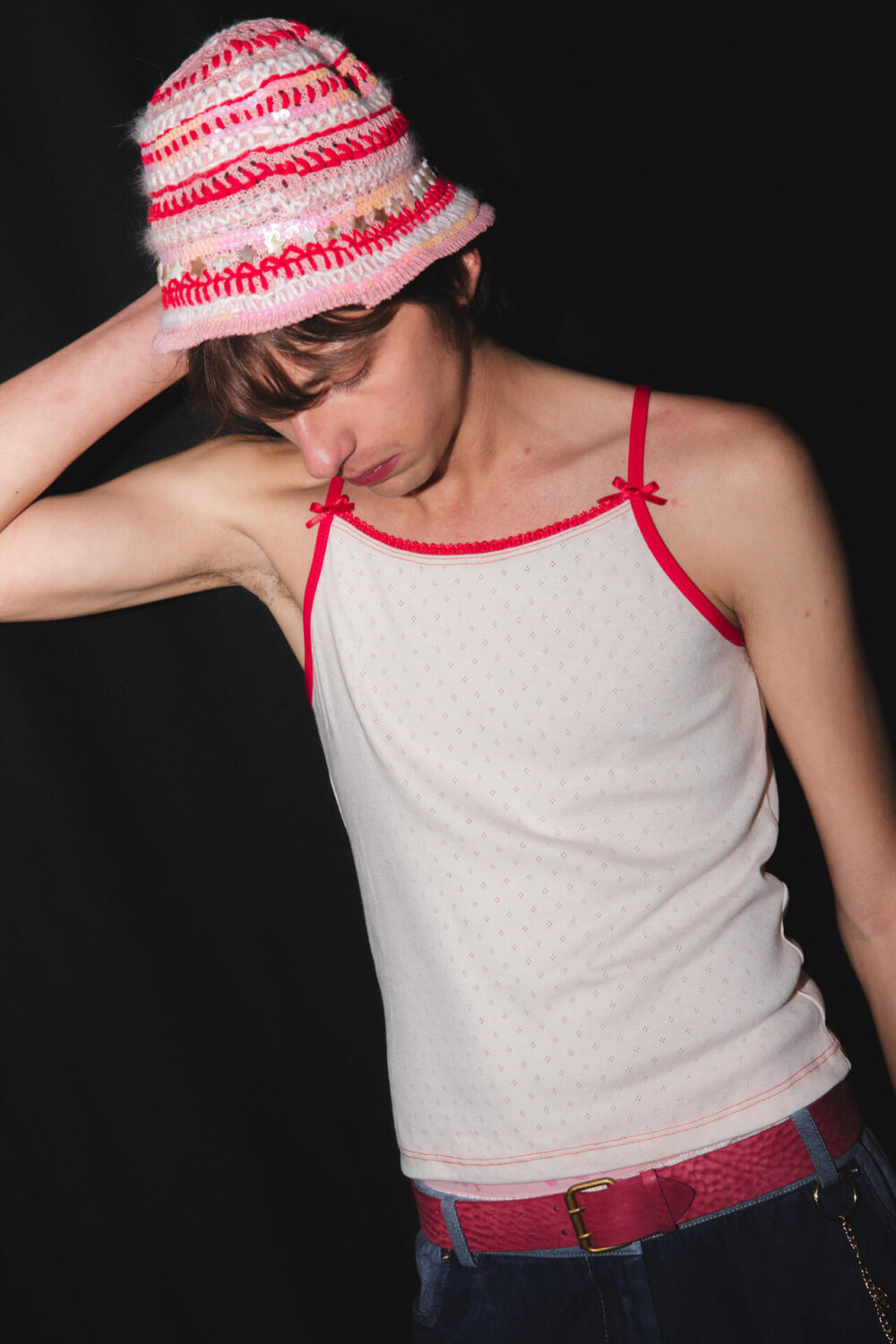
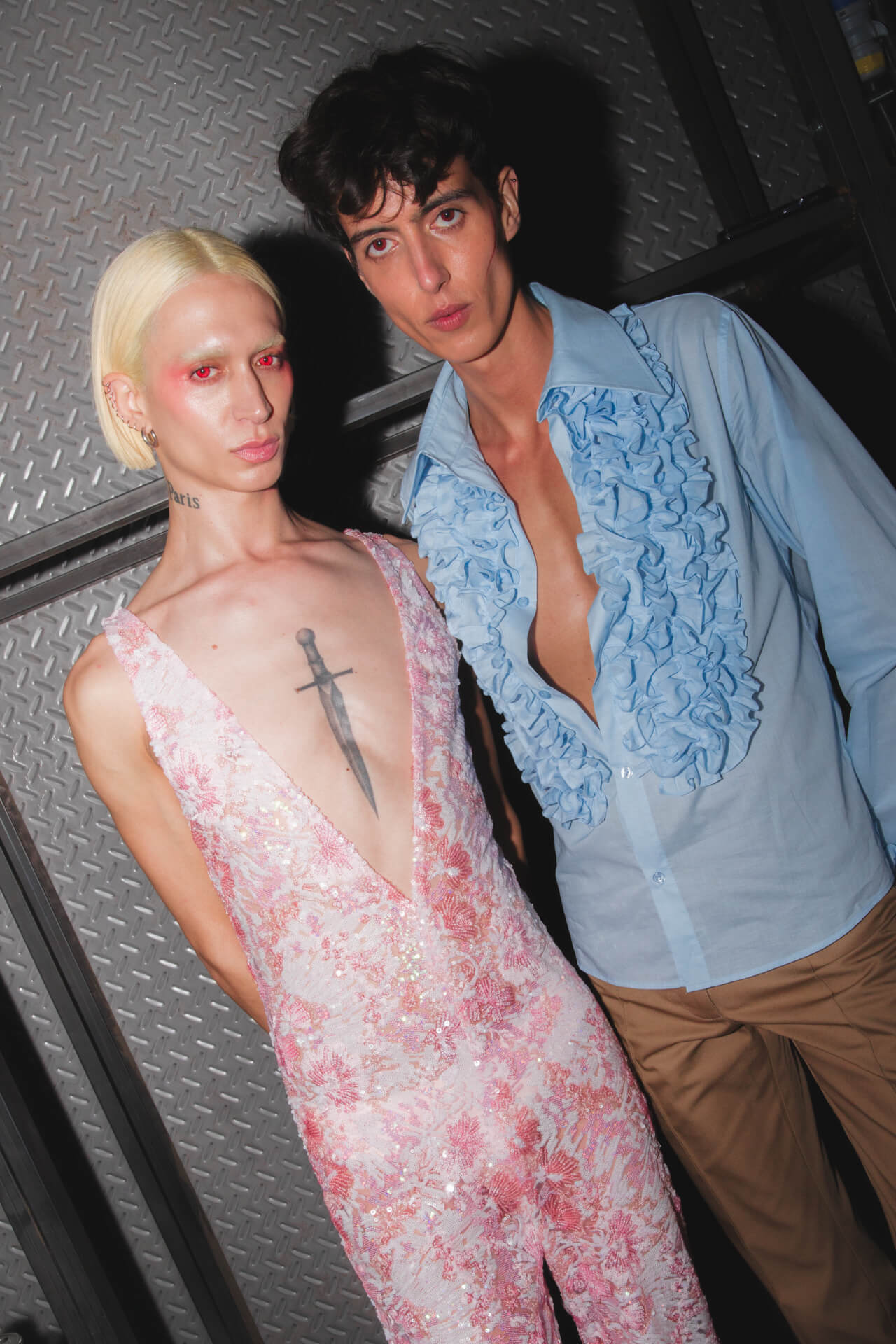
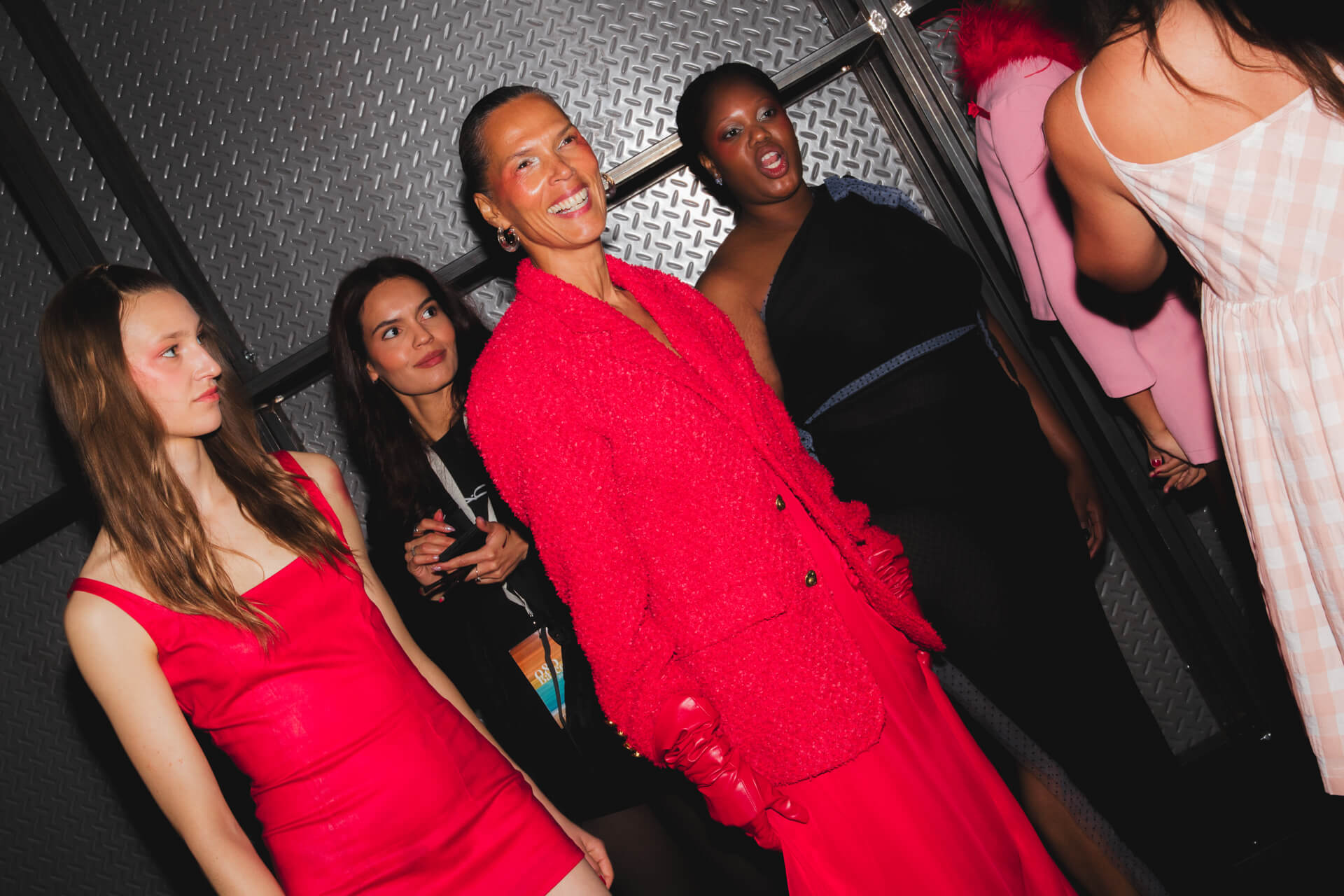
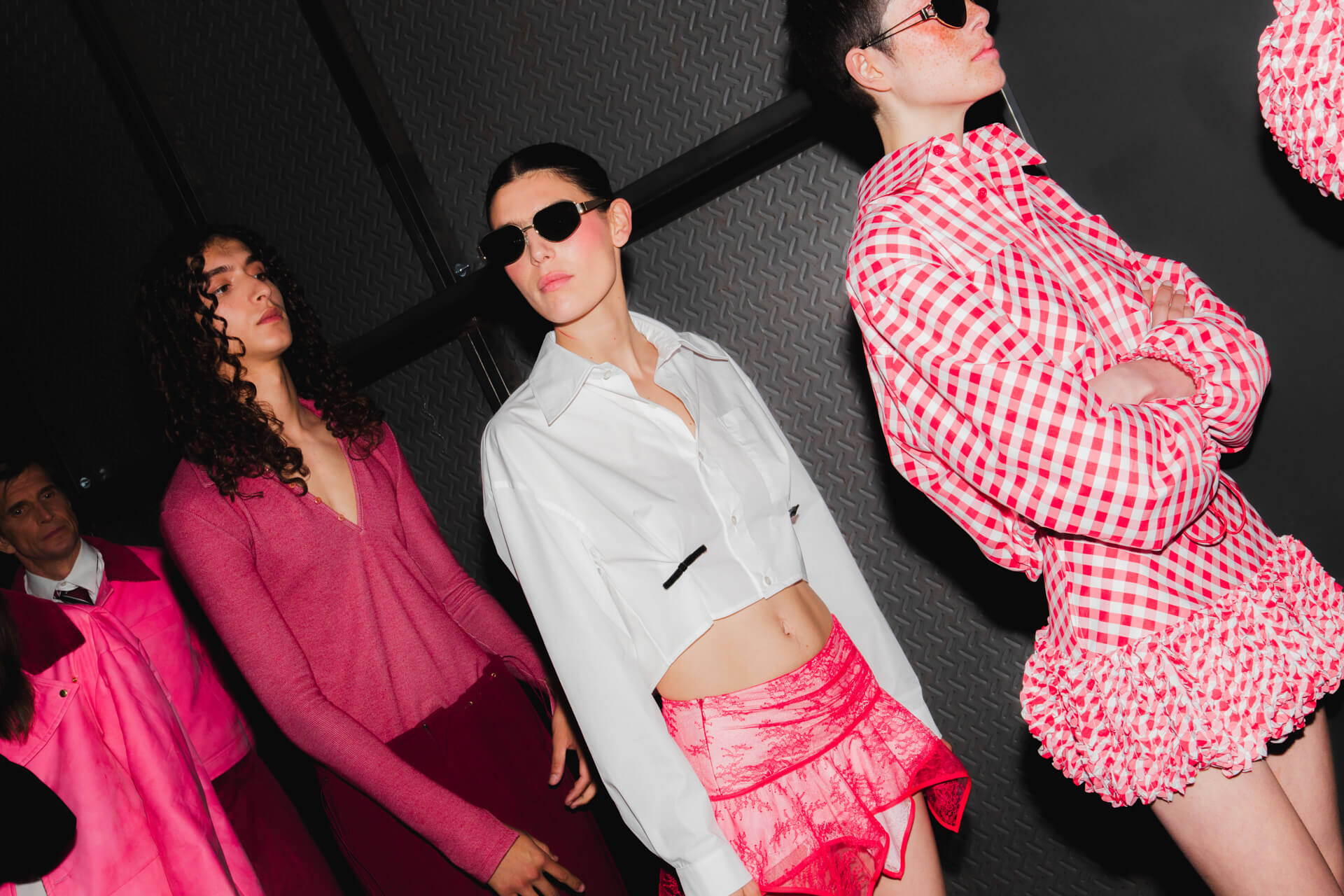
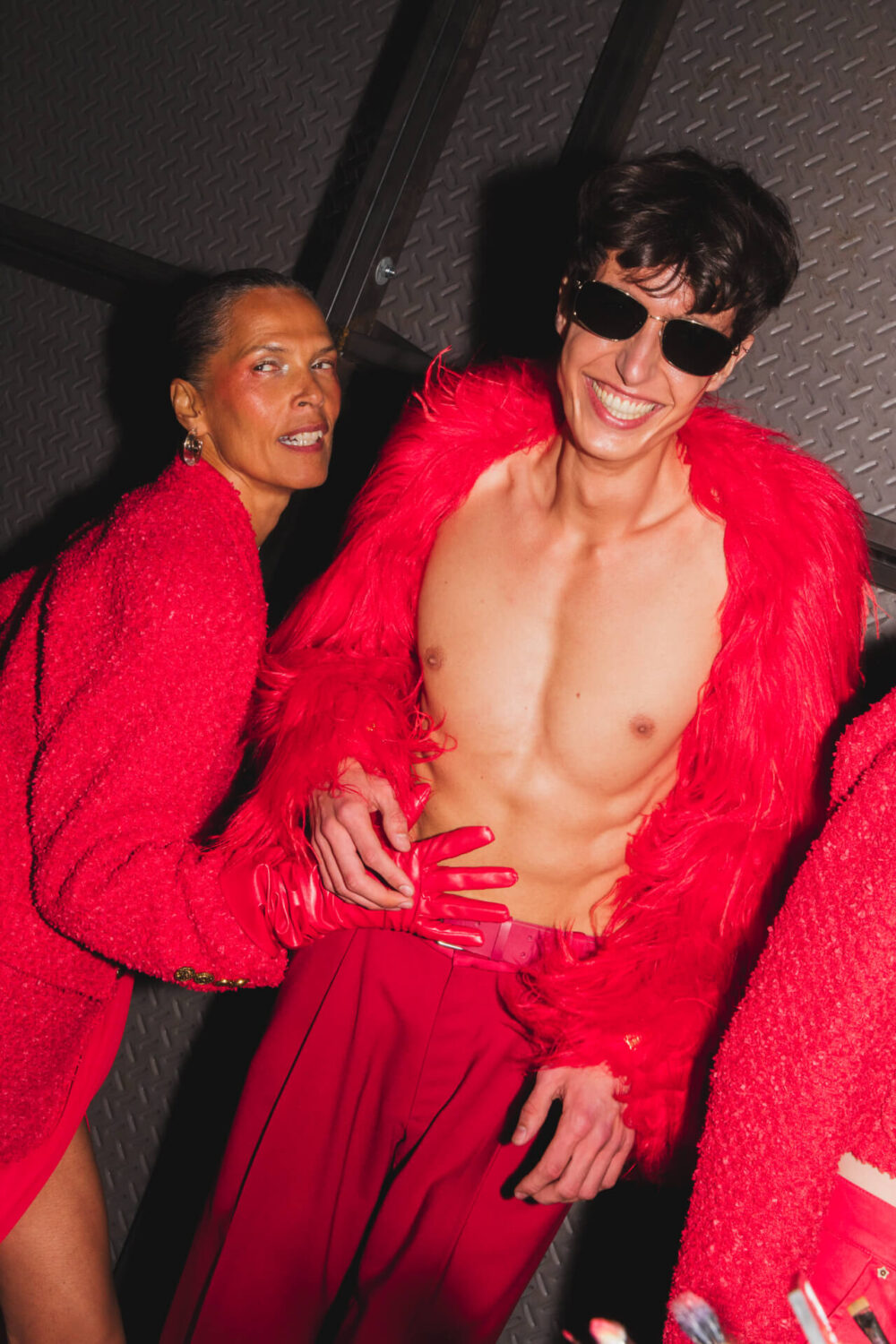
There’s something instinctive in the way the collection unfolds. Referencing figures like Carrie or the heroines of Scream, von Schwarz taps into a visual language that feels both nostalgic and immediate. Prom dresses, college silhouettes, and everyday codes are reworked through tension and drama, as if lifted straight from a scene mid-climax.
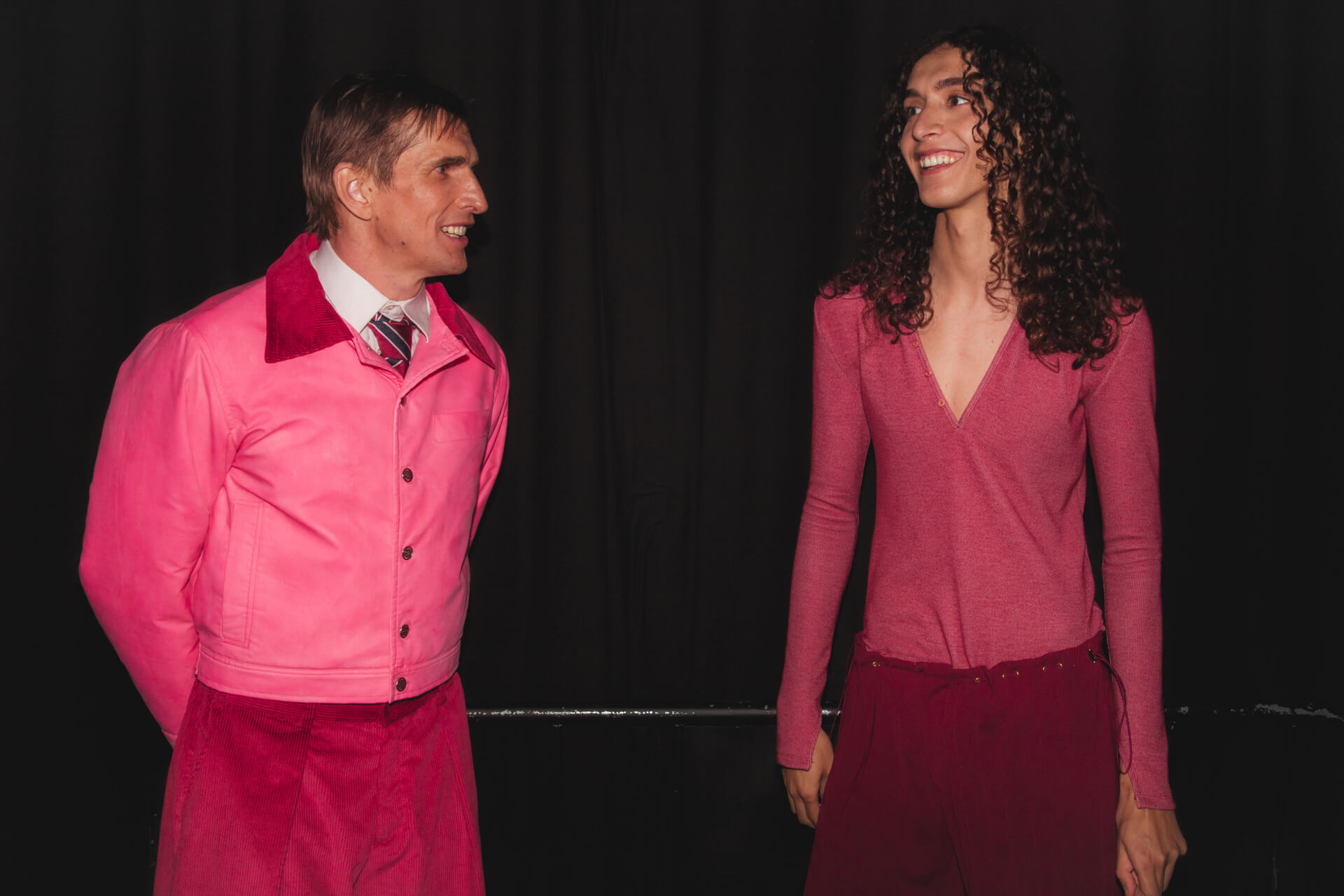
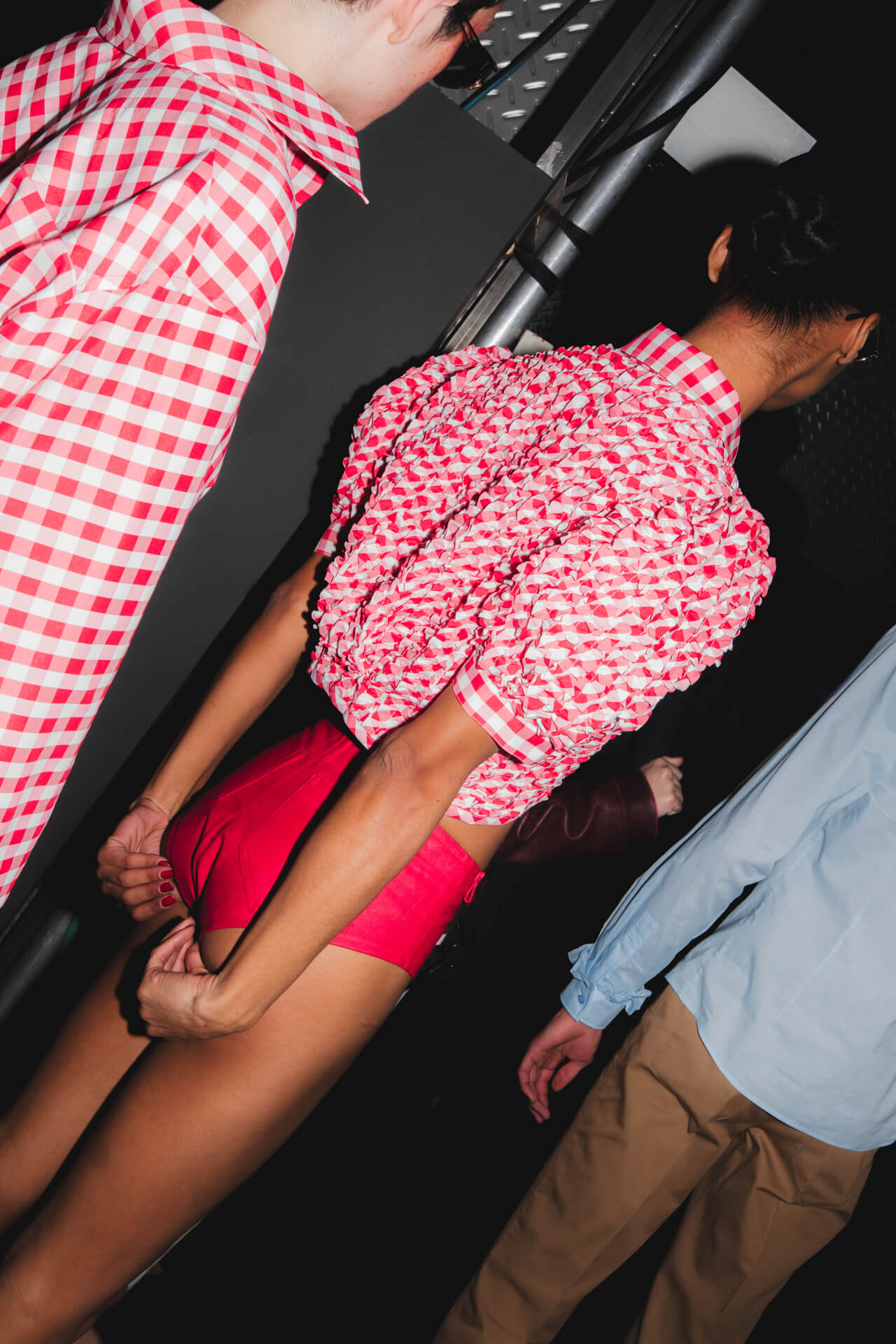
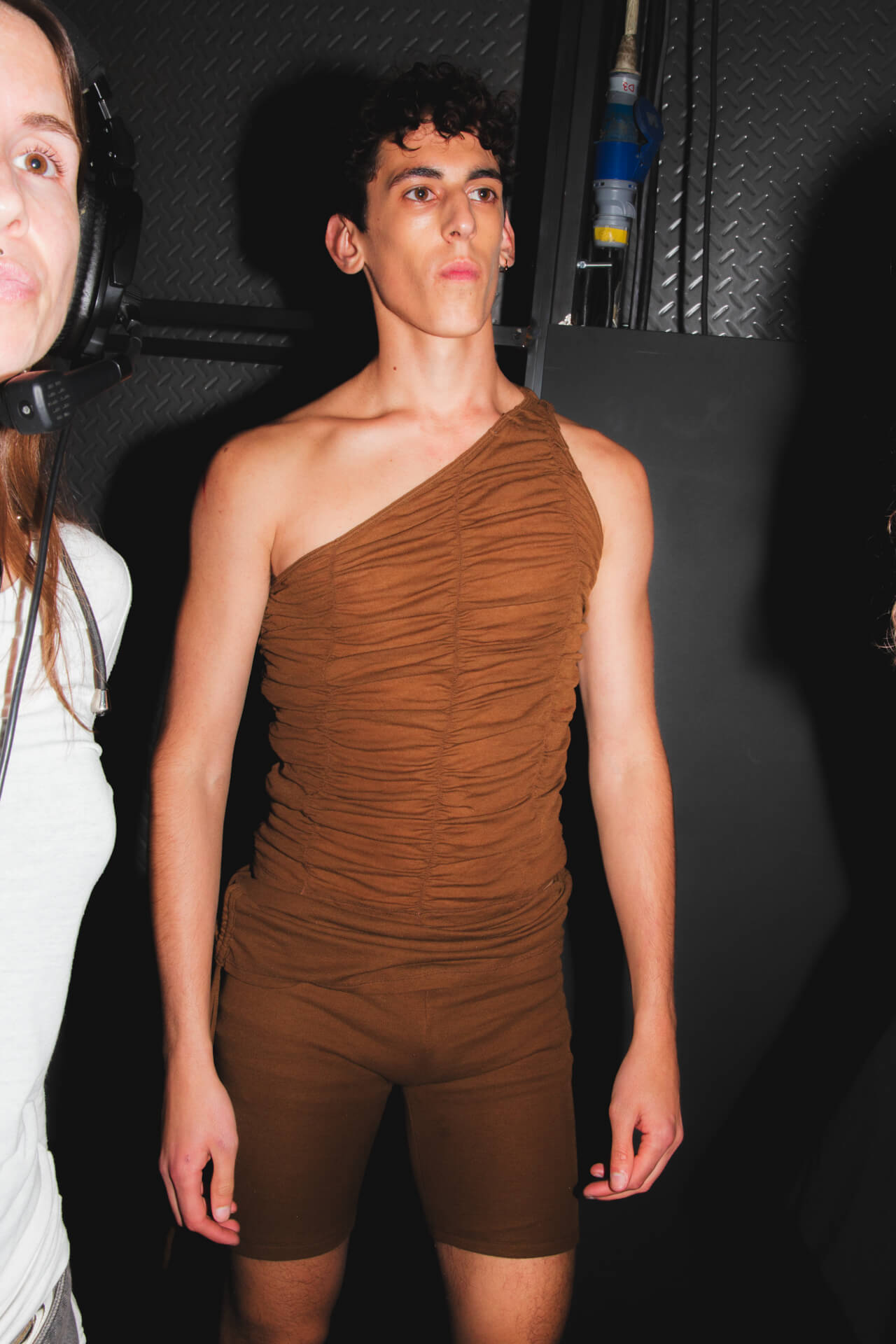
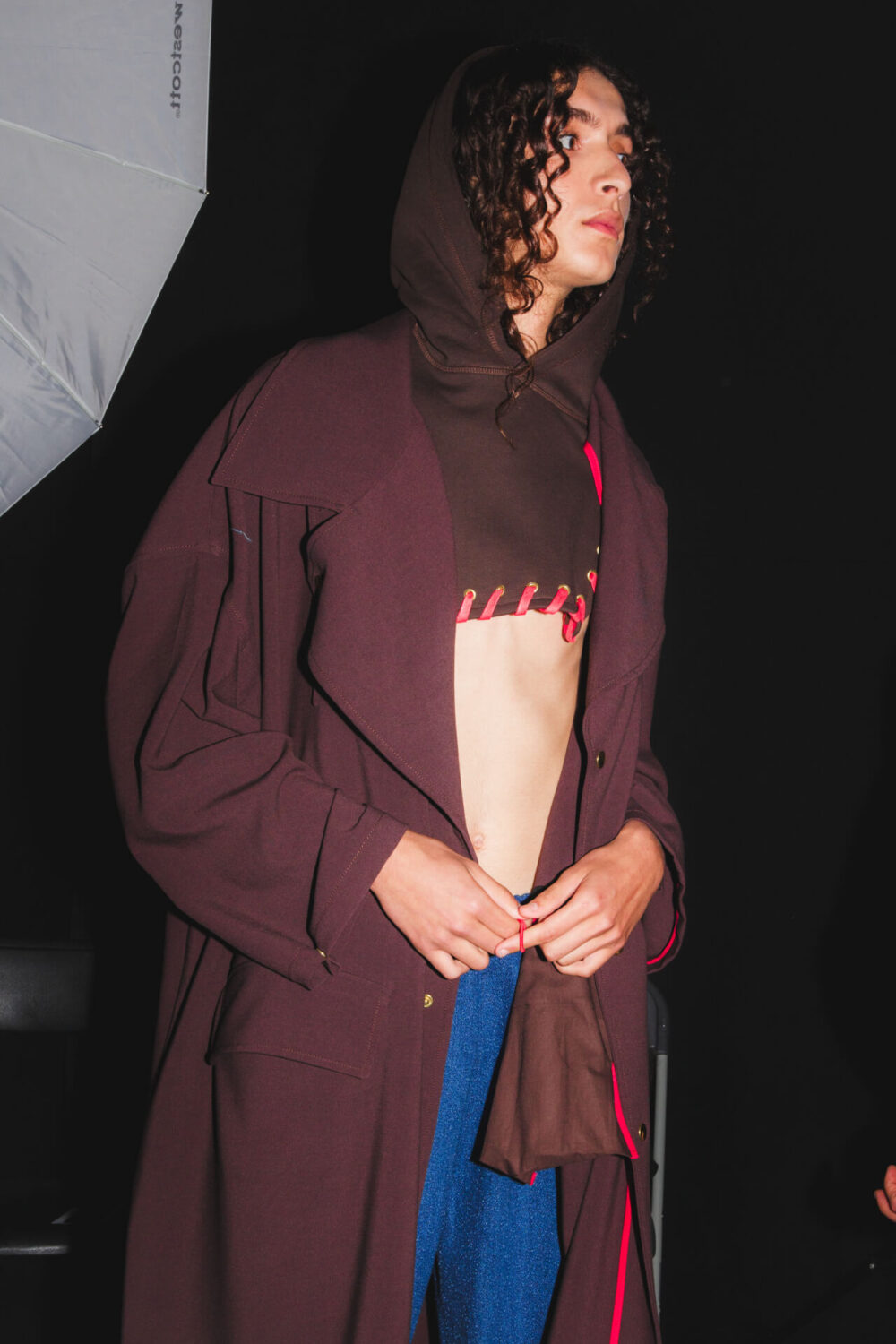
What takes shape is a universe where innocence and intensity coexist. Volumes, textures, and details move between softness and excess, while gender boundaries dissolve into something more fluid – territory the designer has long made his own. Rather than recreating the horror genre, von Schwarz distills its emotional core, channeling survival, identity, and the quiet strength that remains once everything else has fallen away.
You’re returning to 080 Barcelona Fashion. What does this comeback mean to you, both personally and creatively?
First of all, I feel happy. I’d wanted to come back for the past two seasons, but one thing or another meant I prioritized other projects. I’ve also felt quite a bit of pressure, because I’ve been working on smaller collections and collaborating with other brands like Hune for Krack, Overblushhh, as well as doing styling work. My universe is still the same though – pink, dark, and fantasy.
How did this new collection come about, and what was the conceptual starting point?
Watching horror films and series. It’s what relaxes me the most and completely disconnects me from everything, it clears my mind. I started by imagining what the styling of my favorite horror movies would look like.
Your work often moves between the emotional and the aesthetic. What themes or ideas run through this collection?
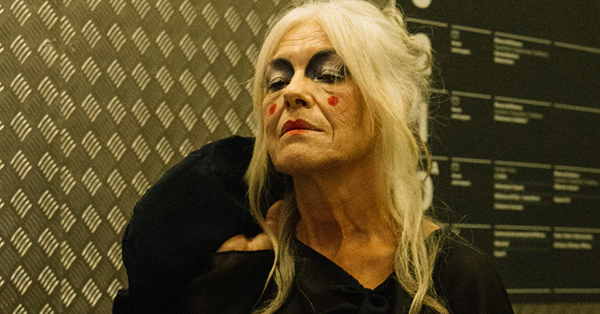
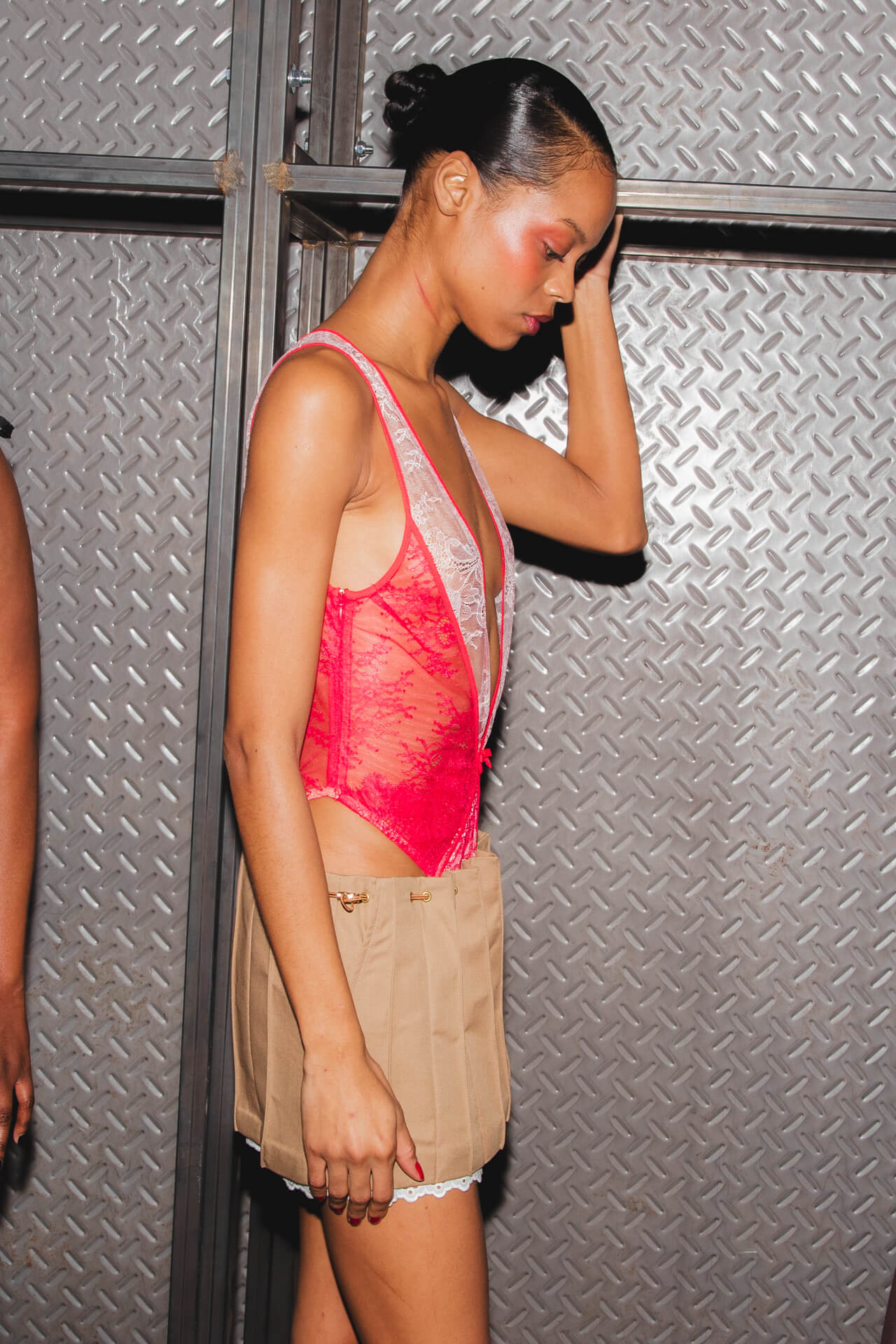
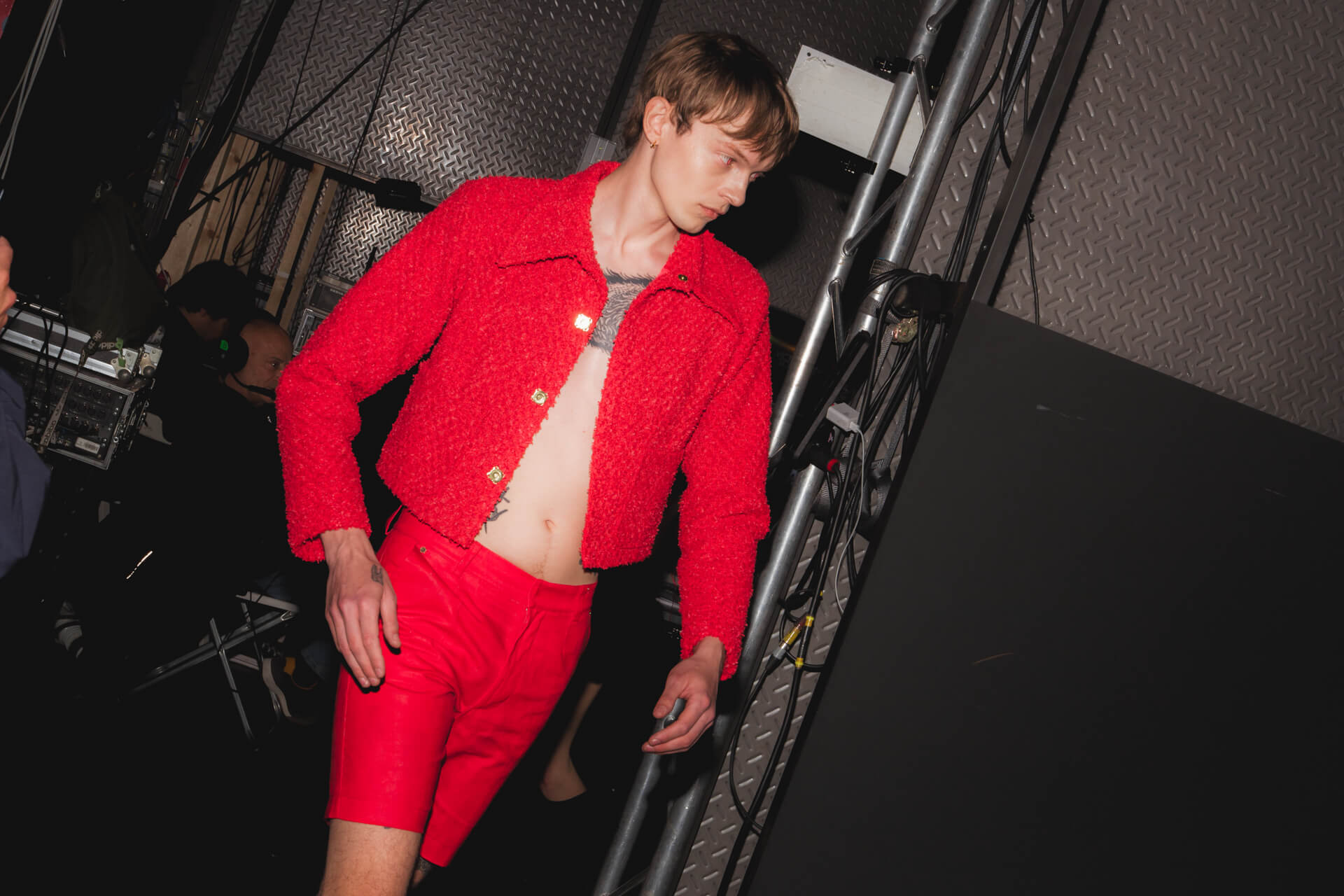
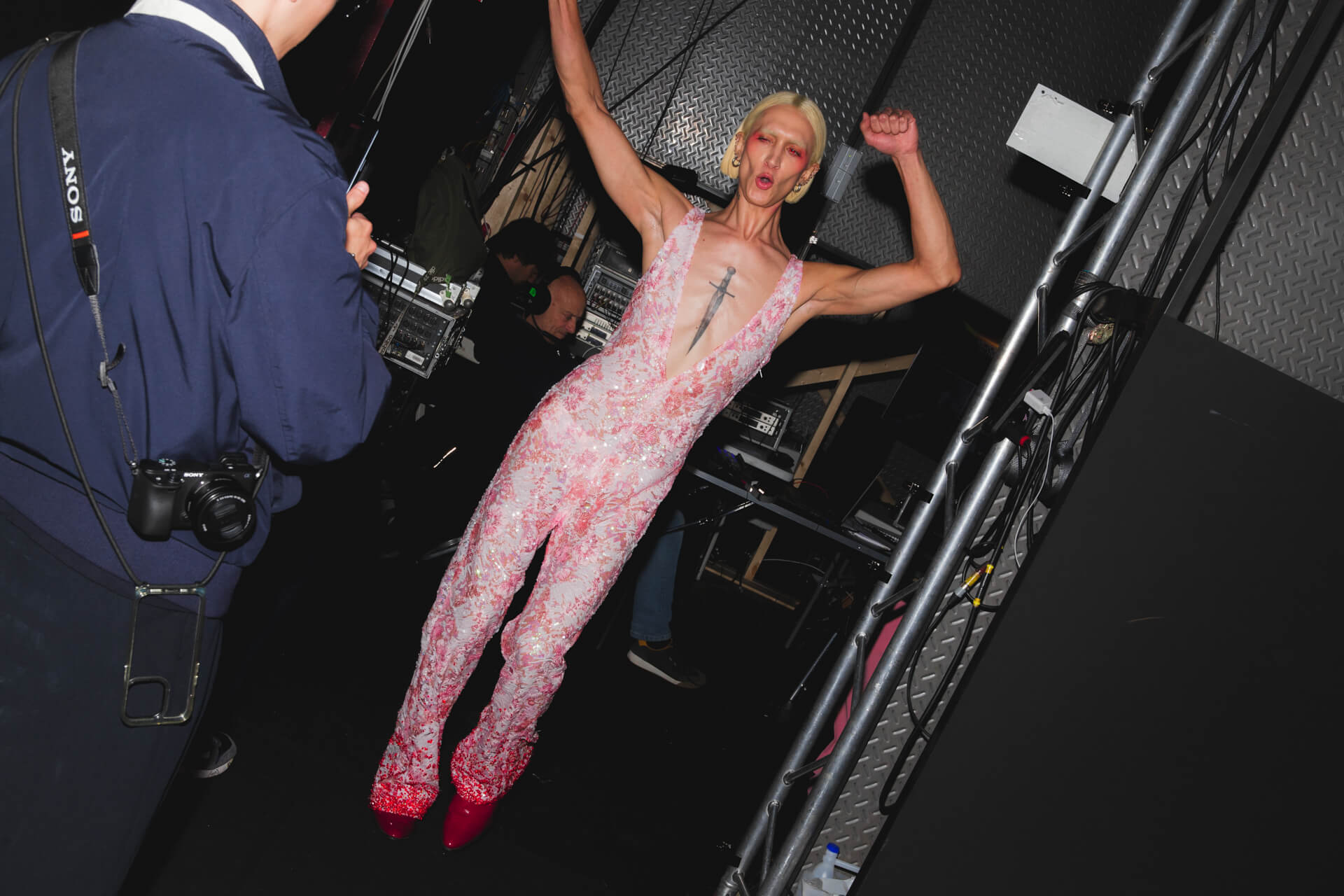
There’s usually something emotional in my collections, but this one is purely aesthetic. I tried to convey something through the styling and makeup, but I really focused on the visual aspect. I wanted it to feel unsettling, but not too realistic. I didn’t want it to be grotesque. I wanted the girls to look perfect, like in B-movies where they still look flawless, hair perfectly done, even after a zombie apocalypse.
How do these ideas translate into the garments?
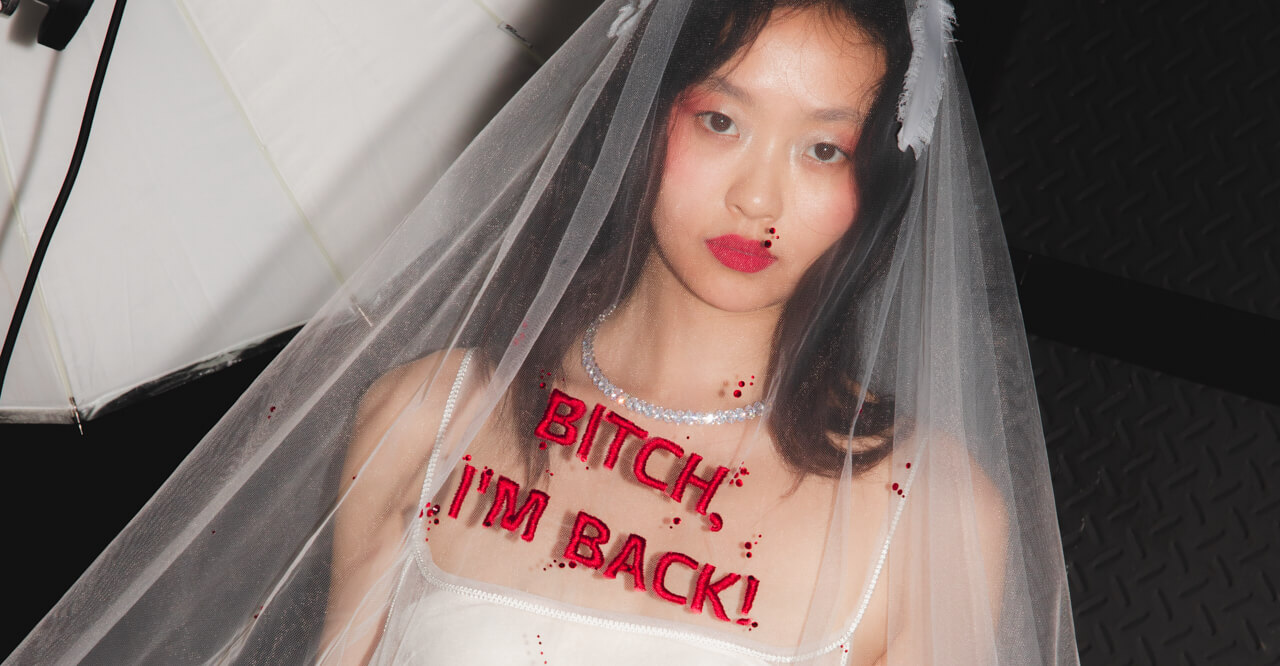
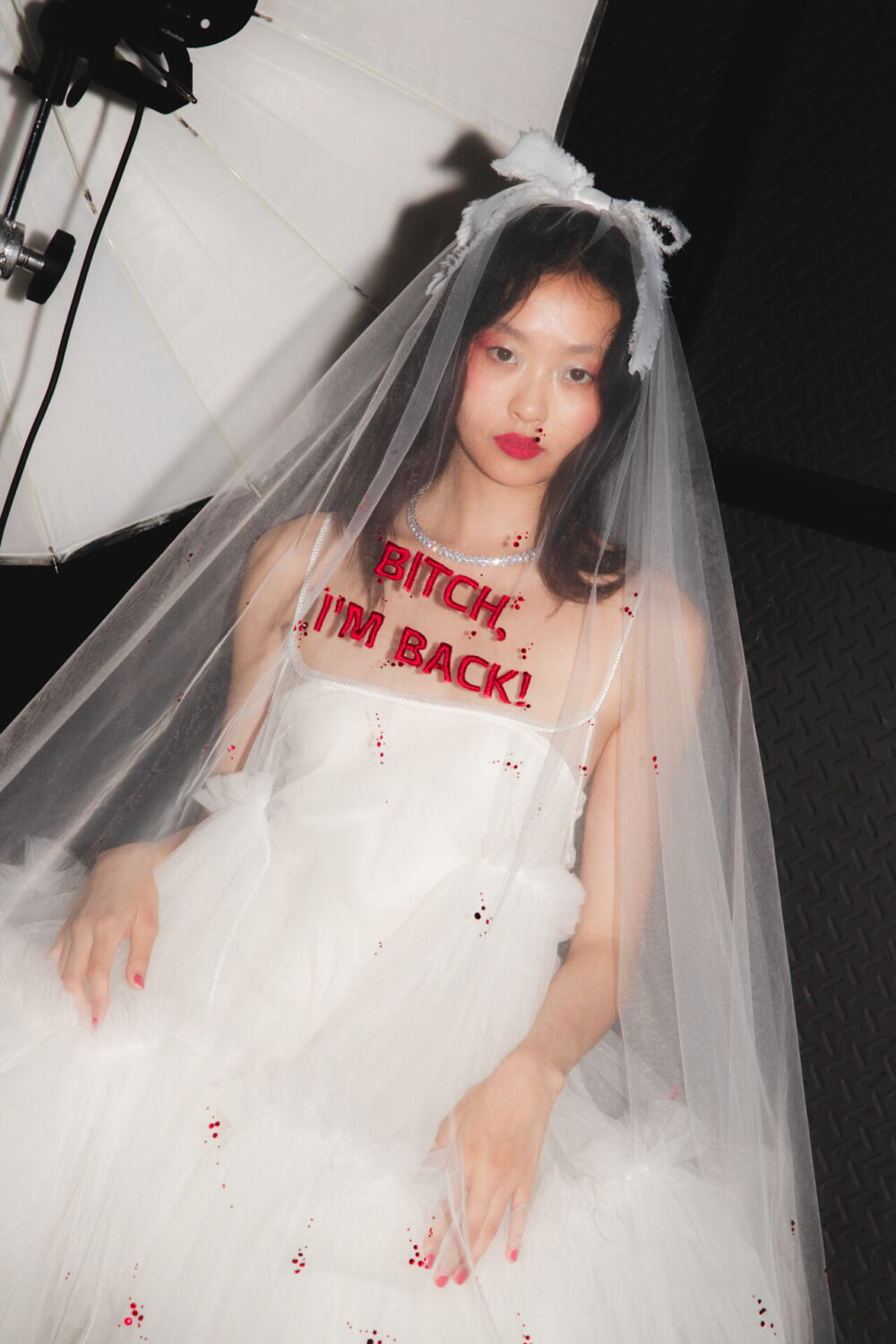
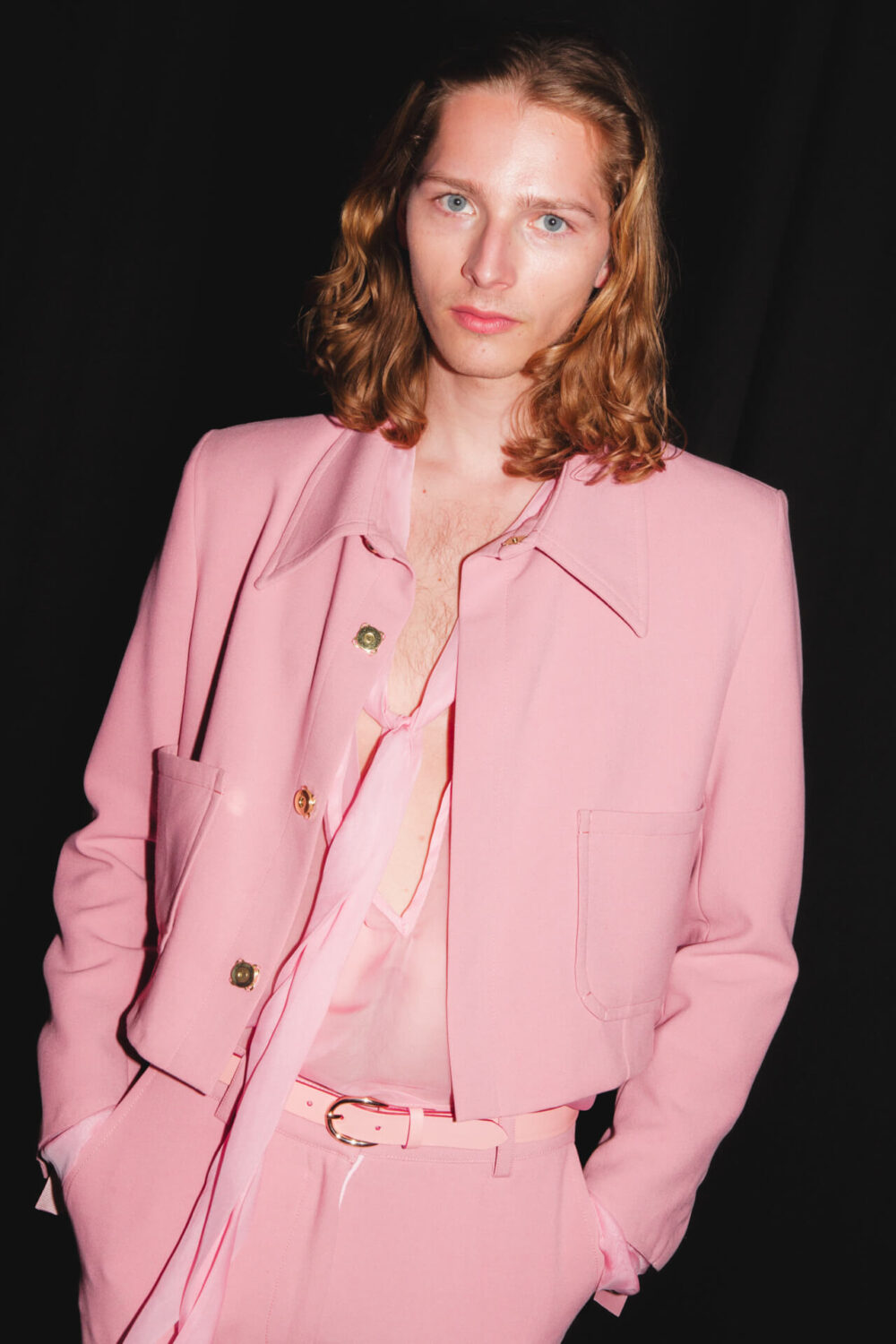
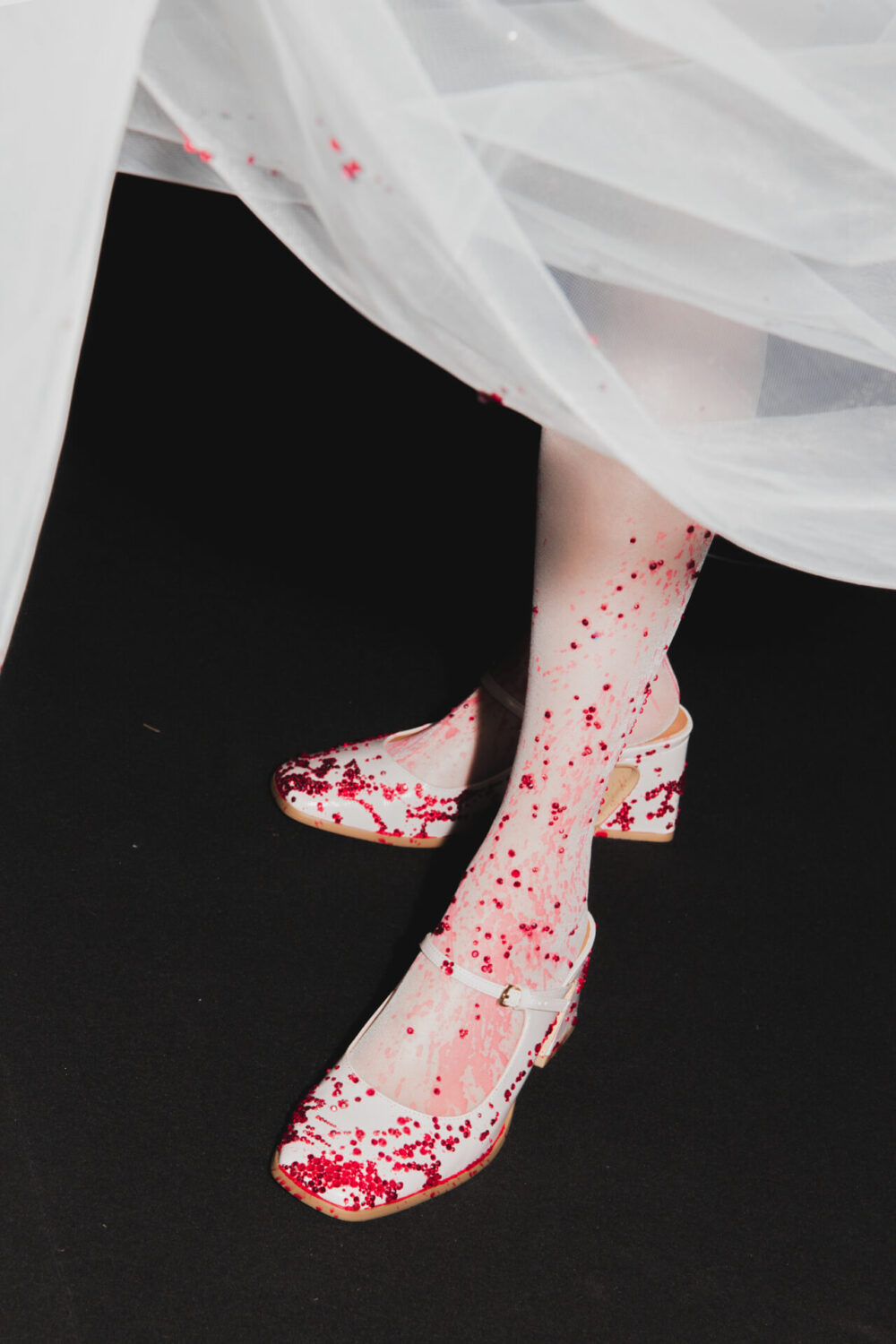
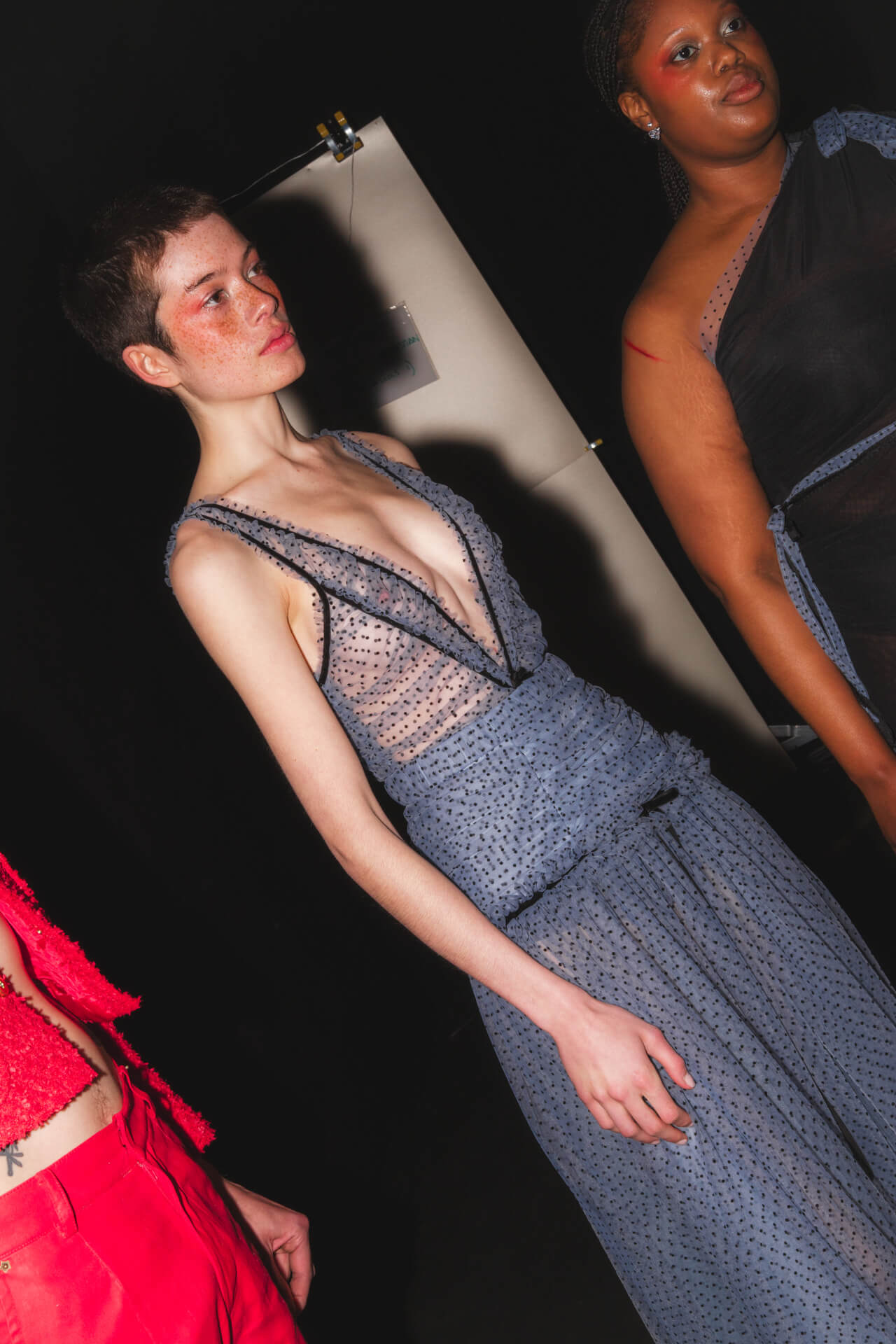
In each look, I built a narrative role – protagonist, antagonist, or supporting character – as if they were all part of the same cinematic story. For the “victims,” I used waxed materials that subtly evoke the look of blood, along with red stone embroidery suggesting splatters. The silhouettes reinforce this language: flared shapes and mini lengths convey a certain innocence, while antagonists are constructed through tighter lines and darker fabrics, emphasizing a more unsettling presence.
Is there a piece or look you feel is the core of the collection?
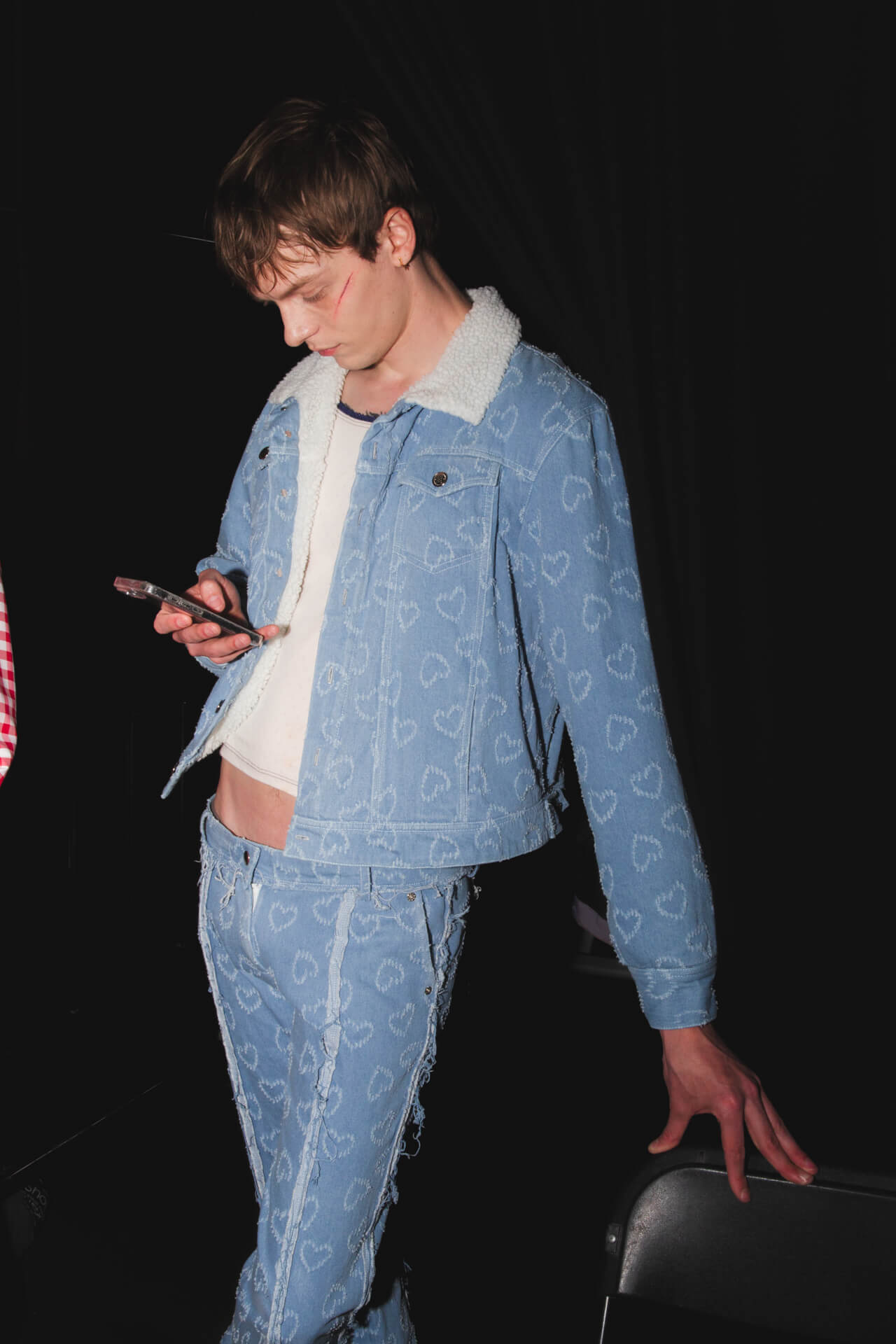
The first look reminds me of a zombie movie protagonist, with distressed denim, an off-white undershirt. It’s very American in attitude. And then the final dress, which is the character who survives in a wedding-set horror film. A classic.
What role does craftsmanship or manual work play in your process?
In this collection, many pieces were made in the atelier, with a lot of intervention on the fabrics. There’s a denim piece where we applied threads from the same fabric, knotted to create a frayed effect. We also embroidered over embroidered fabric and added stones onto tulle. Even though I sometimes try to avoid doing so much by hand, I can’t help it.
What has been the biggest challenge in developing this collection, and how did you approach it?
Finding the balance between something creative and a bit spectacular, but still desirable to wear. That balance can be tricky.
Was there any unexpected discovery during the creative process?
The waxing process. Different fabrics reacted in completely different ways, and even after finishing, the results varied a lot.
How has your identity as a designer evolved since your beginnings?
I’m more realistic about what I can achieve with the resources I have. Maybe the goal isn’t huge productions anymore, but collaborating with other brands and creating semi-bespoke pieces for more specific clients. The way I approach concepts, and even the type of concepts, has remained quite similar since the beginning. That hasn’t changed much.
In a context where everything moves so fast, what role does time play in your creative process?
That’s a big one. There’s very little time for the creative process itself. A lot of my time goes into technical aspects like solving production issues, managing workshops or handling sales. If anyone thinks we spend most of our time just drawing and creating, they’re very mistaken.
How do you imagine this collection living beyond the runway?
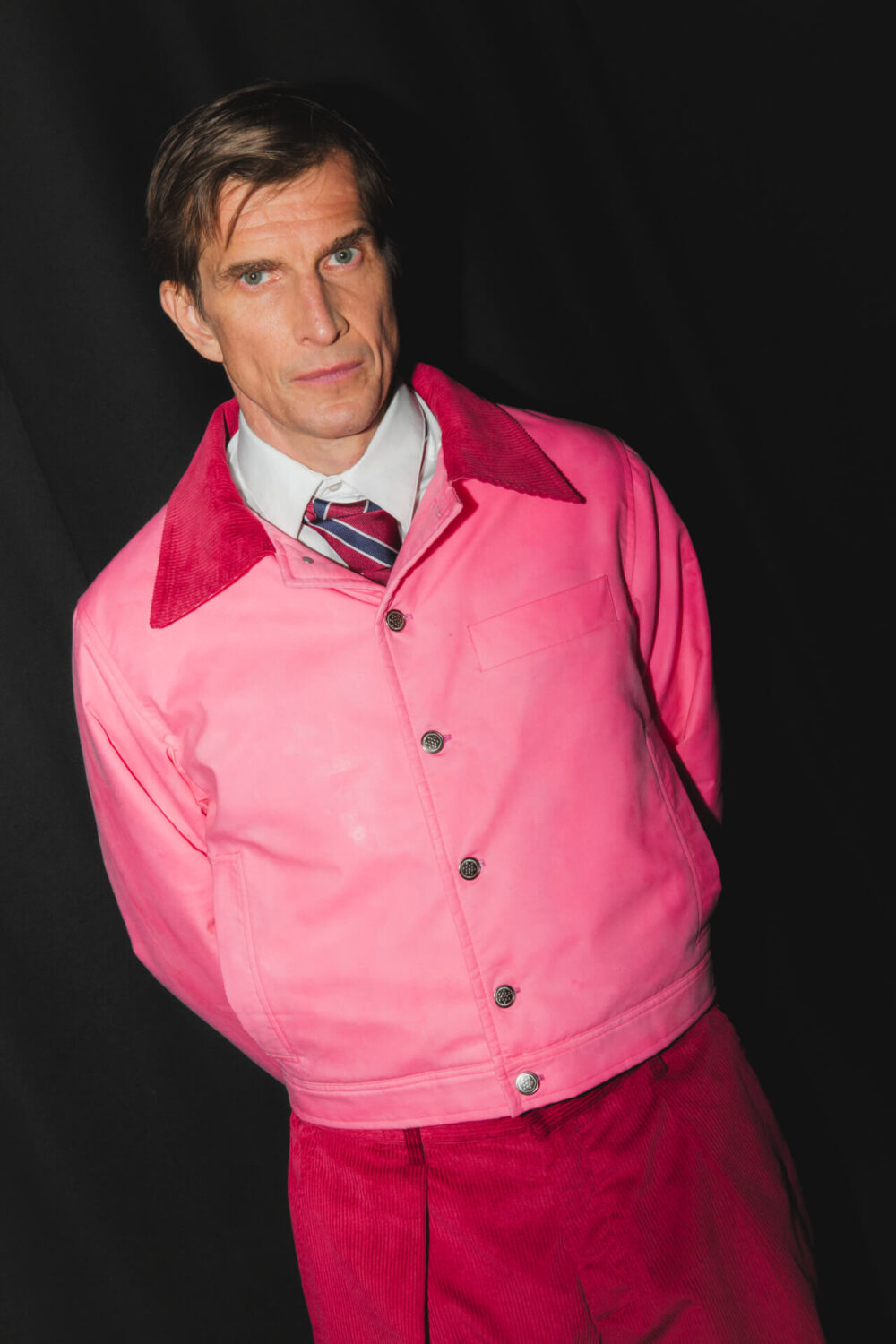
I can see some of the looks on the red carpet, and many others in music videos. So, very much connected to pop stars.
Images by Angela Ibañez for VEIN MAGAZINE