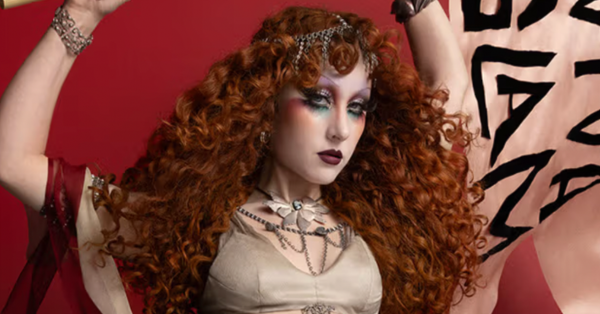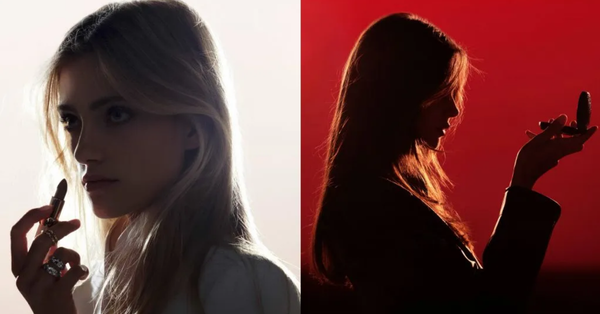
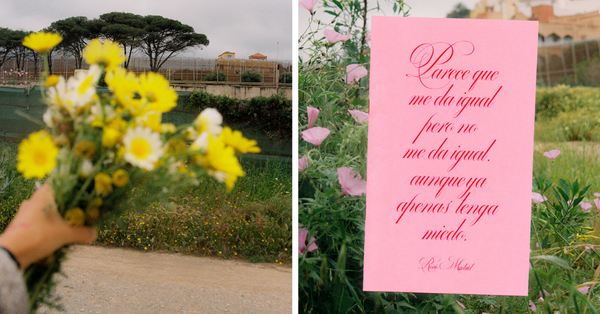
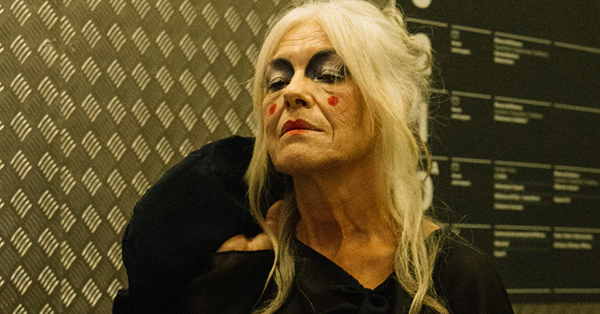
Adeline Rappaz redefines upcycling as poetry. The Bloom of Rappaz blossoms in soft forms and hand-painted textures, turning second-hand fabrics into an organic, intimate manifesto of identity and renewal.
Adeline Rappaz is part of a new generation of designers blurring the line between upcycling and artistic expression. Rooted in an upbringing surrounded by craft and creativity, and refined through her experience at Paris’s most meticulous ateliers, her work balances craft and creativity with intention. She has already gained significant recognition in the industry, most notably winning the Public Prize at the Hyères International Festival for her fully upcycled collection Le Temps des Rêves. Additionally, she has found support in Pro Helvetia through the Swiss Design Awards. With her latest collection, Inside the Bloom, Rappaz explores fluid forms, hand-painted textures, and the organic rhythms of the calla lily, building a visual language that is delicate yet assertive, contemporary yet deeply personal.
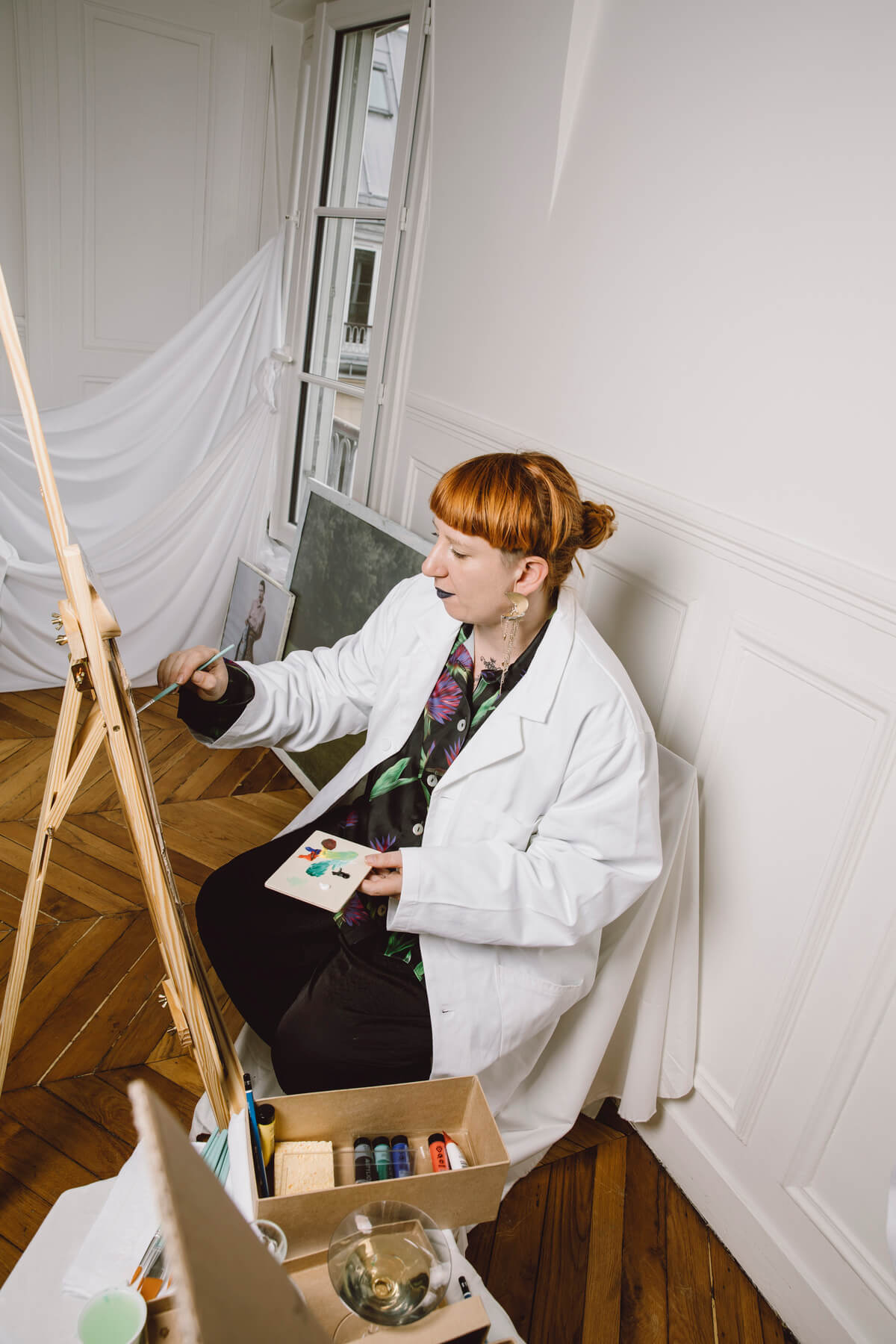
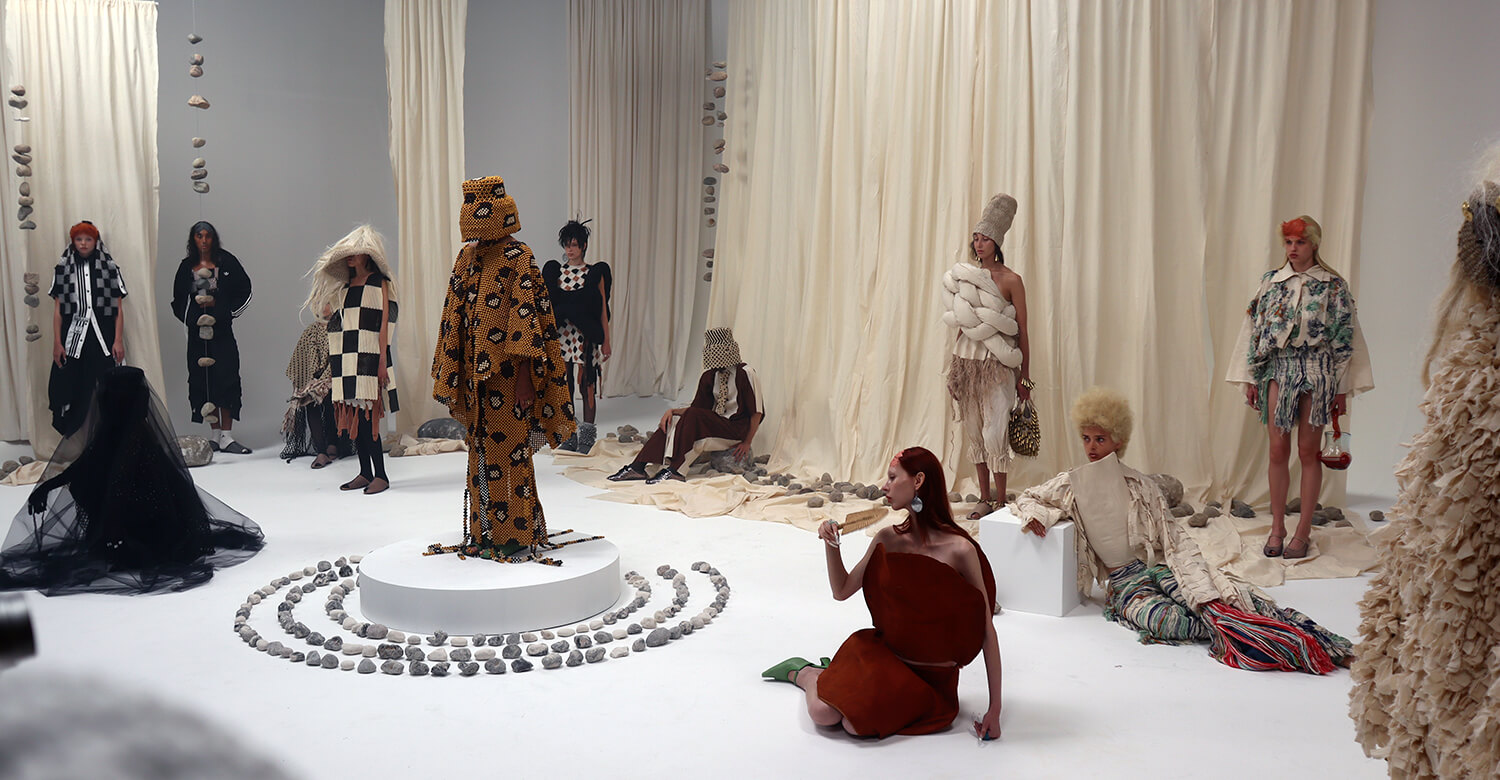
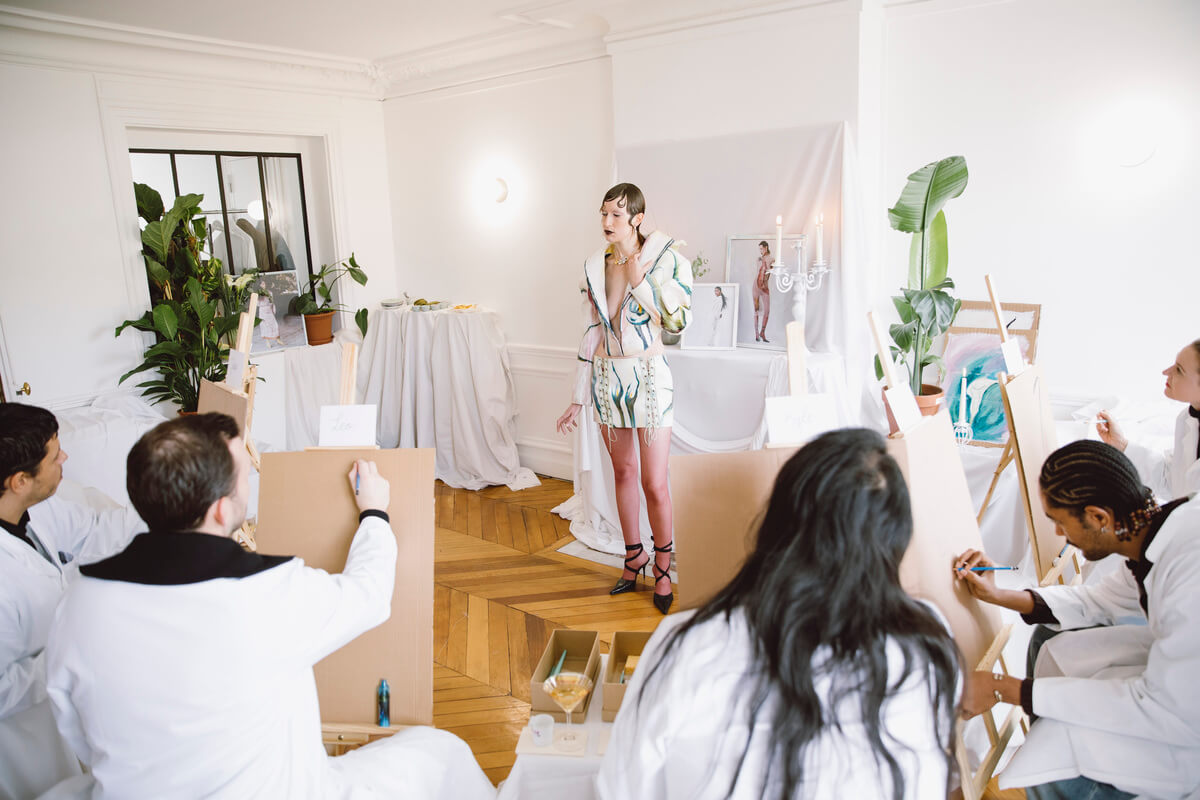
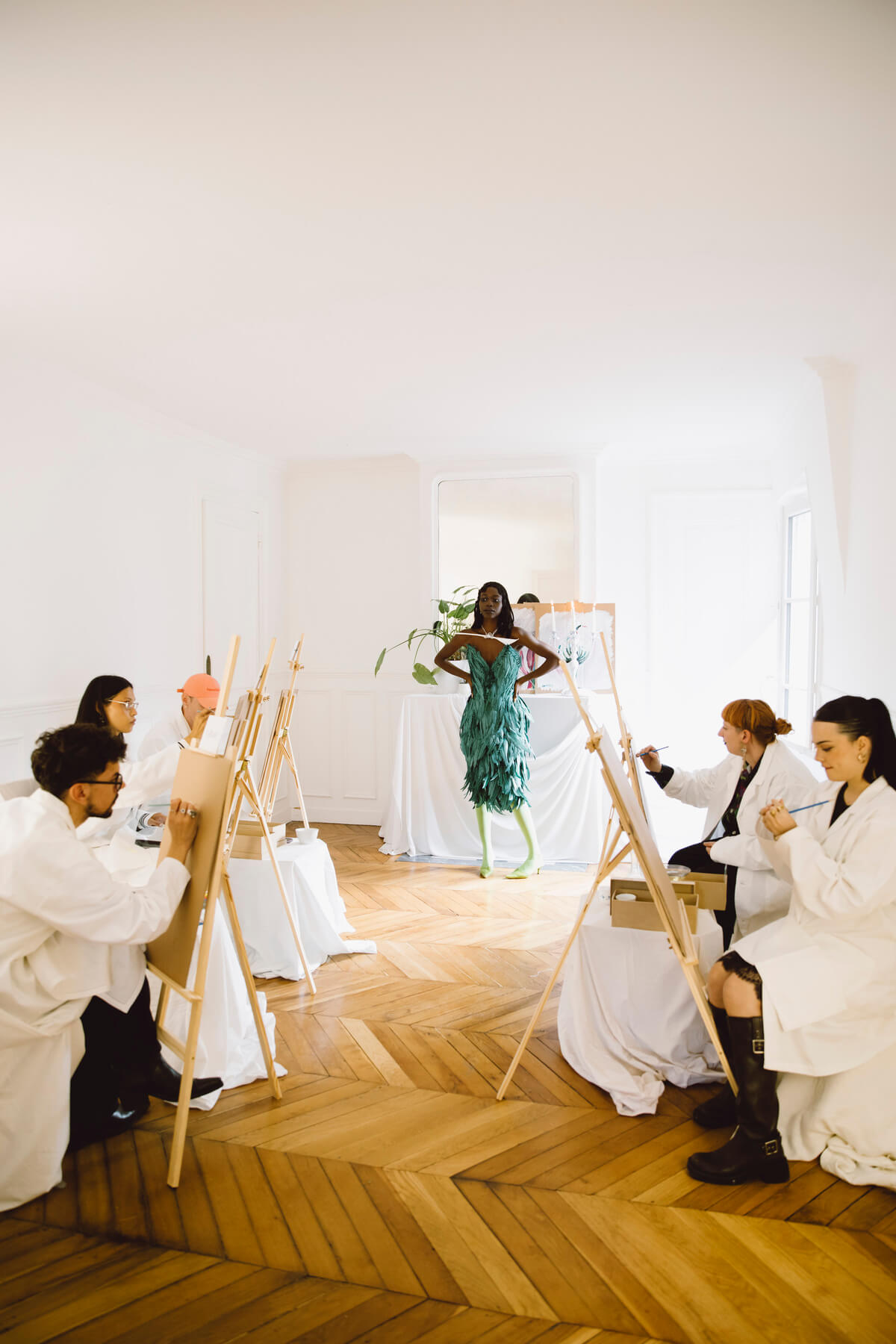
I had the pleasure of experiencing your new collection during Paris Art Week, accompanied by a life drawing model. I have to admit, it was one of the best presentations I’ve attended, because it really pushed me to see and feel the garment while tapping into my own emotions. Fashion likes to play with many rules, from showing during fashion week, to a minimum of thirty looks, etc. Why did you decide to put us behind the easel for the day?
I’m truly delighted and a little moved that this experience resonated with you. I love designing my presentations in a way that evokes emotion in the viewer. My goal is to create a connection between the garment, the body, and the audience, a suspended moment that feels closer to an artistic experience than a traditional runway show, only presenting products. I enjoy playing with fashion codes and immersing the audience in the event, allowing them to become an active part of the experience.
Did you paint growing up? How would you describe your childhood?
I’ve always loved drawing and painting. When I was a child, my first dream was to become a painter. Very quickly, I imagined exploring all kinds of artistic professions before ultimately turning to fashion. Today, even if I don’t paint much anymore, I still enjoy working with prints and textiles as if they were true canvases. Coming from a modest family, my childhood was very creative yet simple. My father, a sculptor, created sculptures and jewelry from found materials, while my mother, a nurse, used to paint, make jewelry, and play with dyes. Their lives oscillated between punk and hippie influences before settling in the countryside, surrounded by nature and flowers. This environment nurtured my passion for life and for DIY creation, inspiring me to use what was around me to invent and transform.
I know that you studied at HEAD in Geneva. What was your experience there like, and what did you do following graduation?
Yes, exactly. It was a true source of pride for me to join a fashion design school, especially with my somewhat unconventional background. It allowed me to develop my creative universe, understand myself better, and clarify what I truly wanted to express. I also learnt many techniques there, from ceramics to screen printing and, most importantly, how to build a complete and coherent world for a project, from start to finish. Which is something I’m particularly passionate about.
After graduating, I moved directly to Paris to intern at houses such as Givenchy, Chloé, and eventually Schiaparelli. It was at Schiaparelli that I began working as a designer, discovering different facets of the craft, from ready-to-wear to Couture. It became a true school of experimentation and an incredible source of growth, allowing me to work on collections where technique, creativity, and discipline all came together in a very meaningful way.
I know you work in the atelier for one of the hottest brands at the moment. What made you decide to focus on developing your own brand in your precious free time?
After leaving Schiaparelli, I felt the desire to dedicate myself fully to my own brand, to build a personal universe and take on a new challenge: developing my identity as a designer through an independent ready-to-wear line. It’s a very different exercise in terms of resources, rhythm, and expectations compared to working within an established and prestigious house. I had been feeling this pull for a while already, and it simply became the right moment to take the leap.
This reflection had actually begun while I was still working at Schiaparelli. In parallel, I had started laying the first foundations of my personal project, which led me to participate in the Hyères Festival. I won the Public Prize there with my Collection 0, a decisive moment that helped me establish the base of the brand, clarify my artistic direction, and confirm my desire to shape my own creative language.
At the same time, I currently work for The Row, which brings me both financial stability and a strong creative balance. The two environments are very different, whether in terms of aesthetics or expectations, but it is precisely this duality that enriches me. Moving between these two worlds allows me to grow, to refine my vision, and to create bridges between universes that complement one another while remaining fundamentally distinct. I also appreciate keeping one foot in an established house, as it allows me to continue learning, sharpening my perspective, and challenging myself within teams driven by exceptional craftsmanship.
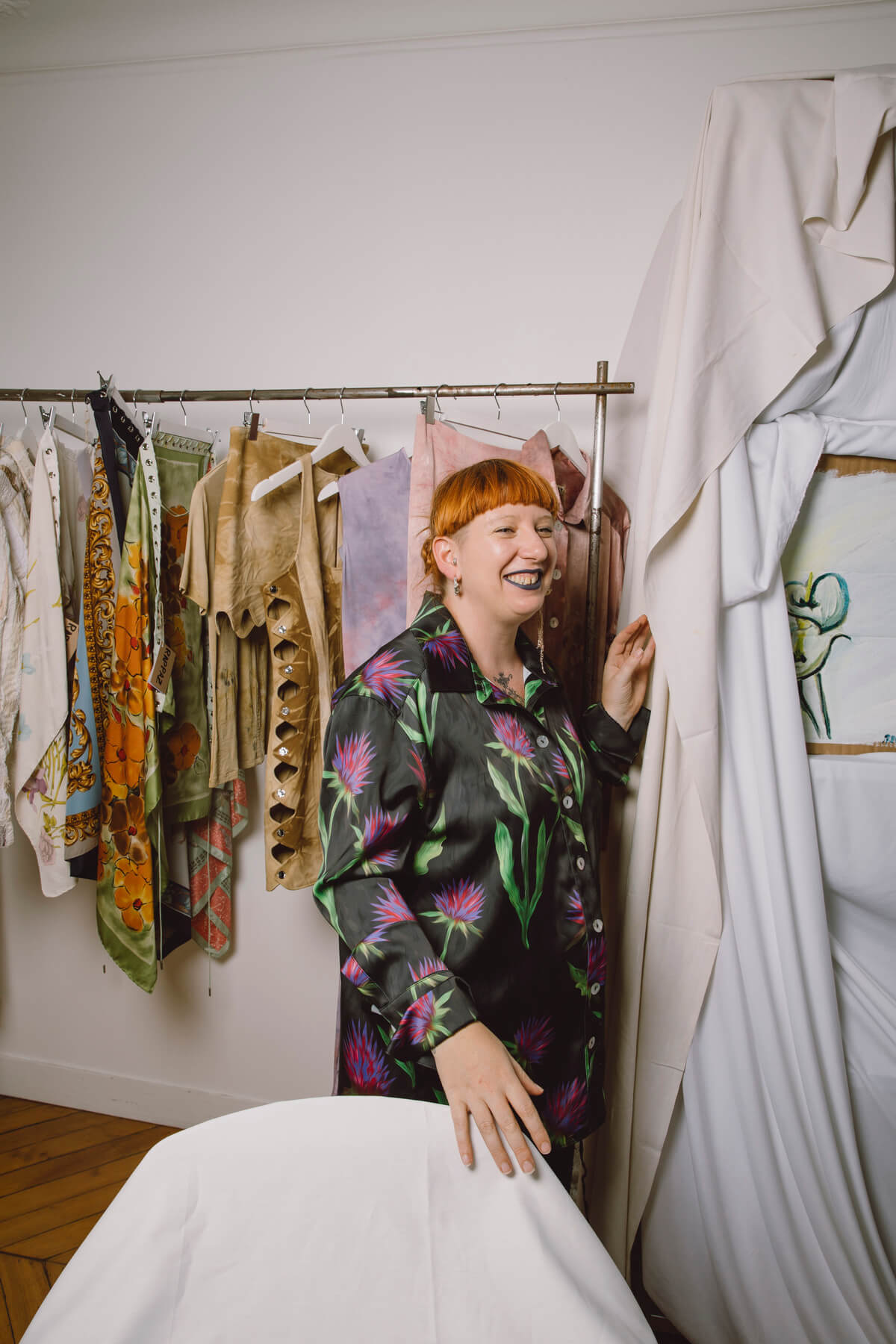
Adeline Rappaz
Your SS26 collection Inside the Bloom is rooted in the calla lily. What drew you to this flower as a narrative anchor, and what aspects of its form or symbolism were most generative for you?
For each season, I like to work around one or several floral elements that become the guiding thread of the collection. This season, since my main inspiration was Georgia O’Keeffe, I chose the calla lily as the central reference because it perfectly reflects her work: the simplicity of forms, the strength of nature, the sensuality and intensity of the emotions it conveys.
Georgia O’Keeffe’s work inspires me deeply through the way she explores the power and sensuality of nature. She painted the calla lily repeatedly in the 1920s, in works such as Calla Lily Turned Away (1923) or Yellow Calla (1926).
This flower has an elegant, fluid shape, with its trumpet-like corolla and long, slender stem. O’Keeffe magnifies these contours, inviting the viewer to observe the volumes, folds, and play of light, moving beyond simple botanical representation. Through this shift of scale, the line becomes emotion, the color becomes breath, and the structure takes on an almost sculptural dimension.
Georgia O’Keeffe’s work is a clear reference this season. What elements of her visual language did you consciously translate into the garments?
Beyond her artistic work, it is Georgia O’Keeffe’s strength and independence that inspire me most. She managed to establish herself in a male-dominated environment, to build a singular universe, and to remain true to her vision. This resonates with my own approach: I aim to create an engaged, feminist form of fashion in which each piece tells a story, reflects an identity, and celebrates the freedom and power of women.
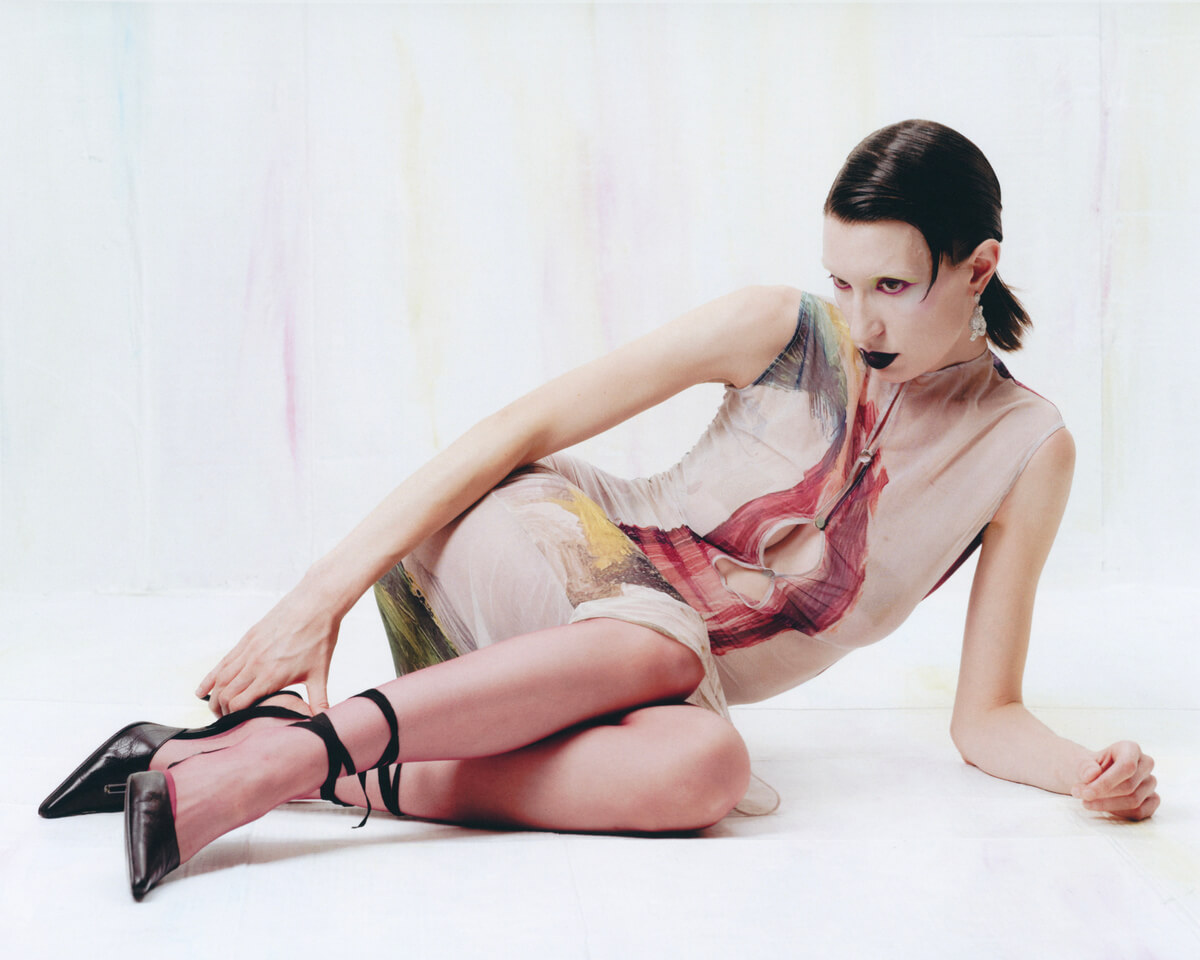
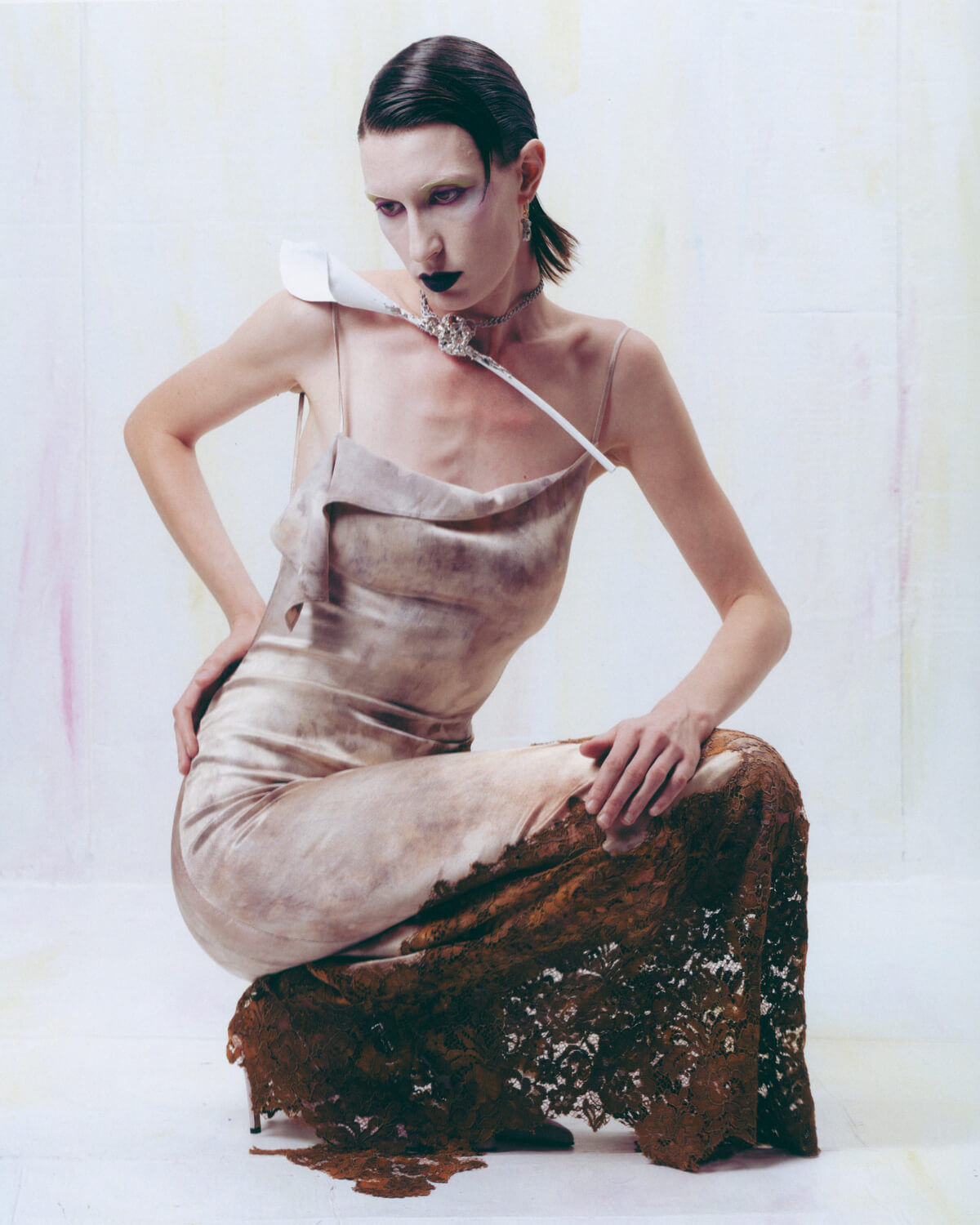
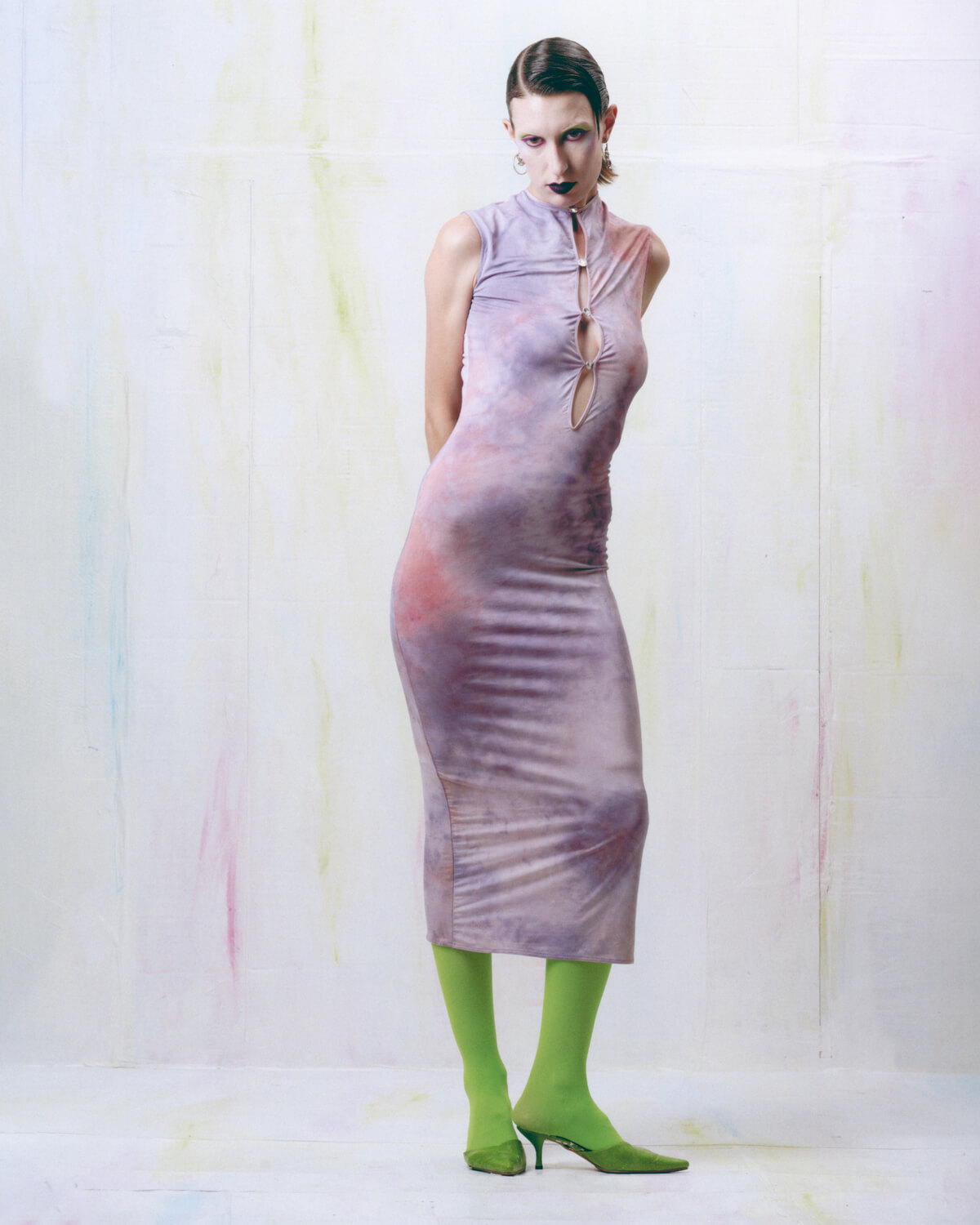
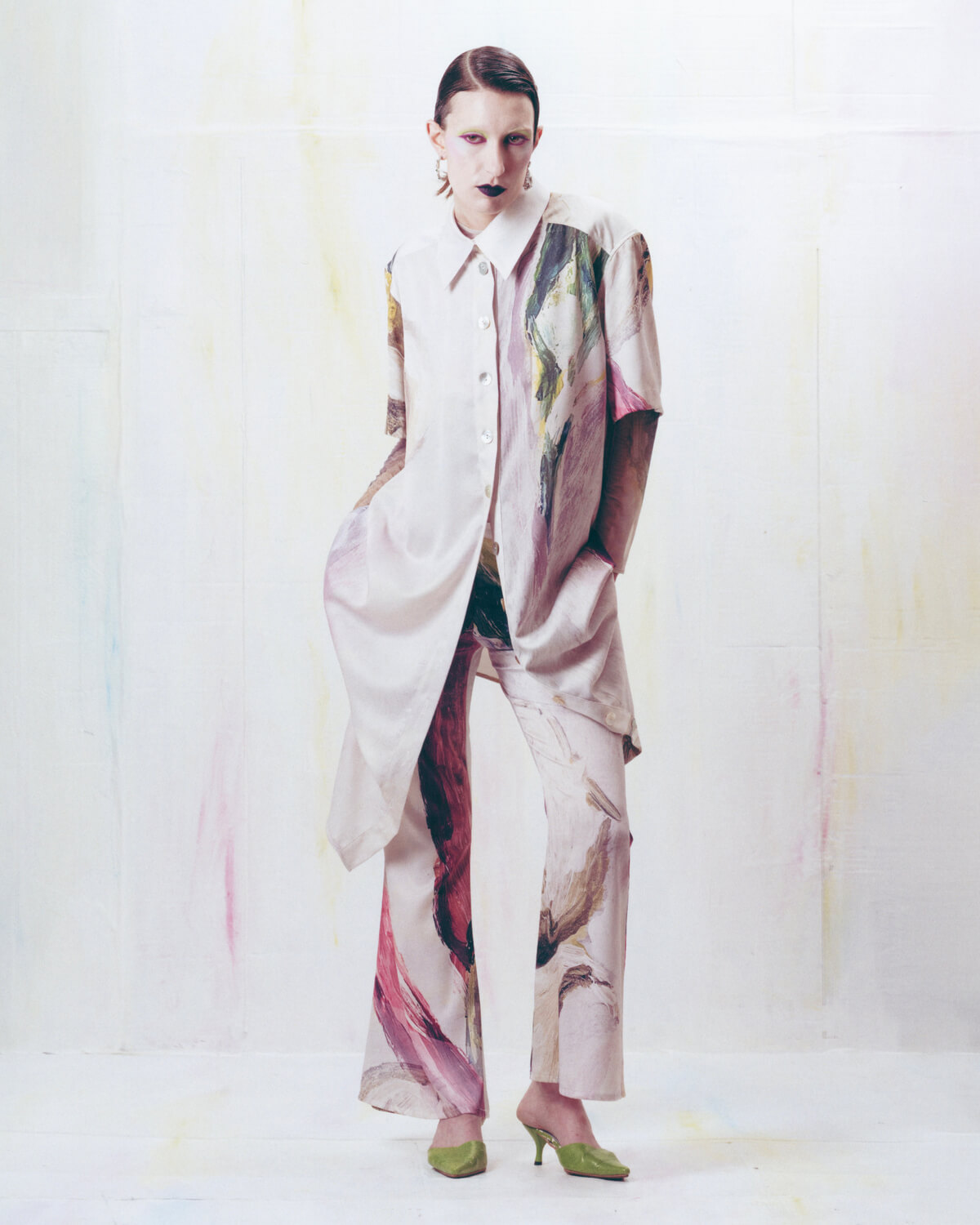
I wanted to translate these influences into the aesthetic of my collections by using fluid fabrics, close to the world of lingerie, to create an intimate relationship with the body. My pictorial approach appears in the raw, textured brushstrokes that bring relief and materiality to the pieces, while certain silhouettes explore zoomed-in shapes and abstraction, creating a dialogue between art and garment, emotion and sensuality, strength and delicacy. The soft pastel tones drawn from her palette reinforce this idea of a work that is both colorful and powerful, while portraying images of confident, self-assured women wearing the pieces.
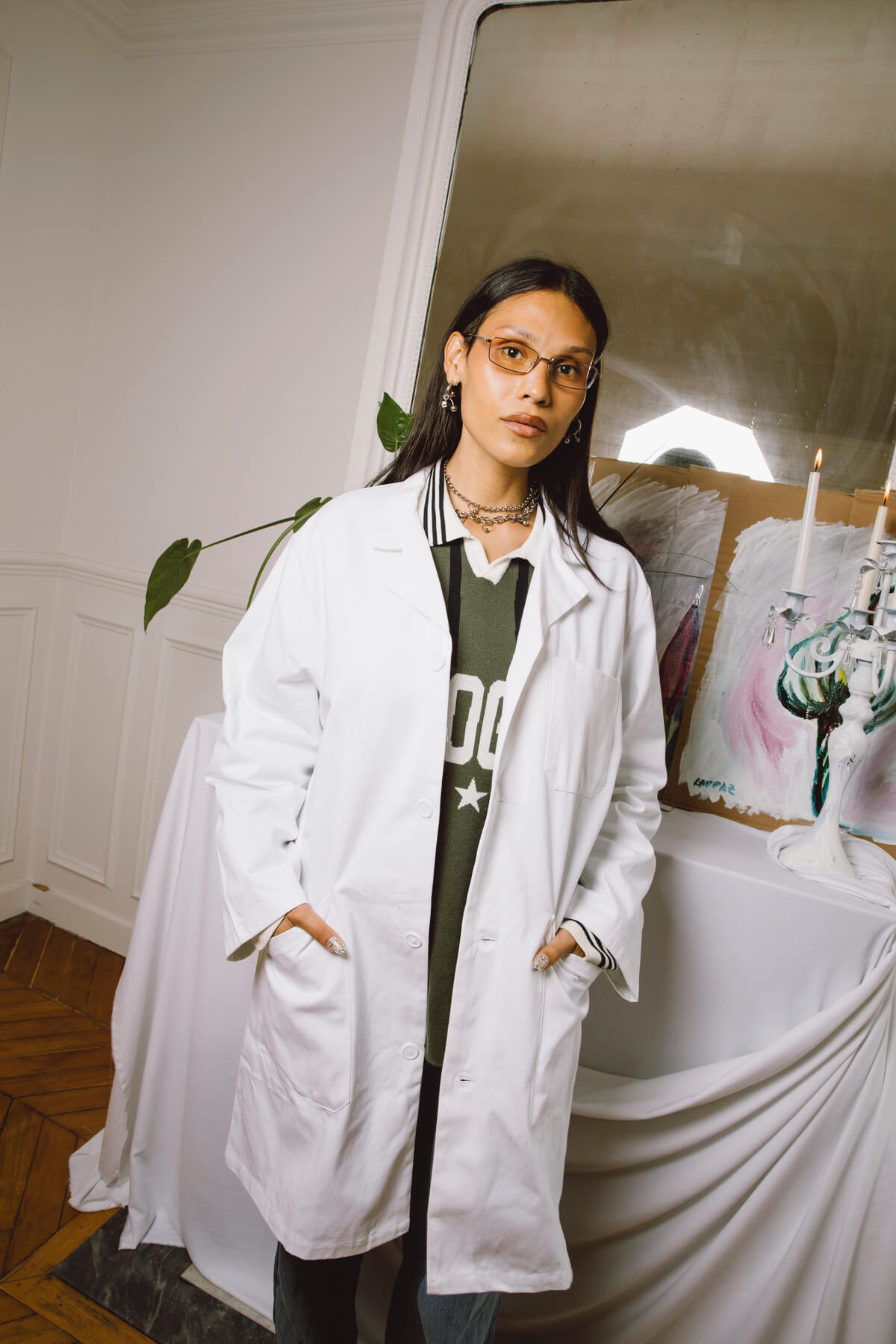
Claude Emmanuelle Gajan-Maull
How did you sculpt pieces to echo the organic curves of the calla lily without becoming literal or costume-like?
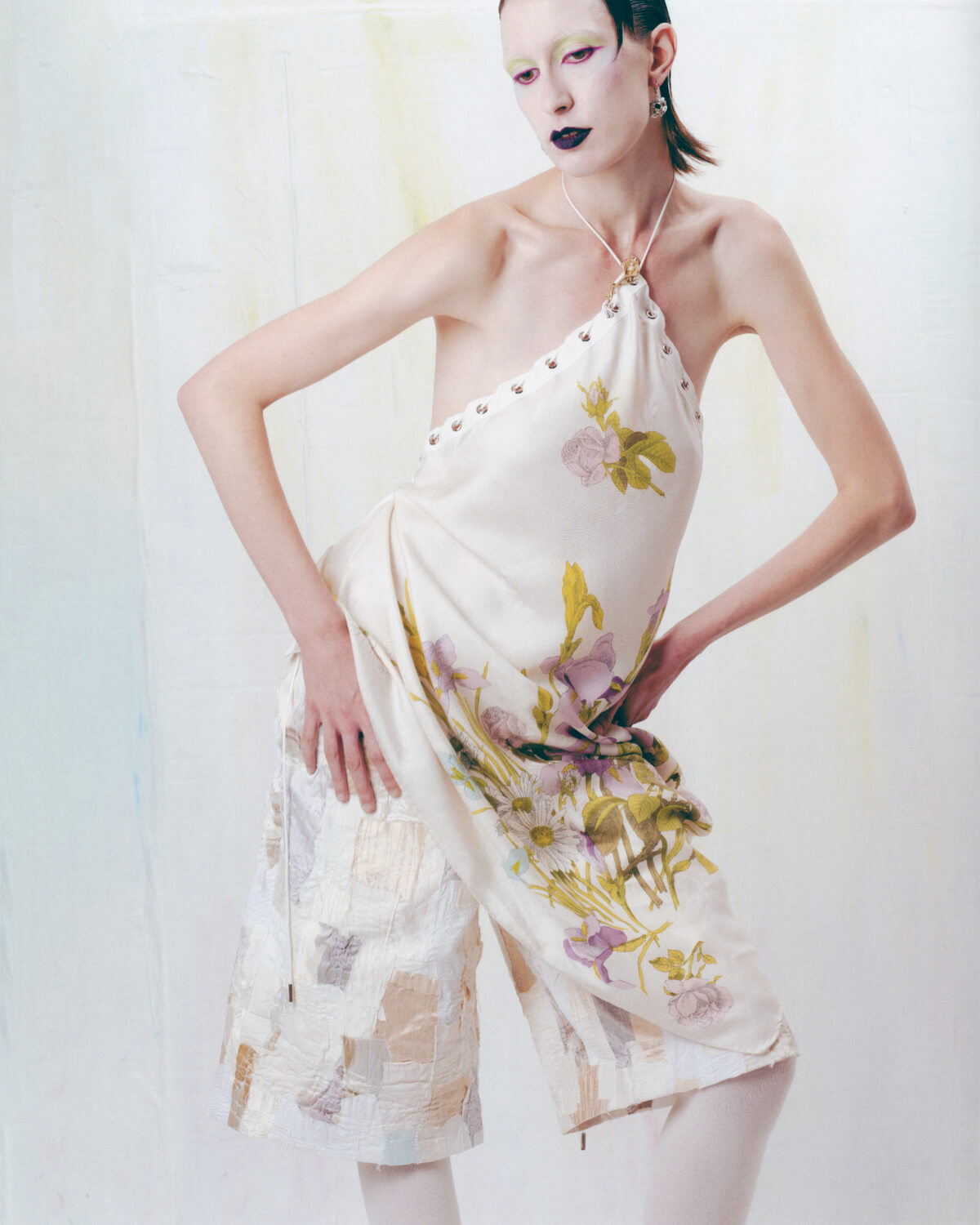
I chose to be literal on only one piece, using a more figurative print. For the rest of the collection, the inspiration appears through the colors, textures, and sensuality of the fabrics, as well as through fluid cuts that echo the world of lingerie, playing with fullness and transparency. I love creating a dialogue between fluidity and sculptural elements, a contrast that highlights both movement and the structure of the body. Some garments subtly reveal the body without ever showing too much. The idea is always to draw inspiration from the flower and its forms, but without becoming literal or costume-like.
Which look required the most iterations in the atelier, and why?
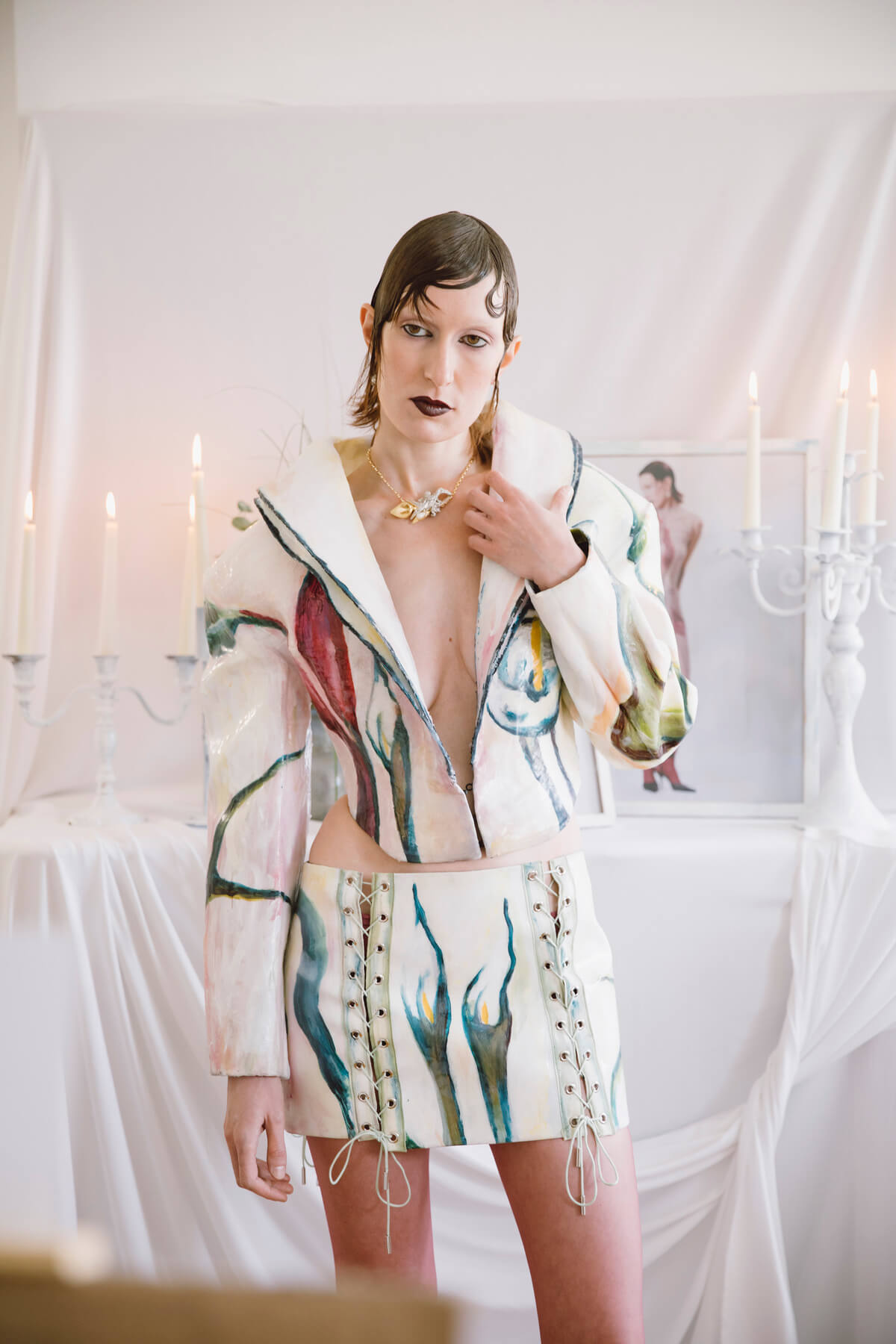
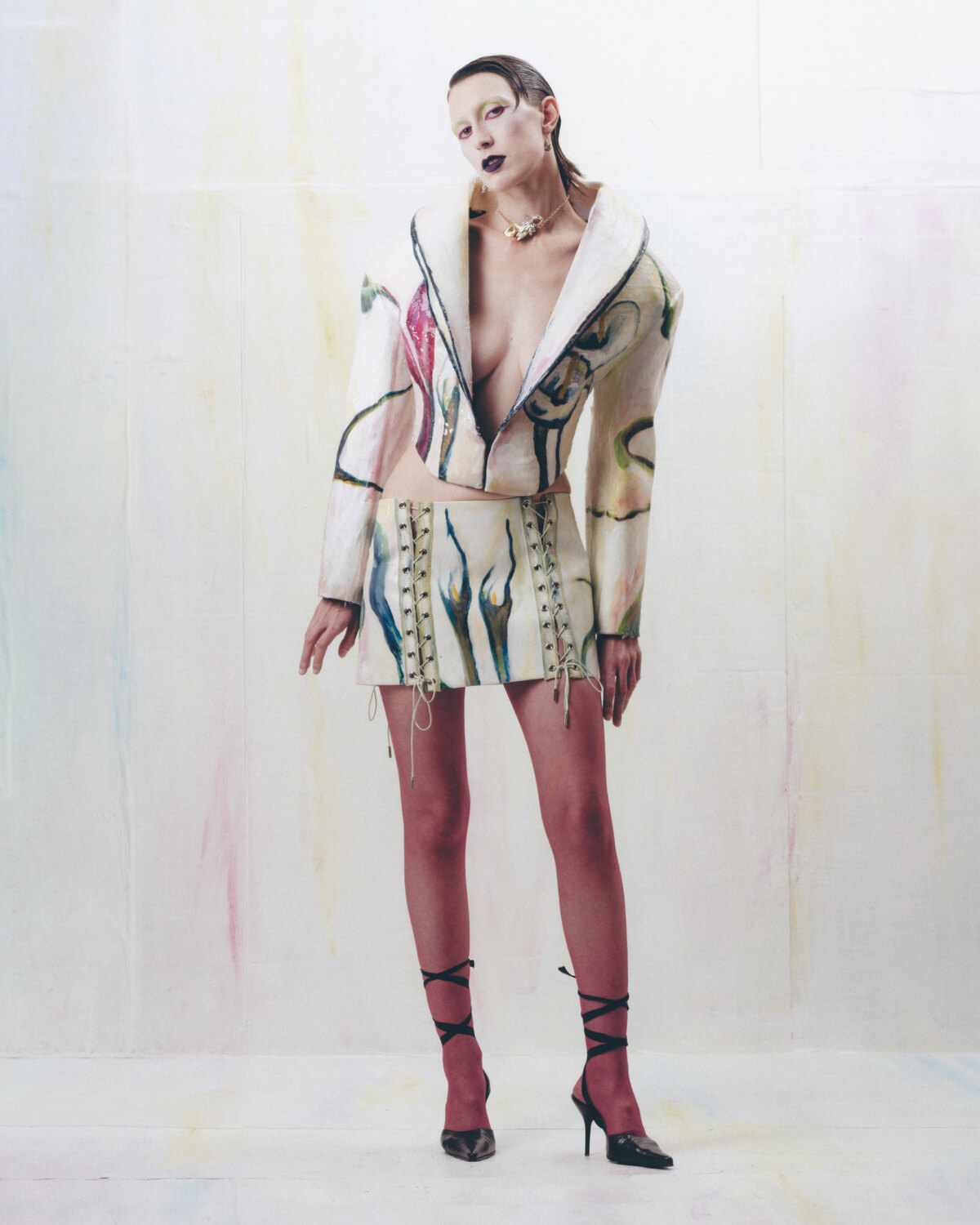
The most important piece is the hand-painted Couture look, composed of a highly sculptural jacket and mini skirt. Building the volumes and crafting these shapes already requires a great deal of precision and time. Then comes the painting stage, which also takes many hours to find the right balance in the composition.
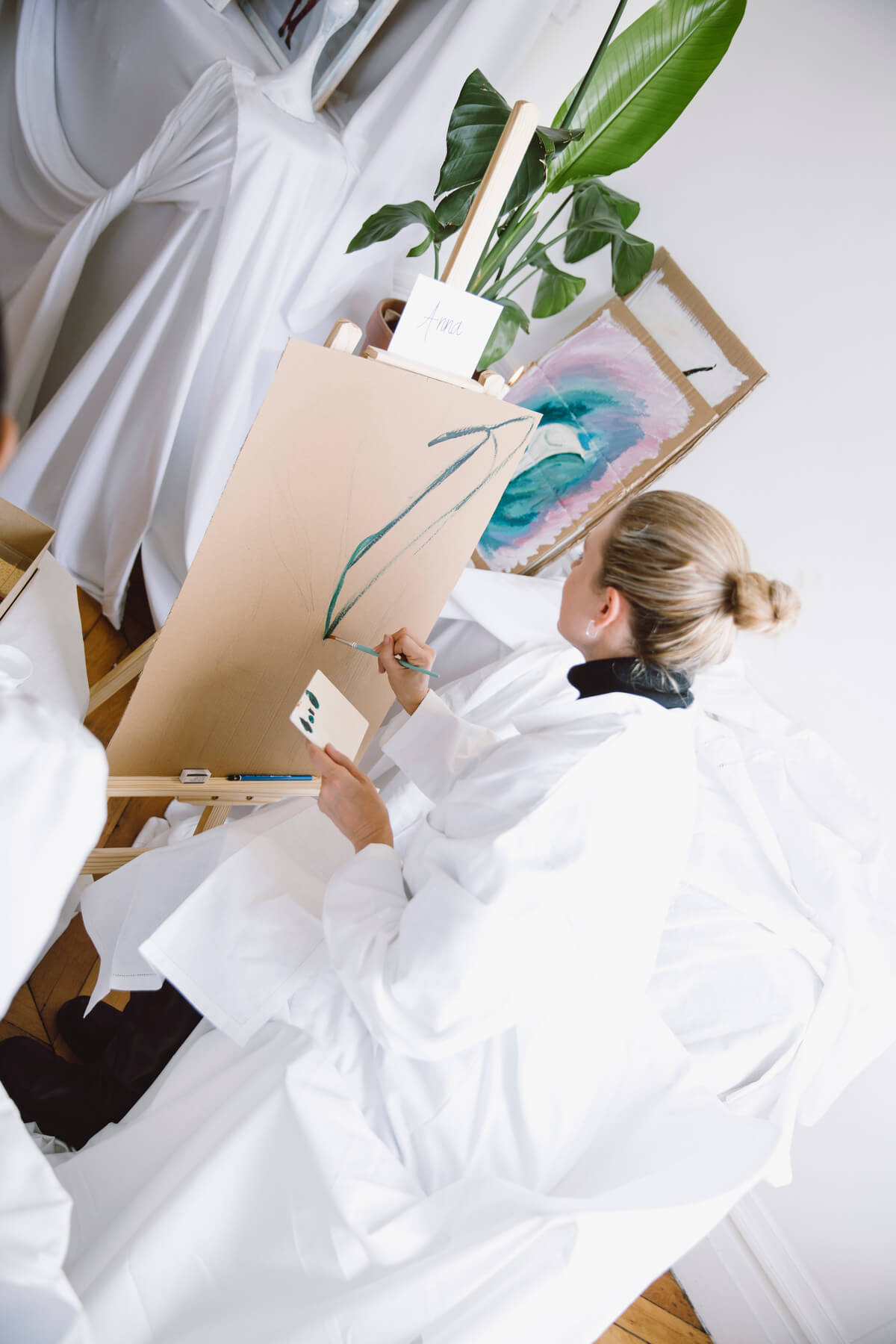
Anna Barr
You incorporated hand-painted elements in this collection. What was your process for developing these surface treatments?
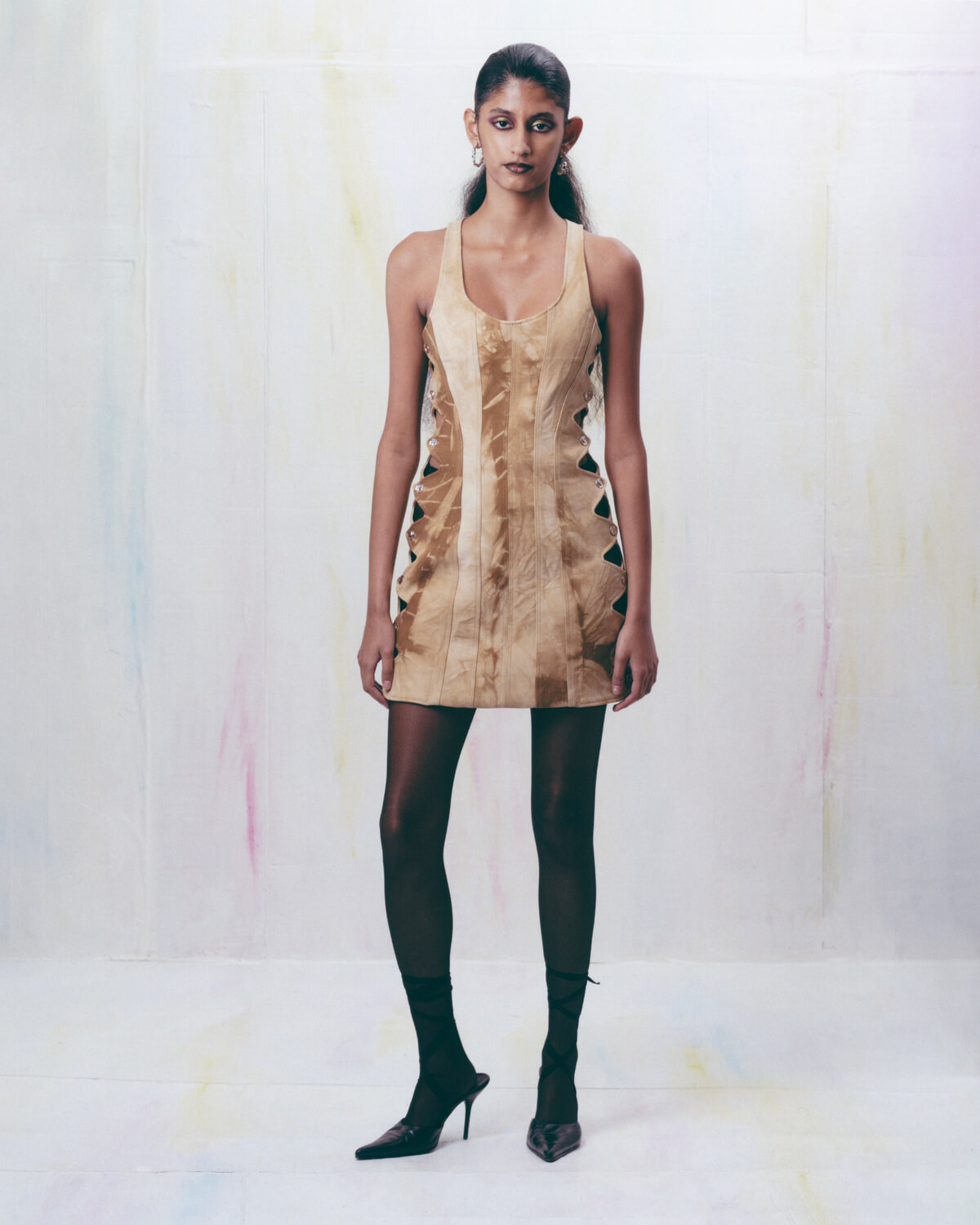
The process is quite instinctive: I paint directly onto the raw corset canvas as if I were working on a living painting, drawing inspiration from artists’ works without trying to replicate them. I work without sketches, placing motifs as I go, allowing spontaneity, mistakes, and intuition to play a key role in the creative process. Then, I add silicone to give a glossy, sensual effect, adding relief and texture that enhance both the visual and tactile experience of the piece.
Were there any new materials or construction techniques you experimented with for the first time in SS26?
I wanted to build the collection in a more fluid way, seeking a subtle balance between structured pieces, such as corsets and rigid elements, and lighter, flowing pieces closer to the world of lingerie. This alternation creates an engaging play of contrasts between structure and movement, precision and delicacy, strength and sensuality. The addition of paint applied directly onto the volumes brings a pictorial dimension, turning each garment into a wearable work of art and reinforcing the brand’s identity and creative signature.
How did you approach featherwork in the collection so it aligned with the overall thematic tone?
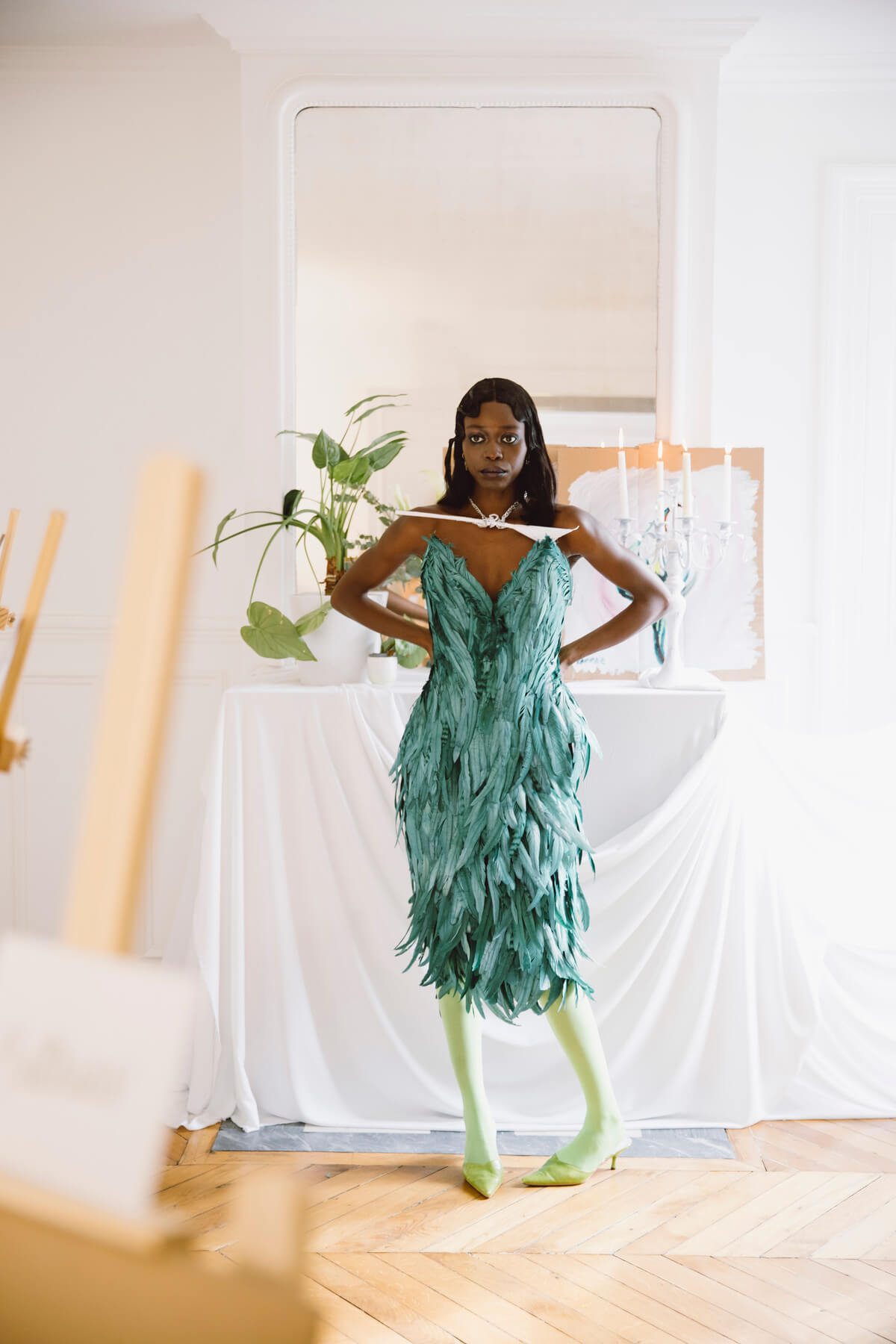
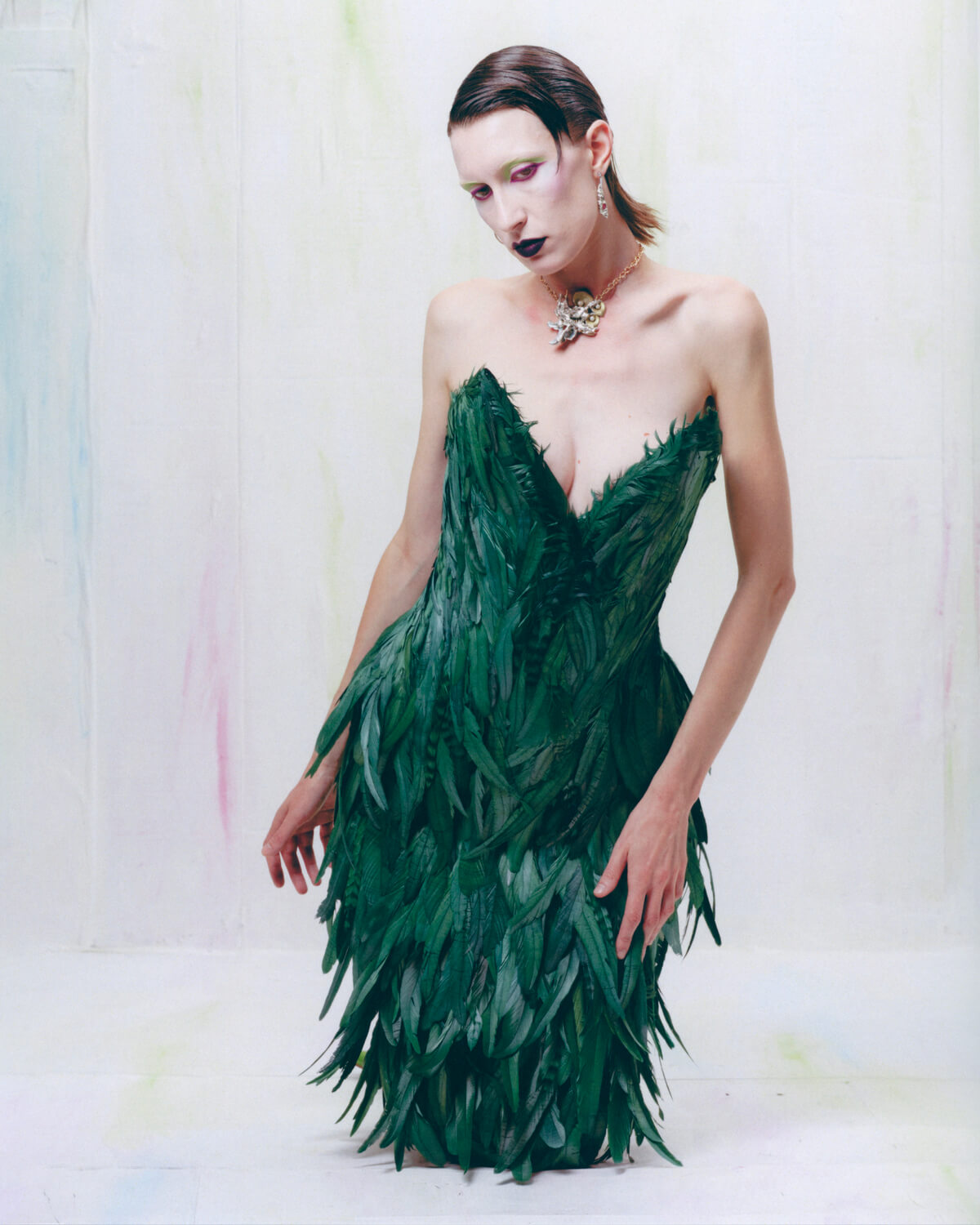
I love working with feathers, and it’s a material I particularly enjoy when paired with a structured piece. The process always begins with selecting the right raw material, which I then shape directly to create volumes and textures. For this collection, I worked with feathers in emerald green tones to evoke vegetation, texture, and forms that feel alive, somewhere between plant and body. My goal was to create a pictorial effect, like a three-dimensional painting made of feathers, seamlessly integrating with the organic and poetic tone of the collection.
Upcycling remains central to Rappaz. How did you do this into the collection?
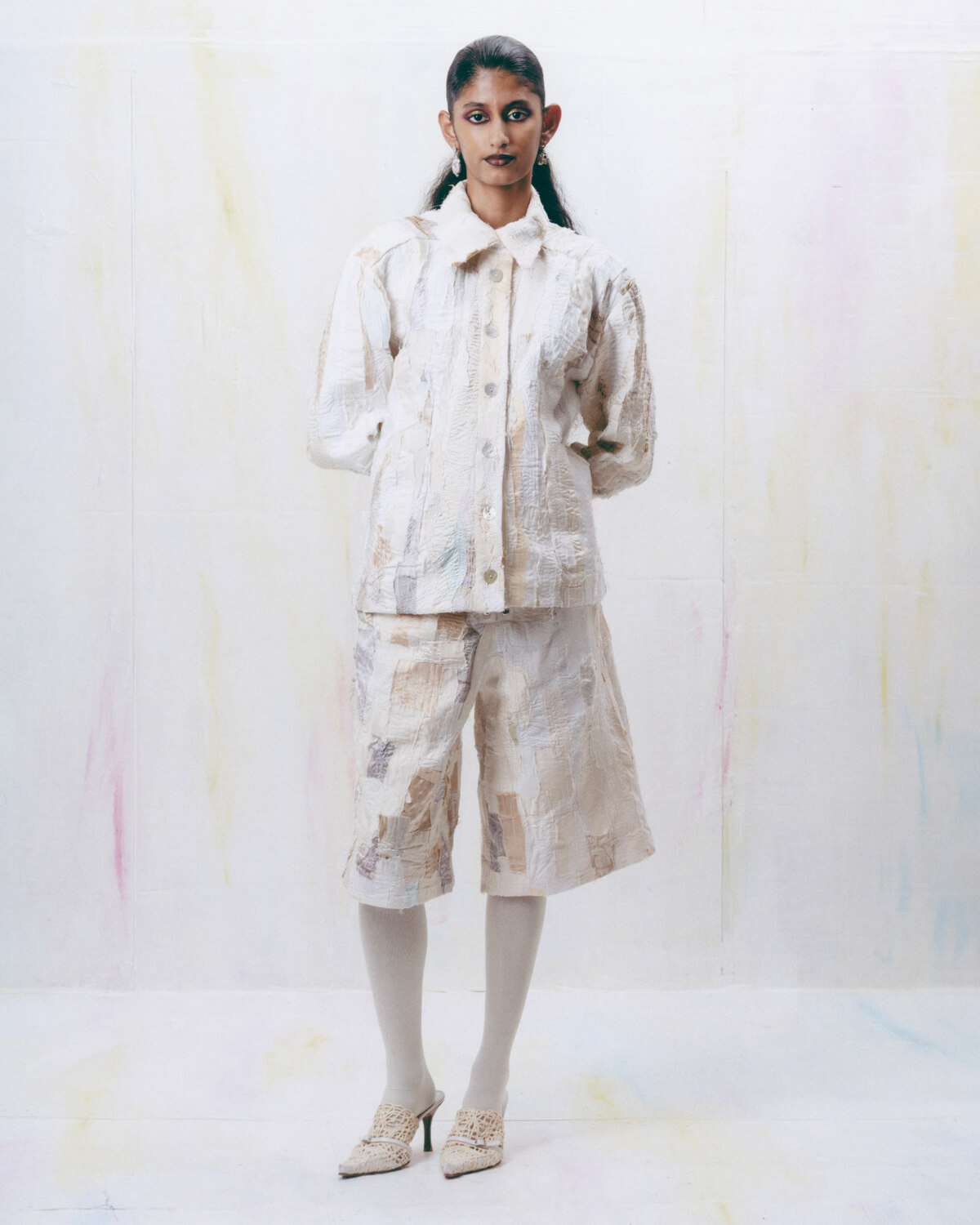
Upcycling remains a central aspect of Rappaz, and I incorporate it in various ways. I sometimes work with dormant stocks or certified materials, but I also rely heavily on pure upcycling: some pieces are made in patchwork, using fabric scraps, vintage textiles, or even reclaimed tablecloths, which I cut, re-embroider, and assemble to create new textiles.
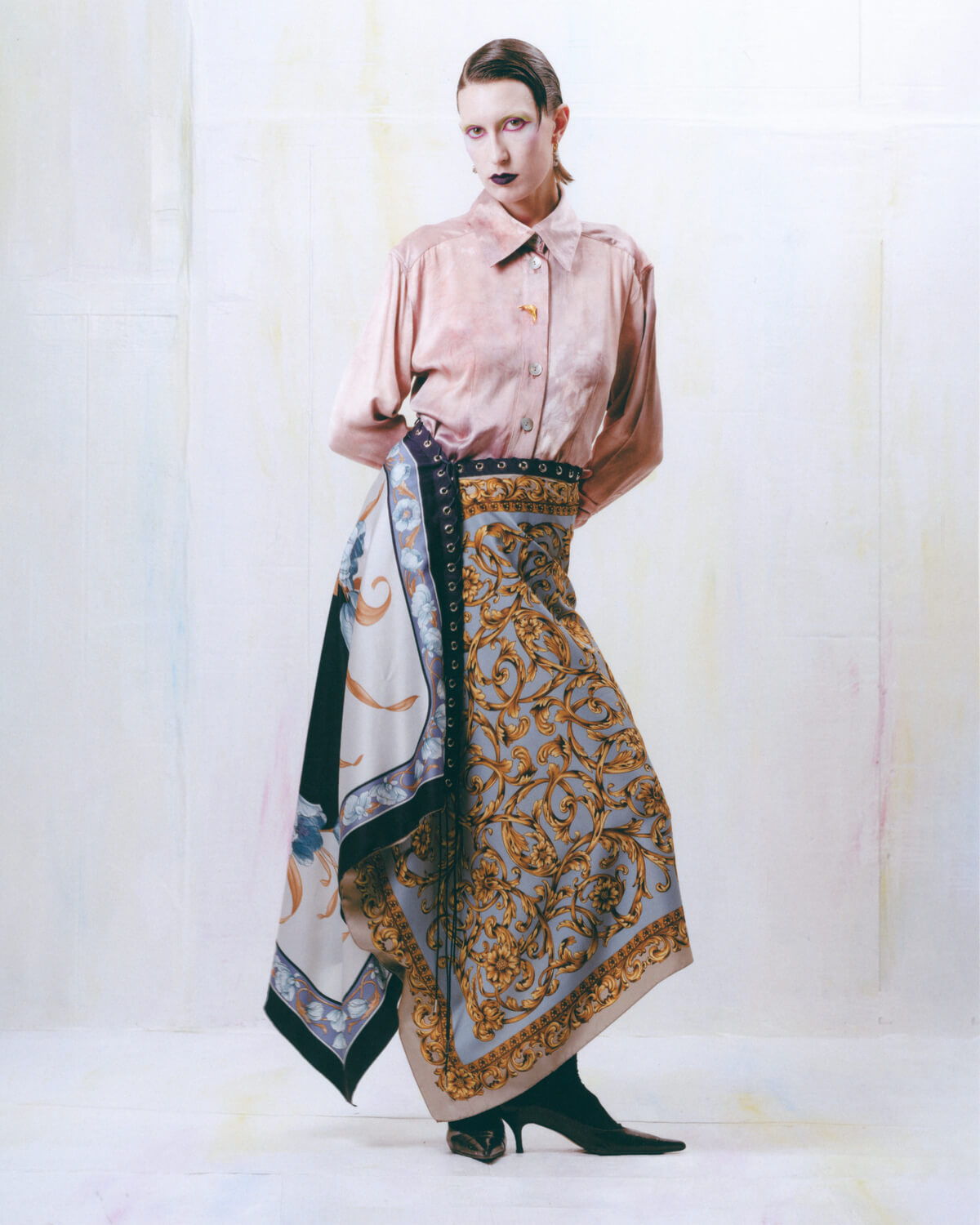
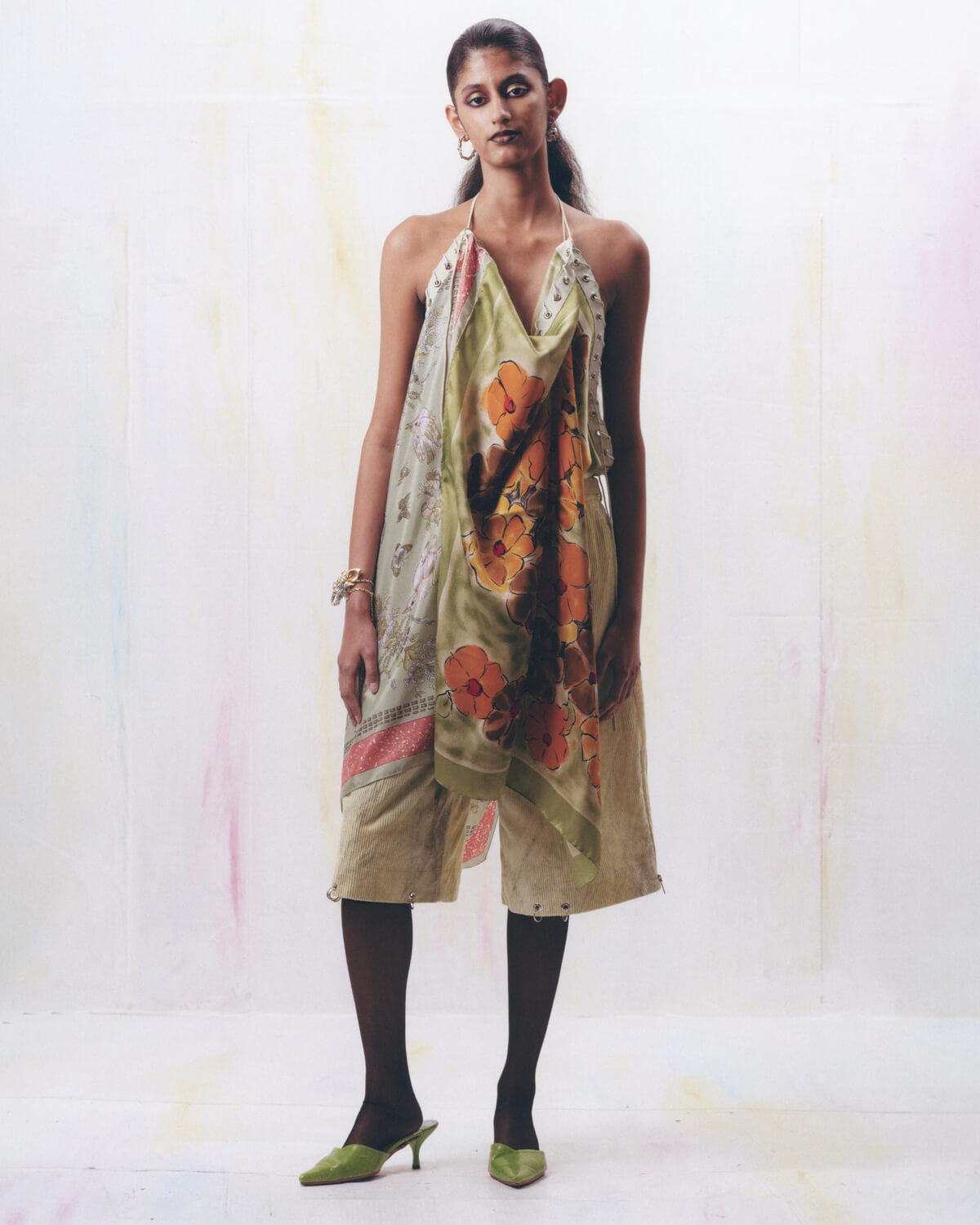
For this collection, I worked particularly with vintage silk scarves that I sourced. The main focus was on composition and assembly, aiming to respect and enhance the original piece without altering its essence. I wanted to utilize not only the textile itself but also its shape and history.
Working with vintage pieces is like exploring a library of objects and colors, which I then reinterpret in my own way to create something new, poetic, and unique.
How do you maintain consistency in finish and quality when working with reclaimed materials?
To maintain consistency and quality, I start with a careful selection of materials: each fabric or reclaimed piece is chosen for its quality, texture, and color. I particularly favor natural materials, which allow me to work with natural dyes while respecting the authenticity of the textile. I also like to structure my collections into different categories: simpler pieces that can be reproduced as they are, a category focused on natural dyes, and a more artisanal, experimental category.
Even within an upcycled approach and limited quantities, the goal is to create pieces that are reproducible in their shape and overall aesthetic, while preserving the uniqueness of each garment. No print or pattern is ever exactly the same, but the silhouette and the spirit of the collection remain consistent.
Finishes are always carefully executed, and for ready-to-wear, the majority of pieces are manufactured to strike a balance between craftsmanship, quality, and controlled production.
Finally, how would you like to see Rappaz evolve?
I would like to see Rappaz evolve by consolidating its creative universe while remaining true to its values of craftsmanship, ethics, and upcycling. My ambition is to continue exploring new techniques, working with sustainable and local materials, and developing collaborations that highlight French and European know-how.
I envision the brand becoming a true space for artistic and feminist expression, where each garment tells a story, celebrates women’s freedom and strength, and evokes genuine emotion. Today, the goal is to expand the brand, build strong partnerships, and continue giving it depth and meaning, while maintaining a commitment to creating poetic, conscious fashion that carries emotion.
Look Book Credits
Photographer: Ulises Lozano @ul.y
Assistant: Alia Hnid, Louise Lepeltier, Nadia Yusuf
Make-up Artist: Venus Hermintant @plsticdoll
Hair Artist: Jean Dorthu
Models: @issa.sunnyday and Amance Bastard @xx.amanciaga.xx