
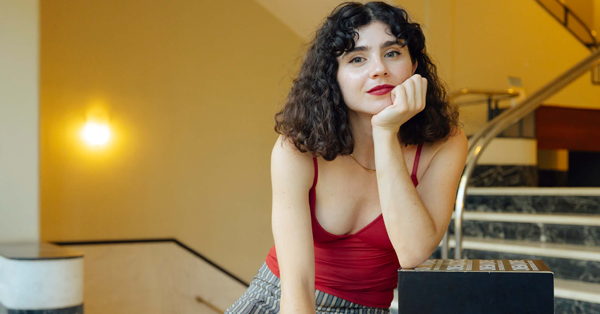


Paola Levitch doesn’t treat social media as a promotional afterthought, she treats it as a living extension of an artist’s world. Born in Madrid and now based in London, Levitch is the founder of Sosig, a women-led, Gen Z-driven social media boutique that works closely with artists to turn releases into fully realised digital ecosystems.
You grew up in Madrid, moved to London at 18, studied music, and now you run Sosig – a “not-an-agency” social media boutique for artists. If you had to tell that journey in three scenes, what would they be?
Scene 1 – Madrid
I was that one friend buying every fashion and culture magazine they could find, obsessing over music videos, and listening to every artist on the radio. London always felt like a hub buzzing with ideas and energy I wanted to be part of. I didn’t want to follow a set path, I wanted to see how far I could push myself in a space that felt much bigger than what I already knew. So I bought a one-way ticket to London, curious to see what I could make happen.
Scene 2 – London
I threw myself head-first into the London music scene. Going to shoots with Olivia Dean, late-night shows with the AMF Records crew, writing tweets with artists like Self Esteem – it felt like an electric time. But I also started noticing that social media, such a core part of an artist’s journey, was often treated as an afterthought. That’s when I started thinking differently: I wanted to create a space where strategy, creativity, and artist vision could collide, bringing the dynamism and excitement I felt IRL into the online world.
Scene 3 – Sosig
I decided to take a chance and start my own business. Sosig is a mix of ideas, campaigns, organised chaos, and constant collaboration. I’m a huge perfectionist, but I’ve also learned that building something of your own doesn’t have to be perfect to be powerful or meaningful – as long as it creates real impact! Working with artists directly, protecting their vision, and shaping their digital world… that’s where the value lies. If I had to soundtrack this scene, you’d hear ‘Messy’ by Olivia Dean playing (if you know, you know).
Sosig launched officially in 2025 and you went straight into Lily Allen’s ‘West End Girl’ campaign, which pulled over 120M views in two weeks and hundreds of thousands of new followers. When you look back at that roll-out, what do you feel you did differently from a “classic” label campaign?
What felt different from a traditional style of campaign was that everything we did was rooted in the artist’s own timeline and narrative. Most campaigns follow a formula: teaser, release, repeat. For ‘West End Girl’, we started by really understanding Lily’s voice and story, and thinking about how fans would engage with it. Every touchpoint became part of a bigger narrative: from easter eggs hidden in captions, to TikTok sounds fans would interact with, to the eternal question: “who TF is Madeline?!”
It wasn’t about chasing virality or ticking boxes. It was about creating a world that felt unmistakably hers, and gave fans a reason to immerse themselves. That meant taking risks, trying things that didn’t have a precedent, and trusting instinct over industry norms. Looking back, the results weren’t just the numbers, it was how the campaign genuinely connected people to her music and vision. This was something I’d already seen take shape in earlier campaigns, like Olivia Dean’s ‘Messy’. Even with it being my first campaign, it was clear that thoughtful storytelling could turn a release into an experience…

You’ve helped artists like Olivia Dean, Joy Crookes, Tom Misch, Self Esteem and others turn their socials into full universes, not just promo billboards. What’s the common thread you’ve noticed between artists who really thrive online and those who struggle?
The artists who thrive online treat social media as an extension of their creative world, not just a promo channel. They approach it intentionally, thinking about how each post, story, or video contributes to a bigger narrative around their music and vision, and how it shapes the connections they build with fans. They value collaboration and dialogue, giving space for ideas and input, and trust the strategy without needing instant validation or shortcuts. They also know it’s a win to have someone on the team who’s equally obsessed with the attention to detail that takes a campaign from good to great.
They don’t compromise their authenticity for fleeting virality, they play the long game, building a presence that genuinely reflects who they are and deepens their connection with fans over time. Those are the artists who don’t just grow online; they create digital worlds that feel alive, personal, and lasting.
Sosig is a women-led, Gen Z-led team working in a very male, very London-centric music industry. What have been the biggest frictions you’ve hit as a young Spanish woman building a business here – and what’s given you leverage?
Being Gen Z isn’t just about knowing the platforms, it’s about understanding how culture moves online, and having a hand in actively shaping it. In an industry where campaigns can feel repetitive or formulaic, that fresh perspective lets Sosig create work that feels current, instinctive, and aligned with how fans actually experience music: original, thoughtful, and unapologetically true to each artist’s vision.
You talk openly about the mental toll of social media and still deliver campaigns with insane reach and UGC numbers. What boundaries or rituals do you insist on with artists so that growth doesn’t come at the cost of their headspace?
From Mercury- and BRIT-nominated campaigns with Olivia Dean to breakout moments for newer names, you often sit at the intersection of pop ambition and very intimate storytelling. For you, what does a “feminine” approach to marketing look like when it’s not just pink graphics and empowerment slogans?
For me, the best campaigns aren’t about clichés or formulas: they’re about intuition, care, and attention to nuance. It’s about noticing the small details that make a campaign feel personal, considered, and reflective of the artist’s world, rather than imposing a rigid formula. There’s no gender attached to this approach: it’s not a “feminine” or “masculine” way of working, it’s just the way thoughtful, creative strategy should be done, in my opinion!
It’s also about balance: ‘ambition meets sensitivity’, making bold moves while keeping the artist’s voice front and center. A campaign can be playful, daring, or experimental, but it should always feel like it belongs to the artist, not to a template. Ultimately, the approach I bring is rooted in empathy, taste, and thoughtfulness, while still delivering work that lands, resonates widely, and has real impact.
If a young Vein reader dreams of moving to the UK to work in music – not as an artist, but as a strategist or founder like you – what are three unglamorous but essential skills she should start building today?
1. Relationship-building – Music runs on trust and collaboration. Connecting with people, nurturing relationships over time, and being someone others genuinely want to work with matters far more than knowing every trend or tool.