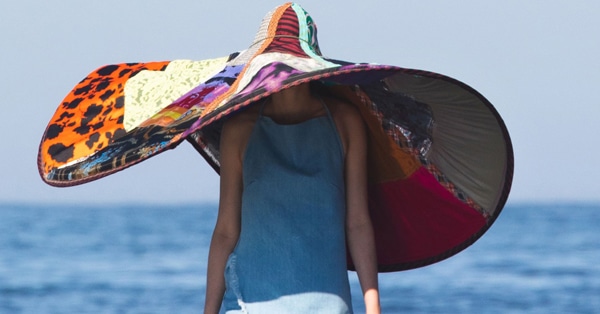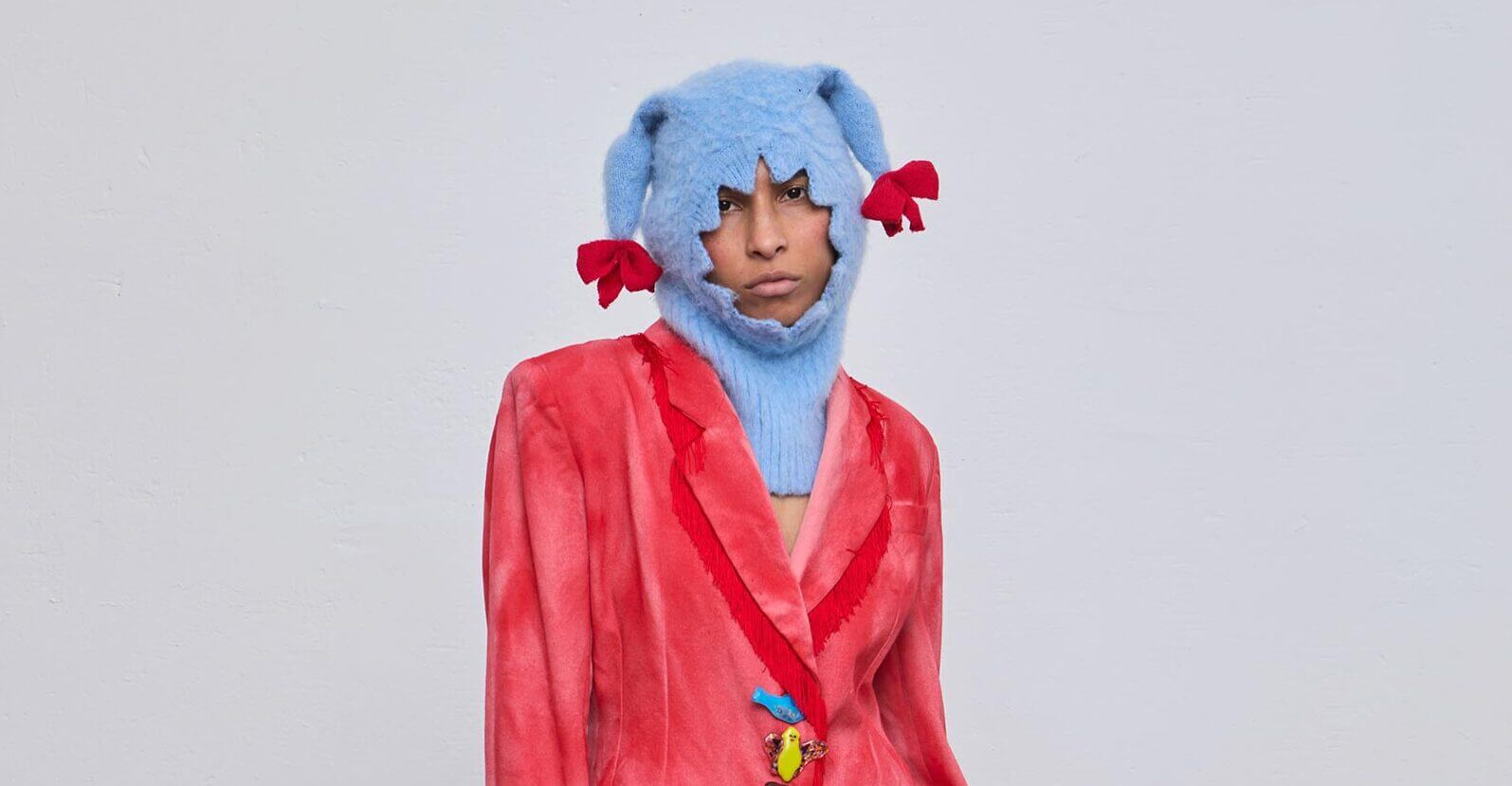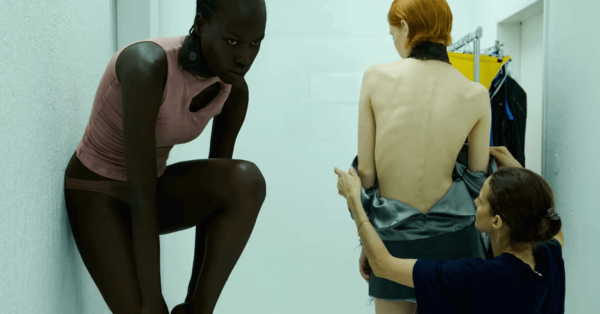
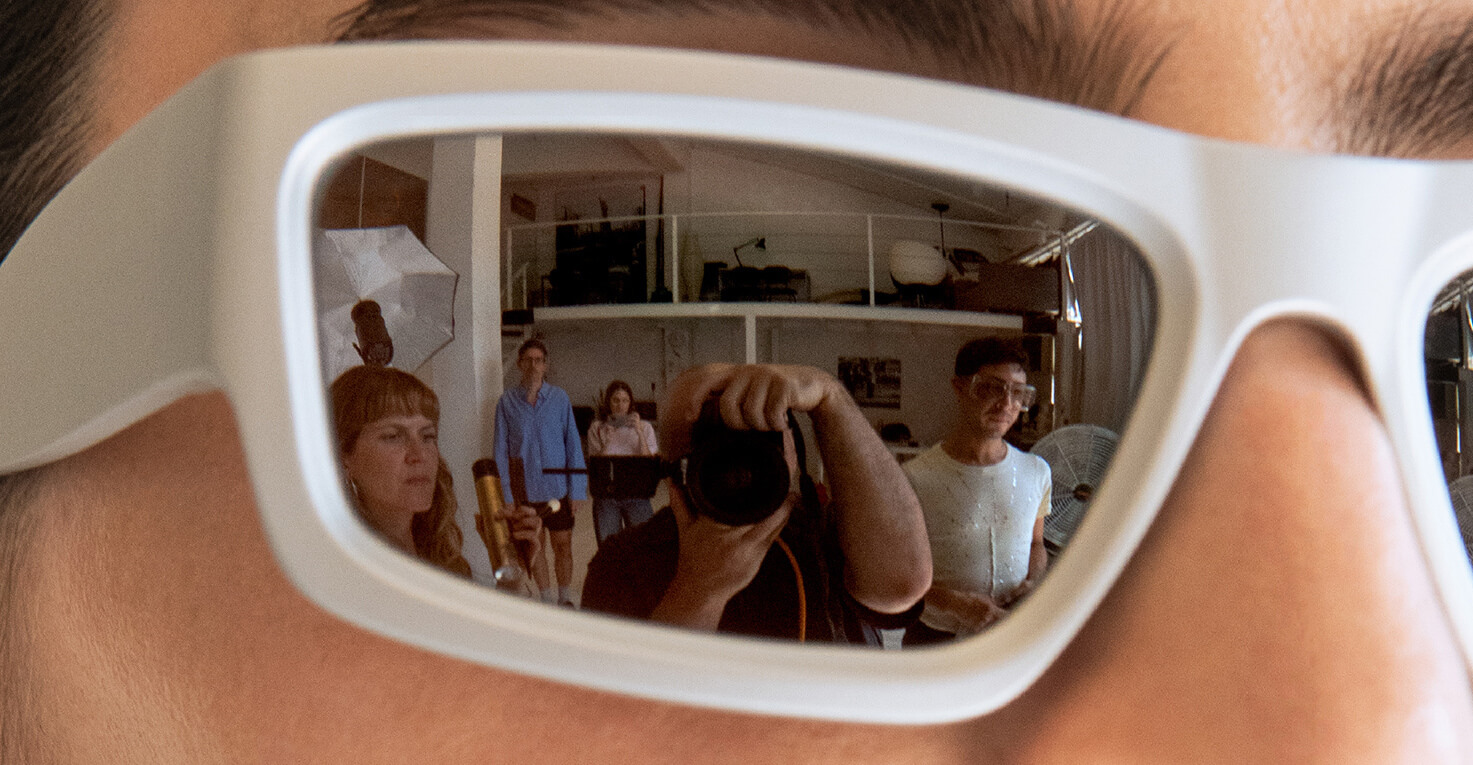
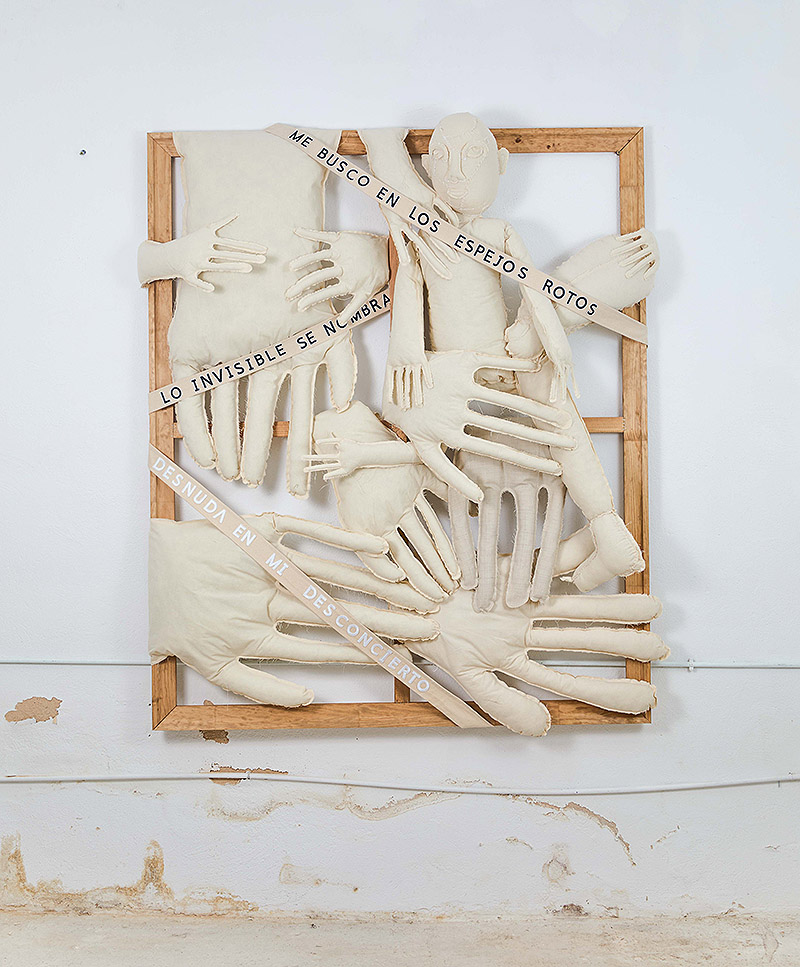
At CAN Art Fair 2026, Mallorcan artist Ela Fidalgo presented Sistema Blando, a tactile body of work created alongside her mother in the aftermath of loss. Through soft sculptures, visible seams and collective gestures of care, the project explores vulnerability, touch and the possibility of inhabiting grief together. In #VEINdigital, we spoke with her about the experience.
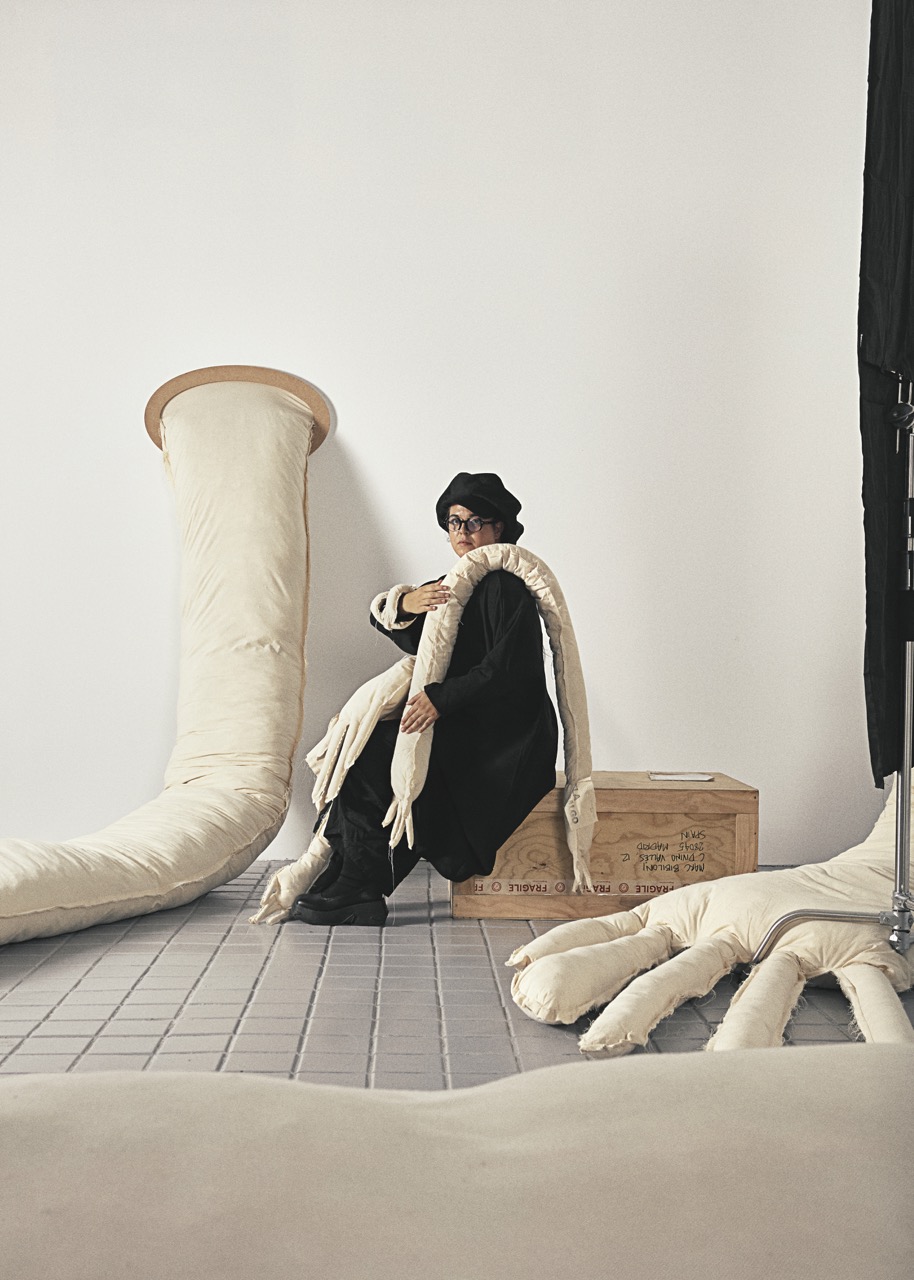
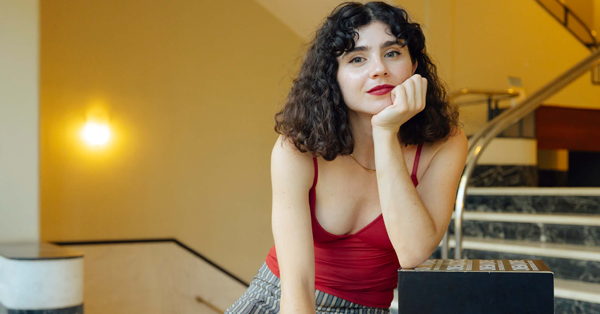
Foto: Juan Borgognoni
In celebration of the 2026 CAN Art Fair, we spoke with Mallorcan artist Ela Fidalgo, whose practice transforms grief into shared, tangible experiences. Dedicated to presenting emerging and mid-career voices from the international contemporary art scene, the fair has become a space for discovering practices that explore new forms of materiality, community and experimentation. For this edition, Fidalgo presented Sistema Blando, a delicate body of work created alongside her mother as a way of navigating loss together. In these soft, stitched forms, vulnerability is not hidden; it is held, shared and given shape. As the artist reflects, “softness appears as an act of disobedience.” In #VEINdigital, we spoke with her about the experience.
You began in fashion, when did the body shift from something you dressed to something you constructed?
My work in fashion was already deeply connected to the body as a space for expression and transformation. I was interested in exploring materiality, form, and identity through garment construction, understanding the body not only as something that is dressed, but as a territory where symbolic processes take place.
Over time, I began to feel that the language of fashion was becoming insufficient for some of the questions that were emerging in my practice. I worked extensively with recycled materials, textile remnants, and found objects, transforming them and giving them a second life. This process gradually shifted my attention from the wearable object toward the material itself: its memory, its fragility, and its capacity to hold experiences.
Little by little, the body stopped being merely the support for the garment and began to appear as something that I could construct, fragment, or reconstruct through sculpture. Rather than a rupture with fashion, I understand this shift as a natural evolution of the same concerns: the interest in the body and materiality found in artistic practice a broader and freer language.
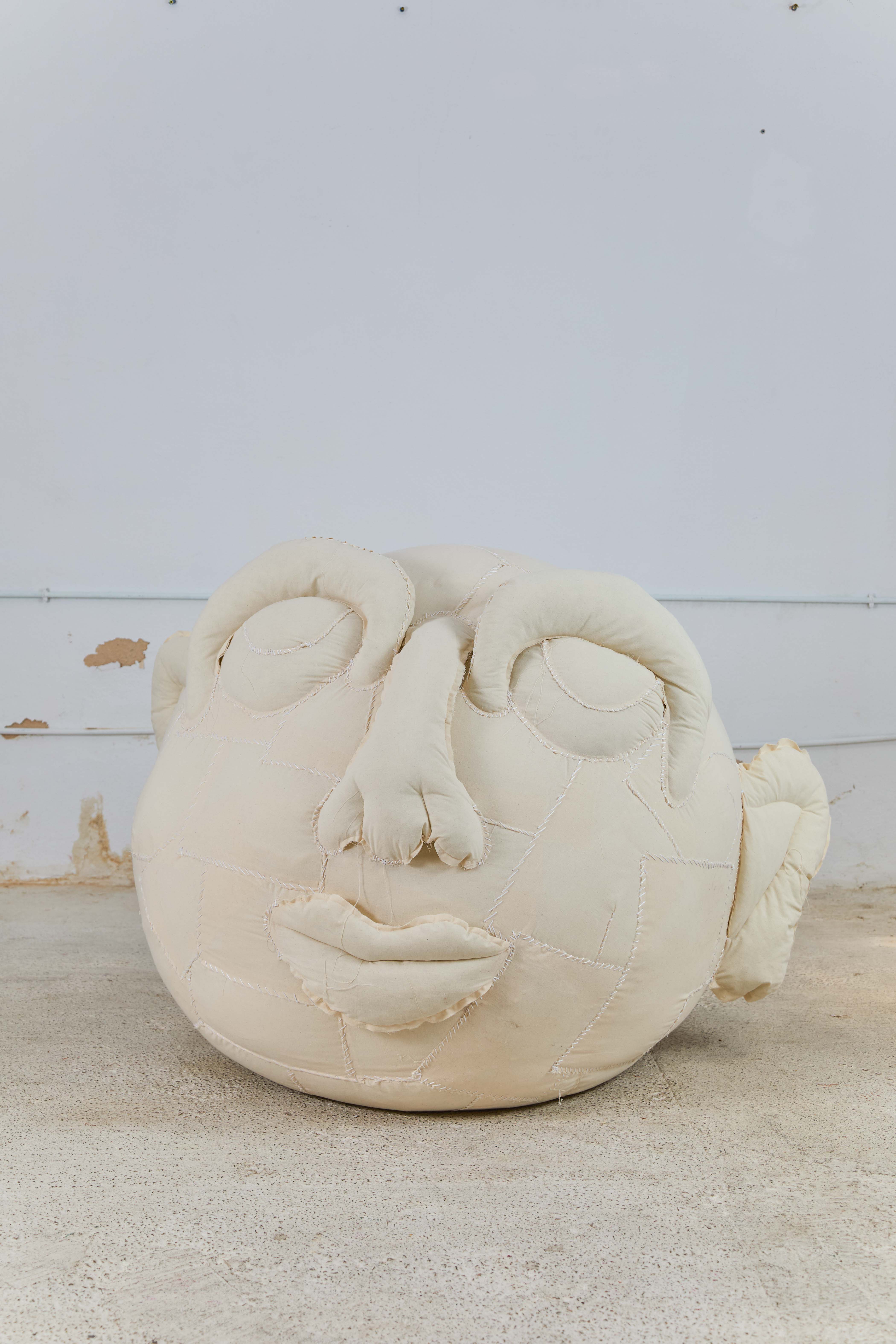
The human body appears throughout much of your work, often portrayed in ways that feel diverse and inclusive. What draws you to the body as a recurring subject, and how do you approach representing different bodies in a way that reflects that inclusivity?
For me, the body is the first territory where experience takes place. It is where memory, emotions, pain, care, and also affection are inscribed. I am interested in thinking about the body not from an idealized perspective, but from its vulnerability and its capacity for transformation.
In my works, bodies often appear fragmented, incomplete, or in the process of reconstruction. I am not trying to represent specific or normative identities, but rather to open a space where different bodies can recognize themselves. Soft materials, visible seams, and gestures of contact speak of fragility, but also of the possibility of supporting one another.
Inclusivity emerges naturally when the body is understood as something changing, plural, and deeply human. I am interested in creating forms that do not impose a fixed identity, but instead allow each person to project their own experience onto them.
Your work feels very tactile and alive. How do you decide which materials or mediums to use, and what do they bring to the story?
The material is always the starting point. Before thinking about a specific form or image, I need to touch, observe, and understand the behaviour of the material. I work mainly with textiles, recycled materials, or remnants that already carry a previous history.
Many of them have had a previous life, and that past becomes part of the work. By transforming them, I do not try to erase what they once were, but rather to allow that history to enter into dialogue with new forms.
Manual processes such as sewing, cutting, embroidering, and assembling are essential. Each stitch leaves a trace of time and gesture. The final result does not seek to conceal this process; on the contrary, I am interested in making the care, dedication, and presence of the body in the construction of the work perceptible.
Your work often carries a strong emotional and poetic presence. What role does art play for you as a way of holding or processing those feelings?
For me, art is a space where I can inhabit questions that do not have a clear answer. Many of my works emerge from moments of vulnerability or from intense personal experiences.
Working with my hands, repeating gestures such as sewing or embroidering, becomes a form of thinking and listening. It is a slow process that allows difficult emotions to be transformed into something that can be shared.
I do not understand art as a way of resolving pain, but as a space where that pain can be held, transformed, and, to a certain extent, accompanied.
You describe touch as a radical political act. What makes softness powerful to you right now?
For me, speaking about softness comes from something very bodily, very intimate. It does not arise as a theoretical idea but as a necessity. For a long time I have felt that the world constantly pushes us toward hardness: toward protecting ourselves, toward tensing the body, toward rigidity, toward responding quickly before truly feeling what is happening.
In that context, softness appears almost as an act of disobedience. It is something radical in the moment we are living in today.
I am interested in it because softness allows something vulnerable to exist without having to hide or justify itself. It allows holding without dominating… Caring without possessing. In my work, when I use soft materials, padded shapes, or surfaces that invite touch, I am thinking precisely about that: creating spaces where the body can lower its guard. Spaces of refuge.
When someone touches a soft piece, something very simple but very powerful happens: the gesture changes. The hand becomes slower, more careful. The body becomes aware of itself and of what it has in front of it. That small change in the way of relating already contains a political dimension for me.
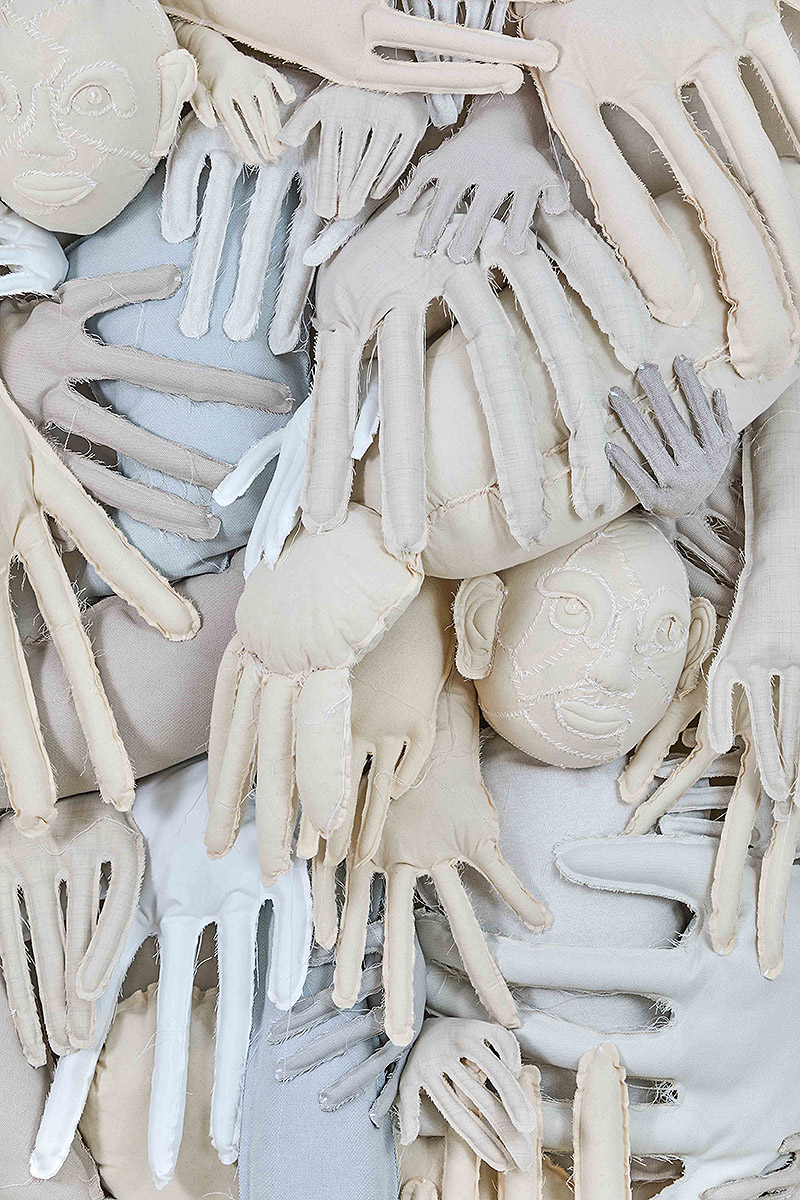
These pieces were created with your mother. What changed when grief became something you physically built together?
Sistema Blando was born at a time when everything was permeated by the grief over my father’s death. At first, that grief was something very intimate, very quiet, almost difficult to name. But little by little, the working process began to open a space where that pain could exist in a different way.
What changed profoundly was that grief stopped being something each of us carried inside and became something we could inhabit together. While our hands were working, conversations emerged naturally: memories, silences, unexpected laughter, moments when we were simply there, sharing time.
Working with my mother completely transformed the meaning of the process. It was not only about making work; it was about building a space where care could circulate between us. Moreover, the project eventually expanded beyond the two of us. My in-laws and very close friends also became involved in the process, and that made the workshop turn into a kind of temporary community. A place where manual work allowed grief to be shared without the need to explain everything with words.
I think that was when I understood something important: that grief does not have to be only a space of solitude. It can also be a place of connection.
When multiple hands are involved in creating a piece, as in Sistema Blando, how does that collaboration influence the energy or intention of the artwork?
When multiple hands participate in the creation of a piece, something very subtle changes in the work. The process stops being an individual gesture and begins to become a small fabric of presences. Each person stitches in a different way: some tighten the stitch, others leave it looser, some move quickly, and others need a slower rhythm. Instead of trying to correct or standardize these differences, I am interested in keeping them visible, because that is where the life of the piece emerges.
Each stitch is, in a way, the trace of a body. Not only the movement of the hand, but also the time that person spent there, the conversation happening around them, the emotional state they brought to the moment.
The work stops being something closed, something that responds only to my intention, and becomes a shared space. A place where different rhythms, sensibilities, and presences have left their mark.
This collective aspect resonates deeply with my way of understanding the world. I like to think that we are incomplete bodies, held and completed by other bodies. None of us exists entirely in isolation; we are always traversed by bonds, care, and the presence of others.
In this sense, working collectively is not only a methodological choice but also a stance toward life. I want the work to reflect this idea of community: that the piece is almost like a small organism where many gestures coexist.
The seams, then, function as a kind of map of relationships. They not only join materials but also connect times, conversations, silences, and affections. And for me, this is where something very important appears: understanding creation not as a solitary act of authorship, but as a space where collectivity can also take form.
What made CAN Art the right place to present Sistema Blando at this moment in your practice?
For me, it was important that this project, which speaks of care, vulnerability, and companionship, could be shown in an open context where these questions could also resonate with other practices.
This isn’t your first time working with CAN. How has your relationship with the fair evolved alongside your own practice?
My relationship with CAN has grown alongside my own practice. Each participation has been an opportunity to showcase new stages of my work and to generate conversations around it.
Over time, this connection has become a space of continuity where I can present processes that keep evolving and transforming. I feel at home here, and that gives me a sense of relief.
CAN has become an important platform for contemporary artists. What has it meant for you to show your work in that context?
Showing my work at CAN Art Fair is primarily about the possibility of situating the practice within a broader conversation. When a work leaves the intimate space of the studio and enters a context like this, it begins to relate to other perspectives, languages, and questions.
For me, this is important because the work I develop stems from very personal experiences but, at the same time, seeks to connect with something deeply collective. At a fair like CAN, the pieces stop dialoguing solely with my own process and begin to coexist with works by other artists who are thinking about the world from very different places. That intersection generates new readings.
It also means that the works can meet audiences who might not have been initially close to my practice. I am very interested in that moment when someone approaches a piece without knowing all the surrounding context, yet still connects with it through something sensory or emotional.
For me, showing the work at CAN means precisely that: allowing those temporalities, those questions, and those gestures of care to circulate. That the project can breathe in a larger space, encounter other sensibilities, and continue transforming through that dialogue.
What kind of encounter do you hope visitors at CAN Art will have with Sistema Blando?
I would like the experience of the works to be more sensory than intellectual. I want the audience to approach them through the body, through intuition.
The soft forms, the gestures of contact between the figures, aim to create a sense of refuge or closeness. I hope that those who encounter the pieces can recognize something of themselves in them.
If someone who has never seen your work before asked you what it’s truly about, beyond materials and exhibitions, what would you tell them?
If someone who has never seen my work asked me what it is really about, I would start by saying that my work speaks about the body. Not only the body as a physical form, but the body as a place where experiences are inscribed: memory, loss, affections, the wounds we accumulate over time.
I am interested in thinking of bodies as neither closed nor complete entities. They are territories in constant transformation. Places where something breaks, is repaired, adapts, and opens again. Many of the forms and materials I use come precisely from this idea: imagining how that which seems fragile or unstable can also sustain itself and find new ways of existing.
At its core, my practice revolves around a very simple question: how can we inhabit our vulnerabilities without hiding them? For a long time, we have been taught that vulnerability is something to protect or disguise, but I am interested in exploring what happens when we place it at the centre.
That is why I try to make the works function as small spaces of care. Places where what seems broken, incomplete, or vulnerable does not have to disappear, but can instead transform. Where care, touch, and the presence of other bodies become part of the process.
If I had to summarize it very simply, I would say that my work tries to imagine other ways of being together… 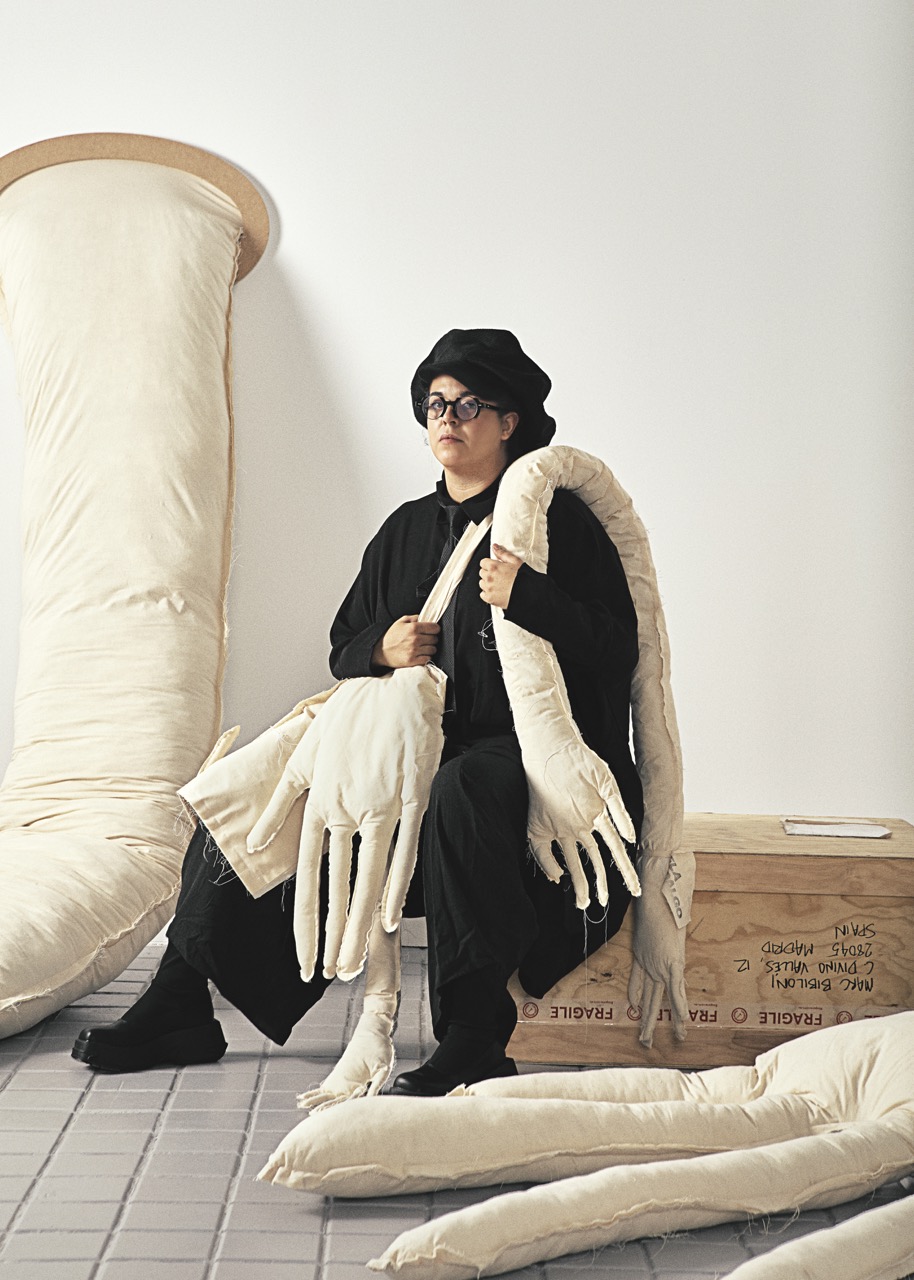
Foto: Juan Borgognoni
–
Follow us on TikTok @veinmagazine