
Drawing from years spent delivering across the city, Tania Marcial transforms precarious labour, humour, and memory into her debut collection at 080 Barcelona Fashion.
The same routes, the same gestures, repeated until they begin to shape how you see and move through the world. With her debut collection ‘Delivery’, presented at 080 Barcelona Fashion, Tania Marcial translates that lived experience into a collection that feels both deeply personal and collectively familiar.
While still studying fashion, delivery work was her everyday reality. Years spent navigating the city on a motorbike and balancing precarious conditions with fleeting moments of freedom now resurface as materialised nostalgia. The collection doesn’t romanticize that experience. Instead, it articulates it, drawing from the wide spectrum of situations and encounters that defined those years.
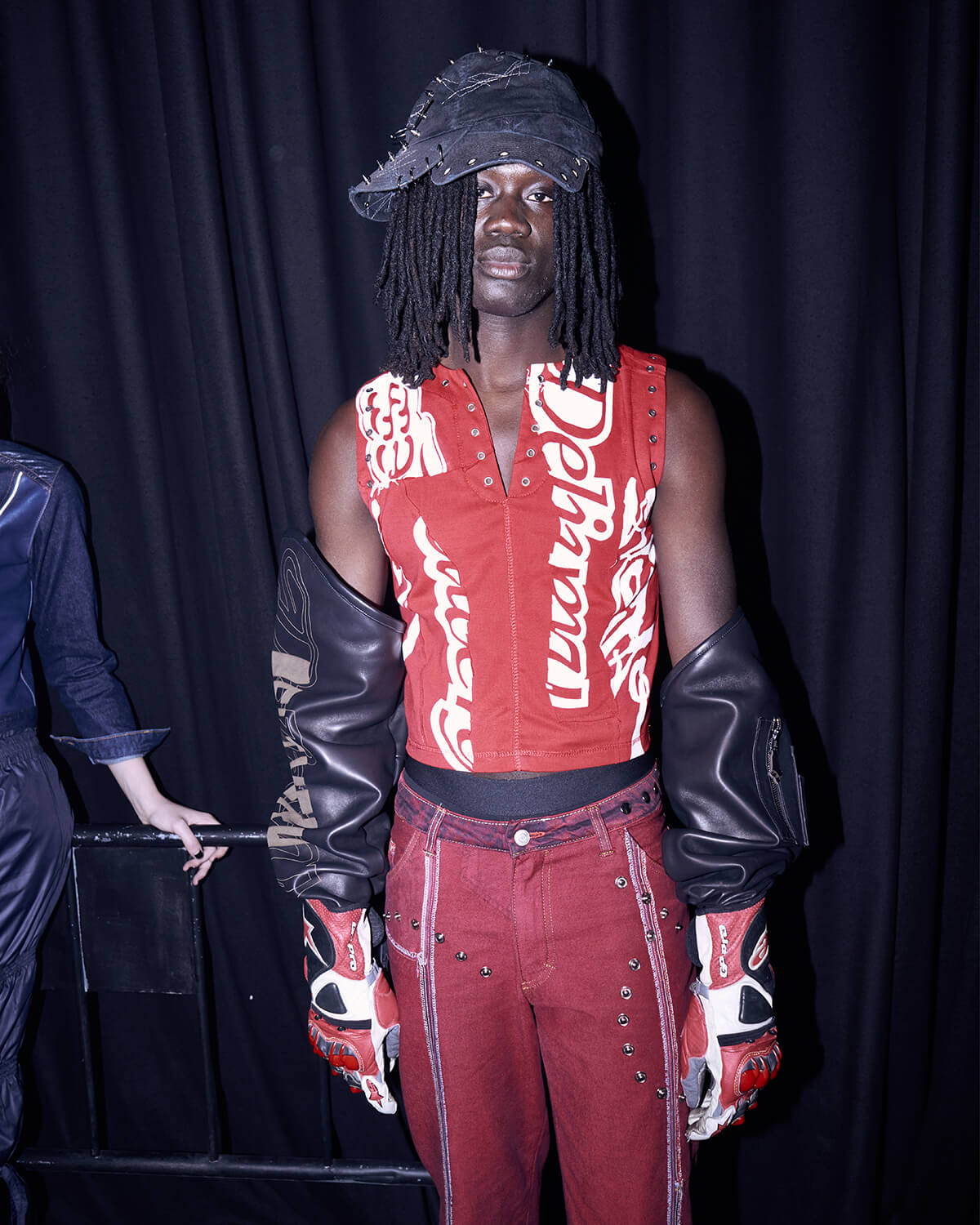
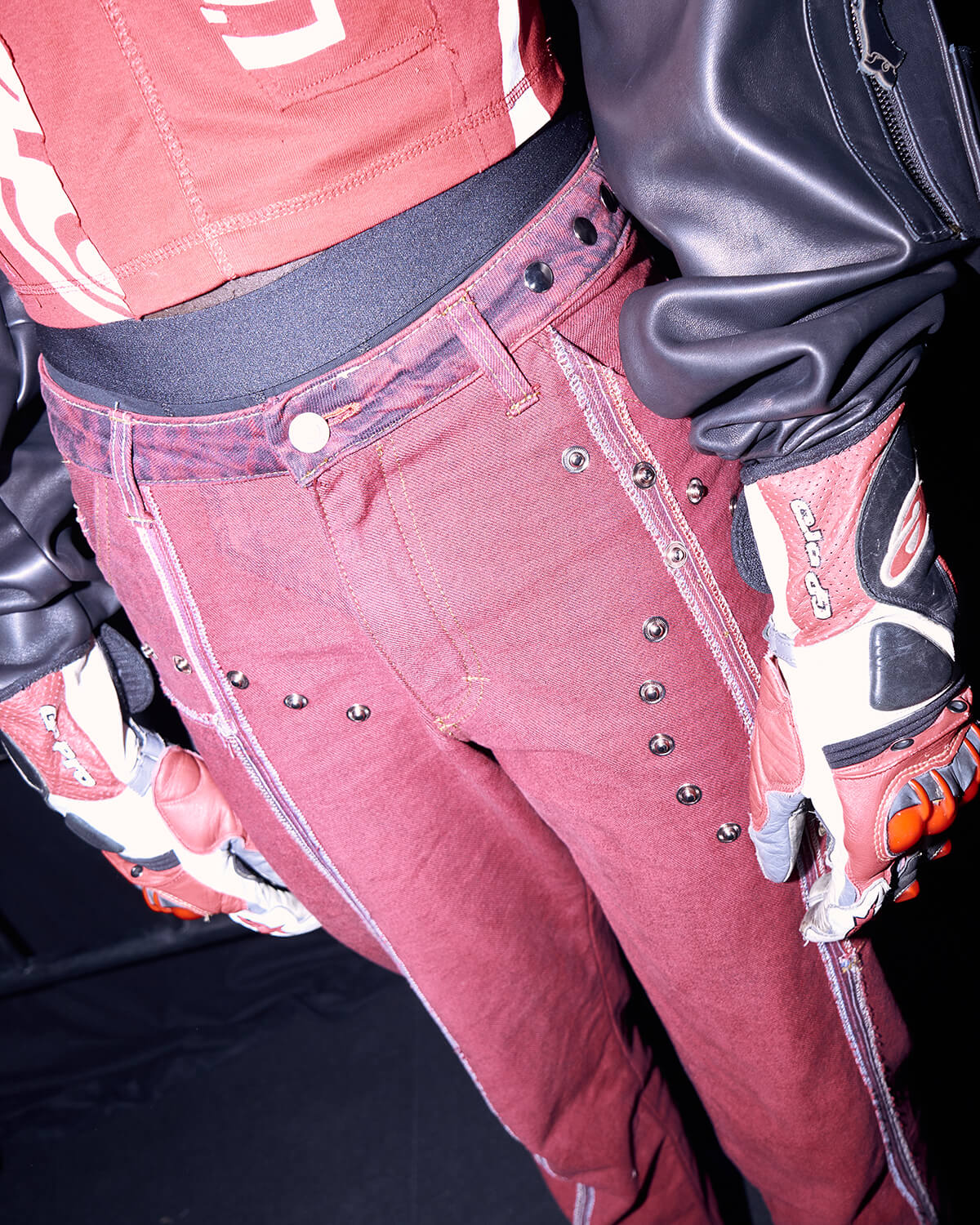
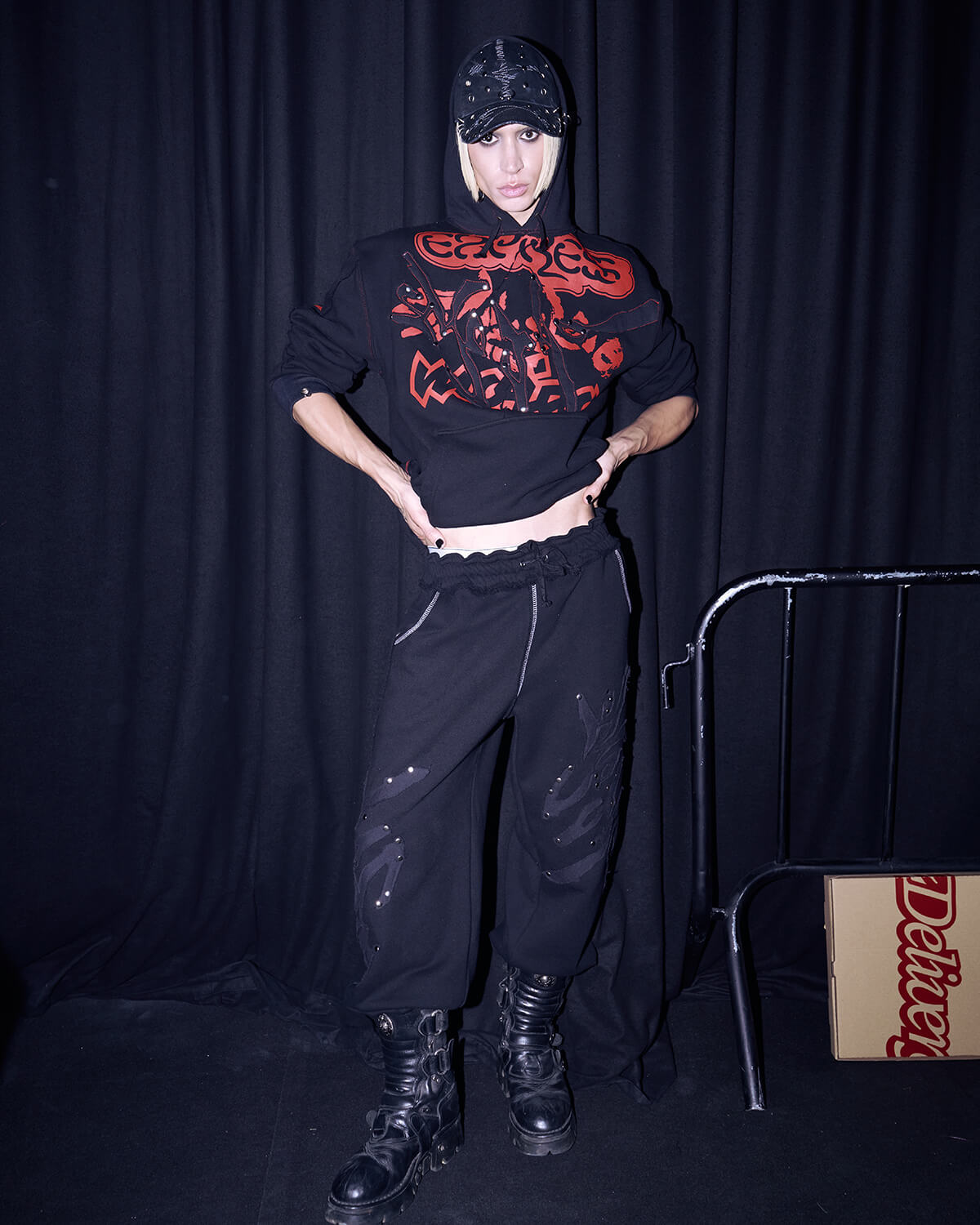
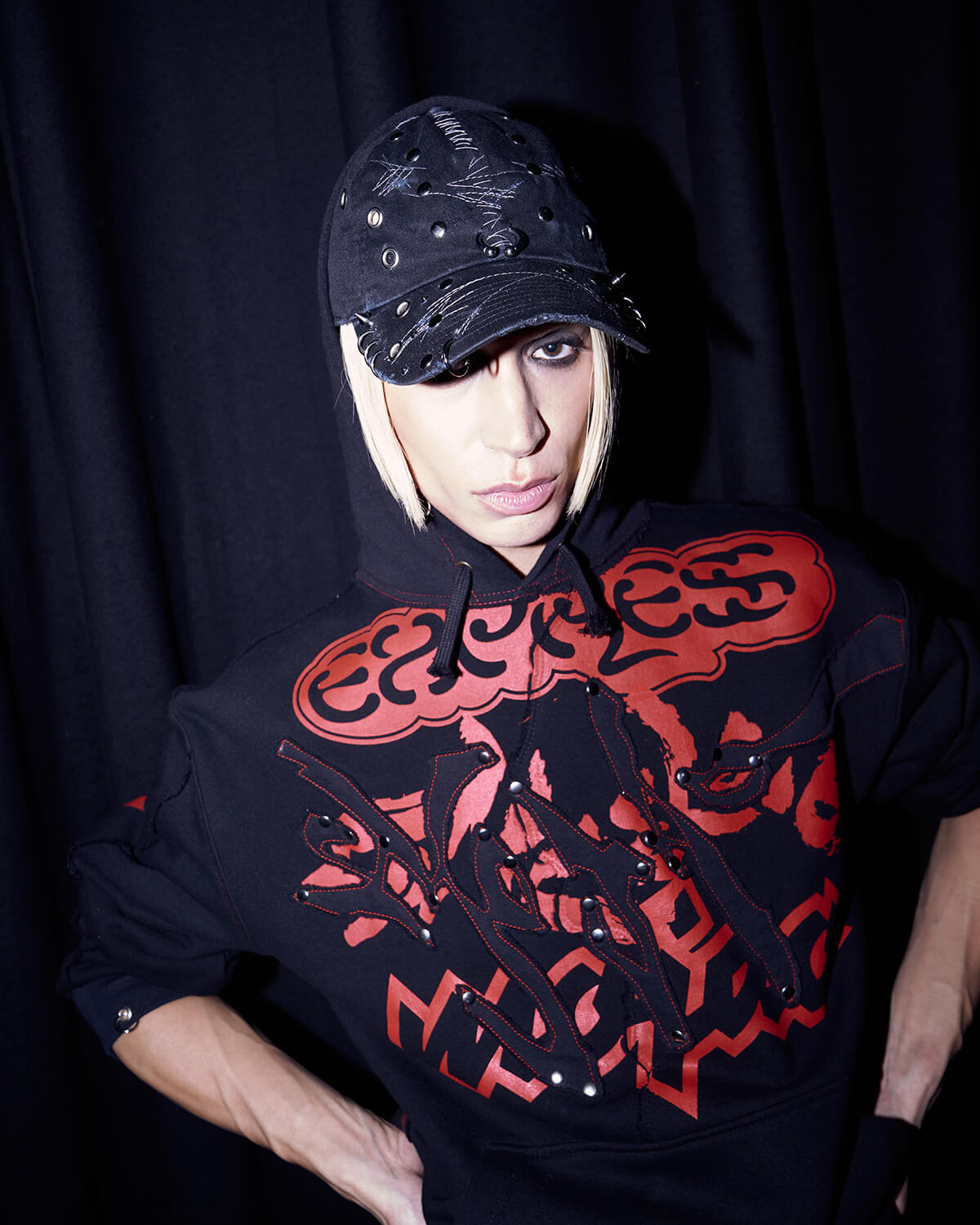
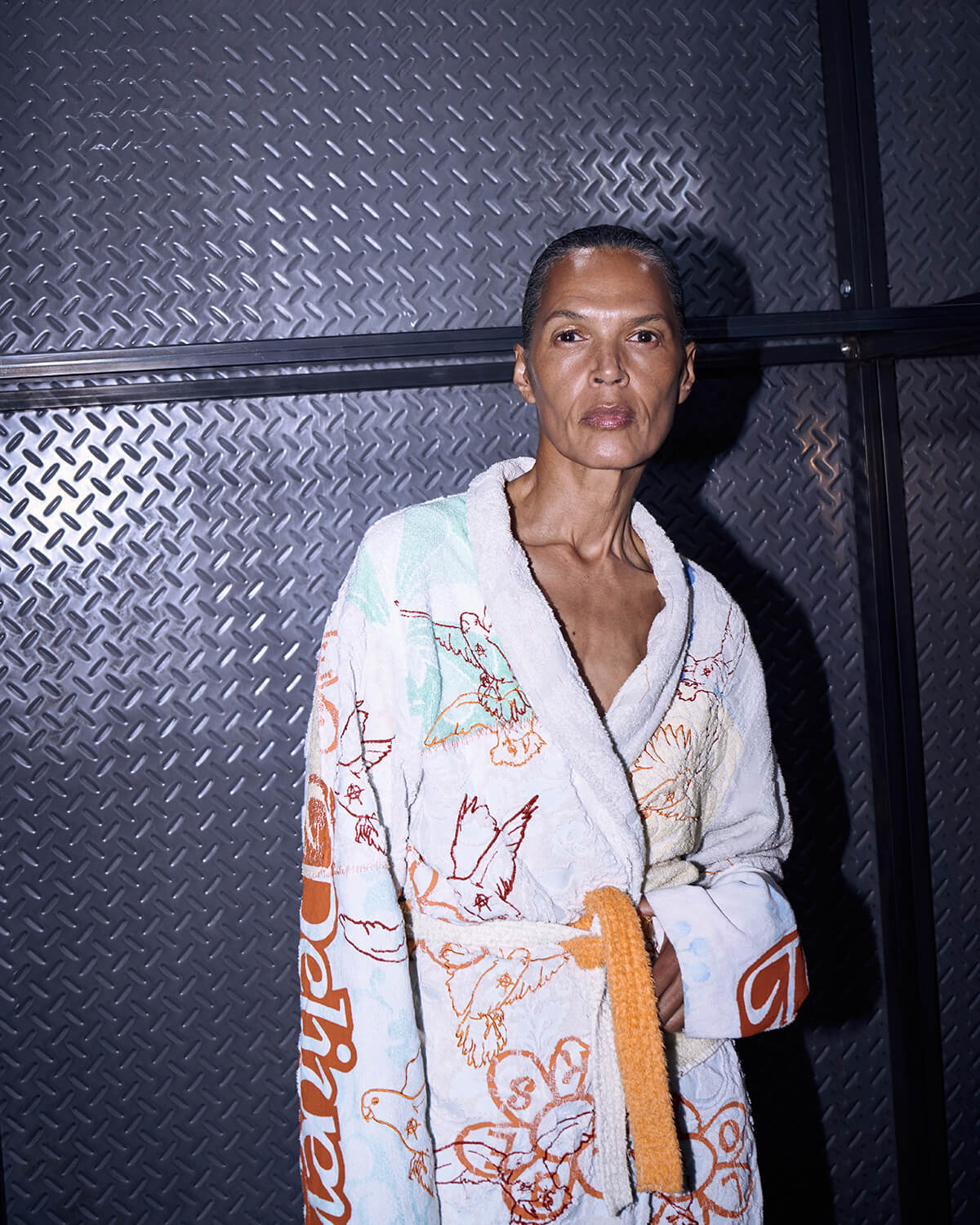
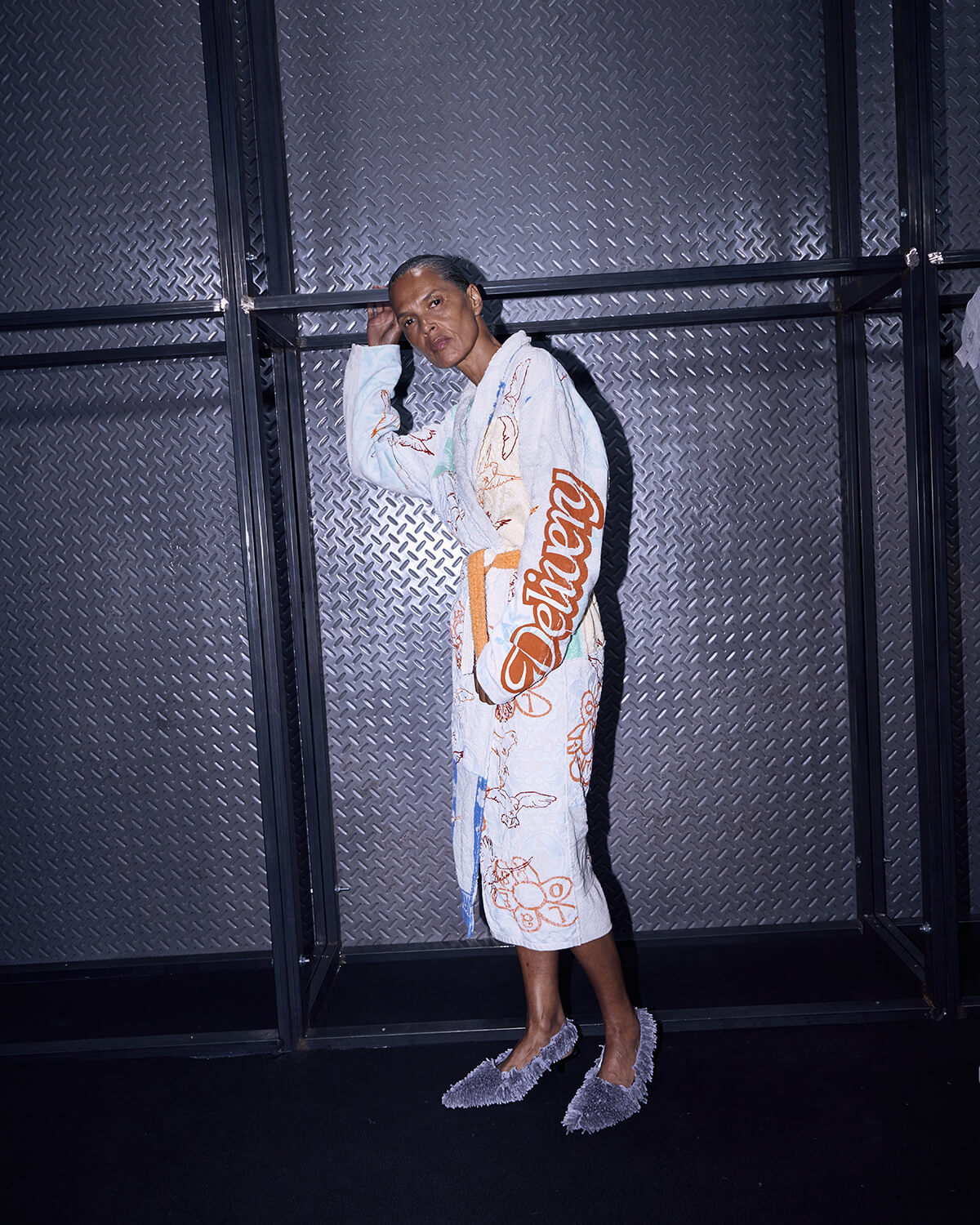
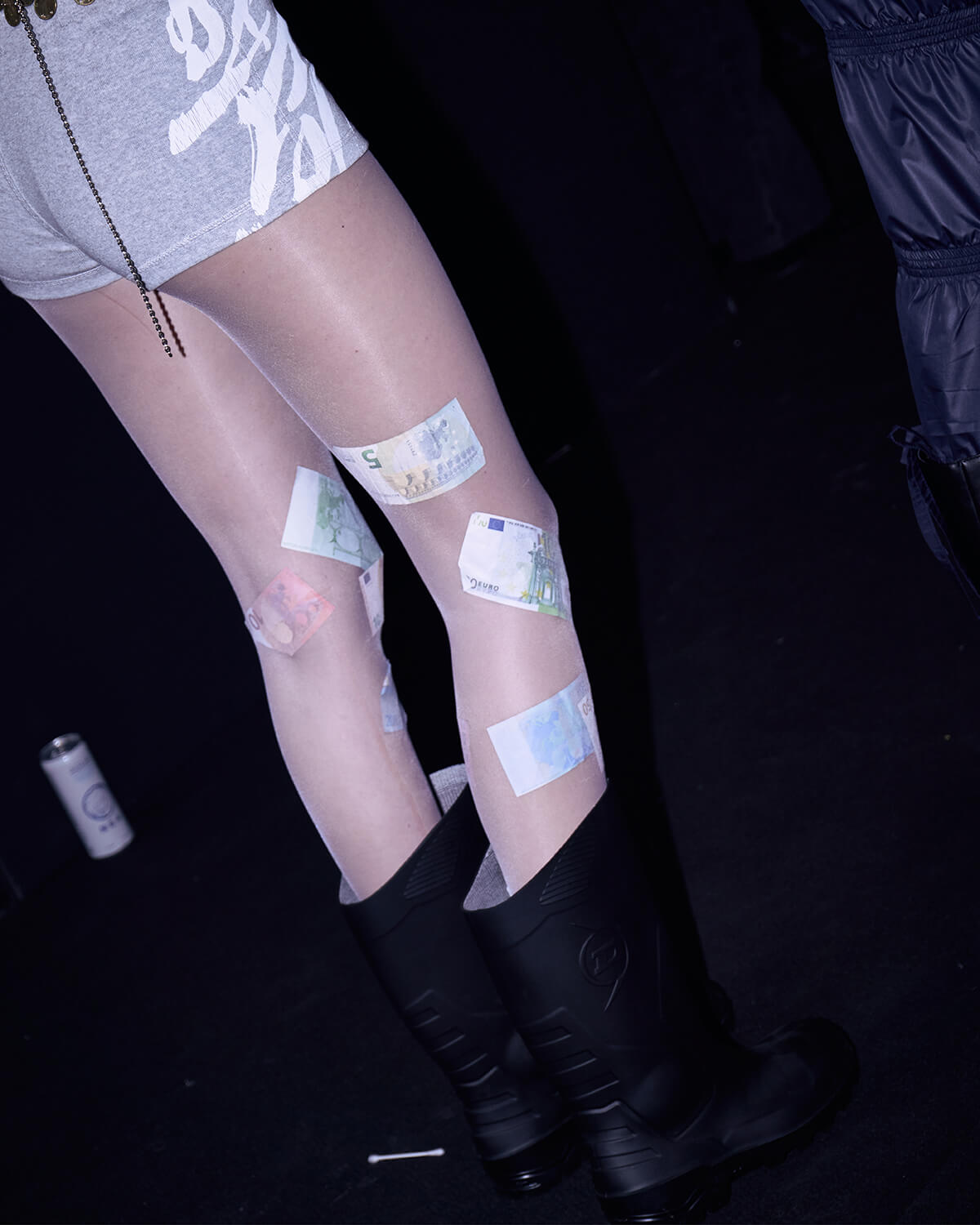
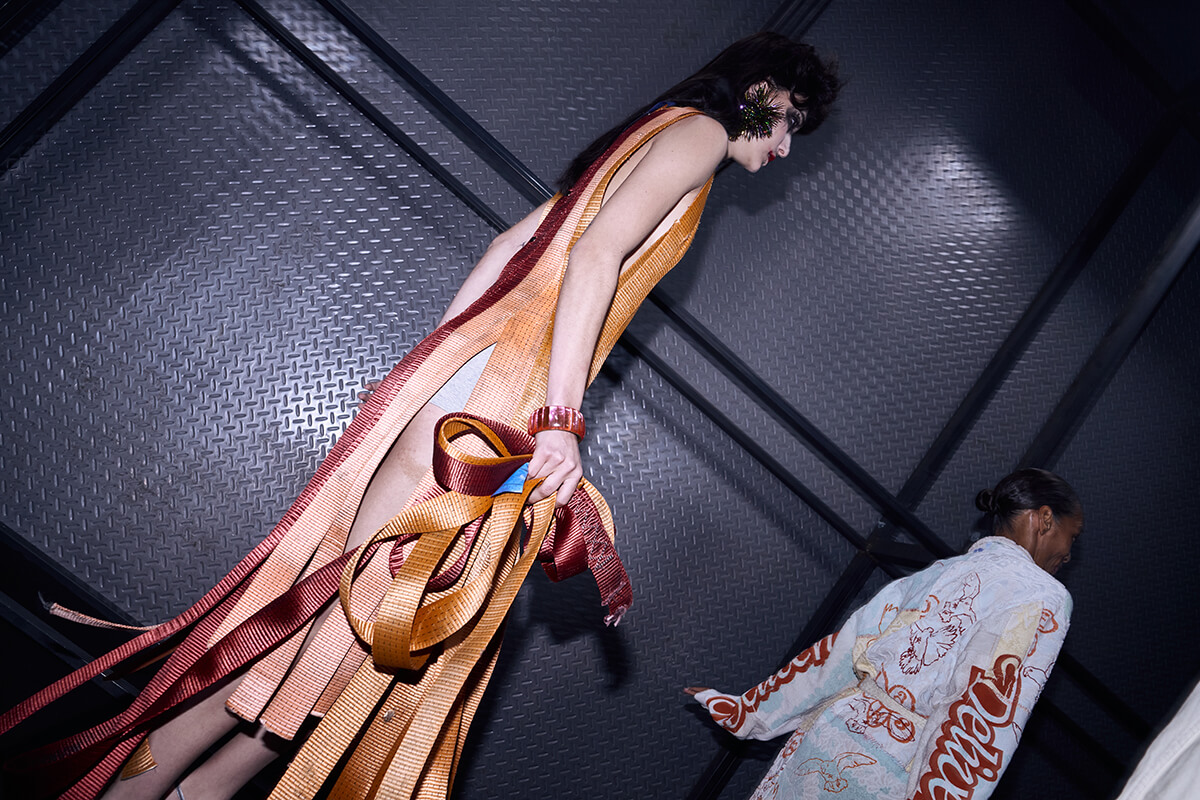
Waterproof pieces made from unexpected sources sit alongside textures developed through experimentation and reconstruction. Upcycling – central to Marcial’s DNA – is not treated as a concept but embedded throughout the entire process, grounding the narrative in the garments themselves. Each material feels as though it has already lived a life before.
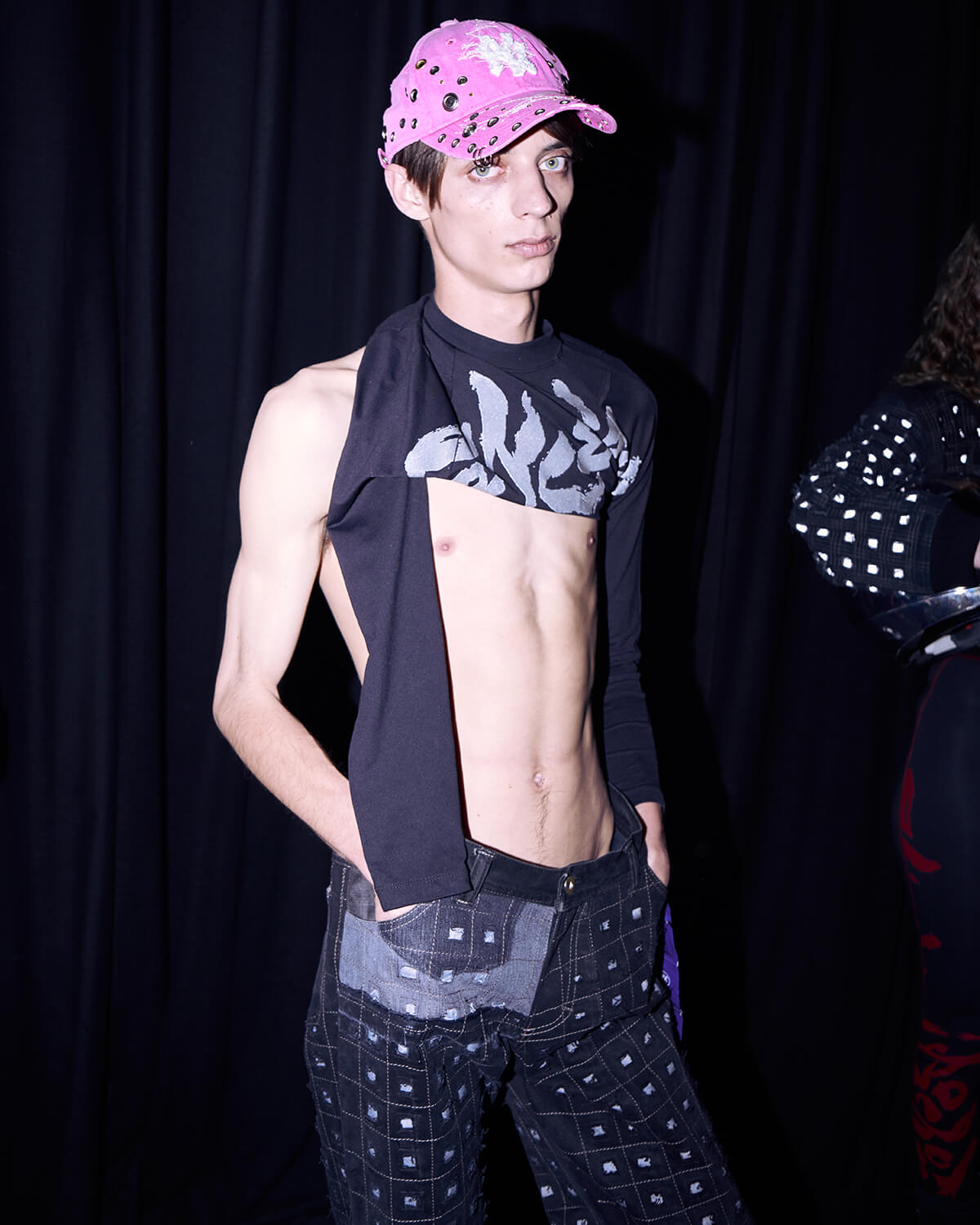
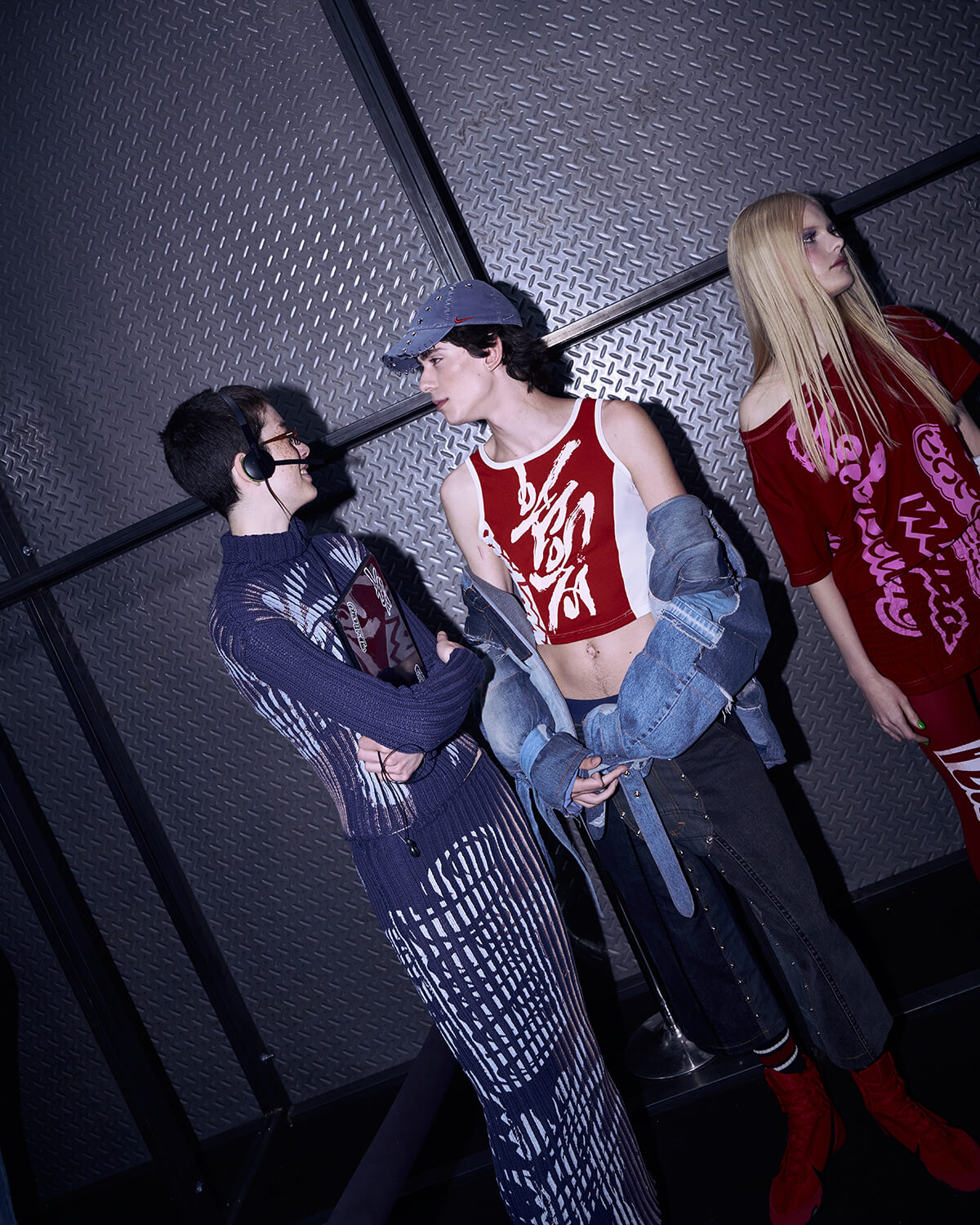
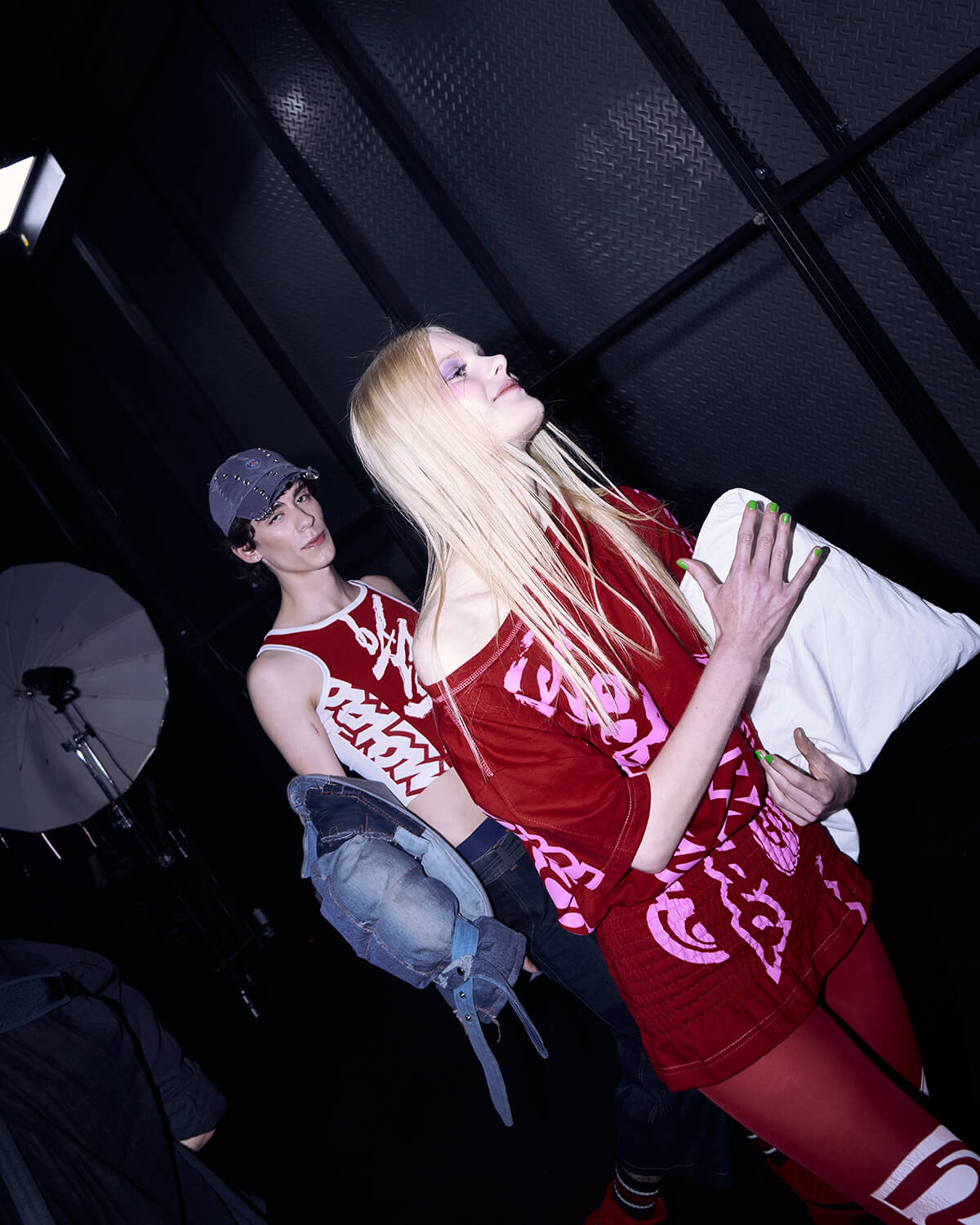
Colors collide, and typography becomes part of the story. The narrative expands beyond the figure of the courier to include those on the other side: waiting clients, interiors, quiet domestic scenes that contrast with the urgency outside. Through humor and irony, Tania Marcial’s collection offers a sharp awareness of the social realities underpinning it all, moving beyond labor to reflect the systems and dynamics that surround it.
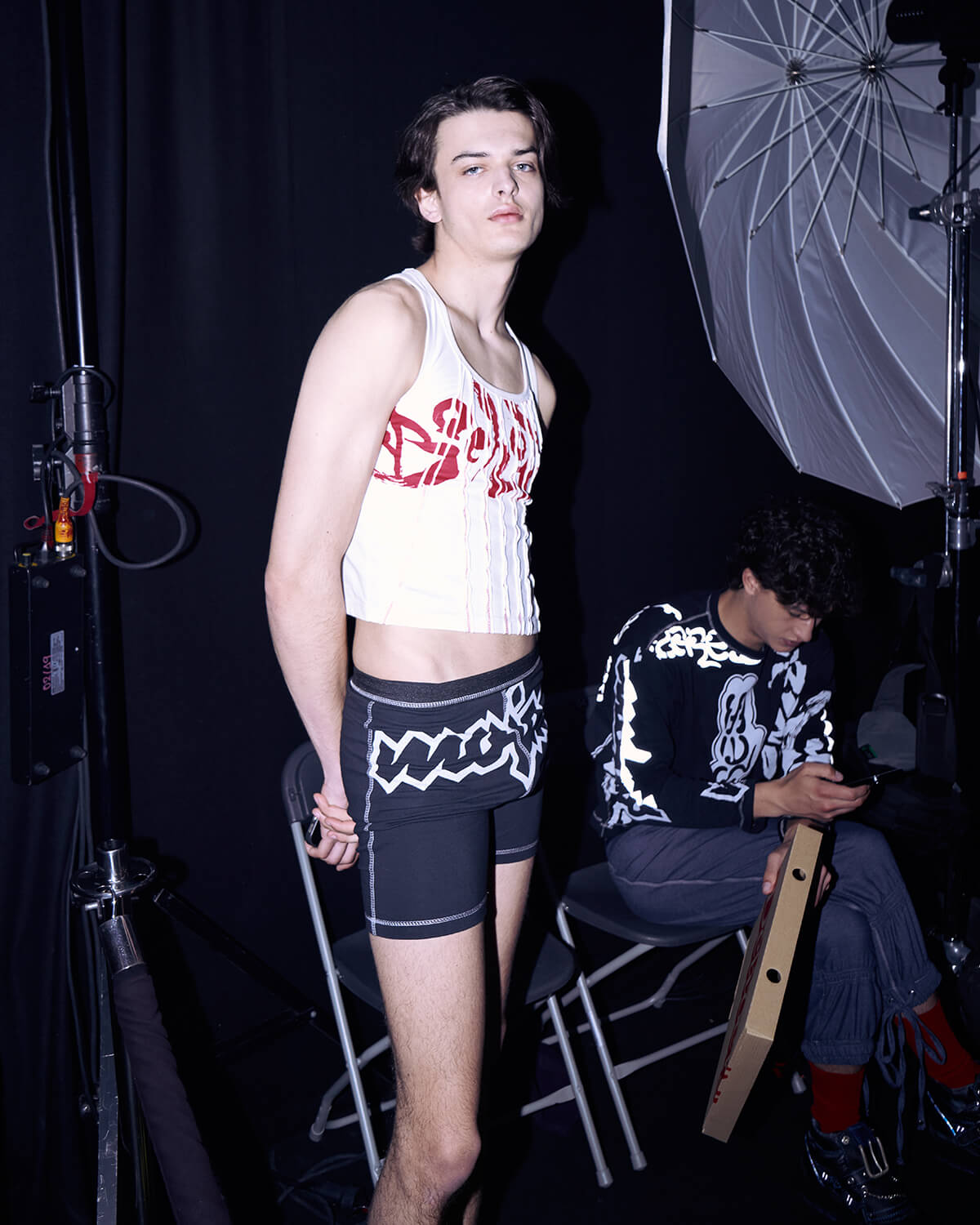
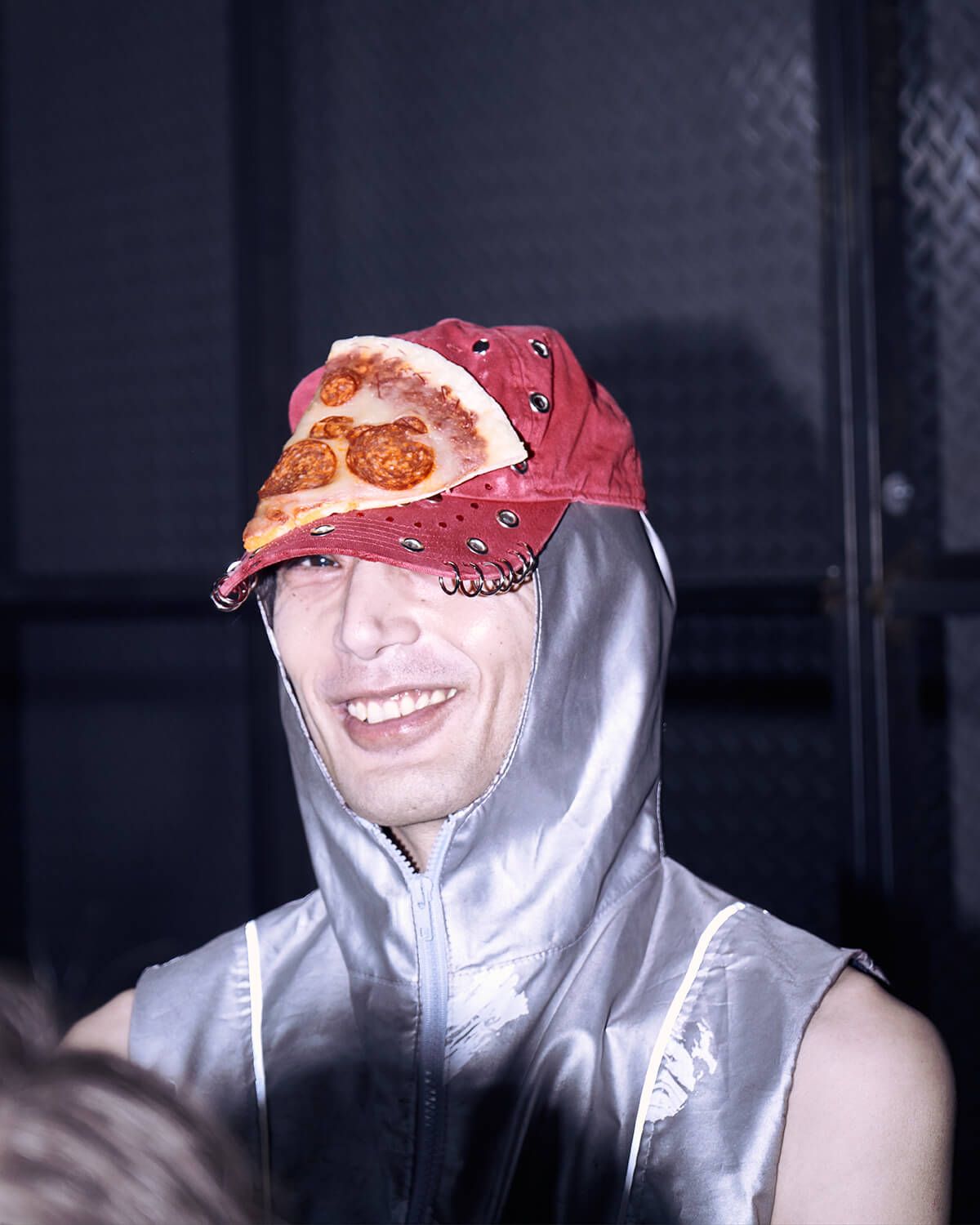
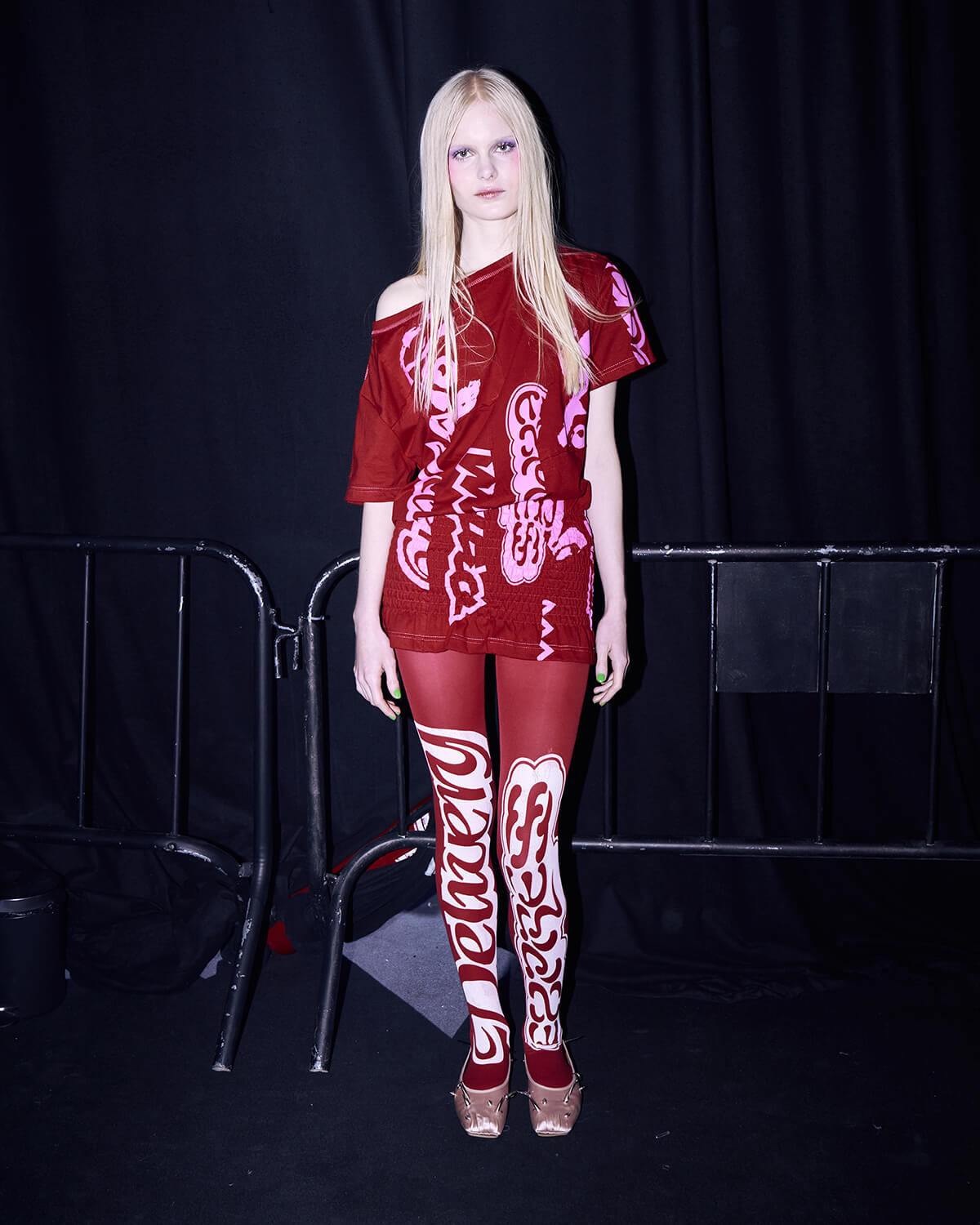
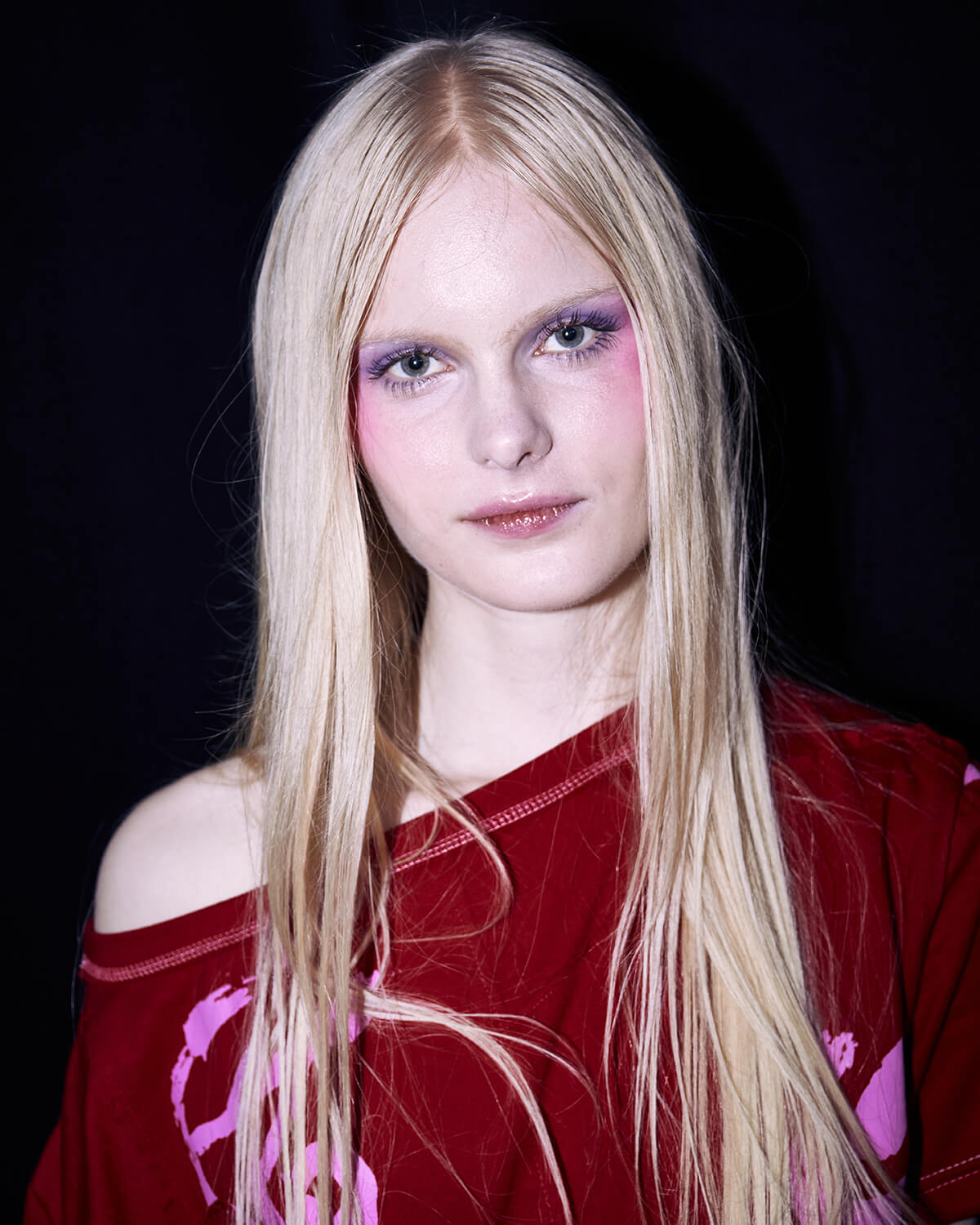
You’re making your debut on the runway at 080 Barcelona Fashion Week. Why did you decide to take this step now and not earlier? What’s changed to make this the right moment?
I’ve been creating pieces and researching textile recycling since 2020. All these years have been a kind of training ground and a search for my own codes and techniques. That’s why I wanted to wait until now – to be able to present something mature, something I genuinely felt proud of.
Do you think that, today, showing on the runway is still necessary for an independent brand like yours to evolve or gain legitimacy?
I don’t think it’s absolutely necessary to be able to work in the industry, because over these years I’ve had collaborations and many interesting opportunities come up. But I do think it helps people better understand the universe of the project, since it’s presented as a show, with a concept and a series of looks that form a coherent whole. It also helps you reach the press and future clients.
How does this show dialogue with your previous trajectory and the identity of the brand?
I think the essence is still more or less the same, but in this collection I’m showing a Tania 2.0, because I’ve invested a lot of time developing a very defined technique and concept. In my universe, I always try to talk about something social and something popular that surrounds me, like the working class and the outskirts of Barcelona. This time I’m addressing that too, but focusing on a more specific theme: delivery.
What is the collection about, and where does it come from?
When I started creating this collection, I went back and forth a thousand times trying to decide what theme to begin with. I wanted it to be something personal to me, but also something people could connect with.
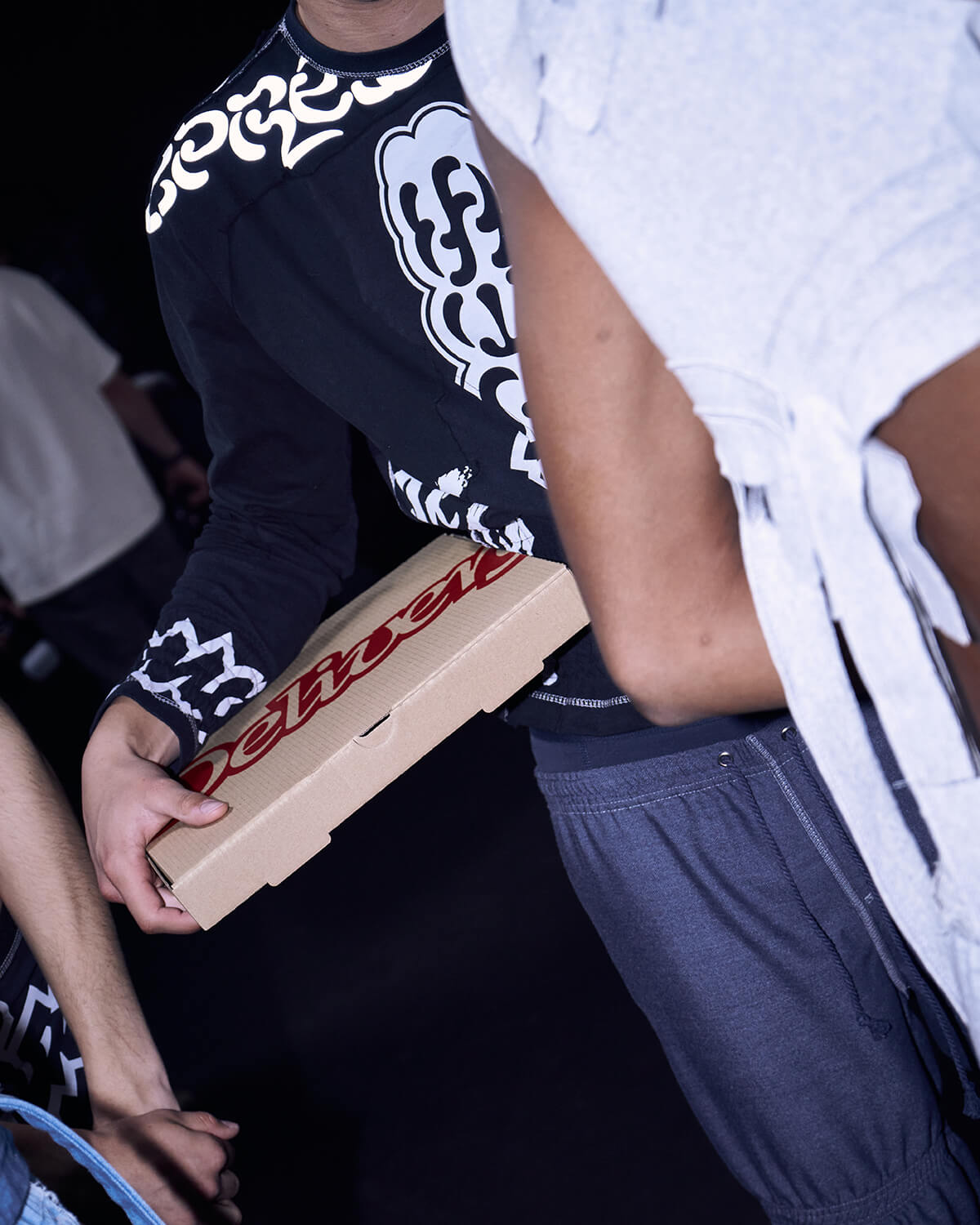
So I decided to talk about my experience during the years I spent delivering pizzas while studying fashion. I did it for about six years and it was a precarious, underpaid job, but at the same time I felt free out on the road with my motorbike. I lived through a lot of experiences, and I’m someone who enjoys living through situations. Funny and strange ones.
How did you translate those ideas into the language of the garments?
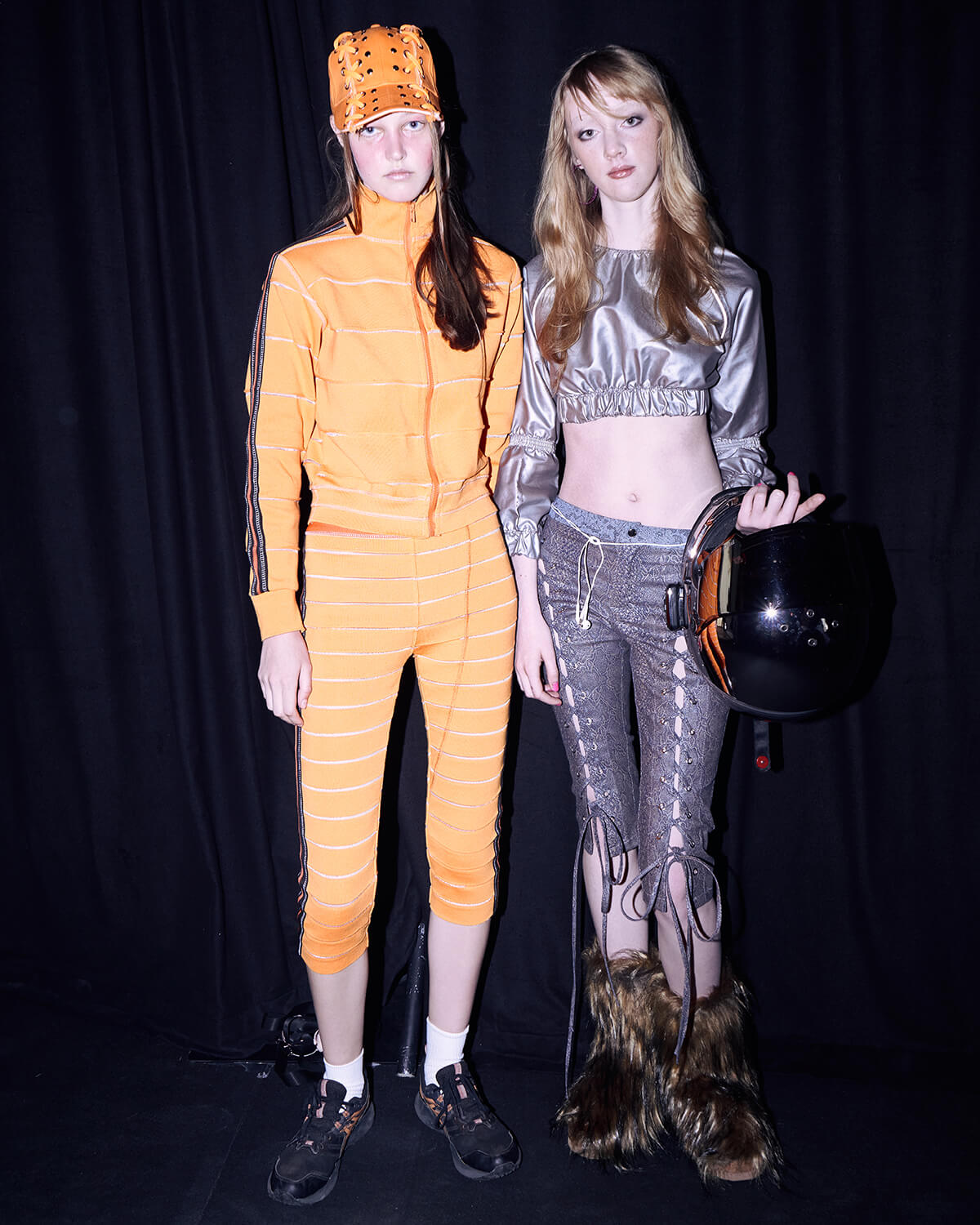
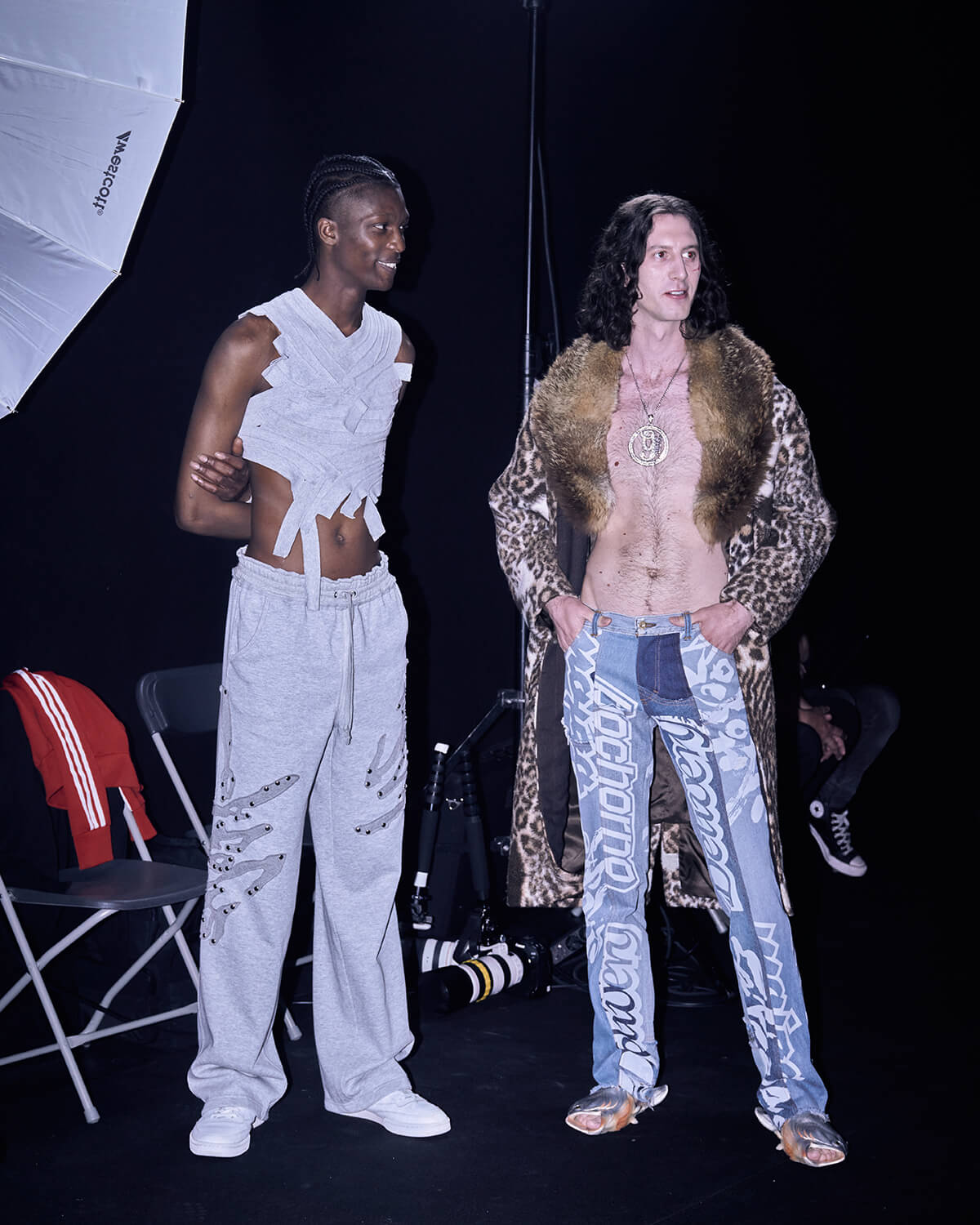
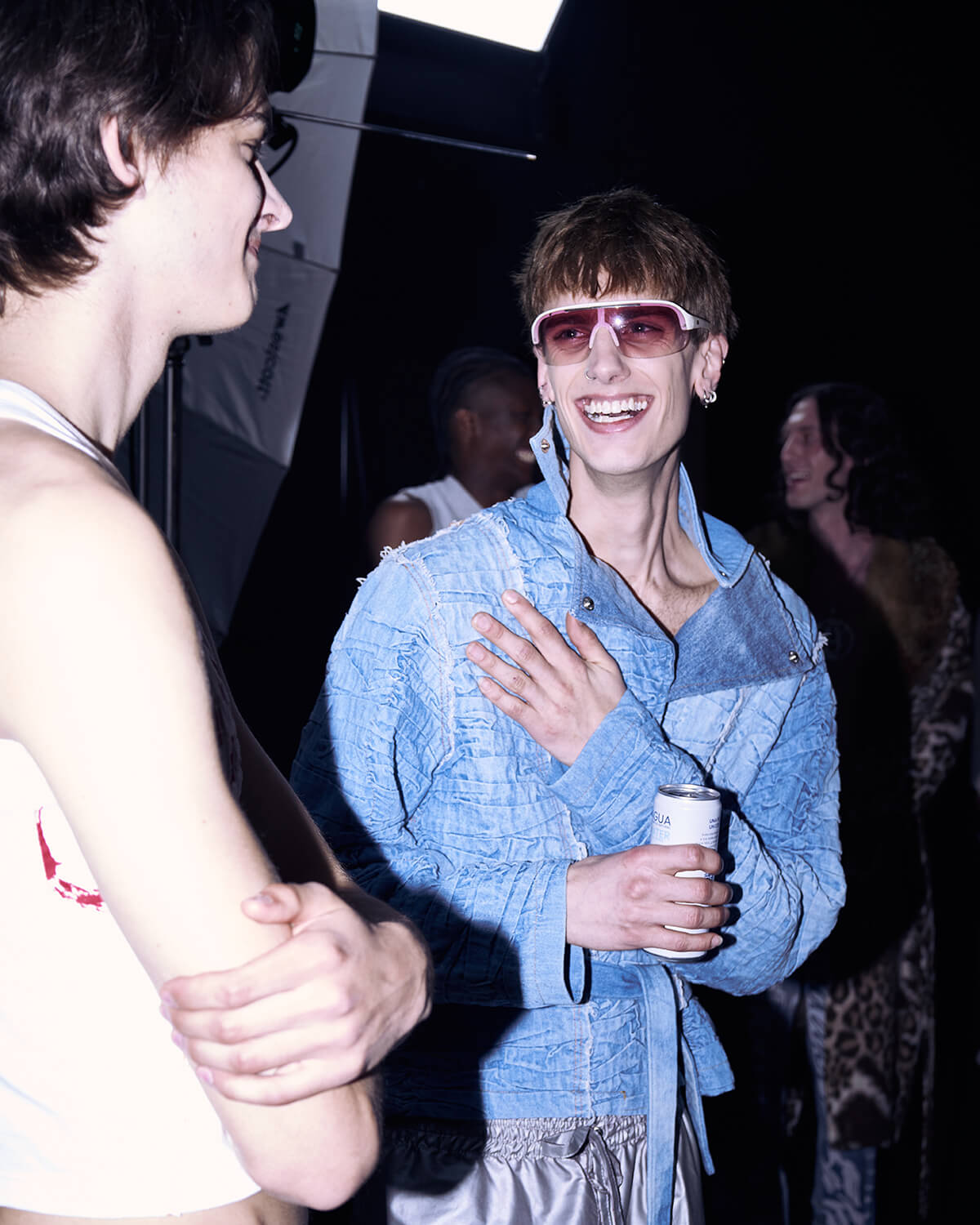
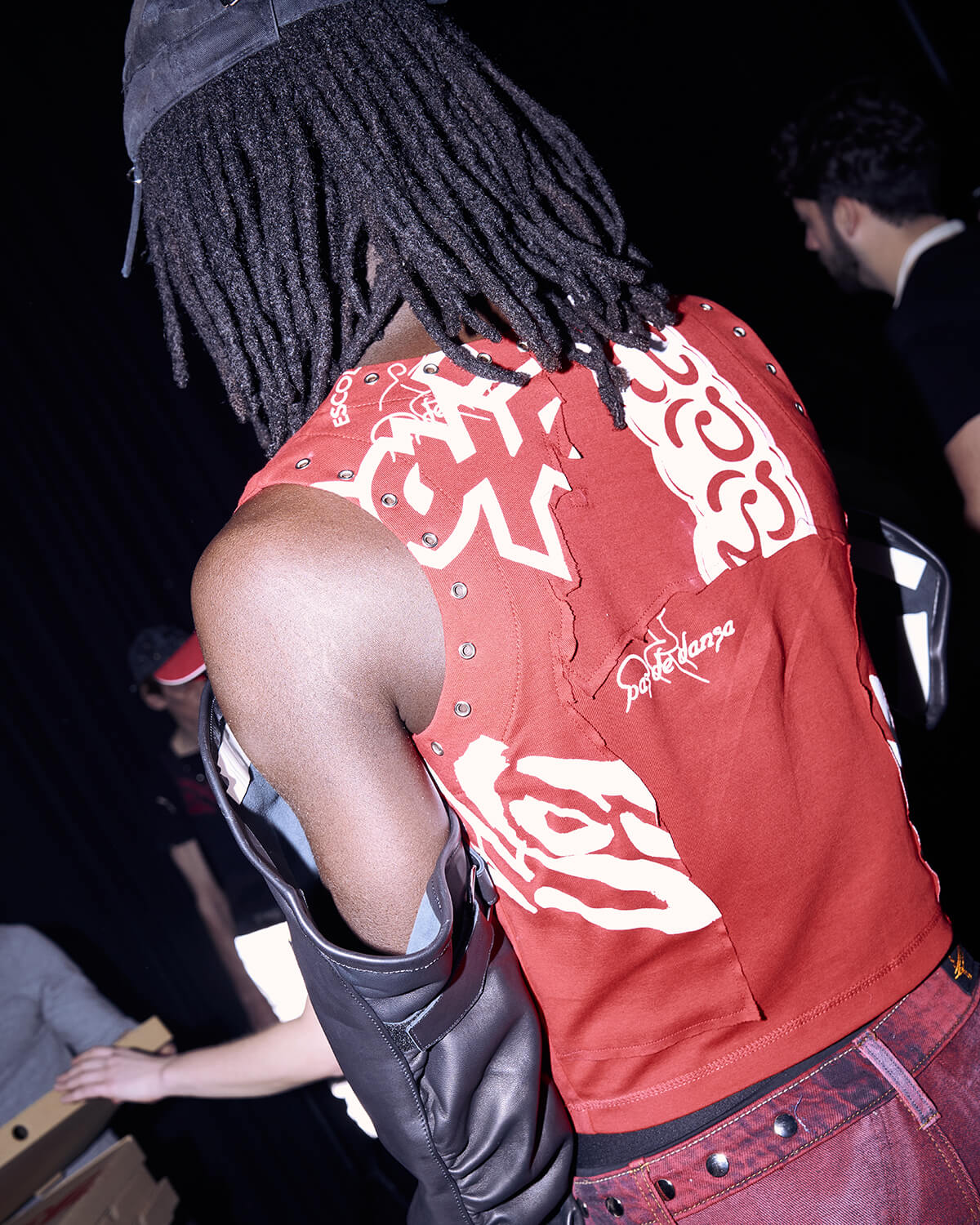
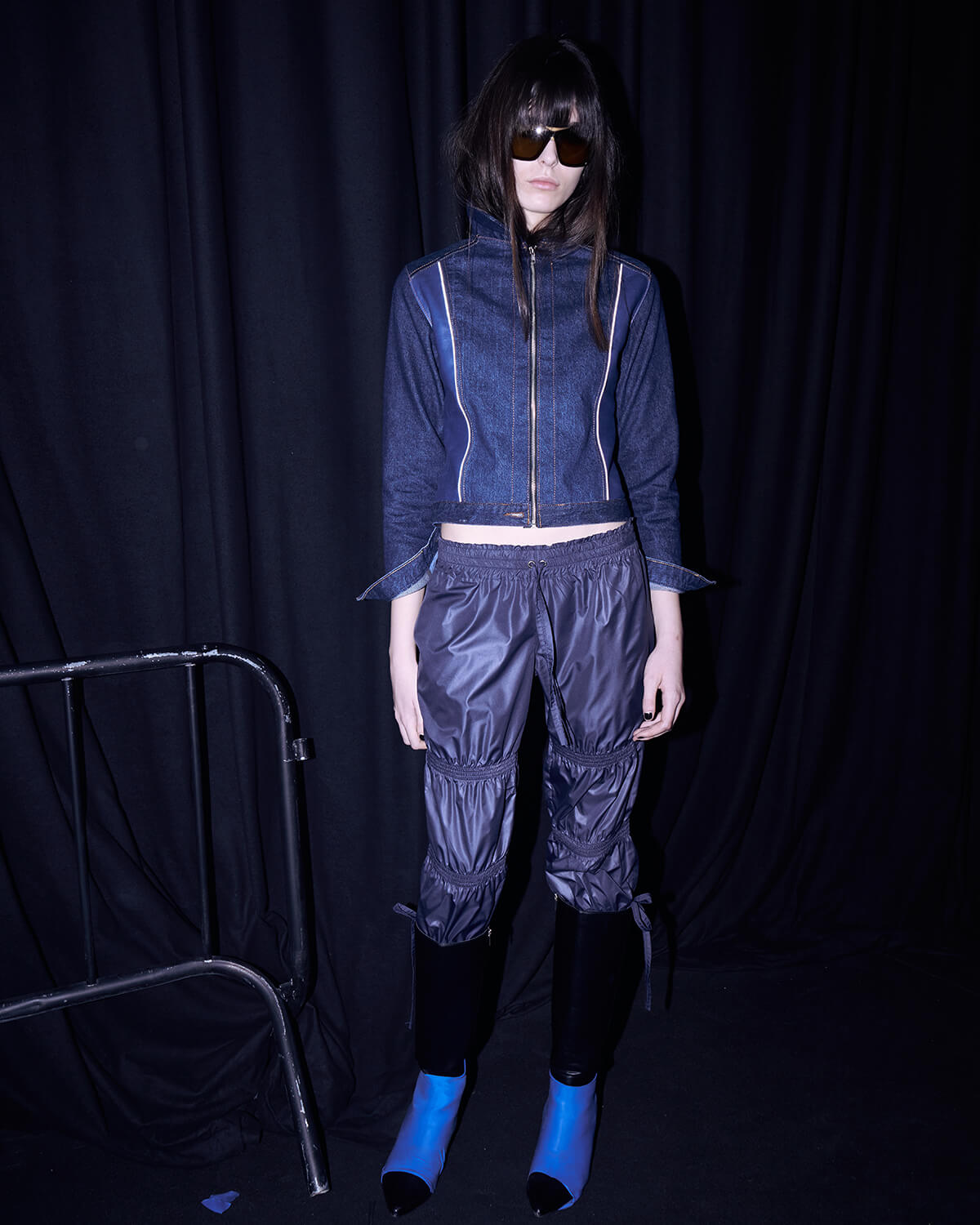
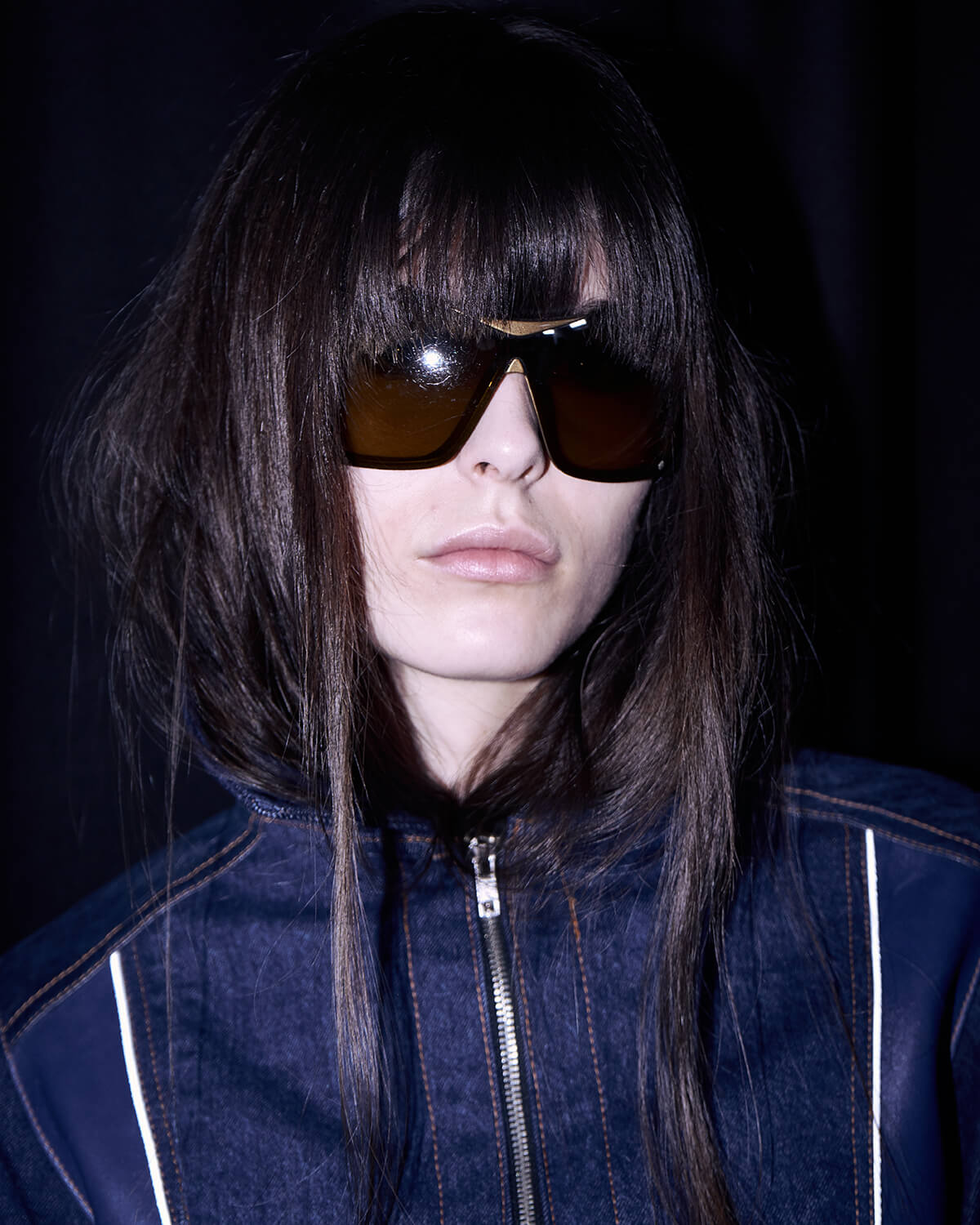
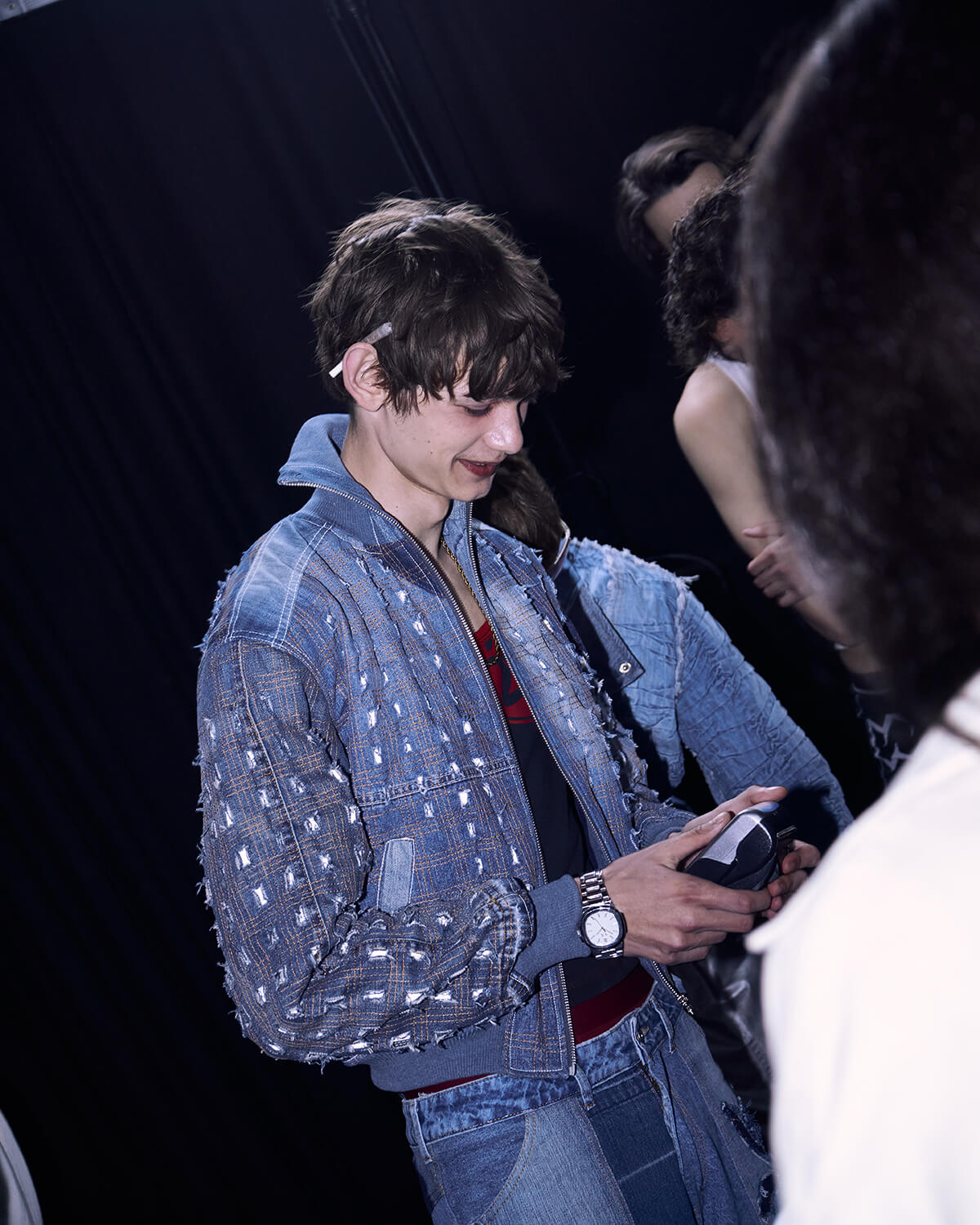
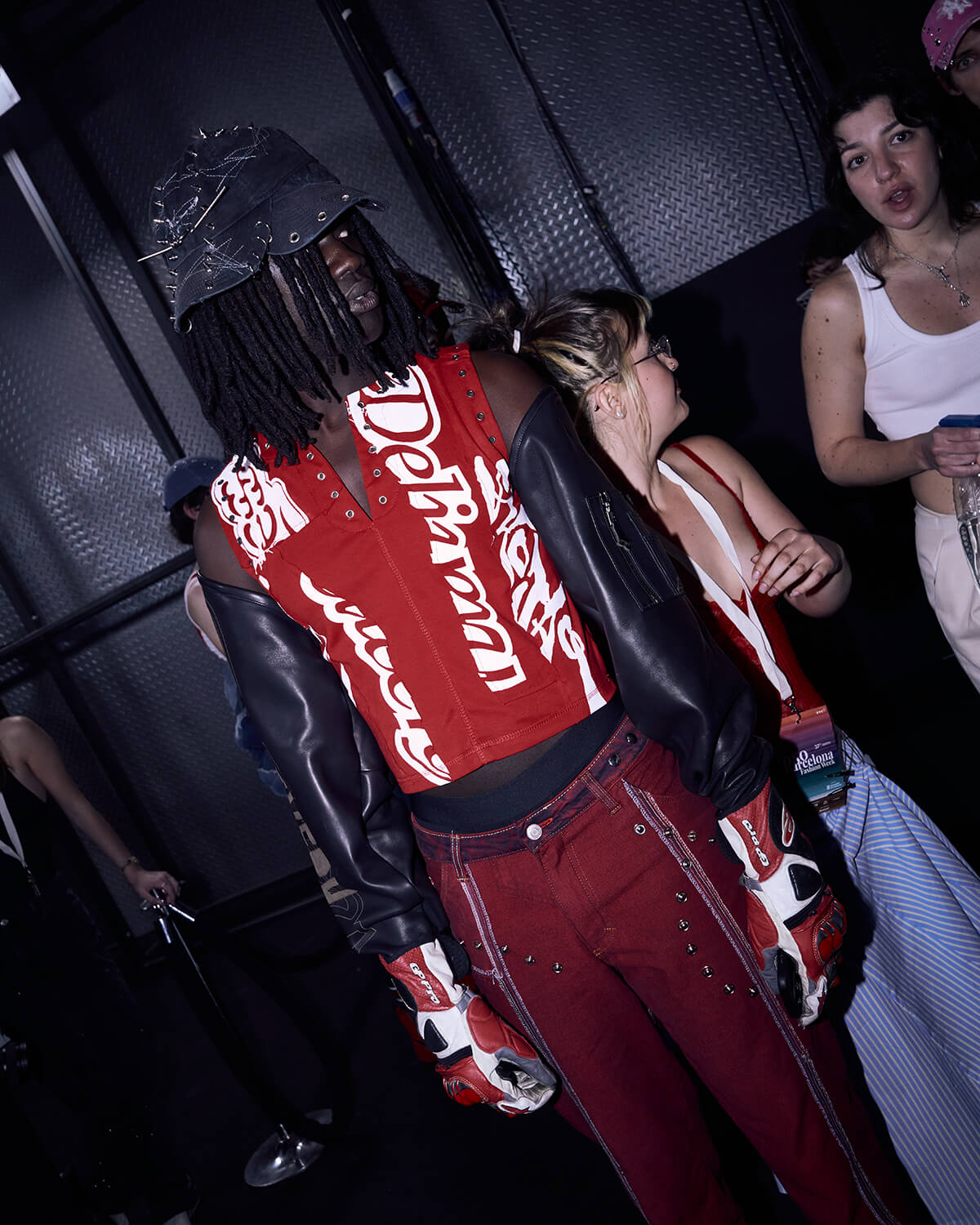
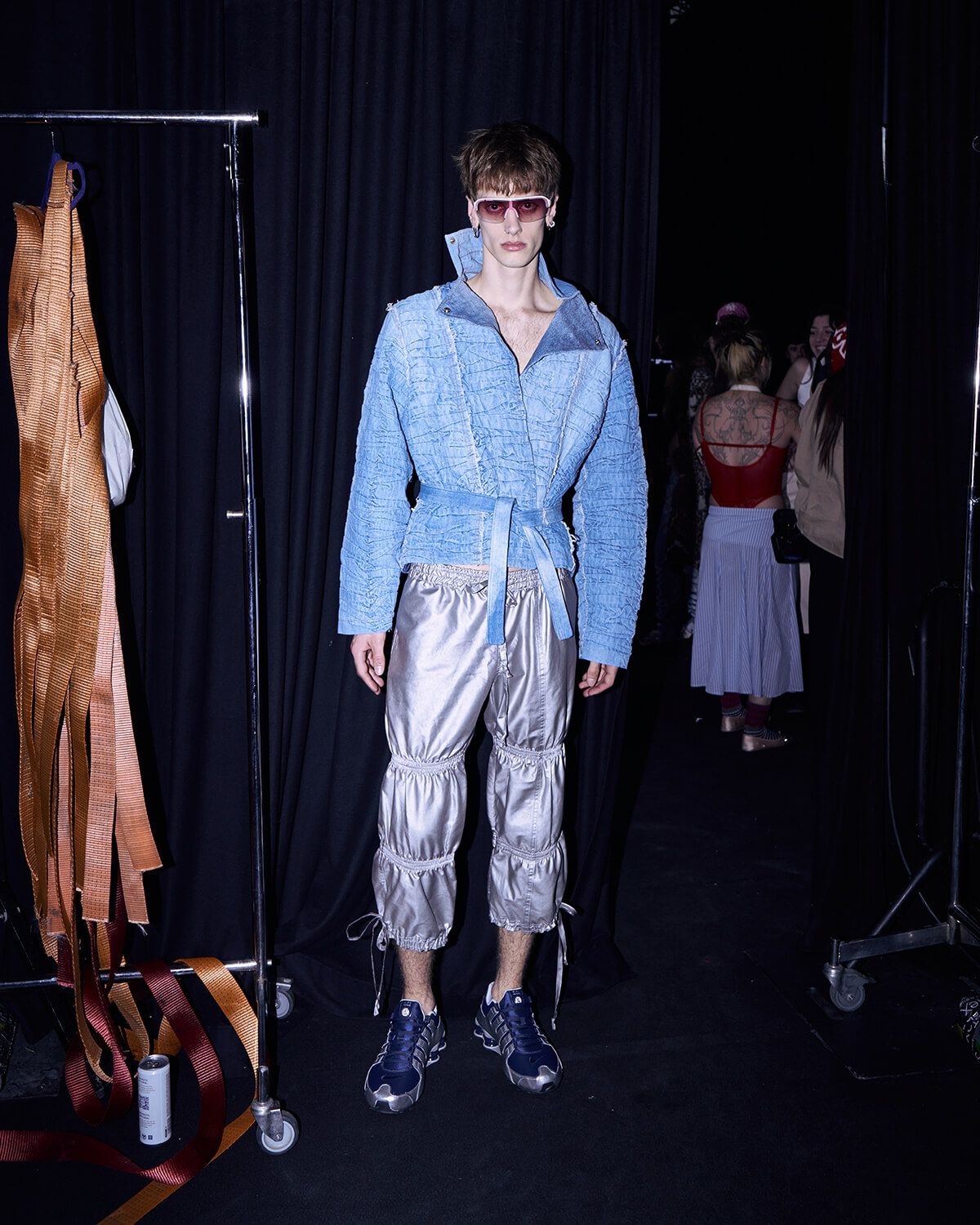
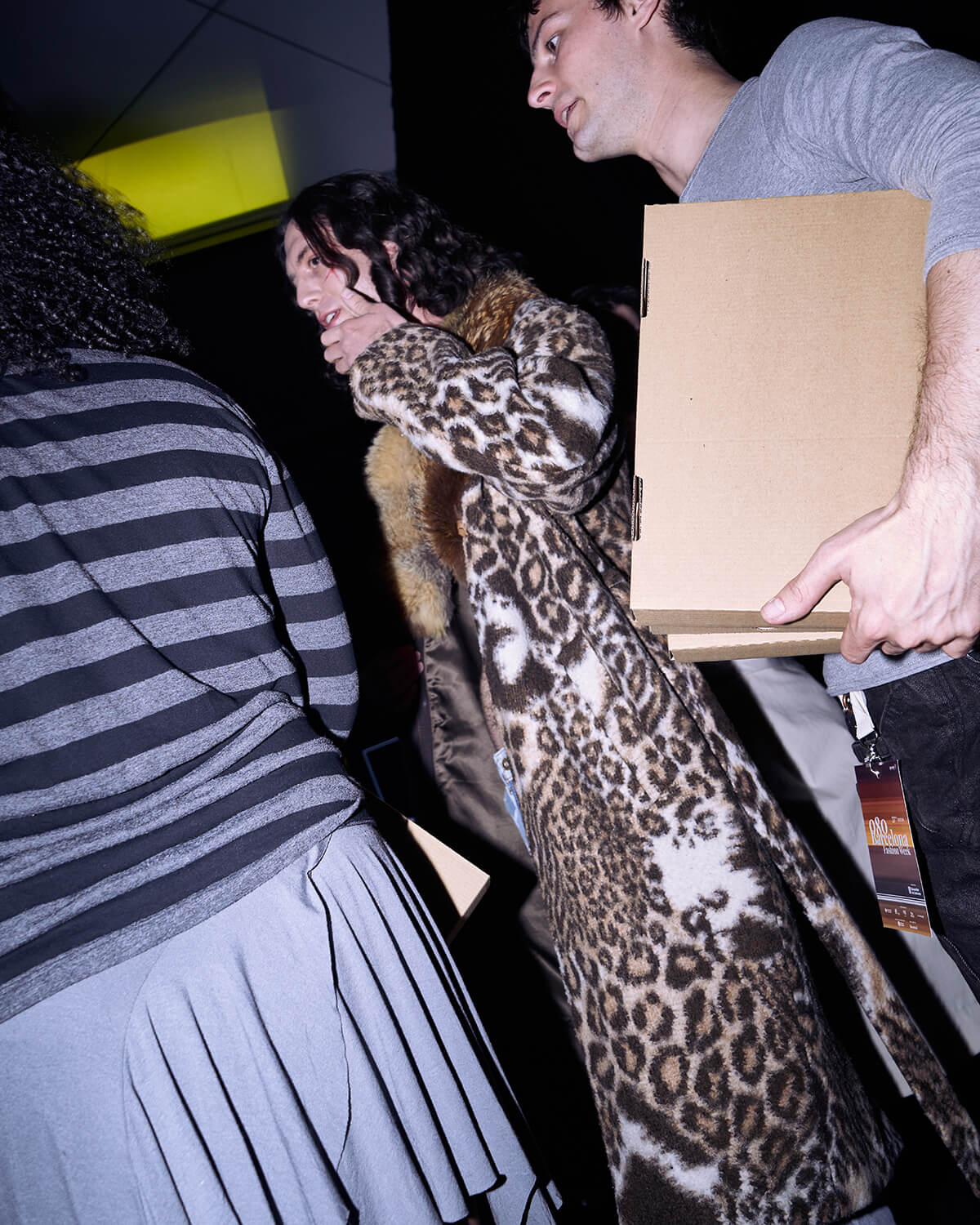
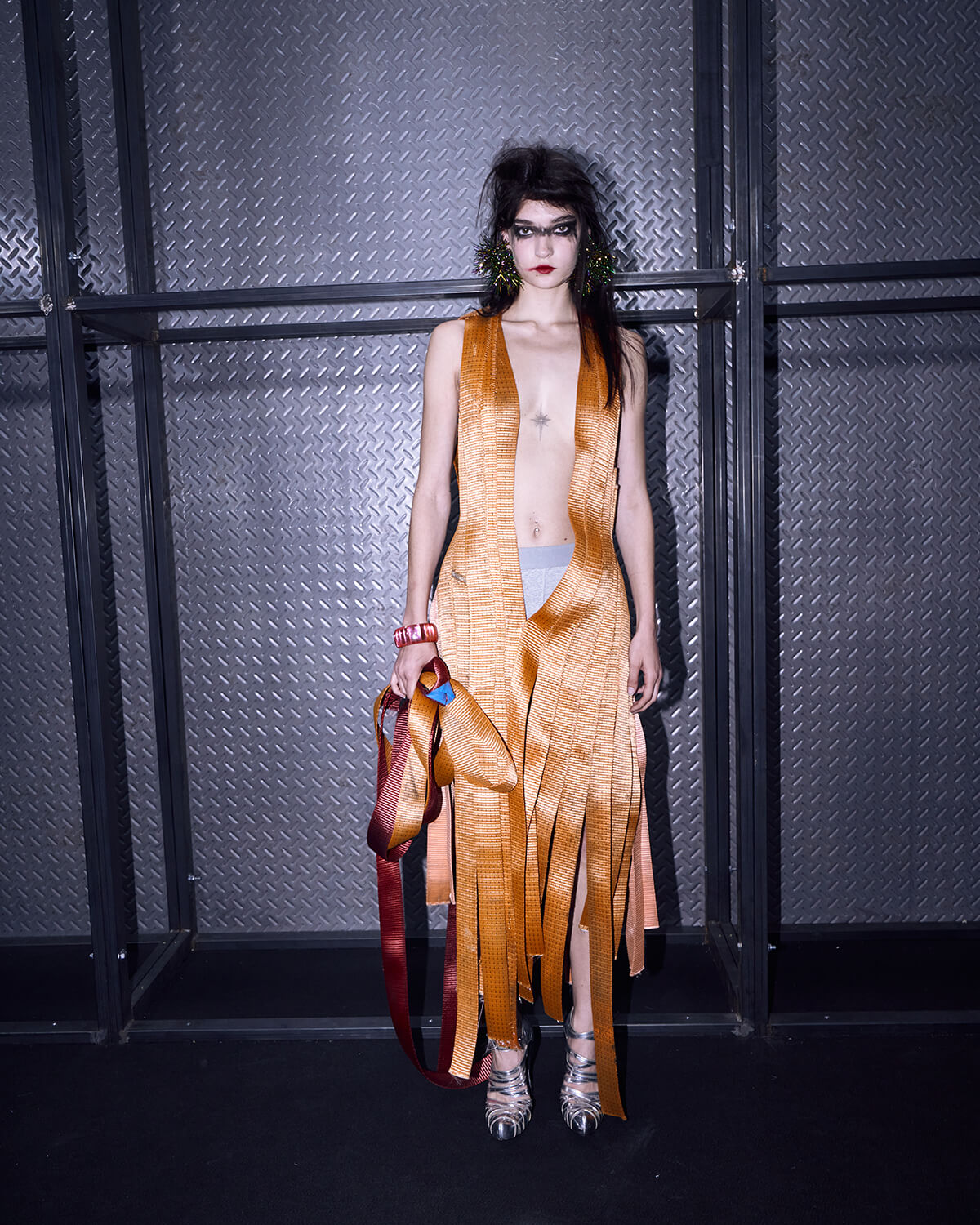
I knew the collection had to include waterproof pieces and utilitarian garments to express delivery work. To create those waterproof items, I used an old tent I had at home. I also incorporated other materials I already had or found this year, making them fit into the collection. Pieces like the “dealer” jacket, made from an old leopard-print blanket, or the orange “running client” set made from polo collars I found in a workshop that was closing. Almost every look has its own story. When it comes to color, I’m never afraid to play, because it’s what I see every day in my neighborhood – how people mix seemingly unrelated garments and colors.
Is there a piece or look you feel is the core of the collection?
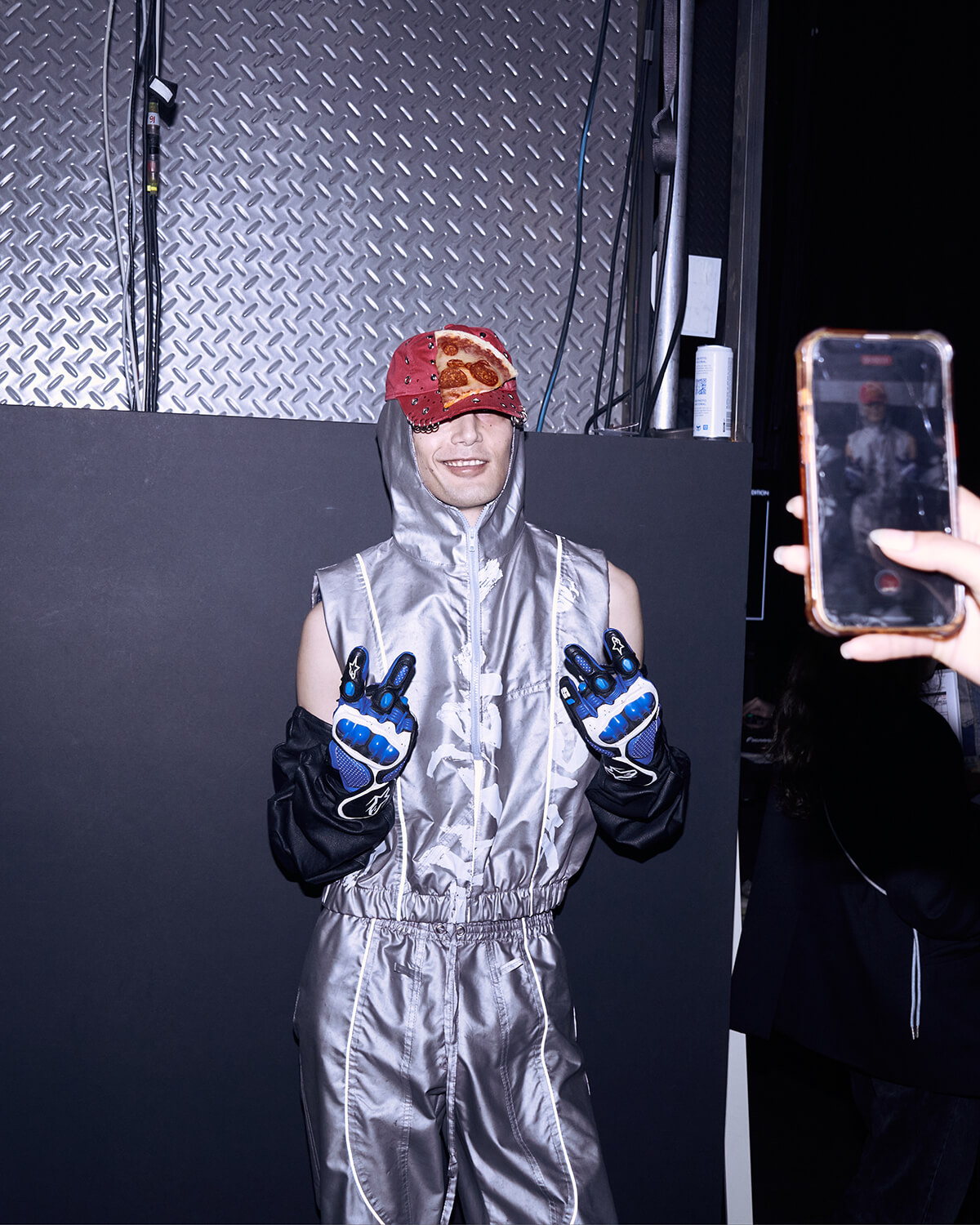
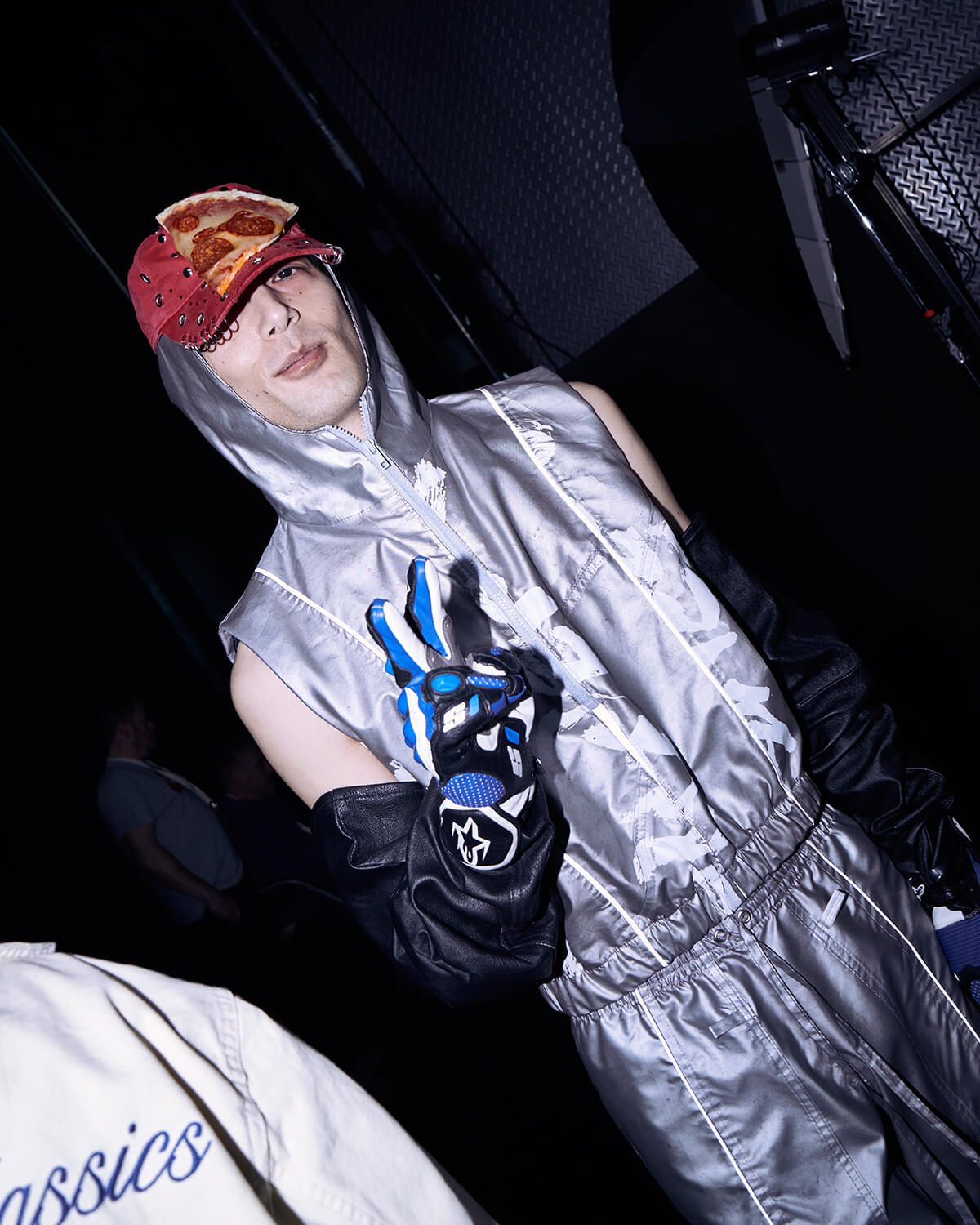
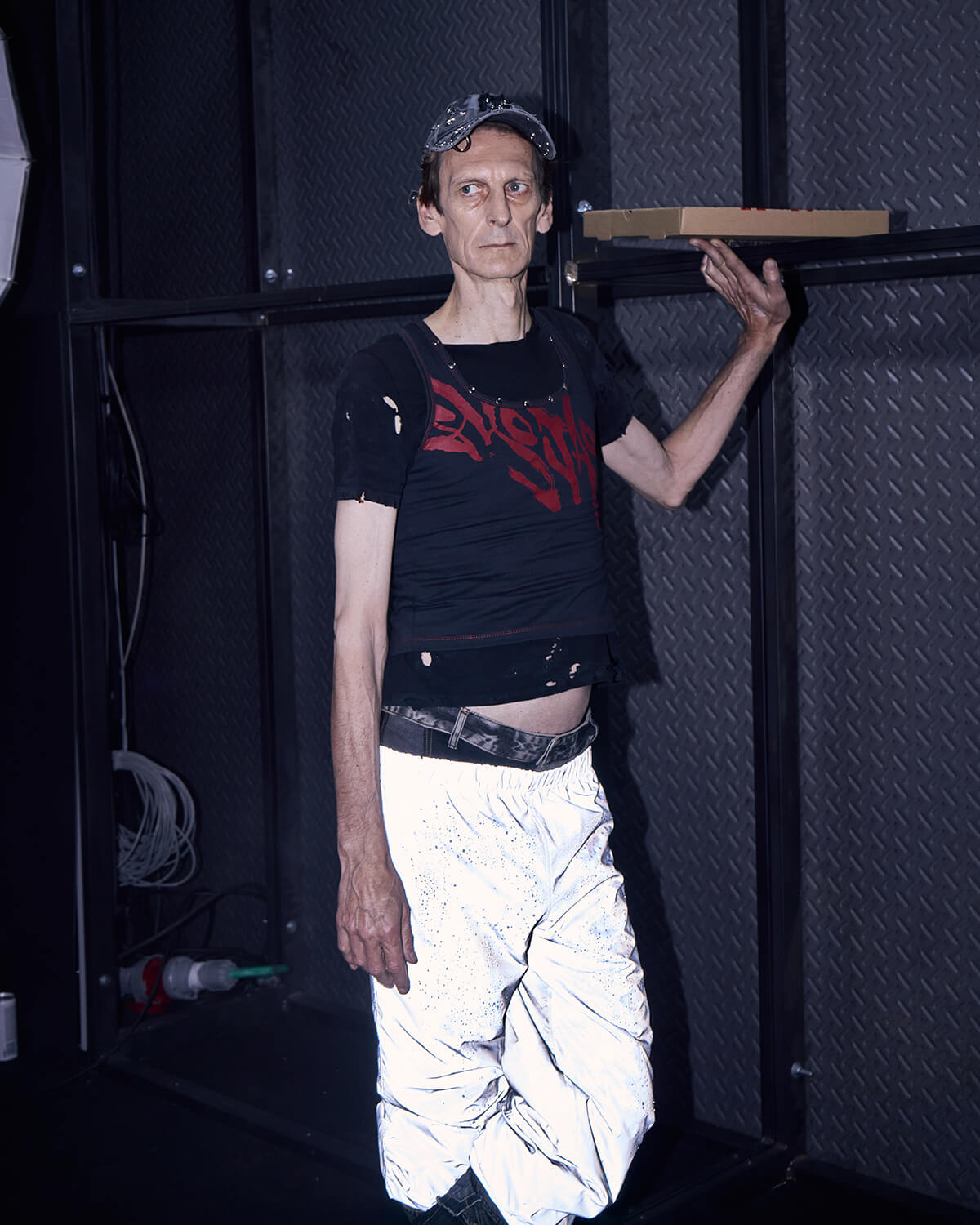
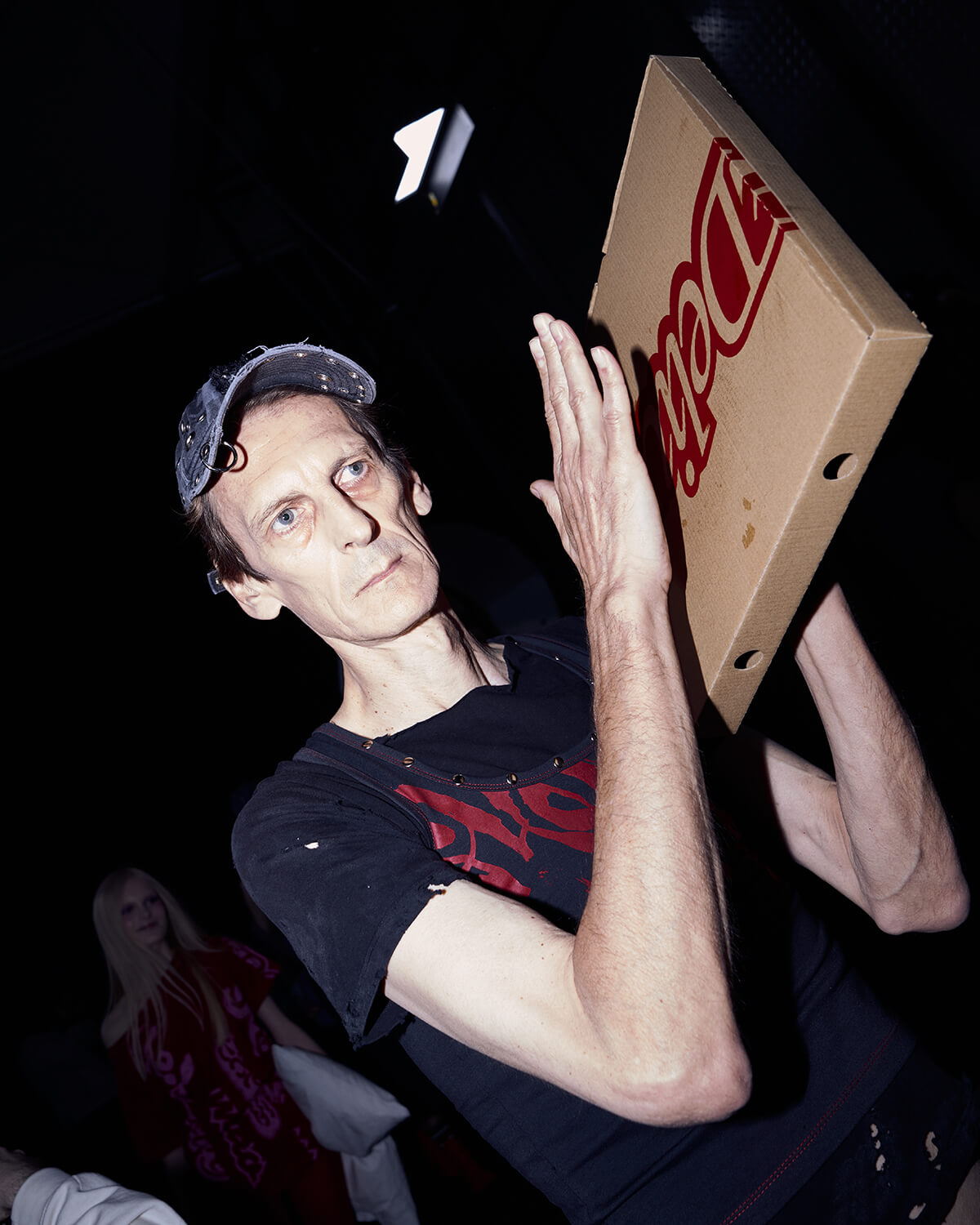
The “clumsy delivery guy” carrying a pizza on his cap perfectly captures the mood of the collection.
How did you experience the whole process of preparing the show? Has it changed the way you work?
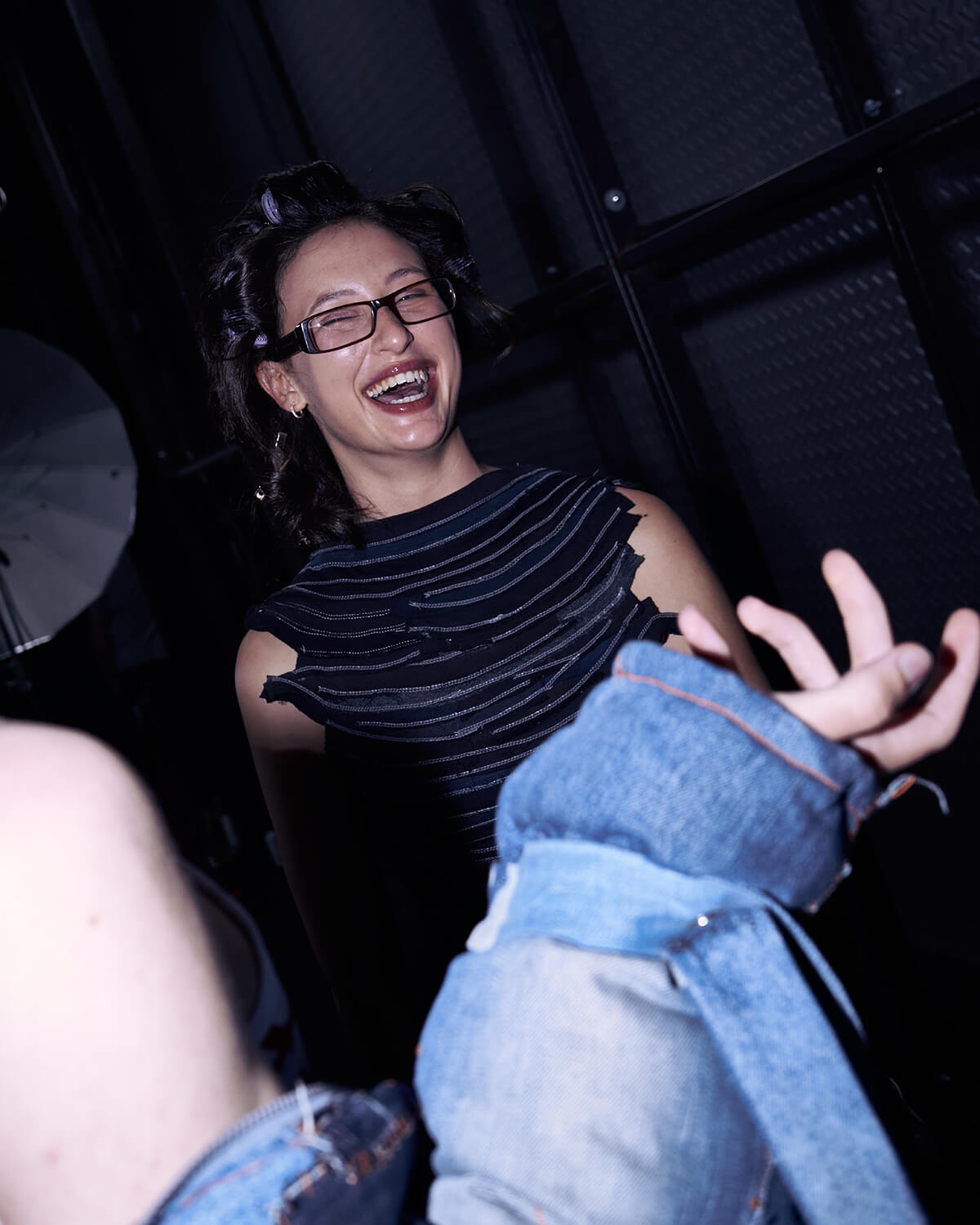
I really enjoyed the preparation and had a lot of fun thinking about the characters. I felt well supported and advised by my stylist, Sofia Larrarte, who has incredible ideas. We make a perfect combo together. As for my way of working, I had to be very organized with timing, and we made a thousand PDFs to keep everything tightly structured, very “by the book.”
You know the 080 backstage well because you’ve collaborated with other designers. How does it feel to now be at the center, leading your own show?
I felt quite a bit of pressure, because this time it was my moment. But I also felt very supported by Sofia, Alba, and Fatima Miñana, who has already worked on several shows and knew exactly how to organize a fitting.
What has been the most challenging part of this process or of the collection itself?
I started working on this collection a year and a half ago without really knowing where I would present it. The hardest part has been the uncertainty – knocking on many doors, thinking I wasn’t good enough, feeling rejected, hearing several “no’s.” That’s why it’s been so rewarding that people have finally recognized the work behind this project and that I’ve been able to show it in my own city.
And the most satisfying part so far?
Realizing it was all worth it, despite the ups and downs, and that it turned out exactly how I wanted. It’s been incredibly exciting to see the interest from both people and the press, and that the concept has been clearly understood. People have even had fun and felt moved watching the show.
What would you like the audience to feel or understand when they see the show?
What I want is the same feeling I get when I go to the cinema or listen to a song – I want to be told something interesting, something that stirs me inside. That’s what I want them to feel.
In today’s context, where do you think your brand sits within the emerging fashion scene? What sets you apart?
I think I occupy a very niche space. People think of me for very specific things, like second-hand rework or maximalist customs, and also as a reference in national upcycling. I think things have gone well for me, but they would probably go even better if I were a man, because there’s still a lot of misogyny in fashion, like in every sector.
After this show, what would you like to happen with the brand? What would be an ideal next step?
To keep moving in the same direction, but with a much steadier workflow – and to be paid better. I’d like to do more custom pieces for artists, especially artists I admire.
–
Images by PAULINO COBALTO for VEIN MAGAZINE