

With Partie Une, Moana Thies and curator Julian Zacharias Eide blur the boundaries between object, atmosphere, and memory, reimagining collectible design as something to feel rather than simply admire.
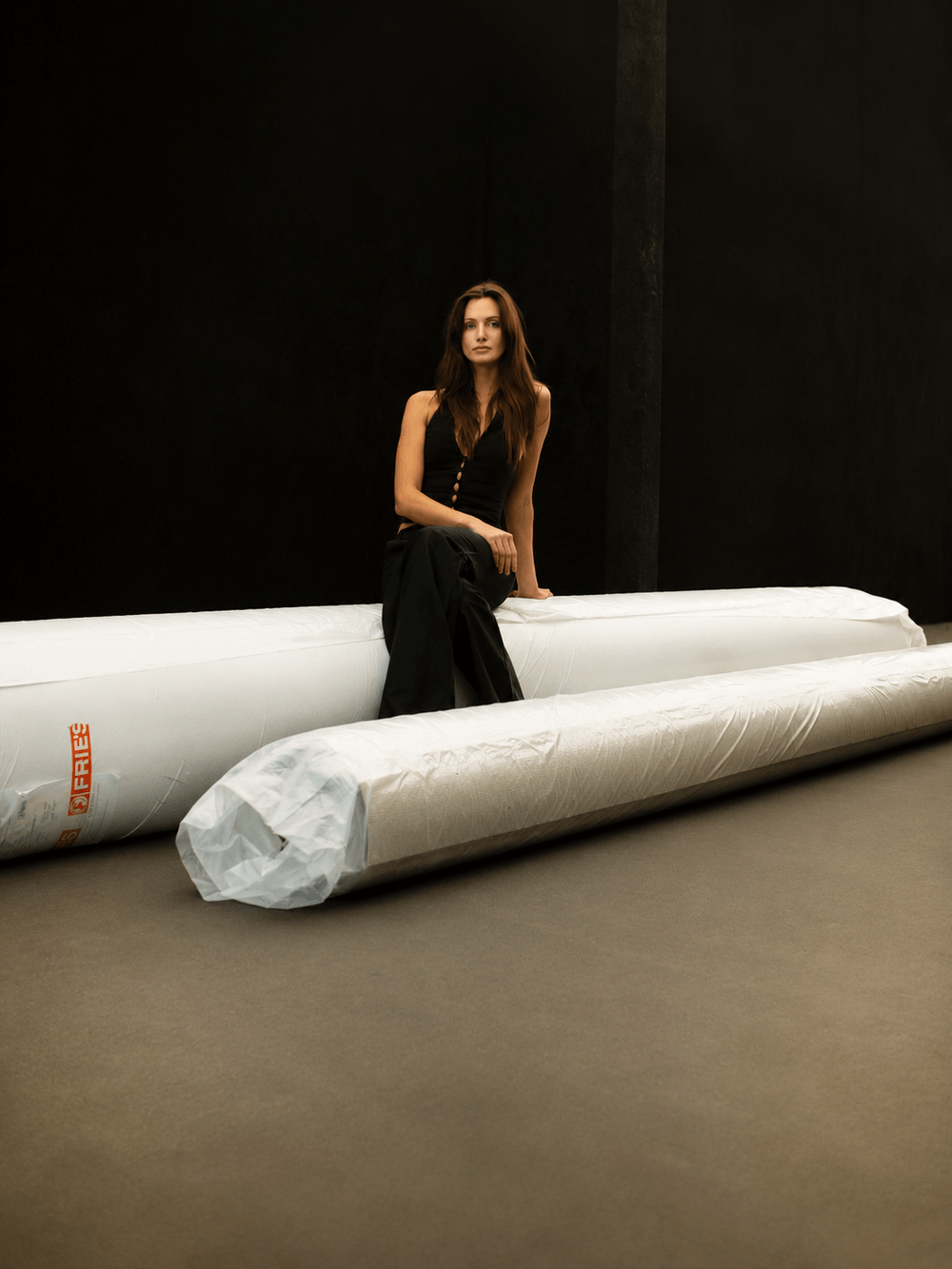
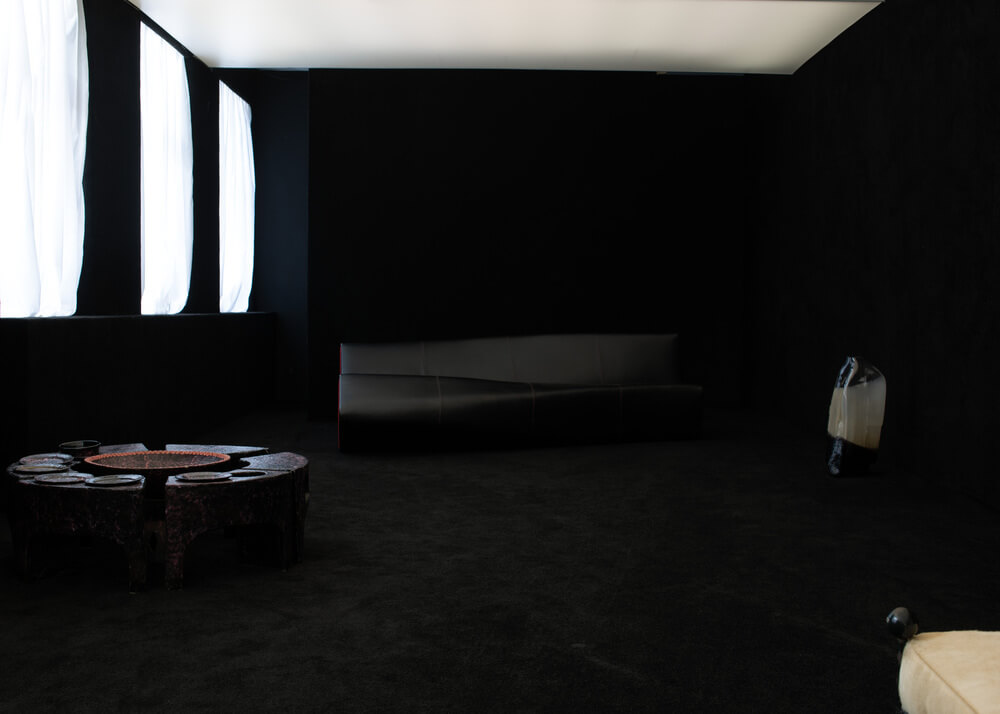
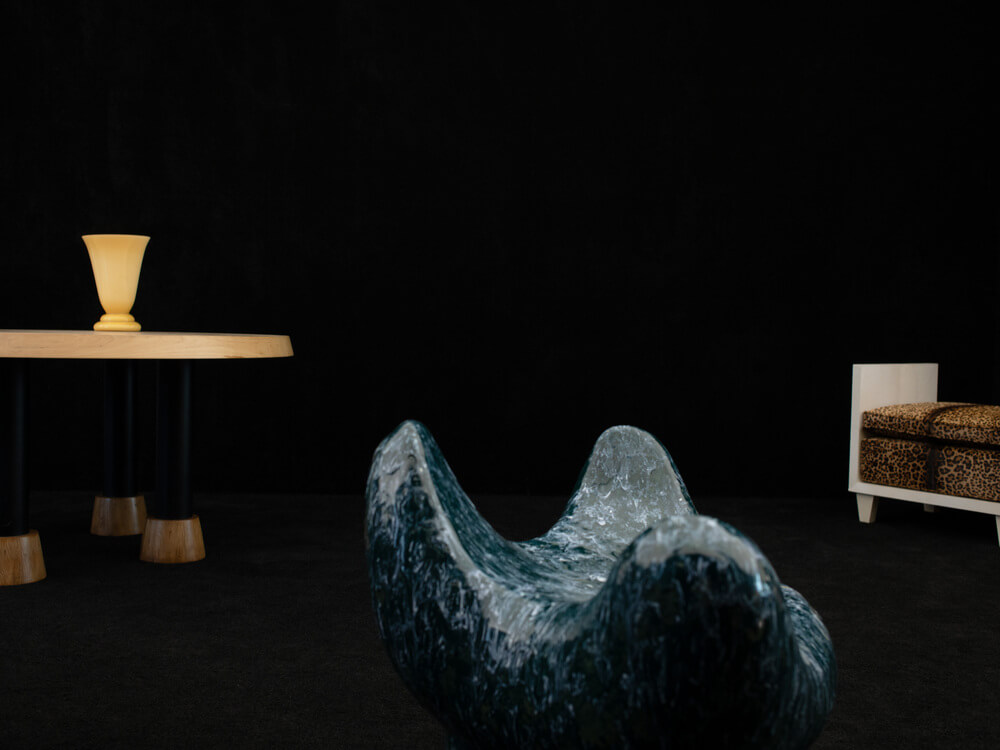
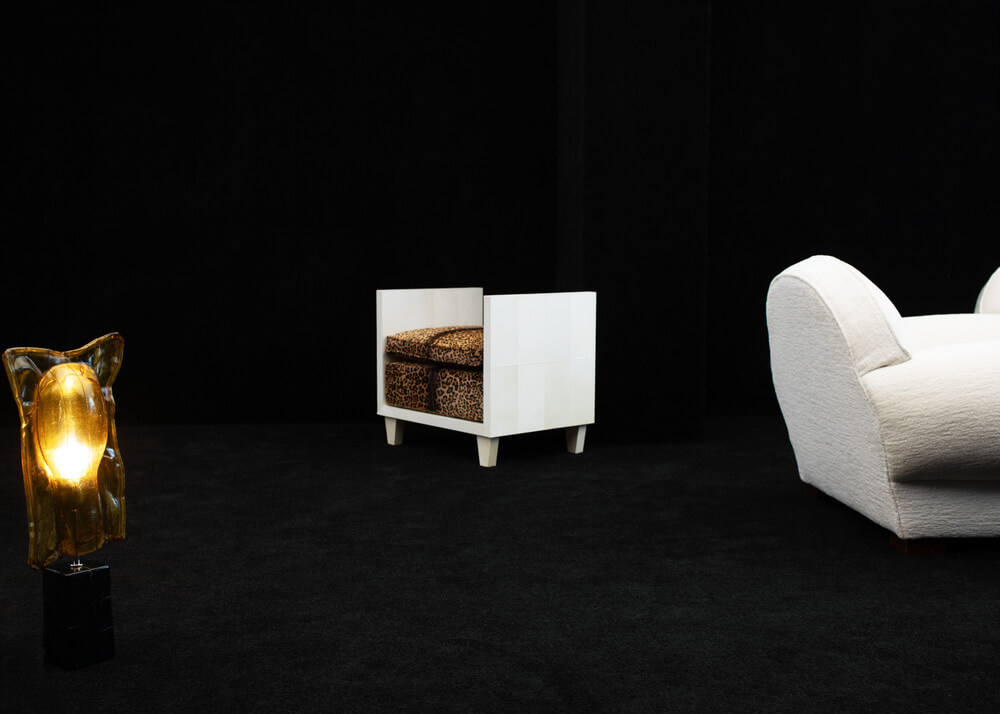
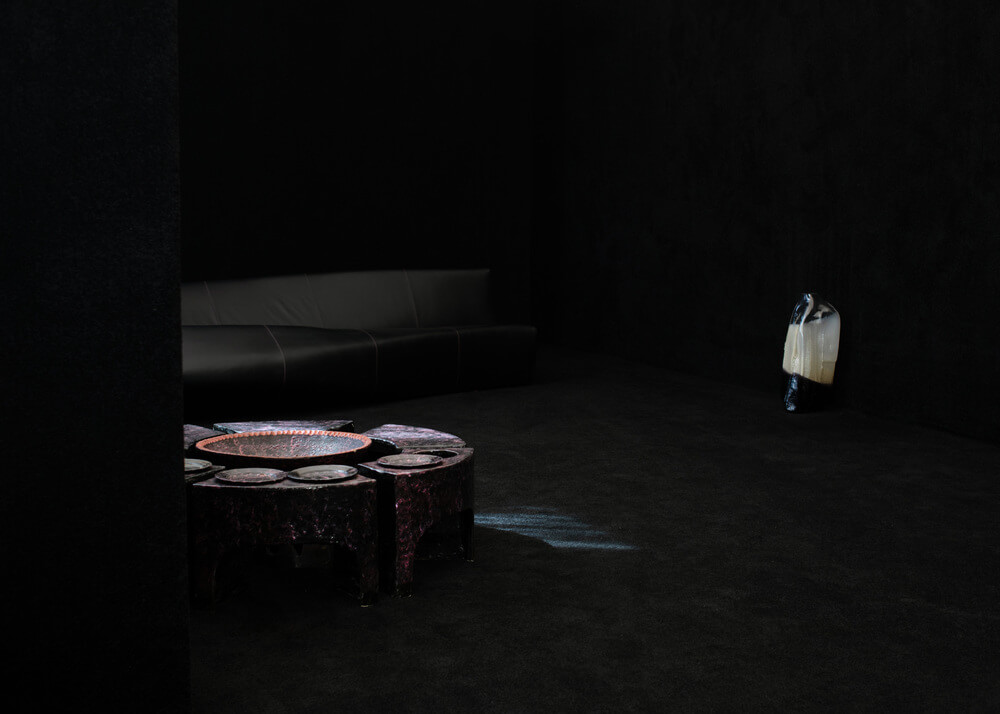
At Galerie OM in Berlin, collectible design is reimagined as something closer to atmosphere than archive. Founded by Moana Thies, the gallery opens with Partie Une, an inaugural exhibition curated by Julian Zacharias Eide that brings together works spanning Jean Prouvé, Pierre Chareau, Jean Royère, Ettore Sottsass, Maison Martin Margiela, Fabio Novembre for Cappellini, Caroline Keslassy, and others. Rather than reading design history as linear progression, Galerie OM constructs environments where objects exist in relation to light, sound, scent, and spatial rhythm.
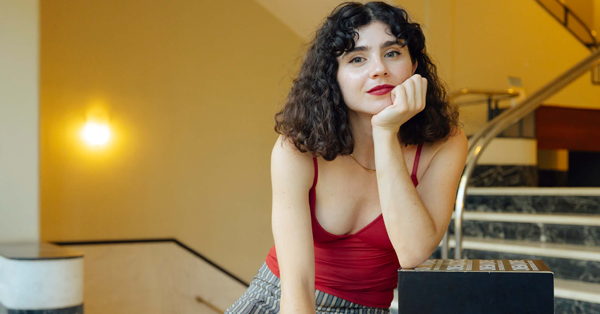
Shaped by years spent within the international fair circuit, including TEFAF, Art Basel / Design Miami and Salon Art + Design, Thies brings a precise understanding of how the collectible design market operates, and a desire to move beyond its fixed structures. We spoke with Moana Thies in reflection on building a gallery that treats design as something to be inhabited rather than observed, and on how Berlin’s creative energy informs a more sensory and experiential approach to collecting.
After working with fairs such as TEFAF, Art Basel / Design Miami and Salon Art + Design, you’ve spent years operating within established structures of the international market. What perspectives from that experience informed your decision to create Galerie OM?
Working within the architecture of the major international fairs gave me an incredibly precise education in how the collectible design market actually functions: its hierarchies, its rituals, its gatekeeping. TEFAF, Art Basel, Salon Art + Design are extraordinary environments, but they are also very defined ones. What struck me over time was how little of that energy, that level of rigour and international ambition, was finding its way into Berlin. The city has enormous cultural capital, a sophisticated creative community, and a real appetite for something more considered than what already existed here in the design space. What the fair circuit also clarified for me was the appeal of a commission-based model: a way of operating that is genuinely curatorial rather than driven by inventory. Instead of acquiring and holding stock, you remain in constant dialogue with dealers, collectors, and estates. That felt both more honest and more flexible. Galerie OM grew out of the conviction that Berlin deserved a platform operating at an international standard, and that there was a more collaborative way of doing it.
Galerie OM describes design as something to be experienced through atmosphere, materiality and spatial dialogue. What first drew you to thinking about design in those terms, rather than as a collection of individual objects?
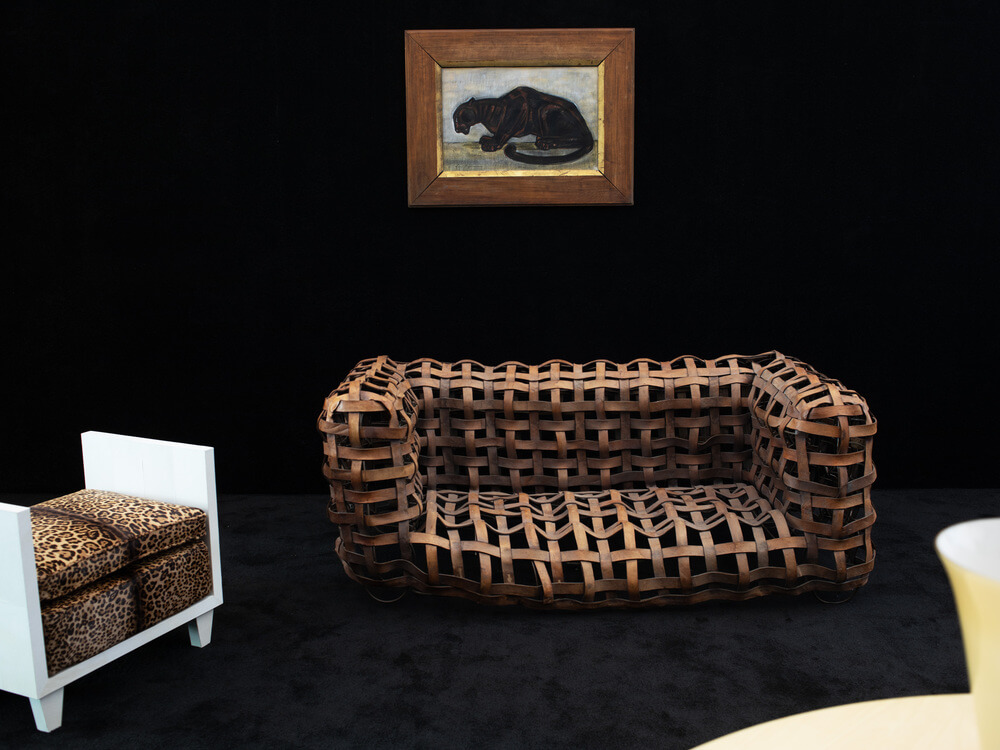
I think the moment you isolate an object, placing it on a plinth, under a spotlight, or behind a barrier, you lose something essential about what it is. Design, more than almost any other discipline, exists in relation. A chair is not just a chair; it is a proposition about how a body meets a surface, how light falls across a material, and how a room breathes around it. That understanding came through years of working with exceptional pieces and observing what happened when they were placed in real spatial contexts rather than fair booths or white-cube vitrines. The atmosphere surrounding an object is not decoration; it is part of the work’s meaning. The great mid-century designers understood this intuitively. Jean Royère designed environments. Pierre Chareau orchestrated ways of living. Galerie OM tries to honor that logic. Each exhibition is conceived as a complete spatial composition, where the relationship between works, light, scent, and sound contributes to how the pieces are read and felt.
Rather than maintaining a fixed inventory, Galerie OM develops through sourcing and collaboration. In a market often defined by ownership and accumulation, what interested you in building a gallery around a more fluid model?
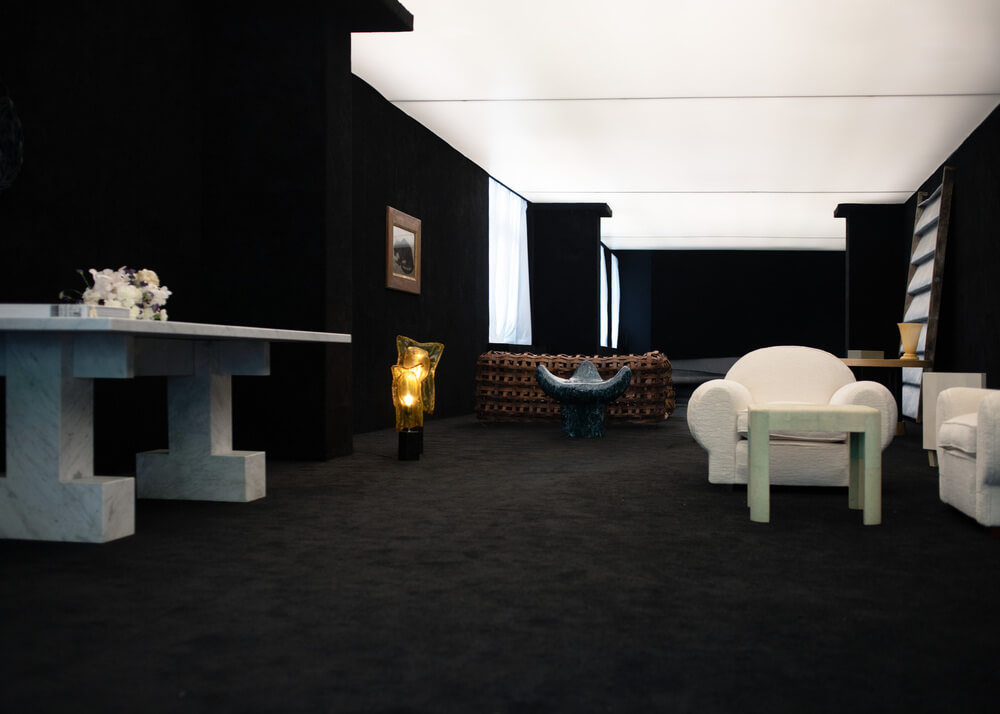
It comes down to freedom. A fixed inventory creates obligations: to the pieces you hold, the capital tied up in them, and a program inevitably shaped by what you already own. Working on a commission basis means the program can be driven by curatorial logic rather than commercial necessity. Each exhibition becomes a fresh question: what is the most compelling conversation we can construct right now, with the most exceptional available works? That openness feels more honest about how the best design circulates in the world. It passes between hands, accumulates histories, and finds new contexts. We are not acquiring from people; we are working with them. Beyond that, Galerie OM is a platform for exploring culture more broadly through fashion, gastronomy, music, performance, and travel. The fluidity of the model is what makes that possible. It is not a workaround. It is the philosophy.
Your career has moved between New York, the international fair circuit and Berlin’s independent creative scene. How have those different environments shaped your understanding of what a gallery can be today?
New York taught me sophistication: the scale of ambition that the American market demands, the seriousness with which collectors engage, and the way the best galleries function as intellectual environments rather than simply retail operations. The fair circuit gave me breadth: a sense of the global conversation in design, which voices were emerging, and where the real energy was. Berlin offered something else entirely: an independent creative scene of extraordinary rawness and directness, a city that values authenticity over polish. What I wanted to bring to Galerie OM was a synthesis of those experiences: the rigor and international reach of the art world, filtered through Berlin’s particular sensibility. The city has immense potential as a centre for collectible design. The infrastructure, collector base, and creative talent are all here. It simply lacked a platform operating at the level it deserves.
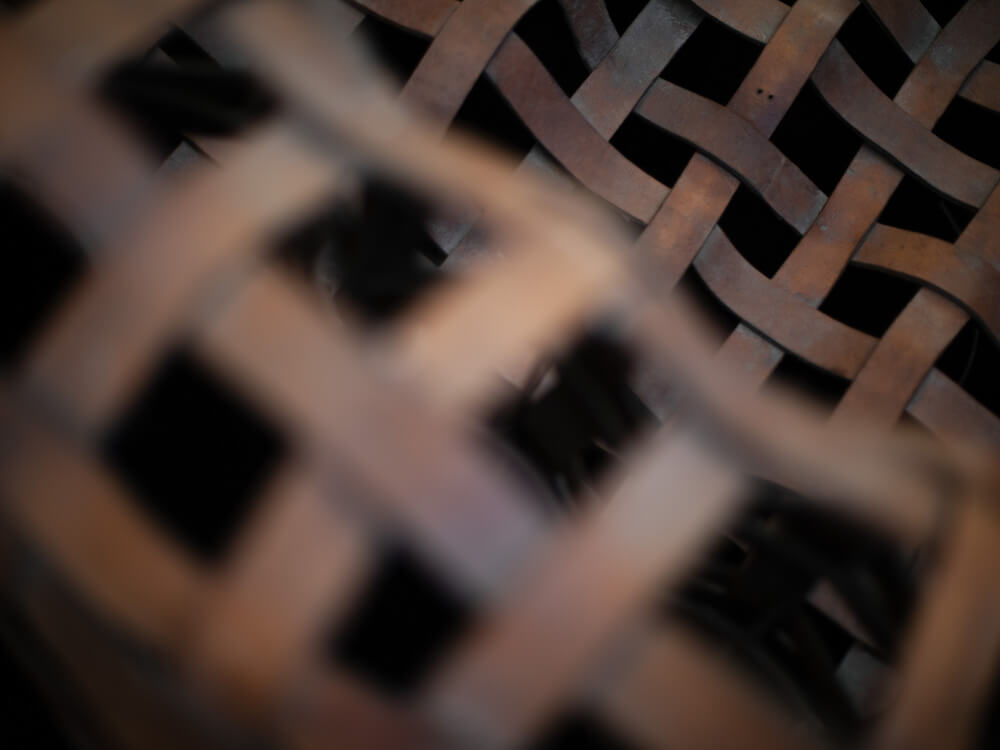
Partie Une brings together designers from different generations, contexts and disciplines, from Jean Prouvé and Pierre Chareau to Caroline Keslassy. What conversation did you hope would emerge between these works?
The conversation I wanted to activate was one about enduring intelligence: the idea that exceptional design does not age so much as it deepens. What connects Prouvé’s structural honesty, Chareau’s sensitivity to material and function, and the work of someone like Caroline Keslassy is a shared commitment to asking what an object truly needs to be. The generational spread was deliberate. It rejects the idea that design history is linear or that contemporary work automatically supersedes what came before. Instead, Partie Une proposes a kind of timelessness: a conversation in which period is secondary to intention, materiality, and intelligence. I was also interested in the productive friction between disciplines. Architects, furniture designers, and object makers approach similar questions from different angles, and placing their work in dialogue reveals things a more homogeneous exhibition never could.
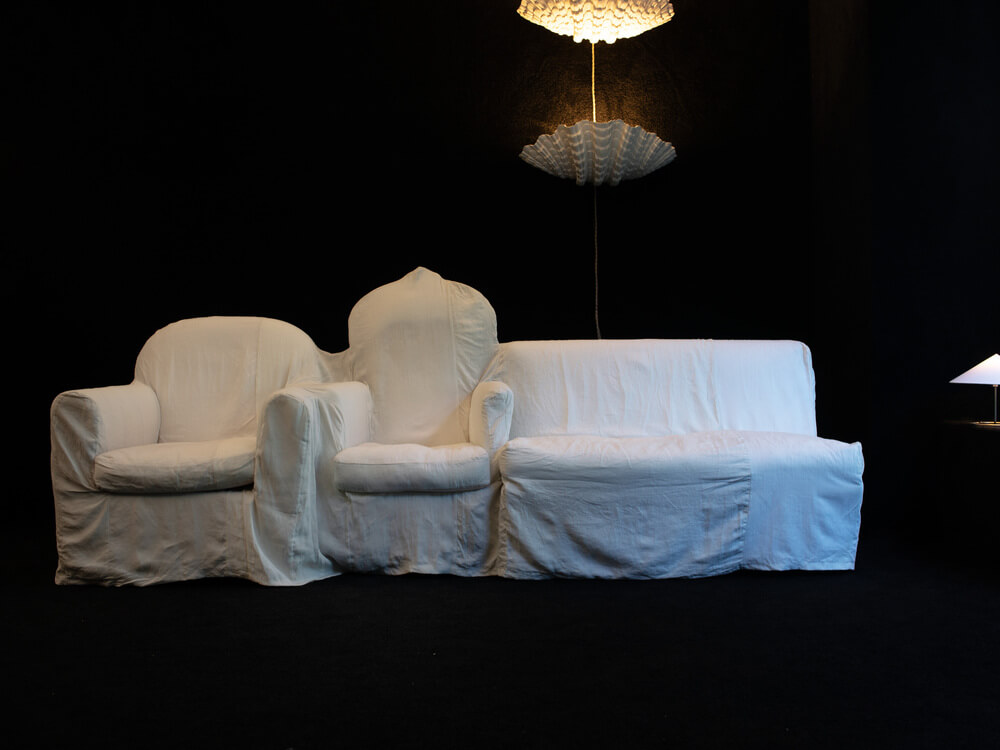
Throughout the gallery’s presentation, furniture, objects and architecture are treated as part of a larger spatial composition. What can a carefully constructed environment communicate that a single object cannot?
A single object, however extraordinary, exists in isolation. It can be beautiful, rigorous, and historically significant, but it cannot tell you how materials converse across a room, how light changes a surface, or how a space is experienced as a whole. The environment communicates all of that. When works are placed in relation to one another with careful attention to scale, rhythm, and proportion, they create something larger than the sum of their parts. There is also an emotional dimension. You feel something before you fully understand it. At Galerie OM, exhibition design is not a backdrop; it is a co-author. Through sound, scent, and considered hospitality, design stops being something you look at and becomes something you inhabit.
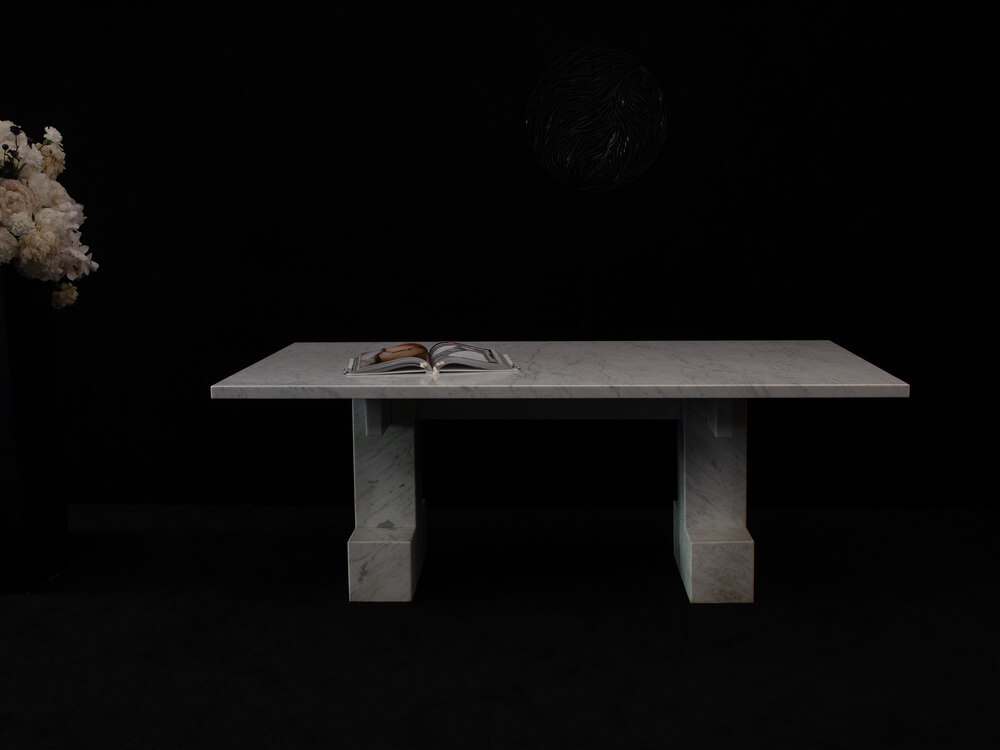
Berlin’s influence is present throughout Galerie OM, particularly in its darker, rawer visual language. What aspects of the city continue to resonate with you creatively, and how do they find their way into the gallery?
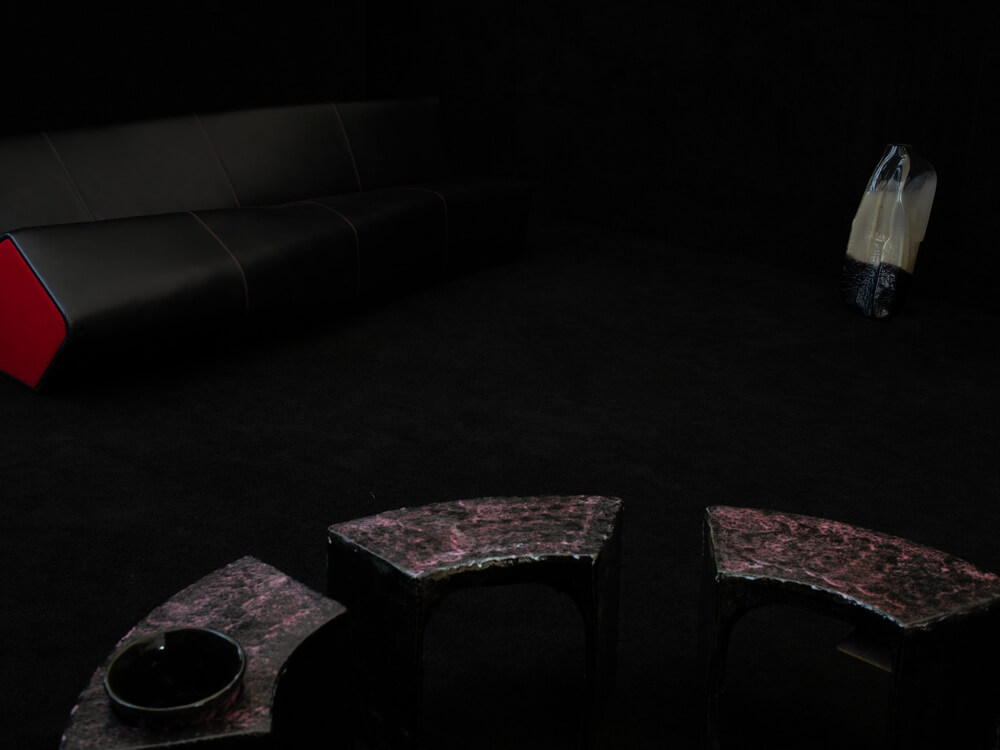
Berlin is a young city shaped by tremendous history, and being German myself, that weight is not abstract to me; it is personal. What moves me most about the city is its underground scene: the way people from different backgrounds, nationalities, and disciplines genuinely connect here. There is no equivalent to the Berlin club, the Berlin squat, or the Berlin creative community; spaces where a fashion designer, philosopher, carpenter, and collector can end up in the same room and find common ground. That openness is something I want Galerie OM to carry. The gallery’s darker visual language is a direct response to Berlin: the strict black and white, the geometric rigour, and the refusal of anything merely decorative. Berlin has lived through too much to be seduced by elegance alone. There is a seriousness here that keeps you honest.
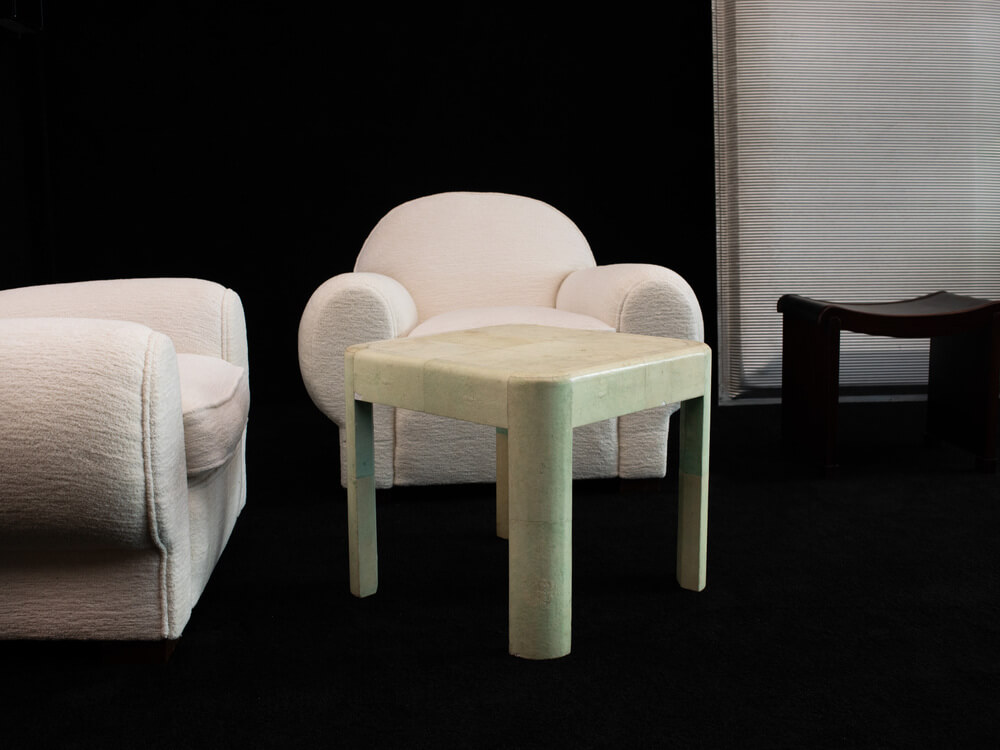
Alongside exhibitions, Galerie OM incorporates sound performance, curated dining experiences and sake pairings. What role does social experience play in the way you think people connect with design?
People connect over food and drink every day; it is one of the oldest forms of human bonding. So why not in the design space? The sound performances, curated sake from OSC Berlin, and canapés are not amenities. They are expressions of things that bring me genuine joy, and that I enjoy sharing with others. All of these elements are deeply personal to me: music, taste, scent, and the quality of a gathering. When they come together around exceptional objects, something shifts. A shared experience creates a deeper connection, both with one another and with the work. Design is ultimately about how we share space. When you are moving through a room, in conversation, and engaging with an object in a lived setting, your relationship to it changes. That is when a person truly sees a work.
Many collectible design spaces focus on rarity and acquisition. Galerie OM seems equally interested in creating atmosphere and encounter. How do you navigate the relationship between collecting and experience?
I don’t think they are in opposition. In fact, I think experience is what makes collecting meaningful. Anyone can acquire an object. What Galerie OM offers is the context in which that object reveals itself fully: through atmosphere, dialogue, and encounter. When a collector experiences a work in those conditions, they carry that memory with them. The object becomes more than furniture or decoration; it becomes tied to a feeling, a moment, and a set of ideas. That depth of attachment is what distinguishes serious collecting from acquisition. Our interest is genuinely curatorial: we want the right work to find the right person. The atmosphere we create is not a sales technique. It is an honest expression of how we believe design should be encountered.
As design becomes increasingly visible through social media and digital platforms, what do you think can still only be understood through physical proximity and lived experience?
Almost everything that matters. I have never been on social media, and I remain skeptical of a culture in which experience is increasingly mediated through images. This is not nostalgia; it is a conviction that lived experience is irreplaceable. The image of an object and the object itself are fundamentally different. A photograph cannot convey weight, scale, texture, or the way light moves across a surface. These are not details; they are the substance of the thing. Social media has expanded the audience for design, and that has real value. But Galerie OM exists to champion something that cannot be digitized: the experience of encountering an object in person.
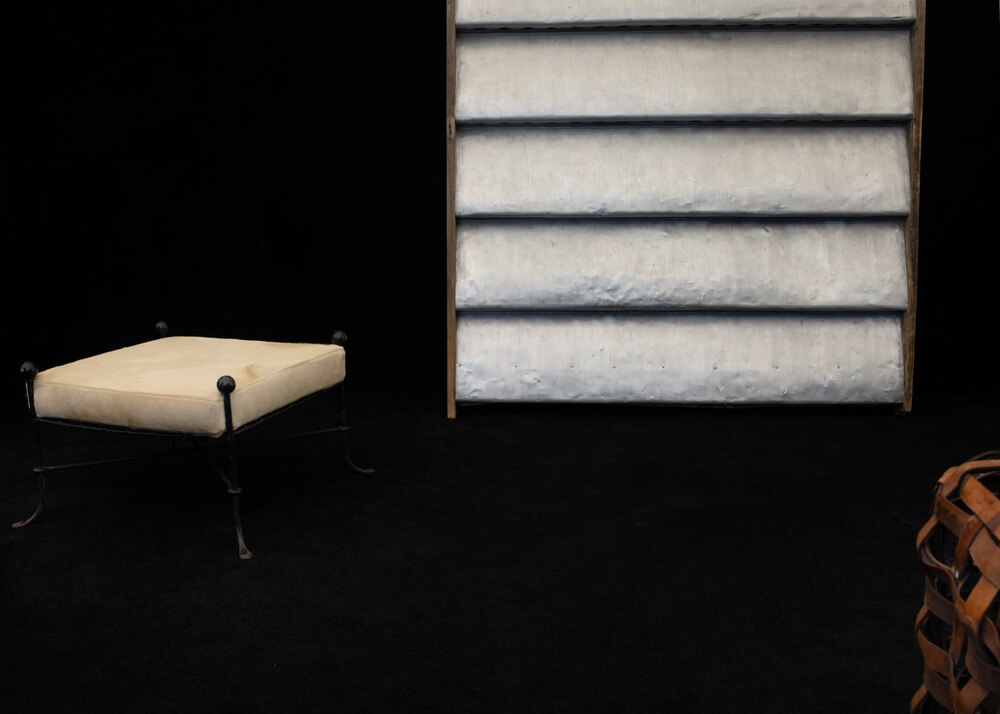
‘Partie Deux – Encoded Landscapes’ opens at Galerie OM, Berlin on 2nd July, bringing together historic and contemporary tapestries and carpets as symbolic landscapes of memory, ritual and human connection, alongside newly commissioned works by Weberei and New Rug Studio.»
Photos courtesy of Galerie Om Photographer Alessandra Fochesato