Elsa Rouy’s paintings move between attraction and discomfort, exploring the most vulnerable aspects of the human experience. As part of CAN Ibiza 2026, the artist reflects on the themes that shape her work.
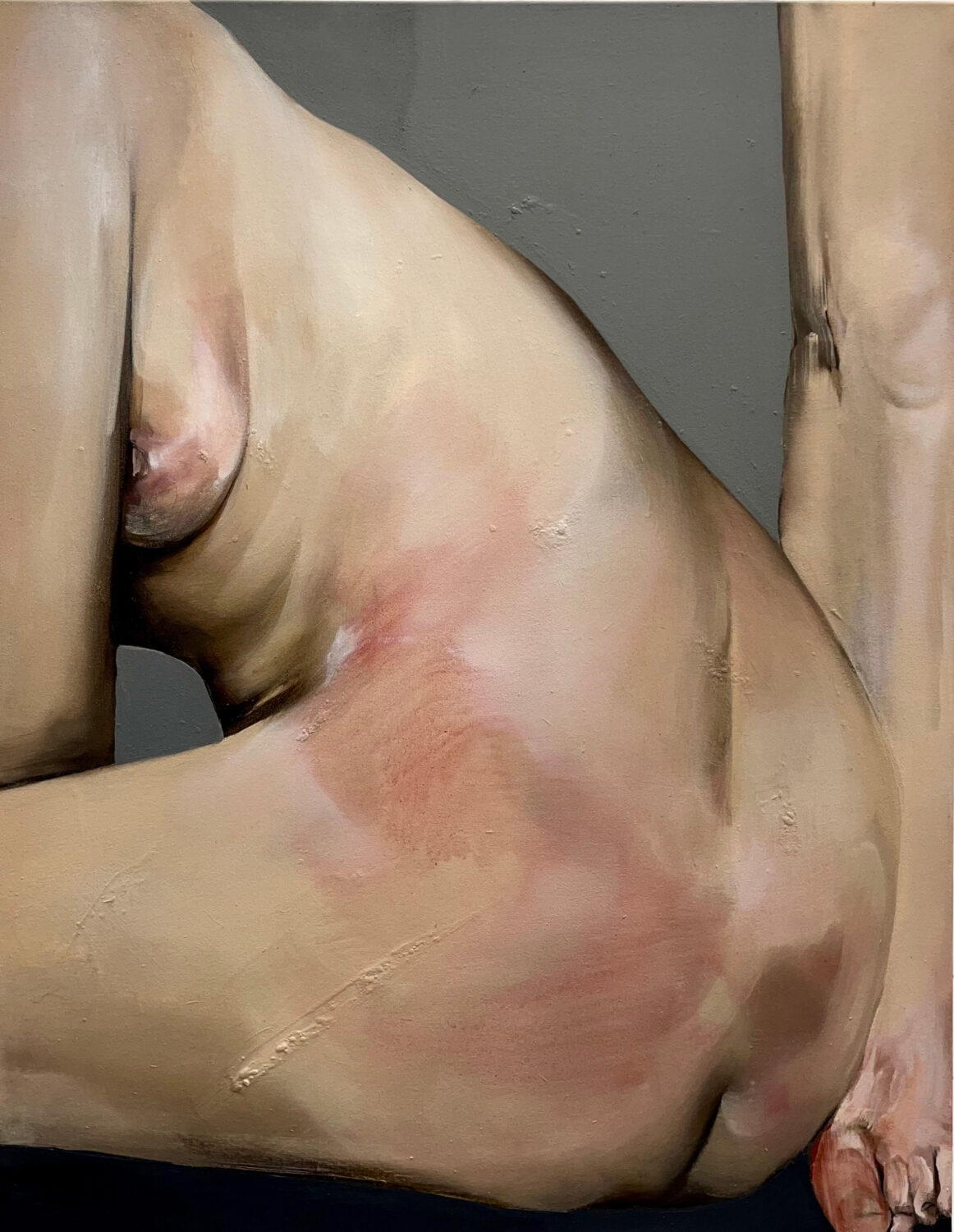 Elsa Rouy has emerged as one of the most compelling voices in contemporary figurative painting. Her works, populated by bodies in constant transformation and scenes charged with emotional tension, explore themes such as vulnerability, desire, identity, and human relationships.
On the occasion of her participation in CAN Ibiza 2026, we explore some of the ideas that run through her practice: from the images that inspire her paintings and the influence of dreams on her creative process to art’s ability to generate emotional experiences and raise new questions for the viewer.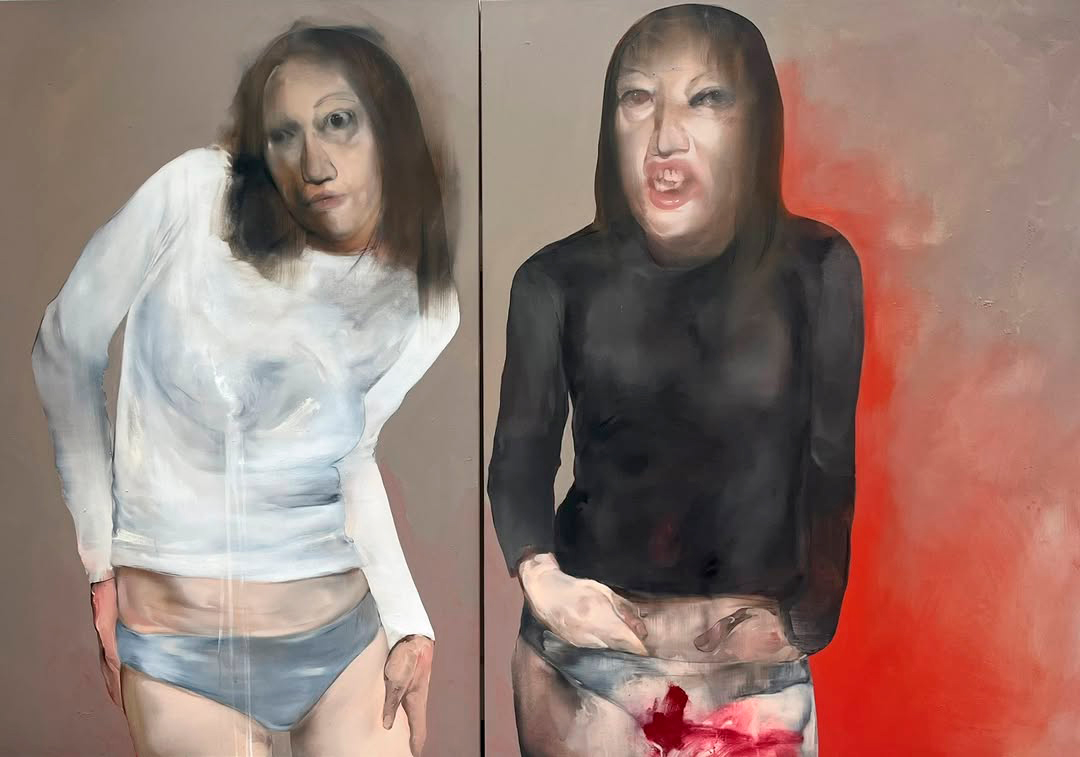 You are presenting your work at CAN Ibiza 2026, a fair that has established itself as one of the most interesting contemporary art events in the Mediterranean. What does it mean to you to show your work in this context?
Its interesting to show my work in various spaces and settings, showing my work at CAN alongside the other artists exhibited with Patricia Low Contemporary brings my work into a setting that I haven’t experienced before and will be complimented nicely by the booth.
Ibiza has a strong identity associated with freedom, hedonism, and a certain construction of fantasy. Do you find any connection between that atmosphere and the themes you explore in your work?
I think that these beliefs and identity connect to the themes of my work. I look into hedonism and like to think of the bodies and emotions pushed to the point of freedom and constriction that there is no distinct line between the two. I think theres an interesting dark underbelly to any fantasy especially when ideas of hedonism are involved and this is repetitively explored in my paintings.
You have previously spoken about dreams and nightmares as sources of inspiration. Do they still play an important role in your current work?
The more I consider my practice the more I find myself daydreaming rather than actually dreaming. I often think of words, images, ideas, motions, colours and emotions that I am interested in painting. The inspiration feels much more direct and from my conscious thought at the moment.
How do you know when an image deserves to become a painting?
A guttural feeling that its right, a bit like when I know a painting feels finished. If the image doesn’t excite or fulfil me, in some way or other, I shouldn’t make it into a painting.
Your figures often seem to be in a constant state of transformation, as if they are moving through intense physical and emotional experiences. What interests you about these moments of vulnerability?
I feel vulnerable a lot, I don’t like the feeling and I often find myself battling it and wanting to oppose it with strength. I think the figures I paint are all realistic in their vulnerability and rarely lack strength either. I like to see both states in one image, as to me, it feels honest.
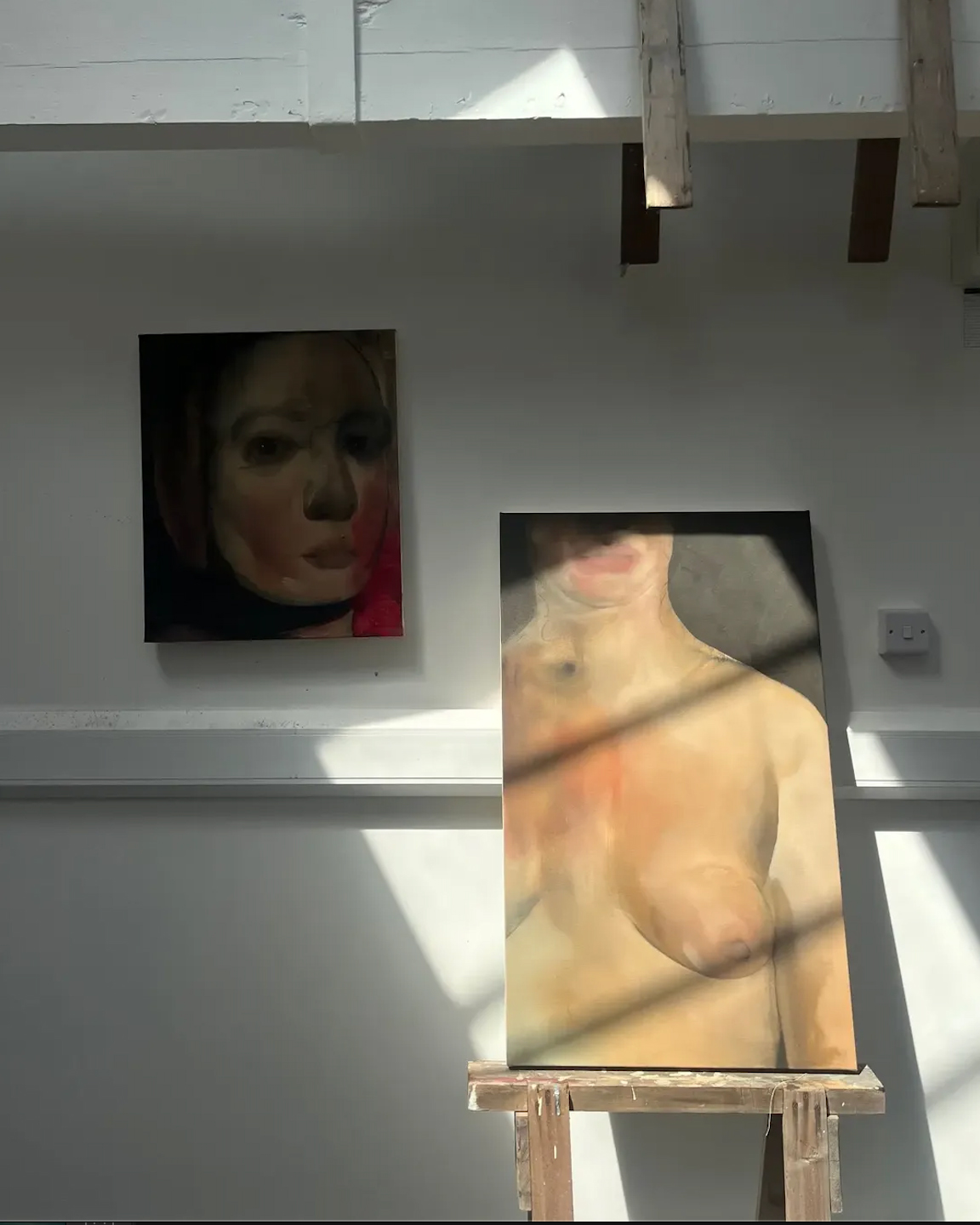
 There is a persistent tension in your paintings between attraction and repulsion. Do you deliberately seek to create that ambiguity for the viewer?
Yes, I have a belief that nothing ever exists as a single state. This belief is getting stronger the more I go through life. Theres always multiple ways of viewing something and most of the time its hard to know which way to view something, so this is what I want to also show in my work.
Many of your figures challenge clear categories of gender or identity. Is that a conscious decision, or does it emerge naturally from your creative process?
This usually emerges naturally from my creative process, I paint what I relate to and also what I find interesting. Gender isn’t so important for what I am trying to make and convey so I don’t see the point of having strict gender identities within the works, regardless of the bodily anatomy.
We live in an age of image overload and constant visual stimulation. What can painting still offer that other media cannot?
I think like any craft its interesting because a real person has spent time making it and because of this its prone to imperfections. Painting is laborious, at least for me as I use big canvases. Theres lots of movement involved, its physical and human. I also think painting always has the capacity to offer a less common perspective that is directly formed from someones individual interests. Seeing an painting in real life is always better than through an online image, you have to spend time with it, theres so much more to see and to get involved with. In many ways an image of a painting online is just another image in the overload. But in person its a physical object and nothing beats the real. Theres a mystique that it exists somewhere in the world.
Is it important to you that viewers understand a work, or would you rather they experience it on an emotional level?
No, I don’t care too much if people understand the image, or like it at that. I would like them to feel something from it, but then again everyone has different tastes and experiences so I can’t force an emotion.
Your paintings often inhabit an uncomfortable space between beauty and disturbance. Do you think art has a responsibility to make us uncomfortable when reality itself can be unsettling?
I don’t think art or artists have a responsibility to do anything other than make works they’re interested in. I certainly want my work to do that and its what im interested in when looking at art. I want to explore this within my work but I think the main role of an artist is to be authentic with their interests and their exploration of them.
–
Follow us on TikTok @veinmagazine