



Archival images of women losing consciousness become a study of femininity, visual culture and collective memory, presented by Penélope Archive in the Paloma Wool window.
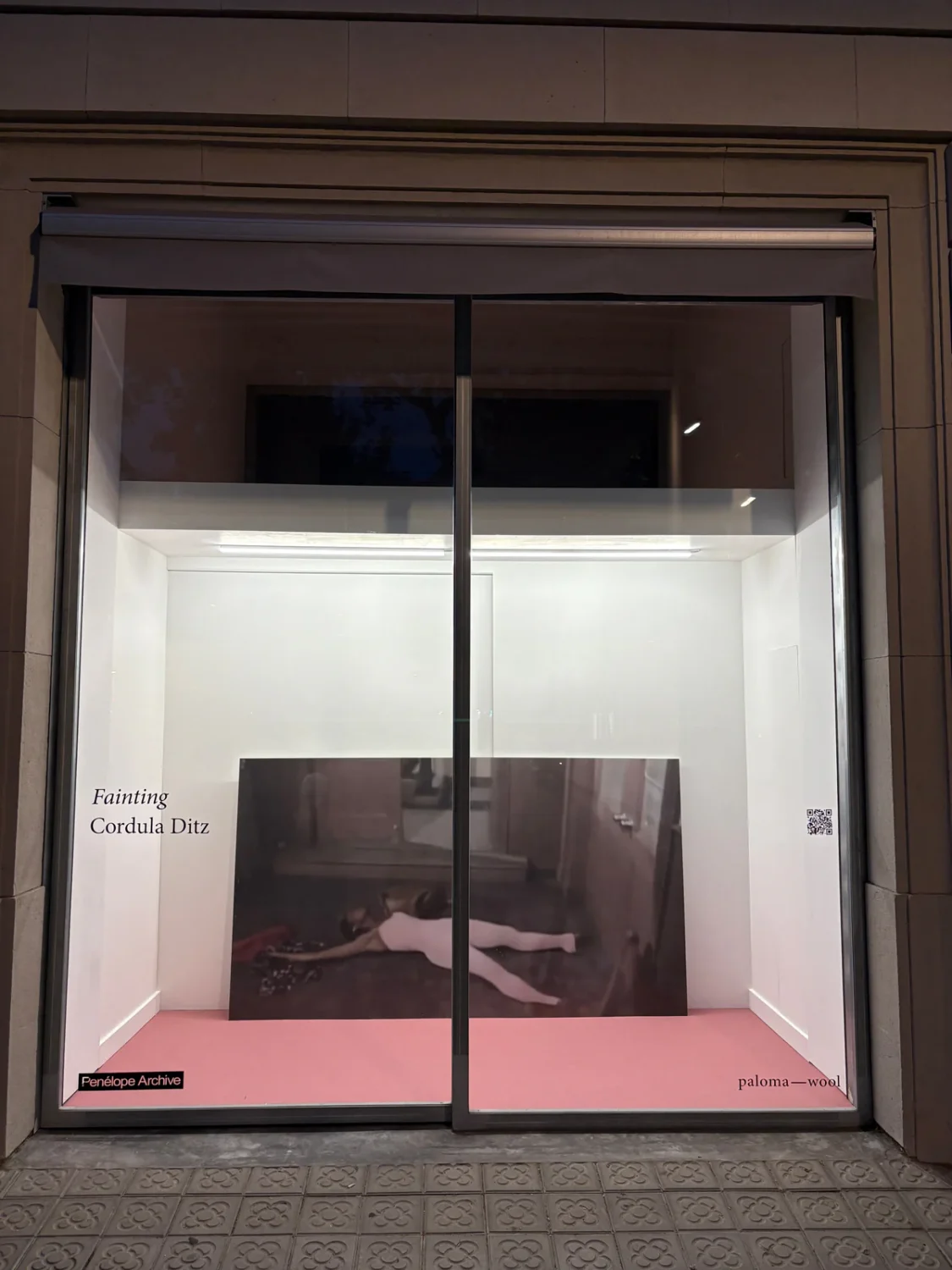
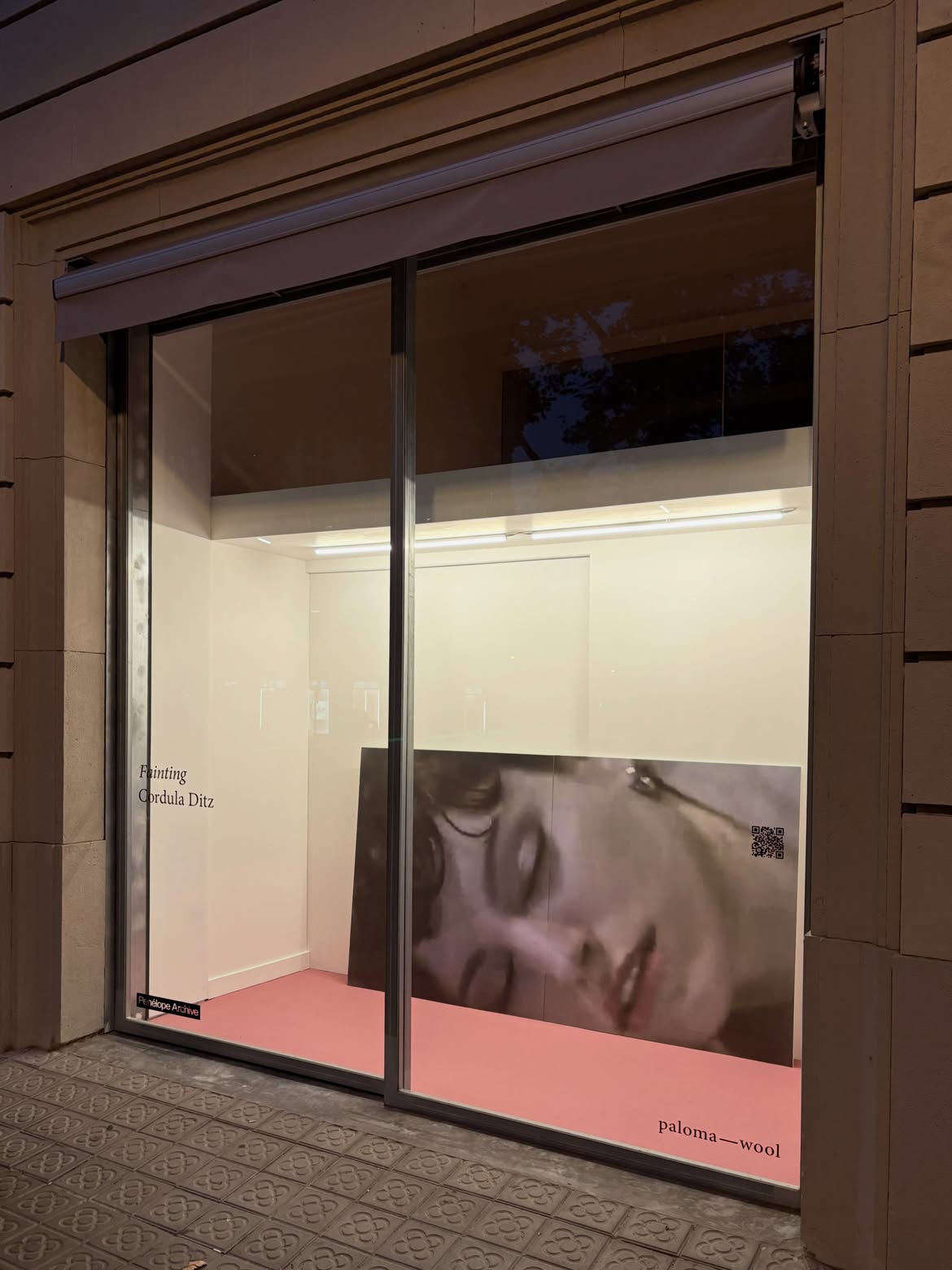
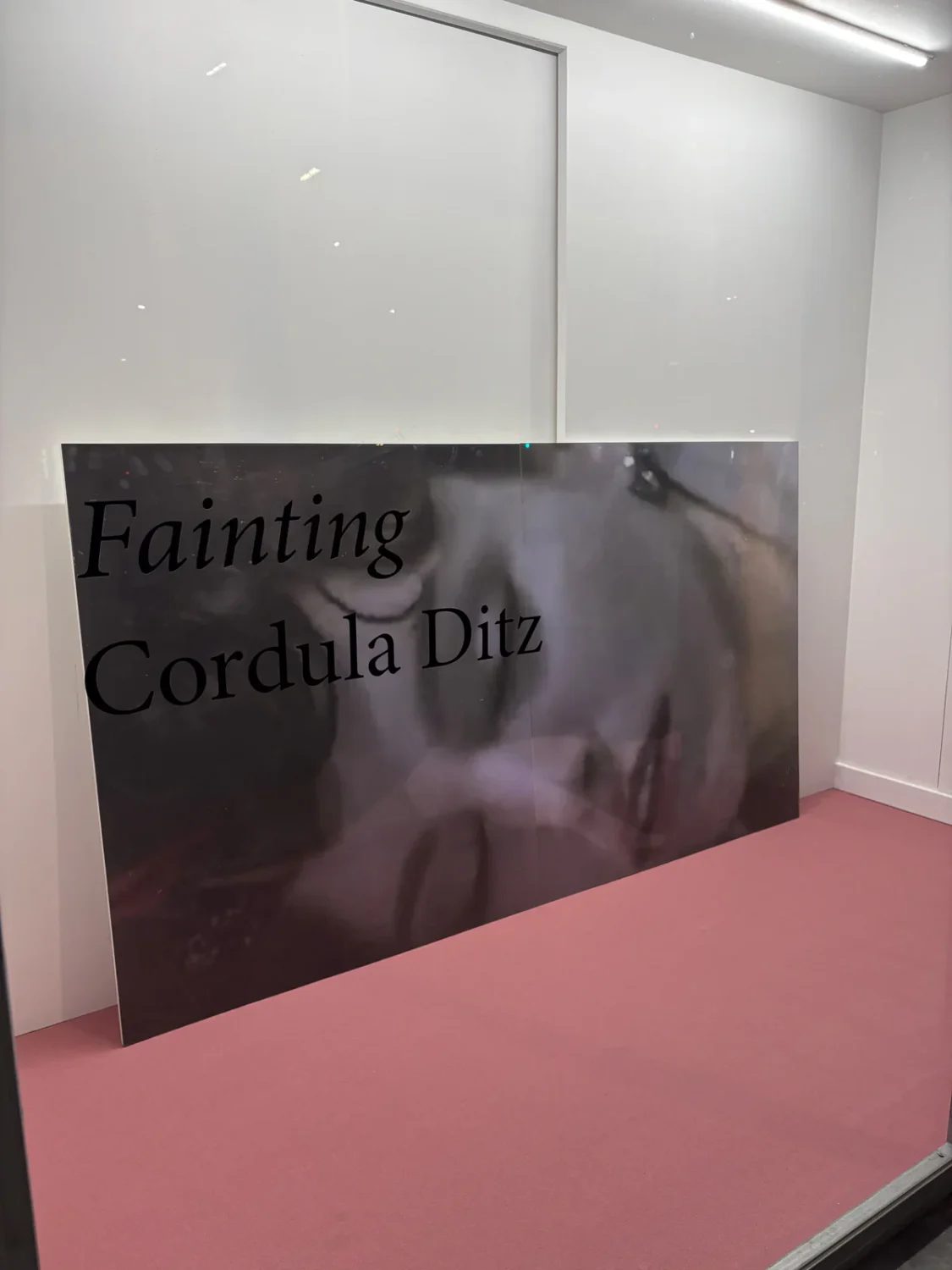
Across centuries of Western art and literature, the swoon has helped construct a femininity shaped by sensitivity, fragility and loss of control. Women collapse from grief, love, fear, childbirth or religious ecstasy, turning a physical gesture into a recurring visual convention. This cultural history is the starting point for ‘Fainting’, a work by Cordula Ditz presented by Penélope Archive. The installation is currently on view in the Paloma Wool window at Avenida Diagonal 358 in Barcelona, as part of the archive’s curatorial programme for the space.
The lenticular edition derives from an earlier video of archival images of women fainting. The motif moves from medieval art and Henry Fuseli to Charcot’s photographs, Marilyn Monroe in ‘Niagara’, Beatles concerts and fashion editorials. Through this visual genealogy, Ditz explores how images construct gender and collective memory.
The project also reflects the purpose of Penélope Archive, a Barcelona-based archive of contemporary iconography dedicated to art editions. Founded by artist Carlota Guerrero and researcher and curator Mariona Valdés Torrella, it was conceived as an act of symbolic reparation that seeks to expand visual narratives and challenge historically hegemonic representations.
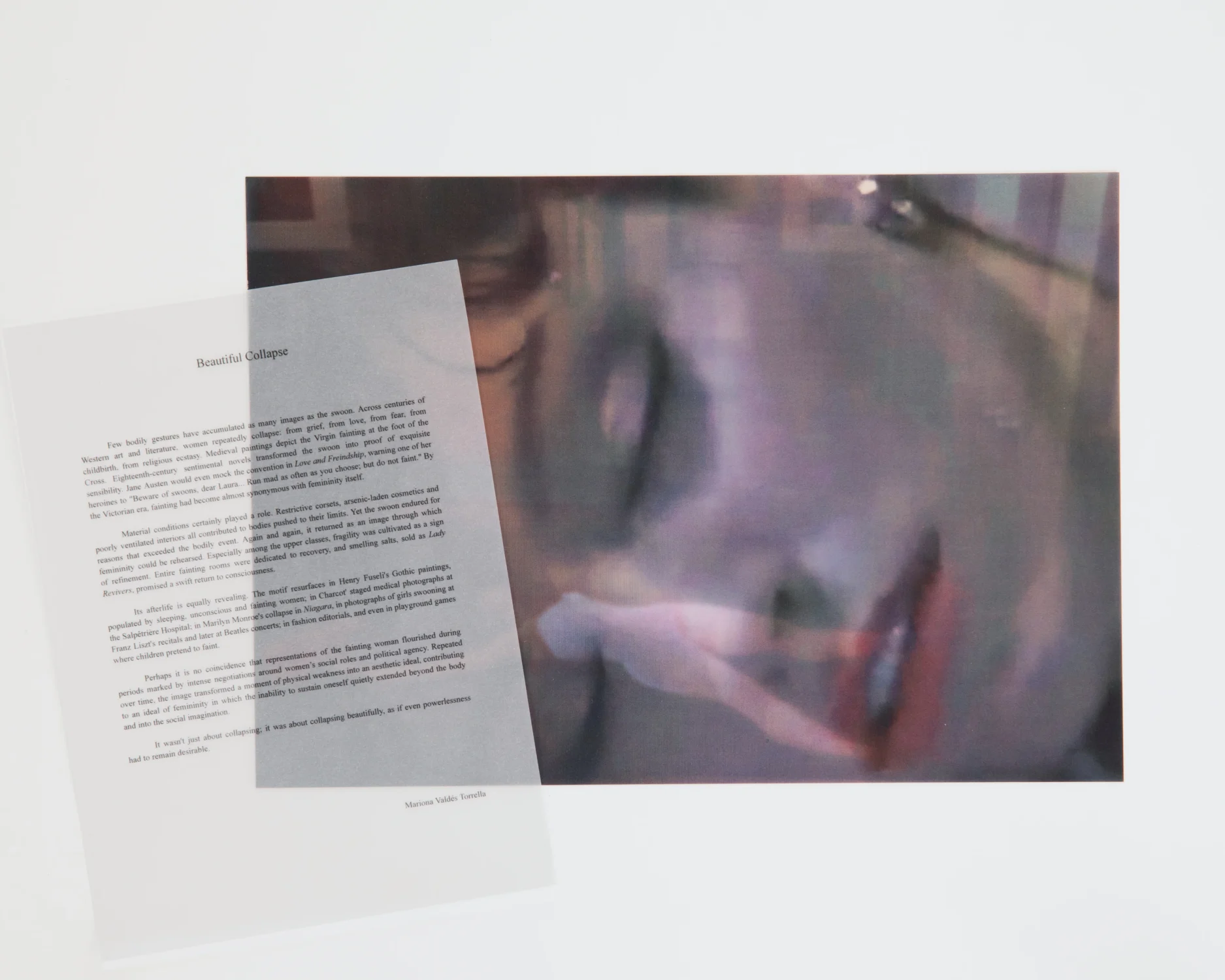
Produced in an edition of 18 copies and two artist proofs, the 40 × 28 centimetre lenticular print is mounted on graphic cardboard and accompanied by ‘Beautiful Collapse’, an essay by Valdés Torrella. The limited edition, priced at 235 euros, is available through Penélope Archive.
«Perhaps it is no coincidence that representations of the fainting woman flourished during periods marked by intense negotiations around women’s social roles and political agency. Repeated over time, the image transformed a moment of physical weakness into an aesthetic ideal, contributing to an ideal of femininity in which the inability to sustain oneself quietly extended beyond the body and into the social imagination.
It wasn’t just about collapsing: it was about collapsing beautifully, as if even powerlessness had to remain desirable.”
Mariona Valdés Torrella
—
Follow us on TikTok @veinmagazine