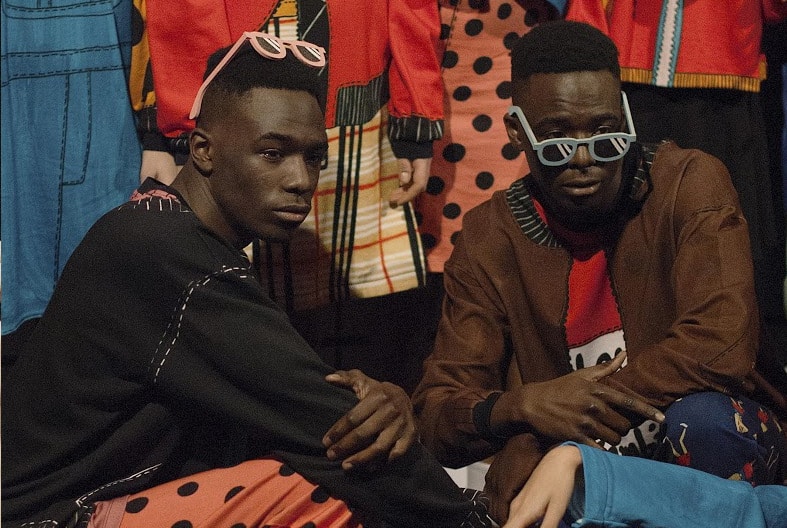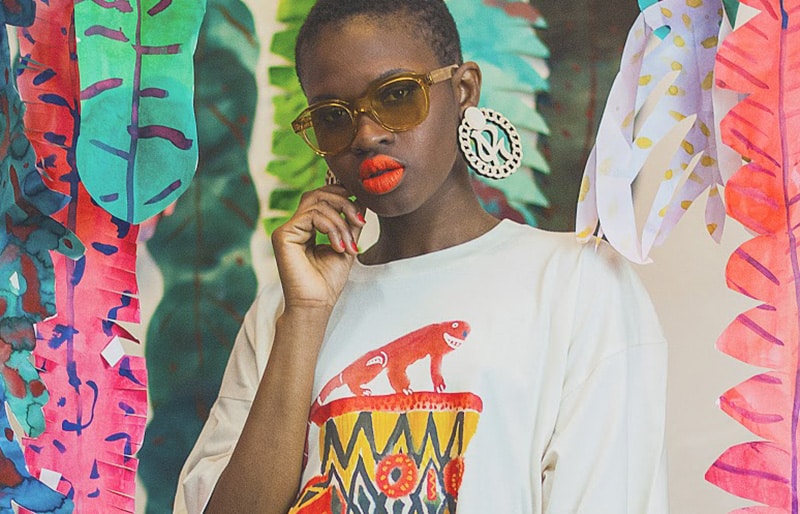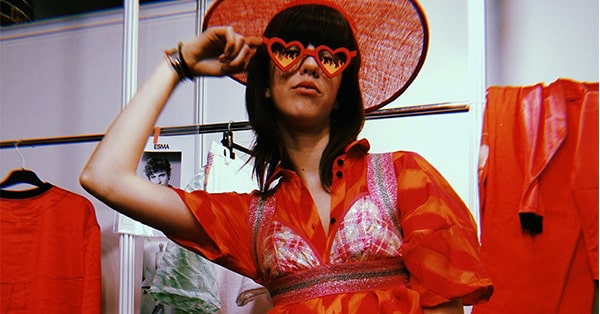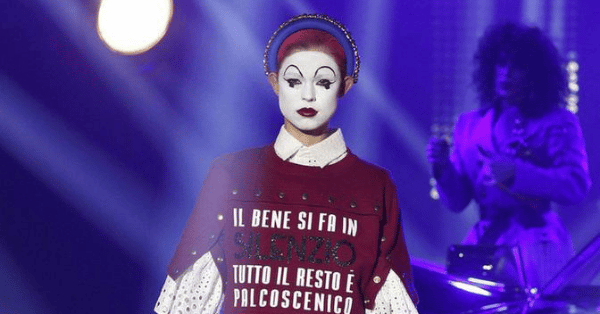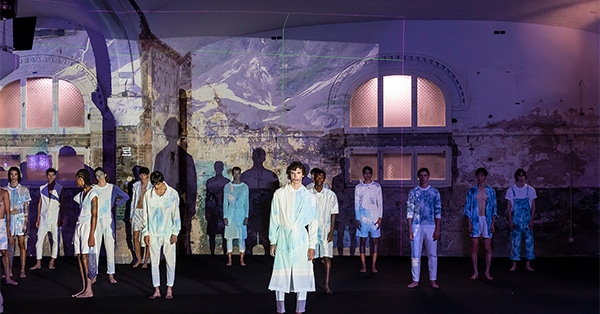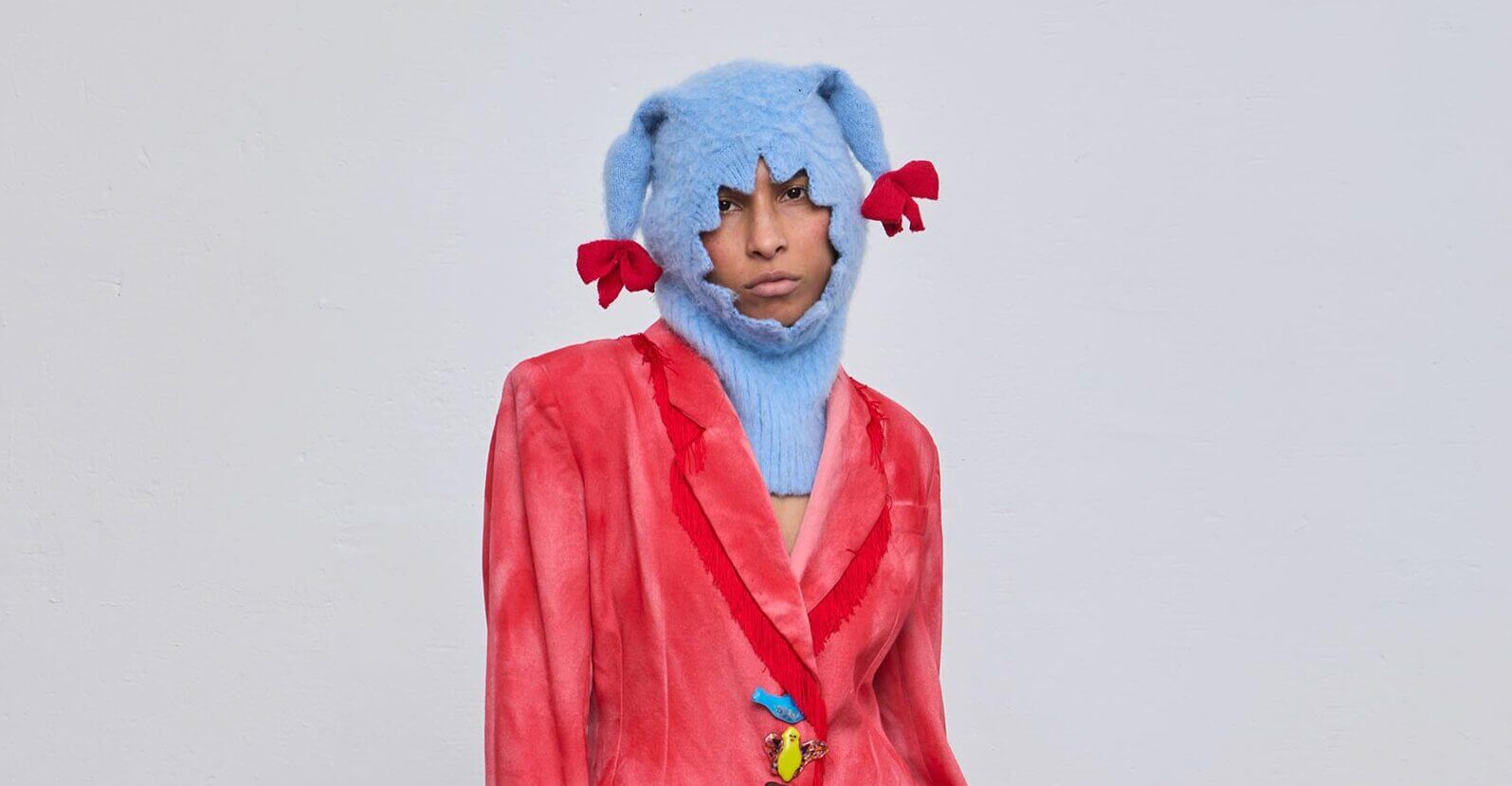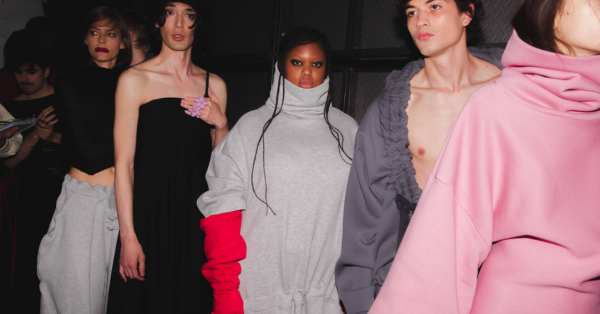
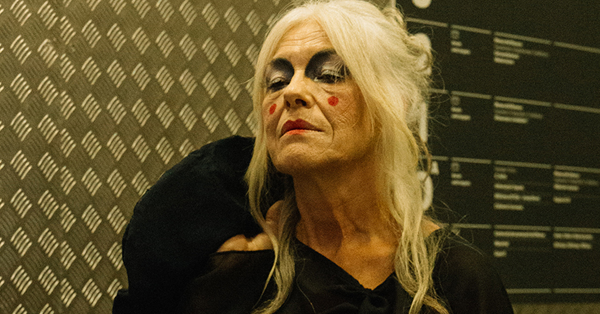
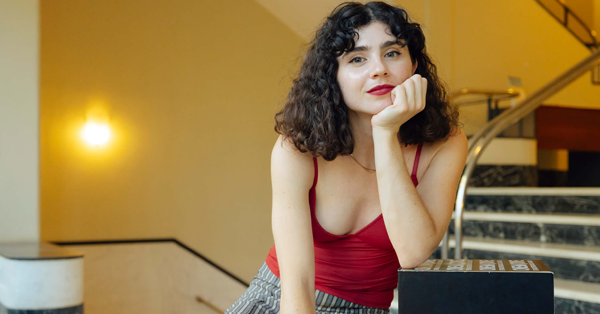


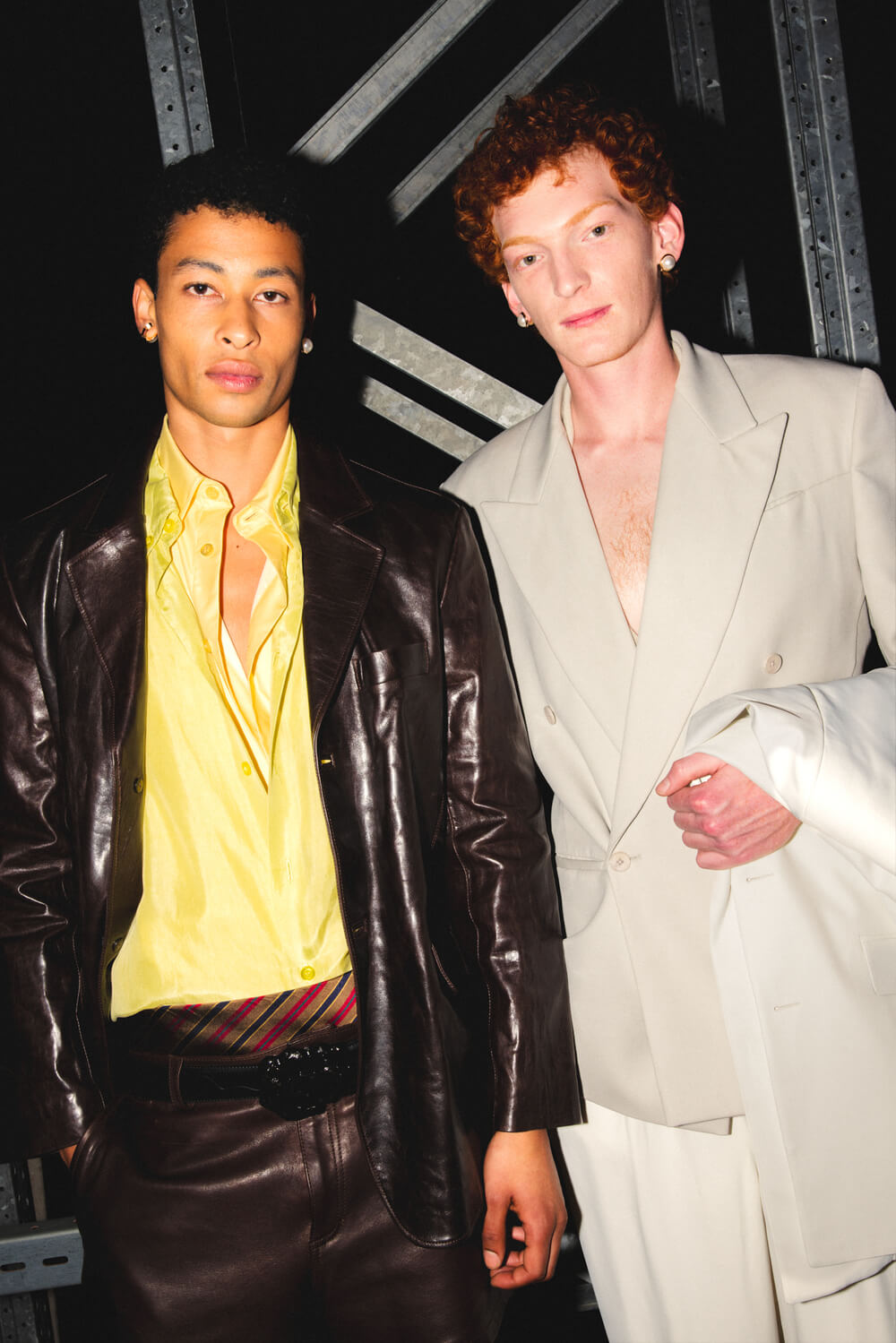
For ‘VOLVER — A Study in Desire’, French designer Louis Gabriel Nouchi digs into the LGN archive, giving old favourites a new life through the technicolour lens of Pedro Almodóvar. Presented at 080 Barcelona Fashion, the collection is a love letter to a city that refuses to behave. A city known to be rebellious, artistic and just a little unpredictable.
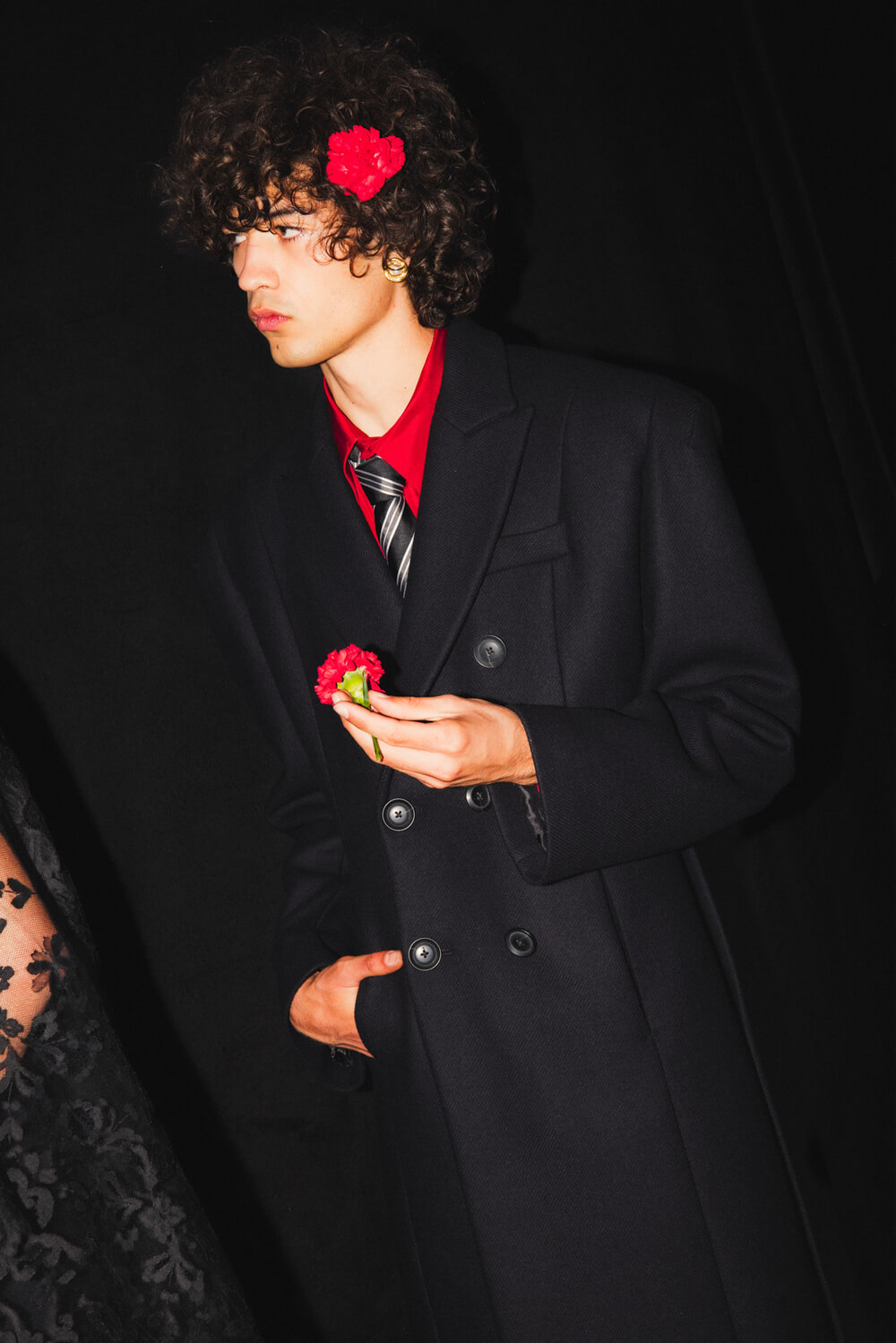
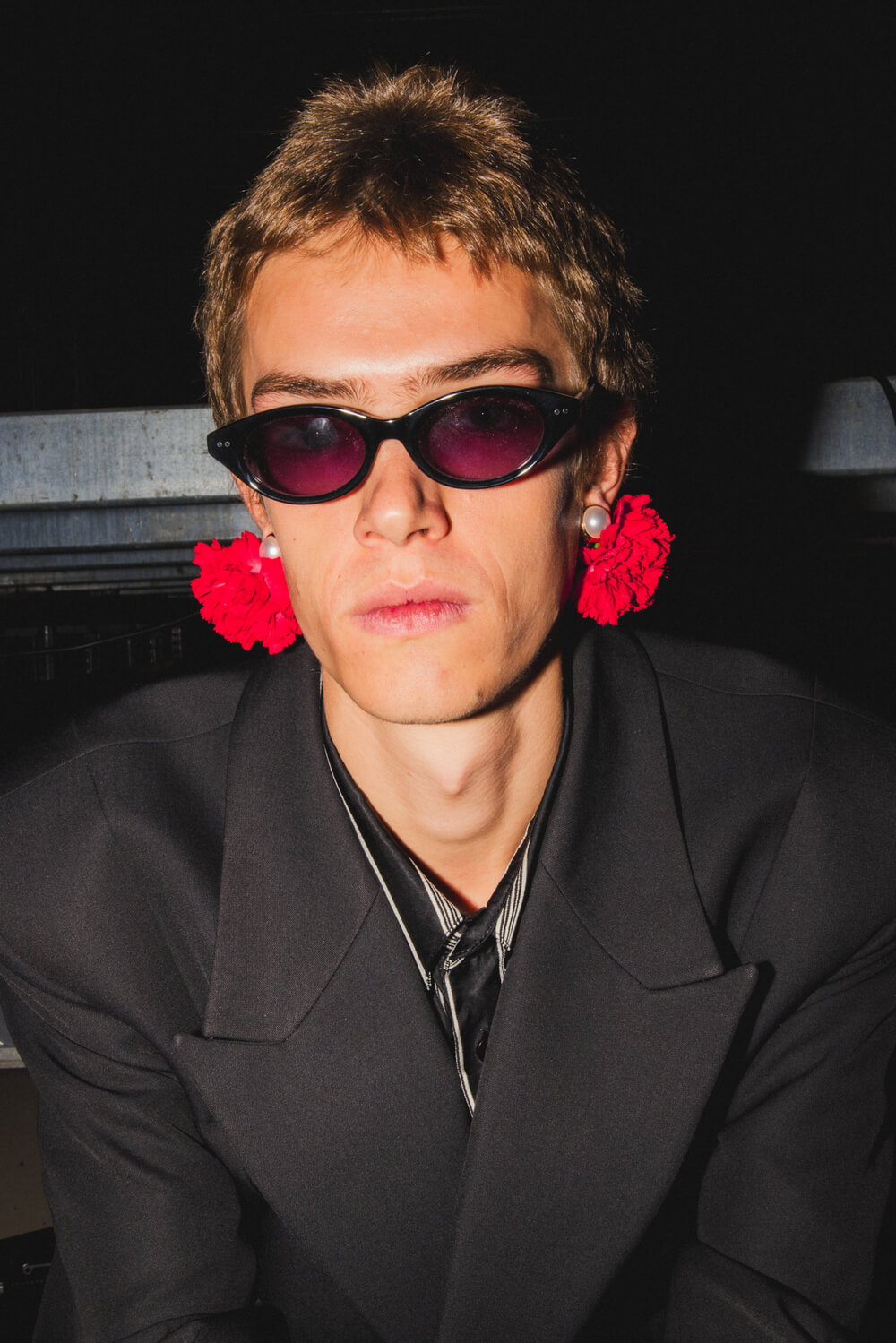
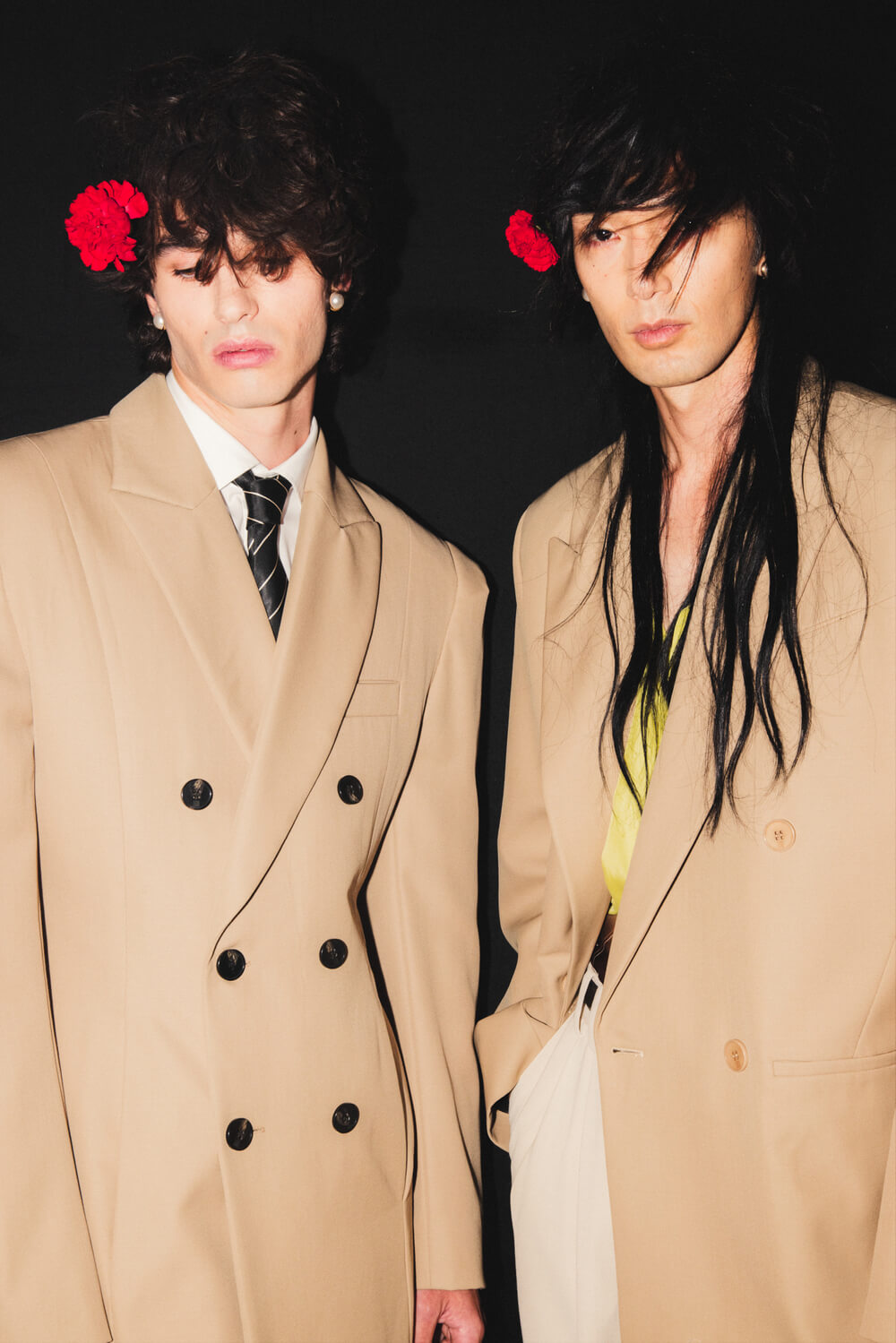
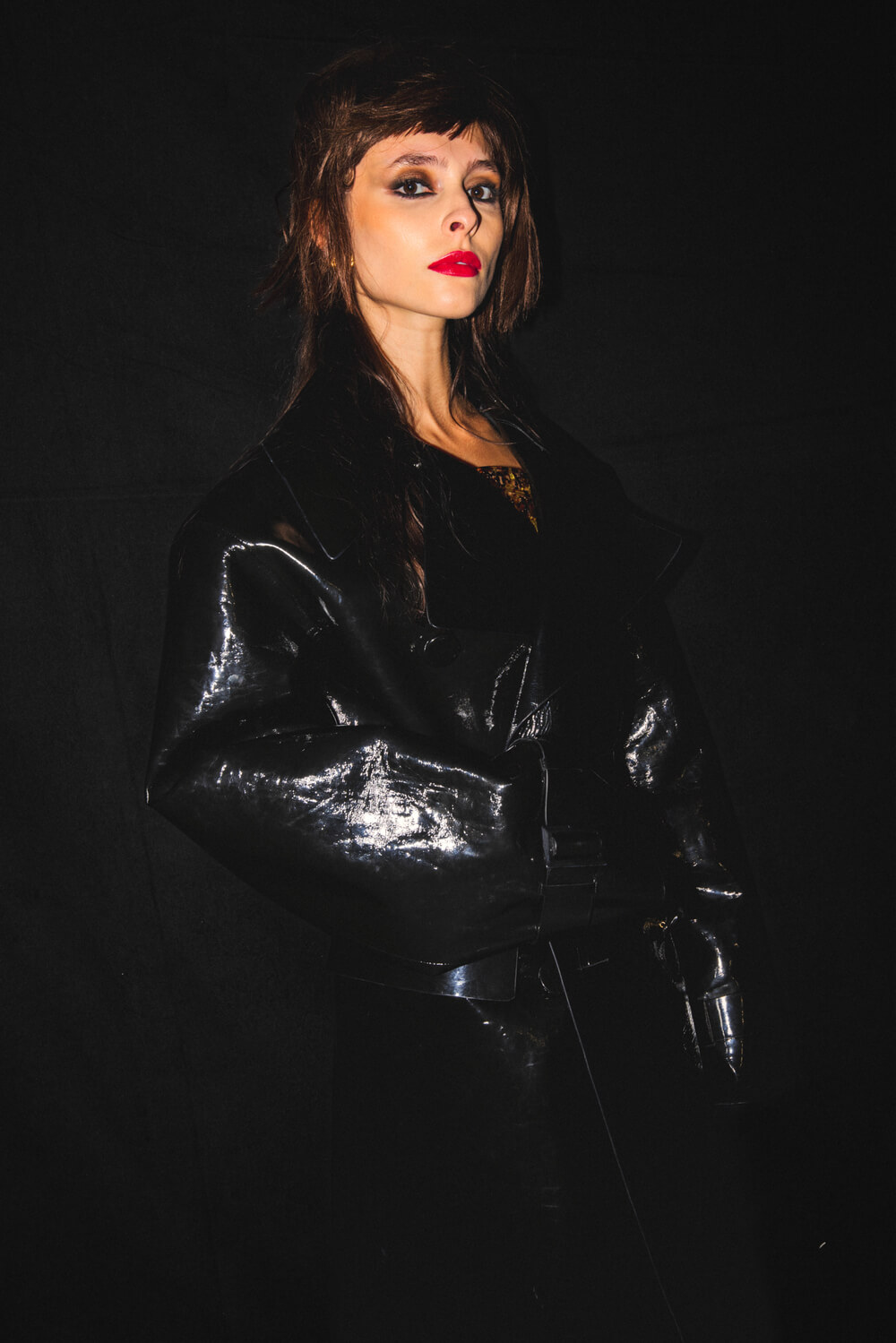
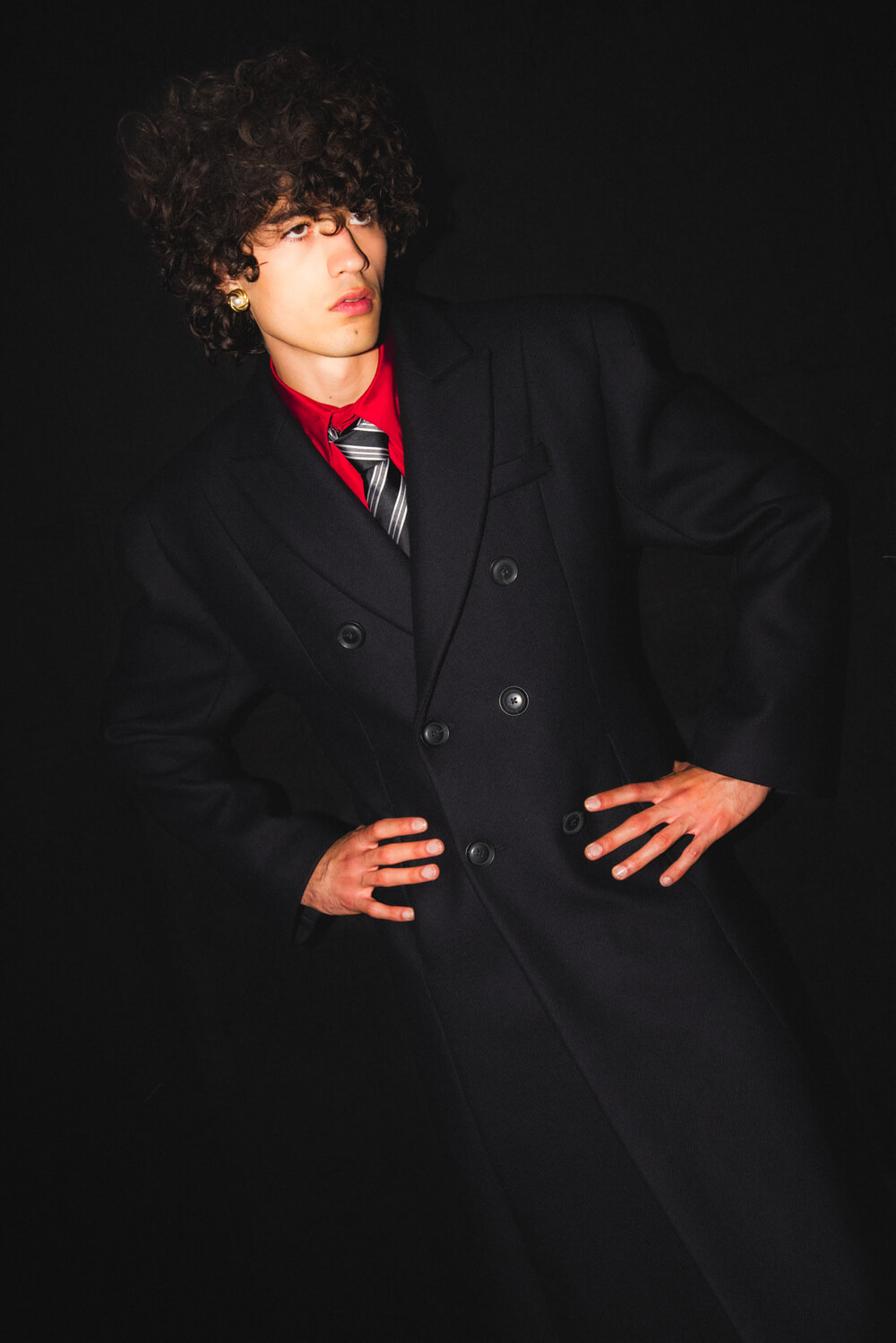
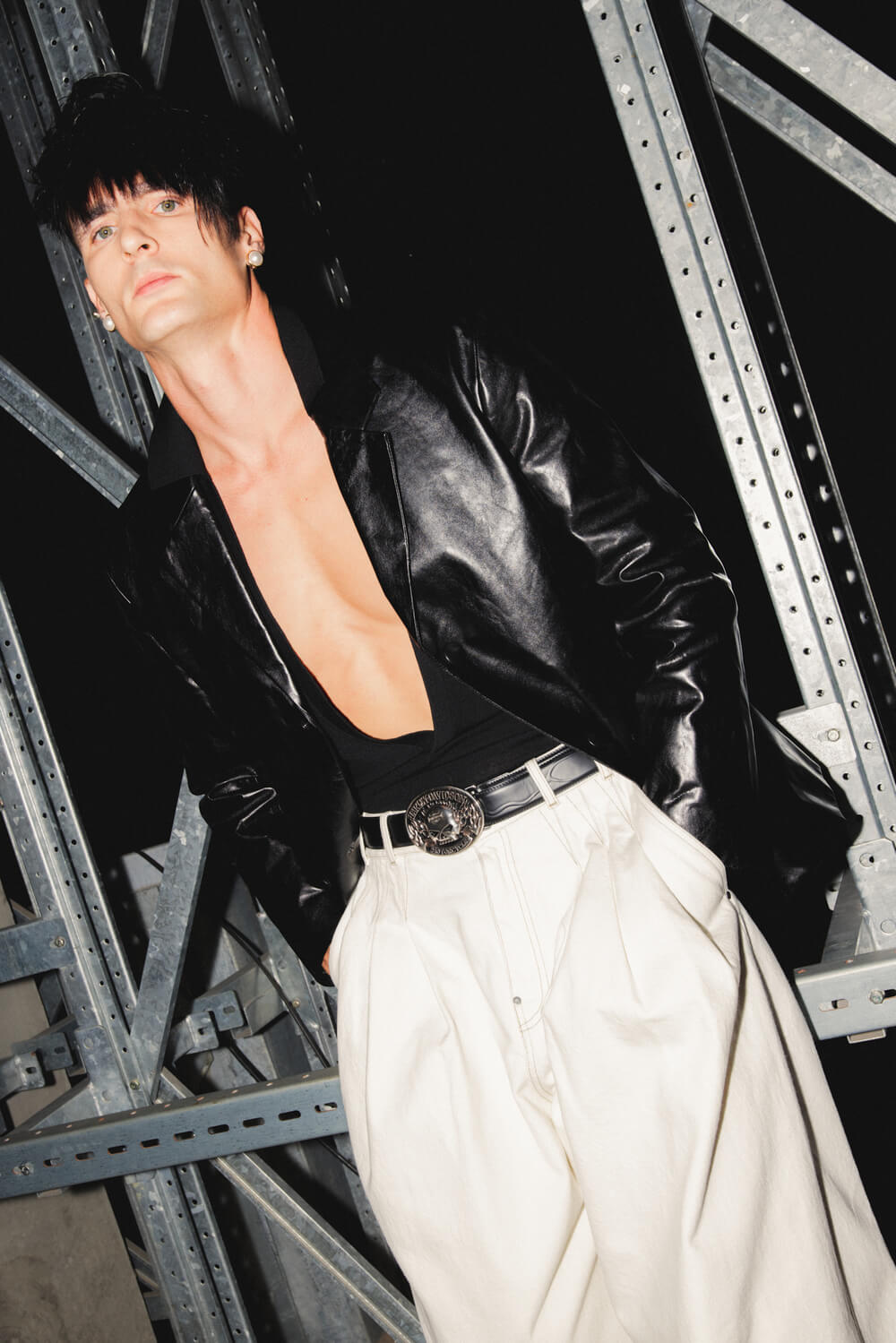
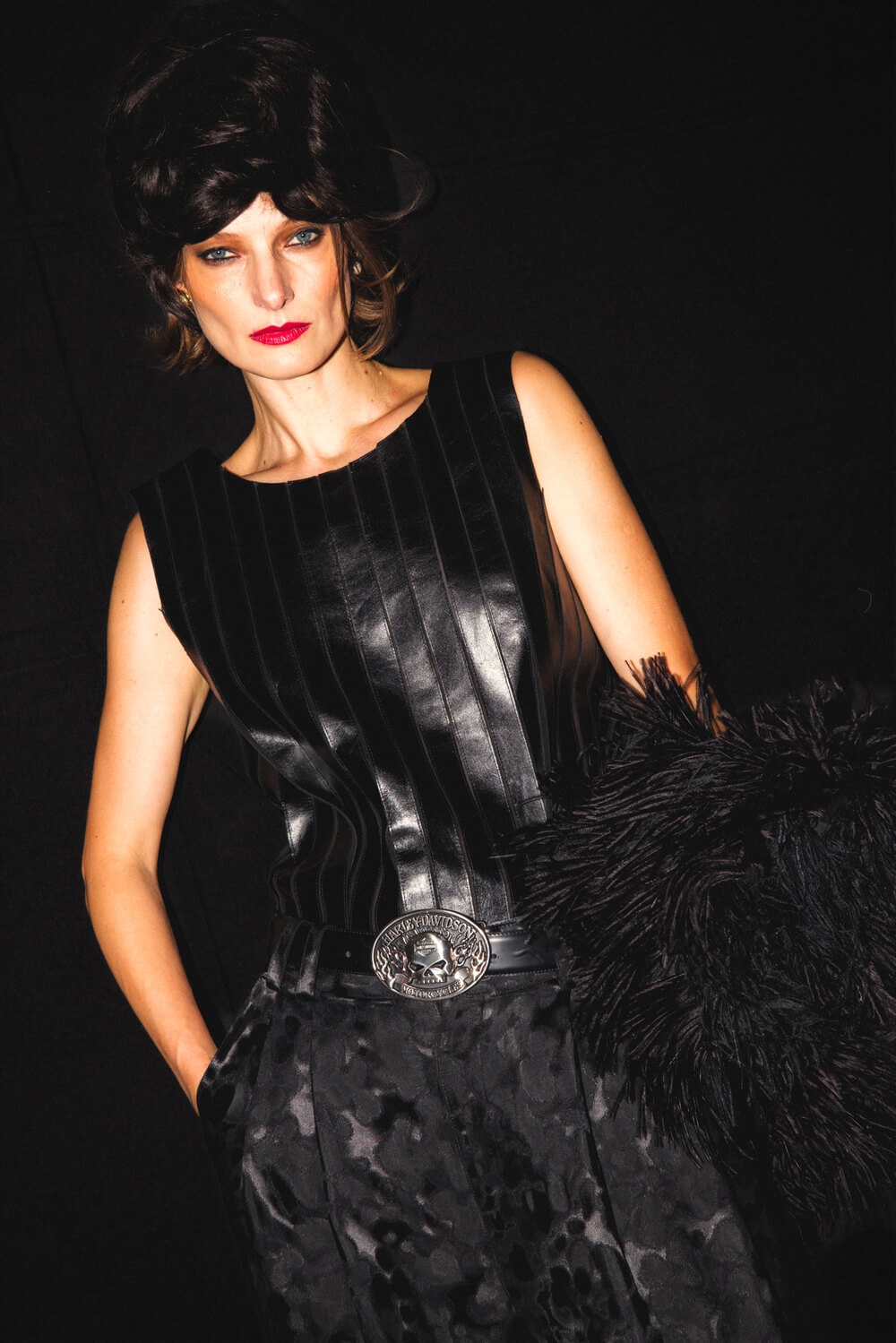
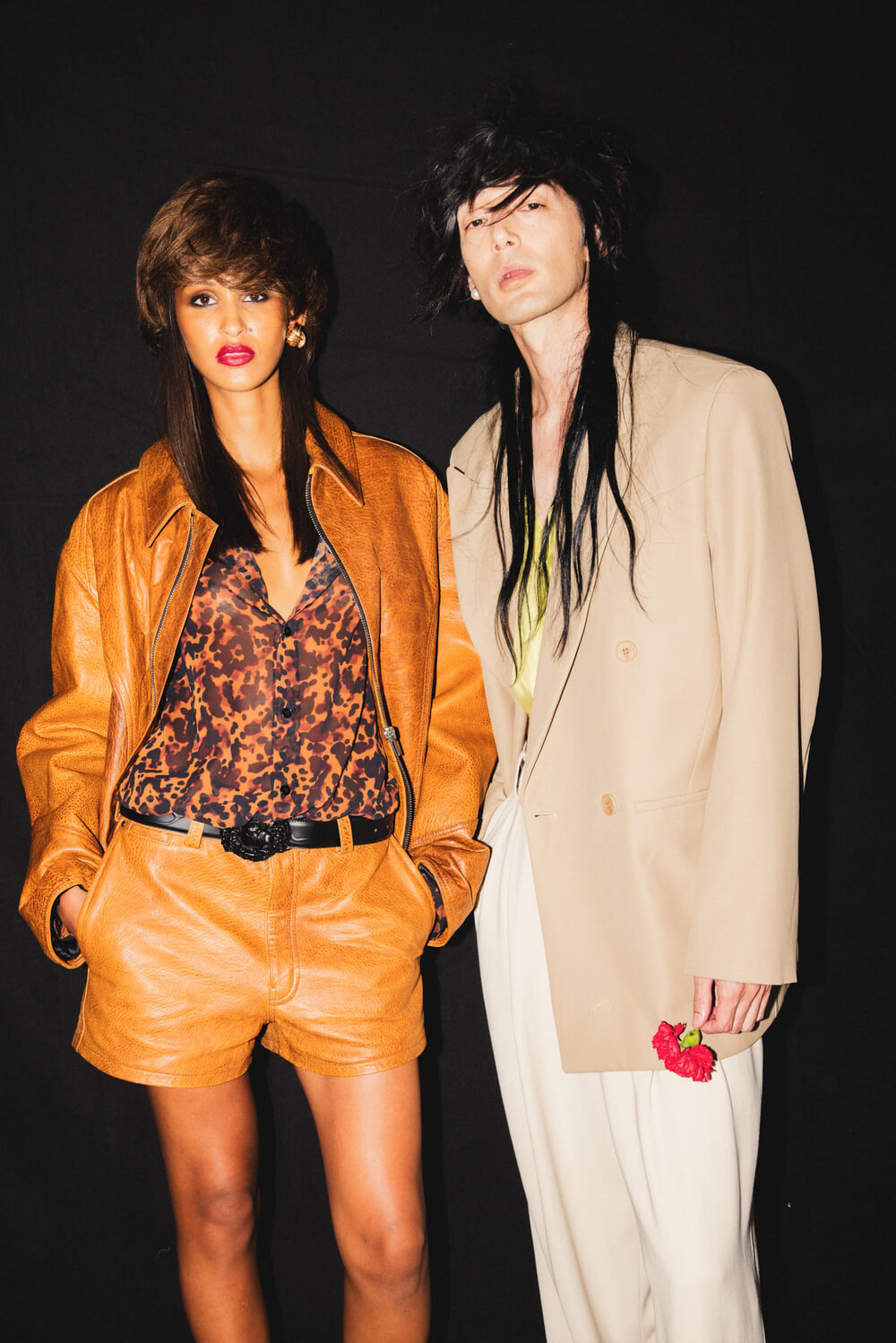
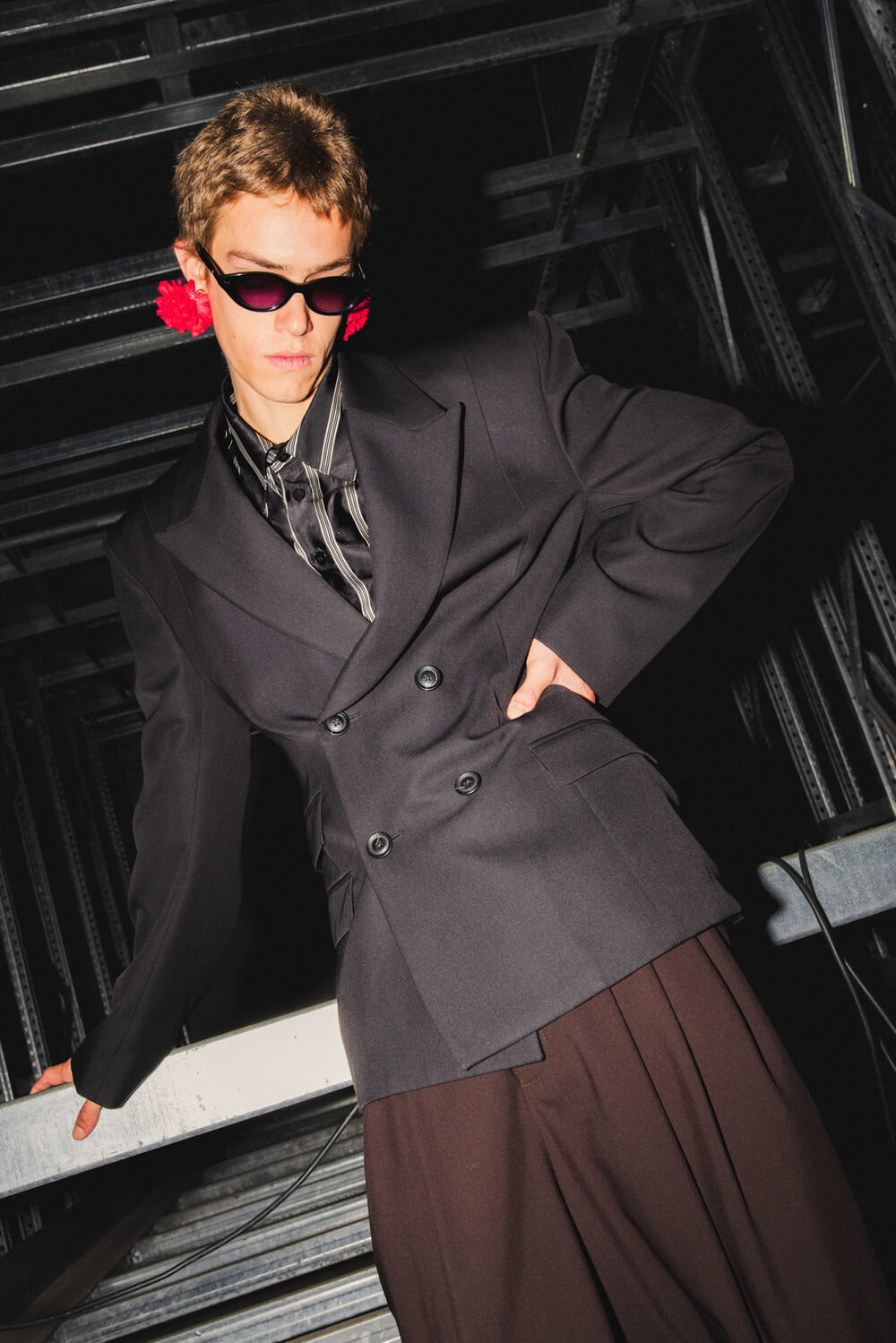
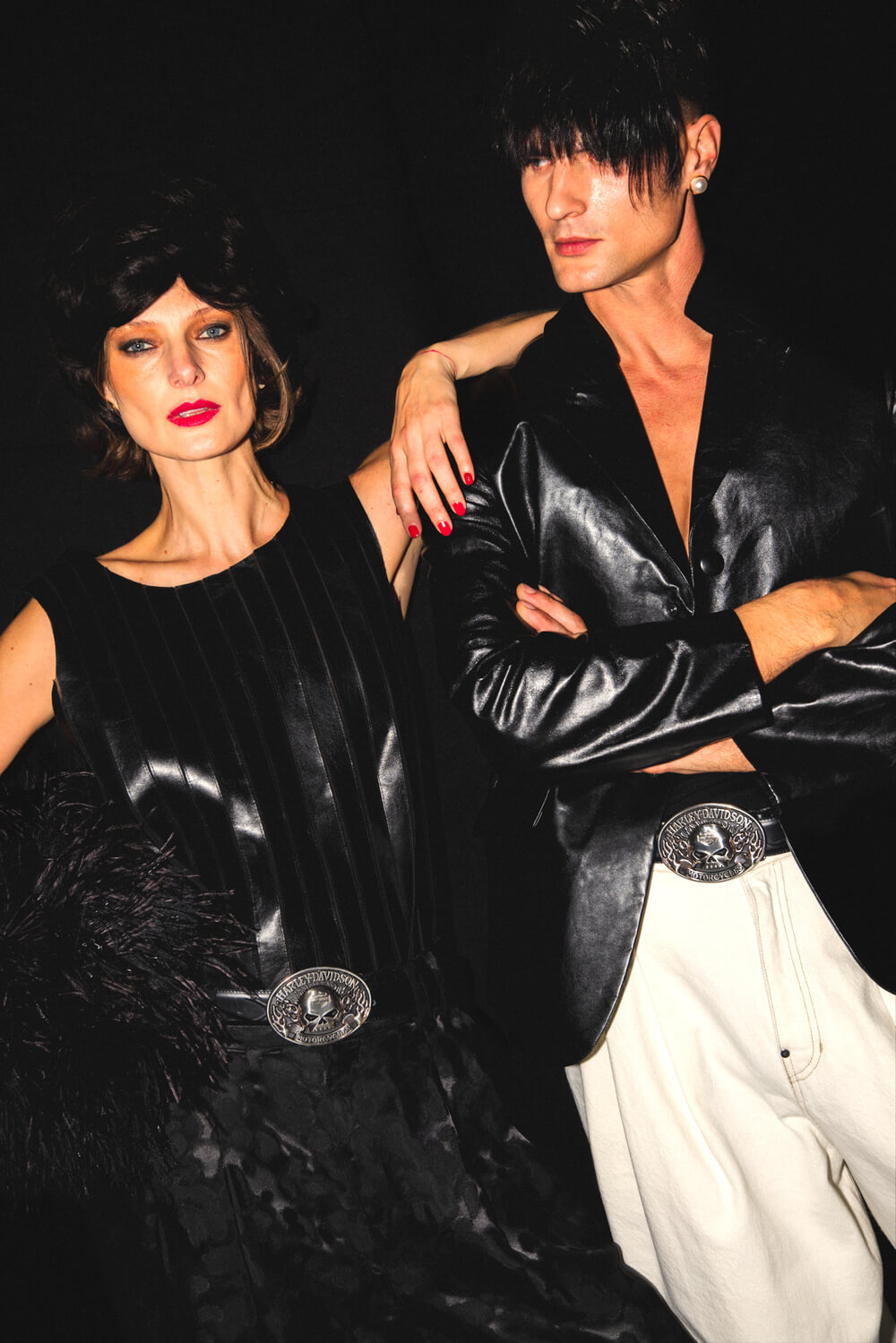
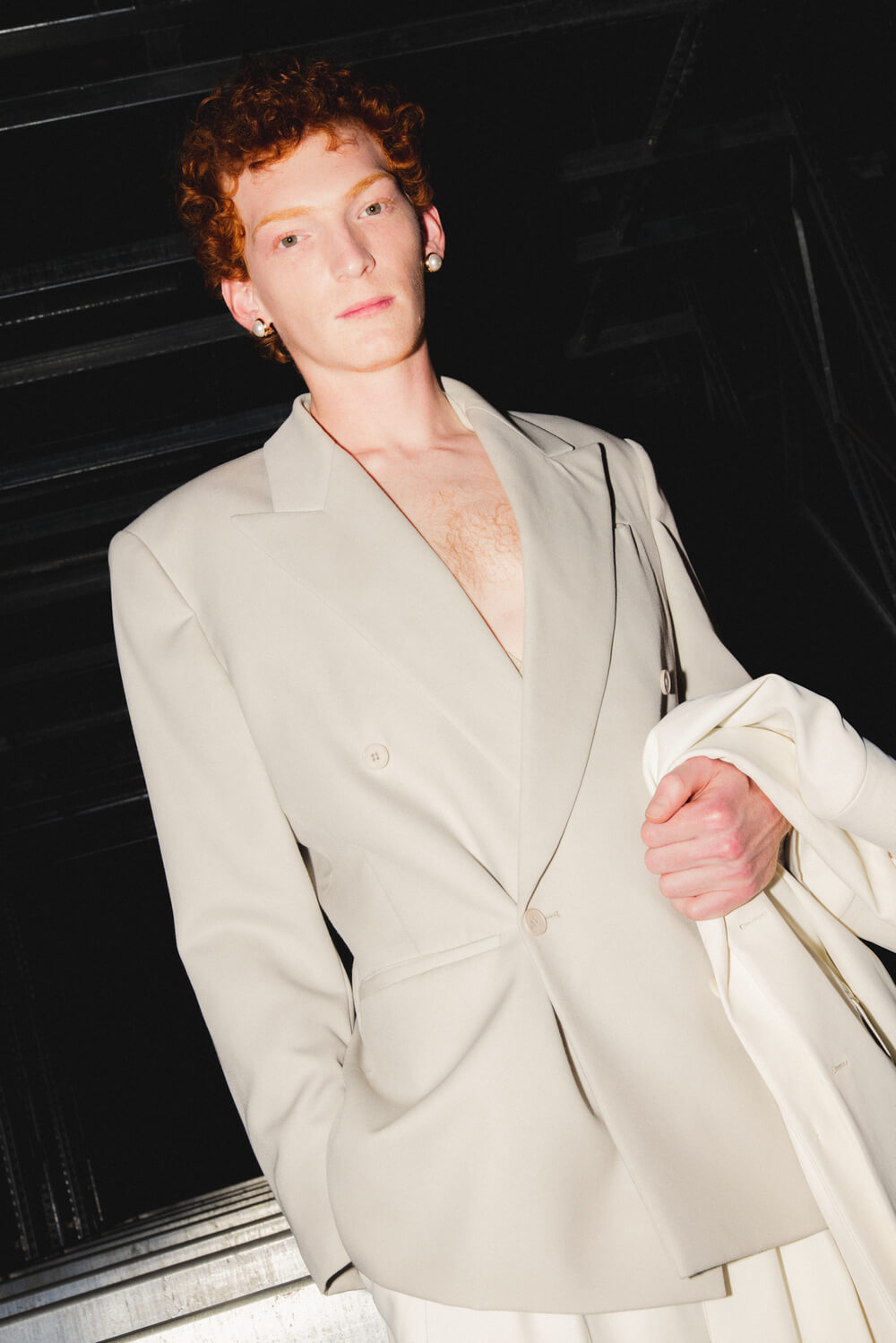
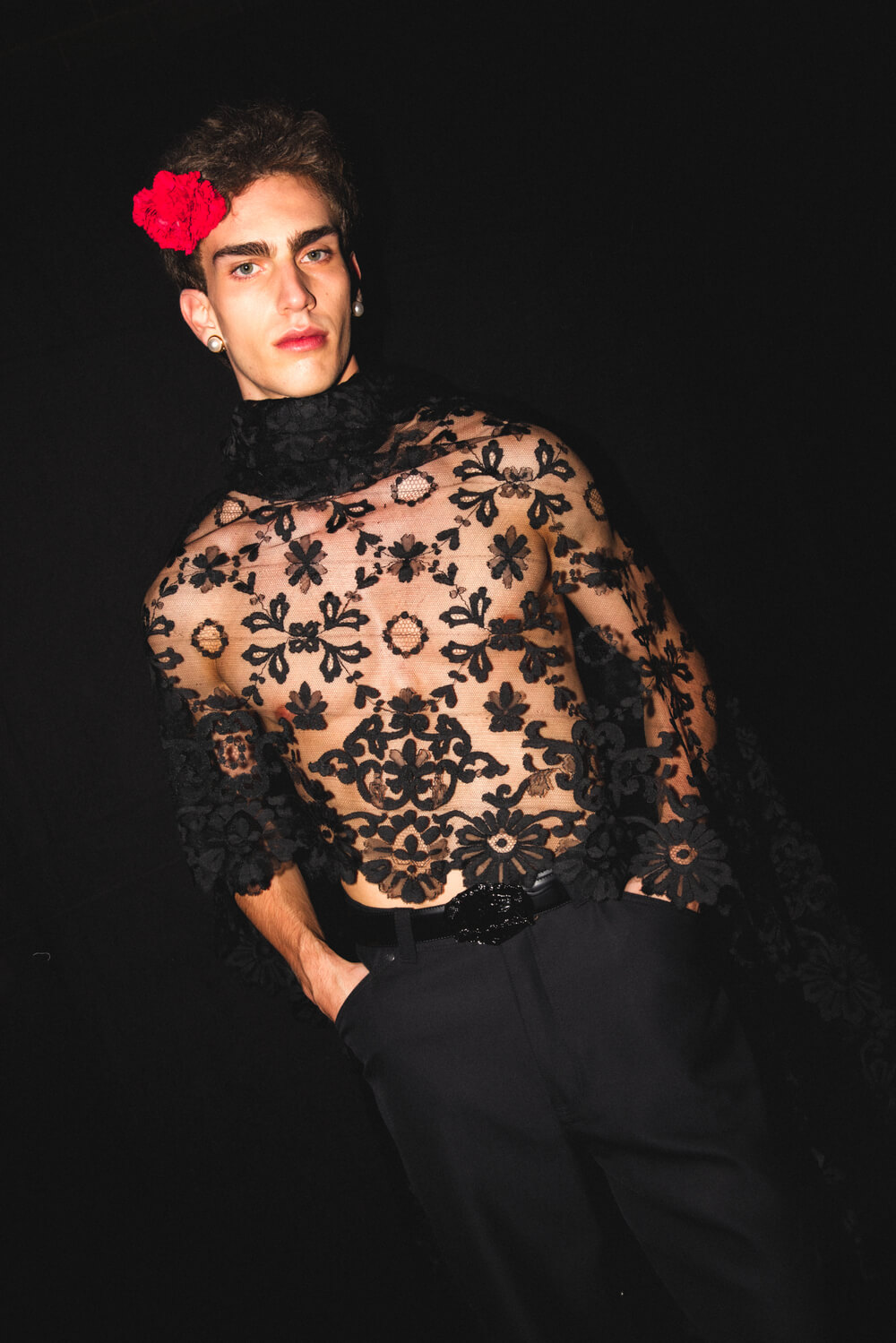
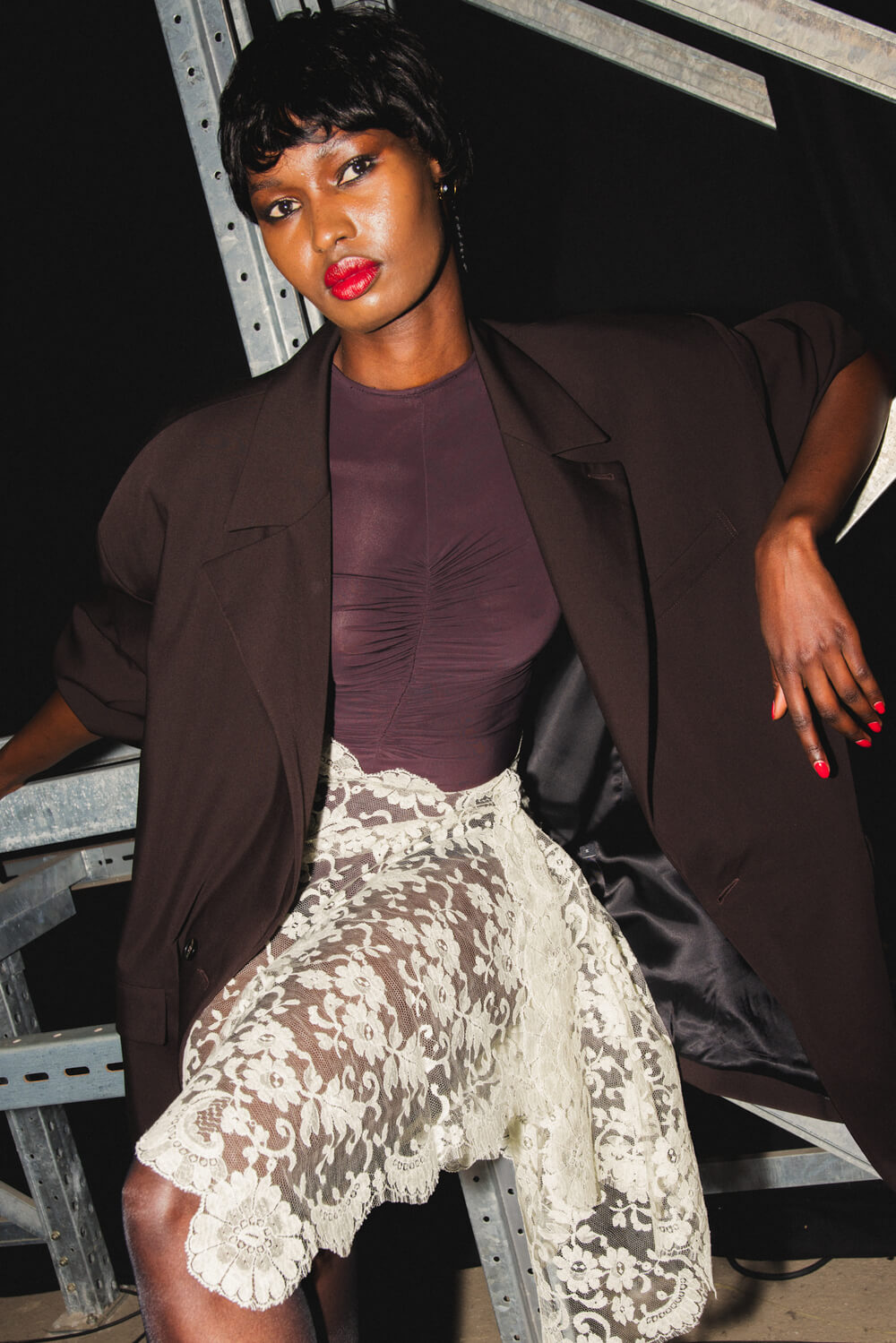
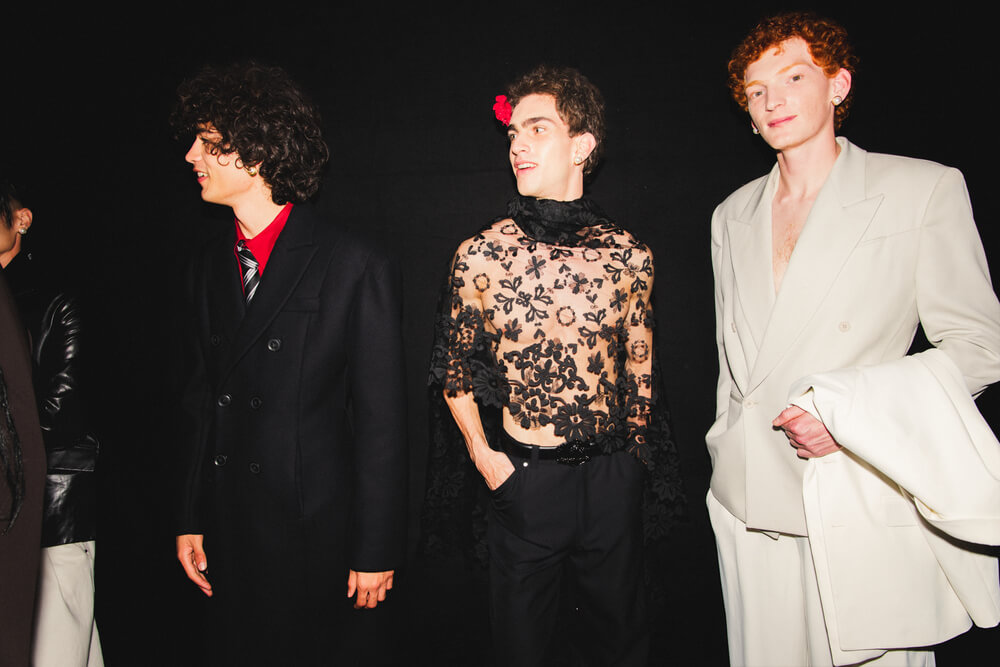
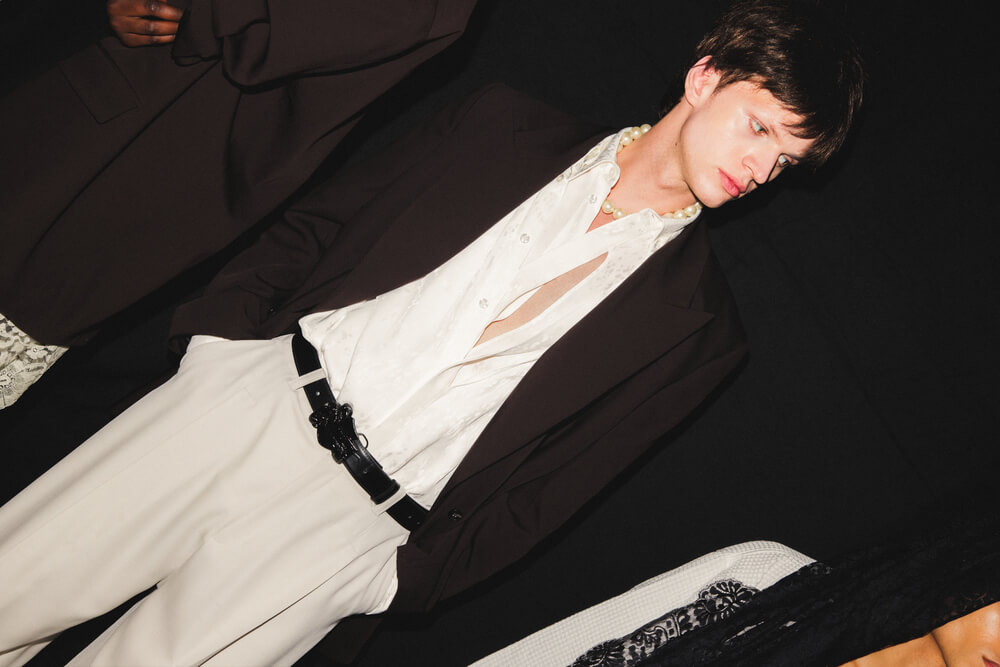
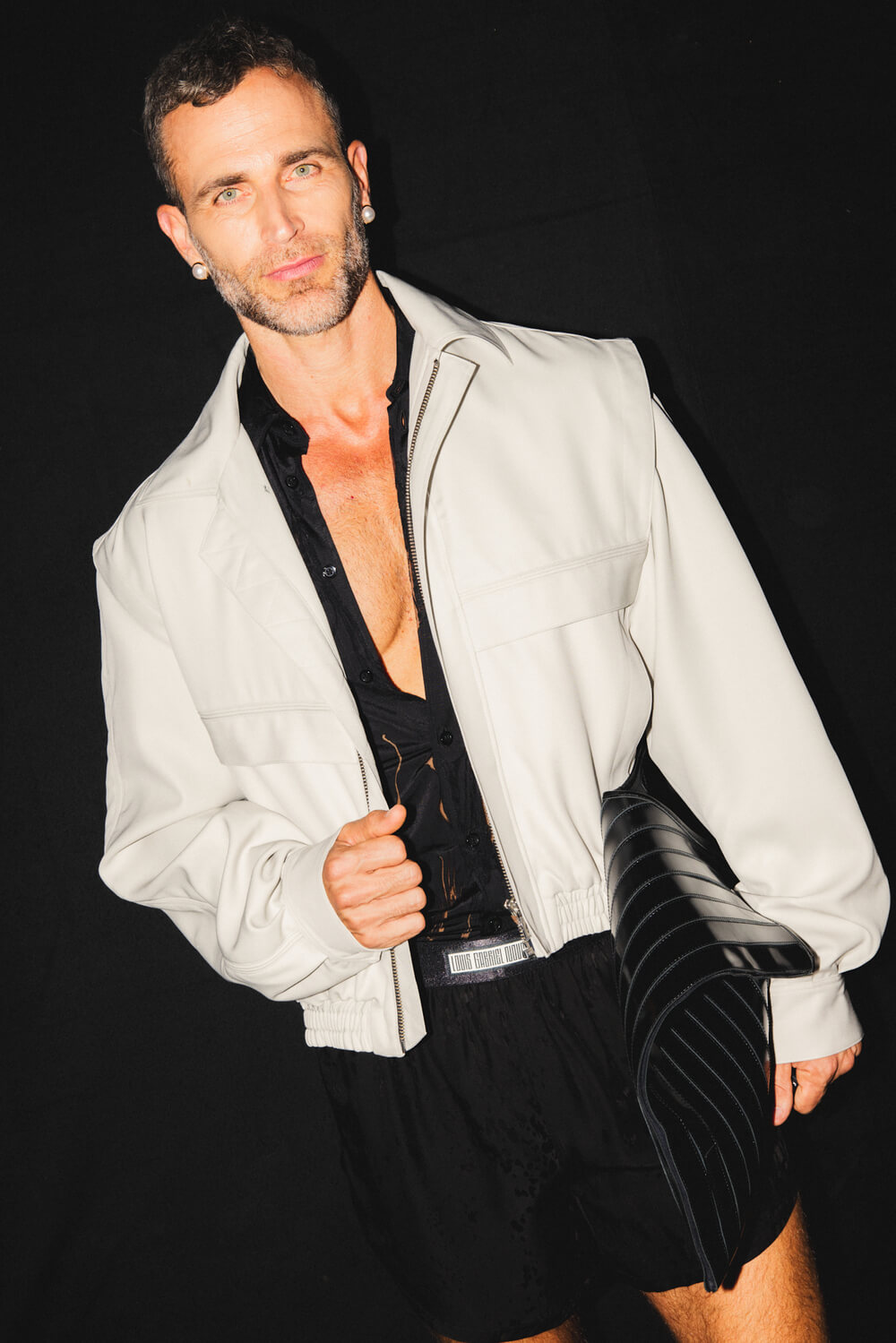
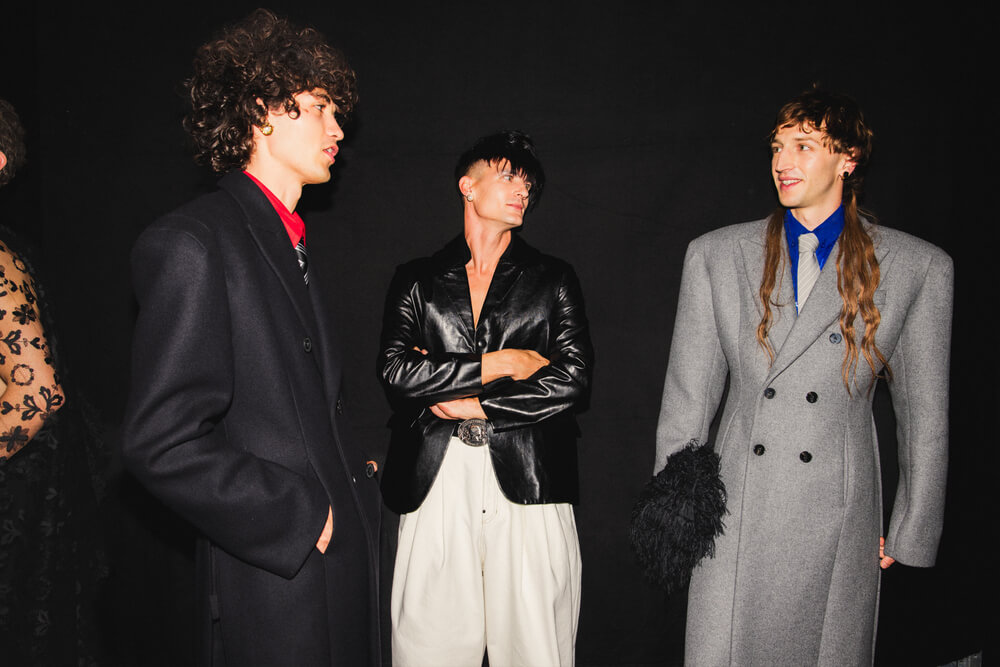
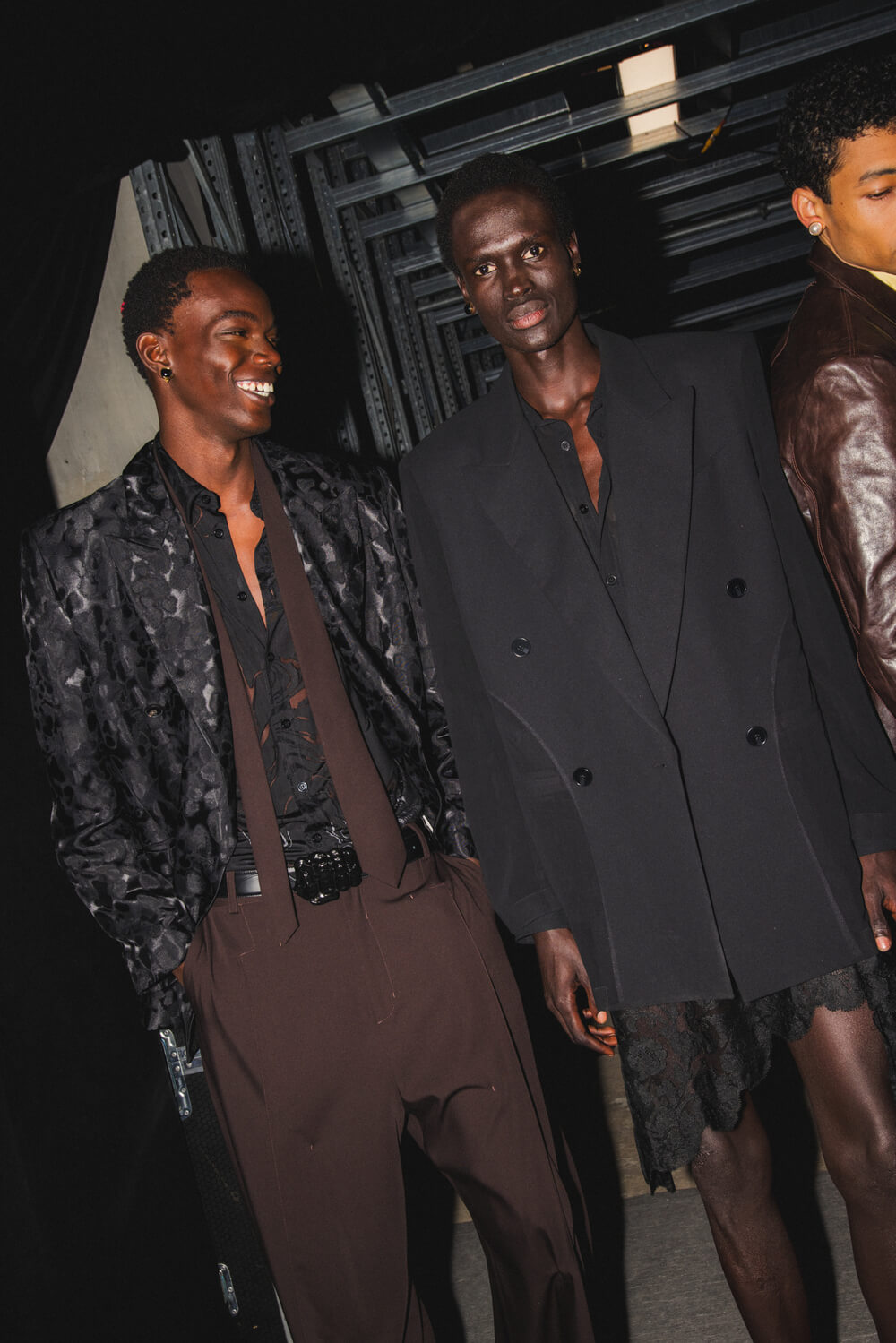
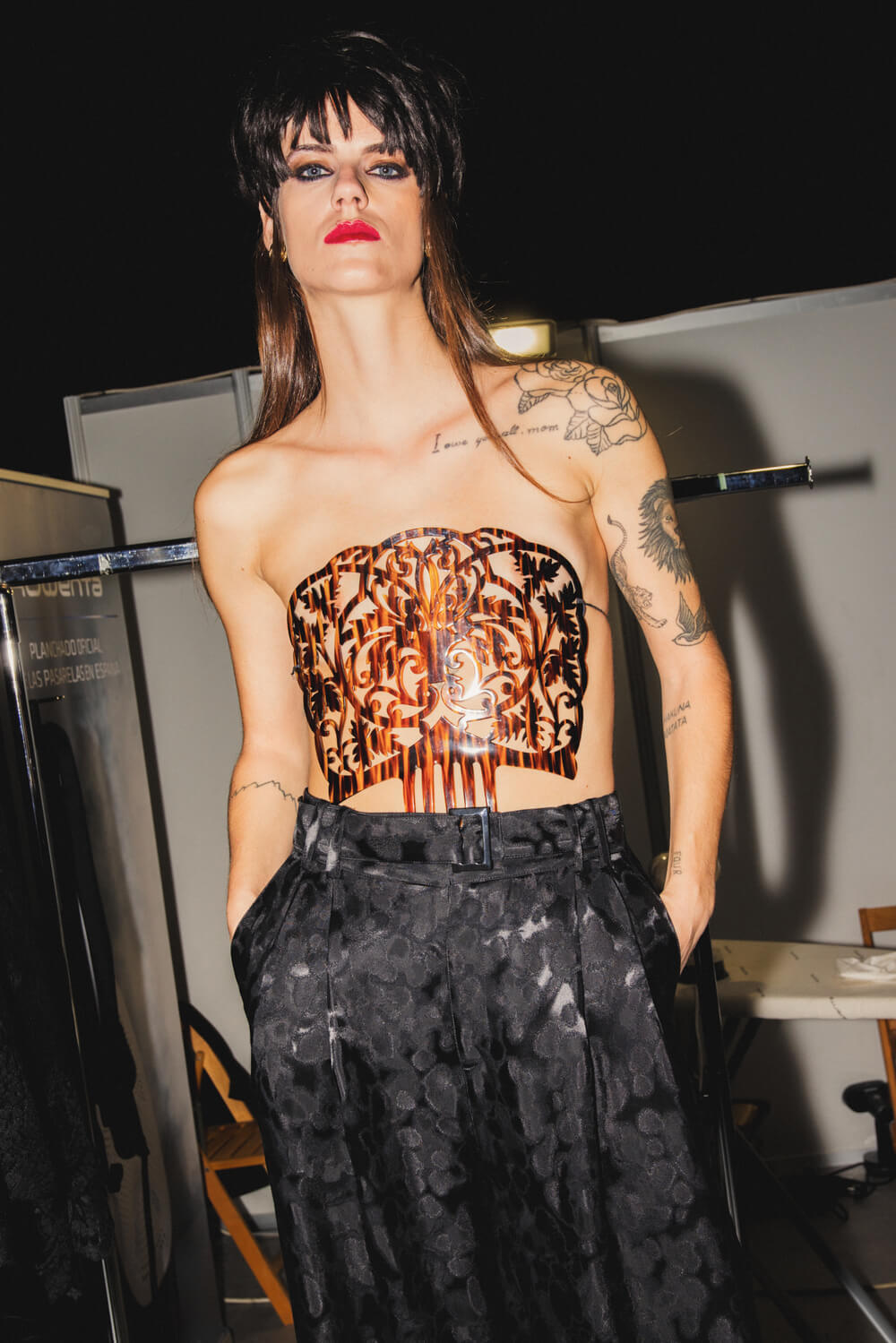
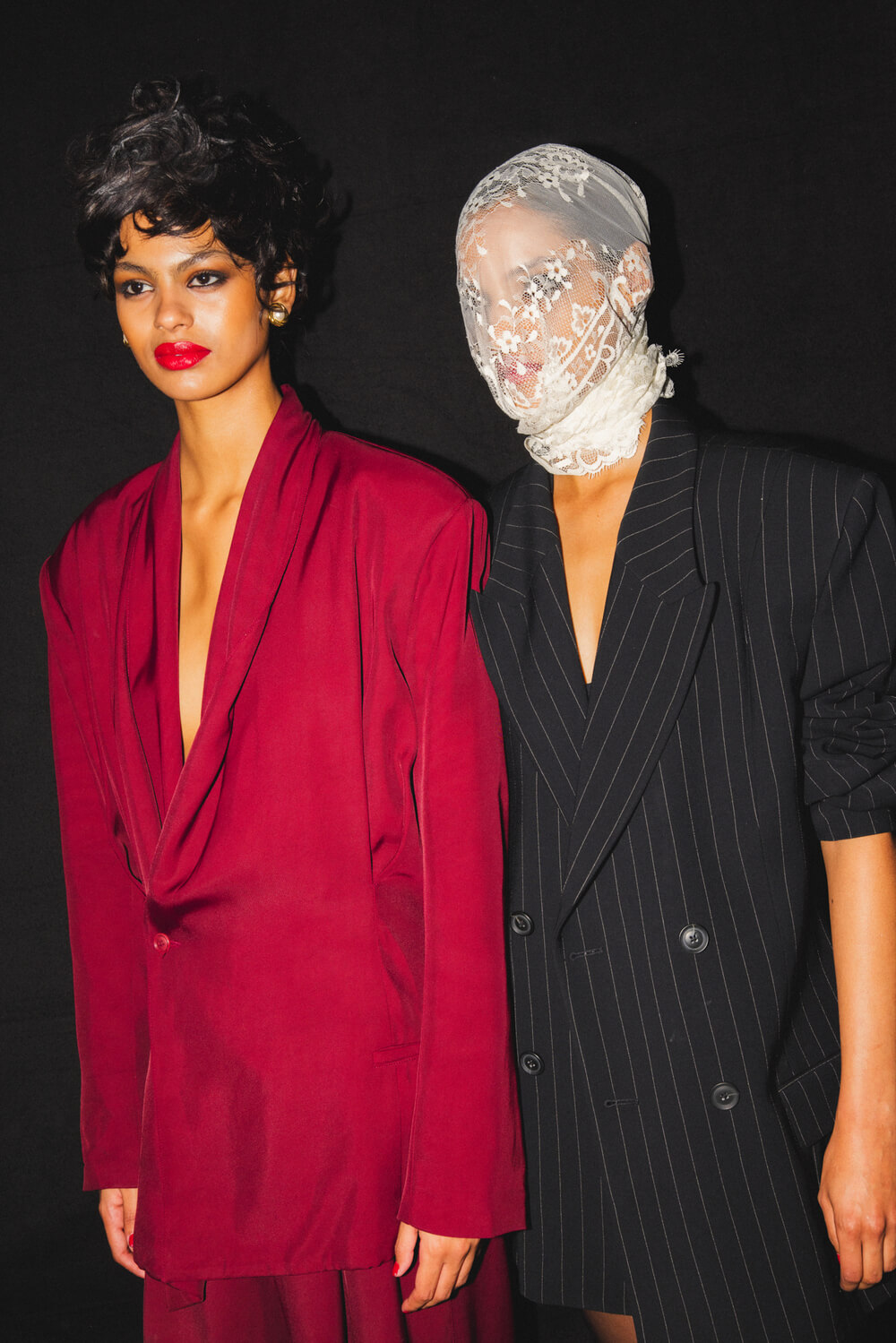
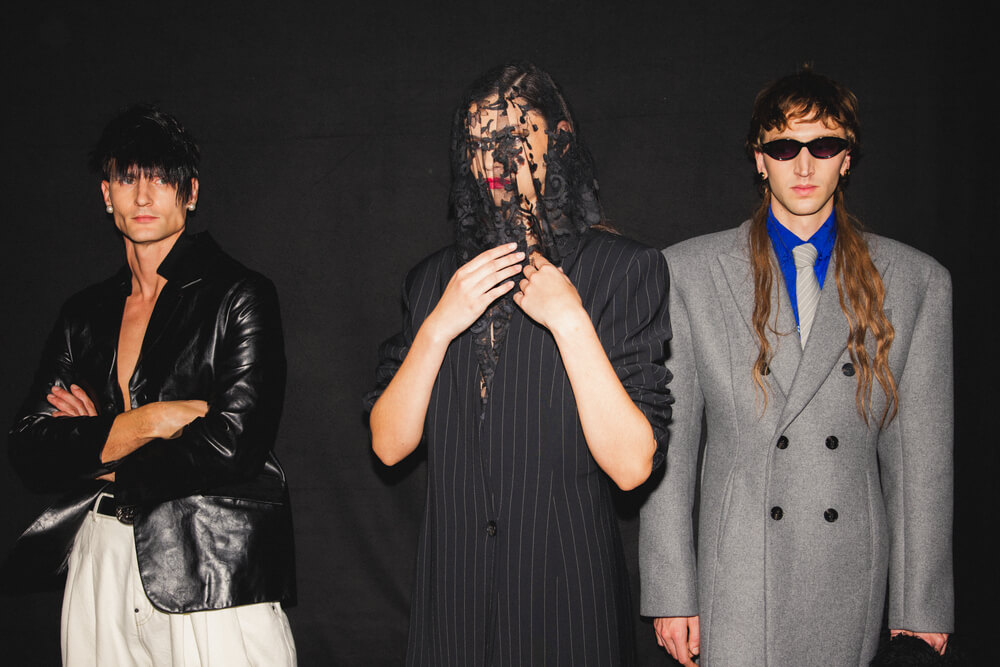
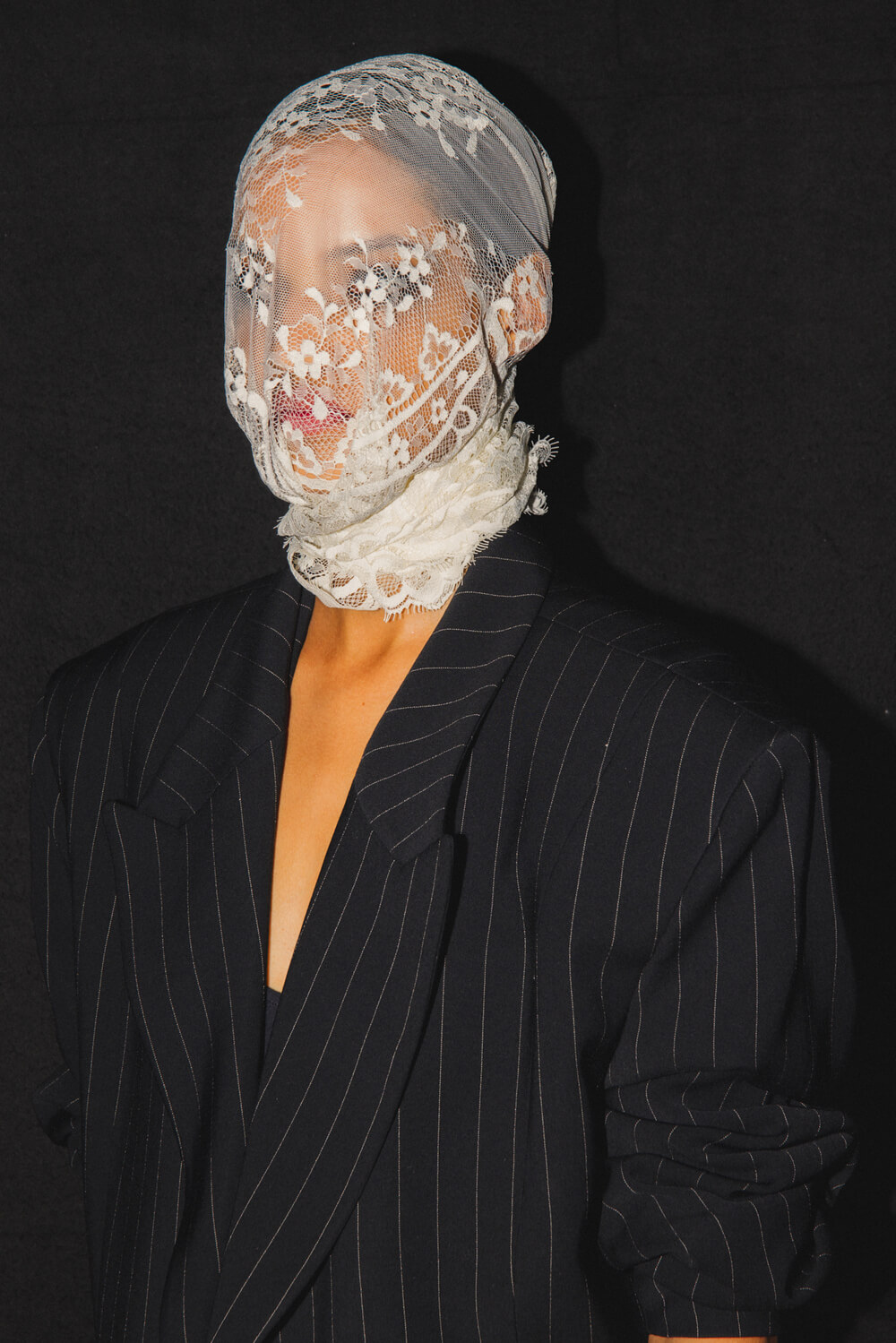
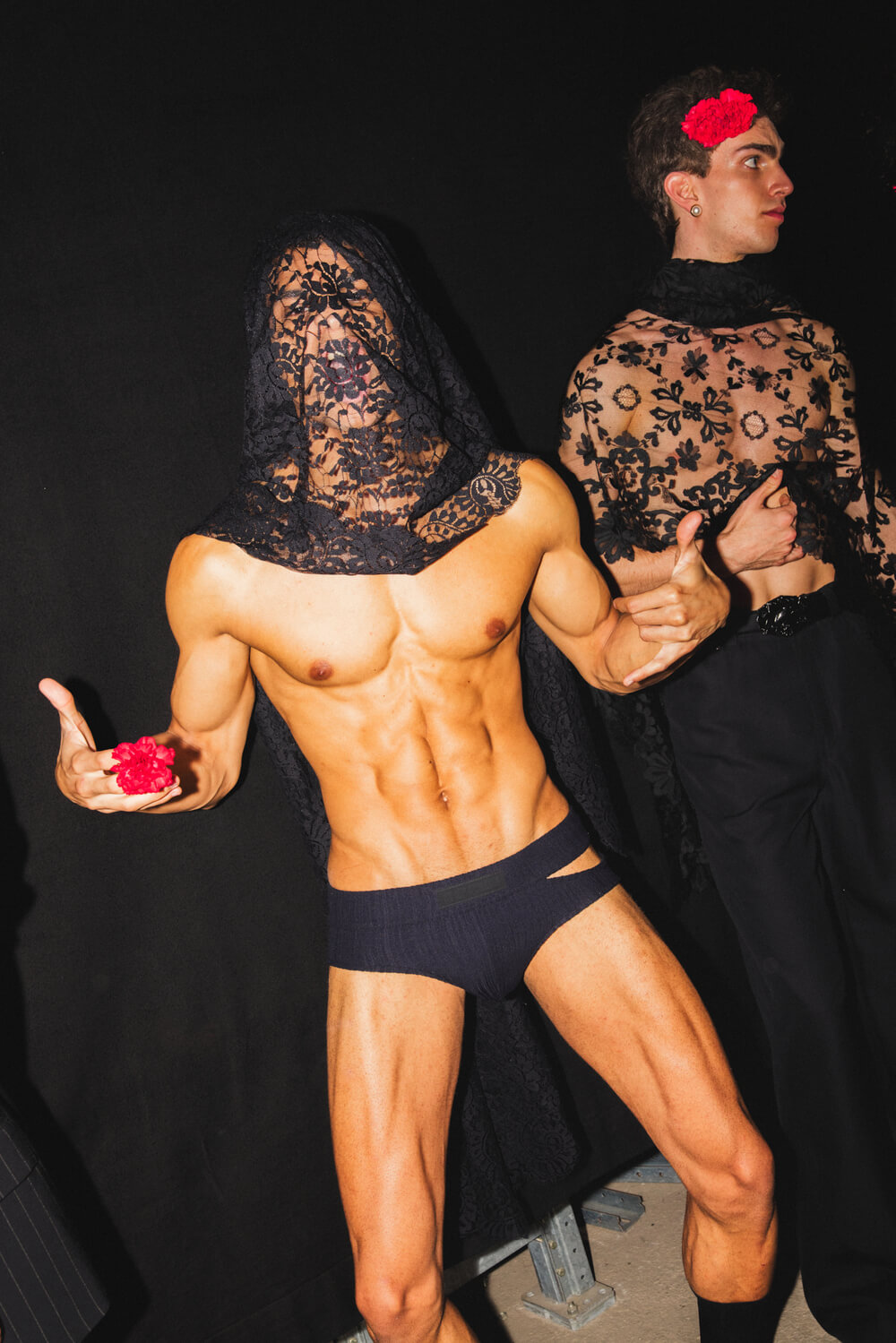
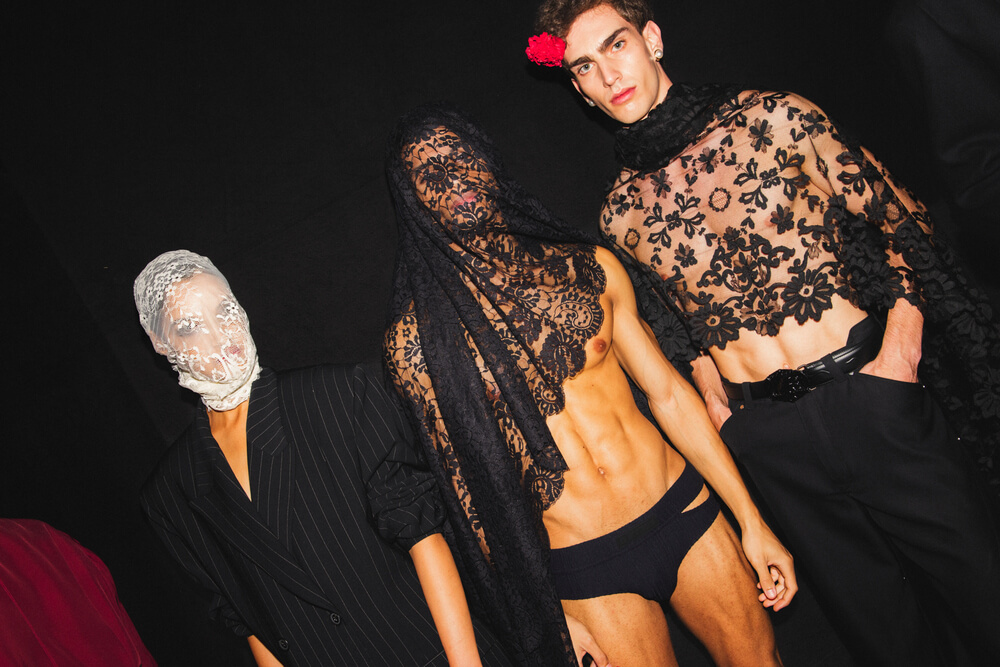
Spanish lace veils become draped tops and skirts, hair combs turn into bustiers, and sharp tailoring gets infused with the drama of ’80s cinema. If we had to describe it, this wardrobe serves as the perfect costume department for the preppy boy, the boss lady and the rebel, taking familiar garments into a realm where gender boundaries blur and silhouettes find new identities.
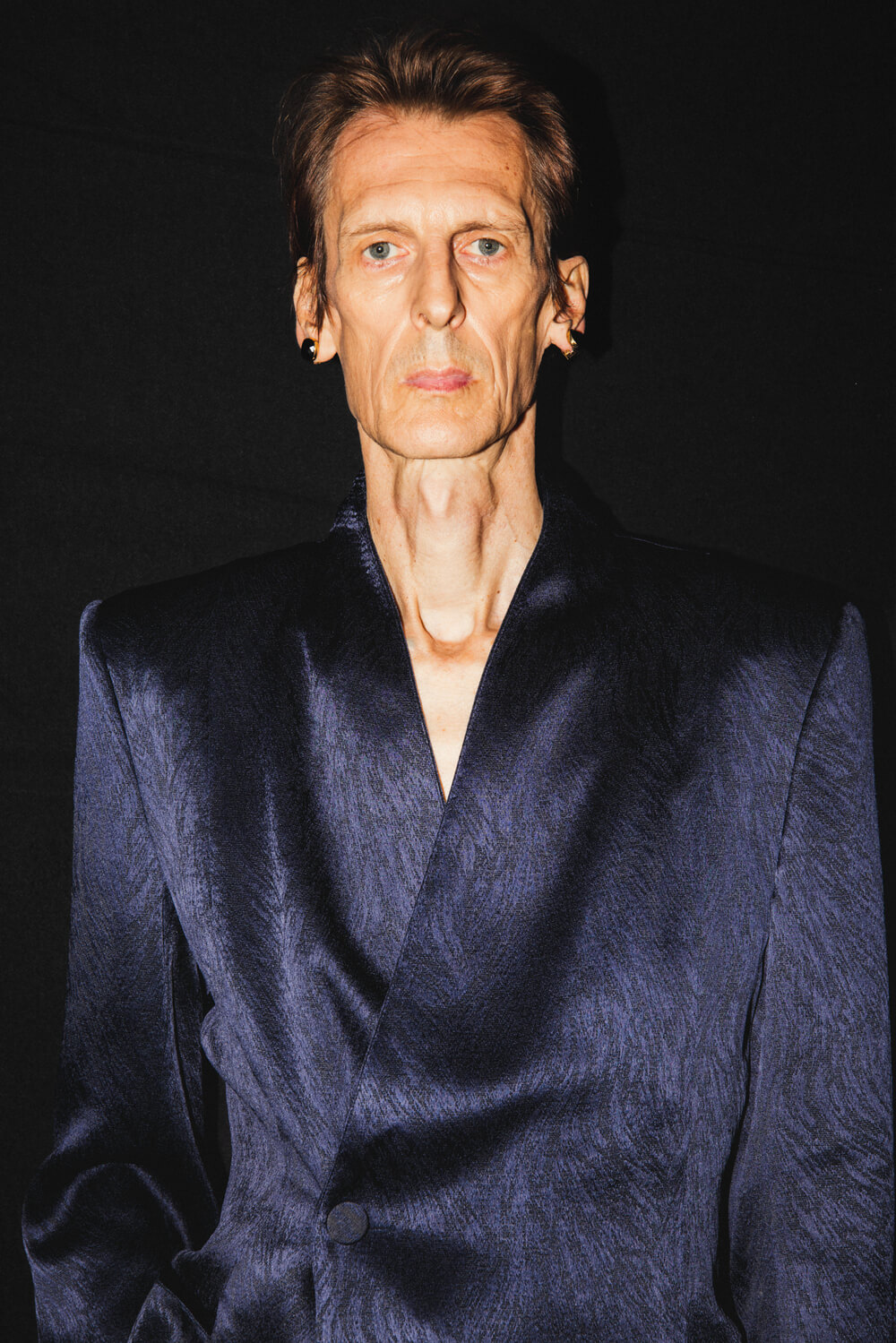
Rather than chasing the next big thing, Nouchi uses the archive as a playground for experimentation, mixing pieces from different seasons to create unexpected combinations of textures, proportions and prints. The result is an array of clothing that feels both nostalgic and refreshingly contemporary, where sensuality and subversion come together and clothes become a way of playing with identity. His vision of Barcelona, imagined as the coolest little sister in the family, provides the perfect backdrop for this exploration of character, desire and self-expression.
During 080 Barcelona Fashion, we caught up with Louis Gabriel Nouchi to talk about the relationship between fashion and cinema, the pleasure of revisiting his own archive, and why versatility, craftsmanship and a little rebellion remain at the heart of LGN.
How would you define LGN Louis Gabriel Nouchi in three words?
Sensual, elegant and a bit subversive.
Can you walk us through the collection ‘VOLVER — A Study in Desire’ and the narrative behind the garments?
I wanted to create something dedicated to 080 Barcelona Fashion. The idea was to rebuild the characters you see in Almodóvar’s films, because that’s my vision of Barcelona, through archive pieces from LGN that we brought back. We’re also working with some Spanish elements, like the lace veil and the hair comb, to create this kind of 2.0 version of what you think of Almodóvar today.
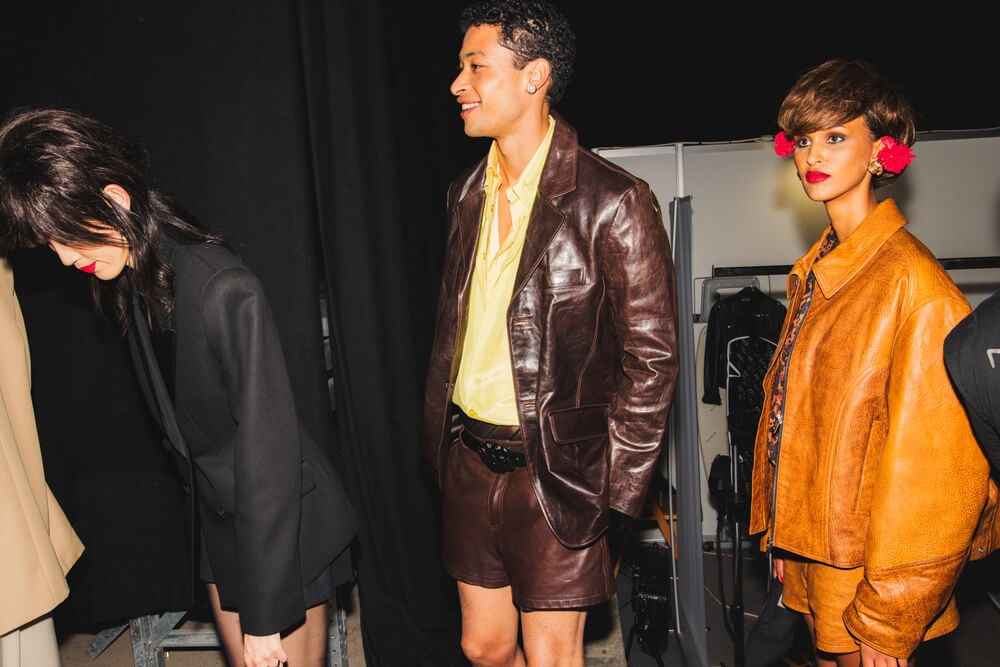
My vision was to have more of an ’80s vibe, which is why we also have these pops of yellow. In some looks, I’ve combined pieces from different collections, including Spring/Summer 2020, Spring/Summer 2024, Spring/Summer 2027 and Spring/Summer 2025. So I have around five collections in just one look.
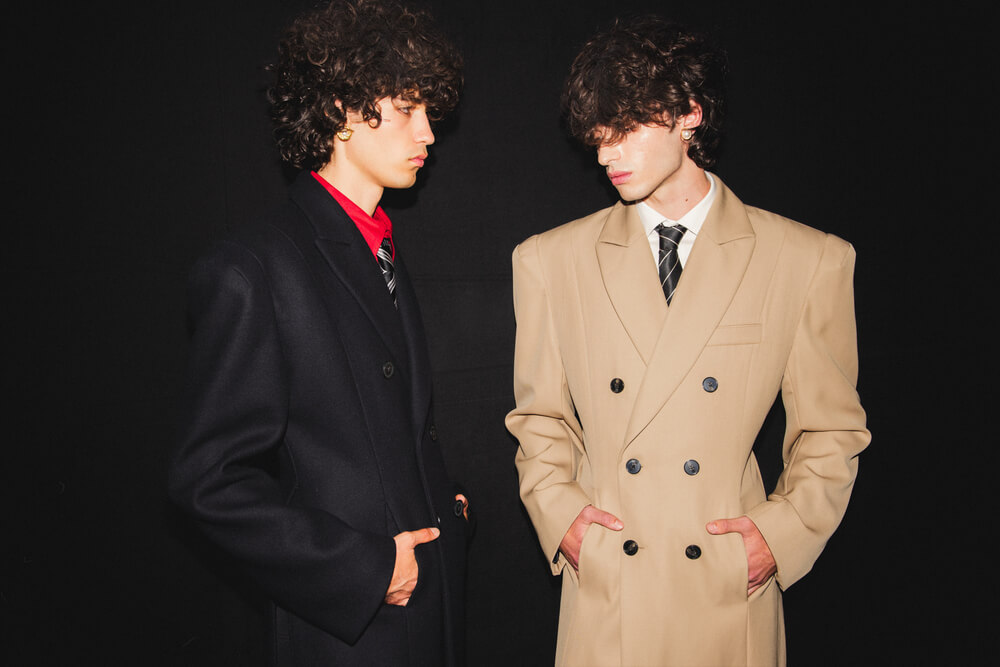
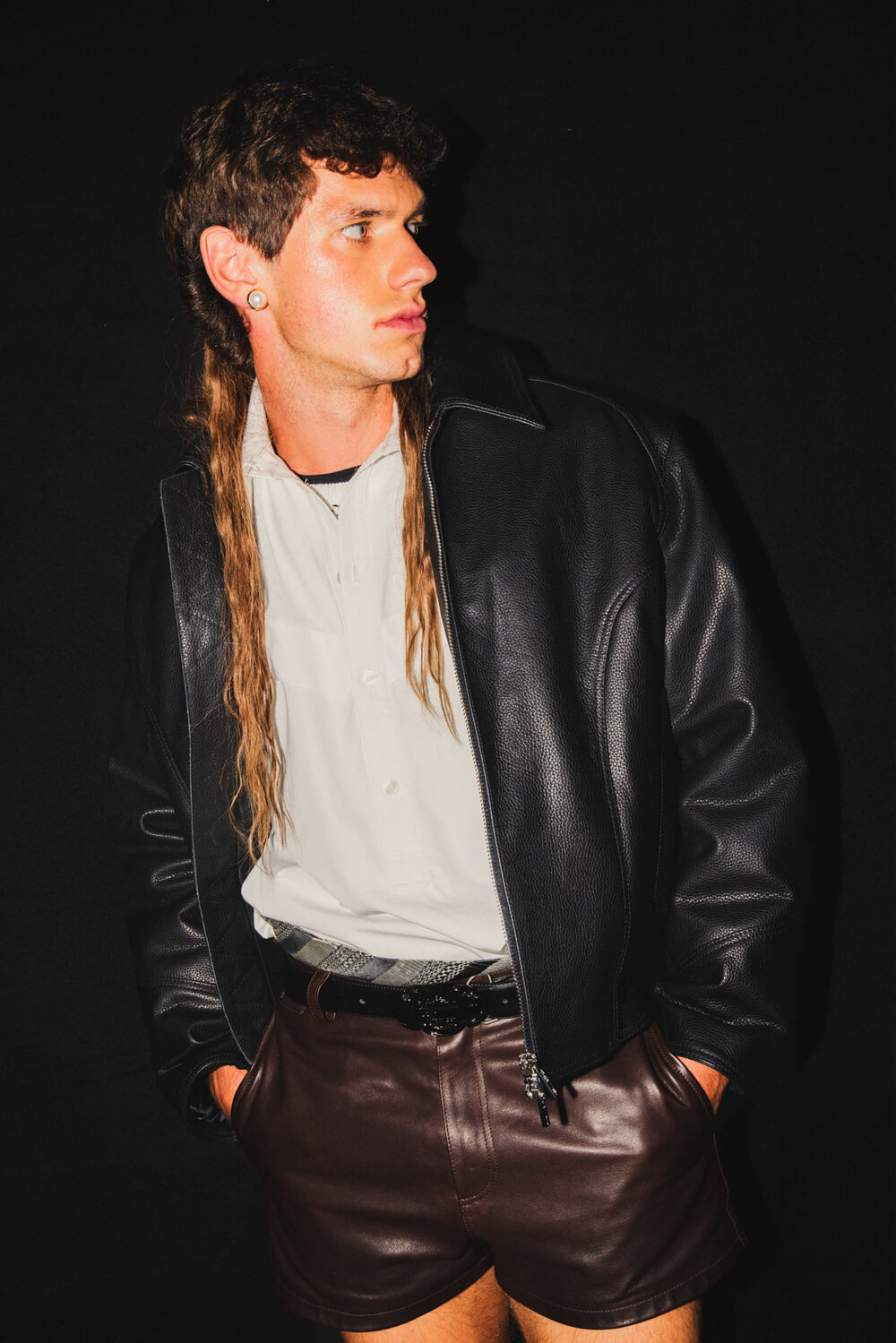
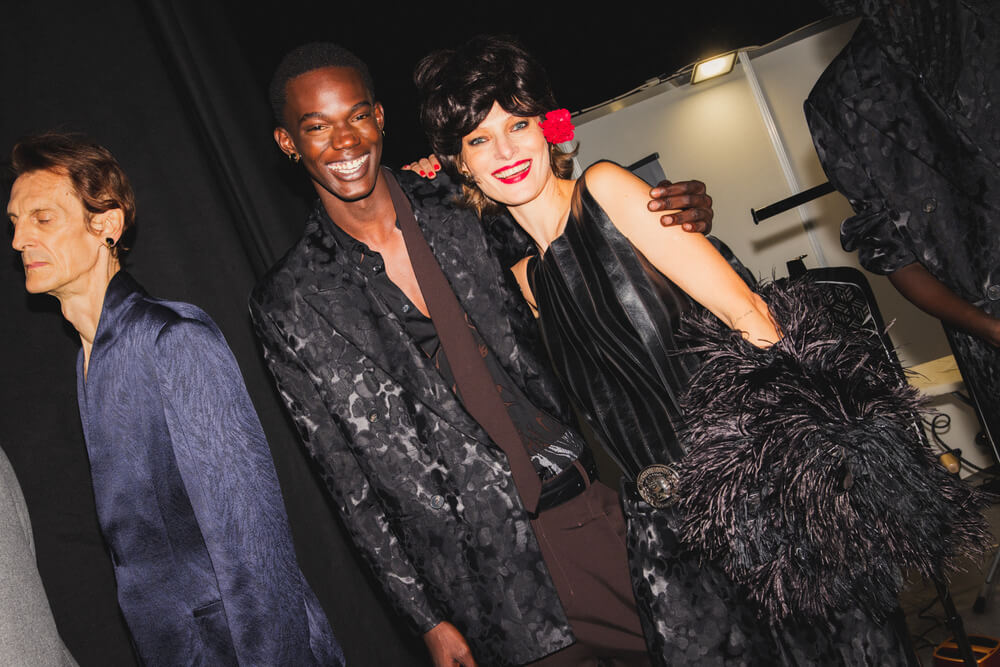
The show was also about bringing back some prints and really creating the kinds of characters you see in the films: the preppy boy, the boss lady, the rebel… Almodóvar also talks a lot about gender fluidity, so sometimes we have the same look on men and women to show its versatility.
What piece do you believe represents the collections best?
I don’t know if there’s just one piece, but working with these Spanish veils was really amazing, creating draping for skirts and tops. And there’s also one of the last looks, with the hair comb used as a bustier. I find this really beautiful because it showcases all the materials and the craftsmanship from this region.
I was really thinking about the people in Barcelona, because it’s very different from Madrid, for example. It’s like Milan and Rome, or the different cities we have in France. The energy is simply different. And here, I feel like Barcelona is the coolest little sister in the family. She’s really rebellious, she does what she wants, and she’s really into art. So, I wanted to bring back this kind of fantasy I have in my mind.
Is this the first time you’ve done a show outside Paris? What motivated you to leave the city and come to Barcelona?
Officially, yes, it’s the first LGN show outside Paris. Spain is a very cool country in Europe right now. You can be proud of yourselves because, from an outside point of view, it seems that you’re quite bold in terms of political choices, and I think that reflects the values we have at LGN. So that was the first thing.
Second, it’s very rare for me to do a show that is purely artistic, because normally we show the collection to sell it. This was really a quality time for me and my team, having three days to reflect and think about what we could create, as well as look through our own archive to see which textures work together and what kind of proportions we like. We never have time to do that in the studio. We do fittings, of course, but to do something without the constraints of sales, something that is purely artistic, is very cool.
Have you noticed any differences between Paris and Barcelona that excite you?
Yes, Paris is very posh, and as a French person, I think we’re very used to fashion. Here, I feel that culture is very important. Everything is amazing – the food, the art, the music, the architecture, the design – but fashion is kind of new in that sense. I feel that in all the Latin countries in Europe, like Spain, Portugal, France and Italy, we love to dress up and there’s a real appetite for fashion here, which is very refreshing.
What makes a garment well-designed? What do you think makes a good piece of clothing?
It’s all about being the best version of yourself and how you look. Since we’re only working with archive pieces for this project, I did a huge pre-selection at the studio and in our warehouse. I also asked some friends for prototypes they had. But I think what makes a good garment is that it’s very versatile and can adapt to the mood you want to create. You can have the same jacket and wear it 10,000 different ways, pairing it with denim or black trousers, depending on how you style it. So I think a good garment is something comfortable that you don’t even think about anymore. You just feel like the best version of yourself.
In the current state of fashion, where everything is changing so rapidly, how can someone build a brand with a strong foundation?
I’m a very obsessive kind of person, you know? You can see the pieces I’ve been doing over the past four years, and I’m very impatient. I think that’s why I’m good at this job, because I always want to do new things. This kind of frantic cycle is something I’m totally okay with because, when I think of something, I just do it. Then I say, “Oh, I like it,” or “I don’t like it,” and then I move on to the next thing. But I really like the continuity we have in the brand.
Where do you see the brand going in the next five to ten years?
That’s a long way ahead! I think we’ll develop more womenswear, which was one of the most important aspects of this project. We officially launched our first womenswear capsule last June in Paris, so this is a category that will grow. And, of course, we’ll continue to be very strong in tailoring. We develop all our materials ourselves, as you can see, so we’ll keep working with textures while staying within our price range, which is very important to me. We’re an advanced premium brand, not a luxury one, because I want my friends to be able to buy what I create. So, I want to keep things honest.
Photography by Ángela Ibáñez for VEIN MAGAZINE