
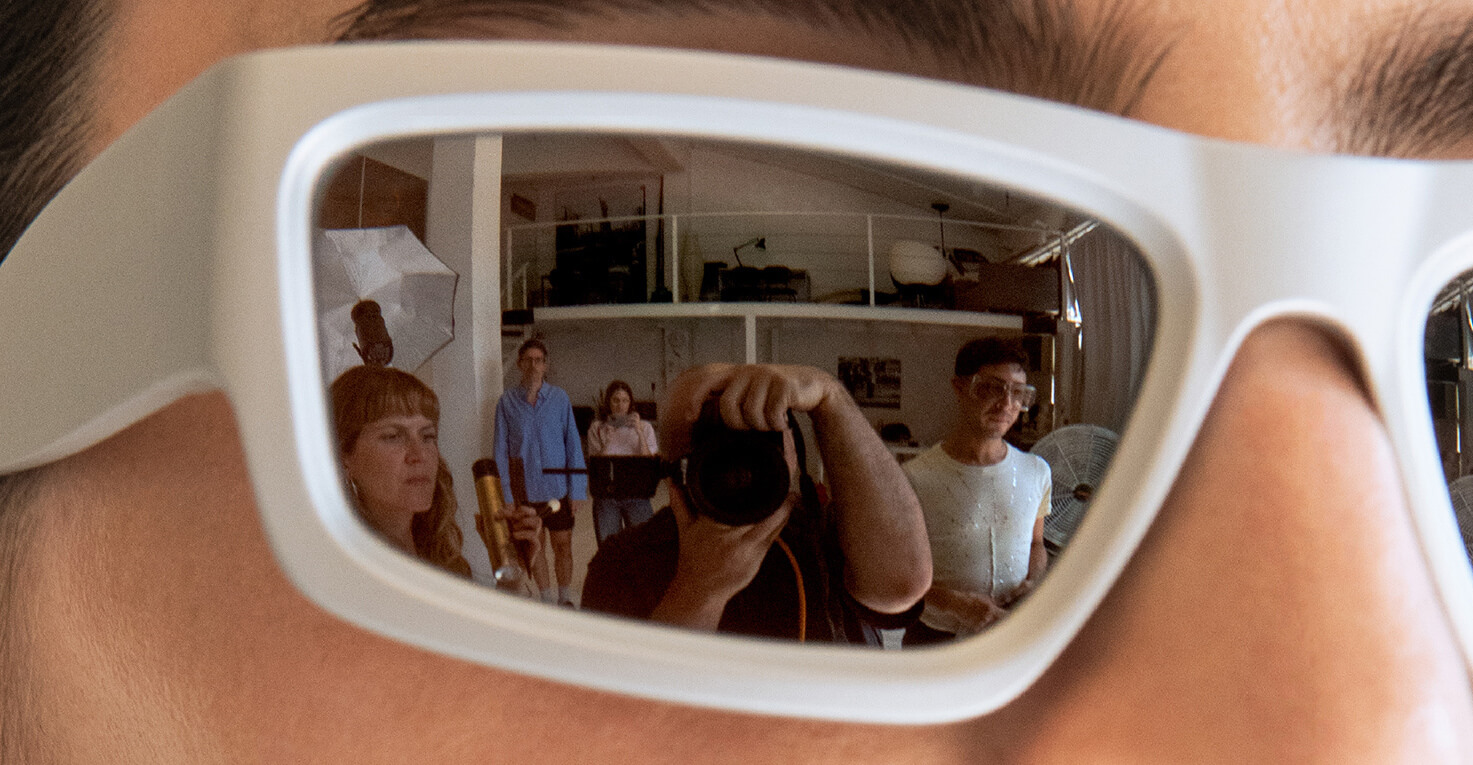
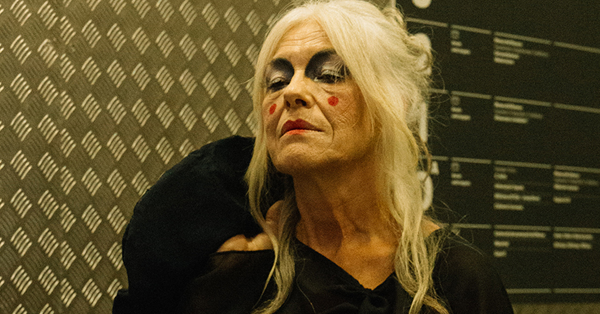
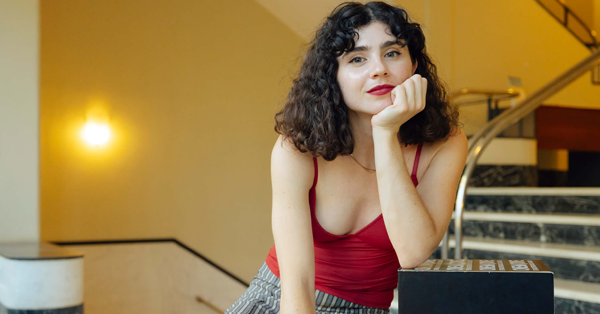

During Paris Art Week, we met artist Kendalle Getty as she walked us through L’identification avec l’autre (Identification with the Other), her new installation at ITEM IDEM. Taking the Hall of Mirrors at Versailles as its starting point, the exhibition transforms the gallery’s storefront into a mirrored environment where sculptural self portraits, engraved mirrors and altered domestic objects explore identity, visibility and the performance of the self.
Moving between American and French cultural references, aristocratic imagery and the language of internet culture, Getty examines how social media, inherited privilege and public perception shape the way we see ourselves and others. Technically, the installation combines laser etched mirrors, intricate vector drawings and patterns inspired by traditional printmaking and woodblock techniques, bringing contemporary imagery into dialogue with antique surfaces. Drawing on her experience of growing up between the United States and Europe, the multimedia artist reflects on belonging, alienation and the pressures of contemporary identity, inviting visitors to confront their own reflections within the work.
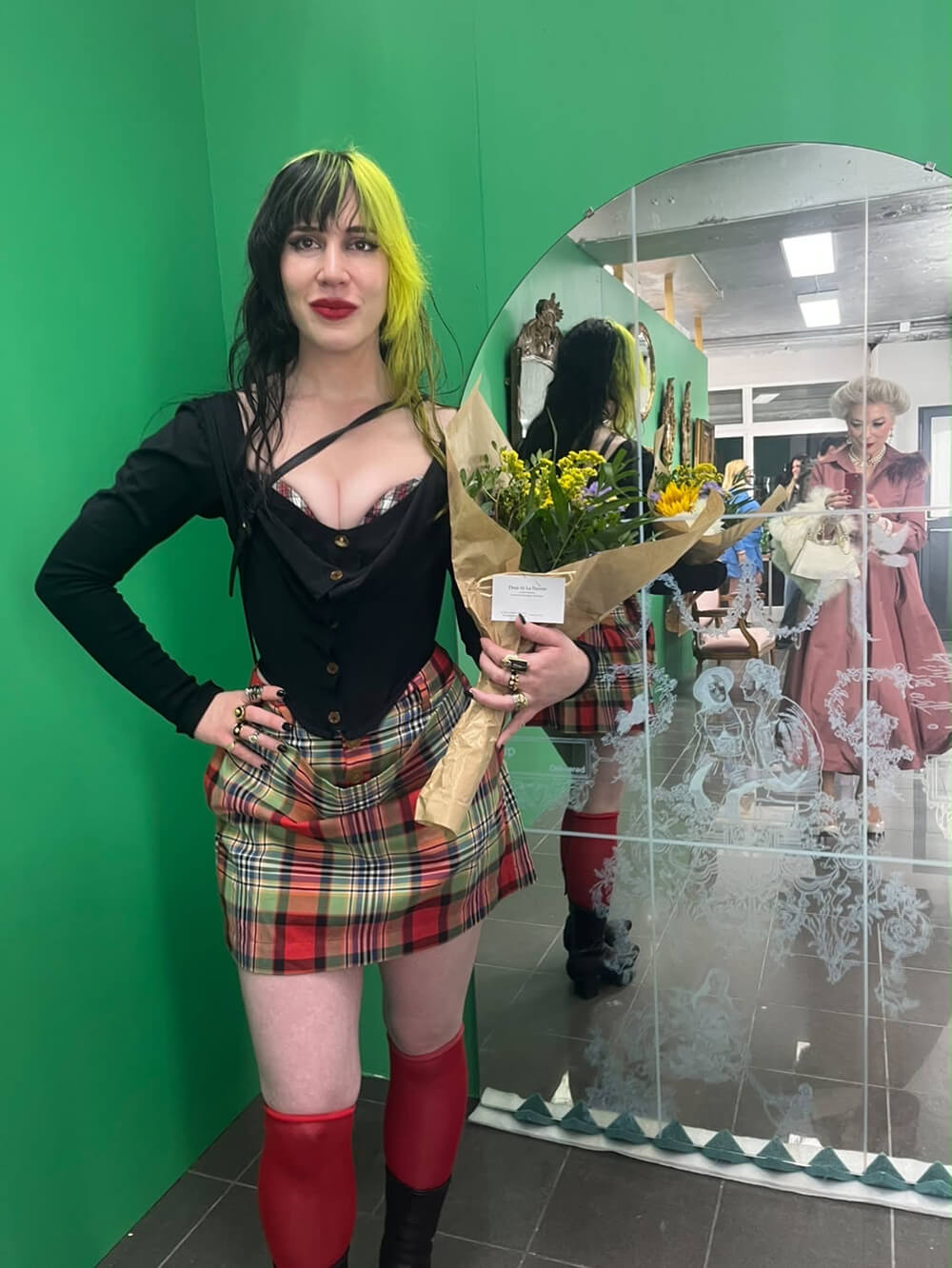
Artist Kendalle Getty at ITEM IDEM Gallery
I was curious whether you already had these ideas and inspirations before coming to Paris, or whether they developed once you were here?
My ideas are always evolving, whether I want them to or not. When I first spoke to Cyril (ITEM IDEM gallery founder), I immediately knew we were on the same frequency. We’re exactly the same kind of weird, and we have the same kind of creative sensibility. I just knew I was excited to make work inspired by France. I had an idea inspired by the Hall of Mirrors at Versailles before the LA fires, but I ended up having to revise and simplify it for an exhibition that took place shortly after the fires. I was displaced for weeks, so that obviously changed things.
I identify myself as a cultural bastard because I grew up between LA, Switzerland and Spain. I grew up without television, and I feel a little out of place everywhere. I’m perpetually a citizen of everywhere and a citizen of nowhere. I was really excited by the idea of creating a mélange of my interpretation of American culture today and my interpretation of French culture, while also indulging my fascination with history. That’s why I was thinking so much about the Hall of Mirrors at Versailles.
What drew you to the Hall of Mirrors in particular? Was it a visit you remembered?
It’s been a long time since I visited Versailles, to be honest. I don’t remember exactly how the conversation went in that direction, but I was thinking about what it means to be a Getty today. Sometimes people who are so brave behind their phone screens send me images of guillotines. Marie Antoinette actually adopted several children, including a Black child, and did a lot of charitable work. She married into the French royal family as a teenager, and France was poorly governed in a way for which she was held much more accountable than I think was fair.
The famous quote attributed to her, “Let them eat cake,” has been attributed to other queens throughout history, too. Yet she was publicly executed. Similarly, people threaten me and want to see me beheaded simply for existing in the wrong place at the wrong time. It’s funny because, just as I’m a cultural bastard, I’m also a bastard in my own family. I’m like a part-time Getty, a second-class citizen of that family.
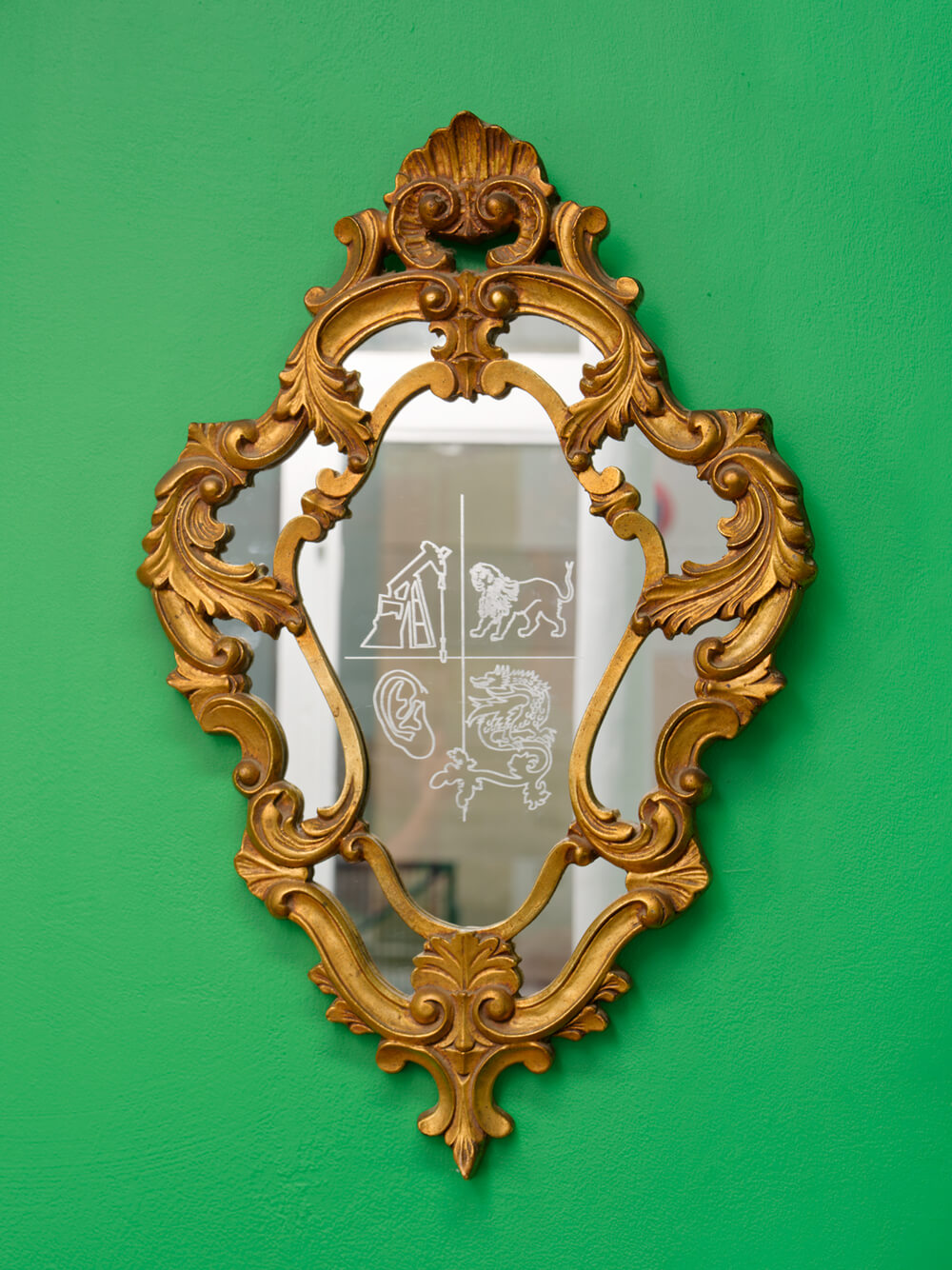
Getty Family Crest II ear Engraved antique mirror 2026
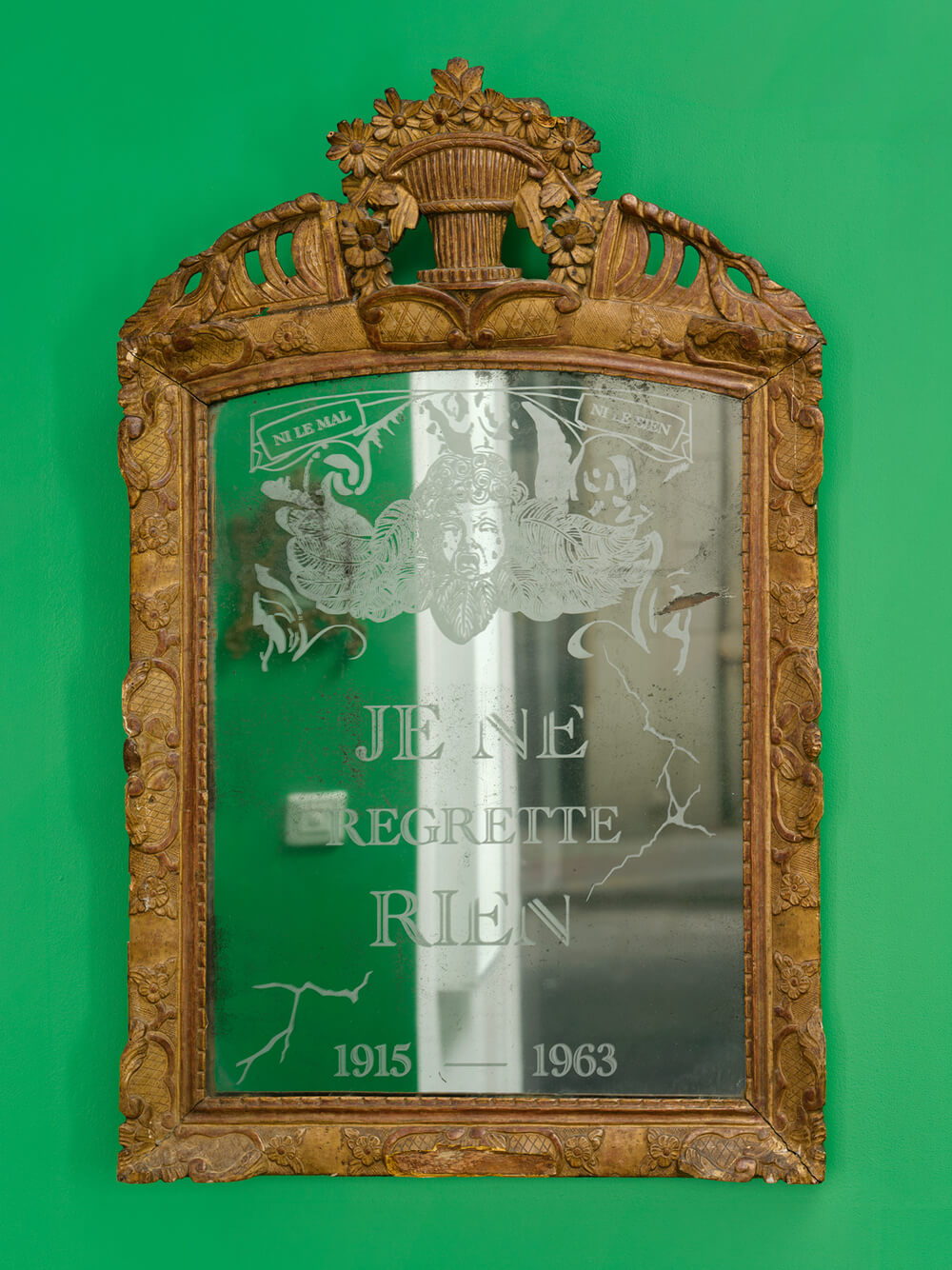
Je ne réfléchis à Rien Engraved antique mirror from the 1700s 2026
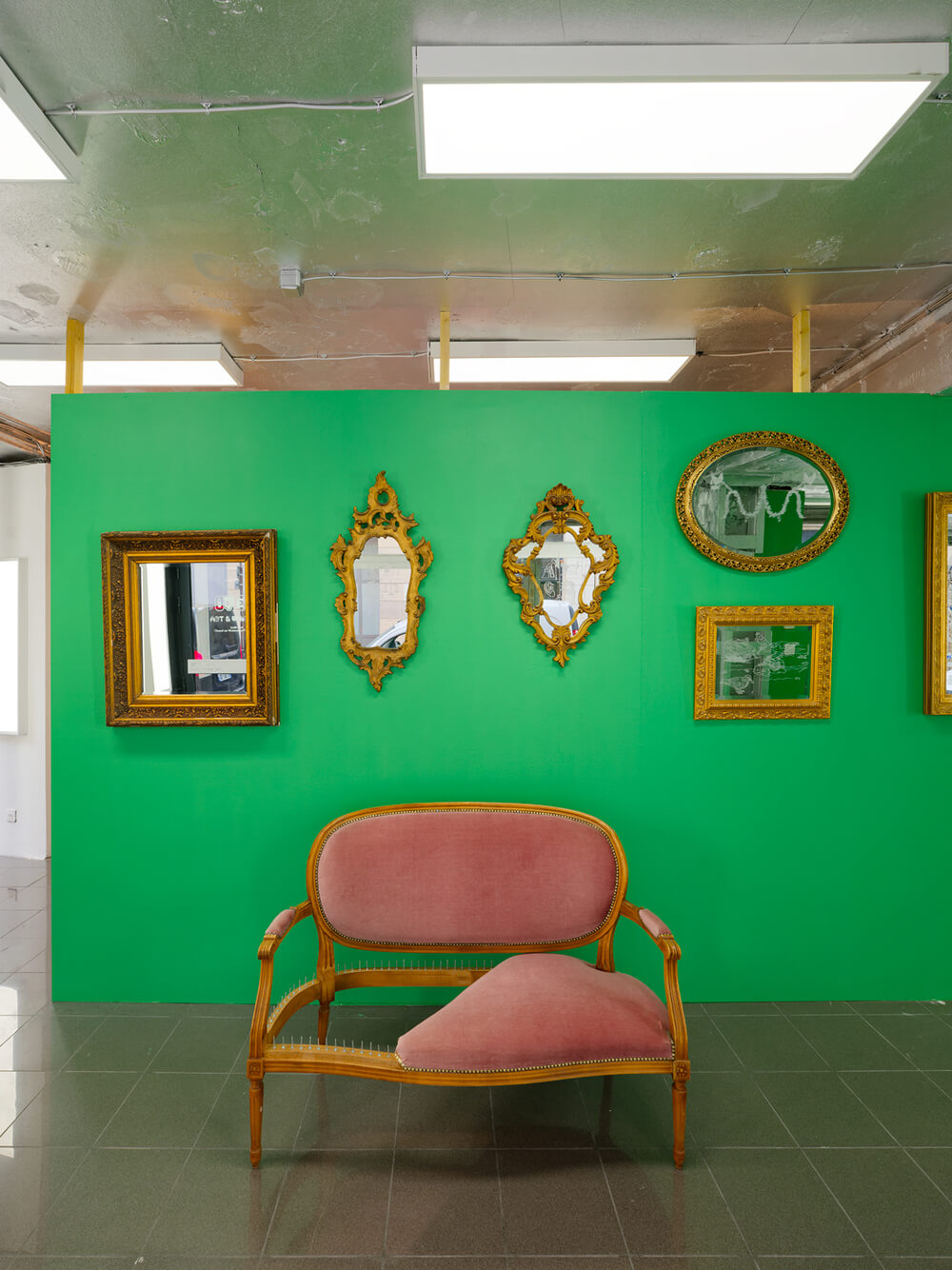
L’identification avec l’autre installed at ITEM IDEM Paris 2026
In some ways, Marie Antoinette was also an outsider. People forget that she wasn’t French.
Exactly.
She was expected to take on this role within a culture that wasn’t her own. But there’s an elephant in the room that I have to ask about before we continue: you have this theme, and there’s also the protest happening here at the moment. How do you feel about that?
It’s scary.
Do you feel scared?
I feel like a target, or like I could easily become one. I say this as someone who grew up on the political left: the left has been raised, cultured and educated to hate itself, and now it’s eating itself alive. The left has grown bigger and bigger. What I don’t think we truly considered is just how ugly and bloody revolution really is. Even though I would say my heart is in the right place, and even though I’m a philanthropist who chaired the Ann and Gordon Getty Foundation and, in my opinion, did as much good for the world as I reasonably could, I know that I still symbolize things that people hate. I know that because of the abuse I receive online.
Hasan Piker said, “Let the streets run red with the blood of capitalists,” which I think is pretty frightening rhetoric. It’s too extreme, and we’re deeply divided. The person I blame most is actually Mark Zuckerberg.
I definitely agree with you on that.
The algorithms are sowing the seeds of division, fertilizing them, watering them and cultivating them. We now have forests of division, and people have begun to completely dehumanize one another. That’s why I thought it was important for my work to reference internet culture and identity, as well as the way the internet and contemporary culture have changed how we relate to ourselves and to one another.
That’s also why it matters to me that the work is on mirrors. Lacan said that we spend our lives identifying with or against external stimuli as we try to build our identities. Jacques Lacan called the imago an idealized image of the self, what we aspire to become. I was thinking about how I could make someone identify with and against external stimuli at the same time. So why not put these personal, and sometimes not-so-personal, things on mirrors? Things that might once have appeared as pastoral scenes of romance and idylls now look very different. What does that imagery look like today? Litter, wildlife trying to thrive anyway (points at Pastorale Dystopique: Les Oiseaux et Leur Repas).
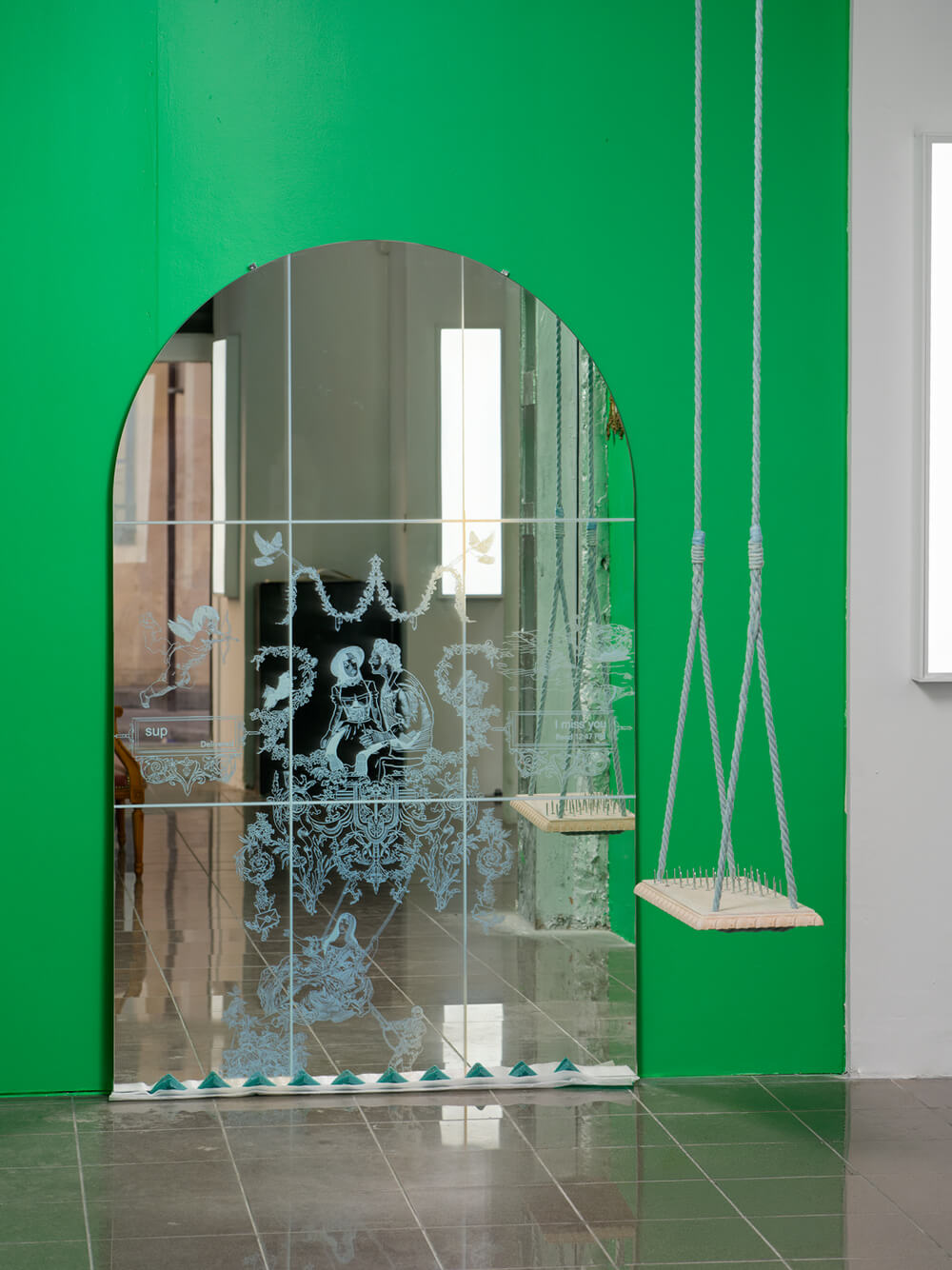
Pastorales Dystopiques Modern Love Engraved custom mirror 2026
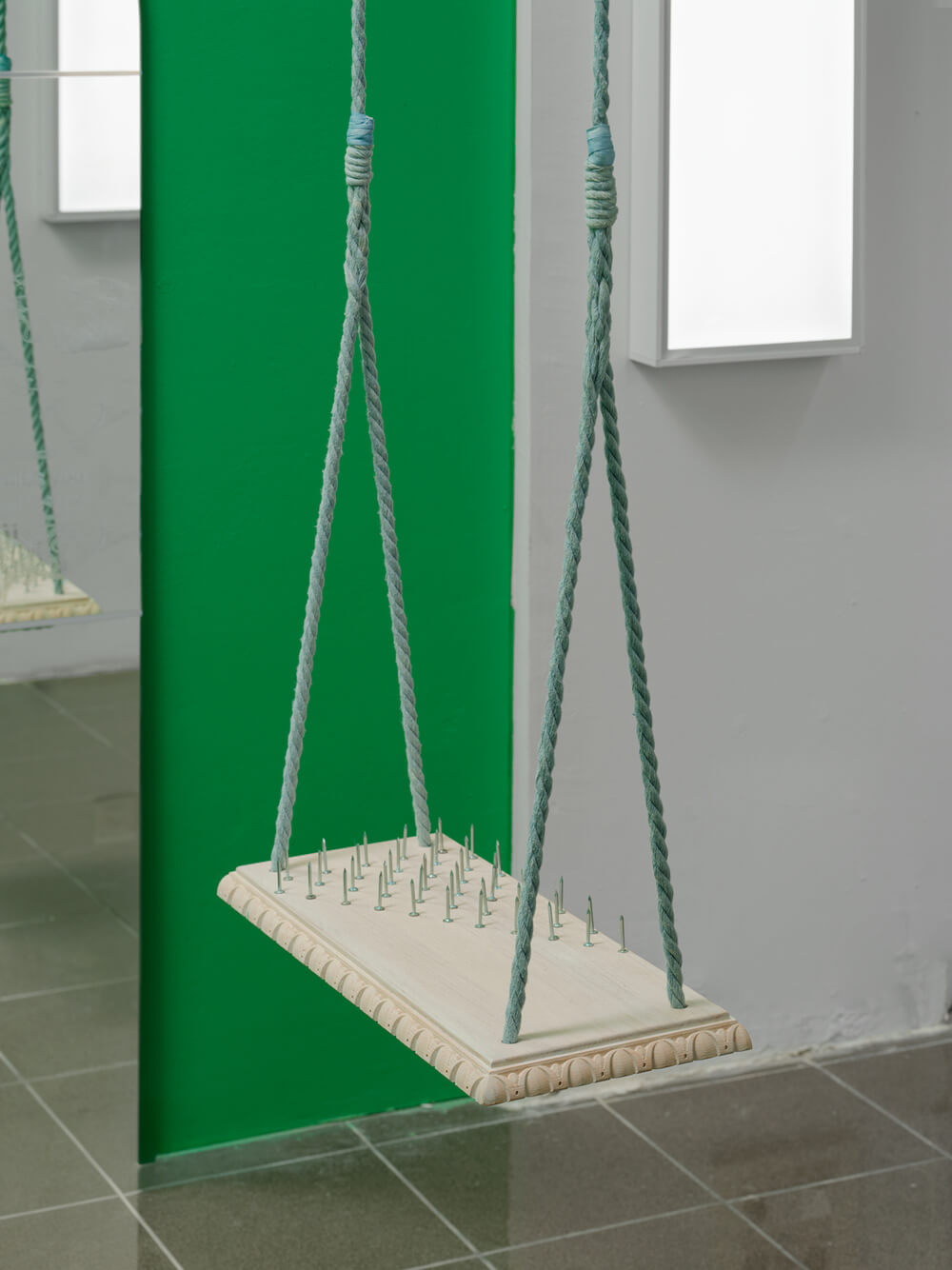
The Discreet Harm of the Bourgeoisie Wood, jute, nails 2026
And what about the piece «Les Vestiges du Fuckboy» (2026) with Theo Therwoman a fake Facebook name on it?
It’s about being ghosted and then seeing someone post about having a great weekend two weeks later. The name of that piece is The Other One, and I thought that was really clever. I’m going to pat myself on the back for that.
There is also “Plan B” on it.
That came from an actual post by an actual fuckboy who ghosted me about ten years ago. I’d completely forgotten about it, but for some reason, the screenshot popped up on my phone as a memory. I thought, “Is this a sign?” So I turned it into art.
There is also a reference to Fragonard (shows us Fragonaut, Engraved mirror 2026), of course, alongside my own interpretation. Then there’s my dystopian version of the fuckboy, which I’ve called Modern Love because I was listening to David Bowie while working on it. We’ve also got “sup,” “delivered” and “I miss you” left on read. Internet culture is all over this work because that’s what the world looks like to me now. There’s another reference to Fragonard, but this piece also calls back to one of my earlier series, Hostile Home. It was inspired by hostile architecture, but translated into a domestic space.
You’ve explored so many different materials and artistic spaces. What was new for you about making this work? Was it working with glass?
No, I’ve worked with this before, but I’ve never worked with a factory that had so many more capabilities. I was able to work with a level of detail that hadn’t been possible for me previously. I arrived prepared to hand-carve everything, but fortunately, that wasn’t necessary. It freed up time for me to go absolutely crazy with detail in my own way, using my vector drawings. What’s new for me is actually exploring toile. I’ve been working with an etched technique inspired by printmaking and old woodblock printing.
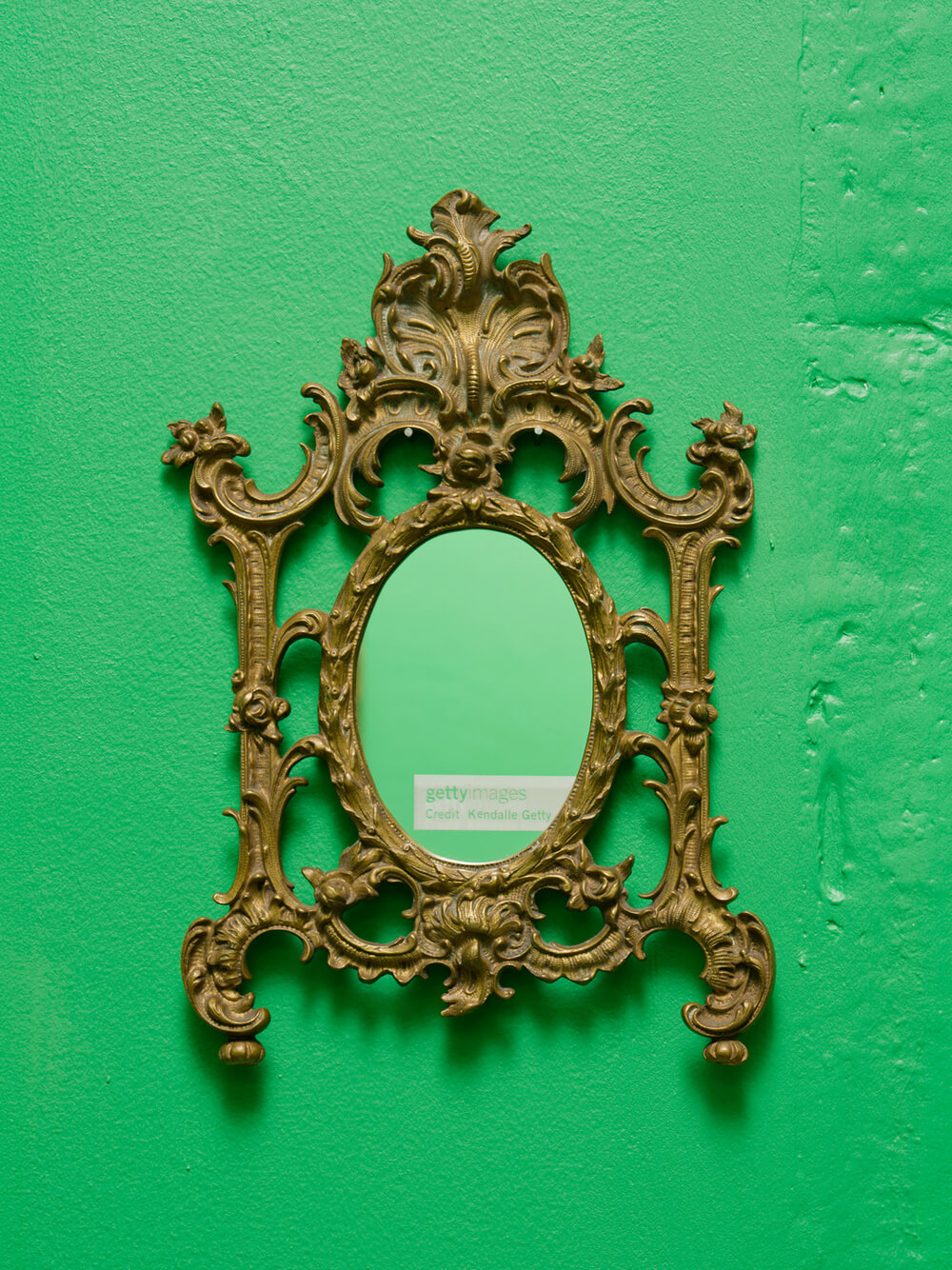
The Coveted Watermark II Antique brass frame, engraved mirror 2026
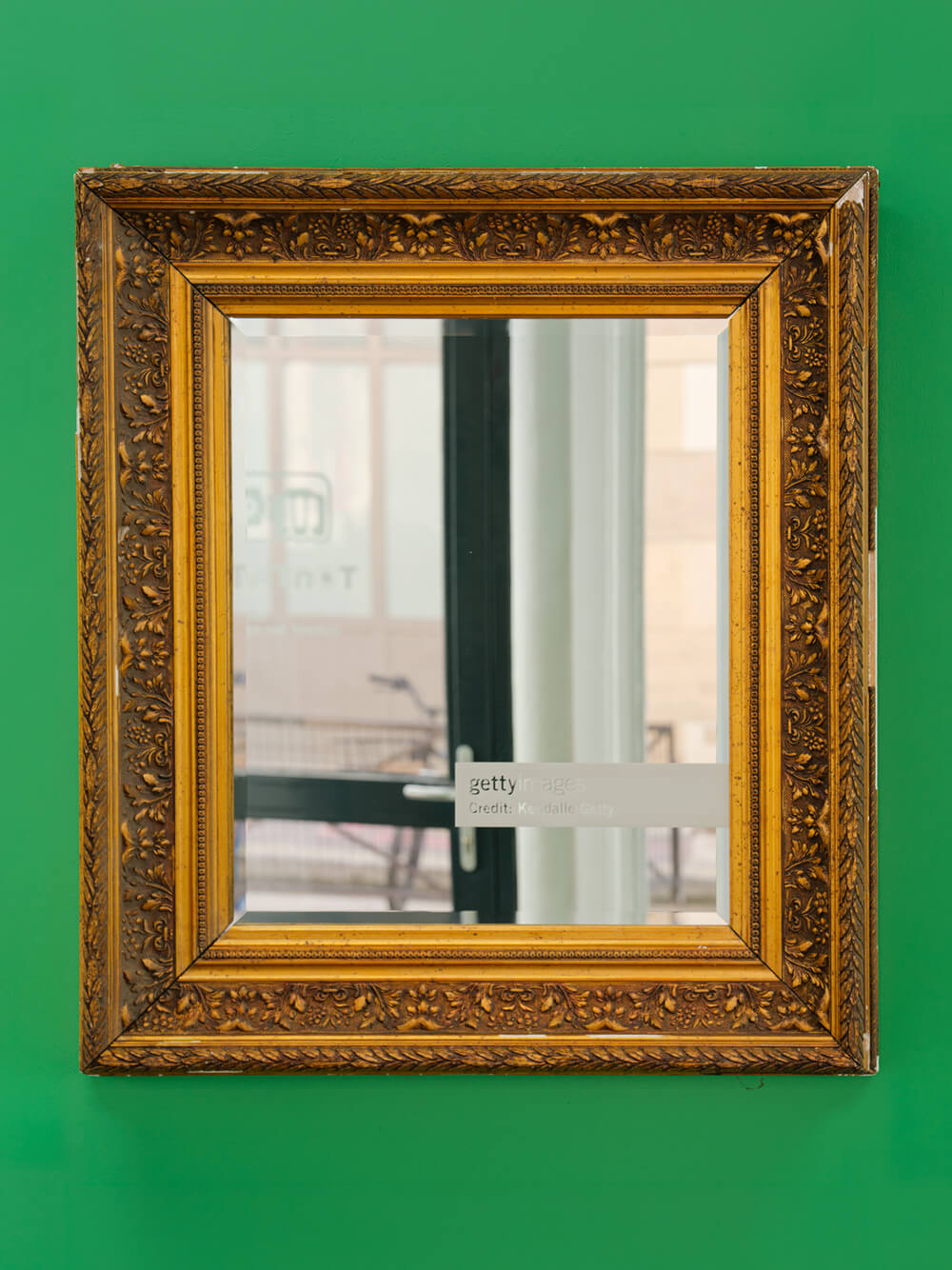
The Coveted Watermark III Engraved antique mirror 2026
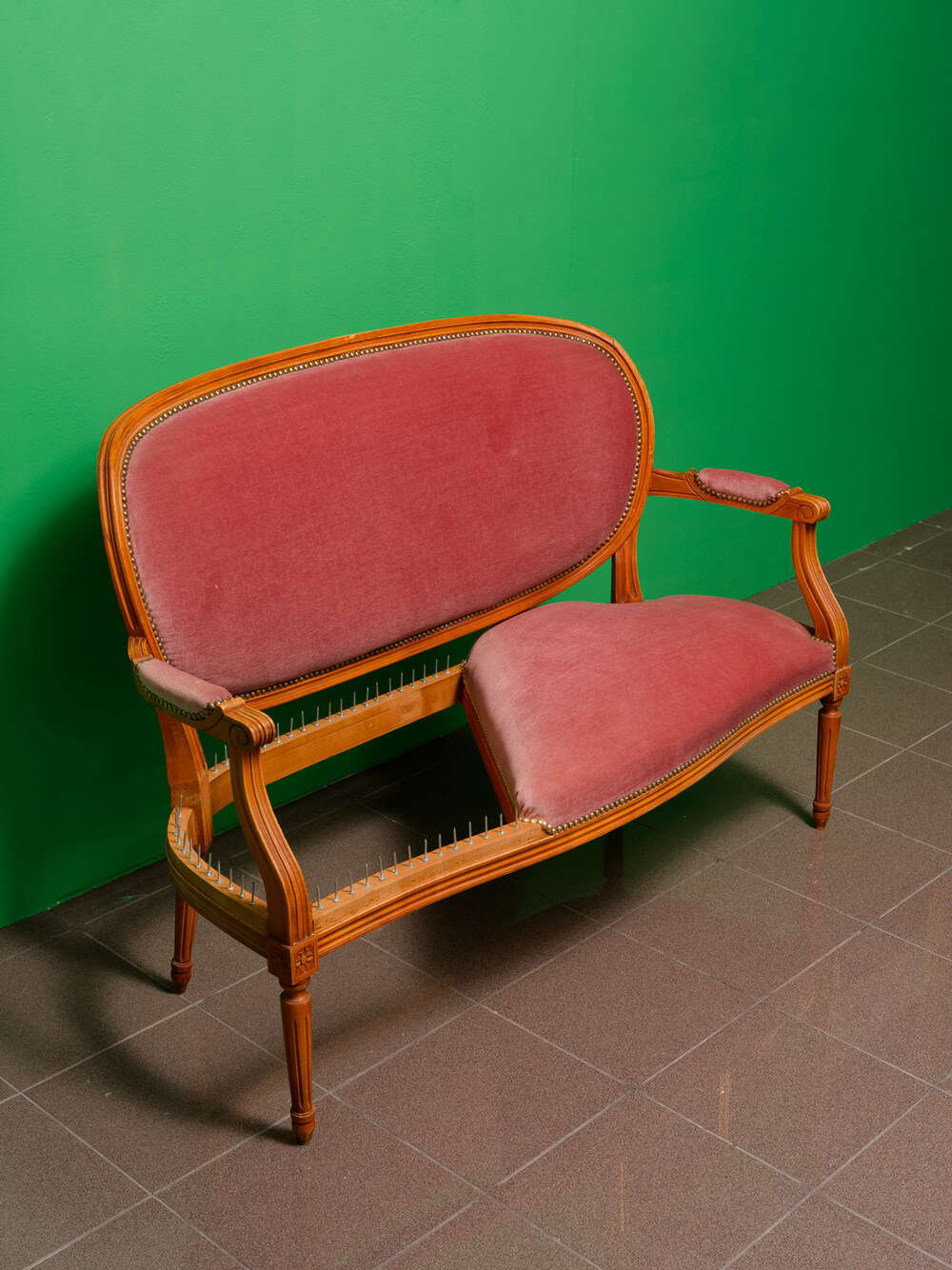
The Discreet Harm of the Bourgeoisie II Vintage settee nails 2026
Would you ever want to translate some of that work into prints?
I think that would be really fun. There are other things I’d like to explore in that medium, but I didn’t think the mirror offered enough negative space for the pattern to be usable. I also wanted to leave enough space for people to identify themselves in the reflection. It’s fascinating to think that glass exists somewhere between a solid and a liquid.
What did you discover about yourself through this process? You spoke about social media and contemporary culture, but what did you end up scraping away, so to speak?
I learned that I’m done trying to be psychologically perfect, politically perfect, or any other kind of perfect. I’m so sick of this culture that demands perfection from artists.
This happens in every field. There’s this expectation that people should be perfect and behave in a certain way.
I’m so afraid of people cancelling or destroying me because I said one thing with the wrong emphasis on the wrong syllable. It’s exhausting. So I decided to lean into that. Maybe this time I get to be personal. Maybe this time, I get to be myself. I was thinking that I find myself feeling so pathologically alien, as I said earlier, and maybe it’s time for me to excavate the things that have hurt me, put them on reflective surfaces and literally force someone to empathize with me and see my humanity.
Do you still feel like a bastard?
Yeah, but it’s not the worst thing. It’s kind of cool. It’s very liminal. I have one foot in each world, and I feel that keeps me humble. It can be really frustrating when, for instance, no one in my family wishes me a happy birthday or comes to my opening. But all in all, I think it’s a good thing. I think that is why I am good at what I do.
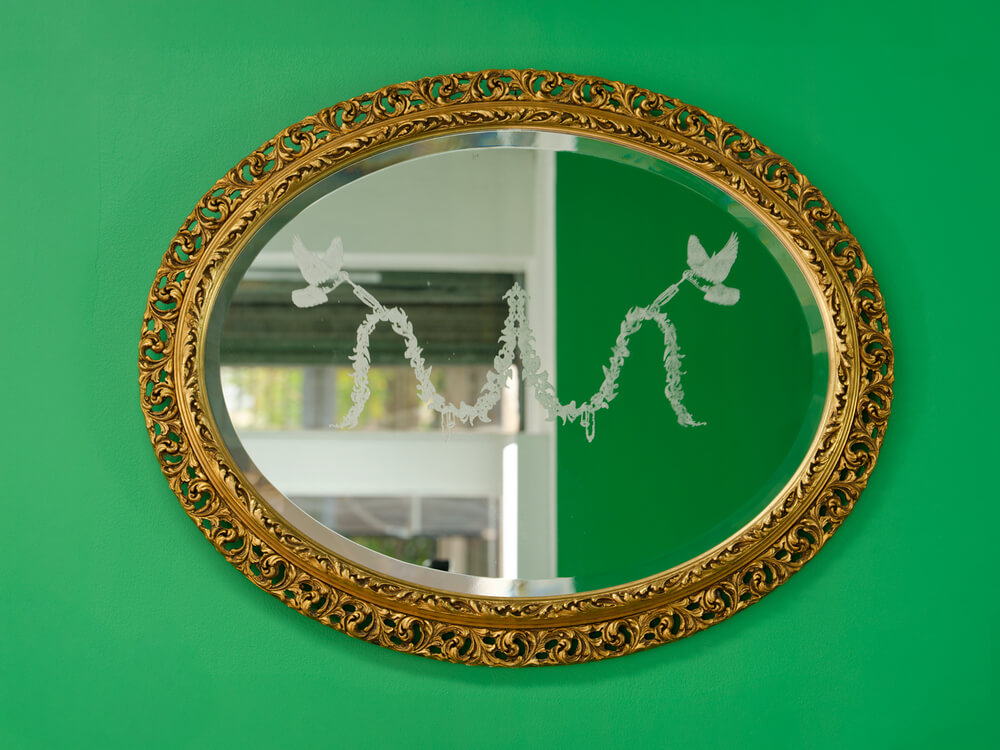
Pastorale Dystopique Garland Engraved antique mirror 2026
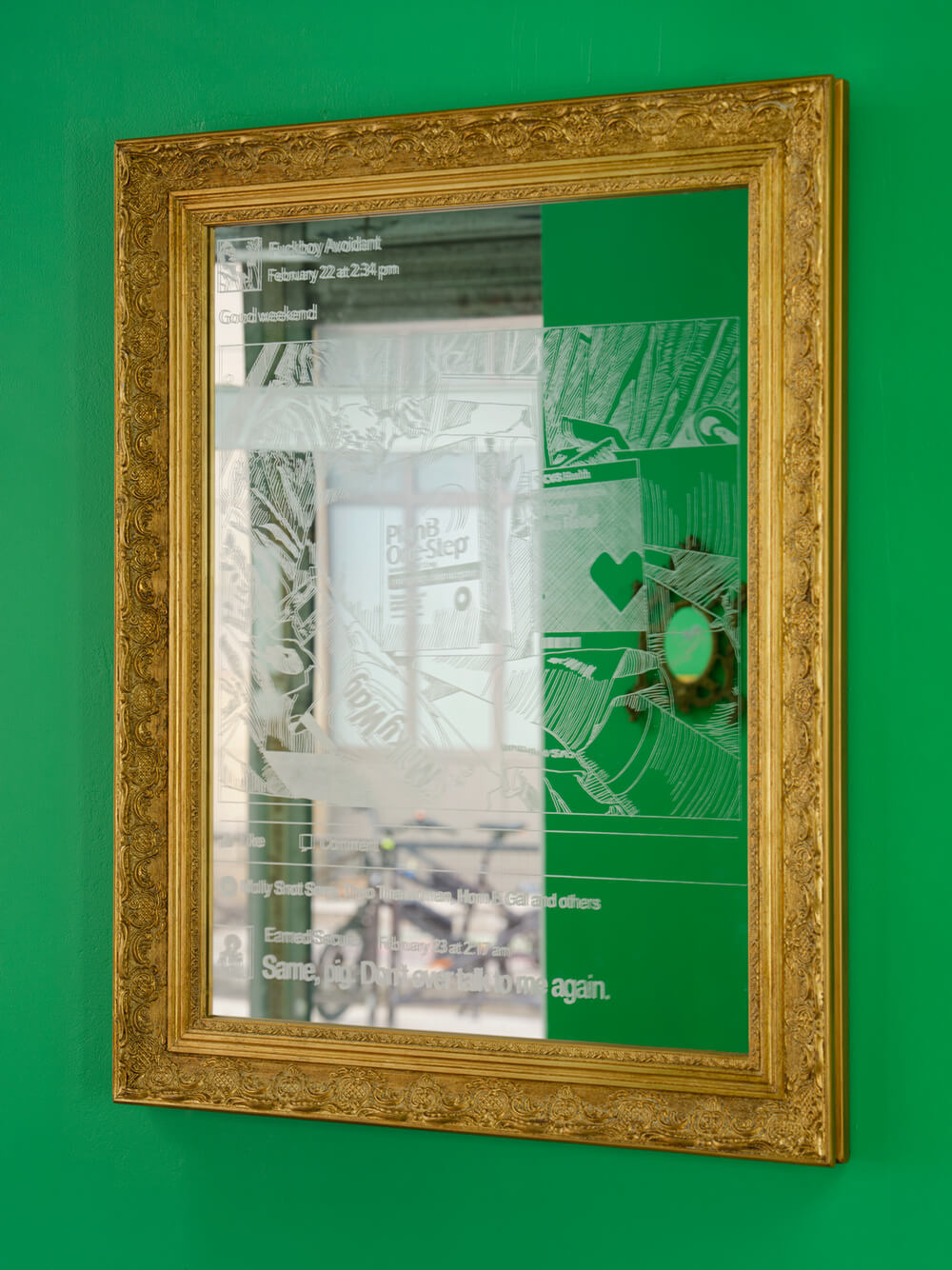
Les Vestiges du Fuckboy Engraved mirror 2026
L’identification avec l’autre
Until November 14, 2026 at ITEM IDEM
12 rue Bleue
75009 Paris, FR


