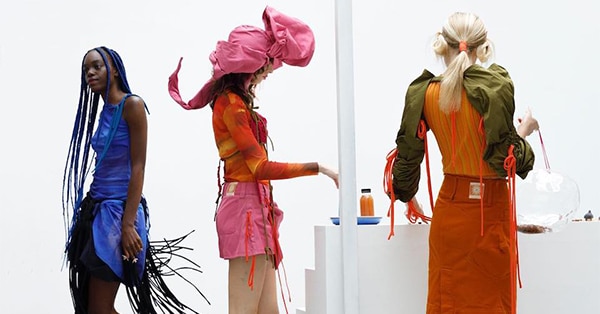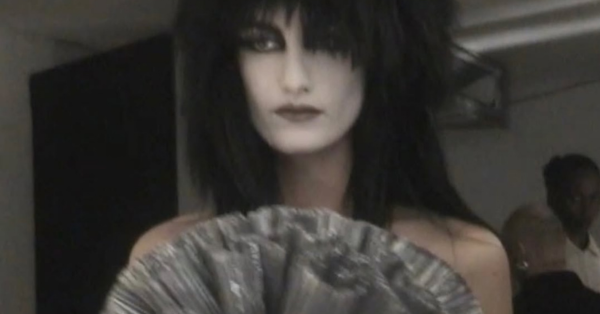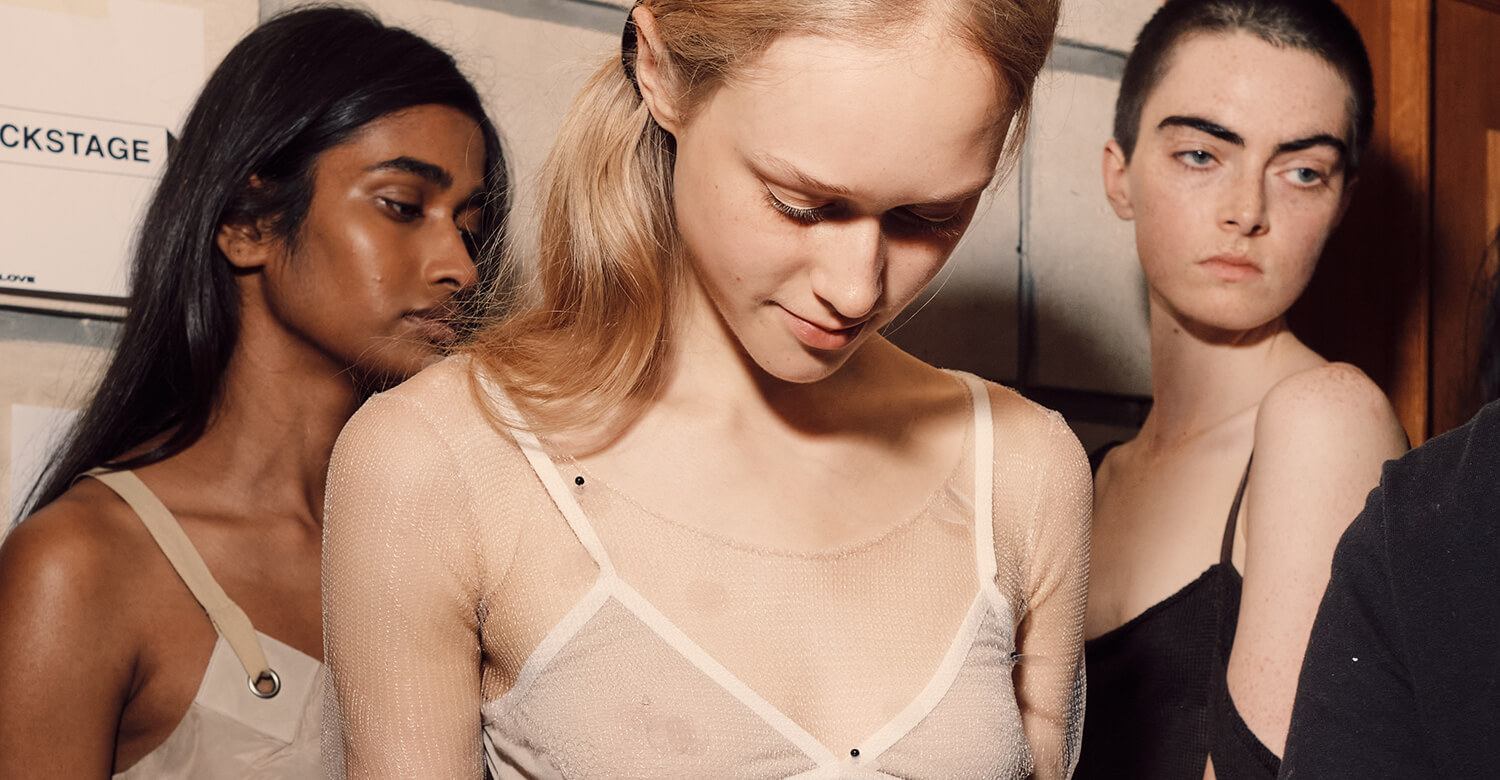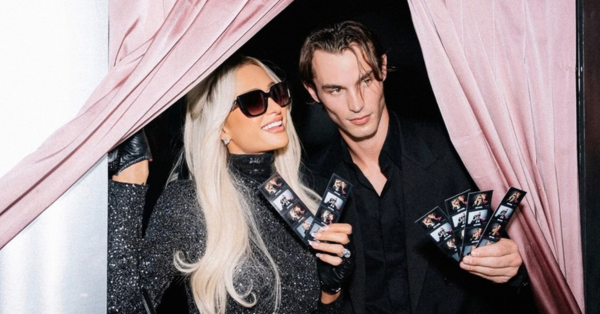

For his haute couture debut at Jean Paul Gaultier, Duran Lantink looks to Marie Antoinette as the starting point for a collection that transforms eighteenth-century grandeur into an exploration of volume, anatomy and the future.
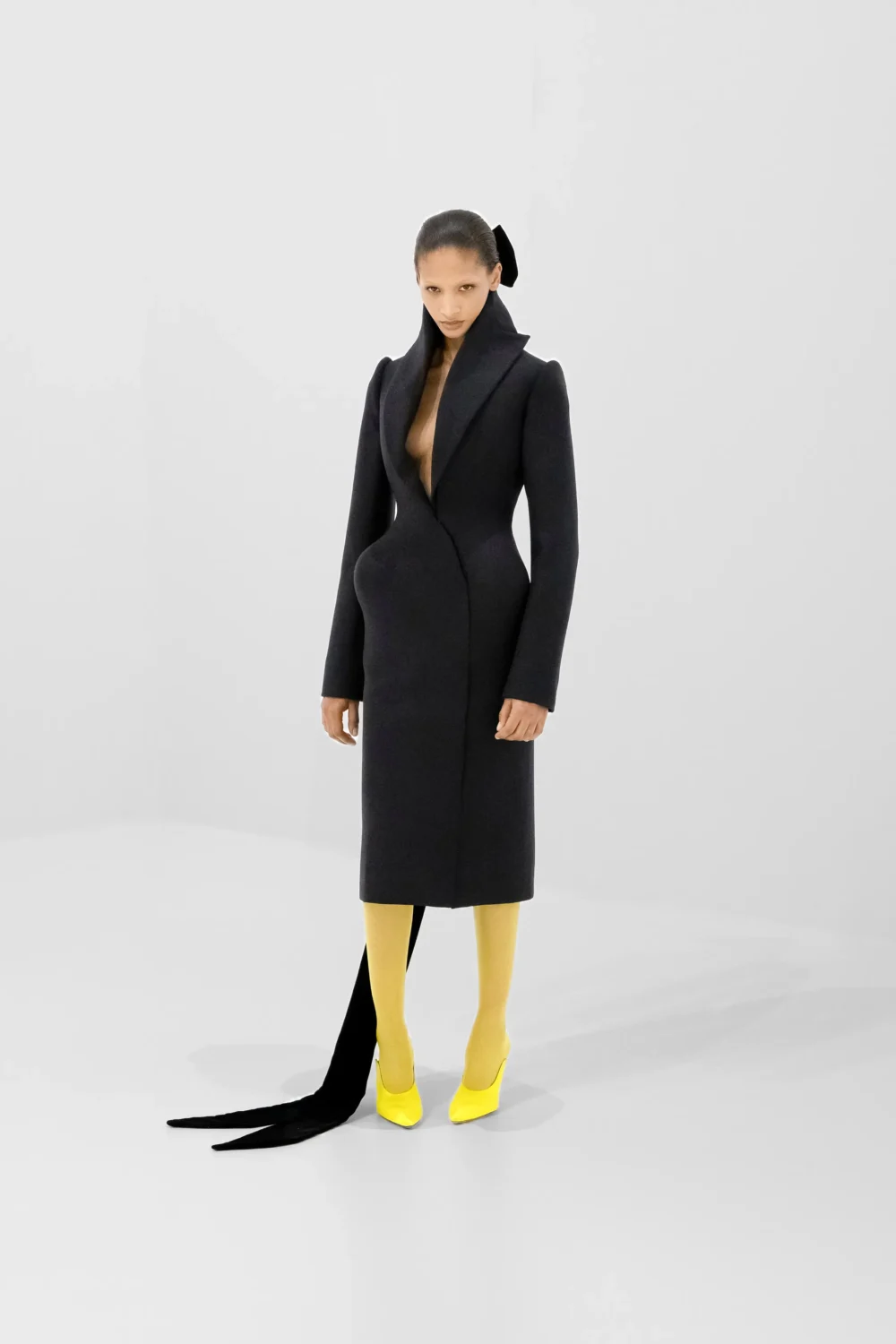
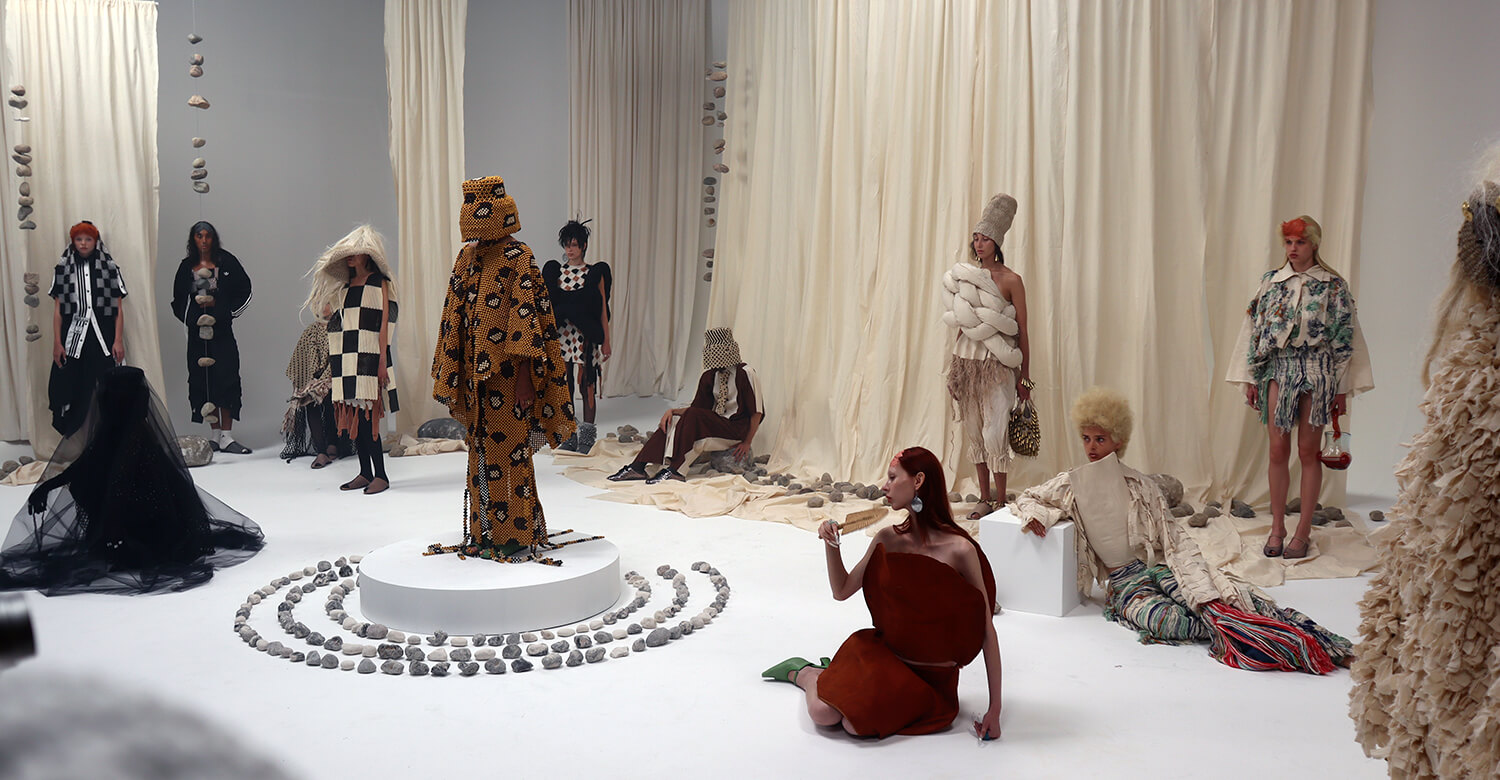
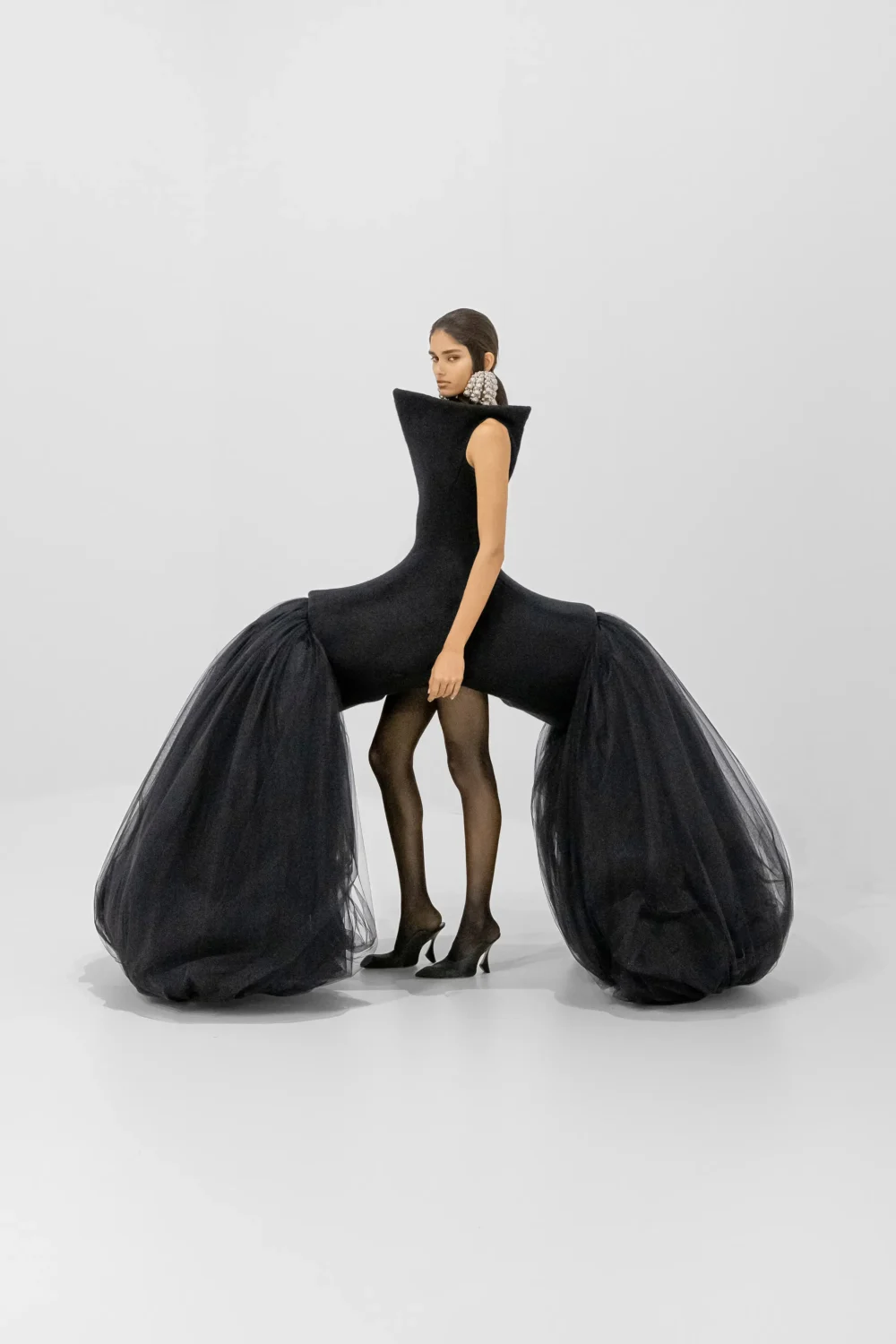
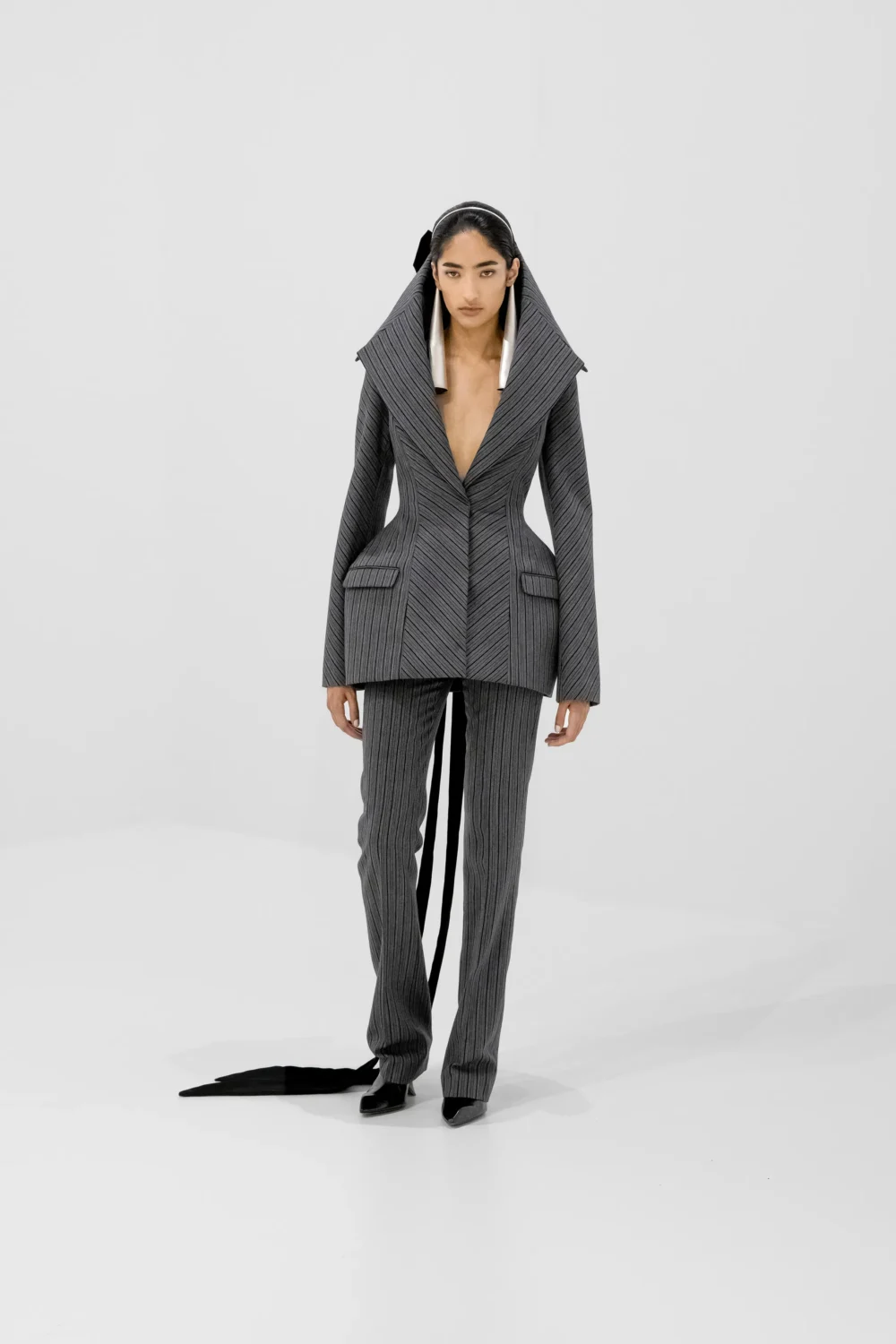
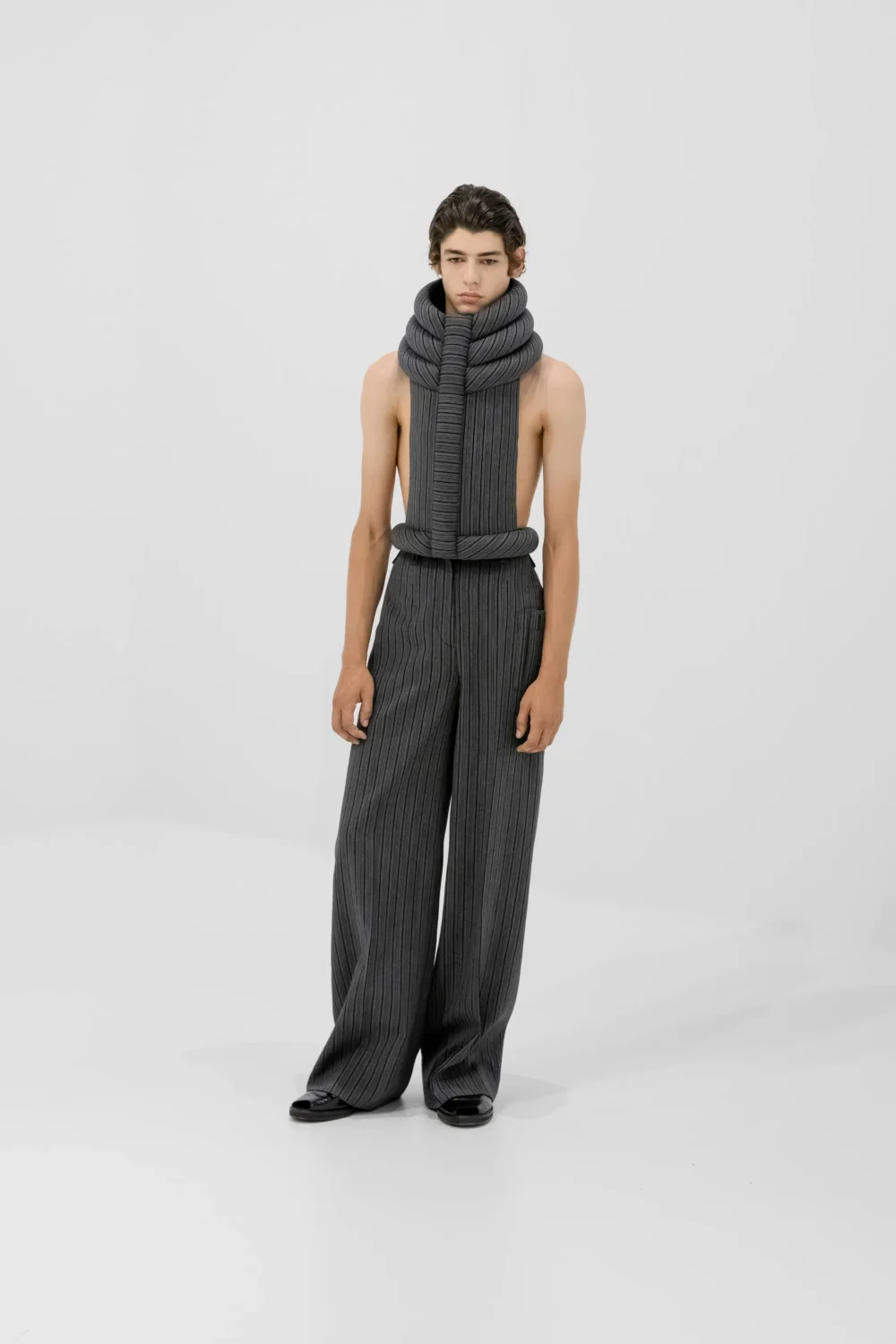
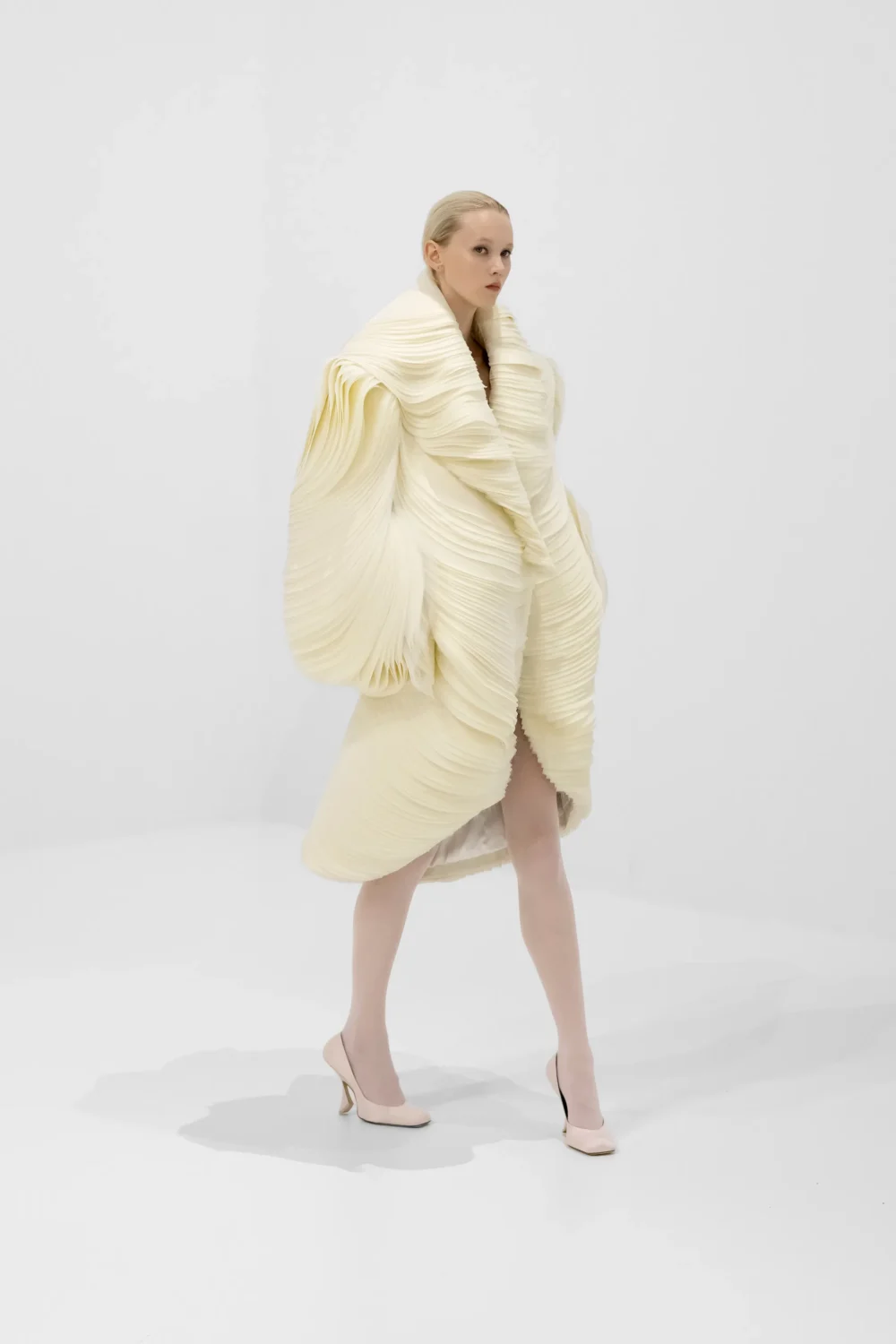
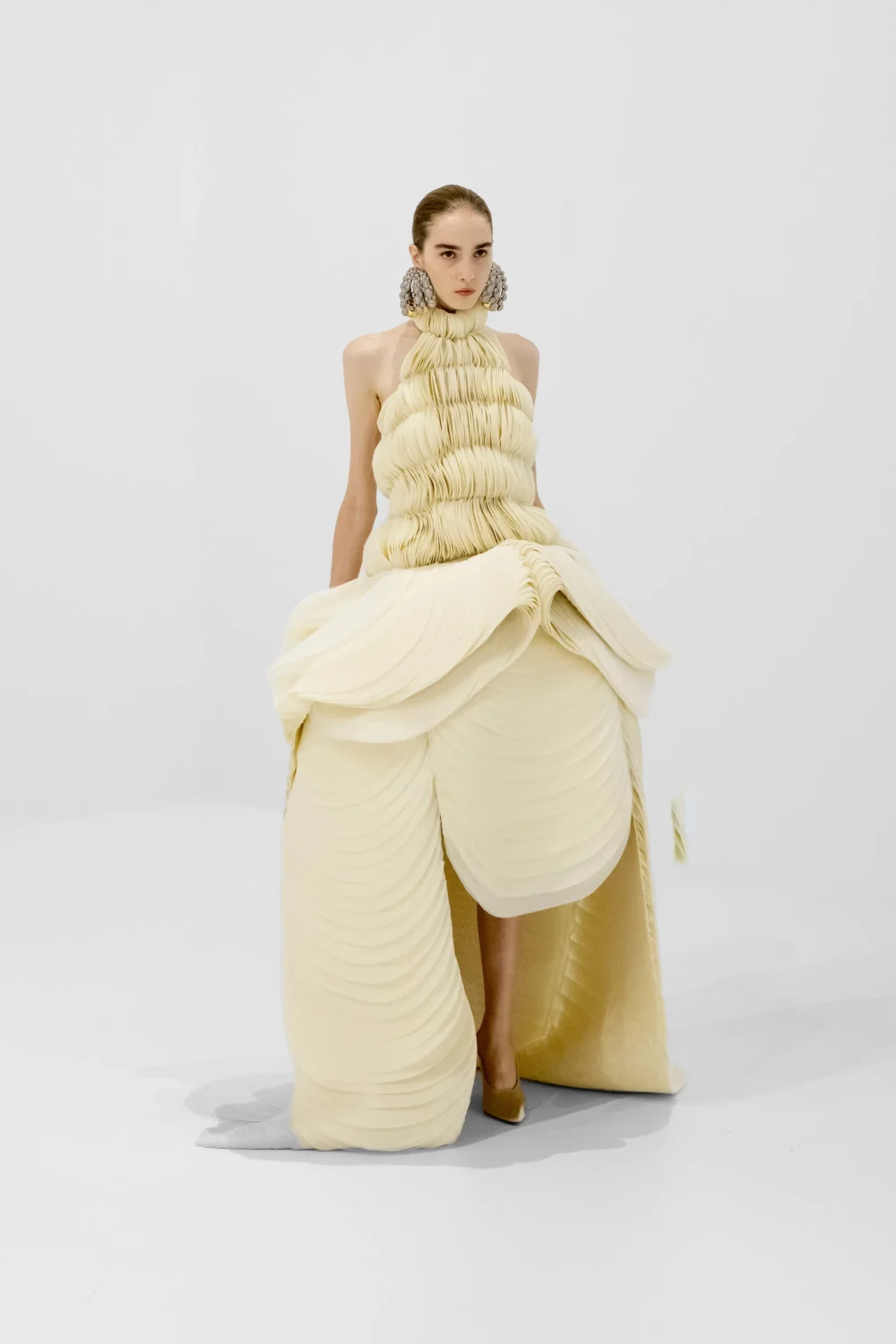
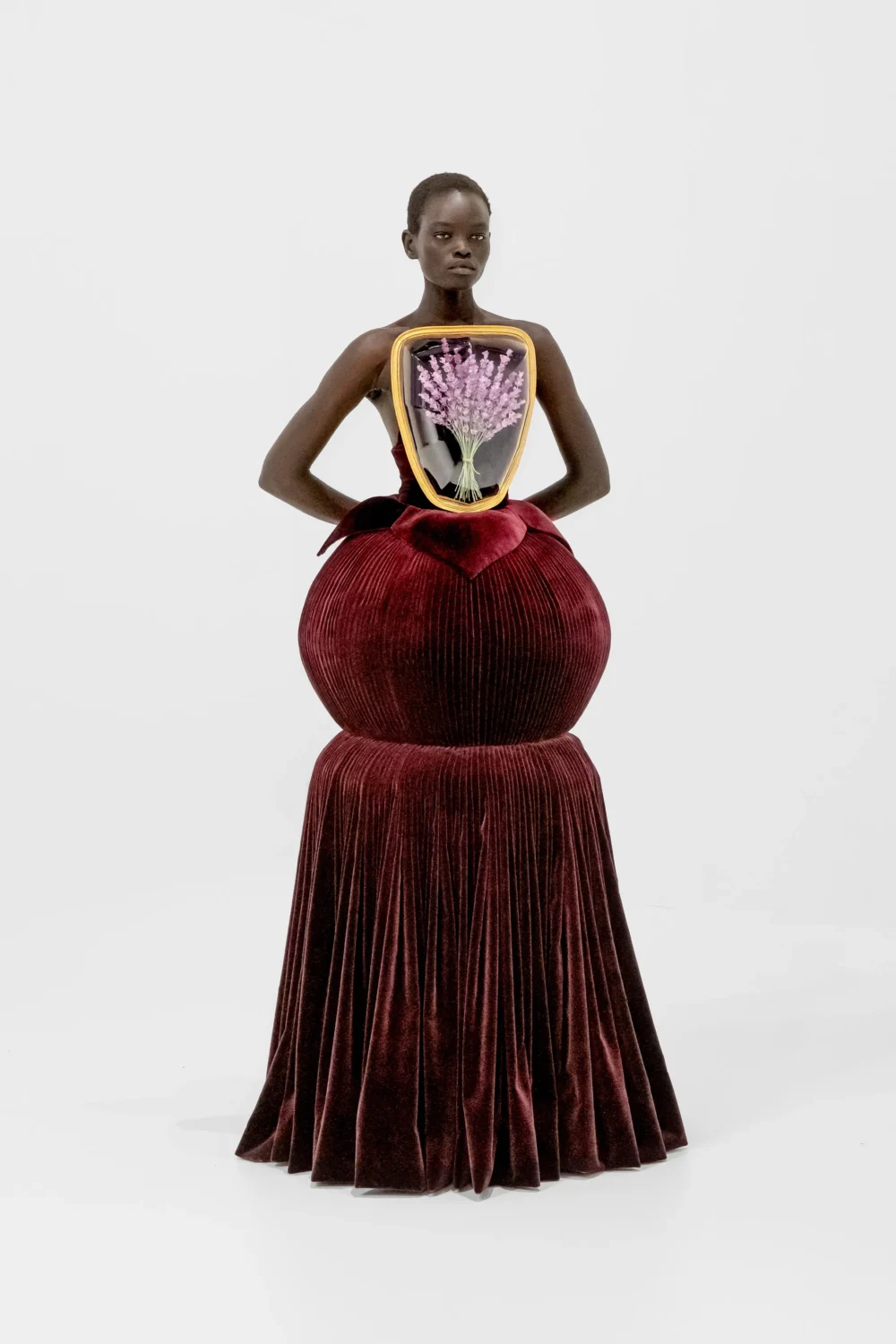
Monumental silhouettes and distorted bodies bring the language of the rococo into unfamiliar territory. At Jean Paul Gaultier, Duran Lantink makes his haute couture debut by approaching Marie Antoinette through the idea of occupying space, leaving historical reconstruction behind to focus on the physical impact of eighteenth-century dress.
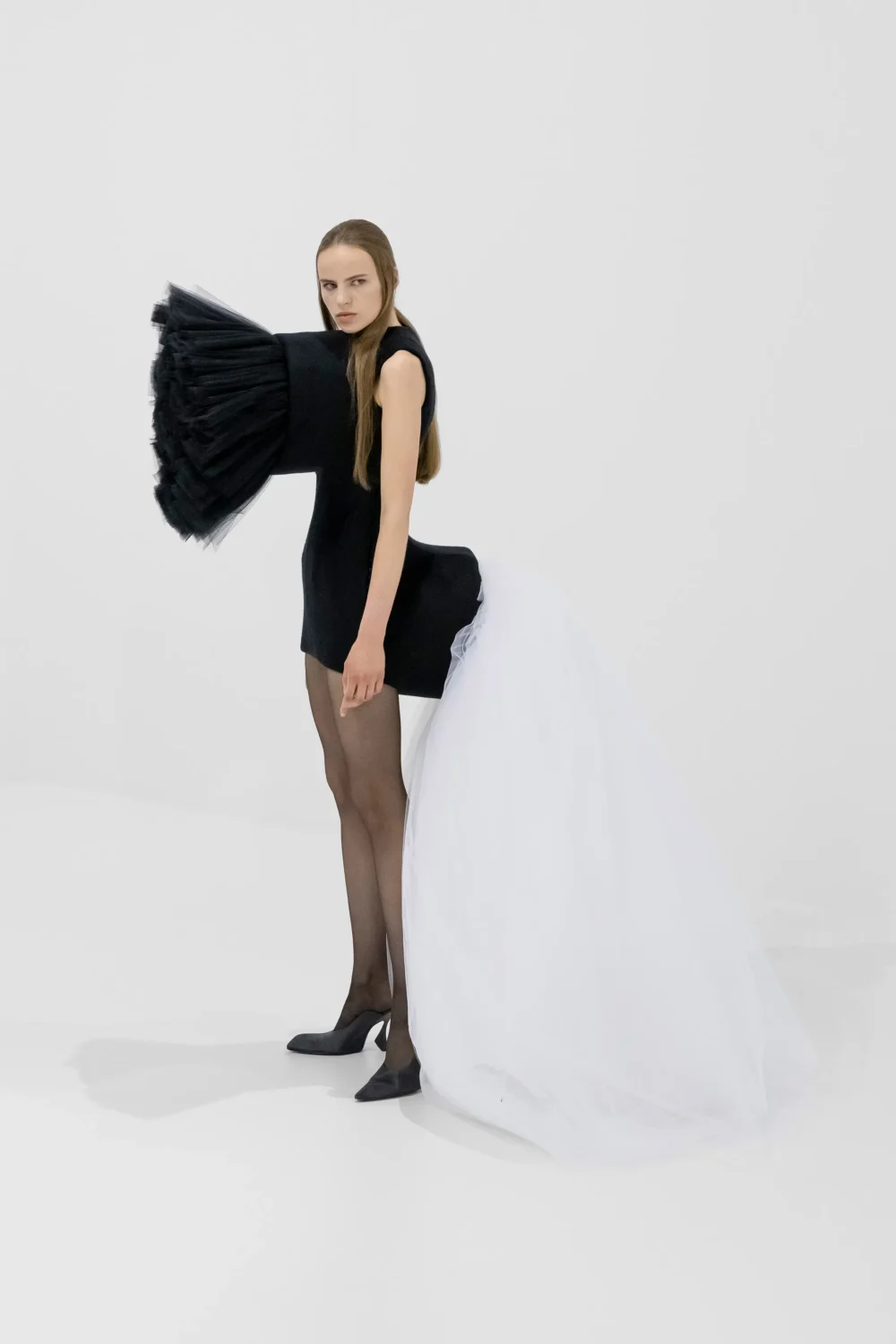
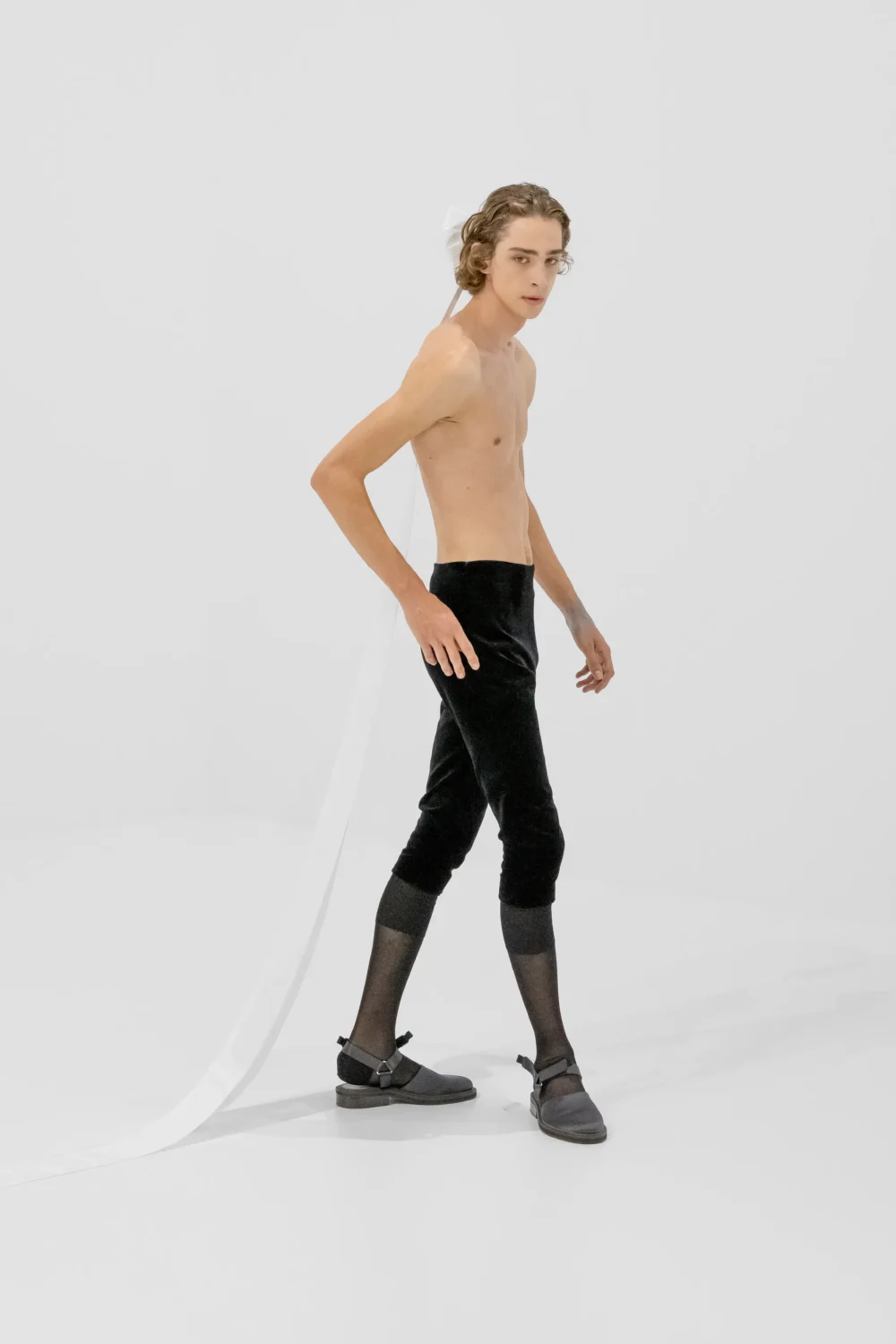
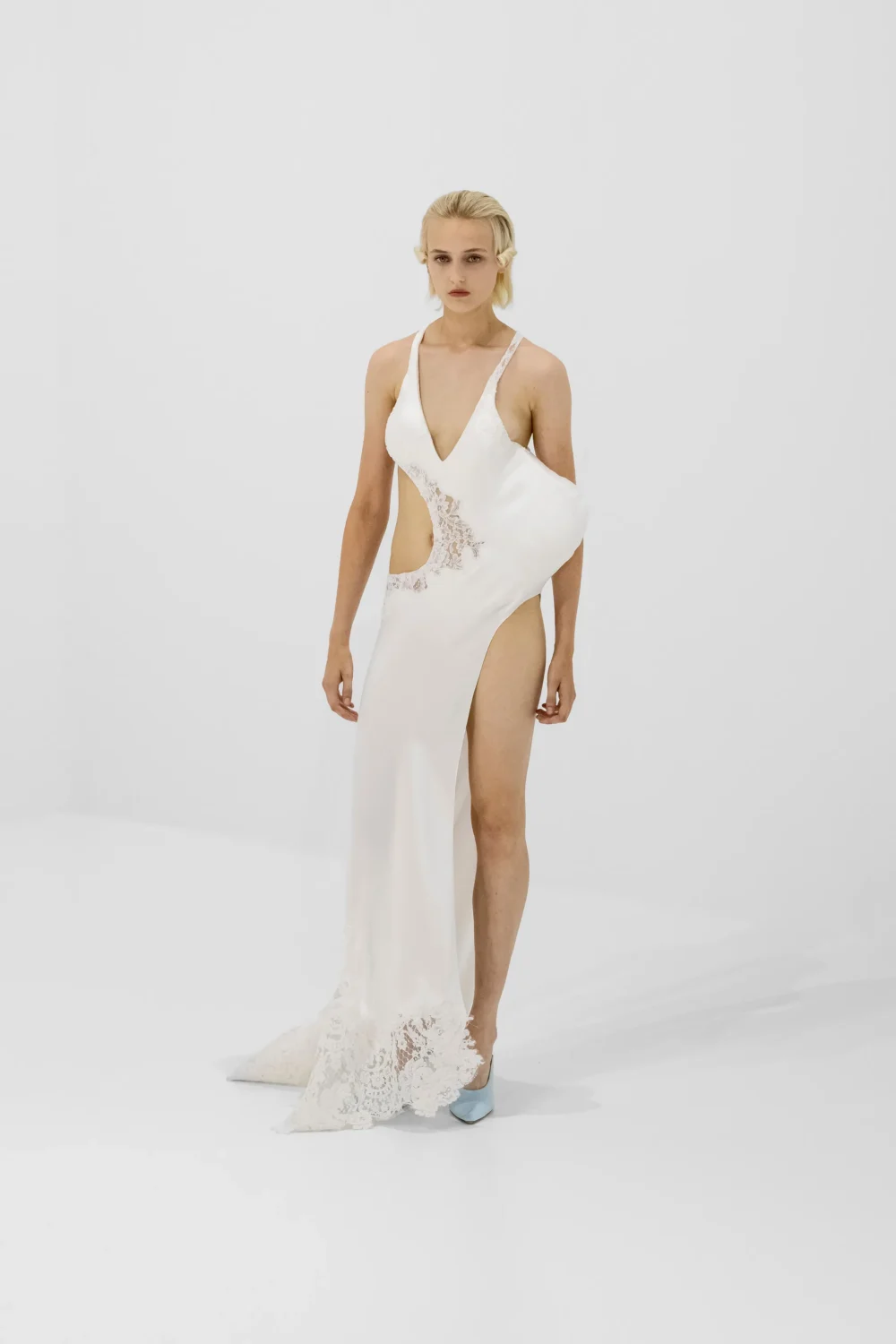
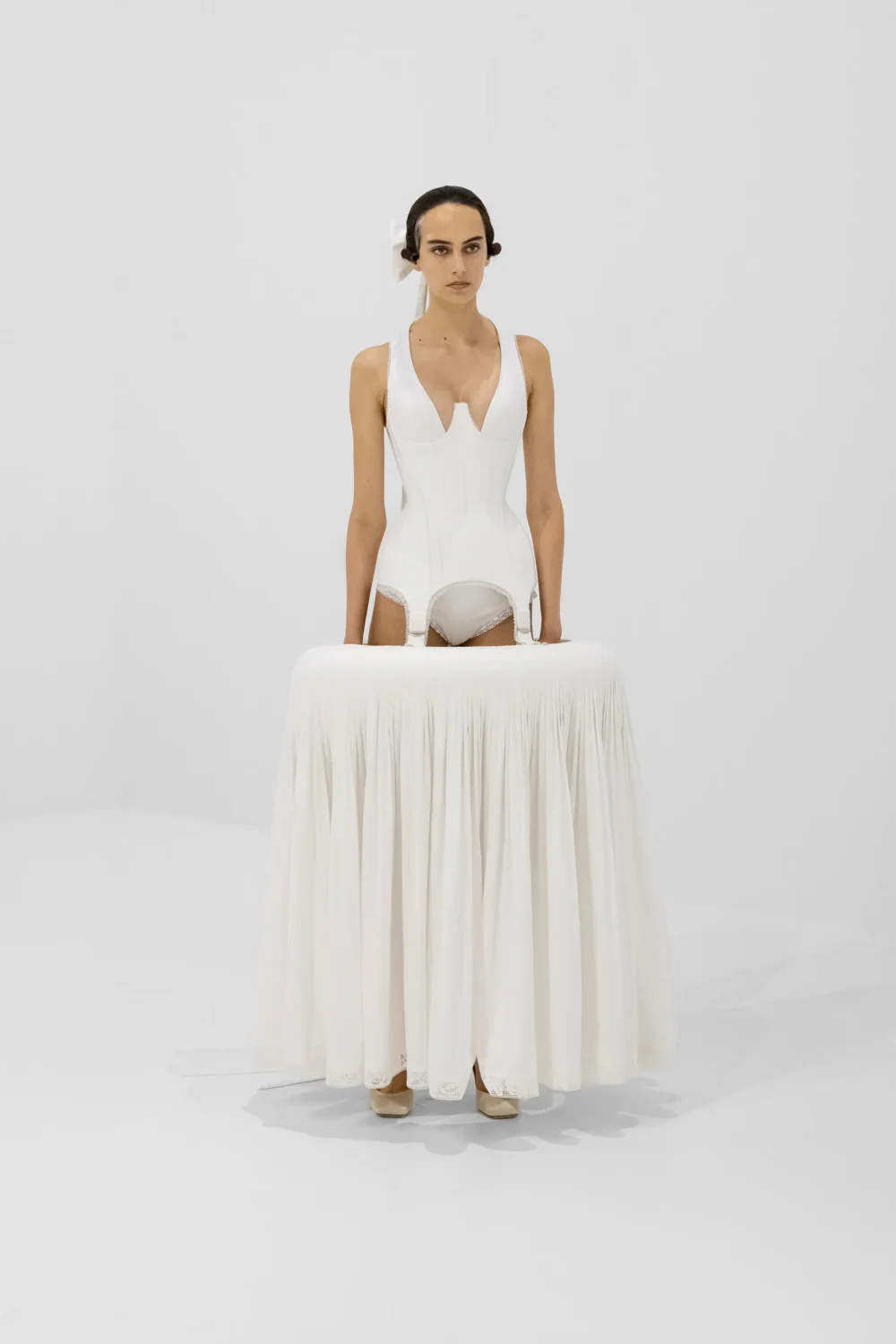
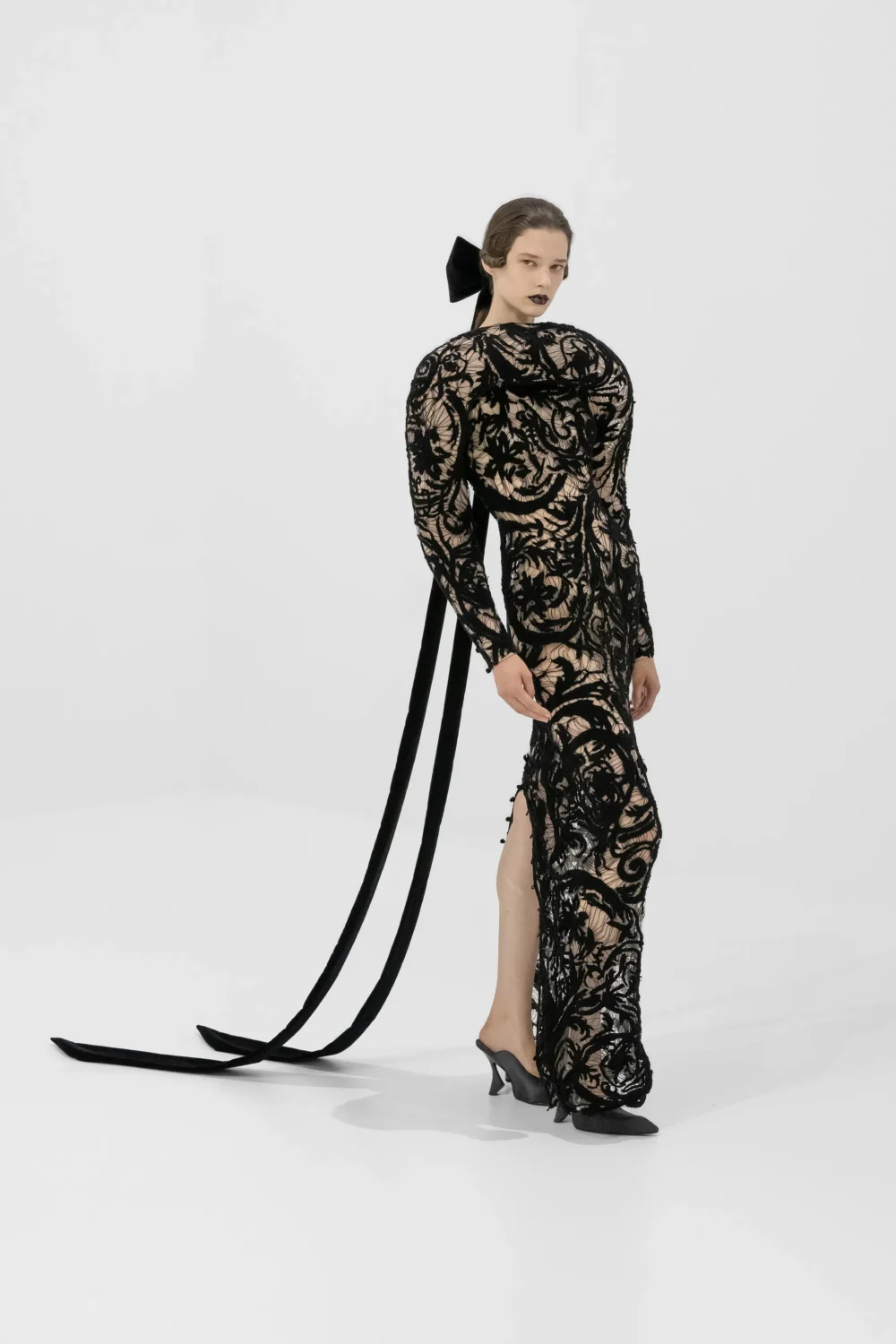
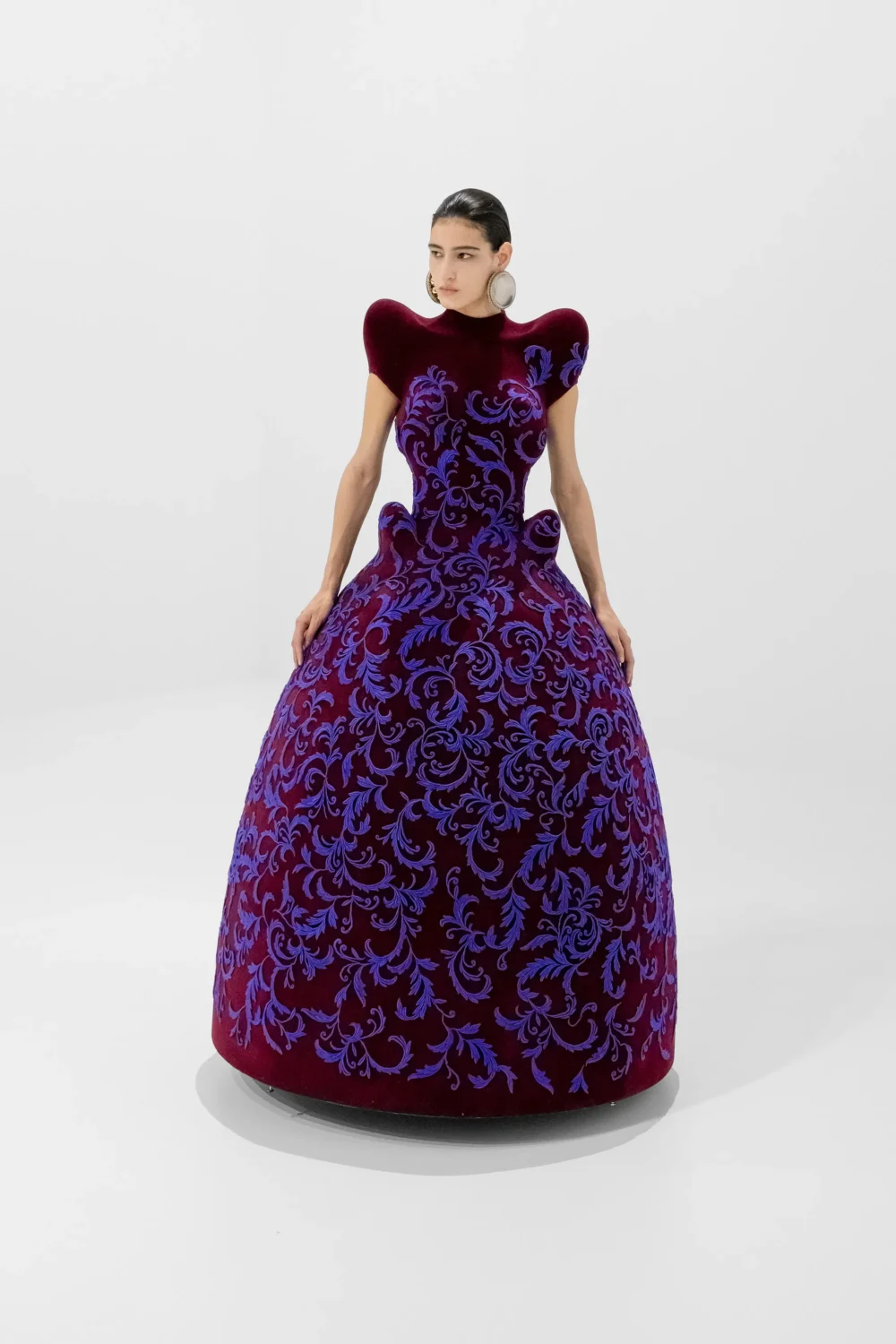
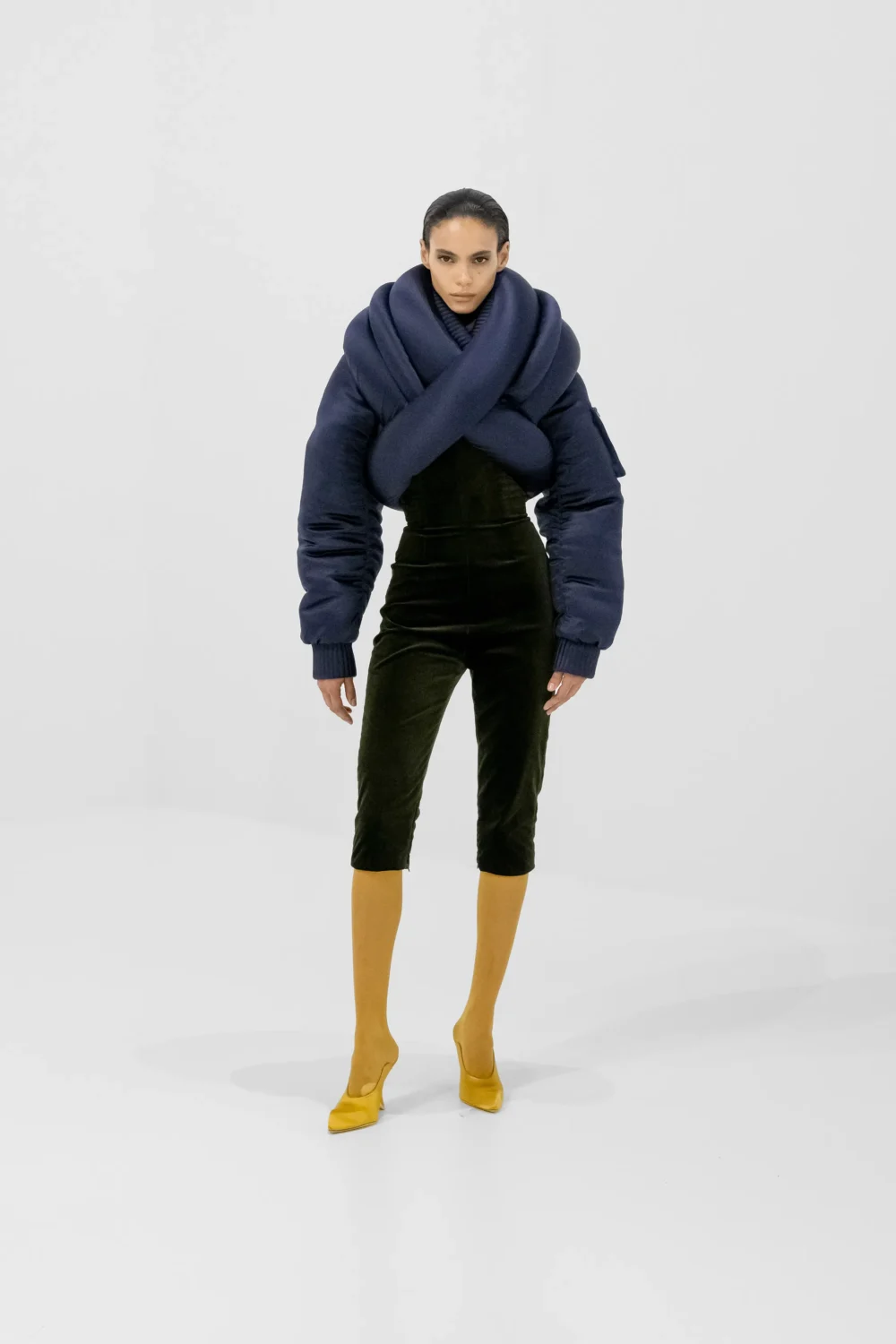
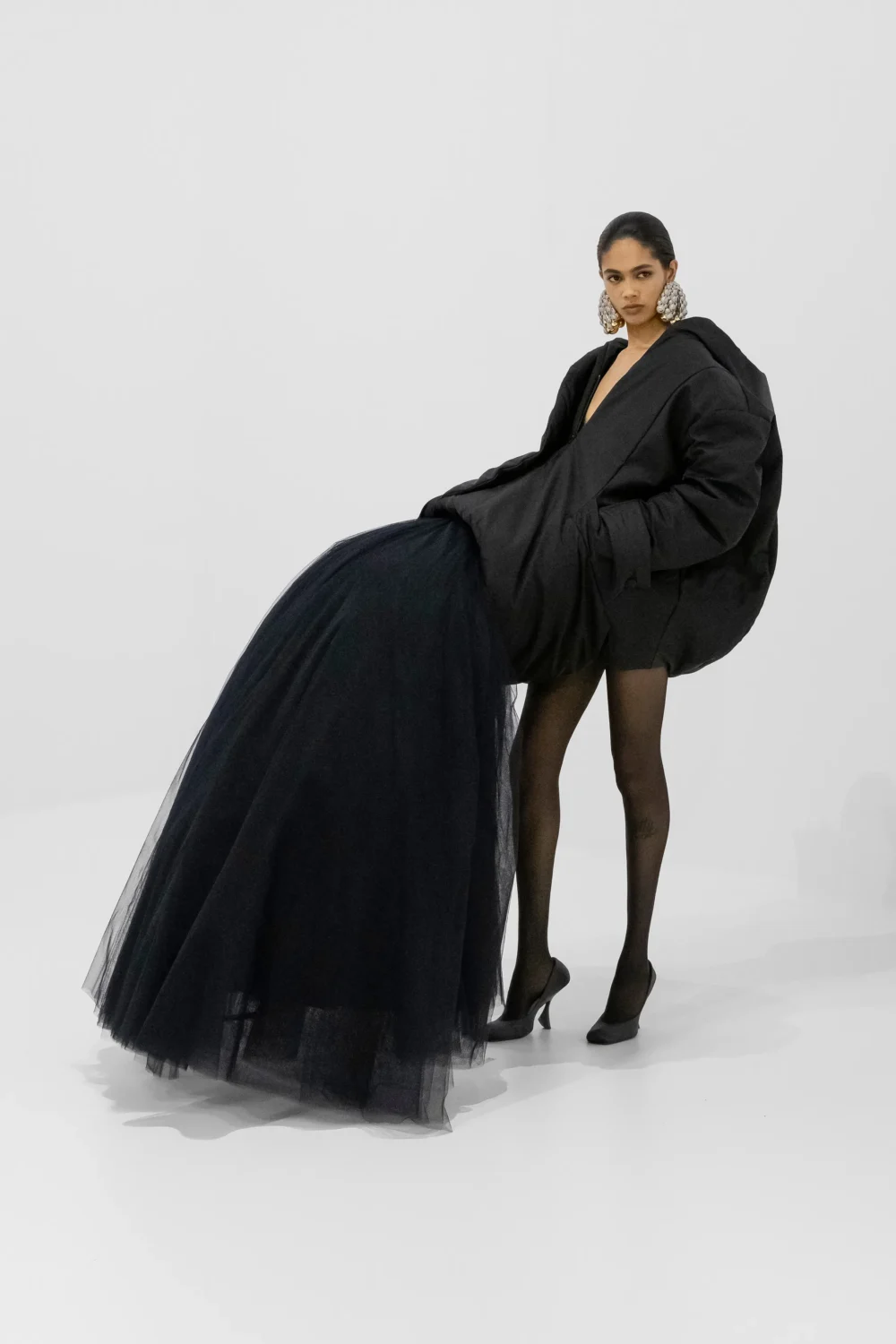
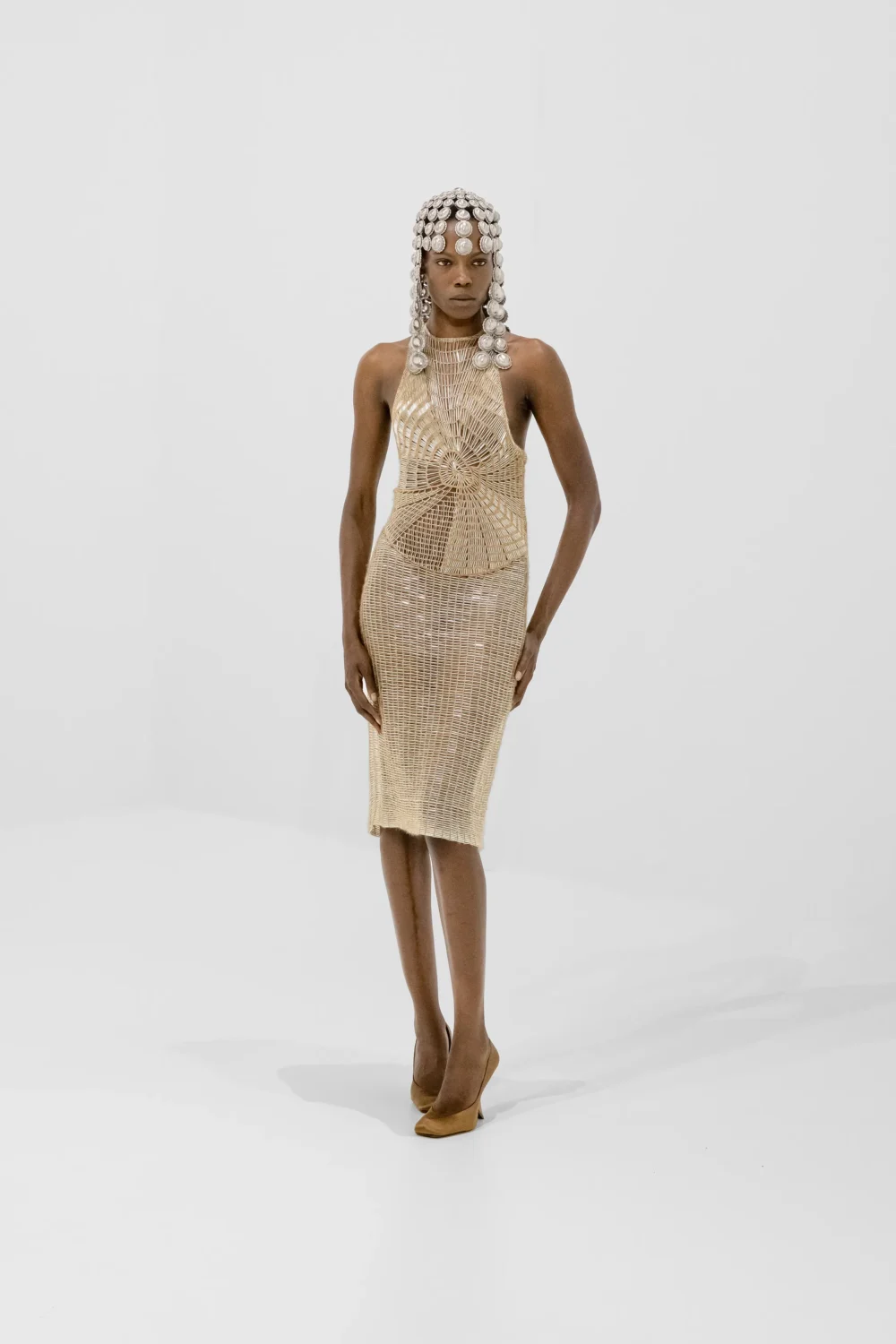
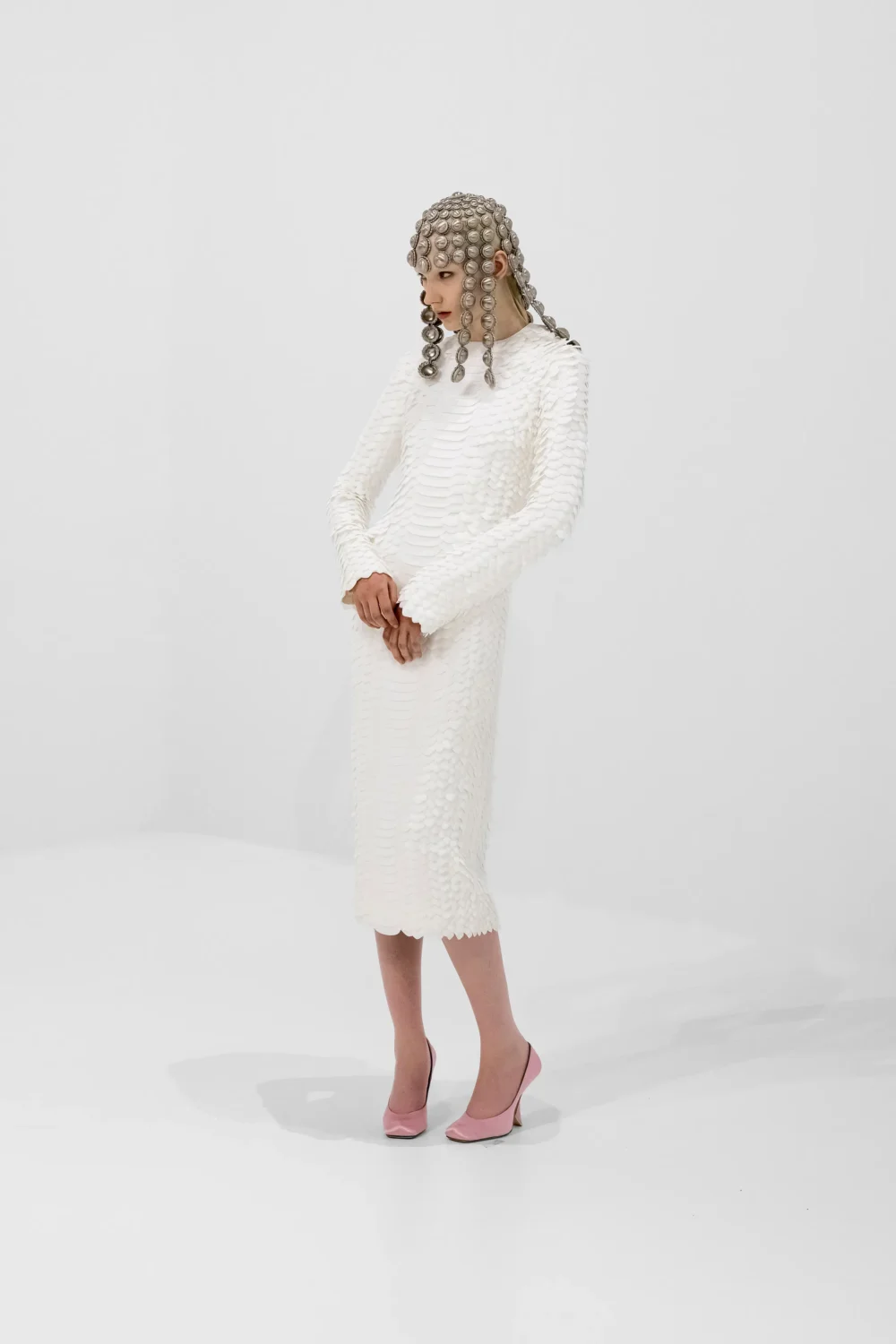
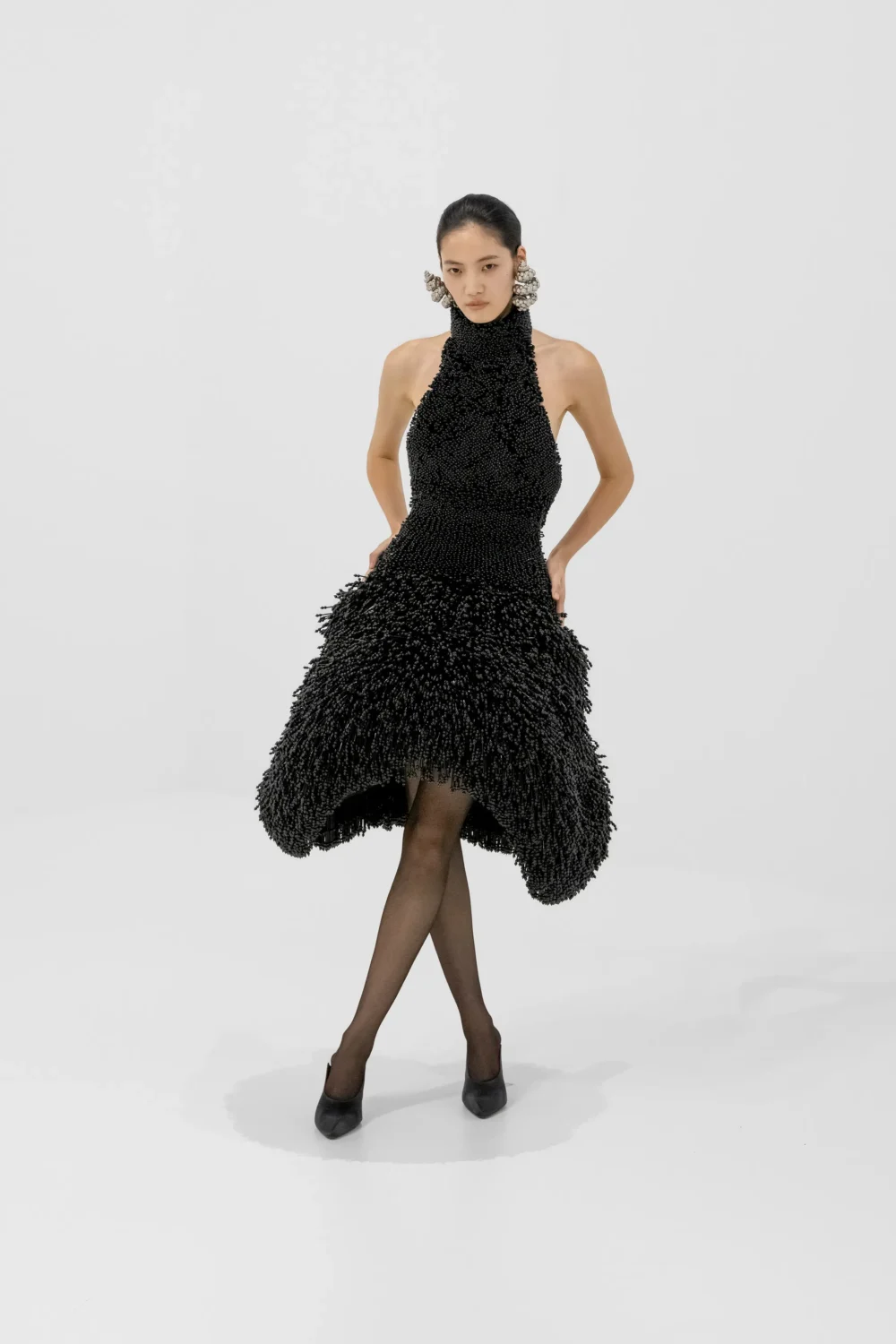
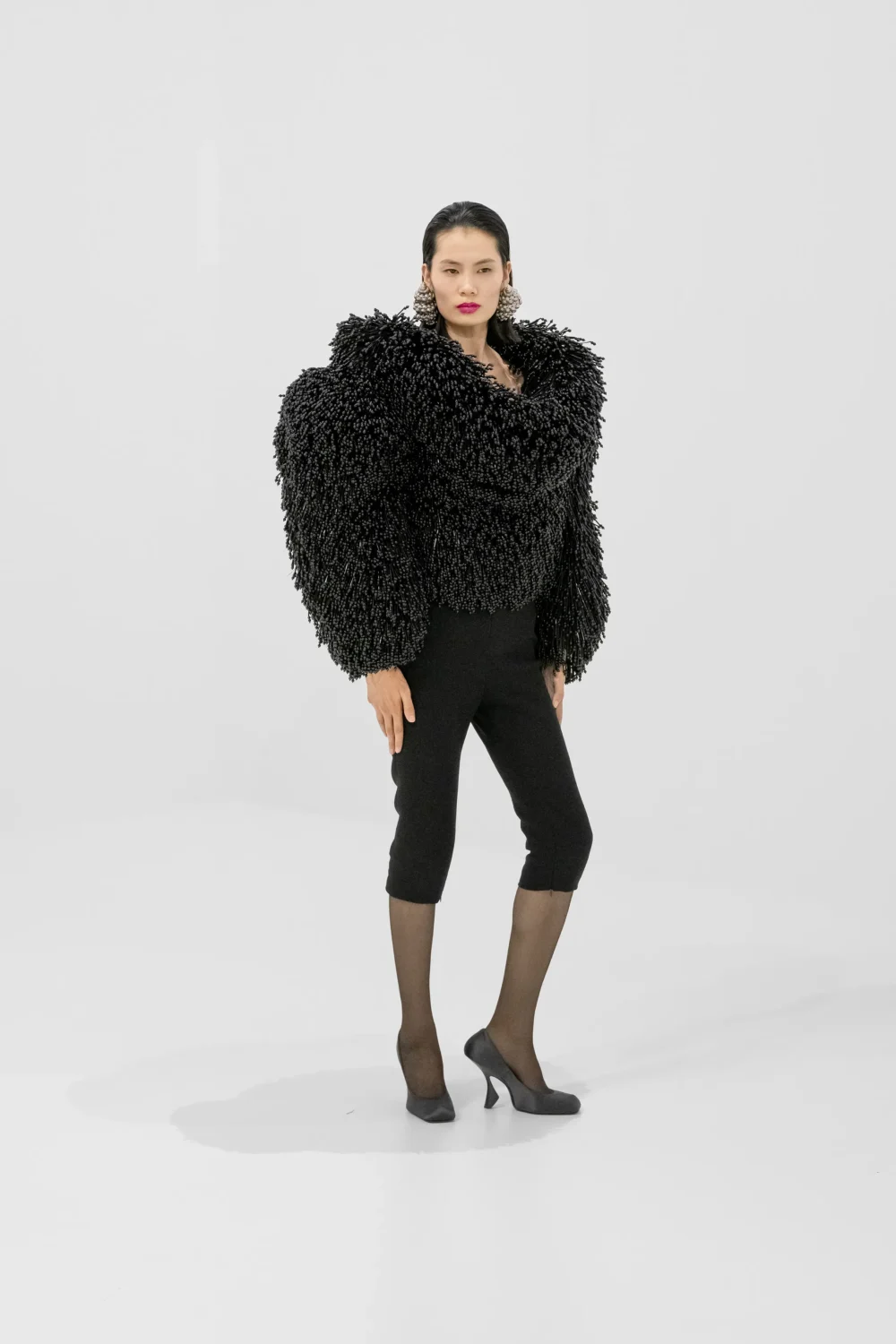
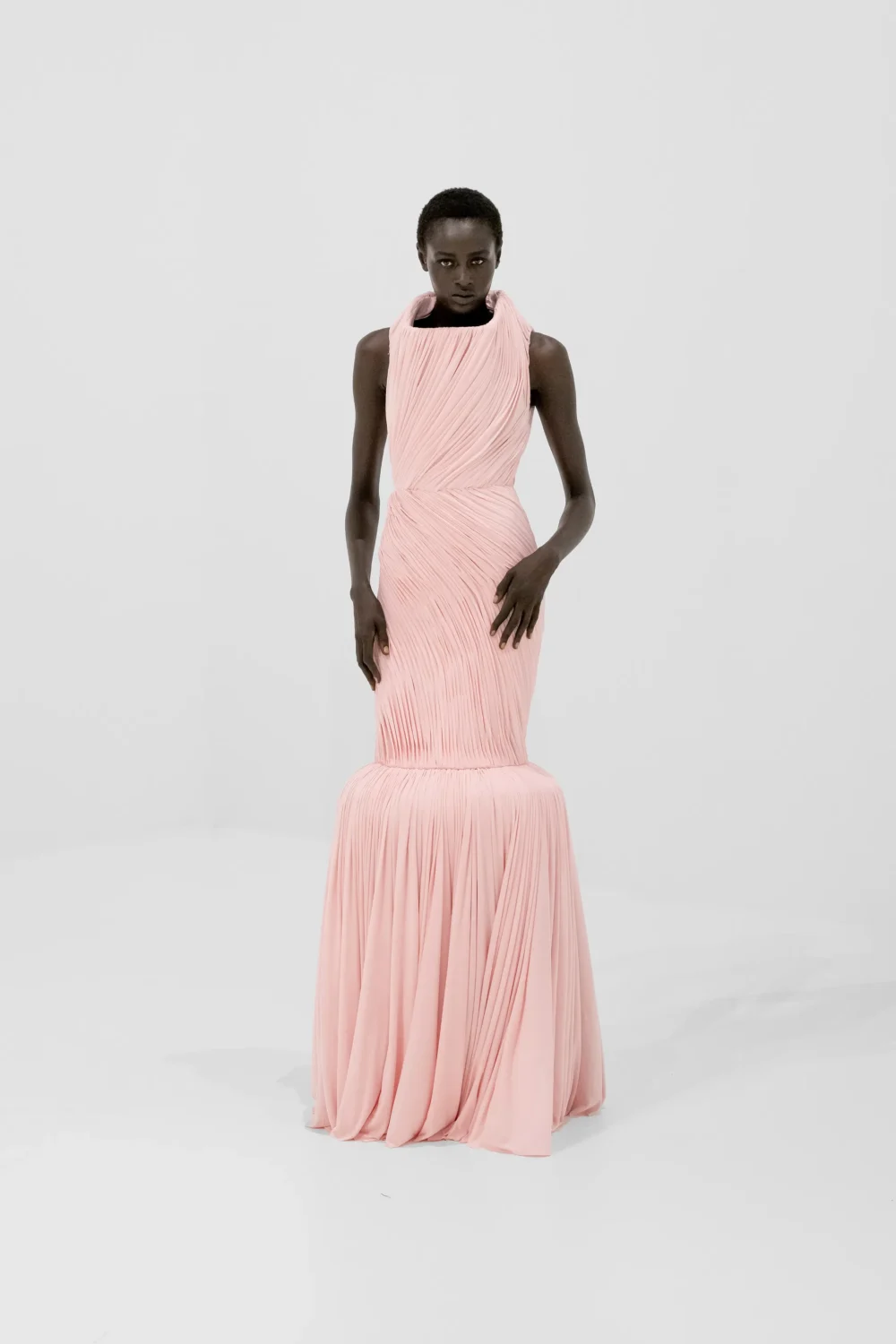
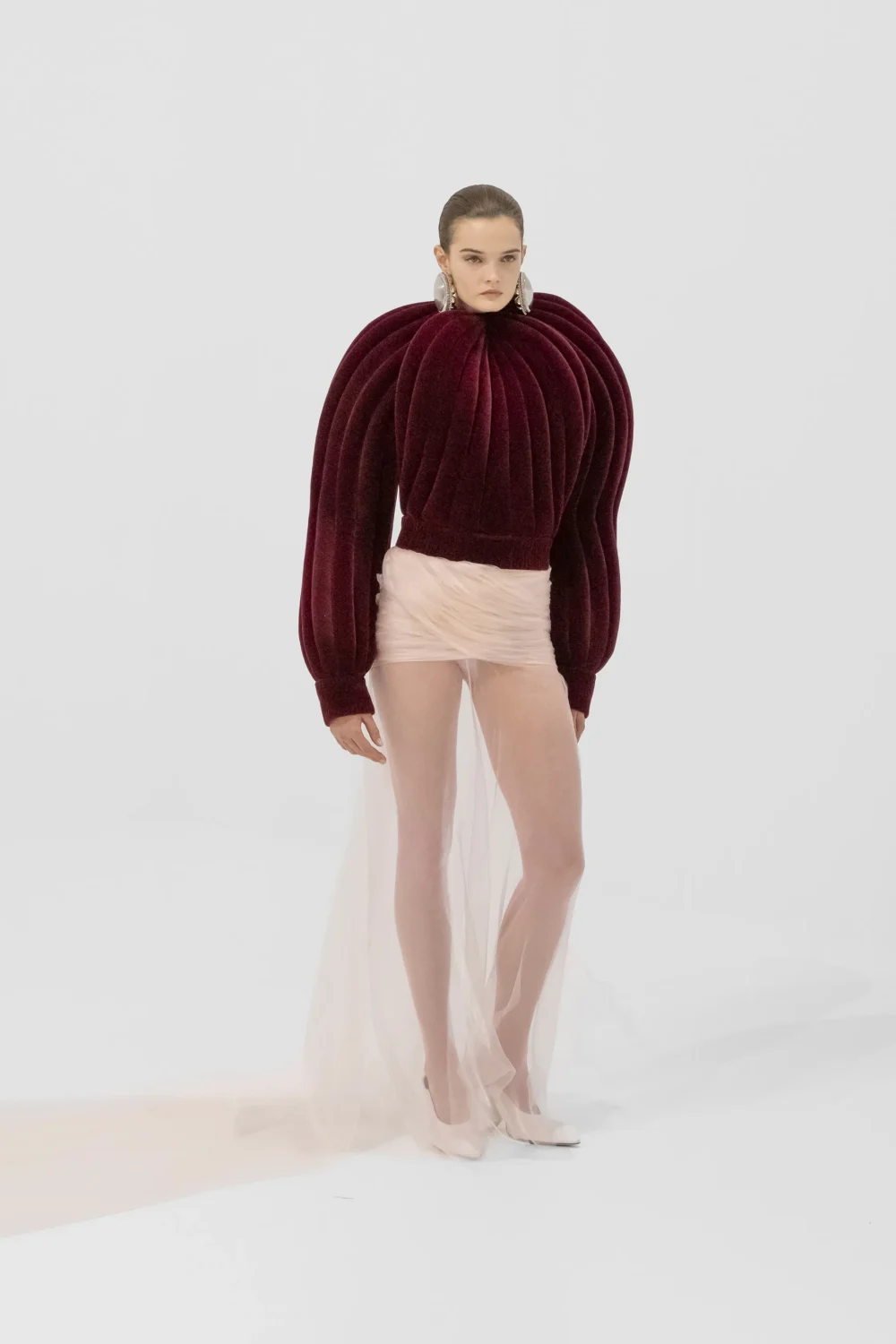
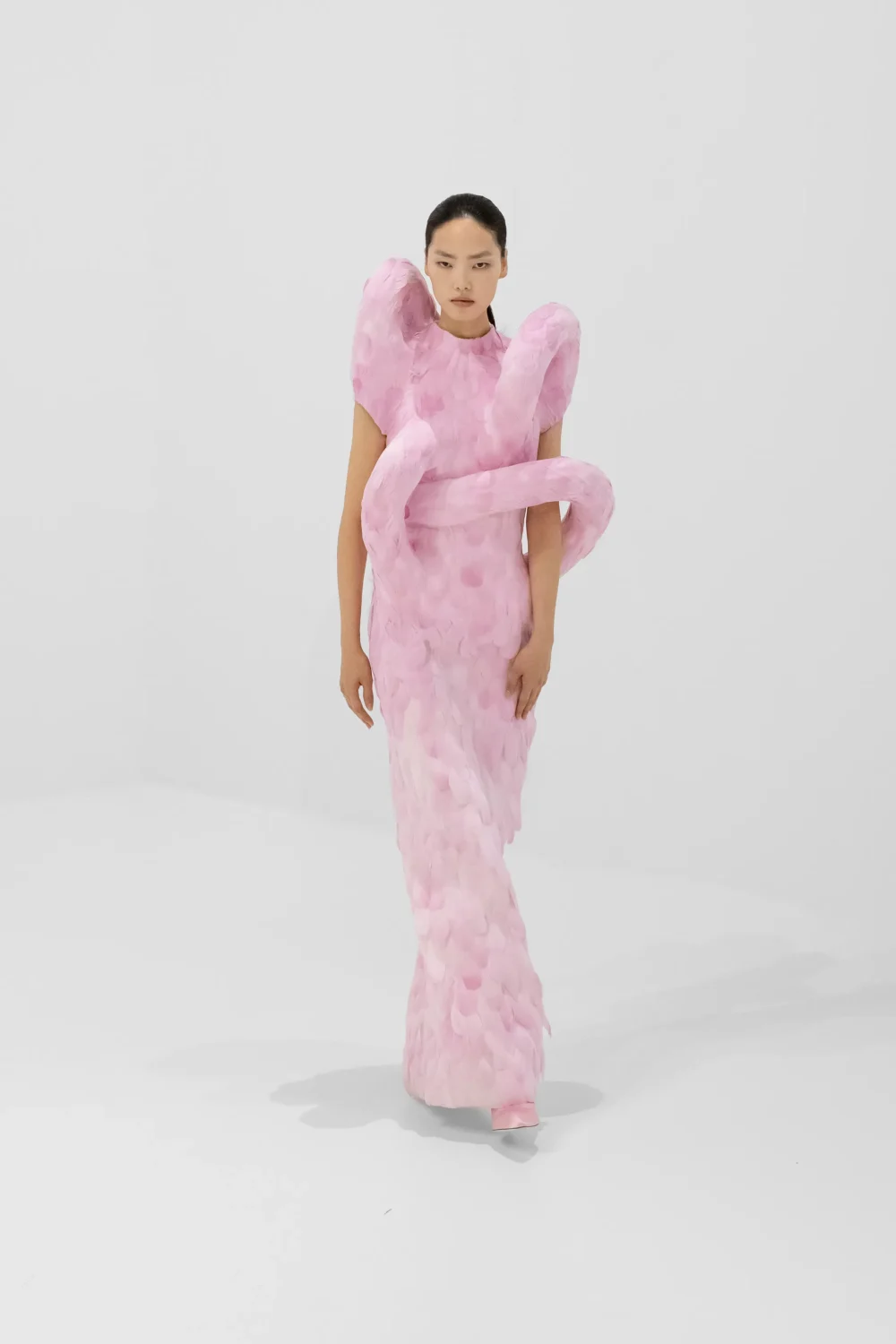
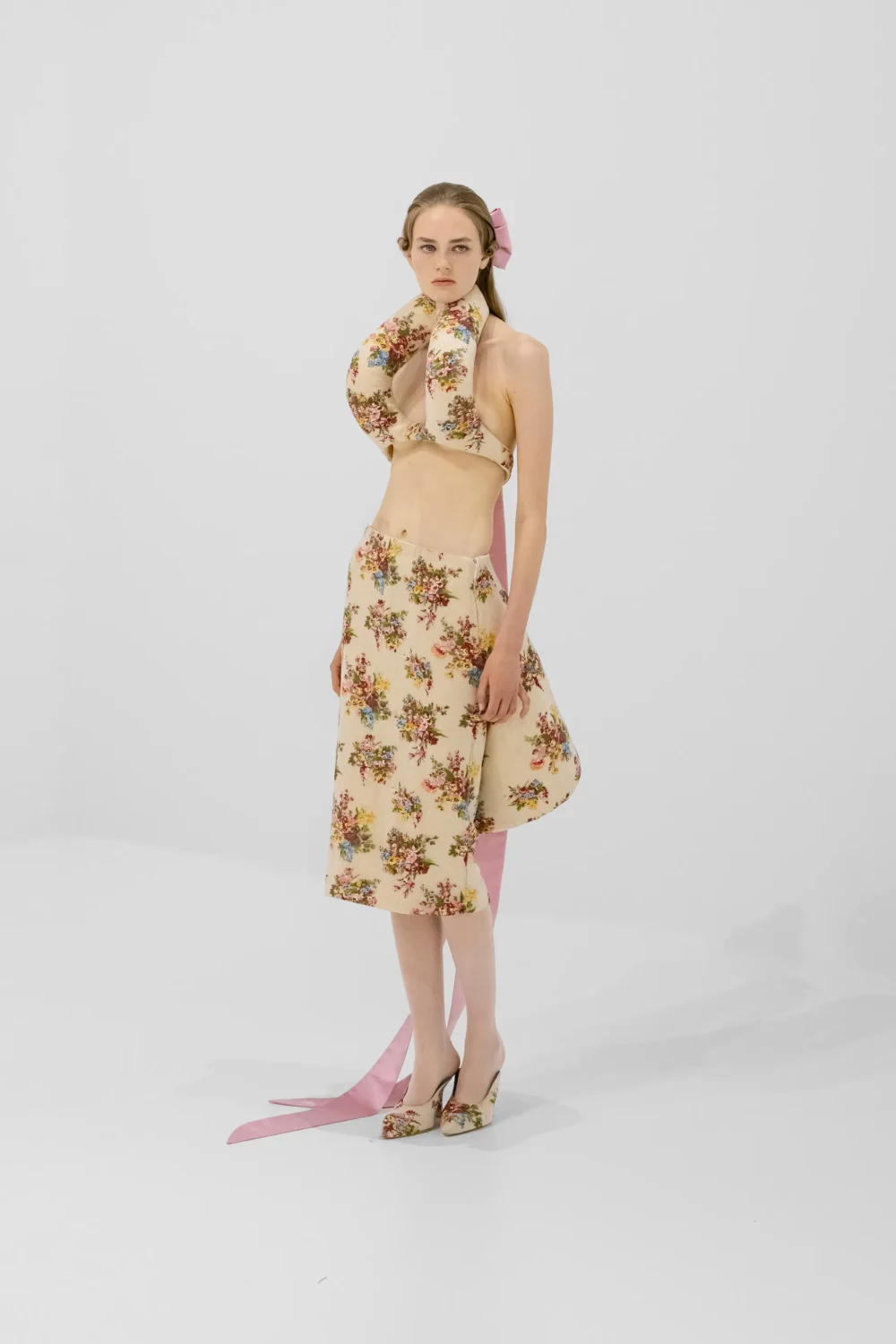
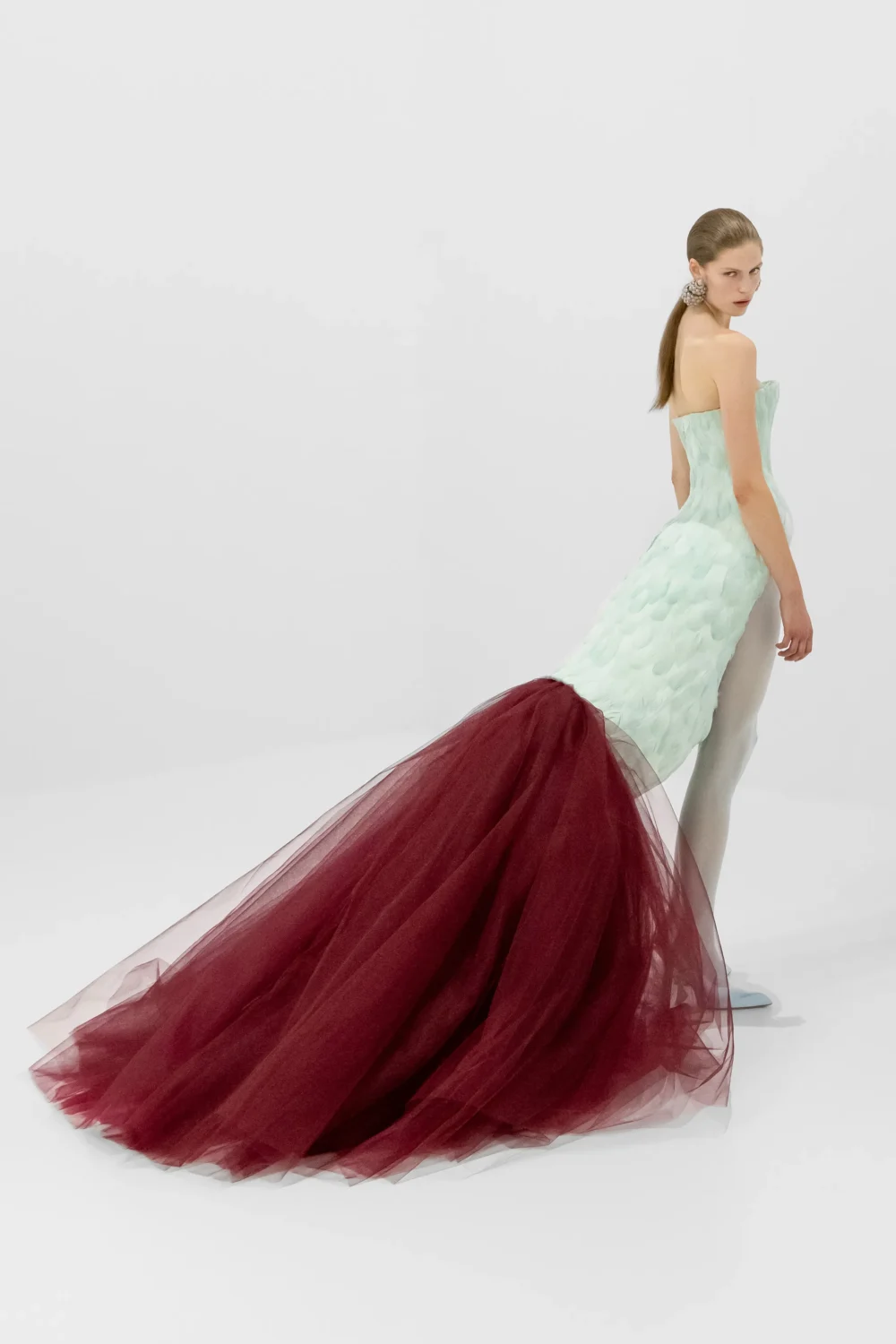
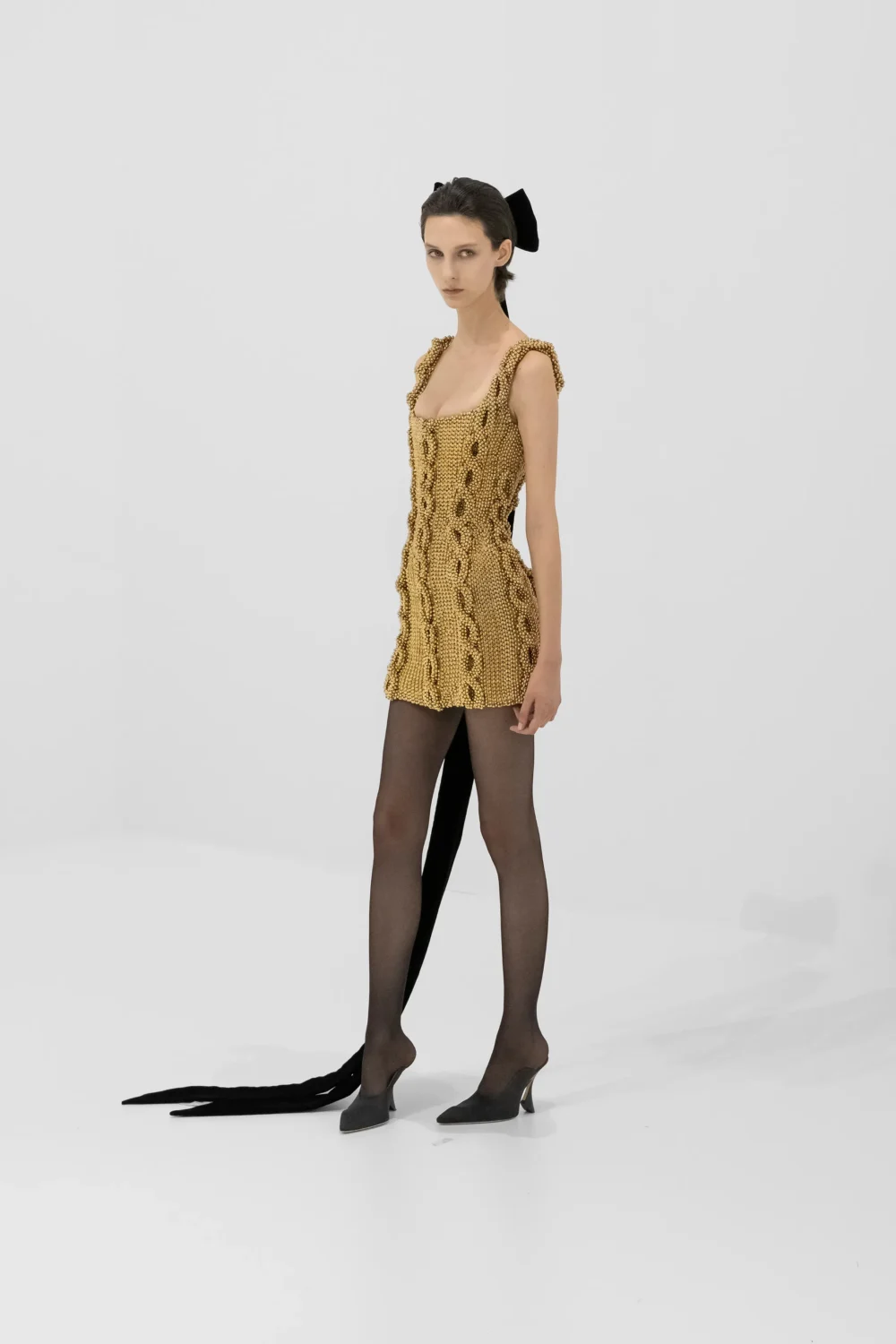
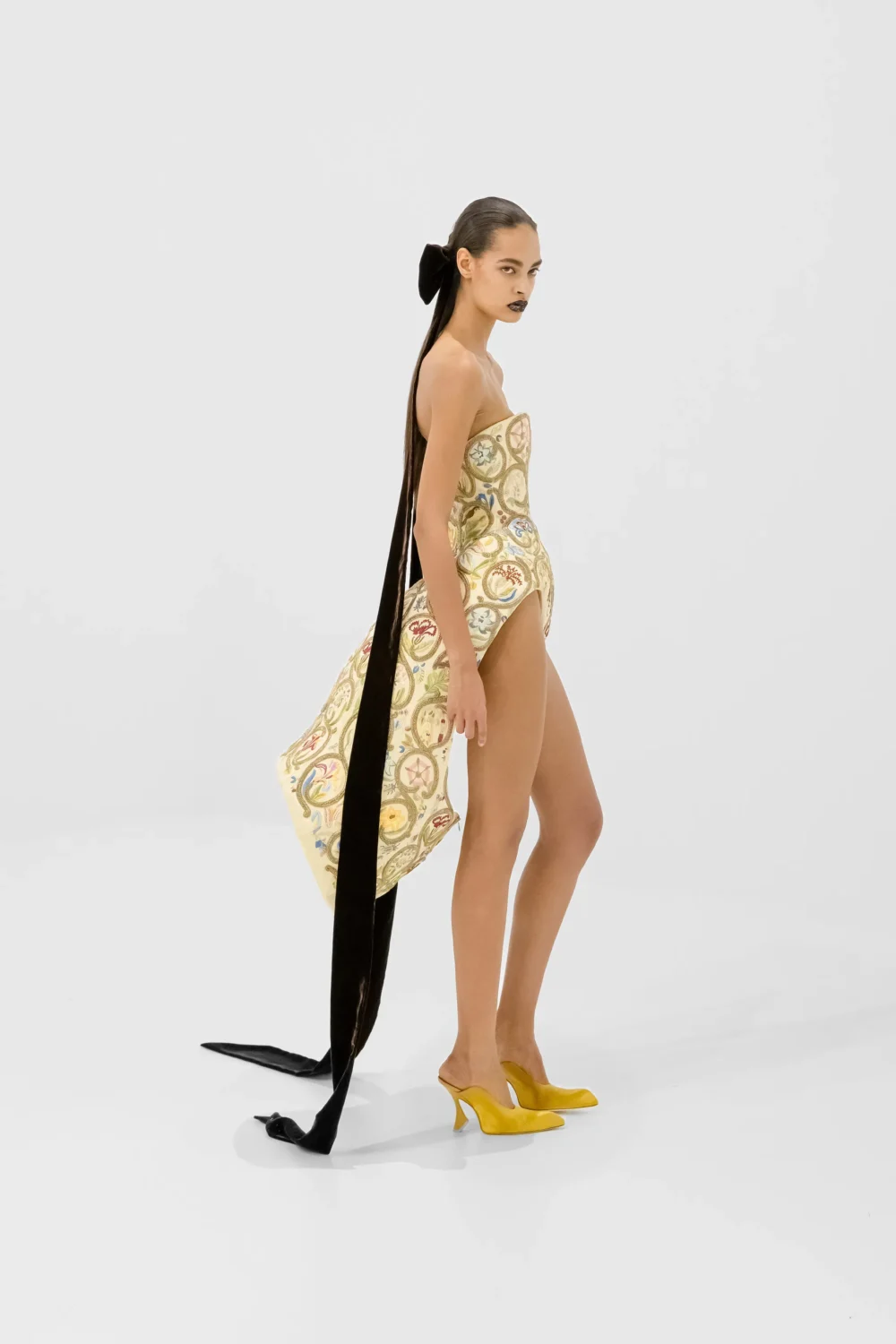
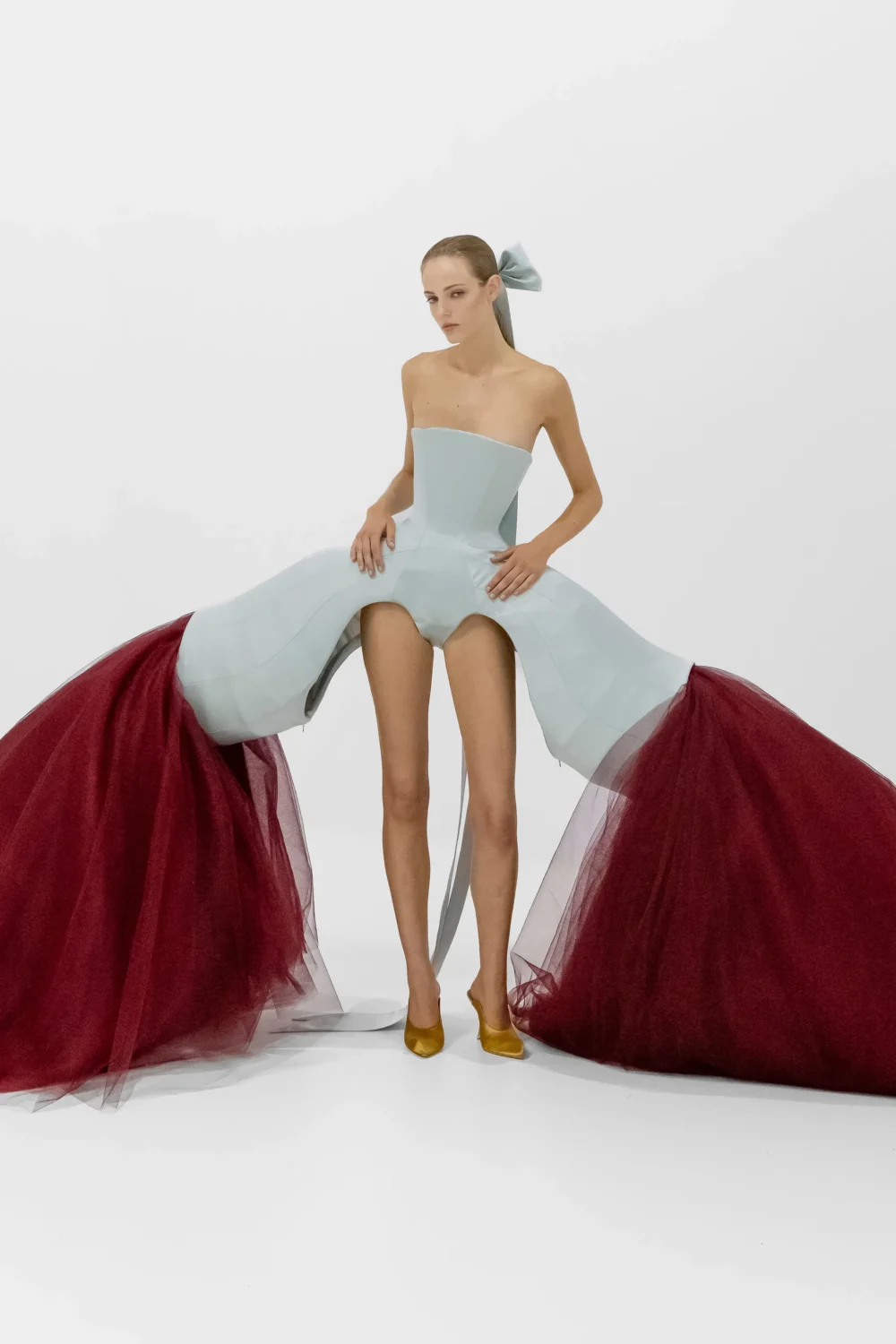
Oversized tubular gowns, exaggerated pannier-like structures and sculptural volumes reshape the body and the room around it. One final look extended so widely that the audience had to move towards the edges of the salon, while other dresses projected tulle from the front and back. Feathers by Maison Février and embroideries inspired by Marie Antoinette’s bed at Versailles reinforce the collection’s connection to the period without turning it into costume.
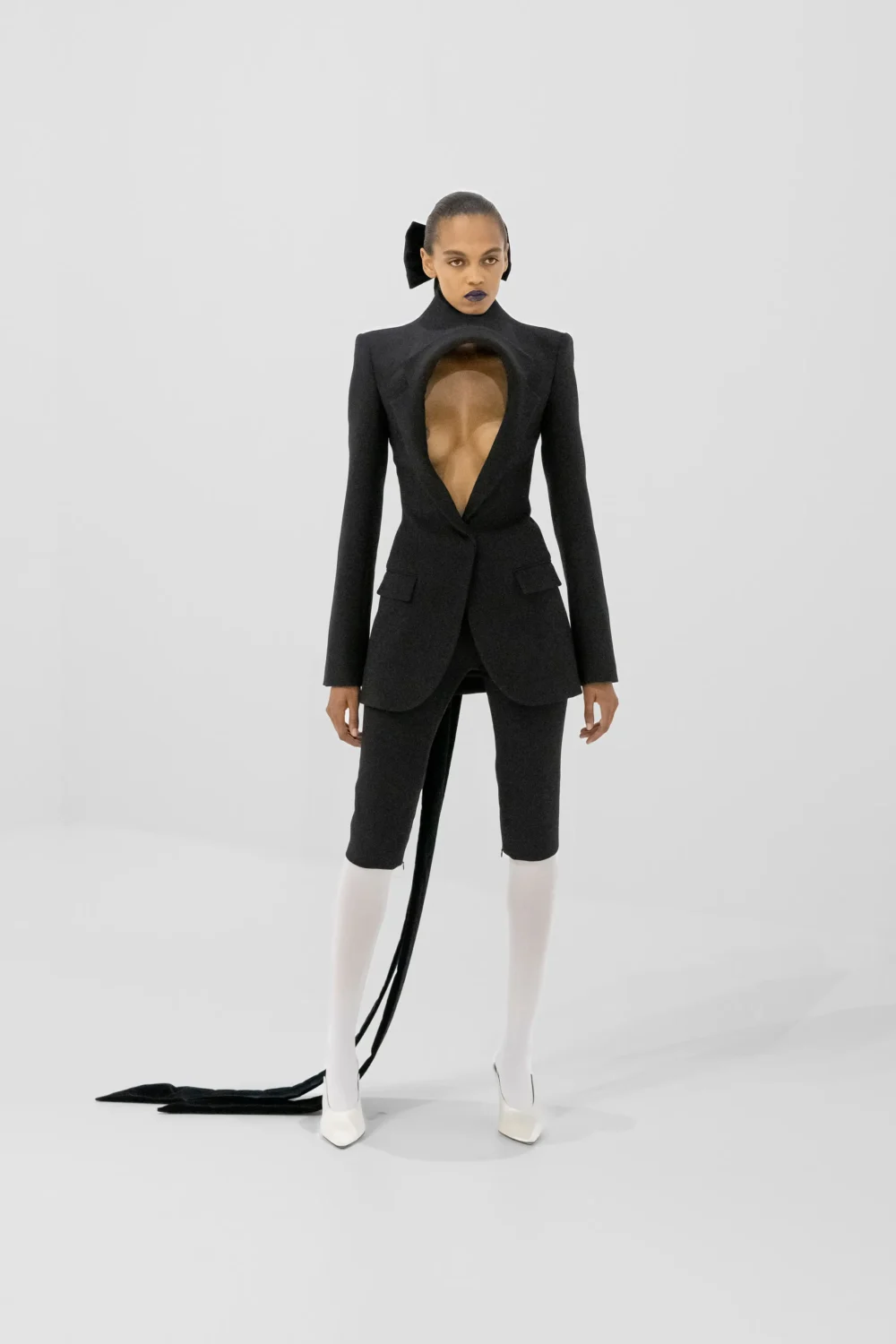
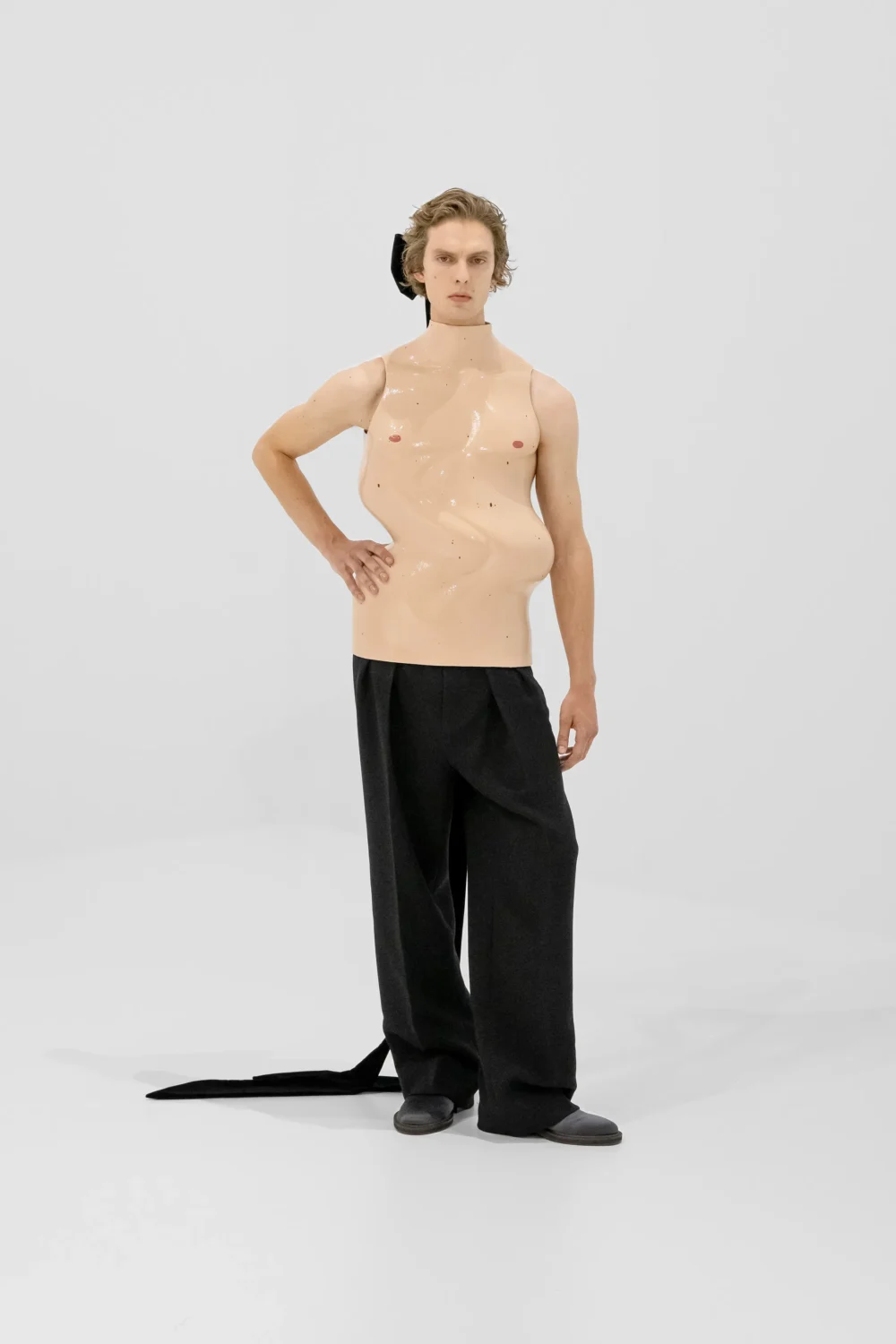
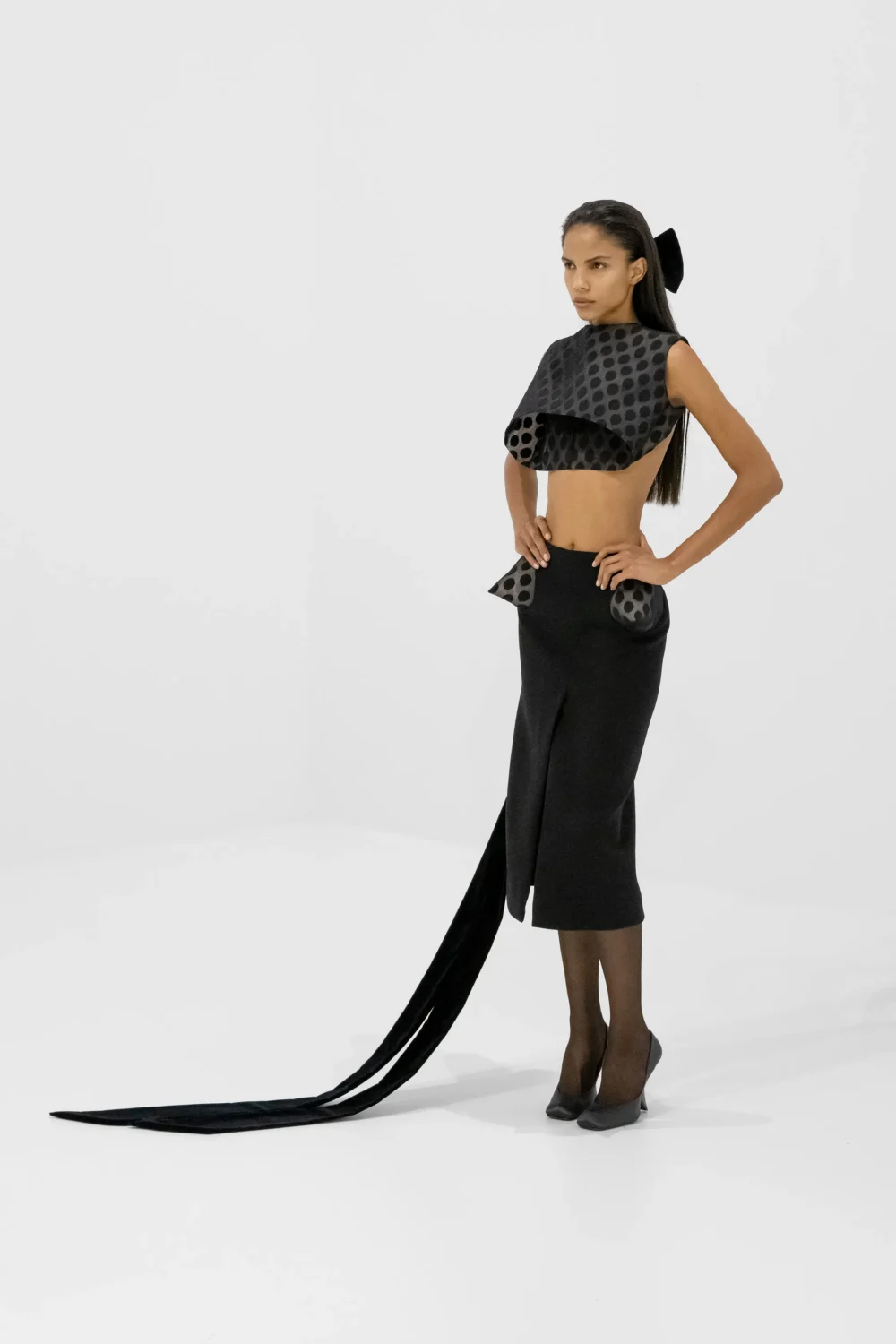
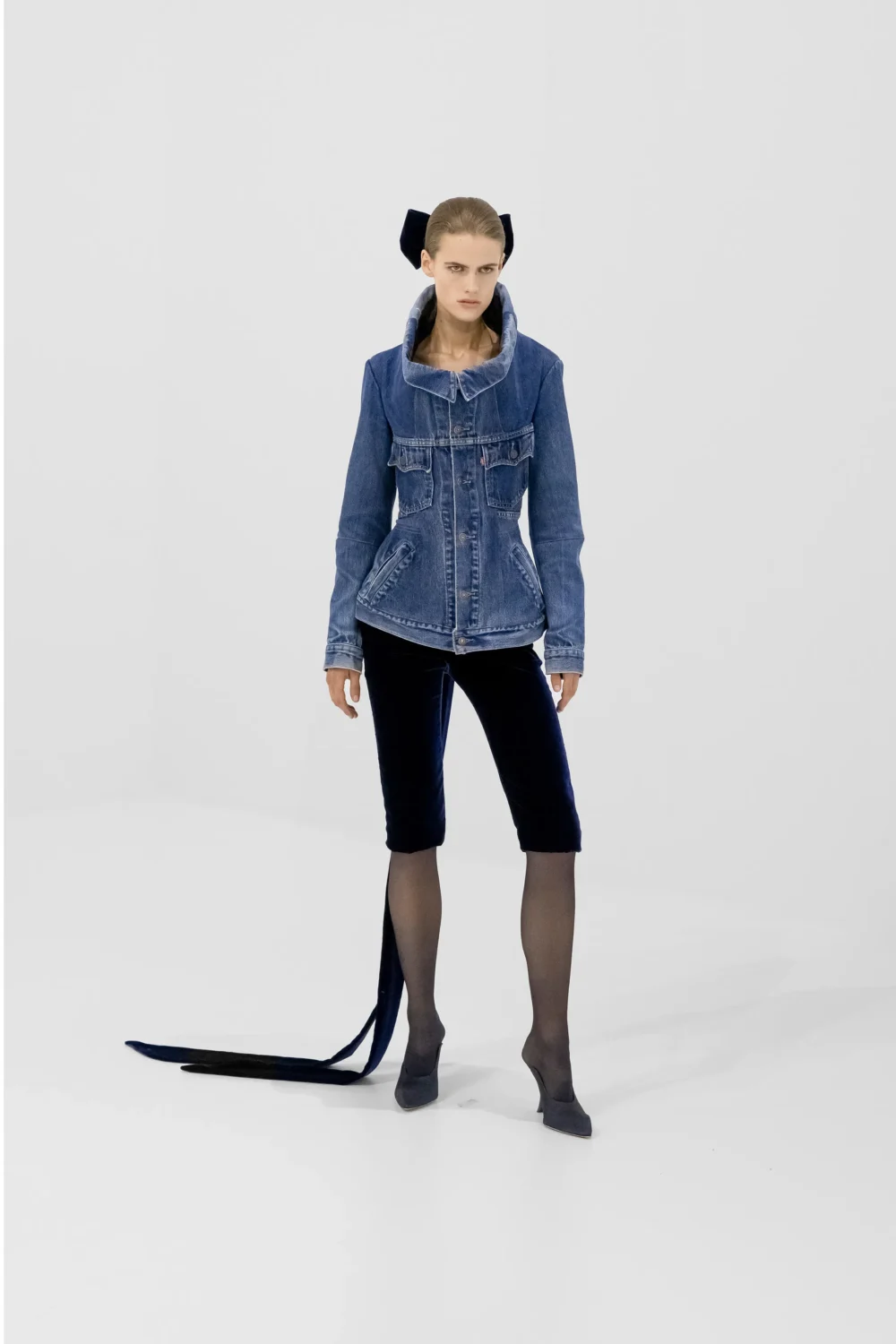
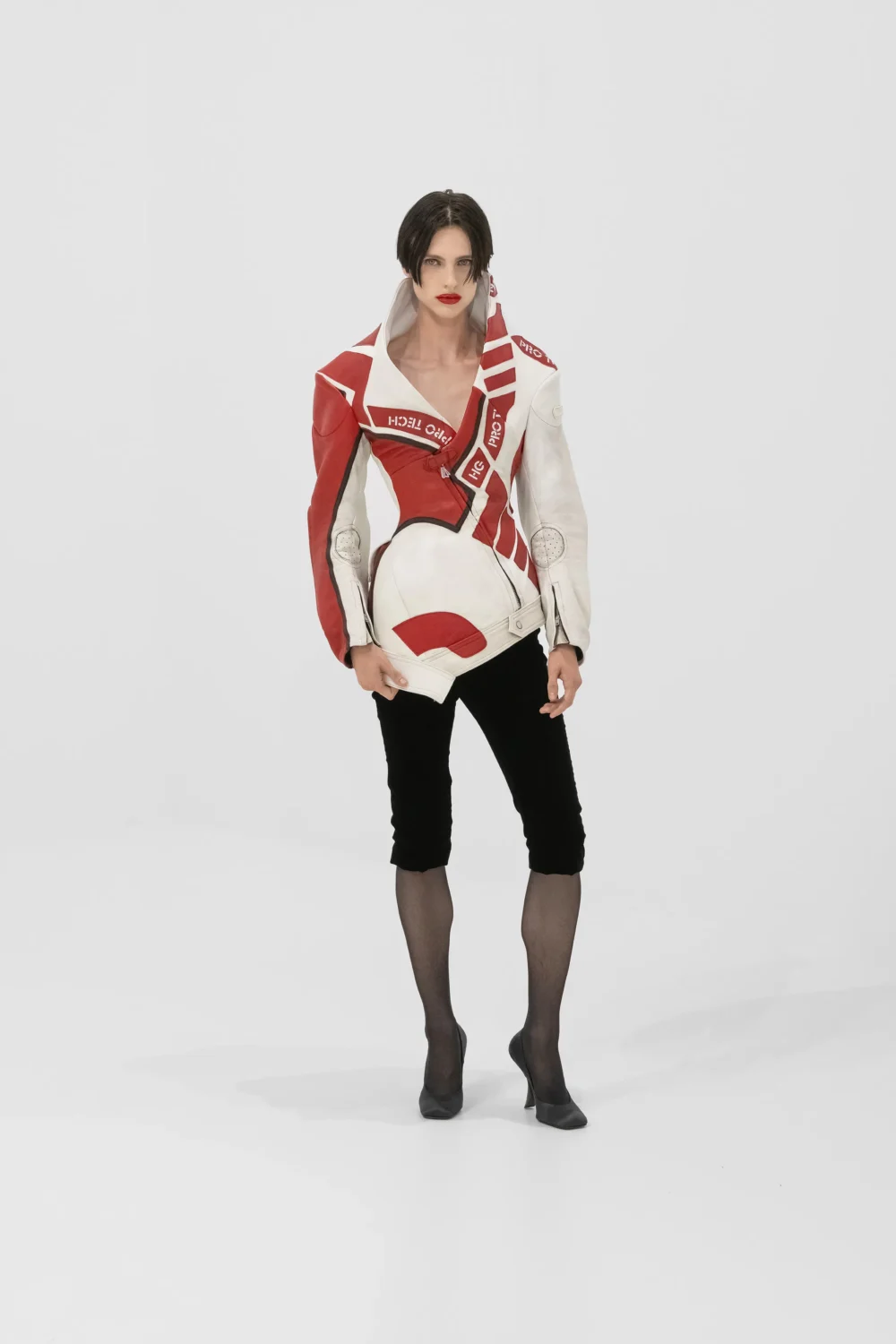
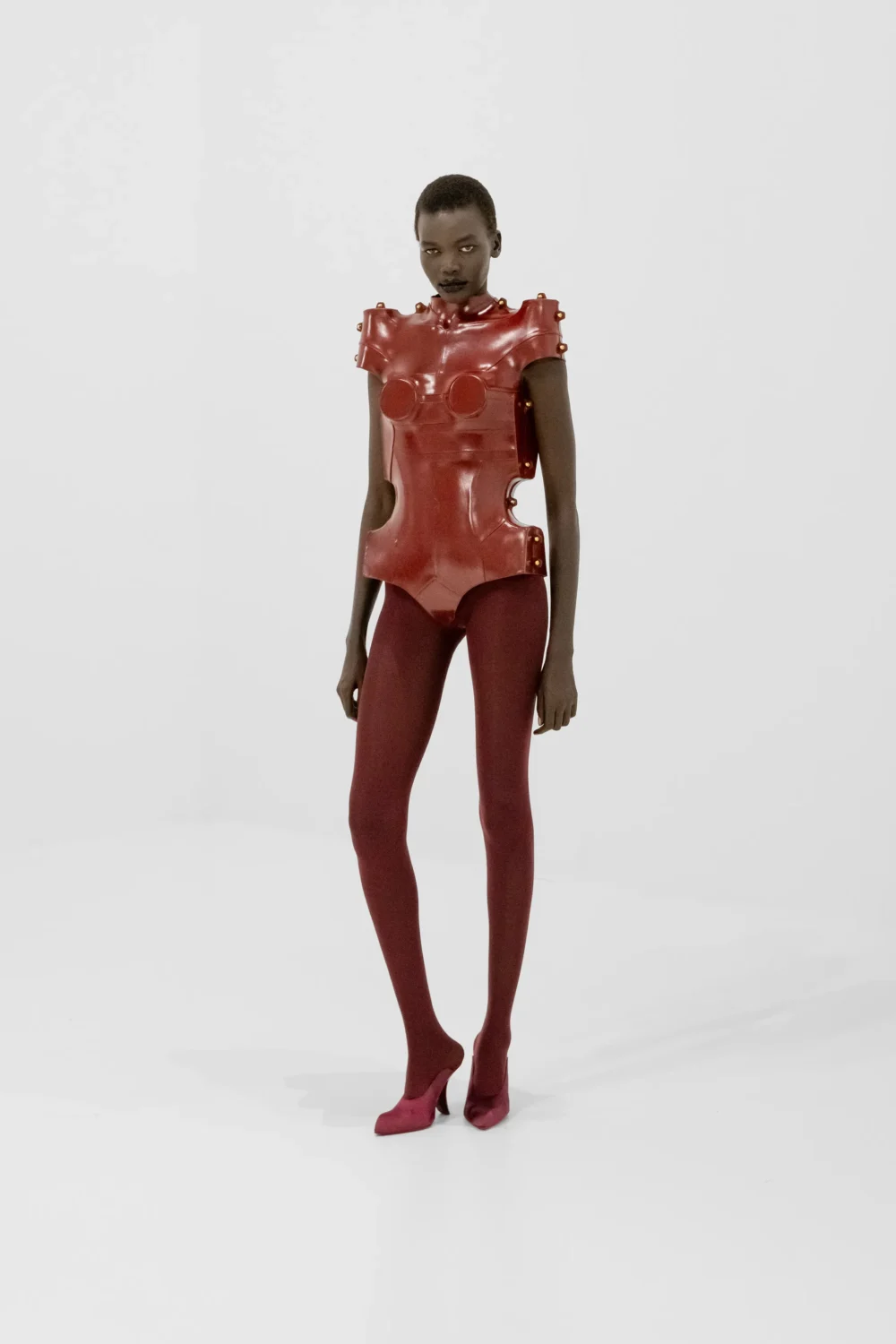
The house’s archive appears through less obvious references. Recycled denim recalls Gaultier’s first couture collection in 1997, burgundy nods to the historic Classique line and anatomical trompe-l’œil effects continue his fascination with nudity and altered bodies. A leather torso reproducing model Leon Dame, including his moles, pushes that visual language into Lantink’s own universe of distortion.
Traditional embroidery, feather work and tailoring coexist with digital body scanning, industrial flocking and 3D printing. The result connects couture craftsmanship with contemporary technology while preserving the humour, theatricality and irreverence associated with the maison. Lantink’s rococo future feels extravagant, unsettling and built to take up space.
—
Follow us on TikTok @veinmagazine