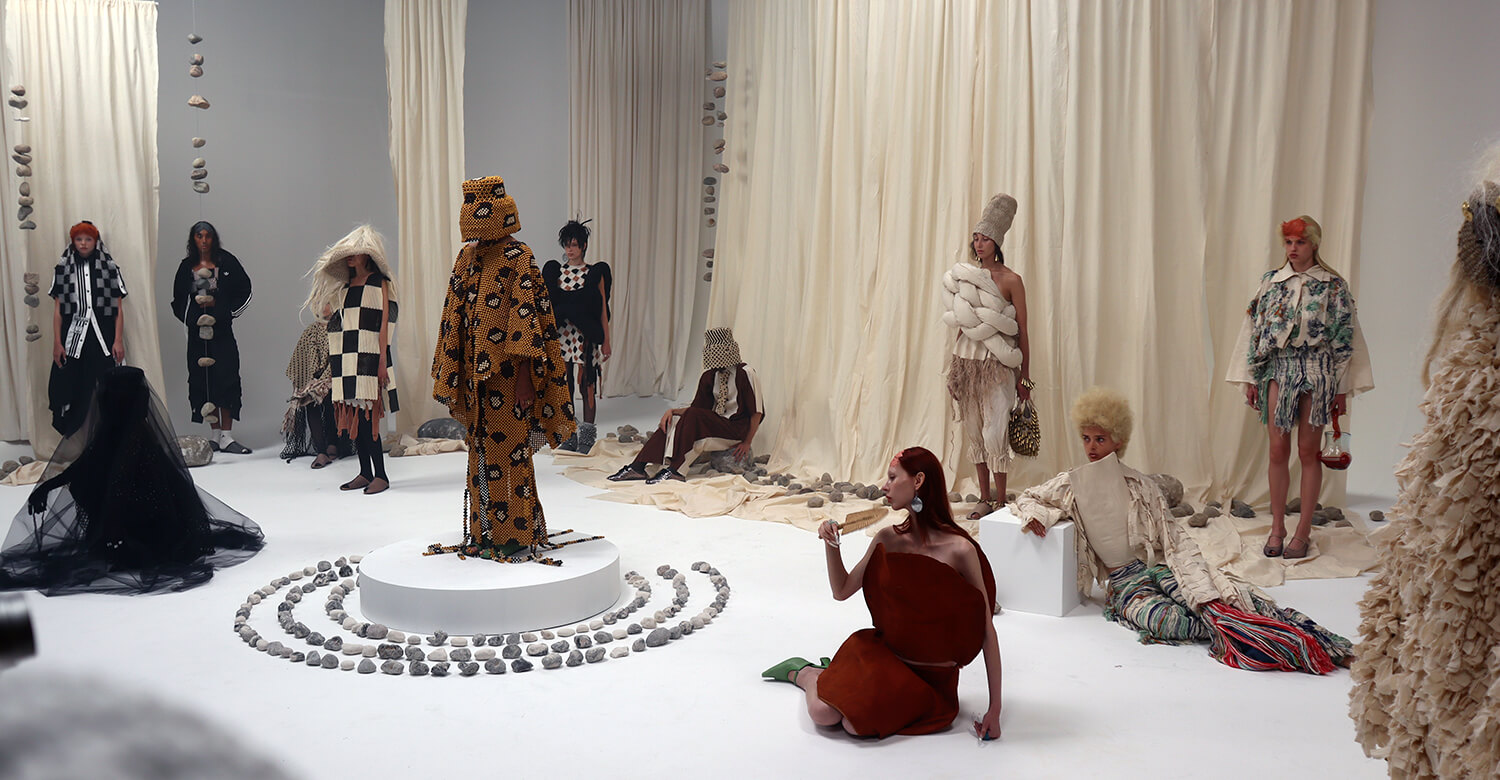
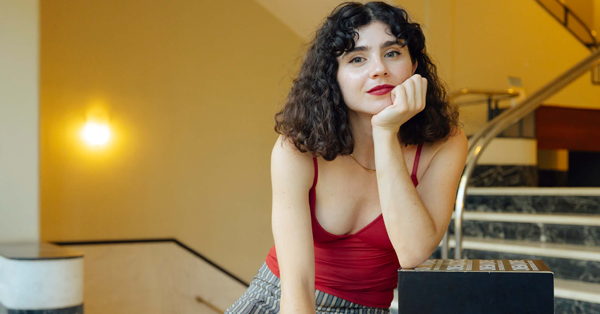

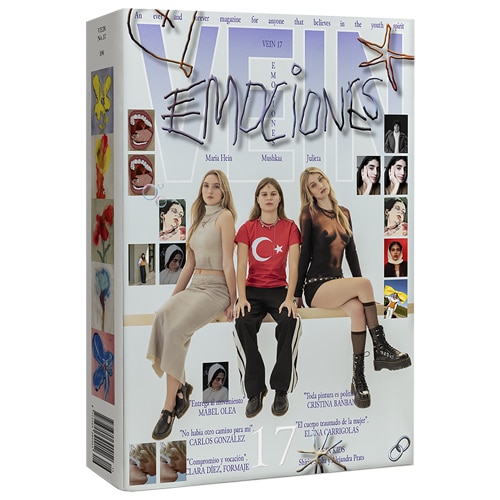
Over nine days, we covered 25 shows, 10 presentations and 30 showrooms, moving through Paris in a season that felt as much about the world around fashion as the clothes themselves. From conversations about fabrics, craft and new approaches to knitwear to wider discussions around geopolitics, identity and the role of fashion today, This Paris Fashion Week unfolded against a city in constant motion. Student protests, strikes, Pride celebrations, Céline Dion concerts and the recent departure of the Pope from Paris all formed part of the backdrop to a particularly busy week.
Paris pointed towards lightness, sensuality and craft, with sheer fabrics, fluid silhouettes, lingerie, exposed skin and clothes that move around the body. Skirts are back in focus, while intricate knitwear, lace, embroidery and handmade details underline a renewed interest in how clothes are made. Designers also looked backwards, reworking Gothic, romantic, folkloric and archival references through a contemporary lens, while bright color offered flashes of optimism against a palette of black, white and neutrals. Above all, there was a feeling of fashion becoming more wearable and adaptable, balancing experimentation with clothes designed for real life.
There is a lot to analyze and digest over the next few weeks as we watch these ideas begin to unfold beyond the runway and into the wider fashion landscape. But with so much unpredictability in the world right now, at least Fashion Week gives us a little idea of where fashion might be headed next.
Aje
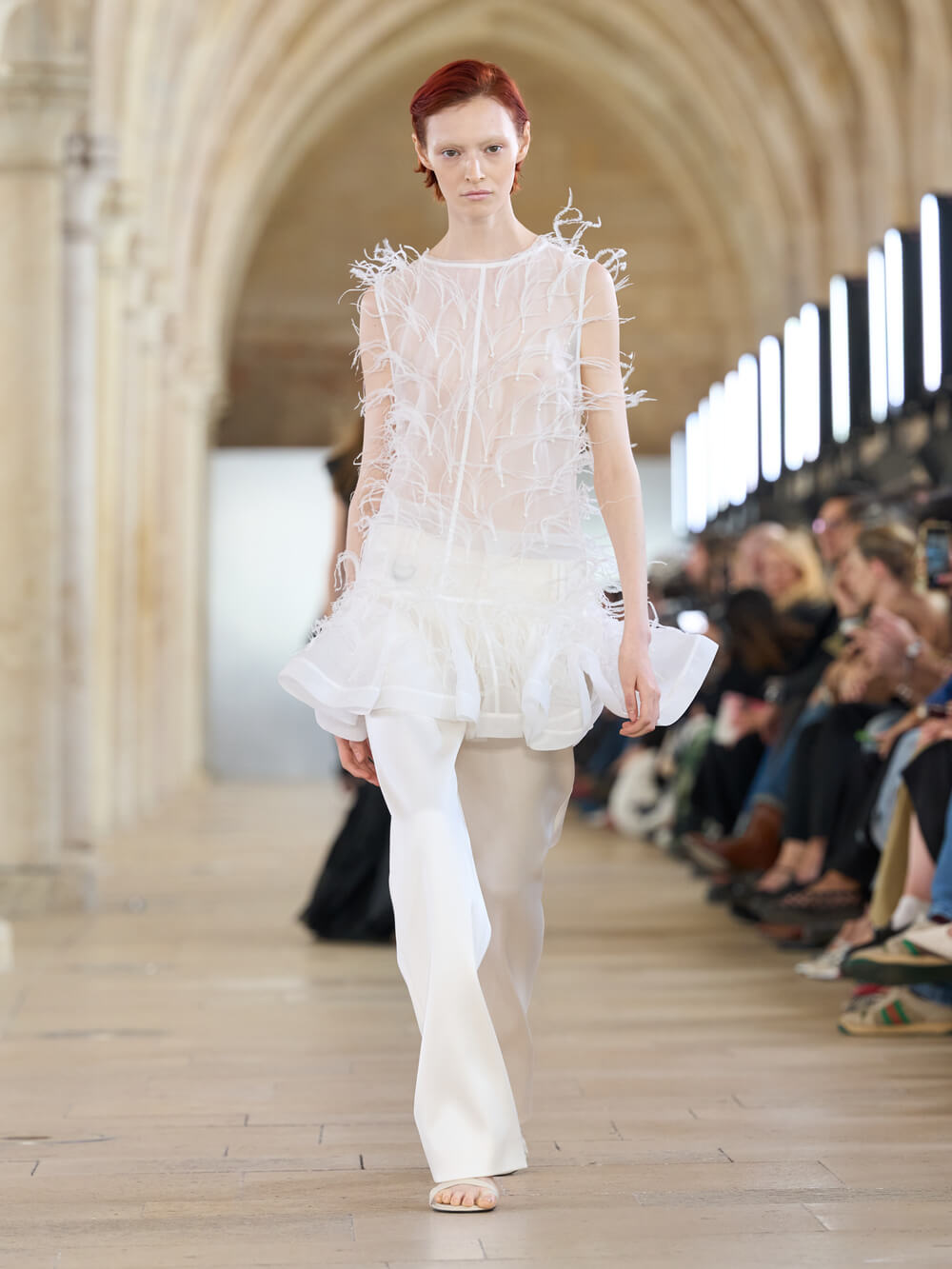
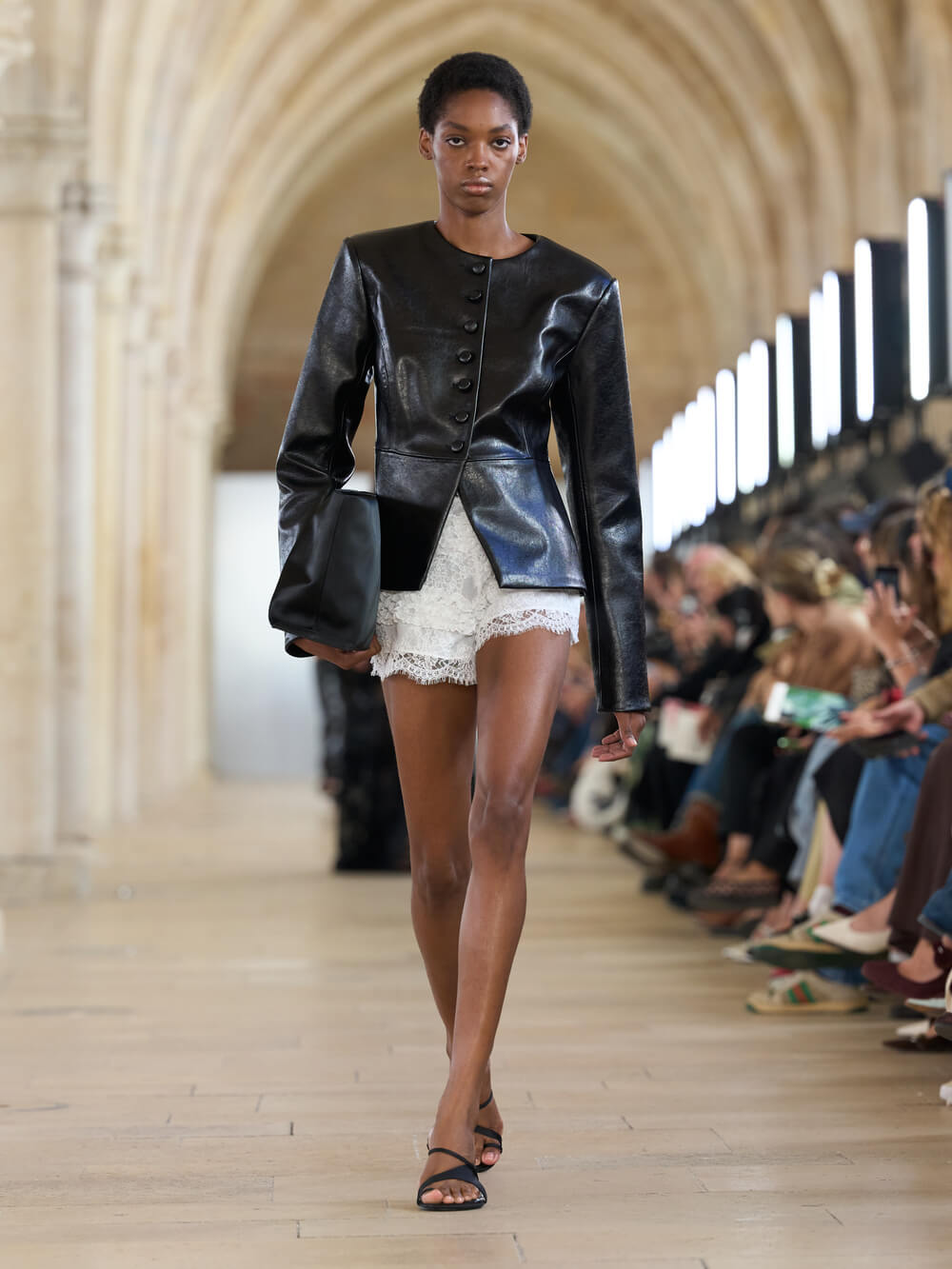
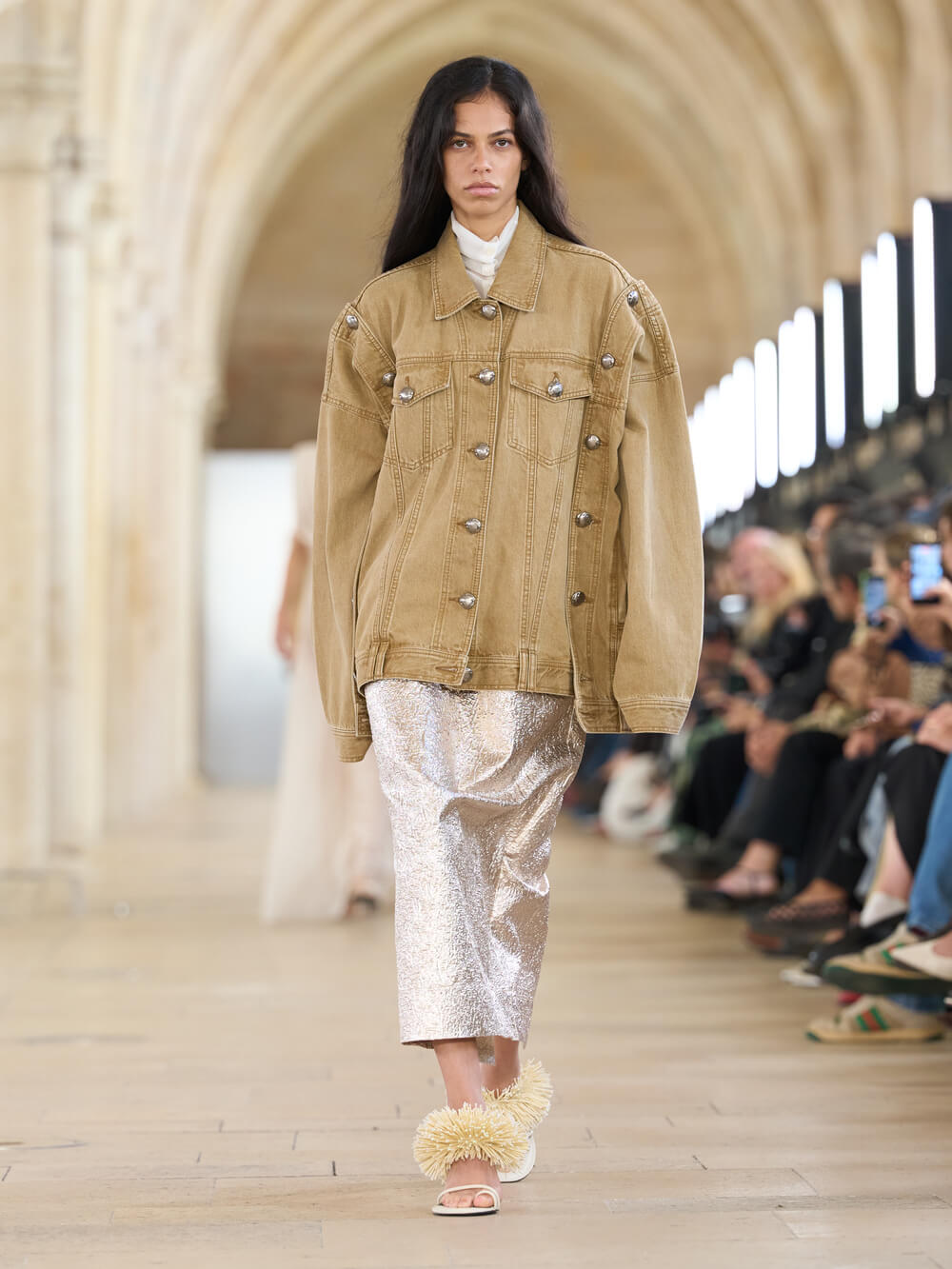
Aje’s Spring Summer 2027 collection, ‘Unfurled’, by co-founders Adrian Norris and Edwina Forest, brought the raw beauty of Australian flora into focus during Paris Fashion Week, presented at the historic Collège des Bernardins. Created in collaboration with Australian artist Vicki Lee, the collection transformed banksia, bottlebrush, grevillea and milk thistle into hyperreal prints, sculptural floral embellishment and tactile surfaces. Floating organza, sheer chiffon and sweeping georgette gave the silhouettes a sense of fluidity, while beaded fringing, petal appliqué, reflective finishes and crackled leather added depth. A palette spanning black, ivory and champagne opened into pistachio, emerald, khaki and silver before settling into earthy browns, soft pinks and sun warmed sand, with distressed jacquards, raw hems, denim and industrial buckles bringing an undone Australian ease to the polished craftsmanship.
CFCL
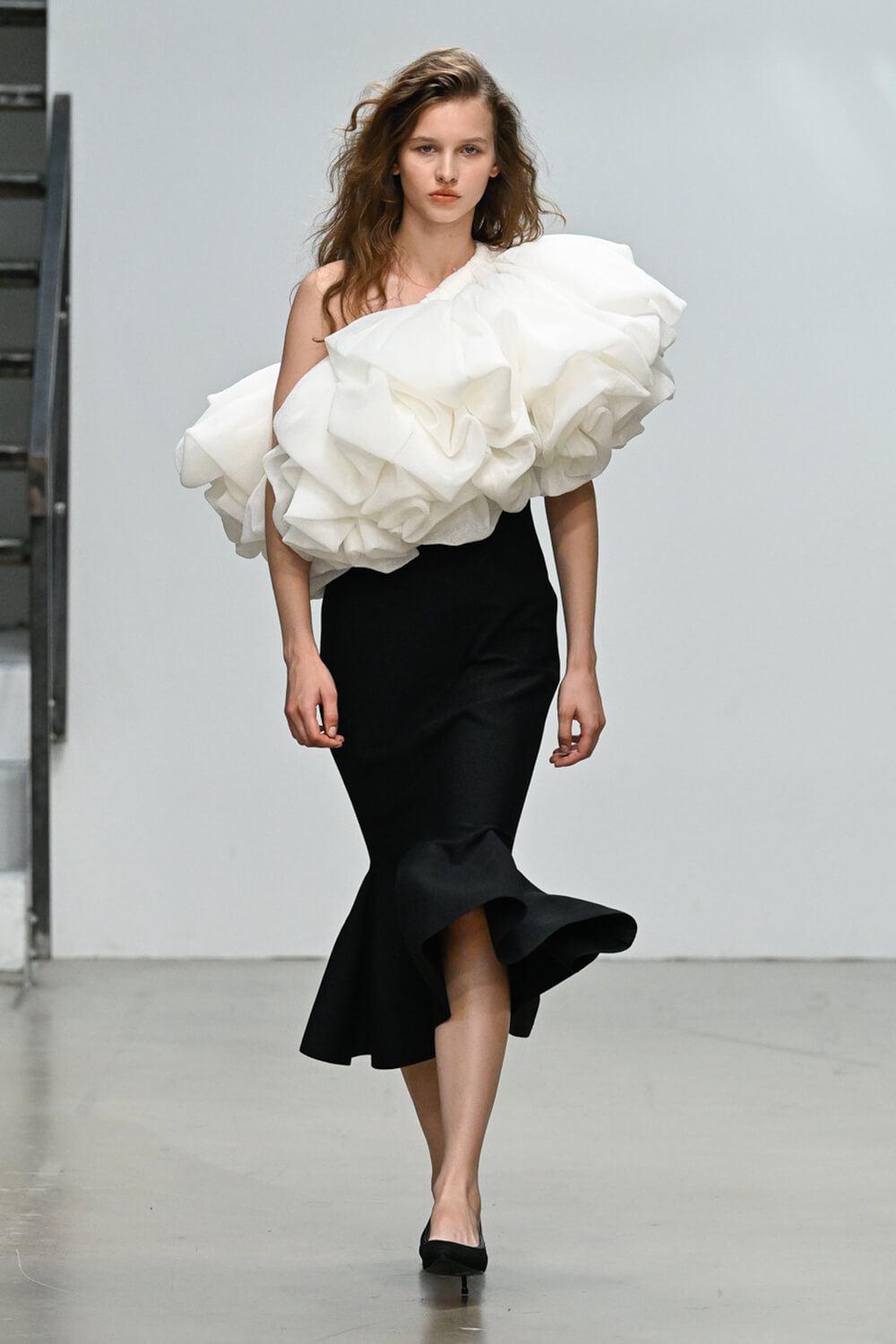
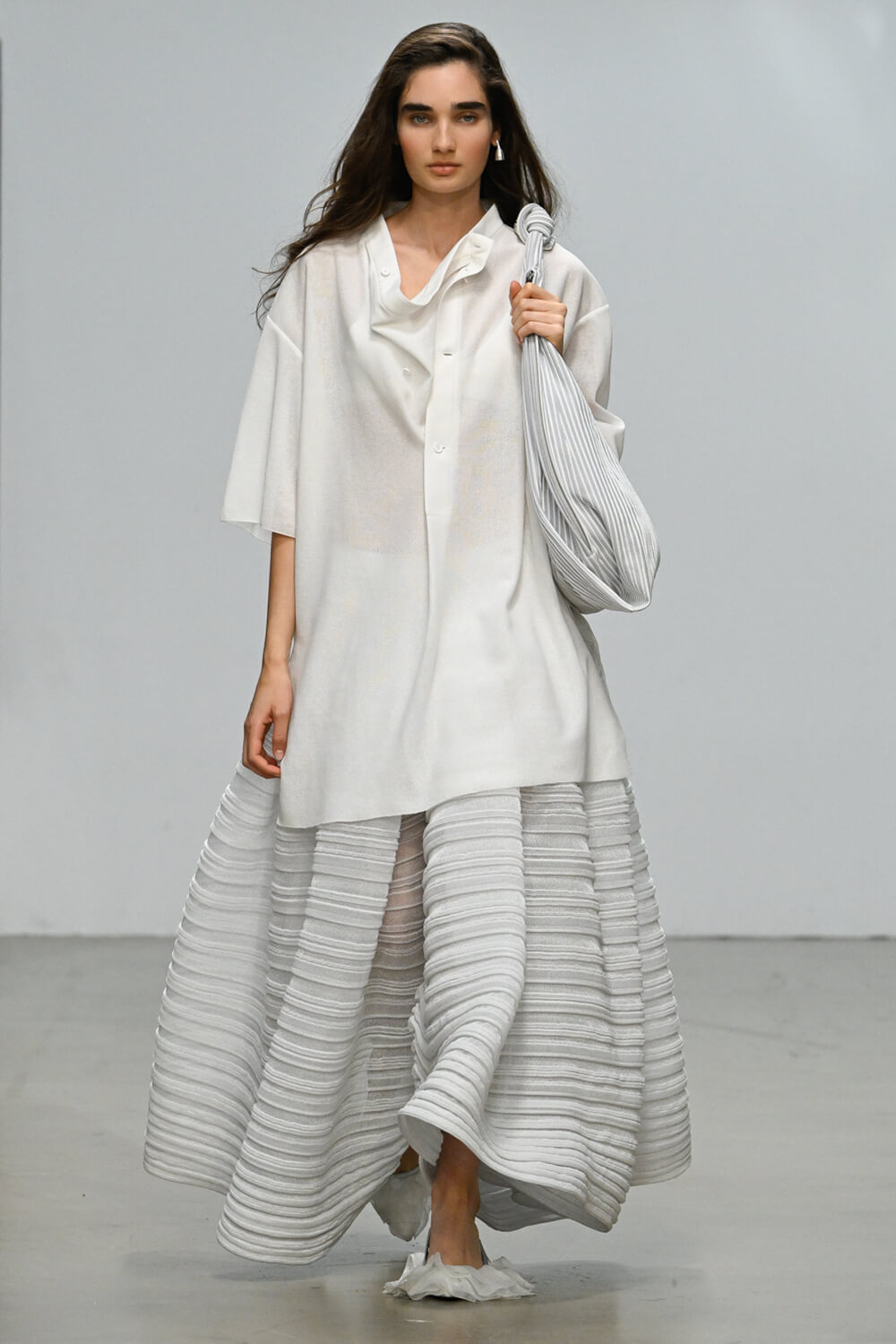
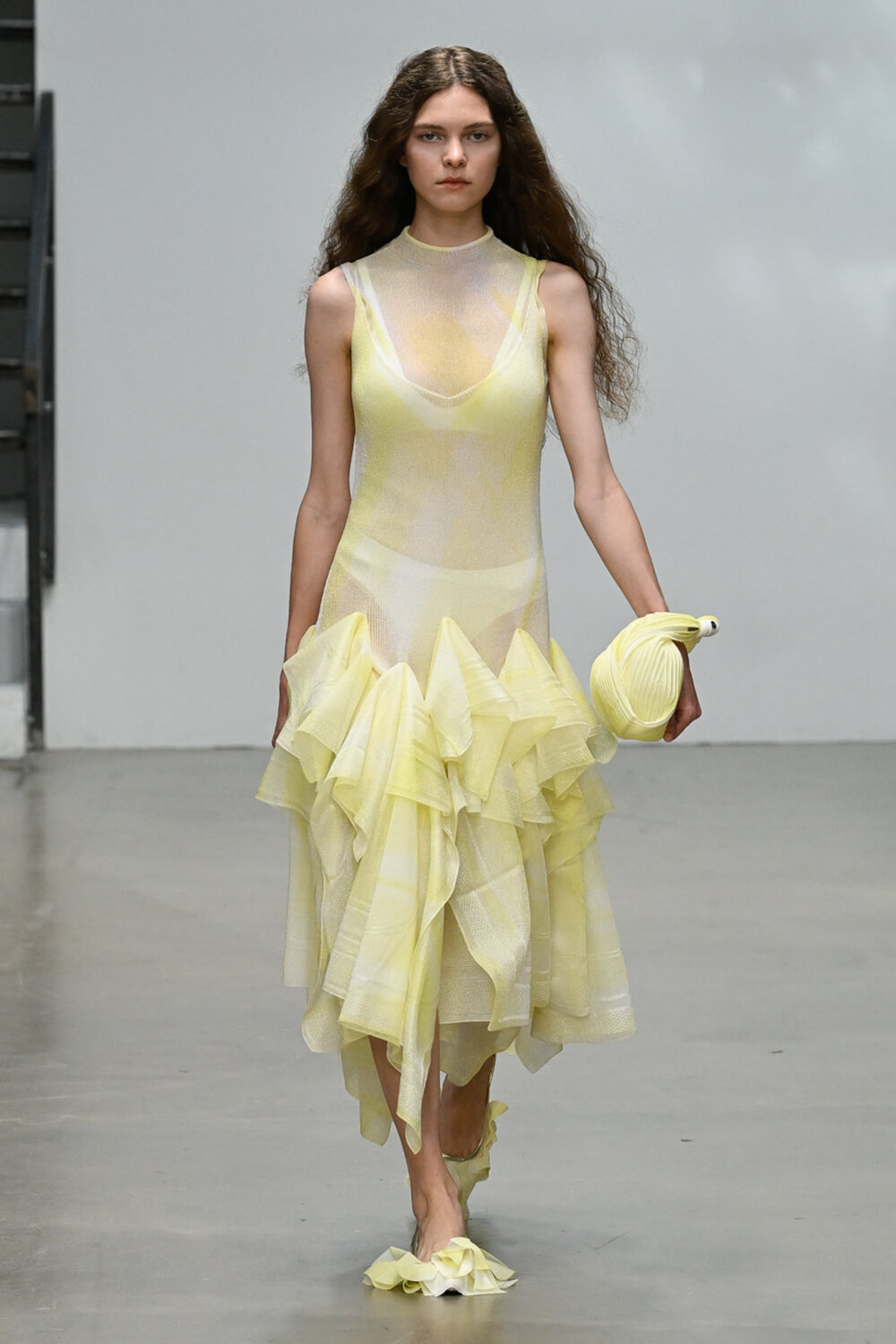
For Spring Summer 2027, CFCL founder and designer Yusuke Takahashi presented VOL.13 at Palais de Tokyo on the final day of Paris Fashion Week. Set inside a surreal living room where chairs appear to sink into the floor and fruit is scattered across the space, the presentation transformed familiar domestic details into something dreamlike. Korean DJ duo Salamanda’s playful, pop infused sounds accompanied a collection centered on luminous color, organic forms and lightweight knitwear, creating a softer relationship between clothing, body and space. Built around the idea of harmony, VOL.13 considers how fashion can balance function and beauty, humanity and nature, while responding to both the physical body and our emotional lives. Using 3D computer aided knitting and recycled fibers, Takahashi expands the possibilities of knitwear through fluid silhouettes, organic curves and an open sense of lightness. In a time of uncertainty, CFCL offers a vision of clothing that feels optimistic, functional and closely attuned to contemporary life.
De Pino
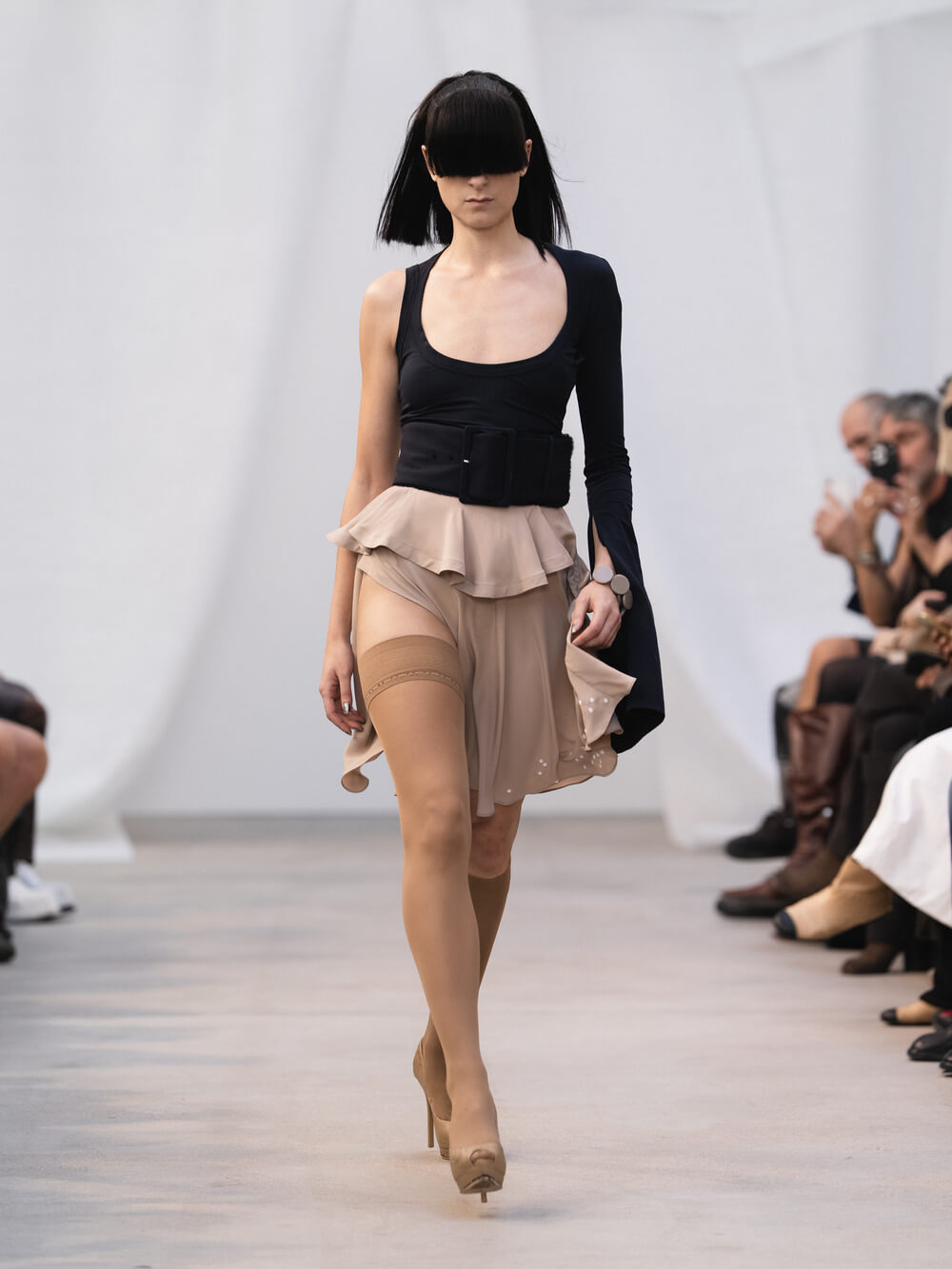
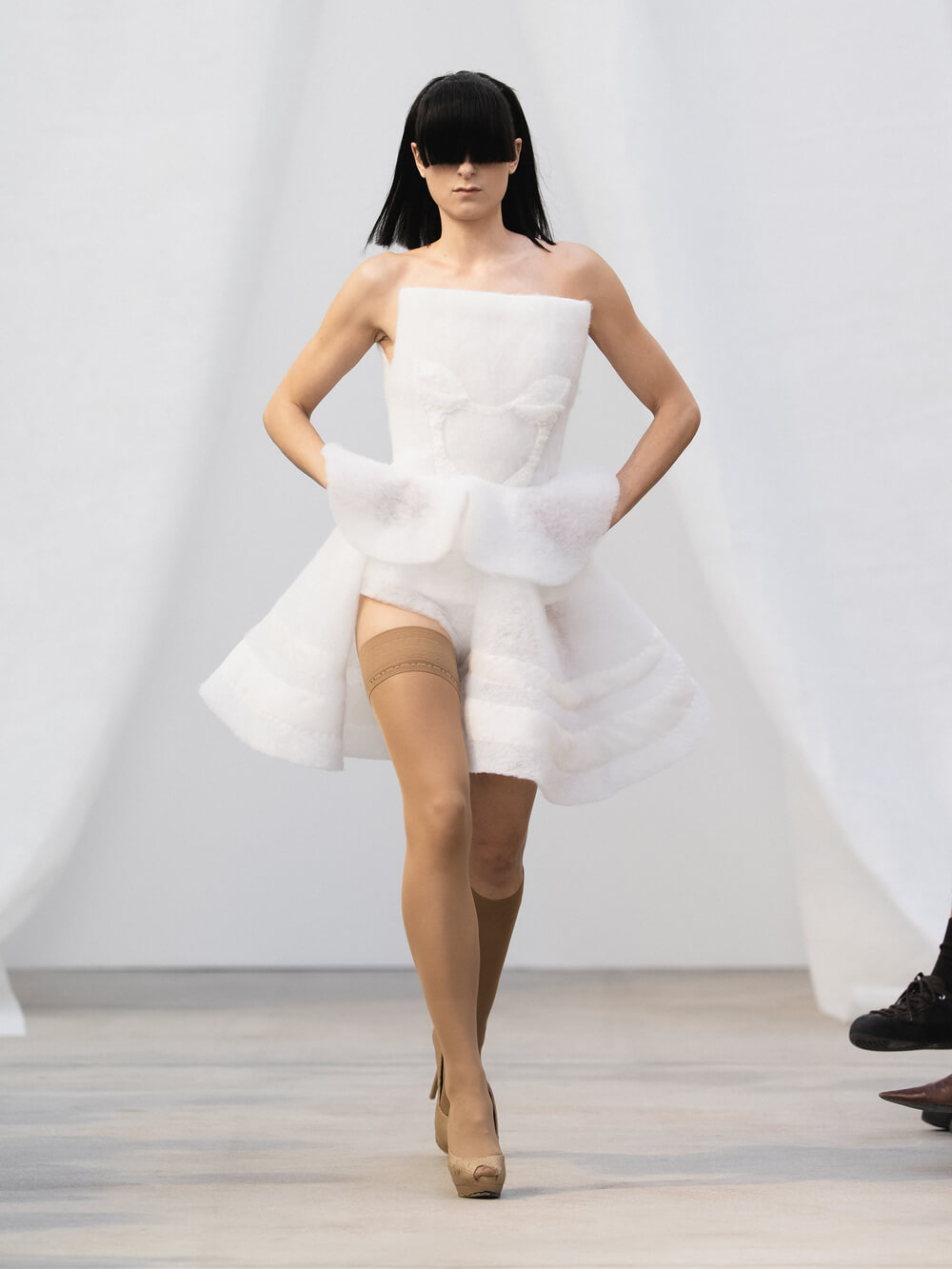
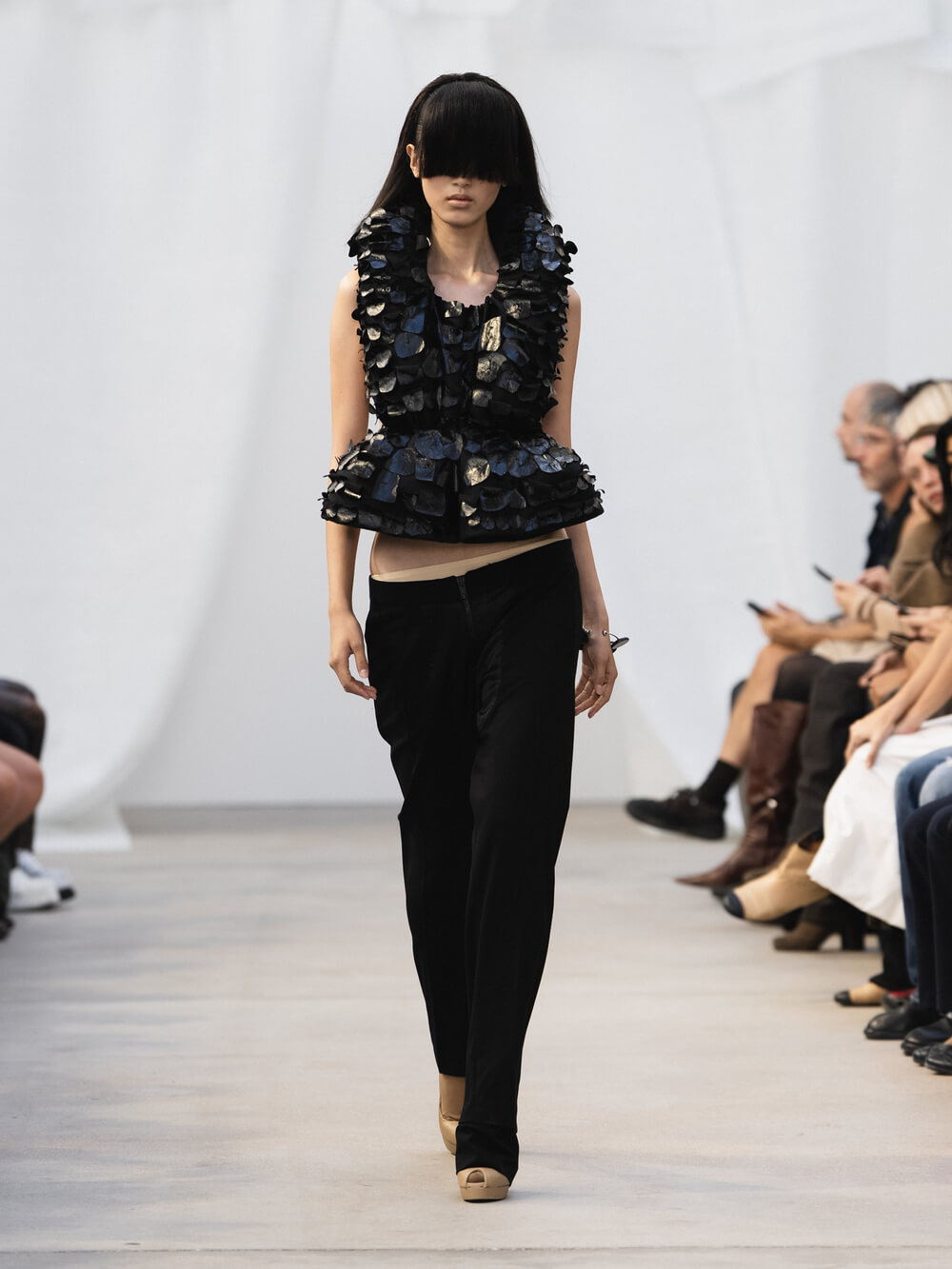
Gabriel Figueiredo unveiled De Pino’s Spring Summer 2027 collection at Fondazione Sozzani in Paris, opening with models in oversized bob wigs and white painted pumps emerging through a curtain into an industrial setting, soundtracked by Michel Gaubert with the fast paced energy of late 2000s runway shows. Following his LVMH Prize finalist appearance in 2026, Figueiredo continued to expand De Pino into a complete wardrobe, drawing on the flashy minimalism of late 2000s American Apparel and the highly stylized world of French fashion editors such as Carine Roitfeld. Asymmetry shaped the collection through one sleeved jersey tops, asymmetrical peplum skirts, shift dresses and skirts layered over single legged tights, while colorful jewelry, headbands and chunky white zippers punctuated a largely neutral palette. Heavy cotton gabardine and hand cut crocodile effect leather returned from last season alongside inventive craftsmanship, including crystals knitted directly into stitches in collaboration with Céline Breton and Swarovski, and a fur like jacket constructed from hand stitched wadding fringes and thousands of embroidered chiffon squares.
FROLOV
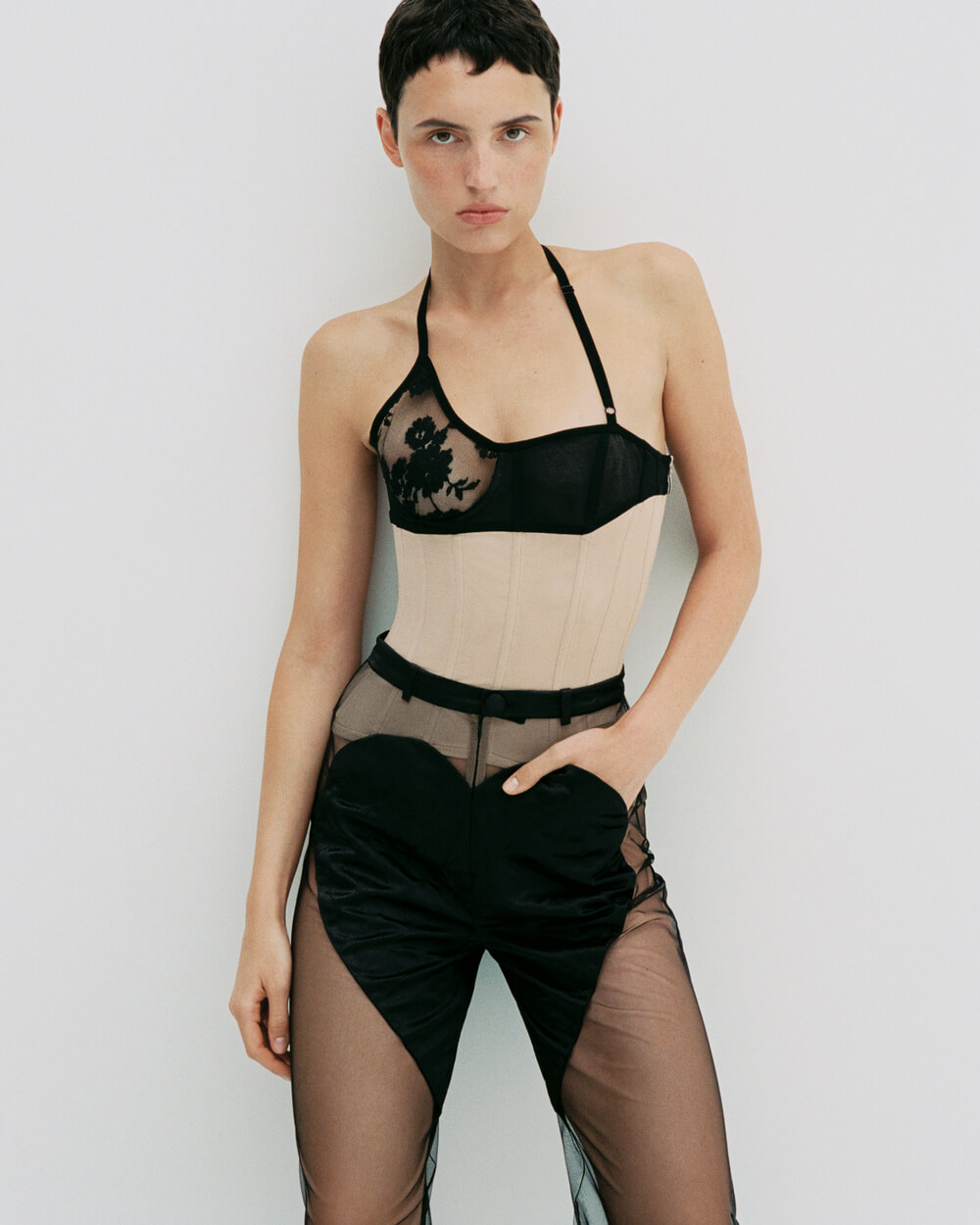
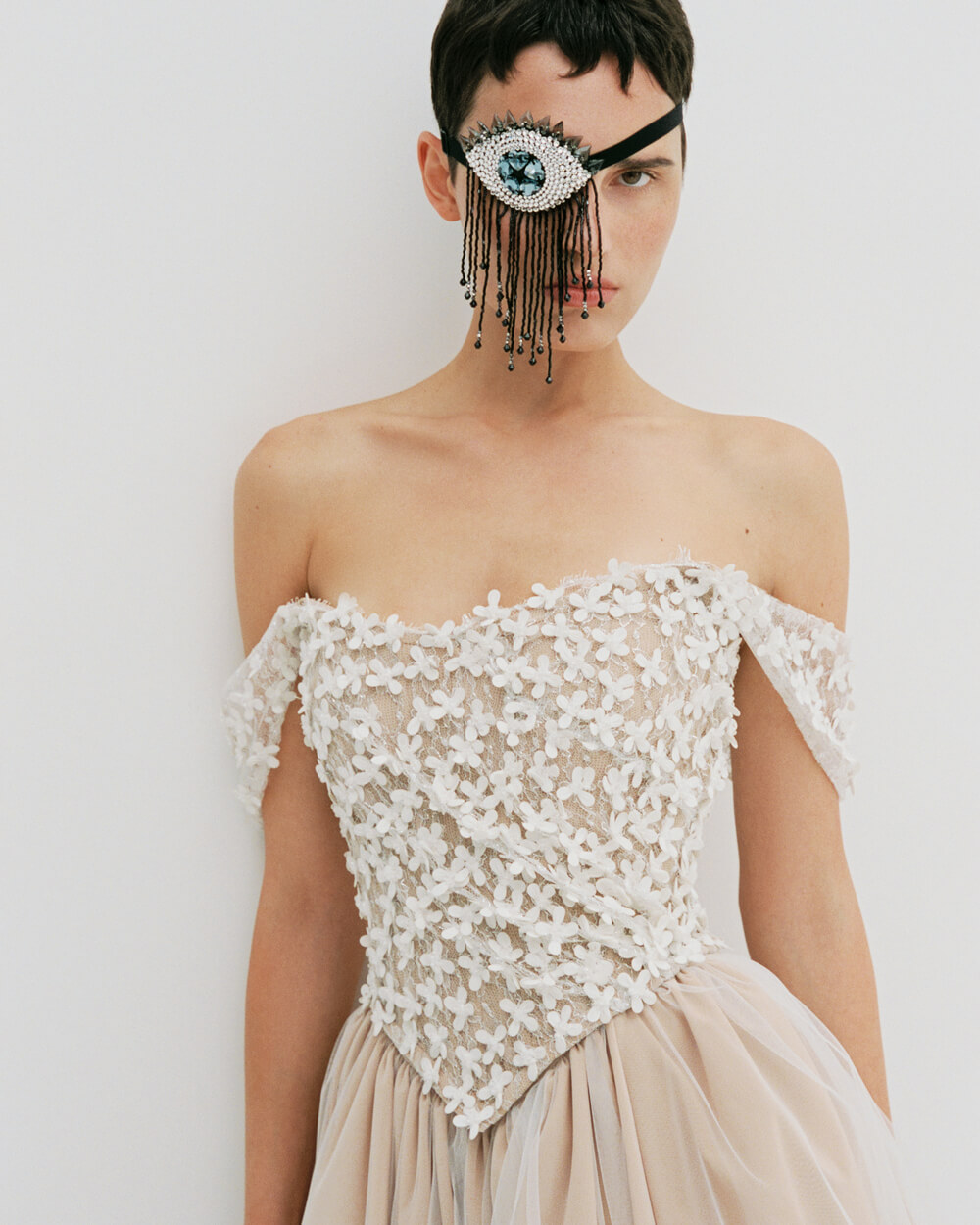
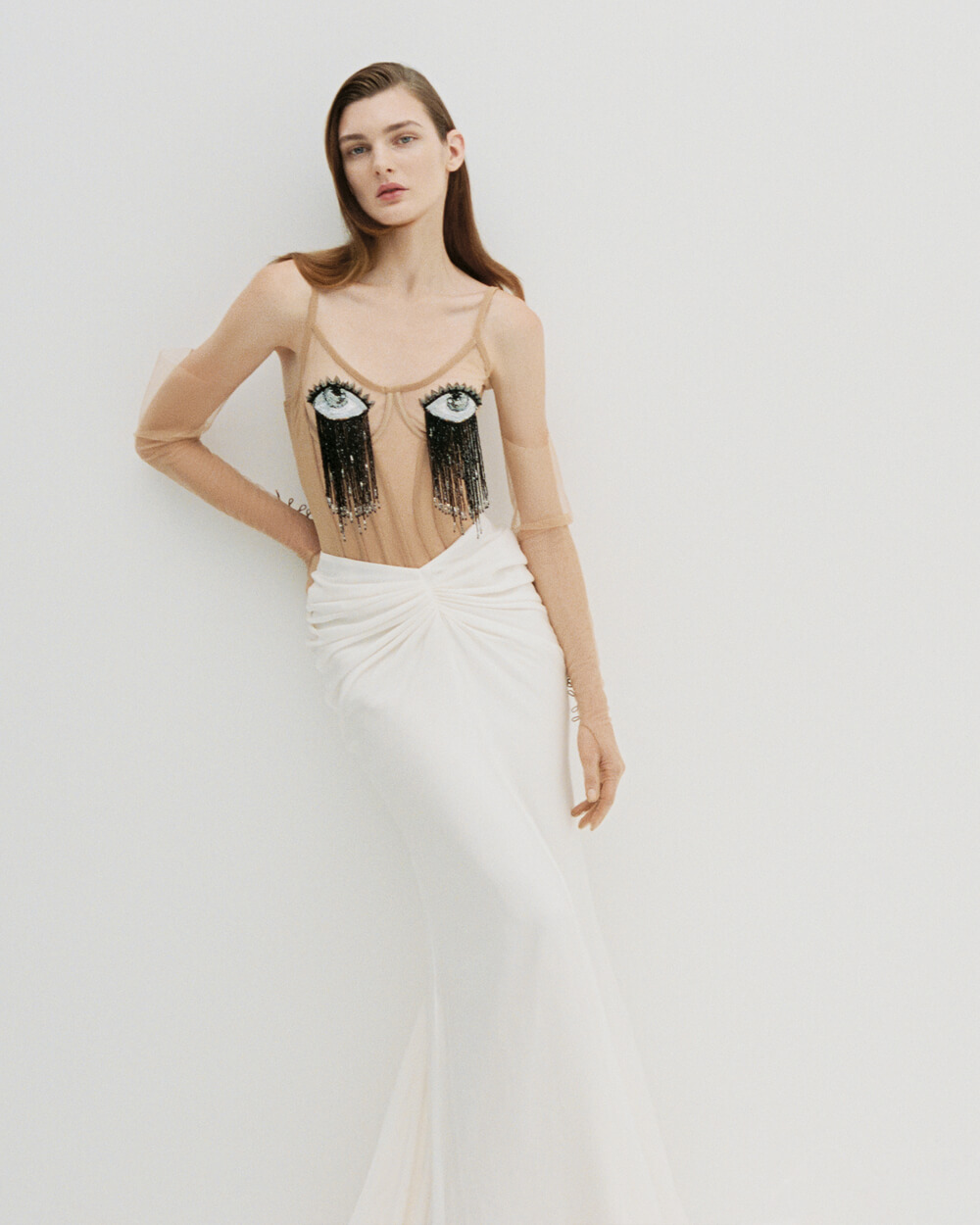
This season, we visited FROLOV in its Paris showroom, where the Spring Summer 2027 collection had been brought over from Ukraine, where every piece is made. Designed by Ivan Frolov, the collection imagines a new subculture born from the collision of Goths and Pirates, bringing together their codes, accessories and rebellious spirit. Gothic verticality shapes elongated sleeves, trailing fabrics and dramatic hennins, transforming the body into an almost architectural axis between earth and sky, while pirate references introduce the romantic world of privateers, from eye patches and flowing silk to luxurious velvet and elaborate coats. The collection plays with the contrast between aristocracy and outlaw freedom through Solstiss lace, Victorian corsetry, silk draping and FROLOV’s signature monochrome palette of black, white and beige. Crystal embroidery adds a couture finish, most spectacularly in a Swarovski covered dress where cascading beads and crystals follow the body like Gothic architecture, while sculptural eye and heart shaped accessories reinterpret the pirate eye patch as jewellery. Together, these references create a distinctly FROLOV take on two subcultures that feel surprisingly at home in the same world.
HISU PARK
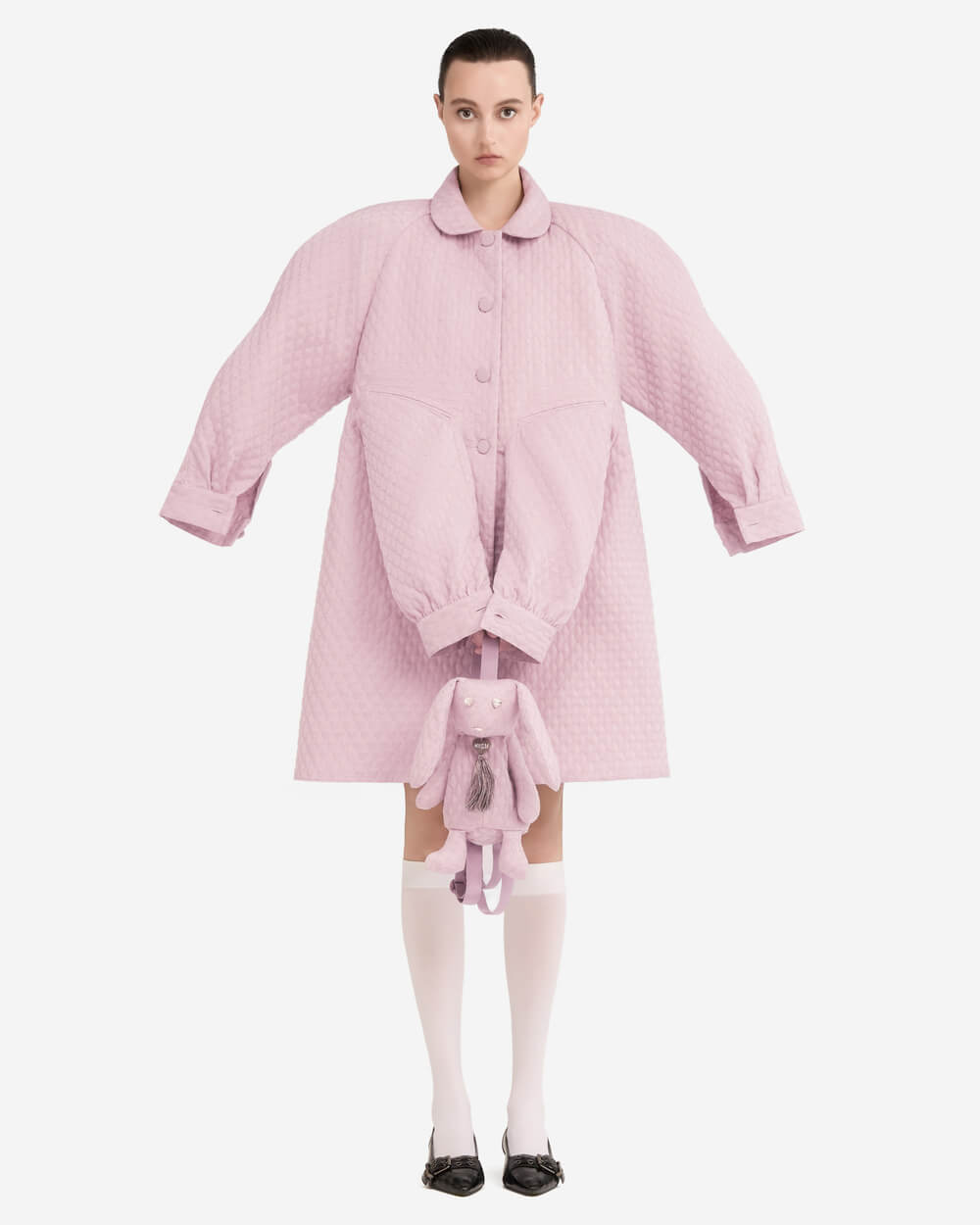
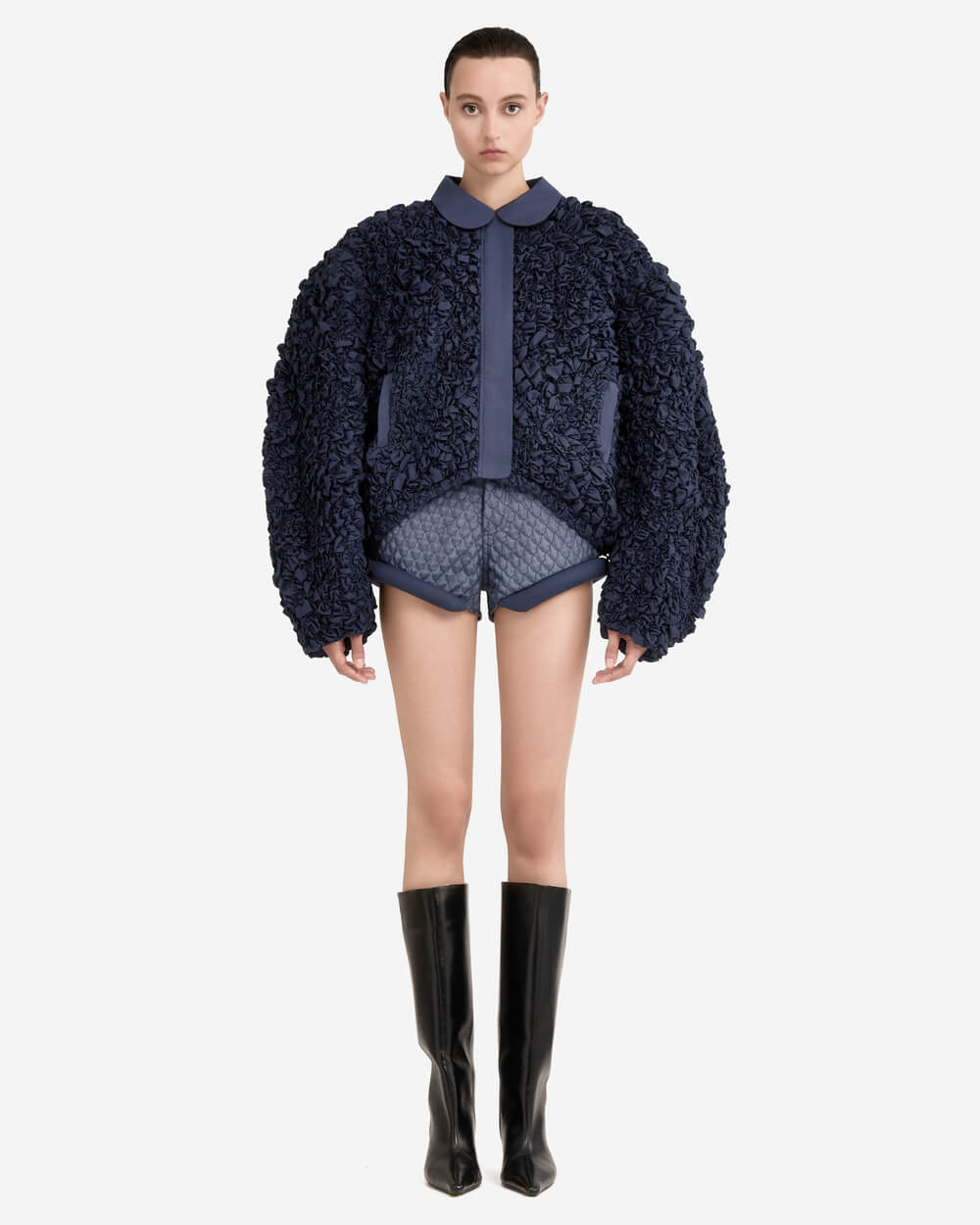
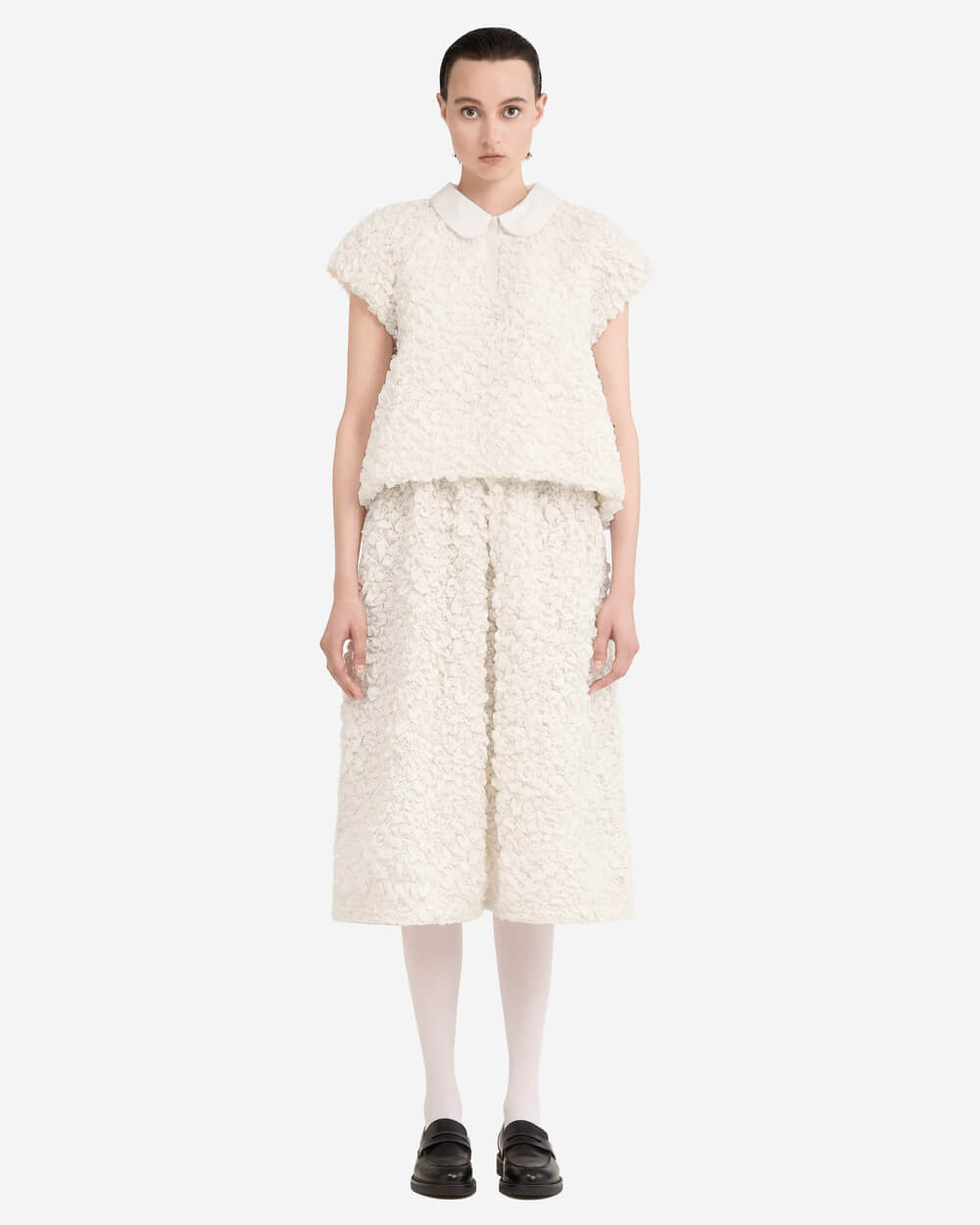
We saw HISU PARK’s Spring Summer 2027 collection, “WHY NOT,” in her showroom during Paris Fashion Week, where the designer explored the joy found in small things through clothing that felt playful, delicate and quietly considered. The collection centred on intricate fabric manipulations and tactile structures, with Bubble and Crumble techniques transforming familiar materials into surfaces that appeared fragile while carrying an underlying strength. Silhouettes embraced contrasts, allowing softness to exist alongside structure and a playful sensibility to feel grown up, while details revealed themselves gradually through texture, shape and movement. Rather than making grand statements, HISU PARK focused on the beauty of the unexpected, suggesting that something does not need to be loud or oversized to hold meaning. With “WHY NOT,” the designer created a wardrobe that leaves space for curiosity, lightness and simply enjoying fashion for what it can be.
Jean Paul Gaultier
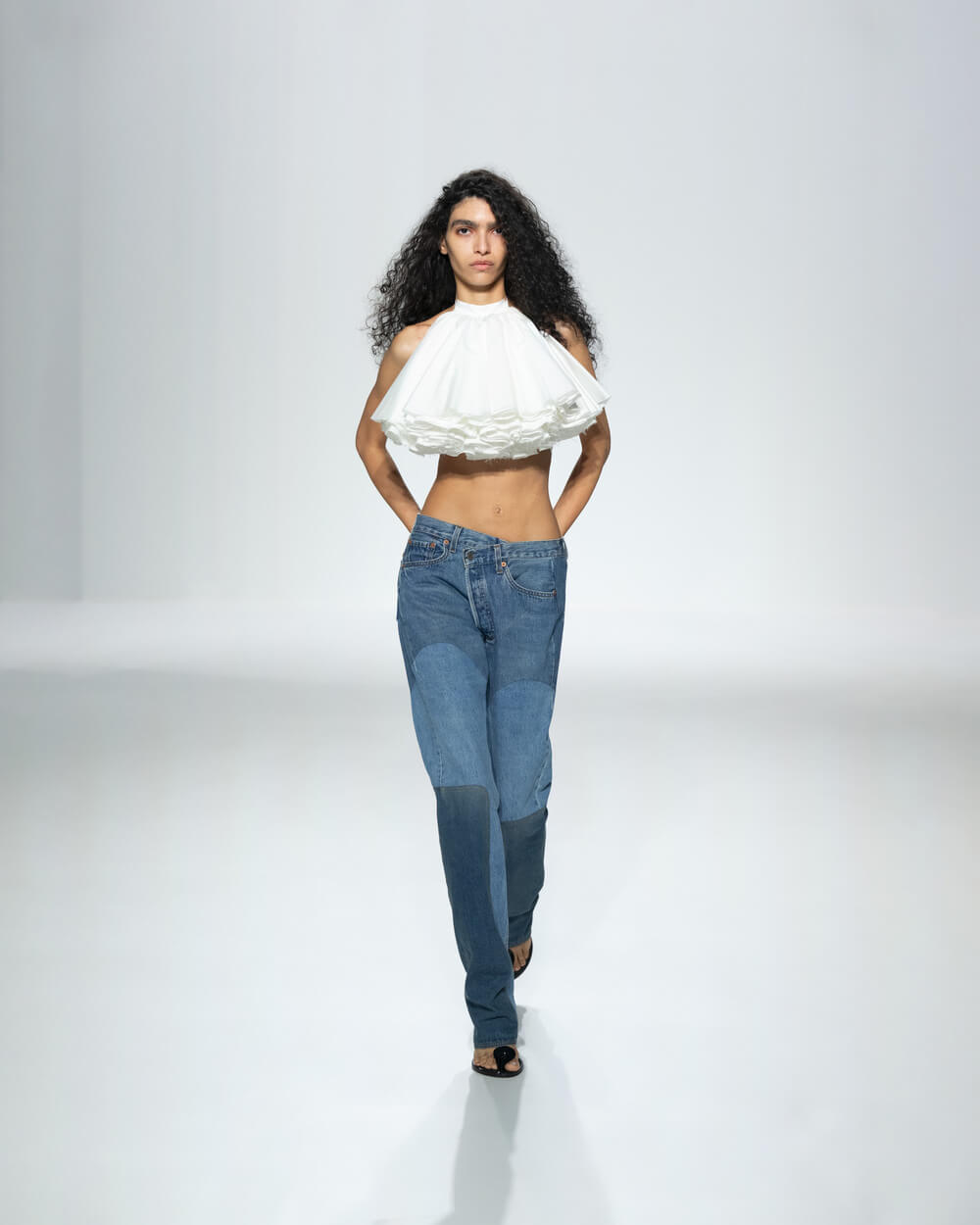
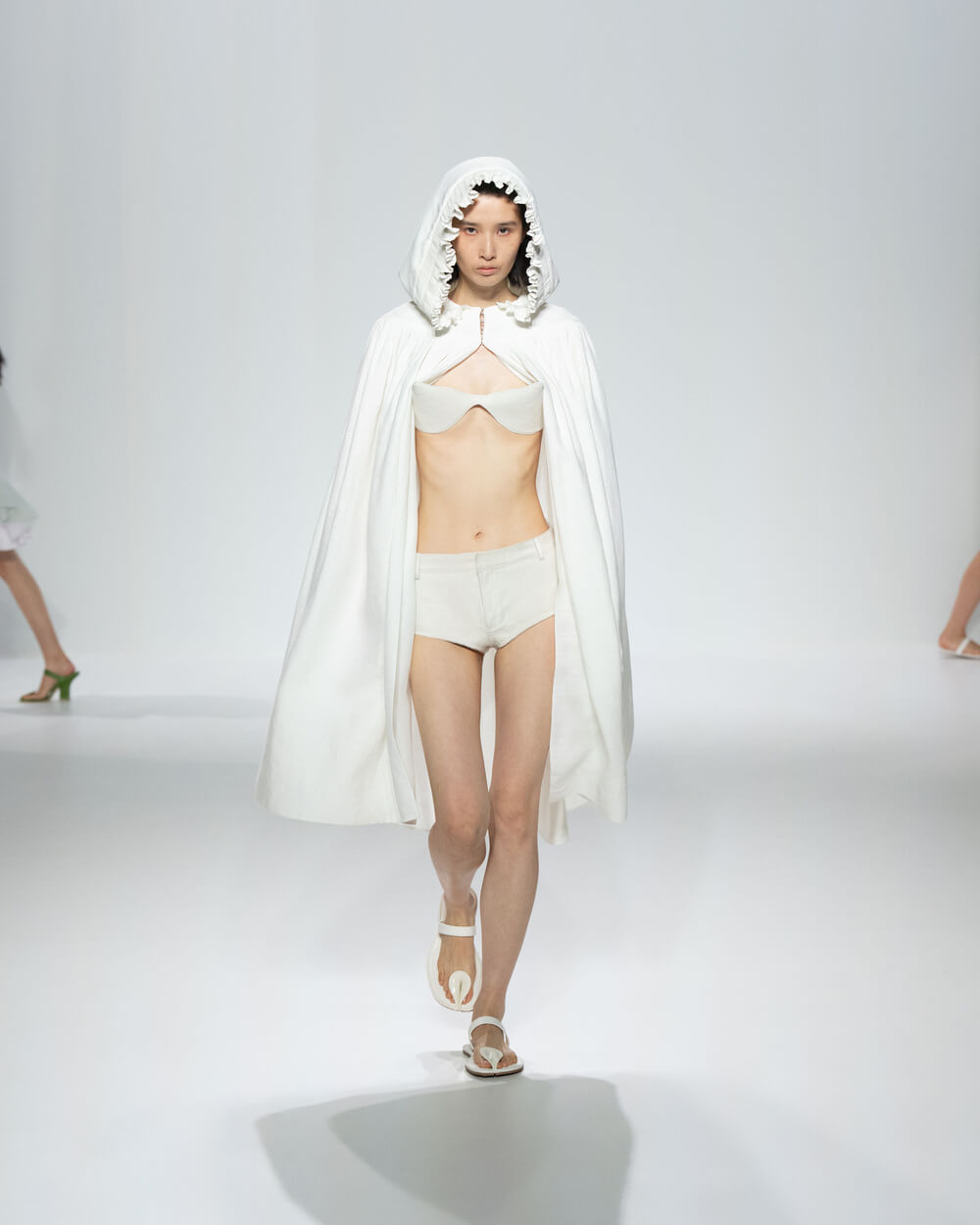
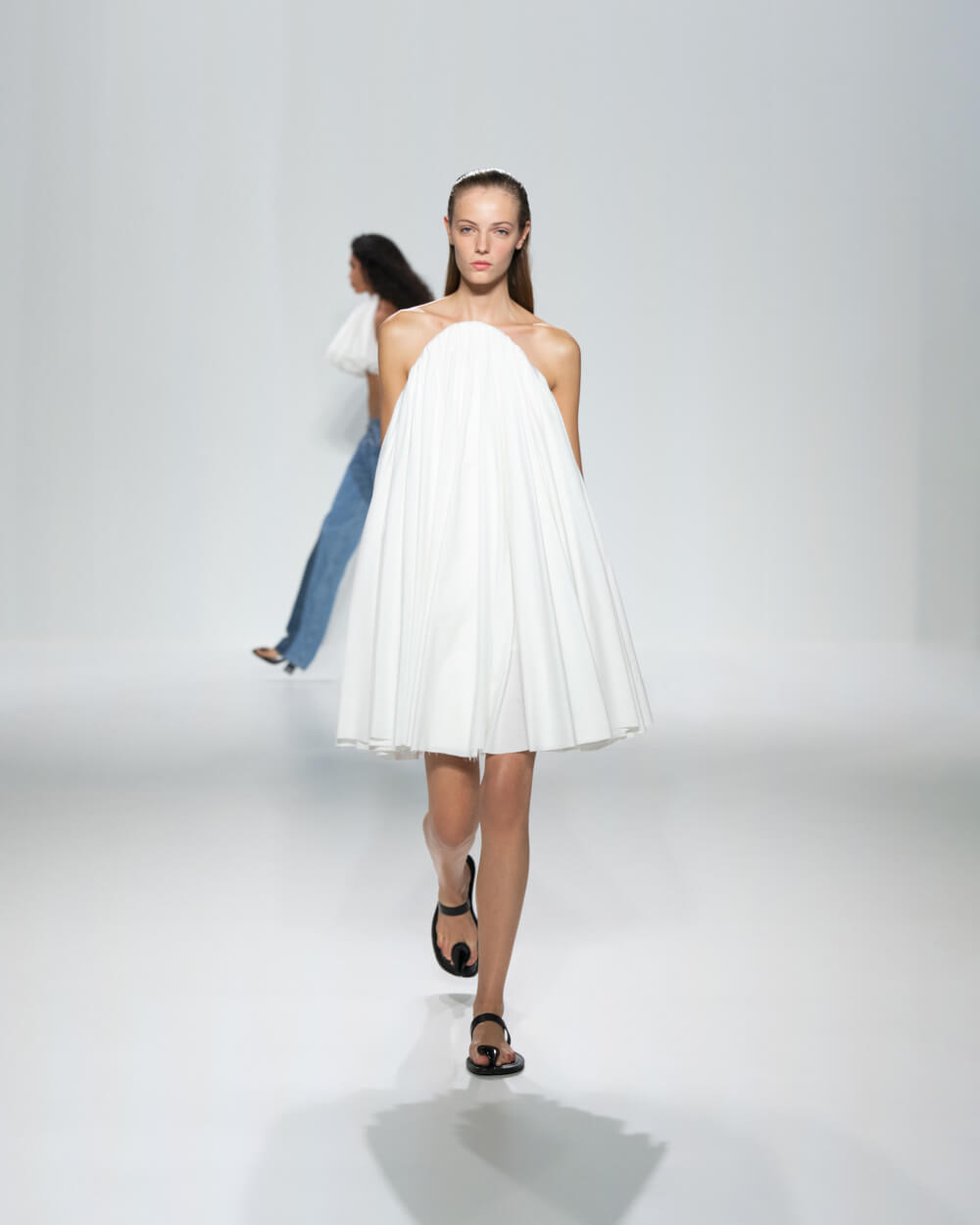
Gaultier creative director Duran Lantink brought together the cheerful familiarity of Dutch folklore with sharp, experimental tailoring, embracing the house’s spirit of curiosity and joyful irreverence. Drawing from the Gaultier archive and traditional Dutch garments and prints, colorful checks, tartans and florals were amplified across a collection that mixed a witchy 1980s Ibiza mood with ruffles, bells, vintage capes and unexpected constructions. Tailoring was sharpened with forward leaning shoulders and precisely positioned armholes, while trenches, field jackets and cargo trousers grounded the more theatrical pieces, including leather cone bras and a perforated leather dress worn from the head like a wig. Vintage jewellery, playful hats and new sandals resembling the negative of a flip flop added further eccentric touches, while mirrors throughout the Palais de Tokyo presentation offered constantly shifting perspectives on the three dimensional designs. As Lantink continues to build his vision for Gaultier, the collection celebrated the idea that fashion does not have to make perfect sense to be exciting.
Londi
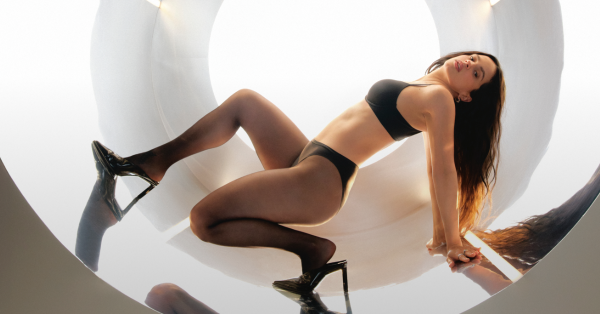
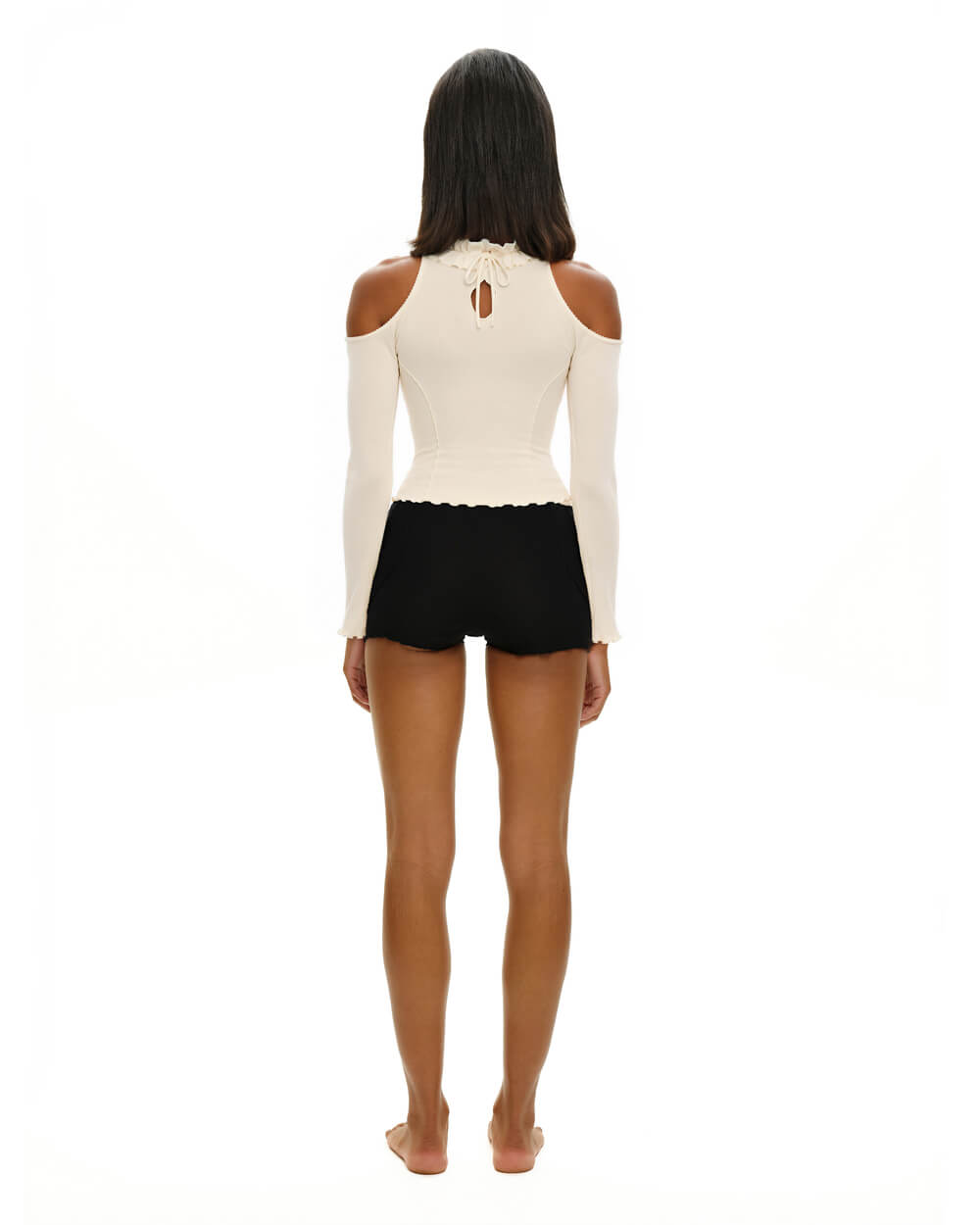
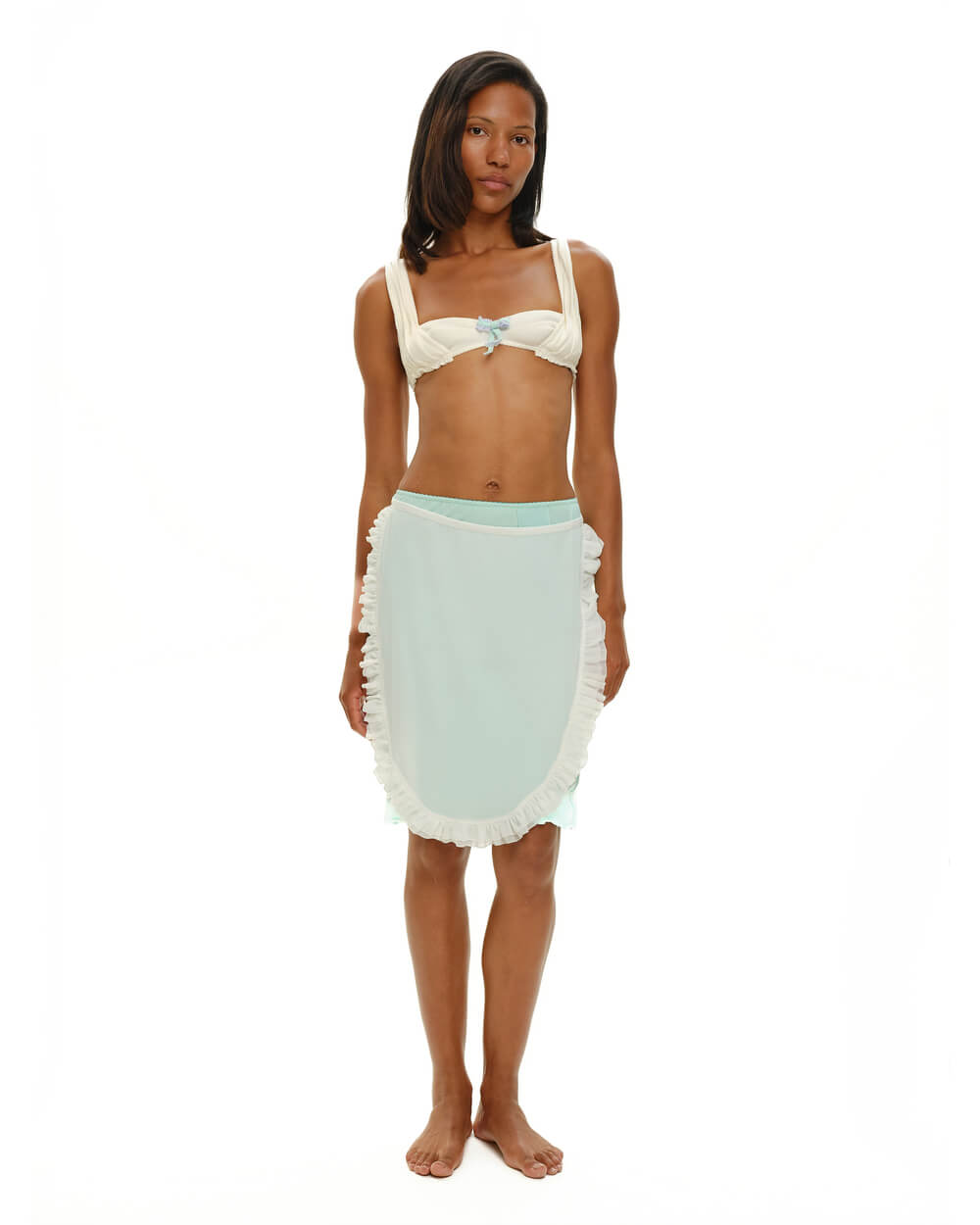
Between the shows, we visited the showroom of Ukrainian brand Londi, discovering a collection that makes us reconsider something we sometimes forget about fashion: what we wear underneath. For Spring/Summer 2027, Nature of Her blurs the line between intimates and outerwear, transforming the familiar ease of loungewear into expressive pieces designed to be seen. Sculptural cut-outs follow the natural curves of the body, while organic floral forms grow across soft silhouettes, framing the skin rather than simply decorating the garment. Here, comfort becomes sensual and underwear becomes part of the look, creating a wardrobe where what is underneath deserves just as much attention as everything layered over it.
Niccolò Pasqualetti
Niccolò Pasqualetti’s Spring Summer 2027 collection approached clothing as an encounter between form, perception and the body, drawing inspiration from Lygia Clark’s relational objects. Geometric shapes such as triangles, squares and linear cuts transformed once worn, adapting to the body’s contours and blurring the line between abstraction and lived experience. Sensory experimentation shaped the collection through cords pulling cotton poplin into unexpected volumes, silk treated to resemble crumpled silver foil and twisted tulle forming uncanny sculptural masses. Fluid gauze and satin contrasted with raw linen, denim and suede, while loose mesh was layered beneath structured gabardine. Accessories extended the idea of clothing as sculpture, with metal pieces bent into three dimensional forms and framing luminous gemstone compositions. At its core, the collection explored identity as something discovered through instinct and intuition, rather than fixed by intellect.
032c Mode
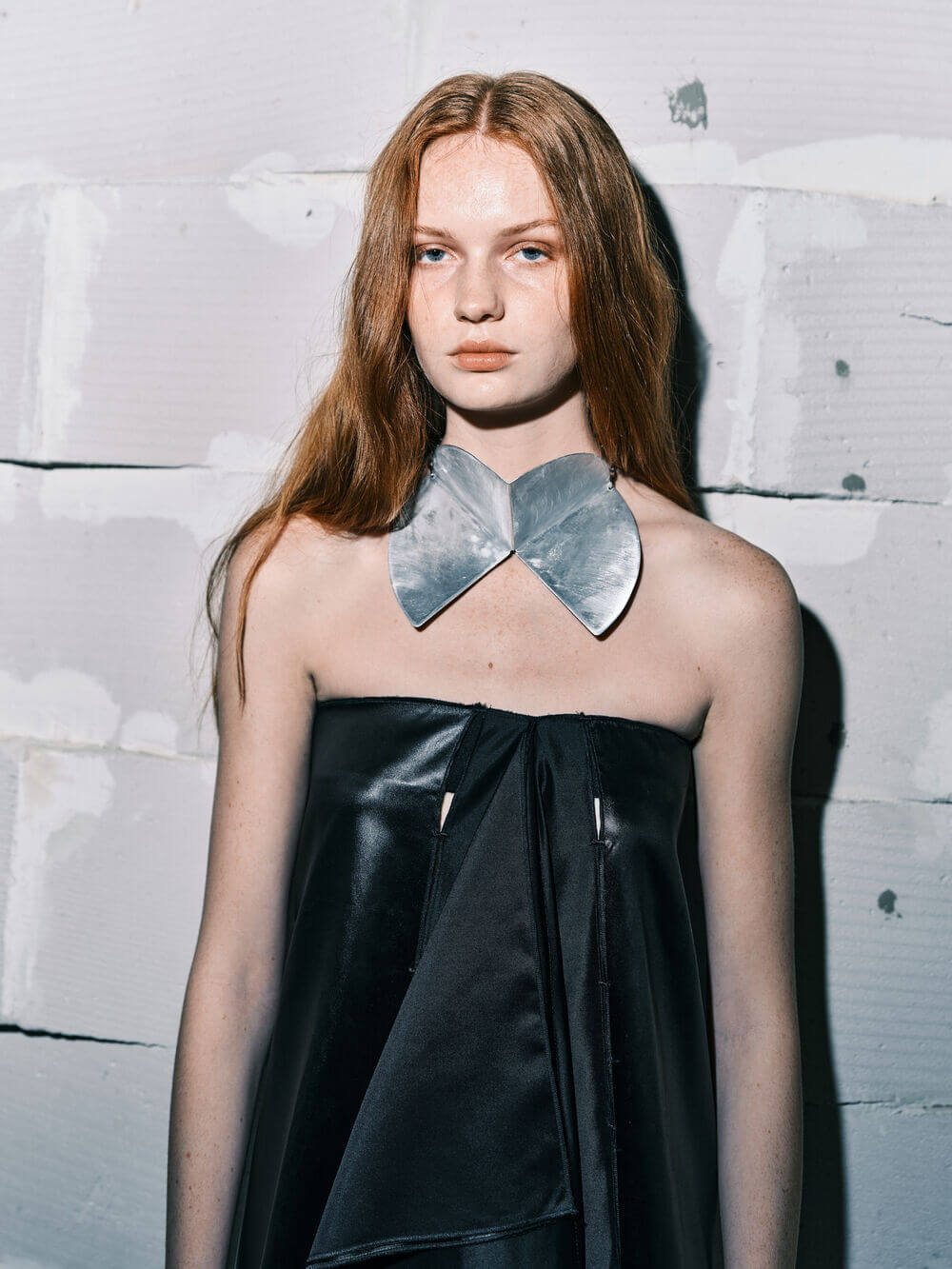
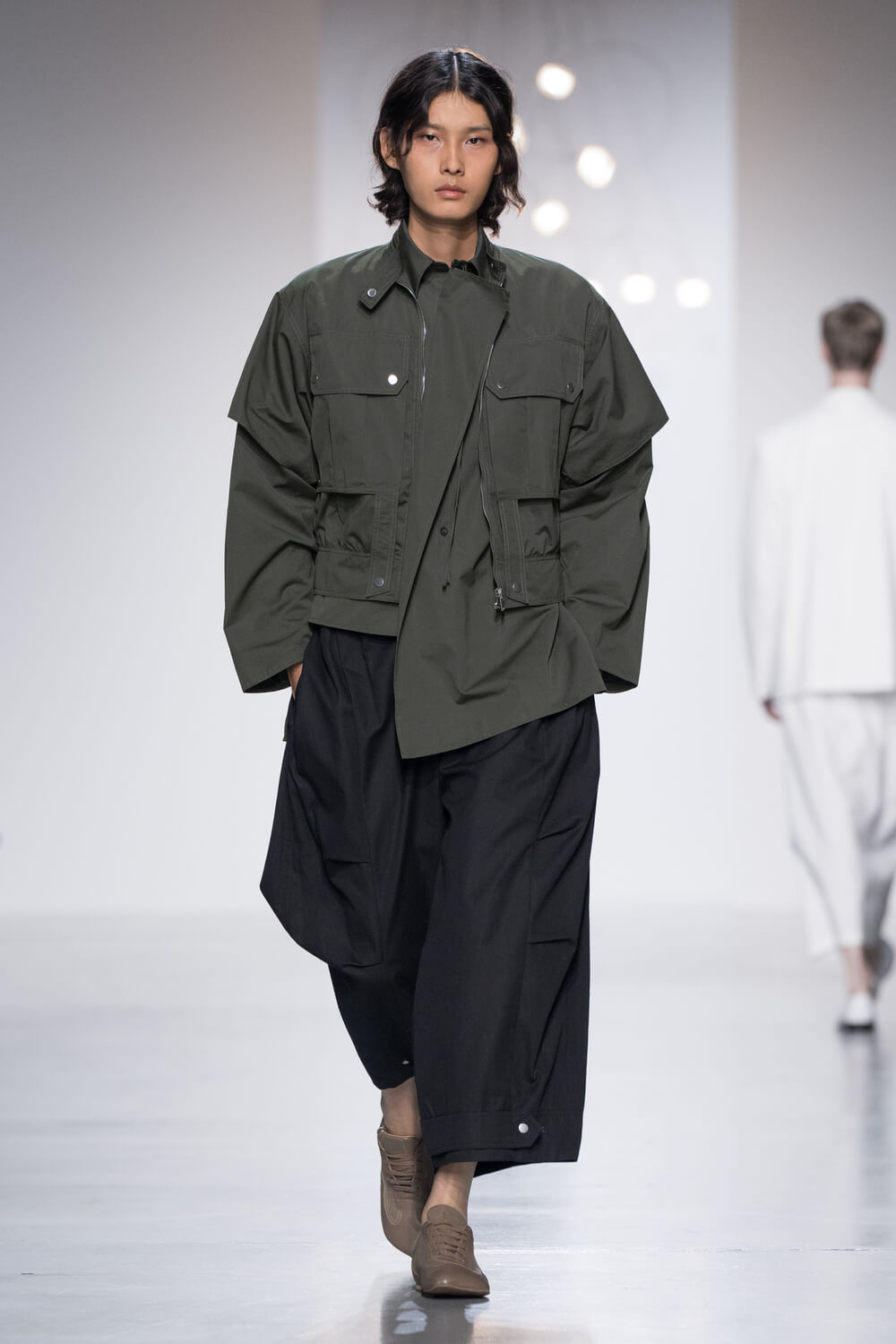
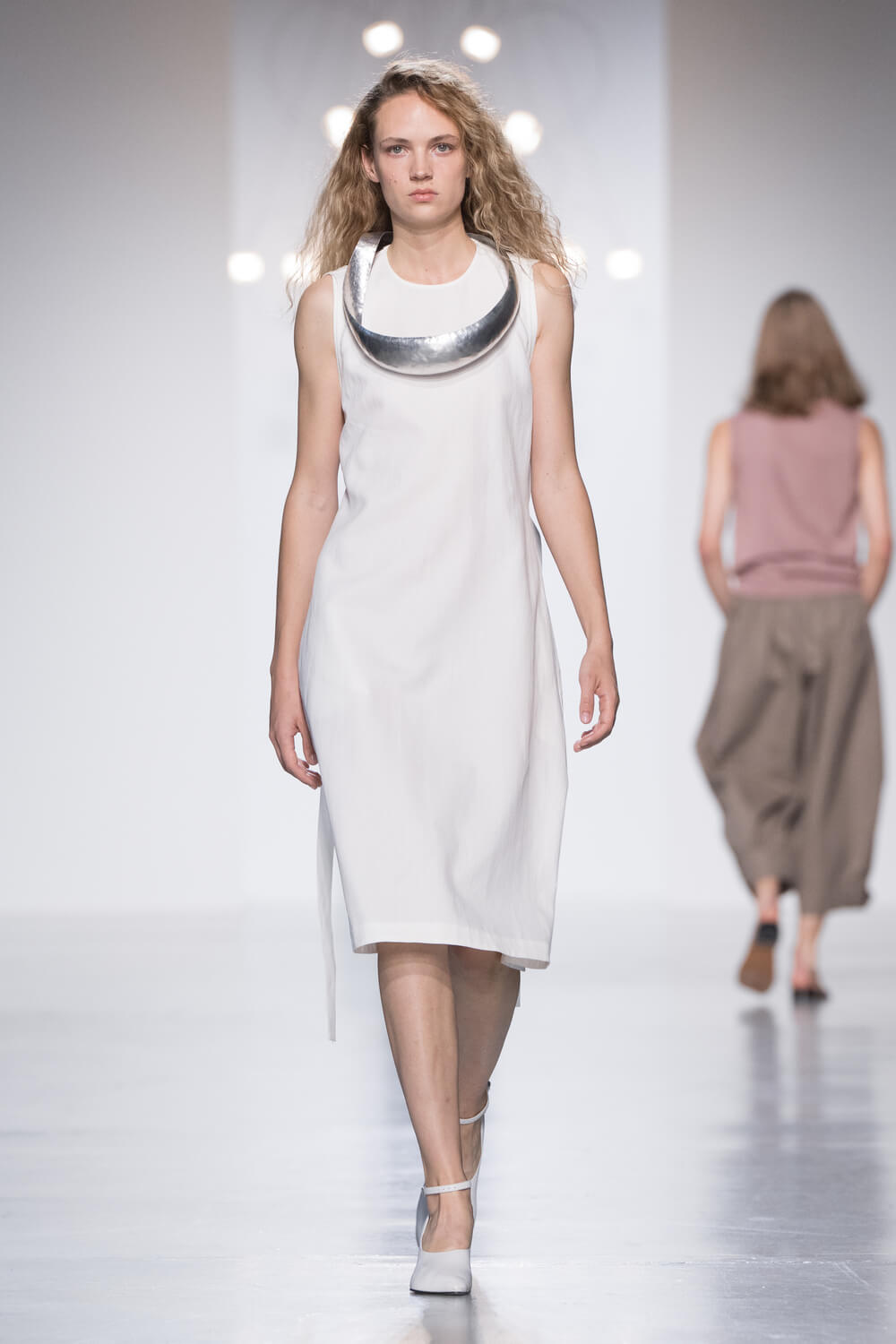
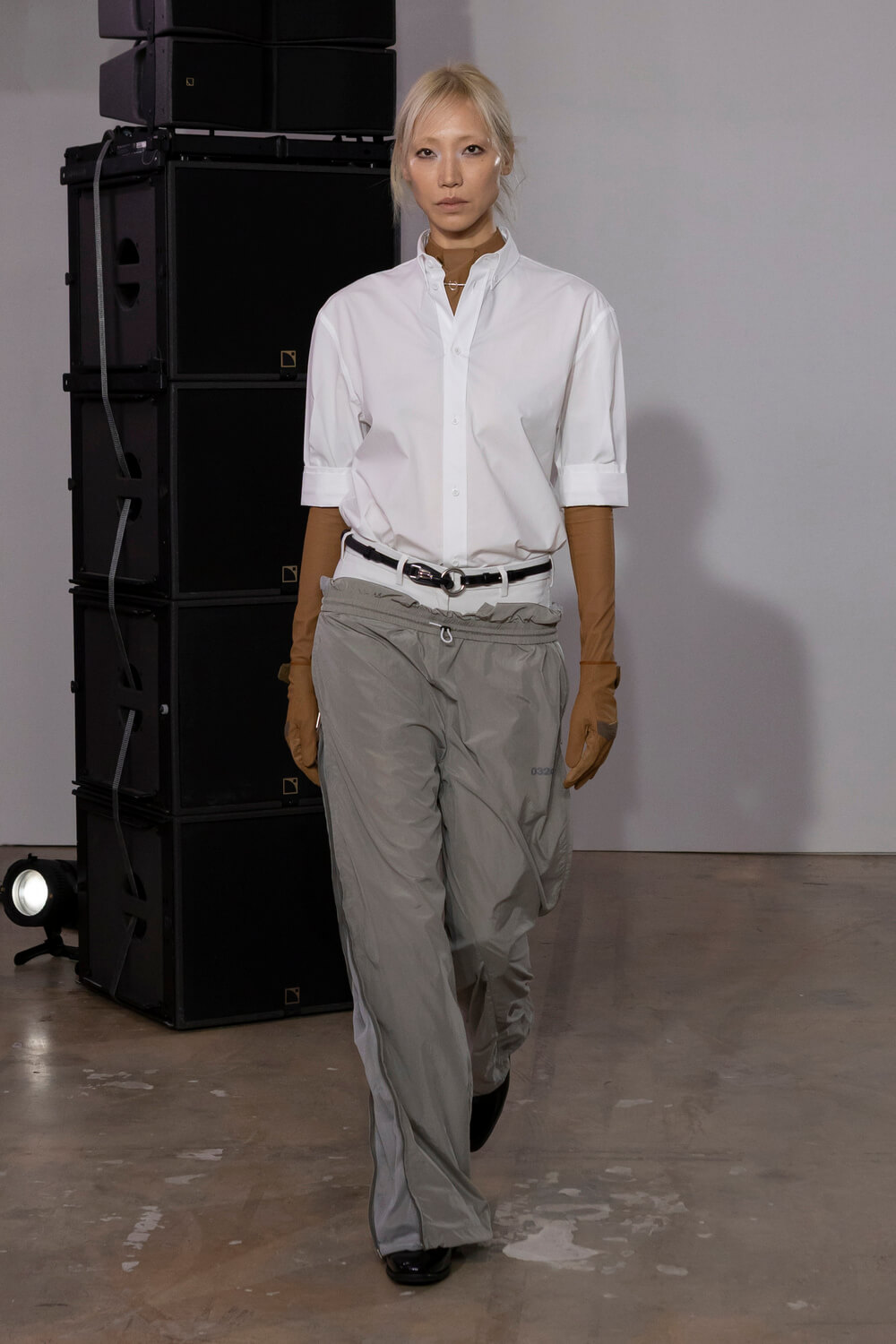
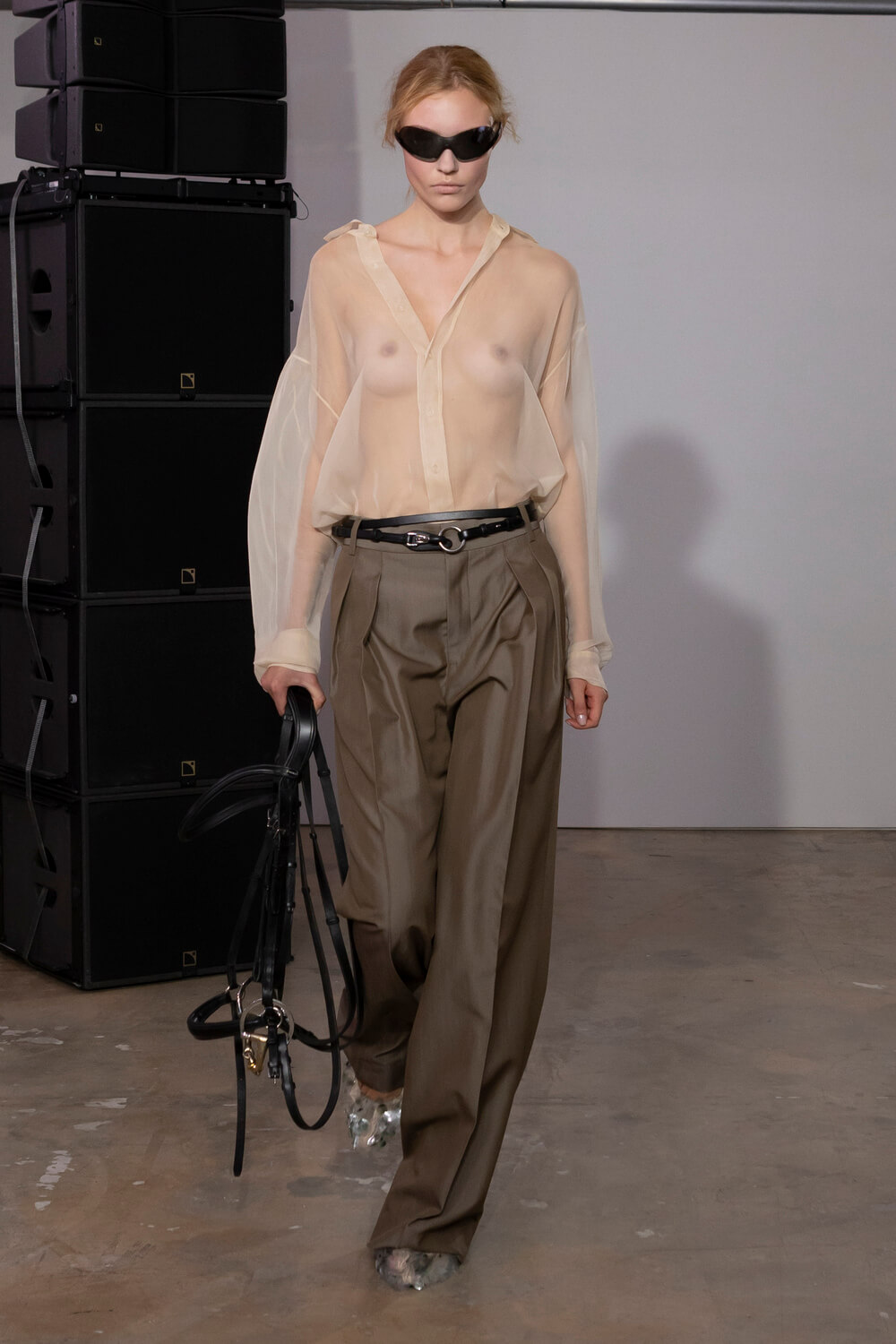
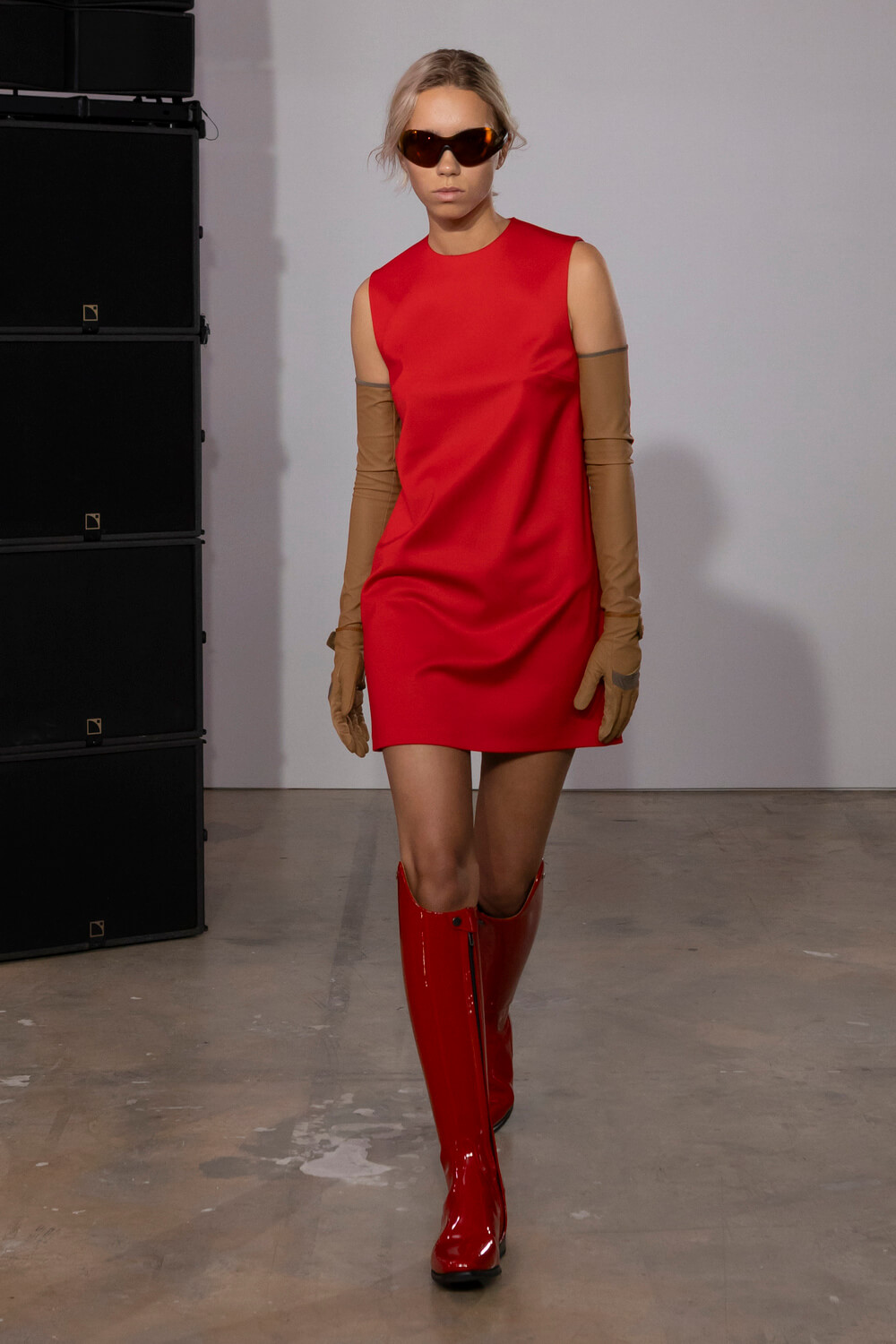
032c Mode debuted its Spring Summer 2027 womenswear collection, STABLE, during Paris Fashion Week at La Ménagerie de Verre, exploring the space between discipline and desire, control and decadence. Inspired by Germany’s Weimar era and the Neue Sachlichkeit movement, with painter Lotte Laserstein as a key reference, the collection played with contrasts between femininity and athleticism, strength and vulnerability. Close cut tailoring, sheer blouses, technical fabrics, delicate silks and fluid evening dresses came together with equestrian codes drawn from Maria Koch’s own experience in competitive riding. Riding breeches became second skins, technical jackets followed the body, while boots and gloves were treated as functional tools, bringing the precision and performance of equestrianism into the energy of Berlin club culture and contemporary city life.
Ruohan
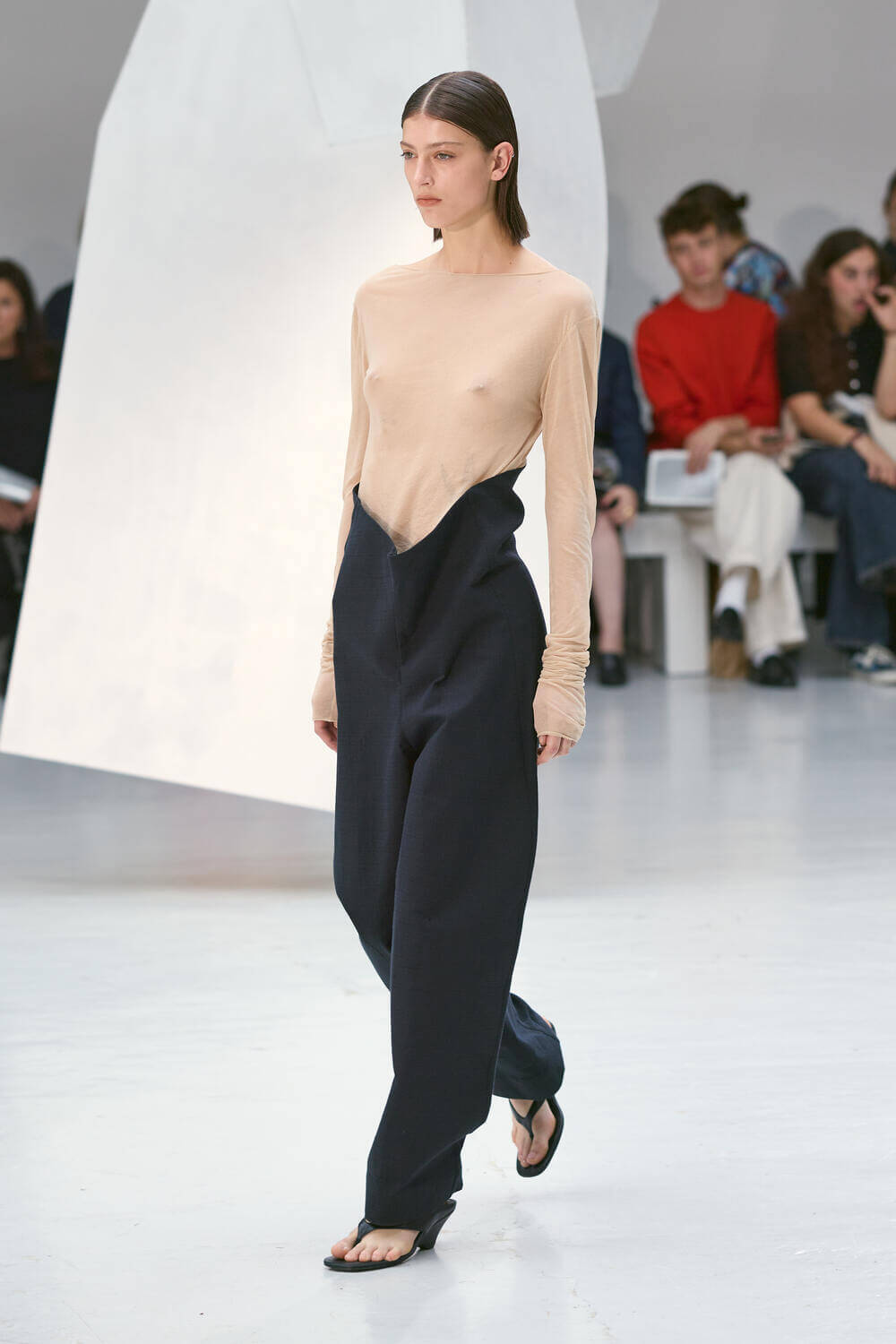
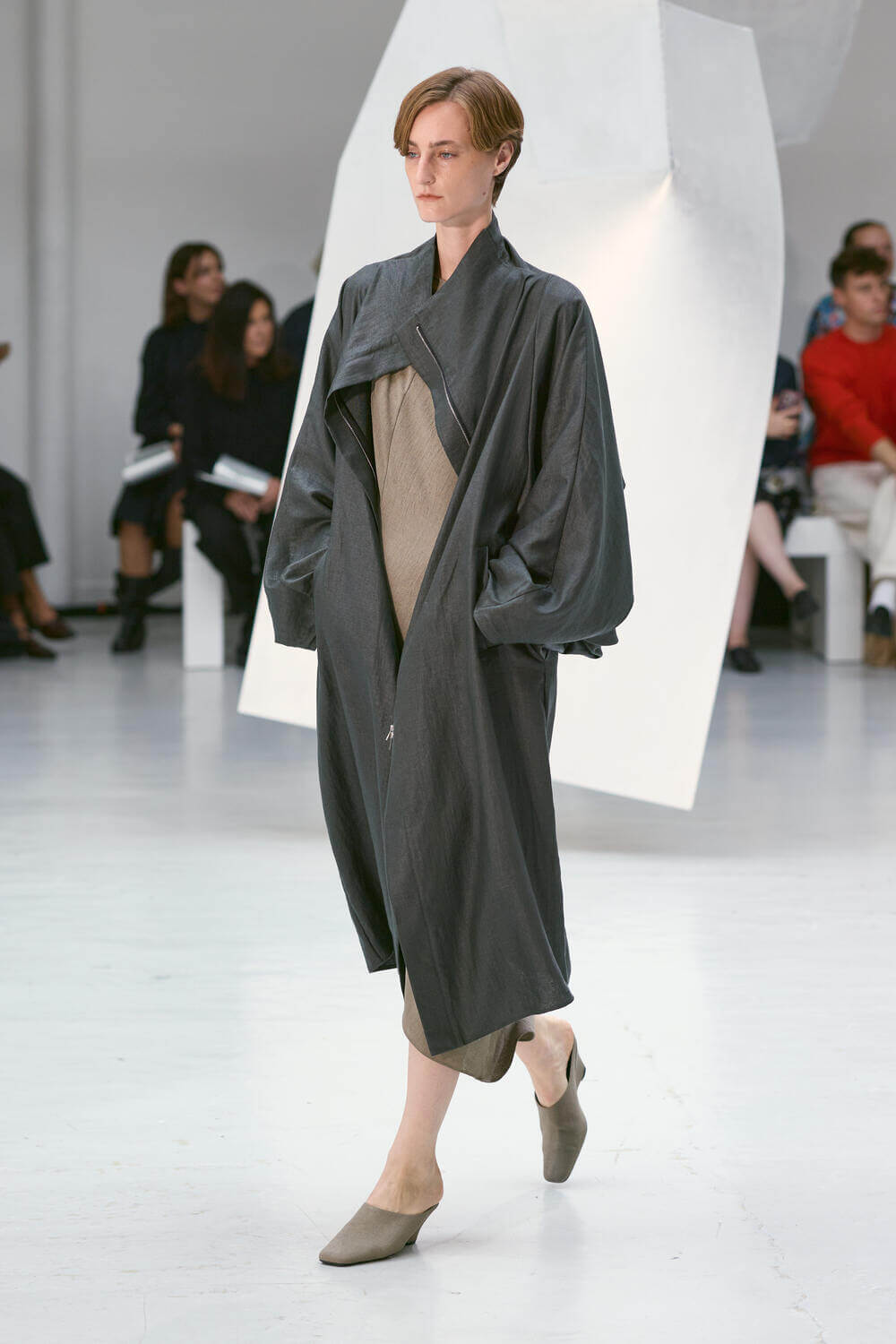
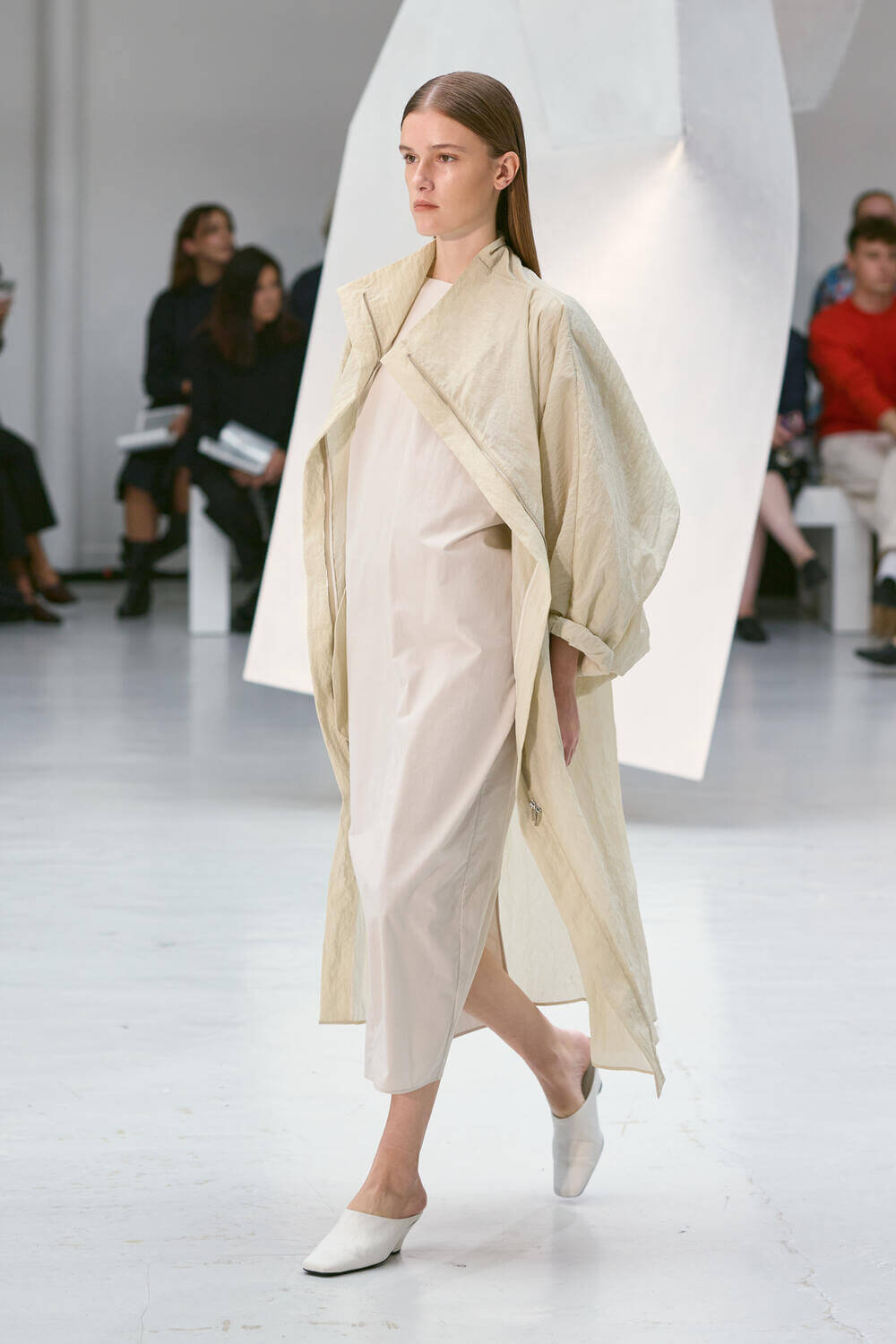
Ruohan approaches identity as something fluid, where familiar forms can shift, overlap and find new meaning simply by changing position this season. A sleeve remains a sleeve, a front remains a front, but once divided, displaced, extended or reunited, the relationship changes. It is an idea that many can resonate with, when personal style is less about committing to one fixed aesthetic and more about constantly remixing who you are. Simple wardrobe building blocks are deconstructed along darts and reconstructed into unfamiliar silhouettes, while specially developed linen incorporates the grid directly into its weave. Ramie voile shifts between transparency and structure. That idea extends beyond the body and into the space around it. Forms derived from the garments’ radical patterns are enlarged in aluminium and suspended throughout the presentation, turning the language of the clothes into an environment. It is perhaps this sense of constant possibility that makes In Becoming feel so current. For a generation accustomed to shifting identities, aesthetics and online versions of the self, there is something familiar in Ruohan’s refusal to define anything too permanently. Nothing needs to be completely reinvented. Sometimes it only needs to be moved.
Shevoke
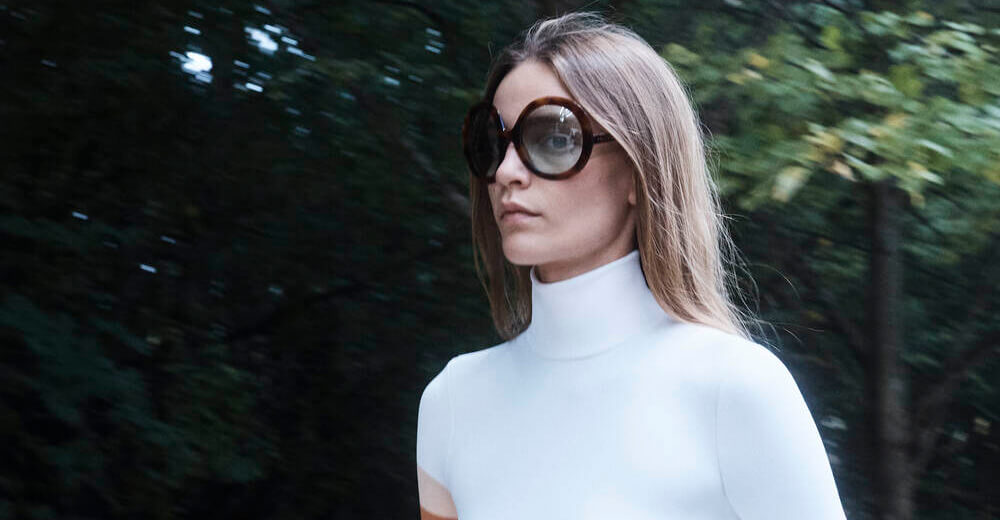
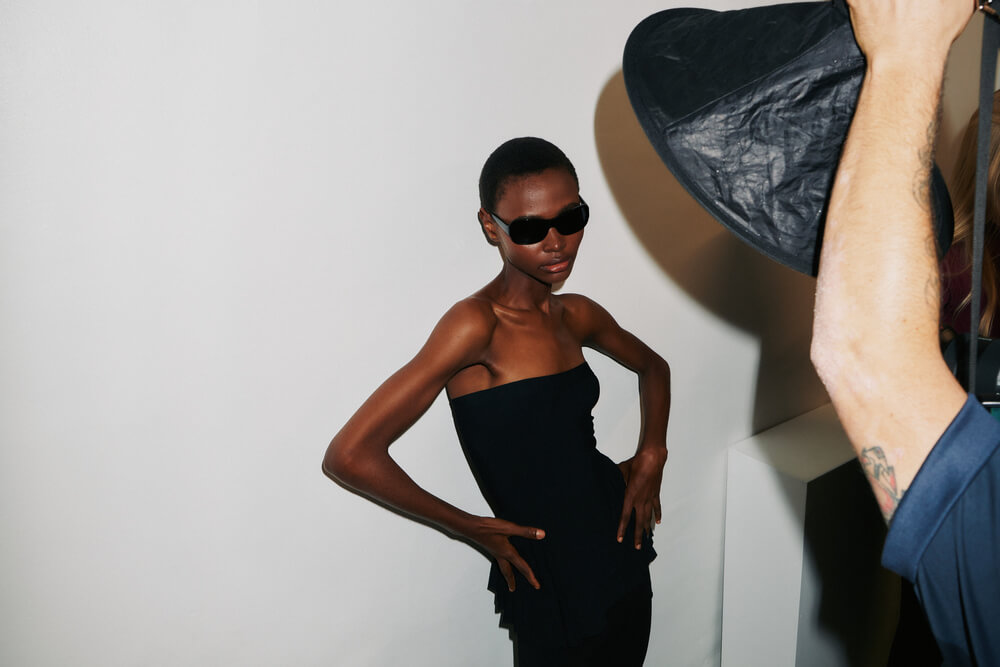
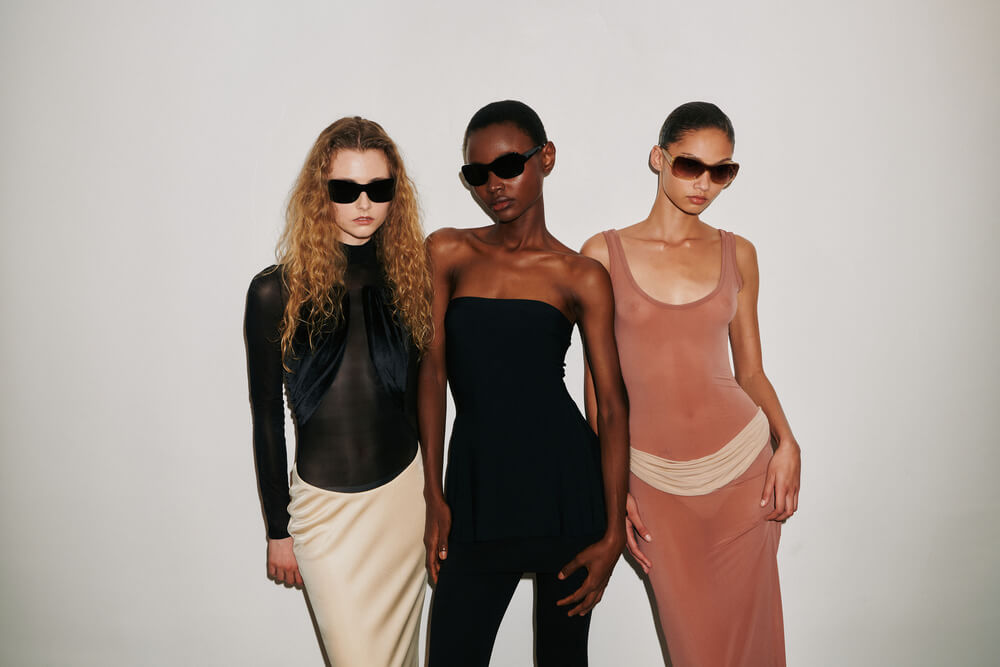
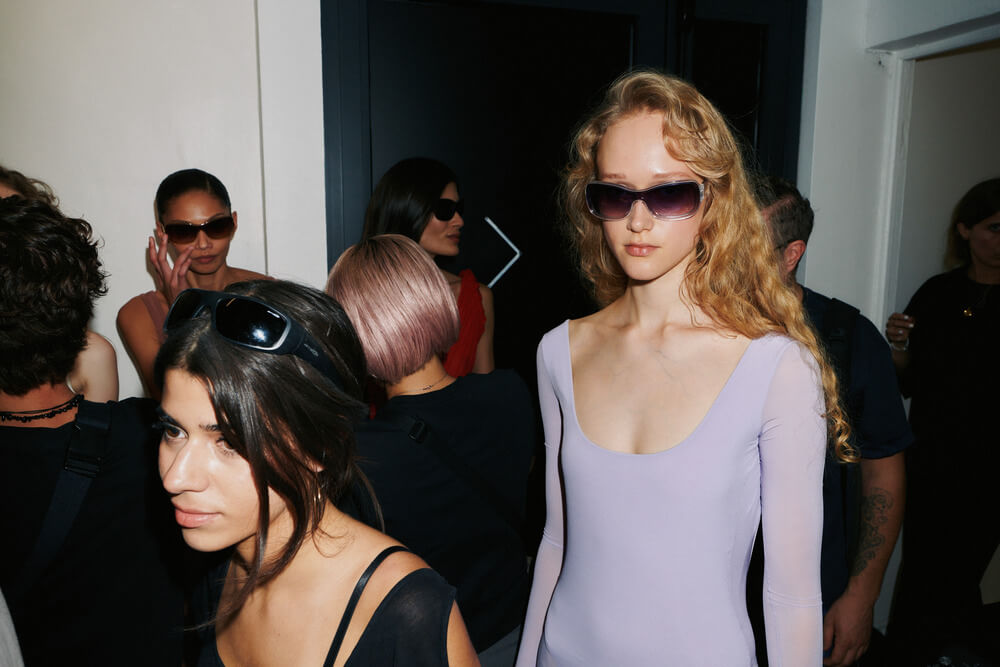
I only recently discovered Shevoke, the Australian eyewear brand founded in 2014, and Paris Fashion Week turned out to be the perfect introduction. Built around design, fit and a strong sense of identity, Shevoke made its Paris Fashion Week debut as the eyewear partner to Burç Akyol, with its new collection appearing on the runway alongside Akyol’s Spring Summer 2027 designs. The Reina style was among the frames presented, marking the brand’s first appearance at Paris Fashion Week and its introduction to the European market. There was an obvious connection between Shevoke’s considered approach to eyewear and Akyol’s focus on craftsmanship and identity, making the collaboration feel like a natural meeting of two design worlds. Following the show, Shevoke will open its first Paris showroom, giving the Australian label a new base from which to introduce its twelve years of eyewear expertise to a European audience.
TIME
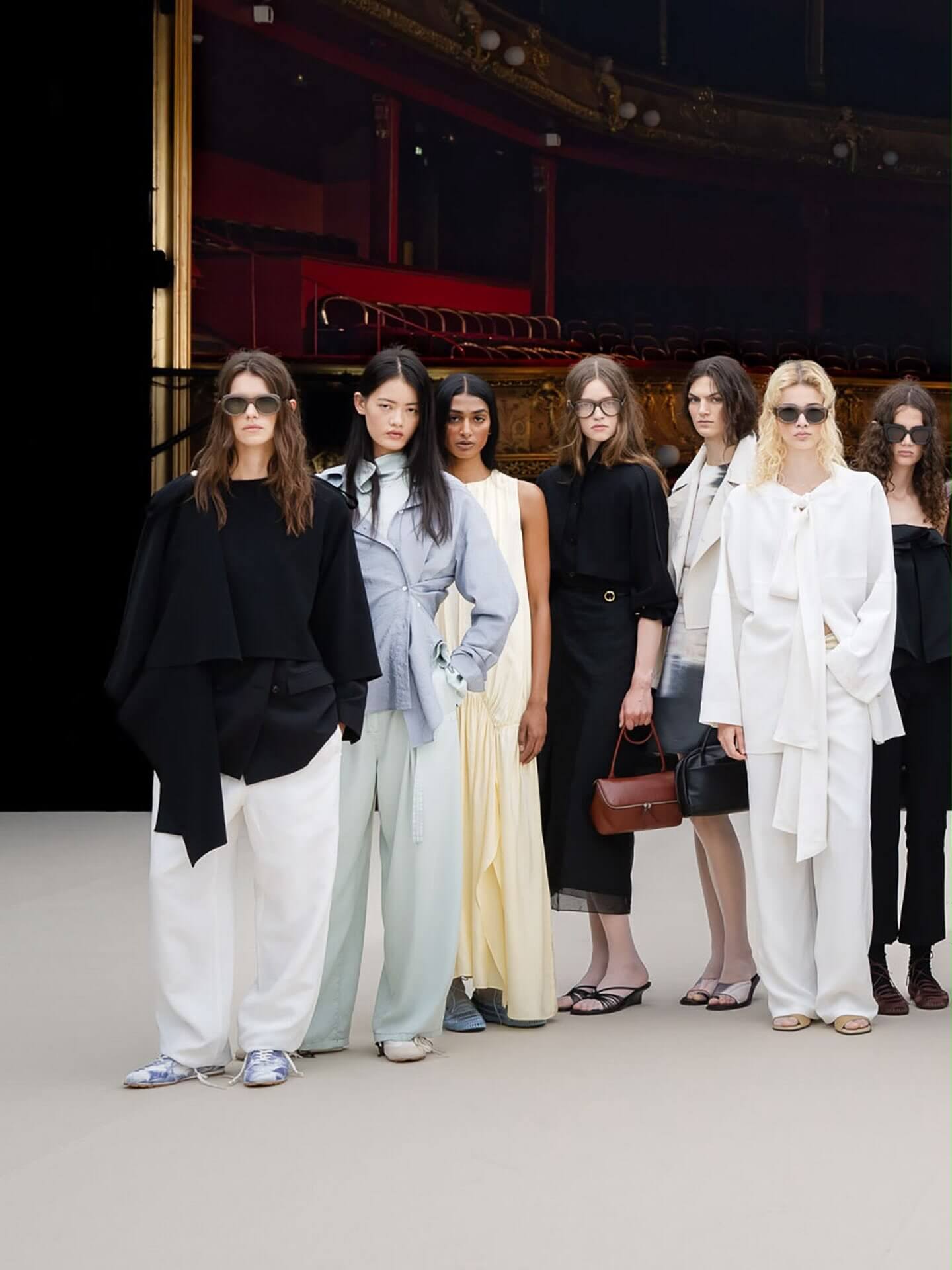
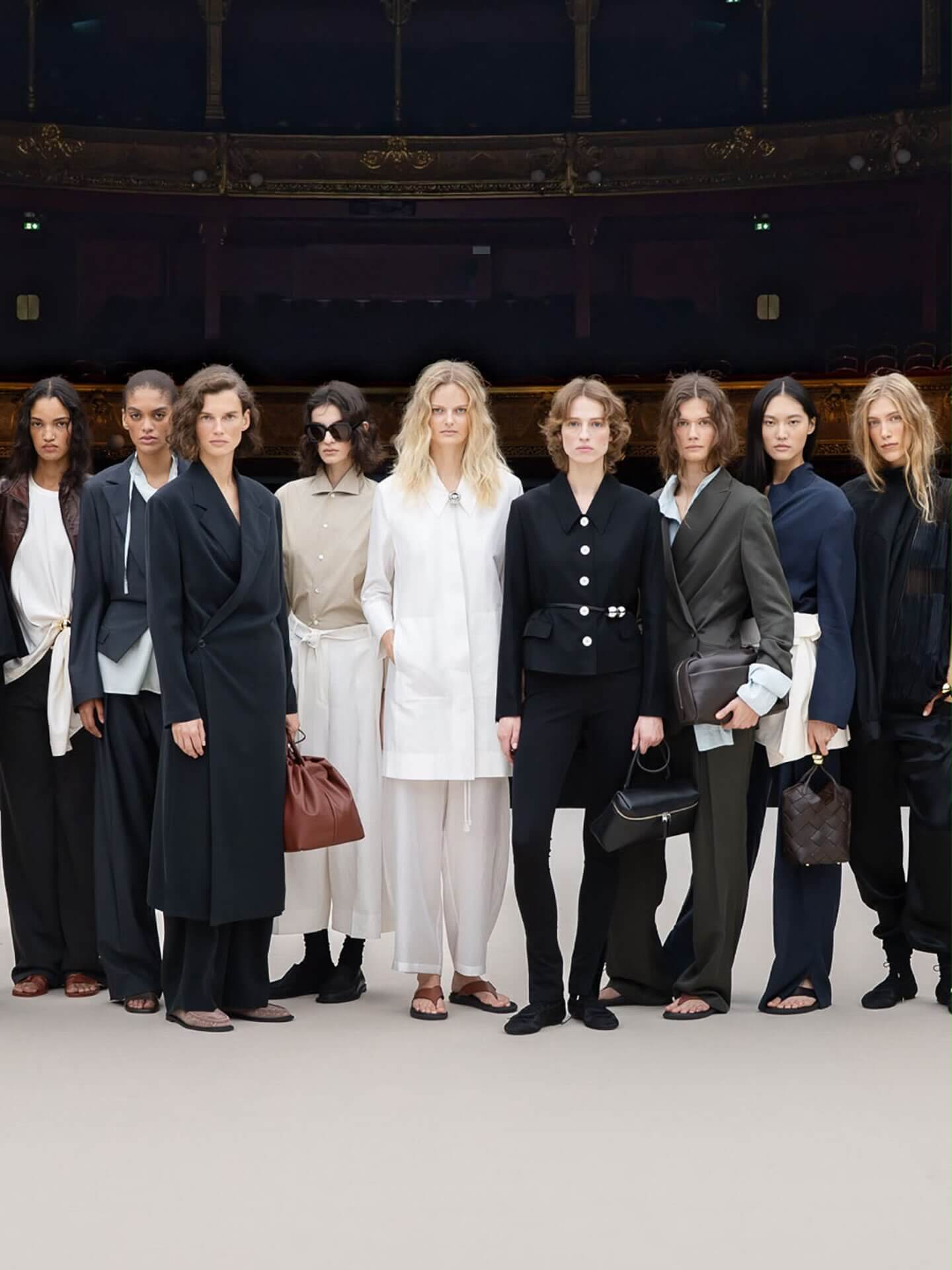
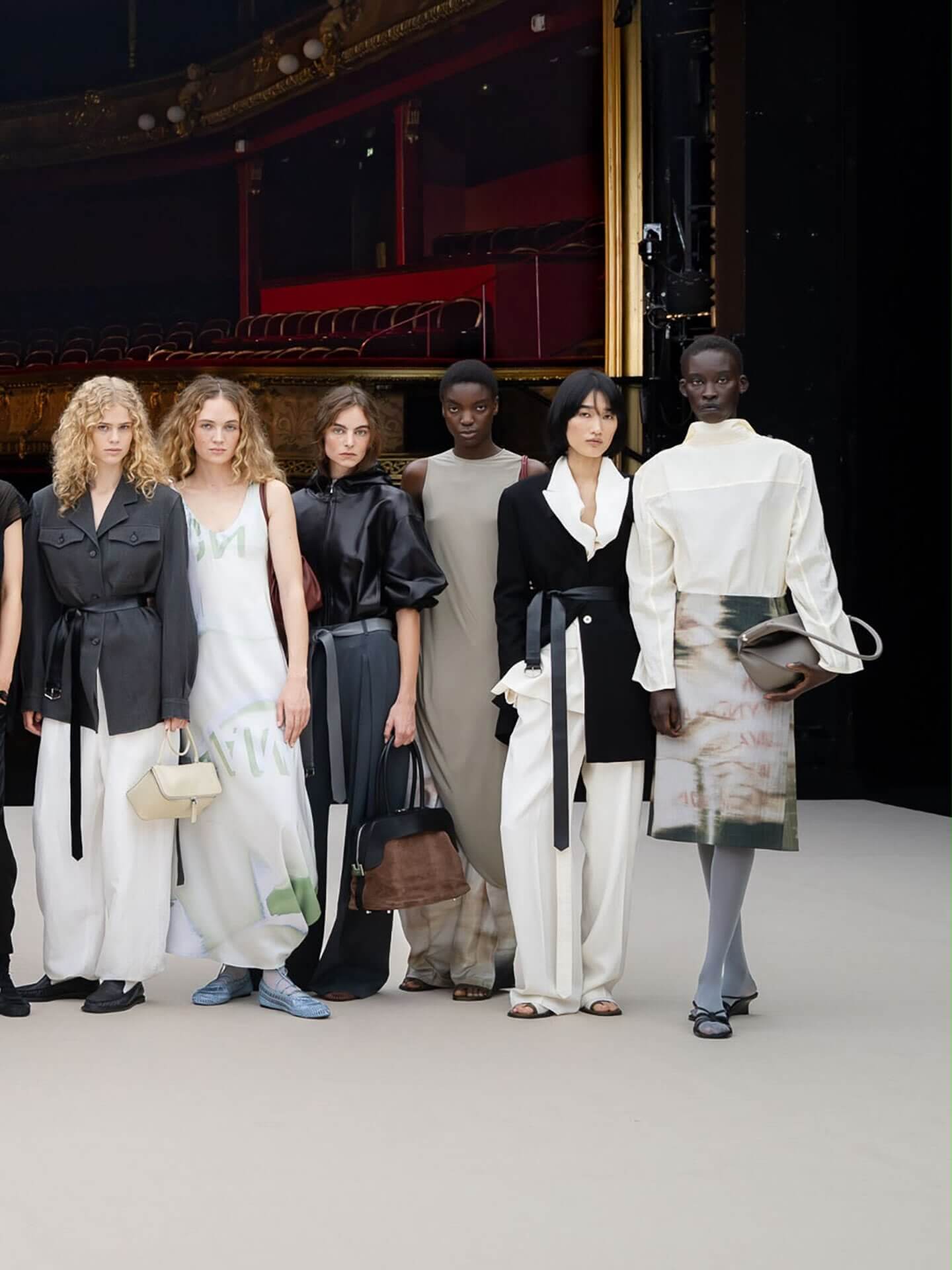
TIME presented its collection at Paris’s Théâtre du Châtelet, transforming the historic venue into an “Inner Stage” where time, sensation and movement became part of the show itself. Building on the brand’s ongoing story of “The First Layer — Into One,” creative director Jung In Choi reinterpreted the theatre through a tilted frame of light, creating a stage within the existing stage. This season also sees TIME collaborate with artist MOKA LEE, whose layered approach to portraiture, still life and landscape reflects the collection’s exploration of contemporary femininity and human beauty. Cold dyed fabrics allow pigments to settle naturally, producing subtle shifts in color, while contrasting textures, luminous silk and irregular pleats capture the traces of movement. With each layer holding its own sense of time, sensation and chance, TIME brings together its heritage of elegant, purposeful womenswear with a more contemporary vision of femininity.