
Judeline has emerged as Spain’s most compelling breakout talents. Following the critical success of her debut album Bodhiria, which saw her earn multiple Latin Grammy nominations, she has entered a new chapter with VERANO SAUDADE, a collaborative EP that explores nostalgia, the passage of time, and the fragile space between summer’s end and autumn’s beginning.
Opening up to us, Judeline reflects on the spiritual undercurrent of her music, the balance between pop and experimentation, and how moments like Cercle have shaped her relationship with live performance. As she looks ahead to arena shows and a global tour schedule, the conversation reveals an artist committed to honesty, curiosity, and emotional depth set to define her fast-evolving body of work.
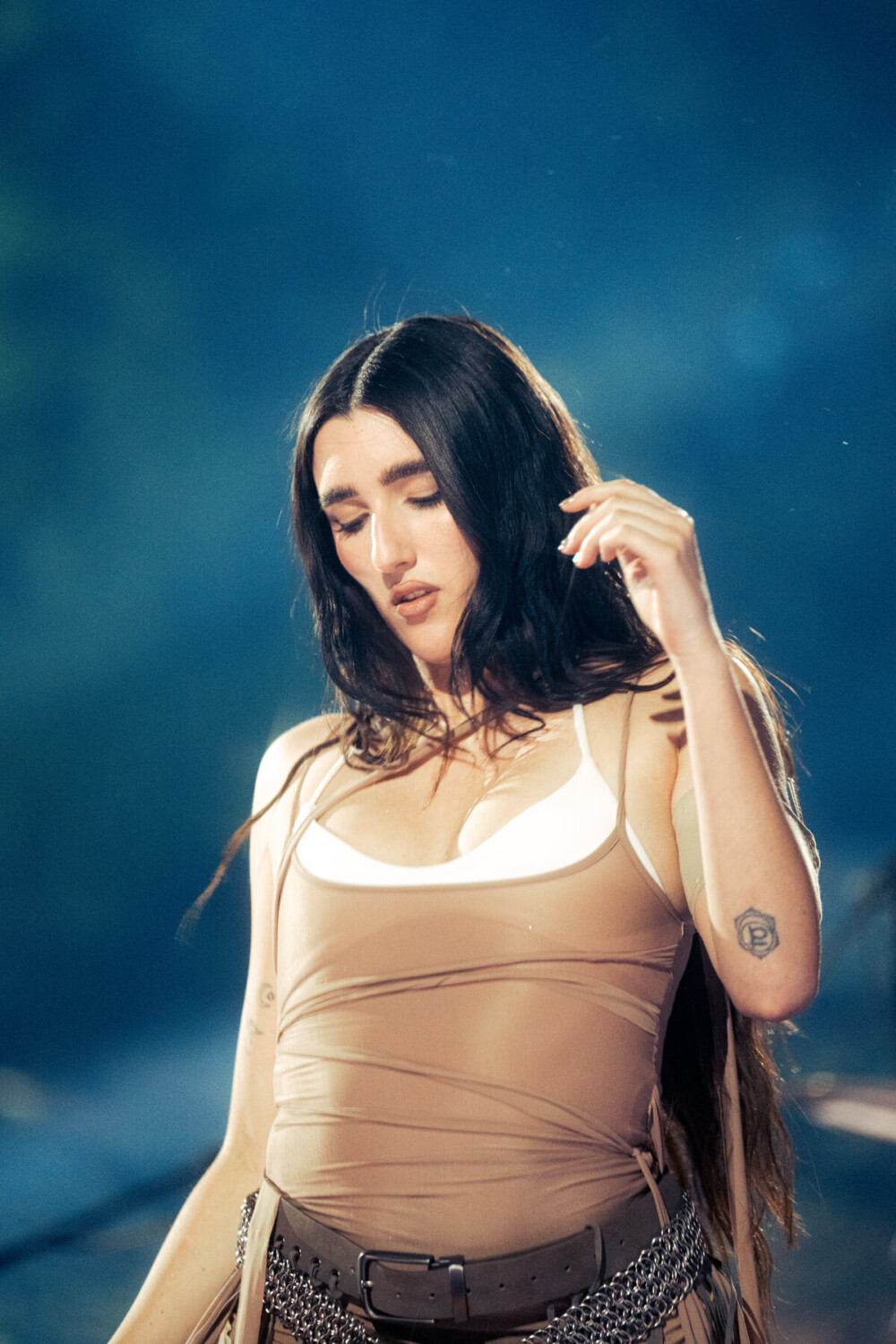
You moved from Andalusia to Madrid as a teenager to pursue music. How did that change your perspective on your art and on the industry?
Madrid was a shock and a revelation at the same time. I came from a very intimate environment, very connected to my roots, and suddenly I found myself in a city where everything moved faster. That forced me to define myself earlier, to understand what I wanted to say and what I wasn’t willing to negotiate. It also made me see the industry from the inside, with its lights and shadows, and to learn how to protect my sensitivity without losing ambition. Now I feel at home. But that also happens to me with other places.
Bodhiria, your debut album released last year, seems deeply rooted in spirituality and the personal. How did your interest in enlightenment and self-knowledge influence the record?
Bodhiria was born at a time of deep inner searching. I was asking myself big questions: who I am, what hurts me, what I want to let go of. Spirituality not as something religious, but as a tool for listening to myself. Musically, it was also an incredible journey to go on.
Bodhiria was critically acclaimed and received Latin Grammy nominations. How does that recognition affect your creative process, or do you see it as secondary to the music itself?
It’s beautiful to feel recognized, of course, but I try not to let it condition what I do next. If you start creating with external validation in mind, you lose something very valuable. For me, what matters is that the music is honest and that I recognize myself in it. The rest comes and goes. It’s equally important how the audience has received it, being able to tour it around the world and meet fans.
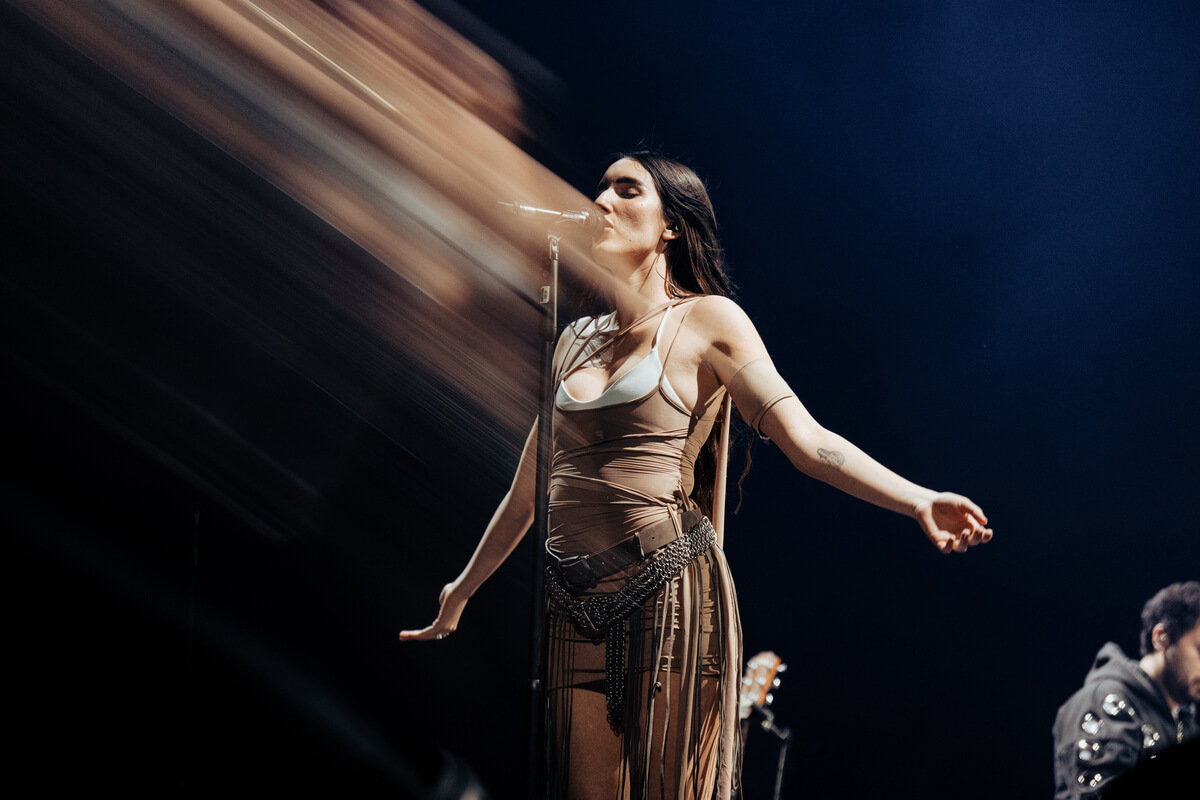
Can you tell us about Cercle?
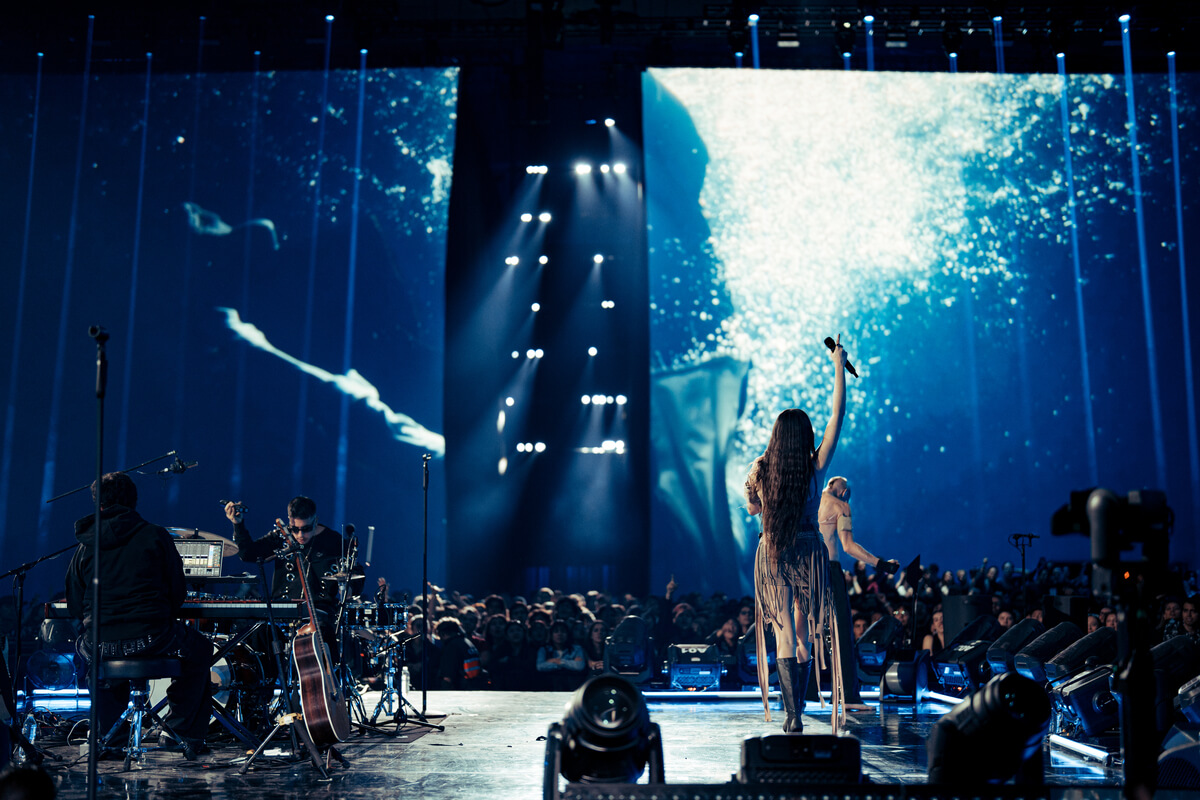
Cercle was an almost mystical experience. It’s not just a concert; it’s a dialogue with space, with silence, with the energy of the place. It forced me to be very present, very connected to my surroundings and to myself. It was a gift. I love the audience in Mexico, and they accompanied us in an incredible way.
How did Cercle change the way you approach live shows, or even your music?
Every concert brings a small shift. At Cercle in Mexico City, I really enjoyed rethinking the stage space, on a stage where the audience completely surrounds you. The dialogue with the images around us was also special. In any case, I wouldn’t say it changed my way of approaching live performance or music, but rather that it represents another step on the path of connecting with the audience.
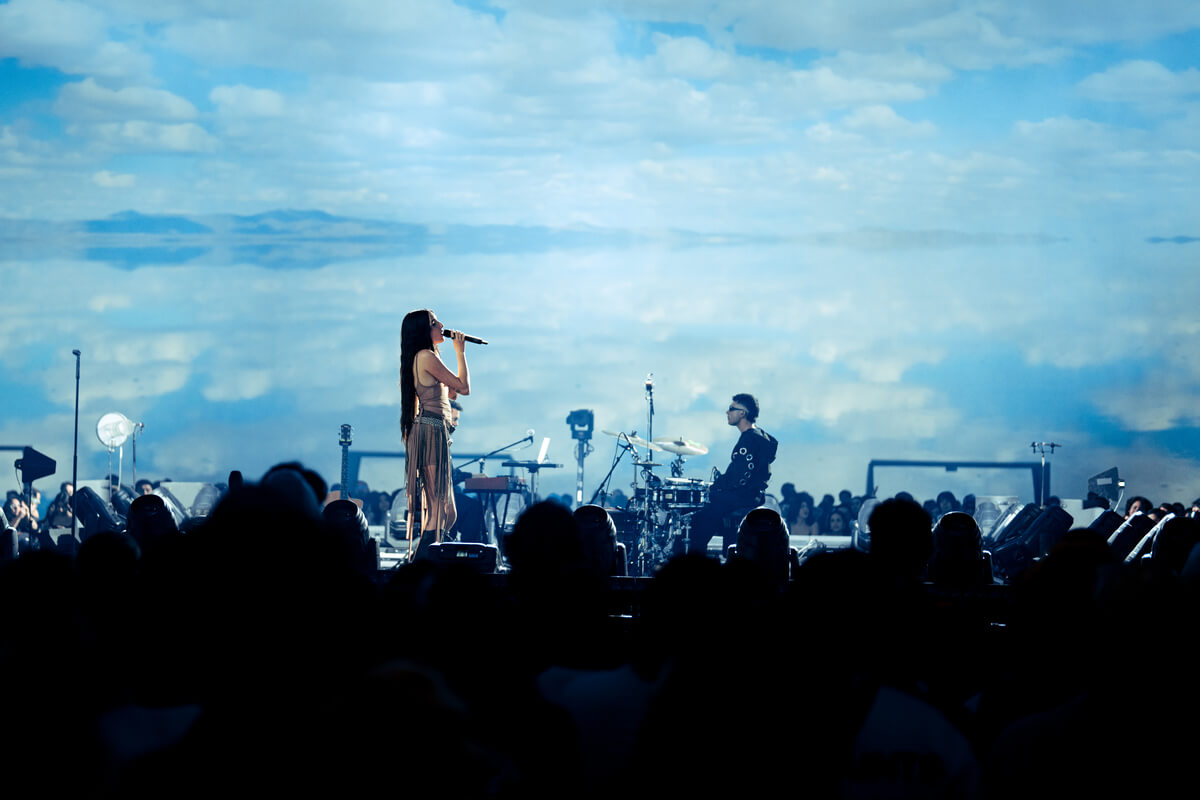
Was there any place you performed where you felt like returning as a tourist?
Yes, absolutely. There are places where you feel something special, even when you’re working. Some landscapes stay etched in your body. I would return without a stage, without rush, just to listen and walk. Mexico City is one of those places, I’ve been several times and I can’t wait to stroll its streets again, and eat the food!
Pop often comes with commercial pressure. How do you balance mainstream appeal with the more experimental sides of your music?
For me, they’re not opposites. I believe the experimental can also connect with many people if it comes from a sincere place. The balance is in not betraying yourself. If something represents me, I don’t care whether it’s more accessible or more unusual. Everything can coexist. In any case, I don’t seek one or the other.
At just 21, you were supported by Rosalía and worked with producers like Tainy and El Guincho. How do those encounters feed into your own artistic evolution?
Being close to creative people with such a clear vision always helps me understand the importance of detail and identity. It gives me momentum, always while respecting my own voice. Surrounding yourself with artists and people who love their profession is always exciting from well-known figures to the musicians I collaborate with. On my latest release, VERANO SAUDADE, all the songs are collaborations with incredible artists: MC Morena, Dellafuente, Sega Bodega, Pa Salieu, and Amaia.
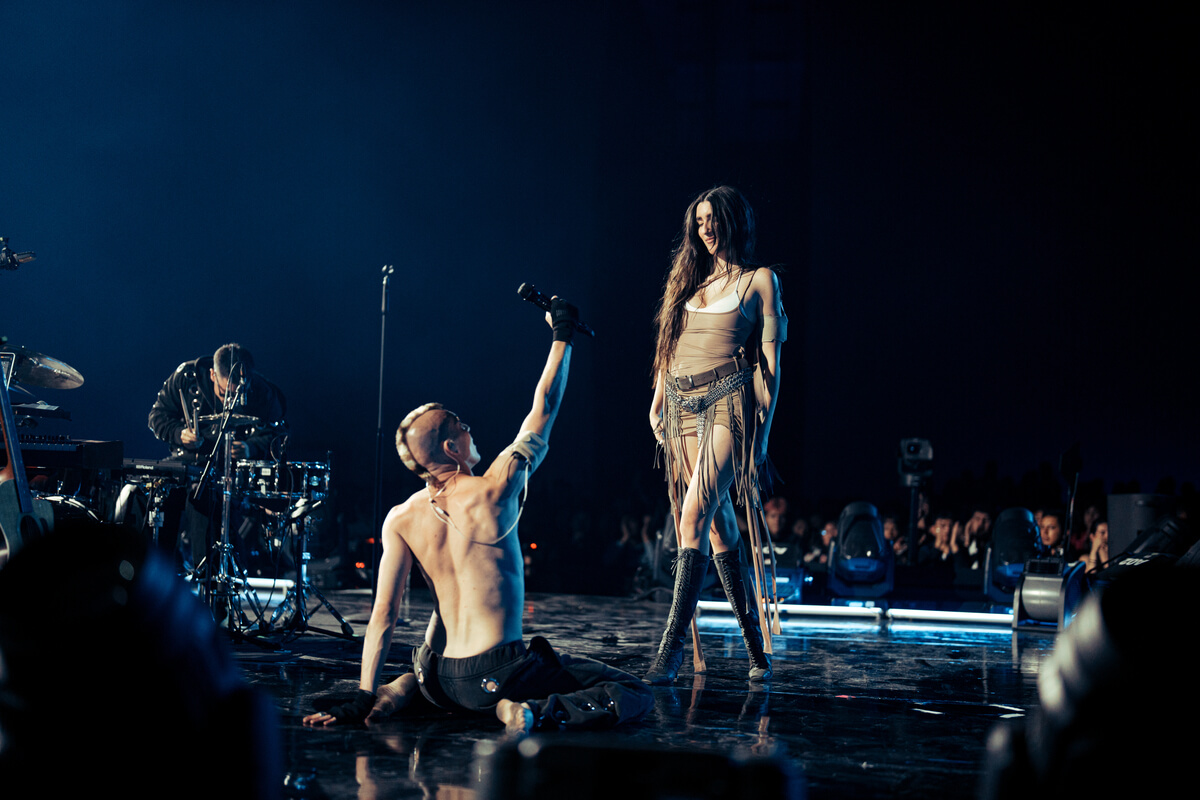
You’ve been described as “the future of European music.” How do you personally define that?
I don’t think much about labels like that. If it means a freer future, more hybrid, more emotional, then I feel close to it. For me, the future is mixing without fear, honoring the past, and looking inward. It’s funny, because I also see the future in other artists I admire.
Let’s move to something more fun: what are your favorite karaoke songs?
It depends on the mood, but anything from Rocío Jurado to Britney Spears. I like singing intense songs… or total guilty pleasures.
Music and fashion are increasingly connected. You’ve collaborated with designers and international creative teams for tours and videos. What attracts you to a designer or an aesthetic when building your visual identity?
I’m not interested in fashion as costume, but as an extension of the message. I’m drawn to aesthetics that tell stories, that respect the body, and that dialogue with both the spiritual and the earthly.
Is there any trend you wore as a child that you now look back on with cringe?
Many. But they’re part of the process. All of that also builds who you are.
If you could live in any decade just for the fashion, which would it be?
Probably the ’90s, for that mix of minimalism and rawness. Or even earlier, when clothing had a more ritualistic bond.
Looking ahead, what’s next?
I’ve just released the EP VERANO SAUDADE, and I’m really excited to see how people receive it. 2026 starts with a European tour and continues with concerts in Madrid and Barcelona (February 22 and 26), my first time playing arenas. I’m also especially excited to return to Mexico City after Cercle, at Auditorio BB on March 19.
Catch JUDELINE on tour
January 24 – EartH – London, United Kingdom (Sold-out)
January 25 – La Machine du Moulin Rouge – Paris, France (Sold-out)
January 27 – Melkweg – Amsterdam, Netherlands
January 29 – Columbia Theater – Berlin, Germany
February 22- Movistar Arena – Madrid, Spain
February 26 – Sant Jordi Club – Barcelona, Spain
March 13-15 – Lollapalooza Argentina – San Isidro, Argentina
March 19 – Auditorio BB – Mexico City, Mexico
March 13-15 – Lollapalooza Chile – Santiago, Chile
March 20-22 – Estéreo Picnic – Bogotá, Colombia
March 27 – Tecate Pal Norte – Monterrey, Mexico