


At CFCL, fashion becomes thought in motion. In conversation with Yusuke Takahashi, knitwear shifts into “social sculpture”.
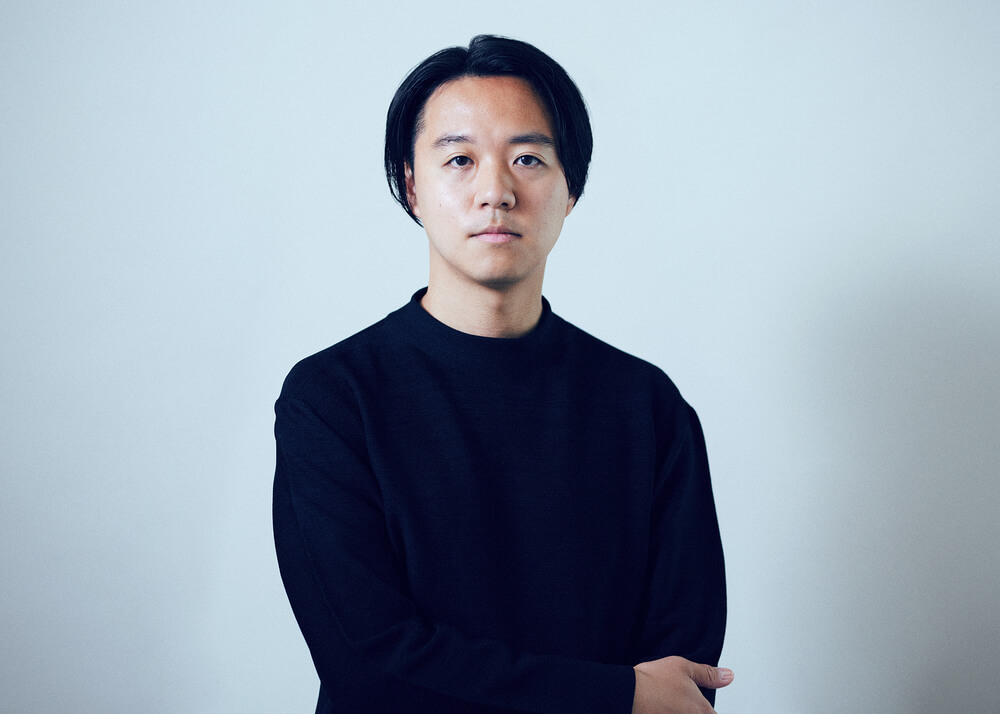
Fresh from the runway after presenting its VOL.12 Fall Winter 2026 during Paris Fashion Week, we spoke with CFCL founder and designer Yusuke Takahashi to talk about the ideas behind the latest collection, the role of technology in shaping the future of fashion, and why rethinking how we produce and wear clothes has never been more urgent.
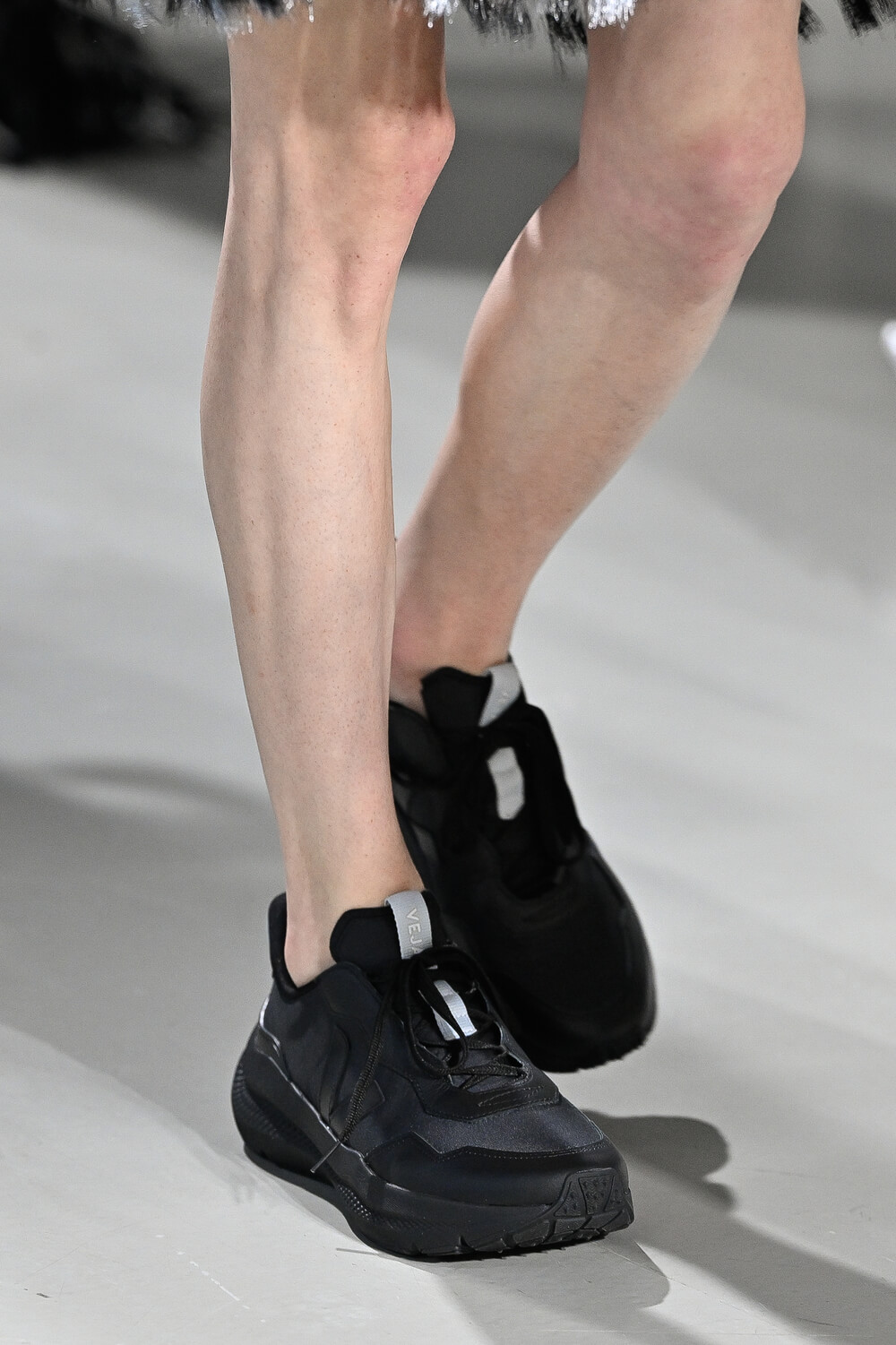
The Tokyo-based label has quickly gained international recognition for its forward-thinking approach to 3D knitting technology with a strong commitment to sustainability and earlier this year made news when they dropped their minimalistic sneaker in collab with Veja made with responsible materials. Yusuke Takahashi, who previously spent nearly a decade at Issey Miyake, has built CFCL around the idea that clothing should respond to contemporary life, prioritizing comfort, longevity, and responsible production. I first met Takahashi three years ago, and it has been incredible not just to see his collections evolve within the scope and vision of the brand, but also to see how much he has realized in three years, making it more exciting to see where the brand will take us.
What was the first image or idea that sparked the collection?
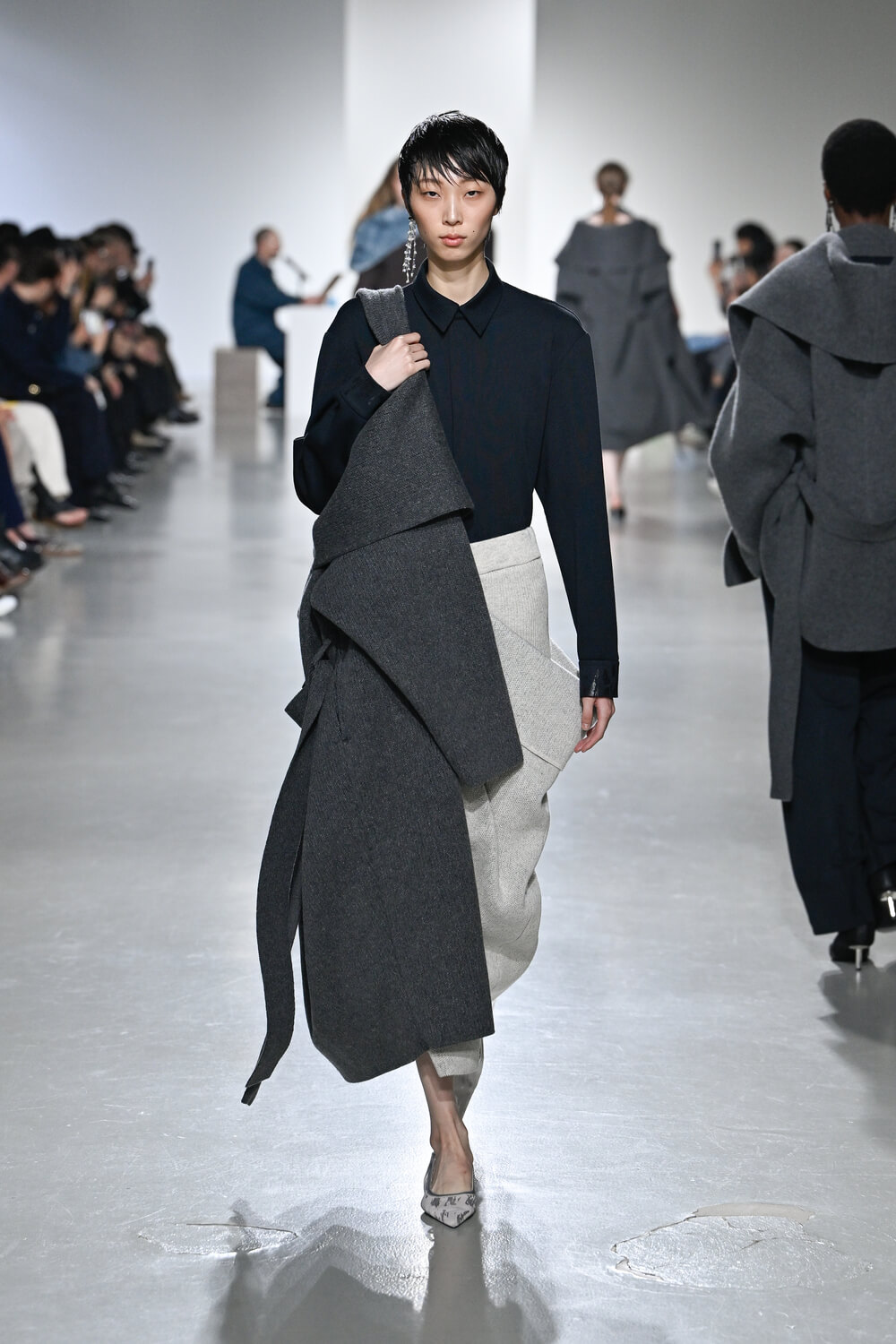
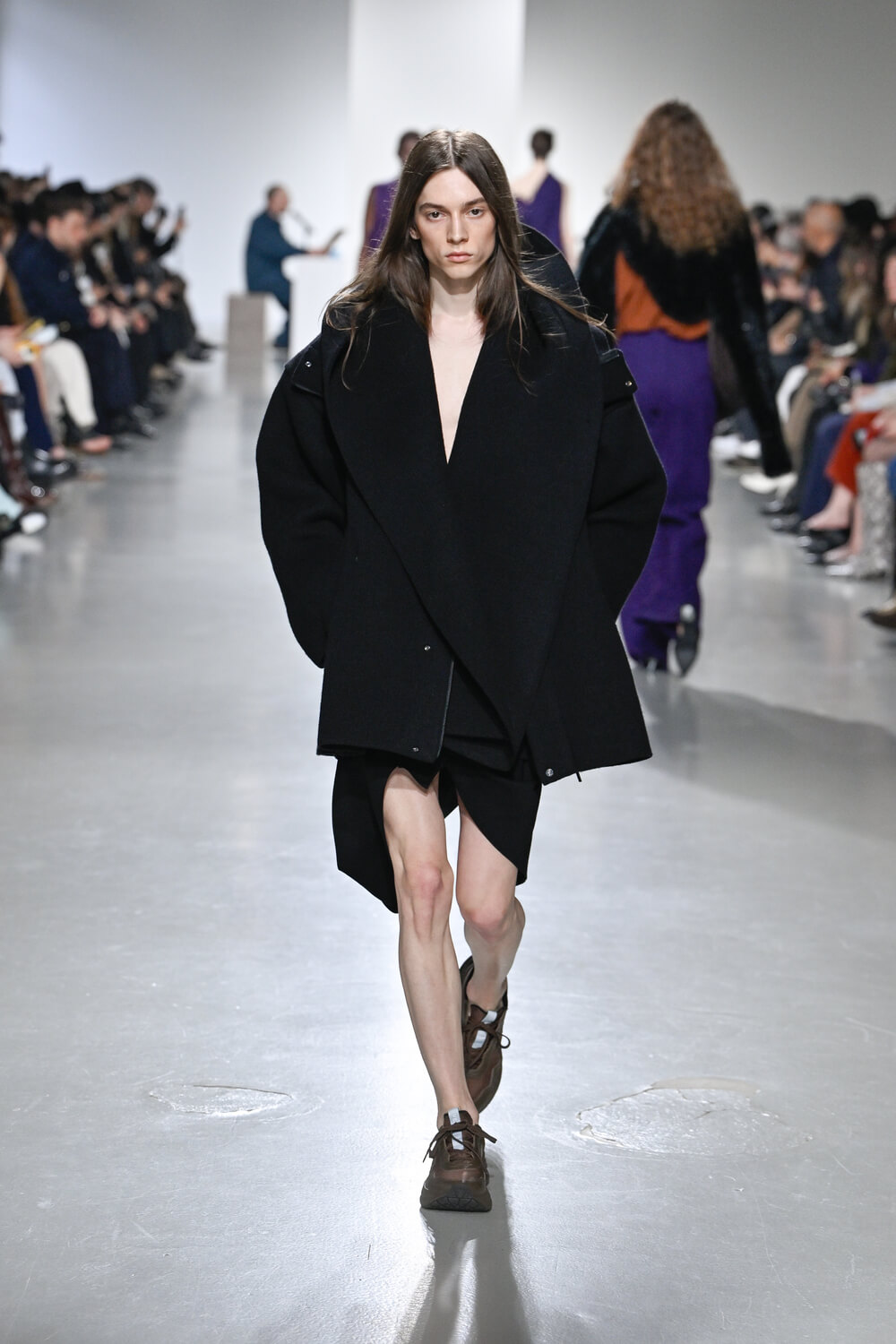
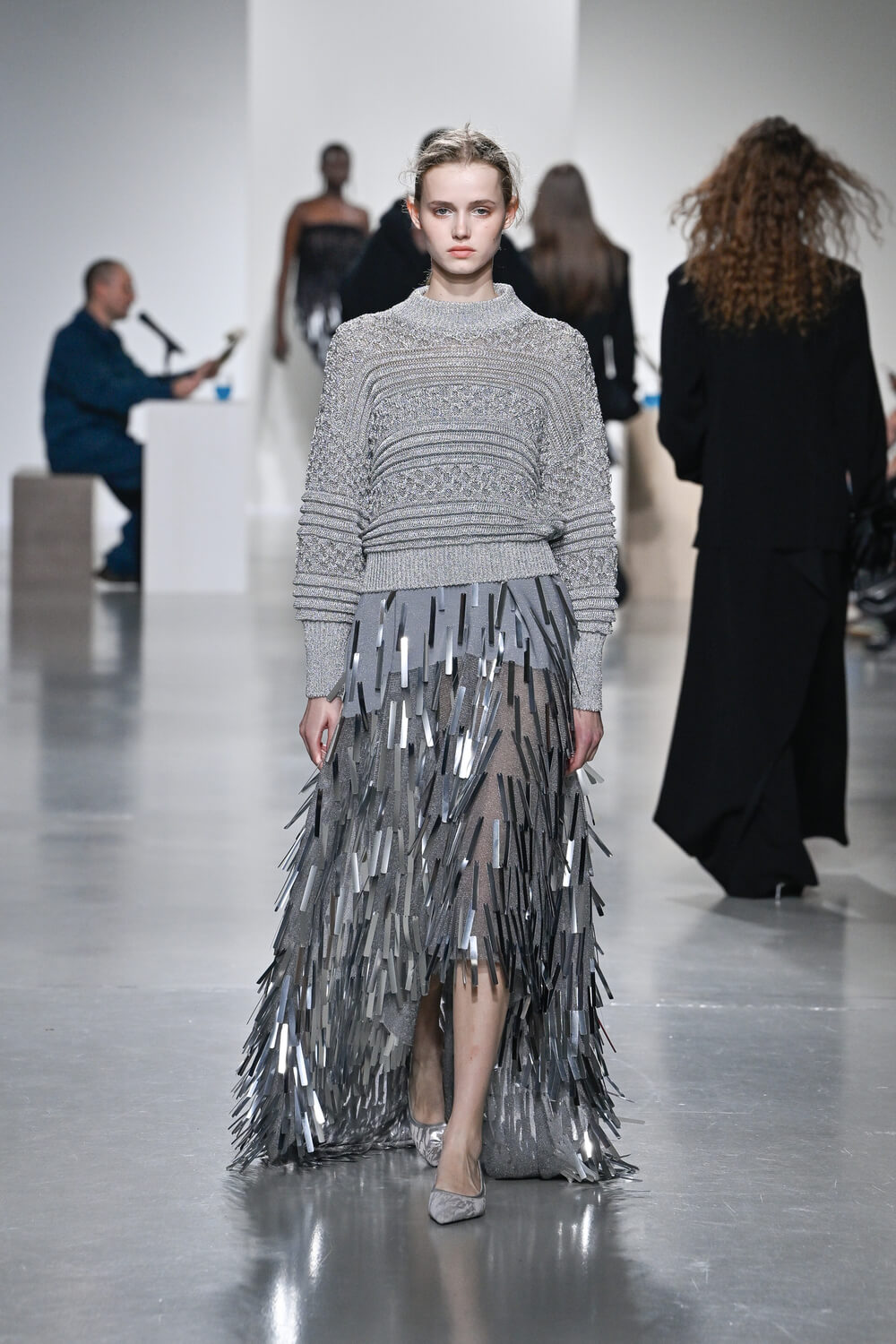
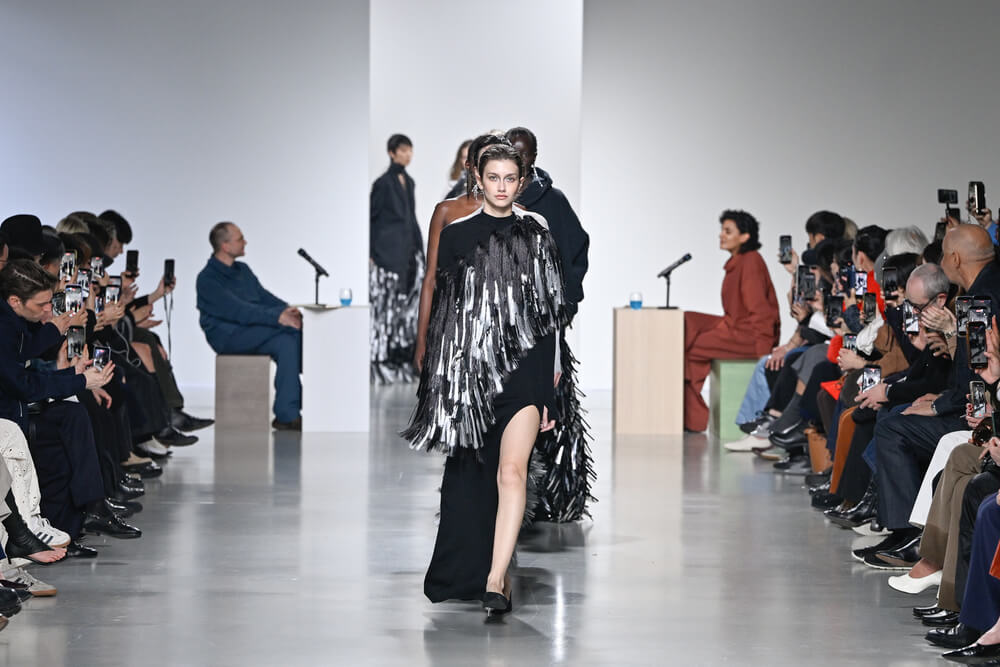
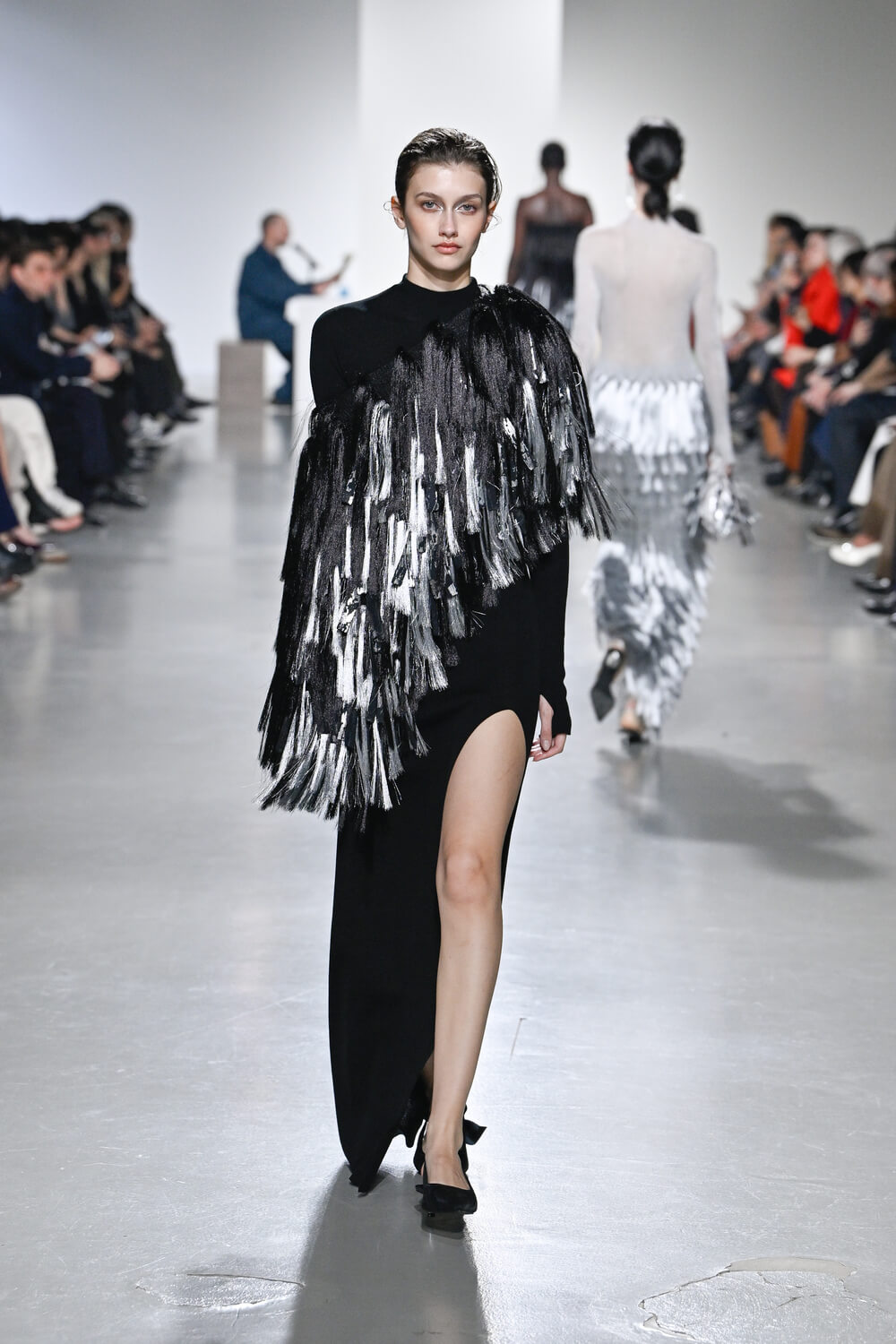
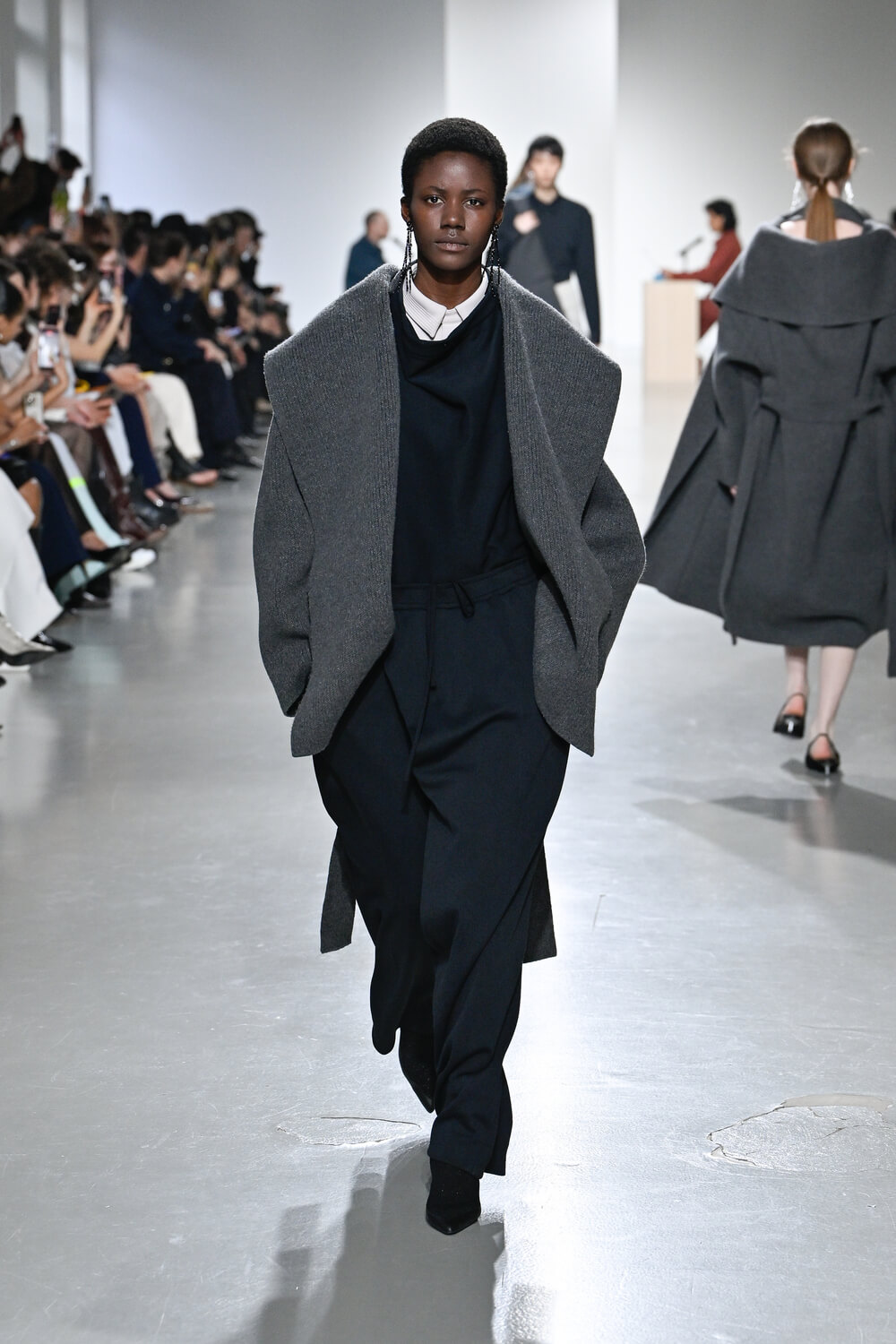
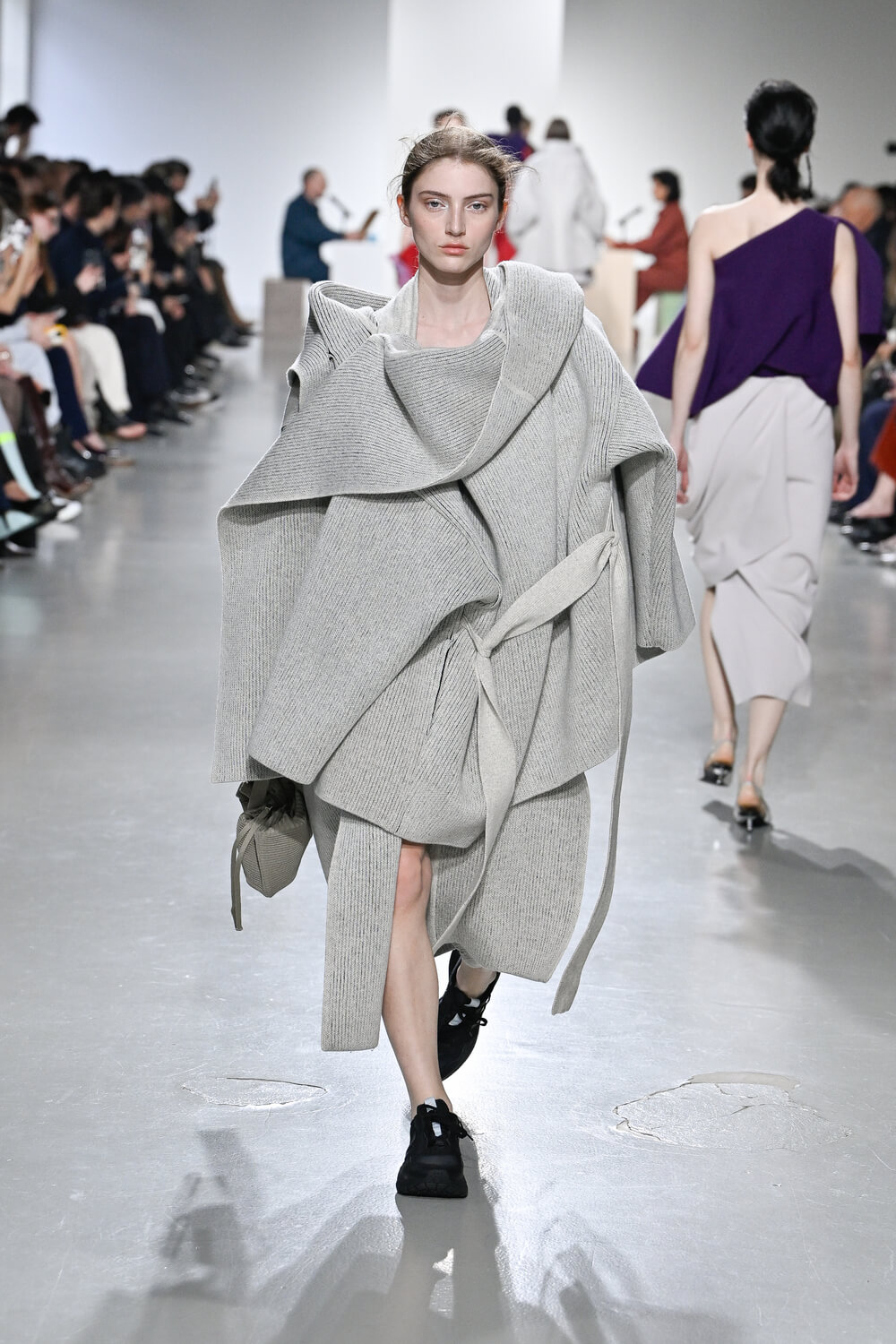
The theme of this collection is Knit-ware: Sculpture. This title pays homage to Joseph Beuys’ “social sculpture.” I was reminded of how much he was pioneer combining social issues with aesthetic sense half a century ago. In this day, considering the benefits to stakeholders, such as the environment and suppliers, should be an essential part of fashion design. CFCL just has completed the B Corp recertification process. We always take responsibility as a company and consider our social impact while creating clothing. Inspired by his felt works as well, we developed clothing silhouettes featuring fabric-like drapes that stand out when hung on the wall. What we want create is soft sculptures that envelop the female body. The coat that most symbolizes this season is a three-layer structure with high-elastic recycled polyester sandwiched between the wool cashmere. The raw knitted edges and the mélanged surface give the fabric an appearance of felt. A voluminous coat creates a strong drape at the back by extending a band across the back of the neck.
CFCL often merges technology with craftsmanship, what was the most technically challenging piece this season?
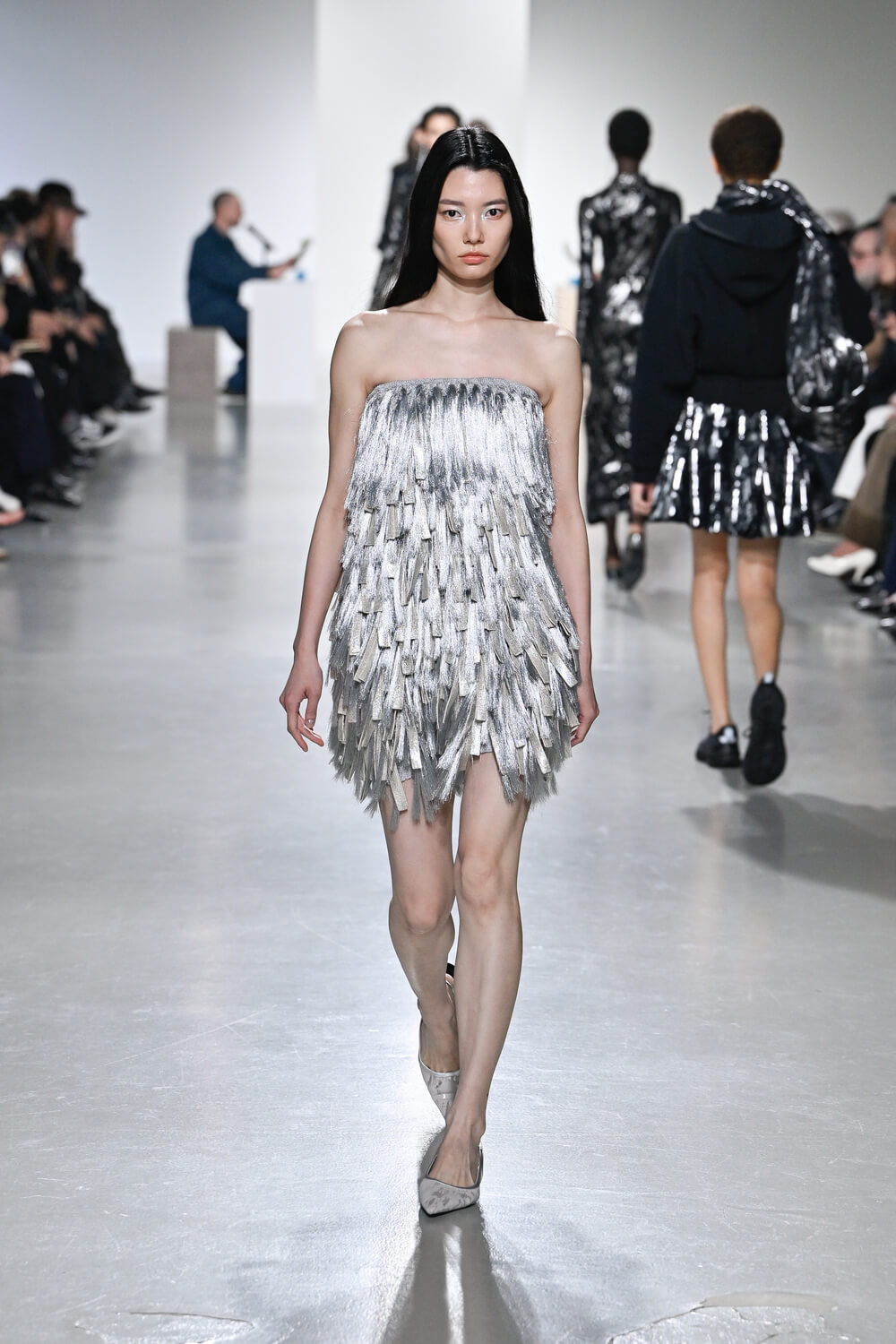
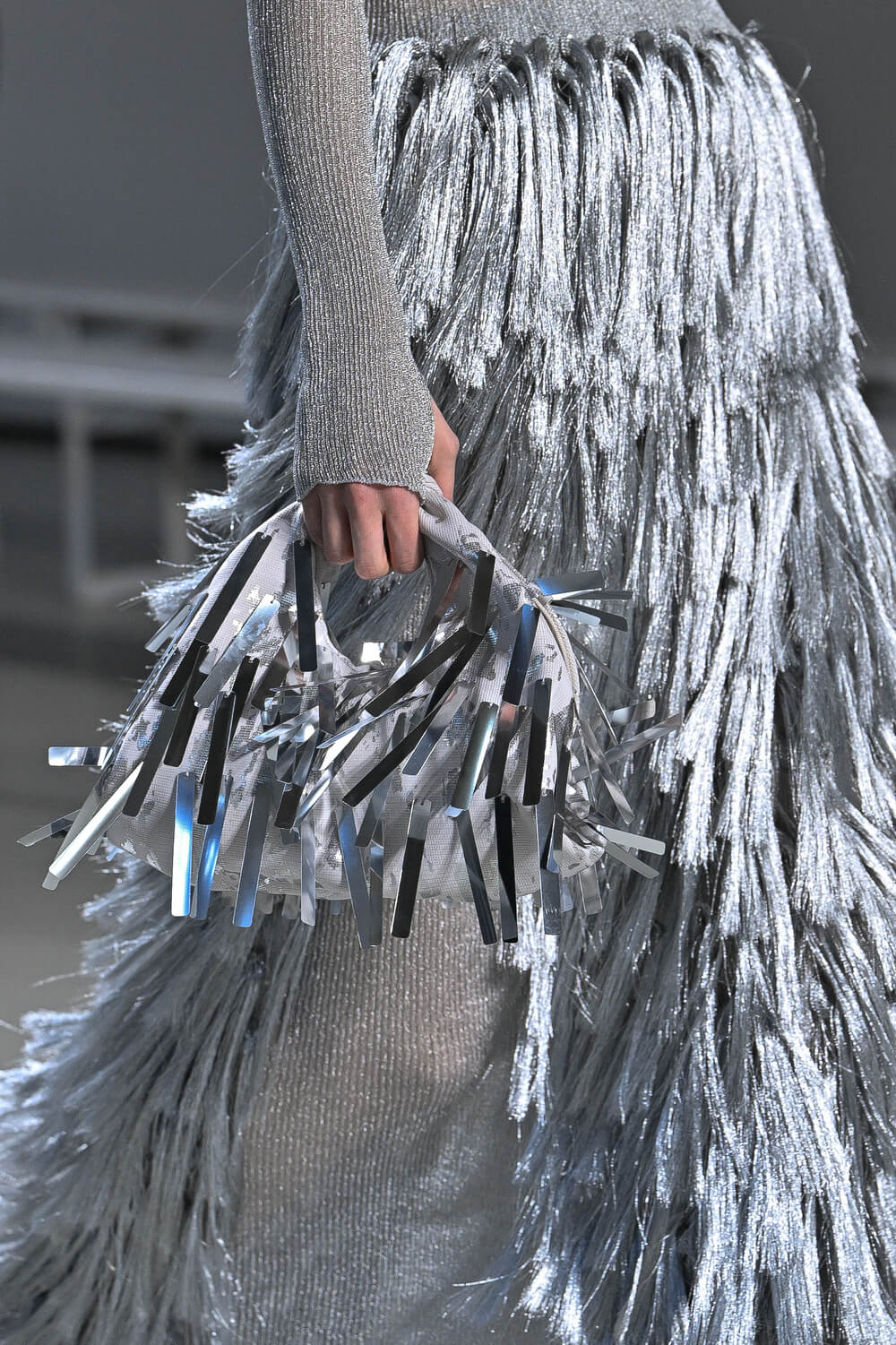
Paying homage to Joseph Beuys’ landscape art piece “7000 Oaks,” we created various garments using textures like foil prints, sequins, fringe, and tassels inspired by oak bark patterns. Among these, the dress in LOOK30 (worn as a skirt by the model) features plate-like knit fringe finished with foil print together with metallic thread fringe in two colors, 1,265 pieces in total. Each tassel is individually inserted by hand through holes programmed into the body of the garment. Except for sourcing the “thread” from suppliers and foil printing, we complete nearly every process in-house at our own factory to turn this garment into a dress. Having never produced such labor-intensive garments in-house before, sample production schedules became disrupted. On the day before shipping to Paris, the entire back office team pitched in to create the tassel components, working together to finish the piece.
Many designers talk about sustainability, but CFCL builds it directly into the production process. Has this approach changed the way you think about creativity?
CFCL designs approximately 200 styles of clothing and accessories every six months, yet only 8 to 10 types of yarn are used to produce about 90% of these items. We consistently use the same raw materials each season. Particularly for recycled polyester, our most frequently used material, the usage rate exceeds 50% in mass production, and we have been using it repeatedly since the first season. This fosters strong supplier relationships, offering advantages in new development, raw material procurement for mass production, ensuring traceability, and managing delivery schedules. While many collection brands use numerous textile suppliers to maintain freshness, engaging in unstable, season-dependent transactions, CFCL prioritizes R&D by taking the opposite approach.
In a fashion system that produces so much, how do you decide what not to make?
We are conscious of being a knitwear brand. Therefore, we do not handle woven textiles or leather. Consequently, we impose restrictions on our creations, focusing solely on knit development—even extending to bags, hats and small accessories. Our goal is to become the No. 1 brand in the “knit dresses and suits” category within the market. We believe it is crucial in brand business to face market needs head-on and clearly define what we should create.
What do you hope someone feels the moment they put on CFCL?
We constantly strive to create clothing that resonates with those living contemporary lifestyles. While perceptions vary from person to person, regardless of their feelings, we believe our role as a clothing maker is to make garments that offer even a little more comfort.
In a fashion system that moves so quickly, what does longevity mean to you, both for clothing and for a brand?
The fast-paced fashion system primarily revolves around younger generations, while established individuals rarely undergo significant style changes. I’m much more interested in movements among the younger generation that view the times from an irreversible perspective than in the younger generation’s focus on appearance. Meanwhile, the evolution of IT technology dramatically transforms lifestyles. Fashion acts as a mirror reflecting the times, so I believe there are limits to continuously creating timeless, season-less clothing. I consider it our mission as a clothing brand to present the garments we should create to established individuals while simultaneously contemplating and updating for the new lifestyle of the next era.
You are opening a garment factory in Japan, reinforcing your commitment to innovation and responsible production. What kind of future do you imagine for CFCL over the next decade?
CFCL is growing its brand in an unconventional way. We firmly believe that if our approach succeeds, it will establish a new business model within the fashion industry. It should challenge the fashion industry’s reliance on large-scale production within globalism, which disregards domestic supply chains for the sake of corporate profit. We are determined to make this an initiative that will endure for future generations.
CFCL X VEJA