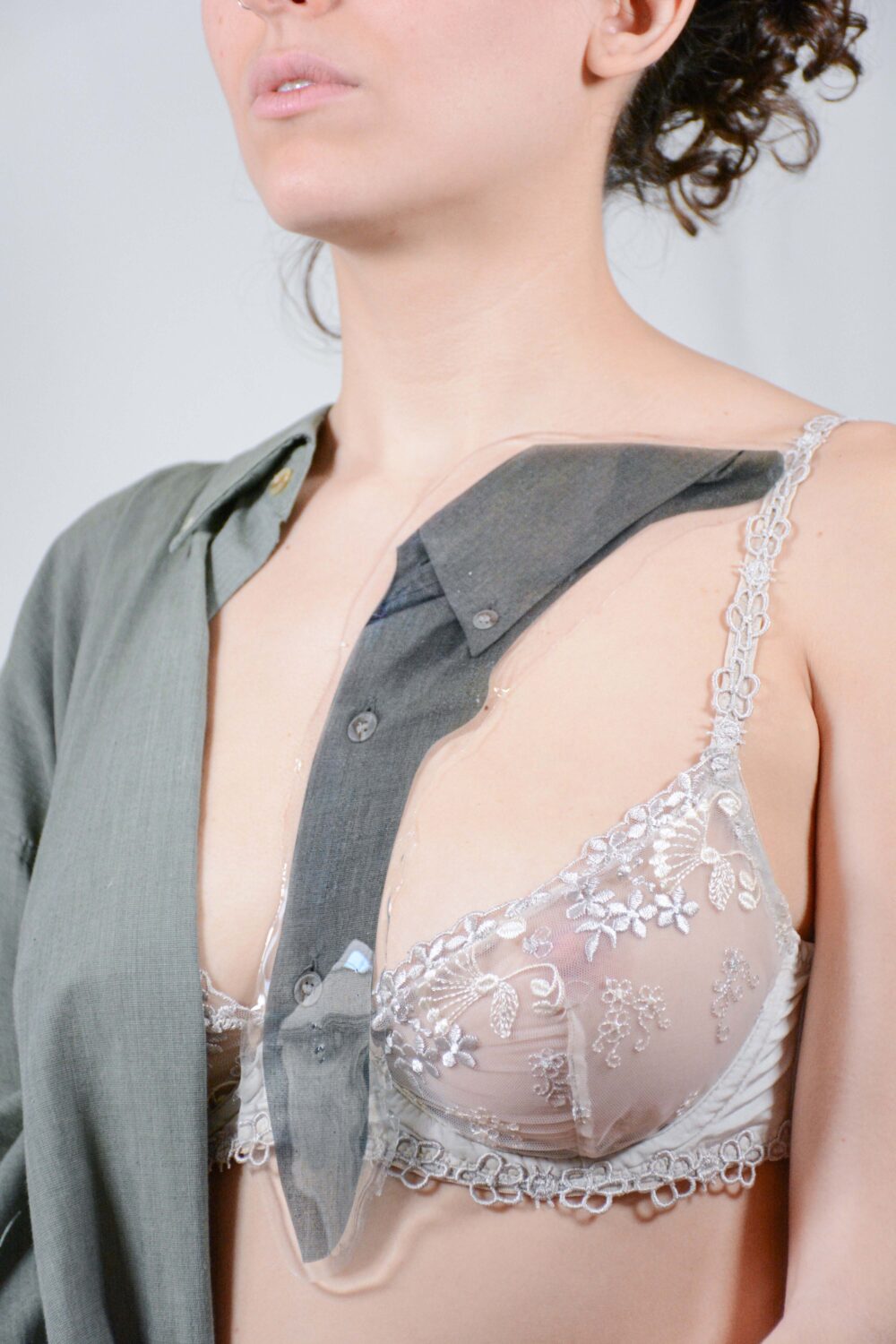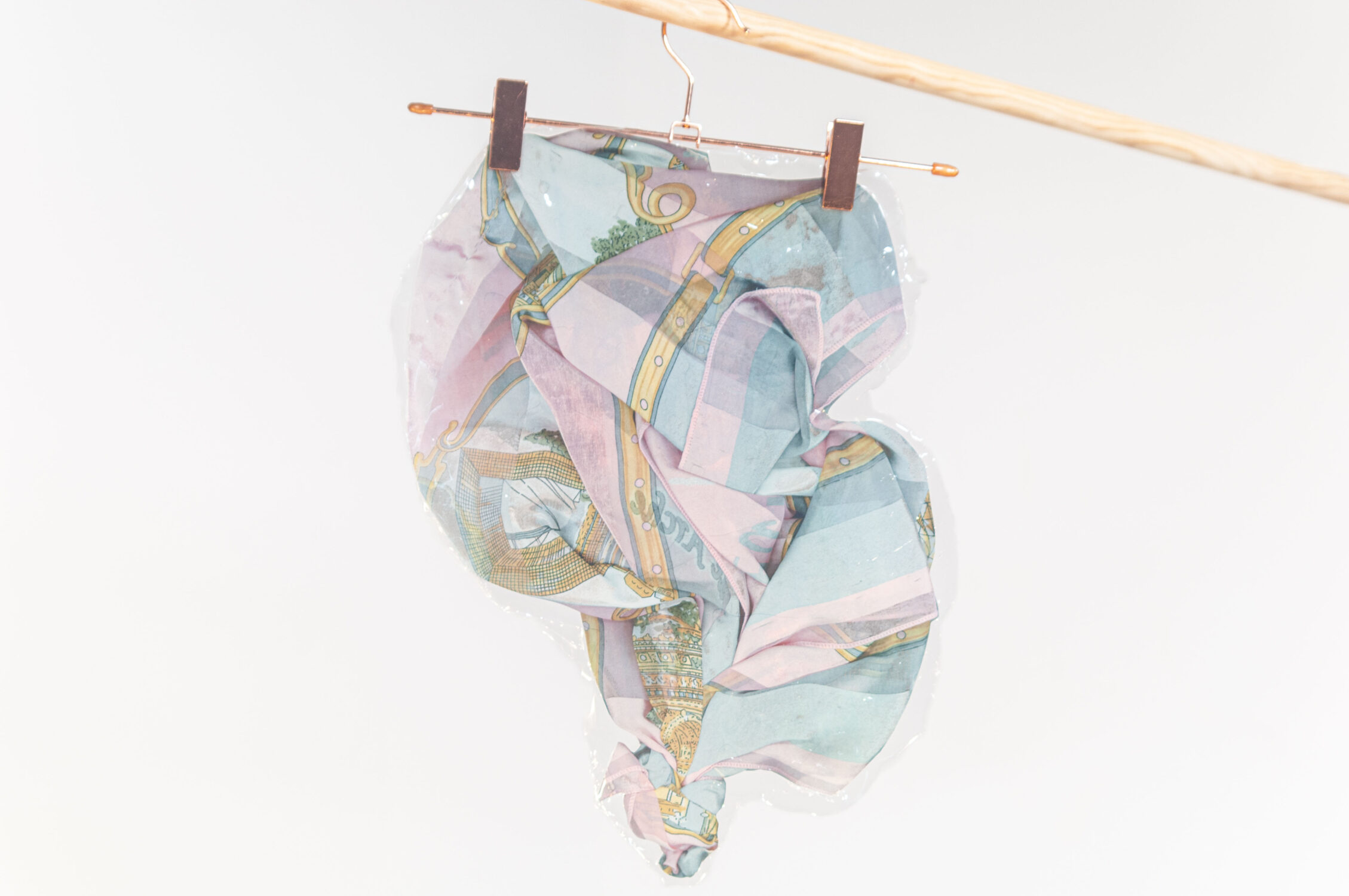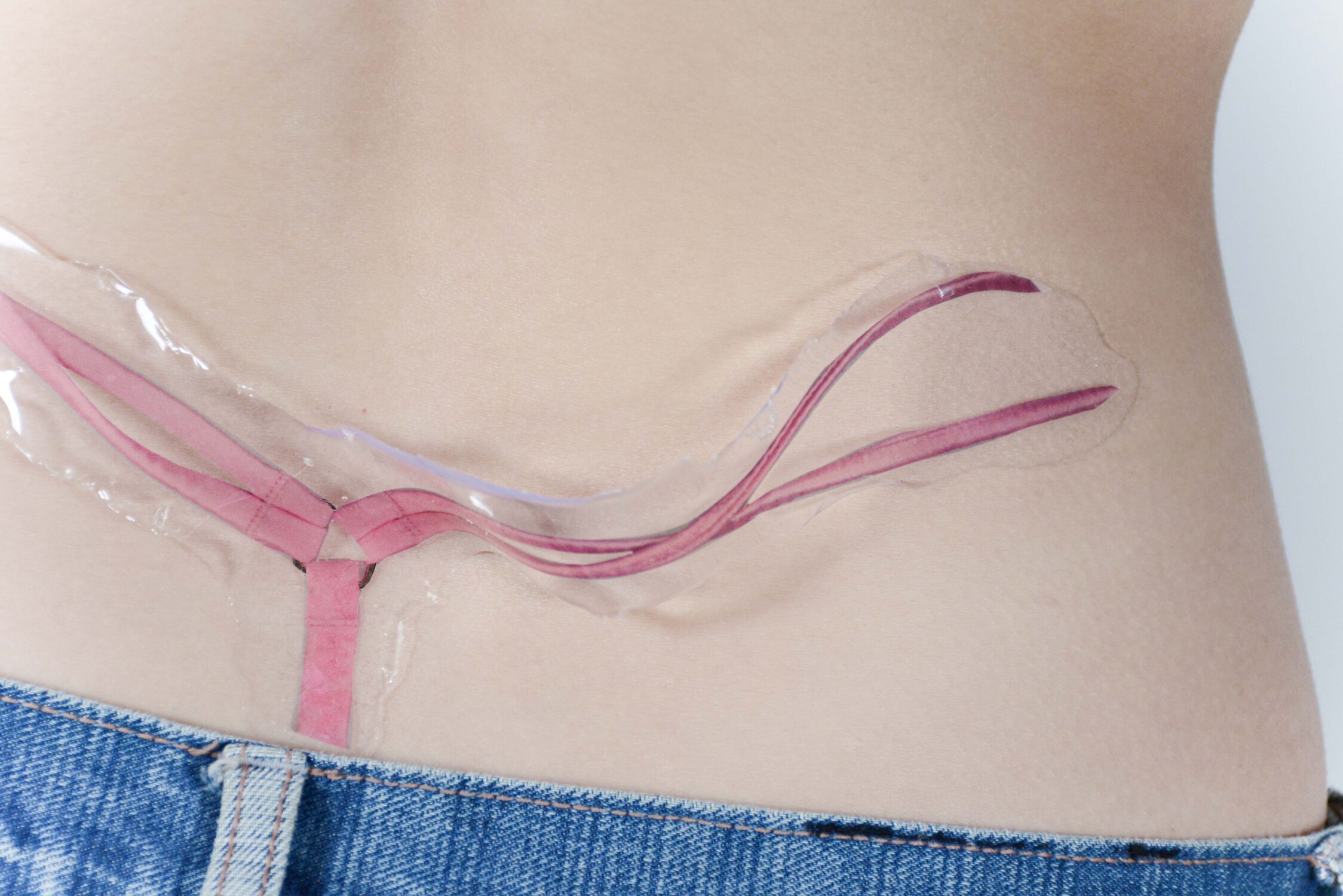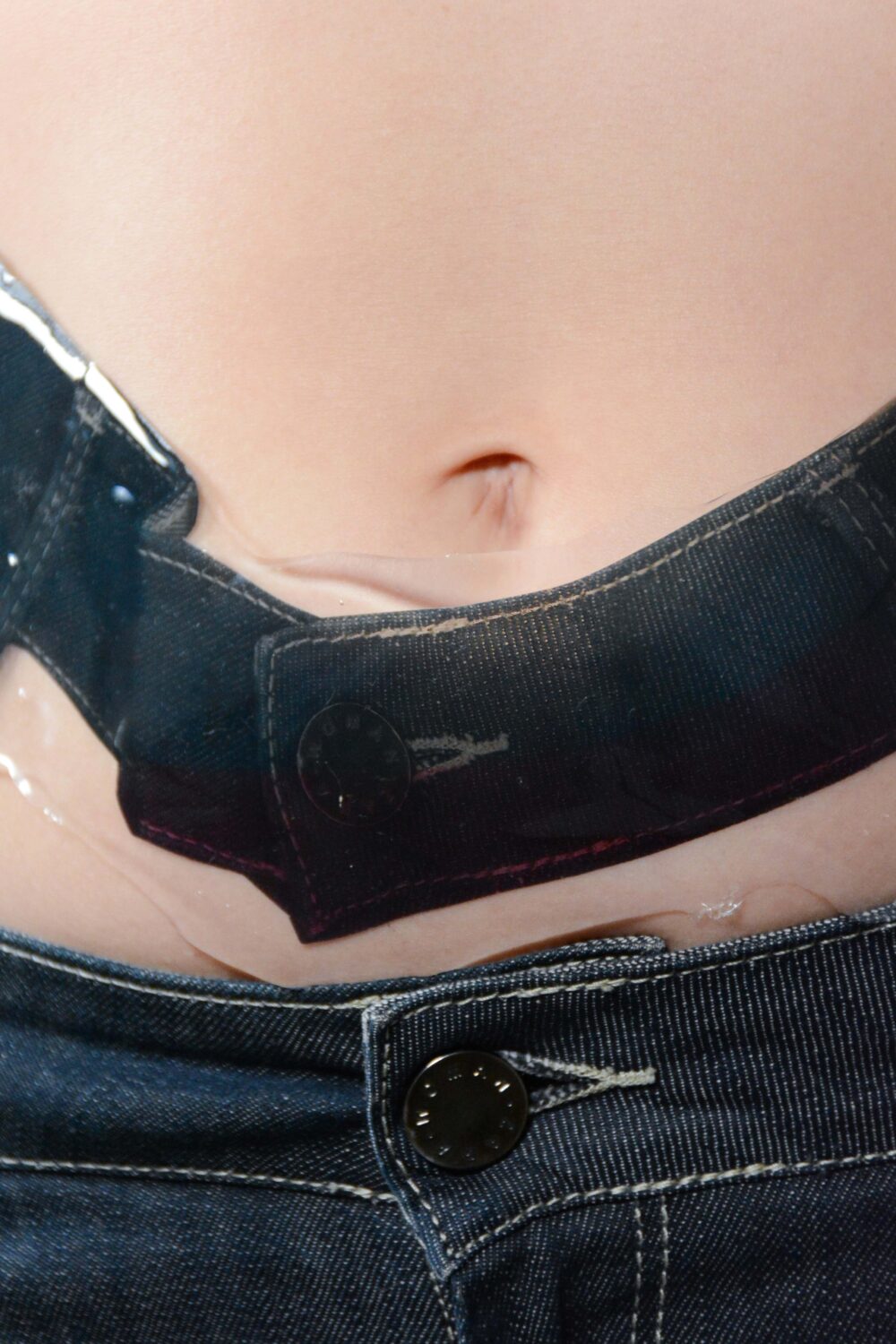
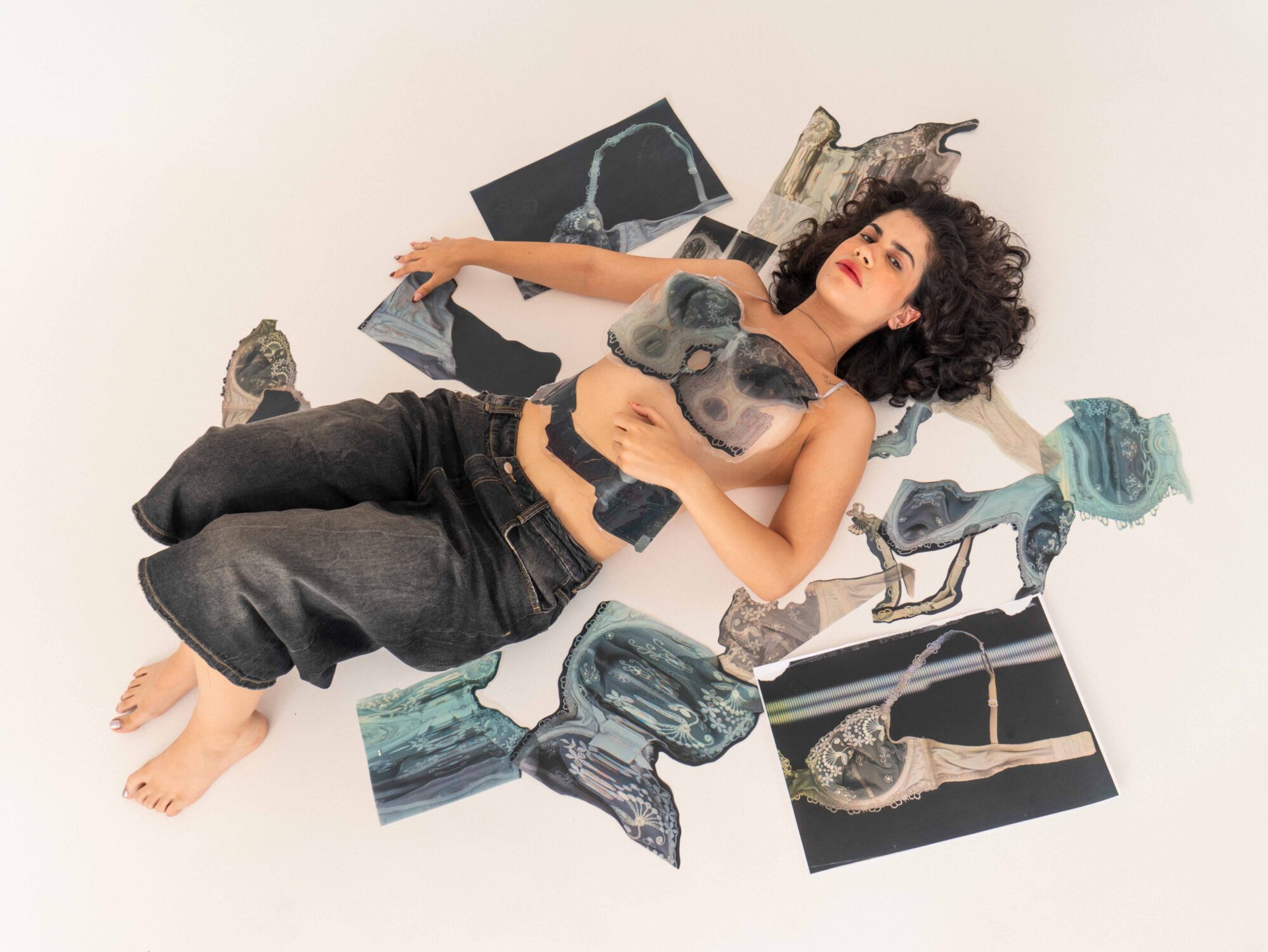
Copy Station is a conceptual showroom by Karola kay where clothing is not made in the traditional way: it is photocopied. The original garments are placed in a photocopier and transformed into two-dimensional images. A seemingly simple gesture that becomes the core of the project. By making this copy, its main function—to cover and protect the body—is eliminated, but its visual and symbolic value is retained. The garments cease to be useful in practical terms and become representations. Instead of hiding the body, they expose it.
The project stems from an intimate reflection on sustainability. Beyond using recycled materials or responsible processes, it questions something deeper: our own relationship with clothing. Why do we need to constantly produce? Why do we associate fashion with novelty? Moving towards a more conscious model means facing these questions and, above all, ourselves. If clothing is a second skin, what happens when it becomes a fragile image that no longer hides, but exposes? Copy Station suggests that sustainability could begin not in the factory, but in our gaze, in the way we understand desire, vulnerability, and the constant need for novelty. At #VEINDIGITAL, we spoke with its creator about materials, intention, and how vulnerability can be placed at the center of sustainability.
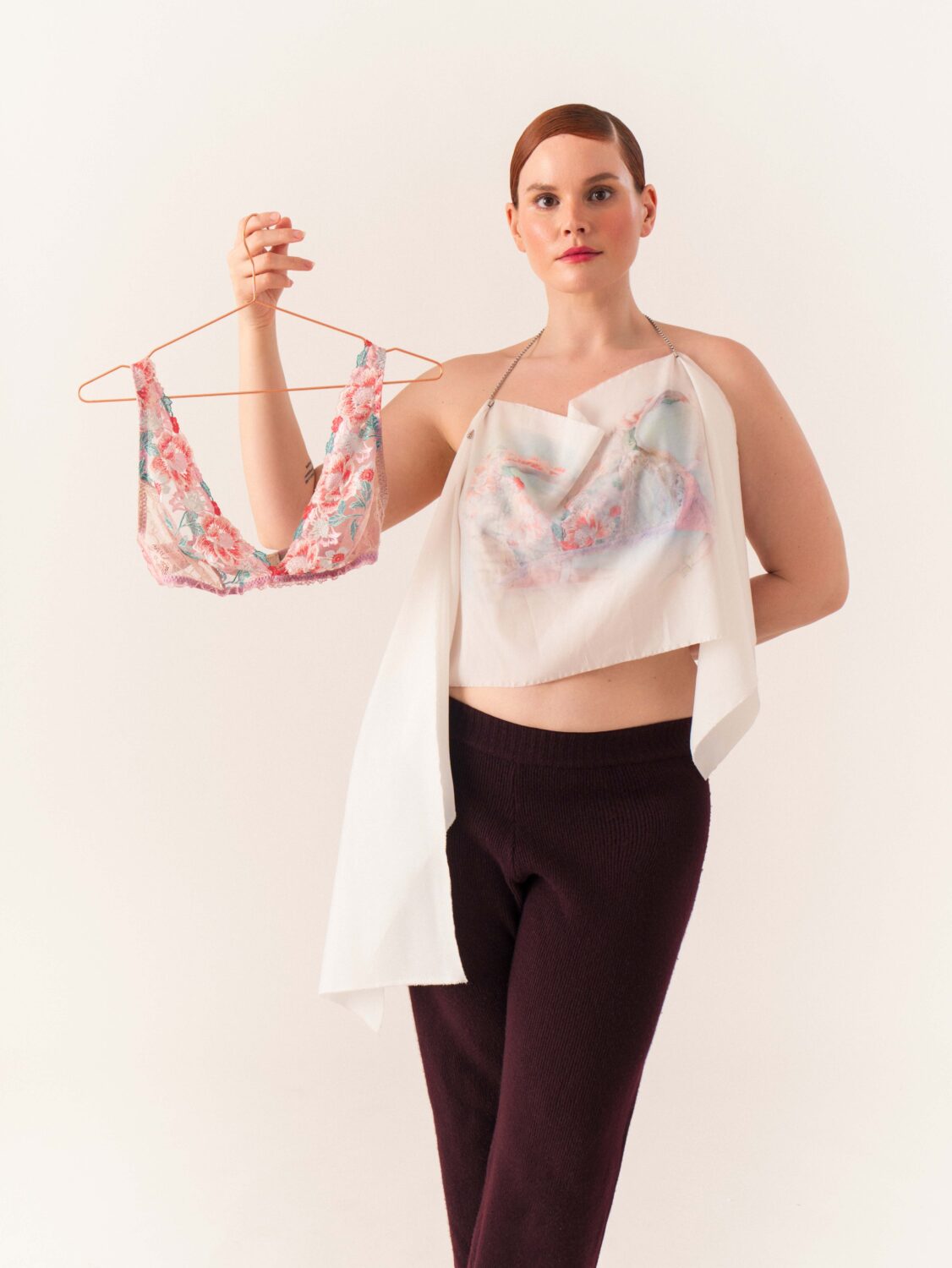
I have several years of experience working in fashion, but I consider myself a multidisciplinary artist. My way of thinking is conceptual, so I started this project because I wanted to create an object that would bring clothing and dress closer together; a kind of intermediate element that bridges the gap between the two. I also wondered what the future of fashion would be, not so much in the sense of what the next trend will be, but rather how the whole movement will evolve and whether this idea of freeing ourselves from the body will continue. So I began to investigate the reasons why we wear clothes, and that’s when I found a definition that caught my attention in Elena Esposito’s book Originality through Imitation: The Rationality of Fashion, where the author defines three key elements of fashion: adornment, protection, and shame. At certain times, protection from the cold or heat is inevitable and necessary. I also consider adornment necessary, especially when viewed as a communication tool. But shame… does it really help us progress? Aren’t we losing a large part of our potential by feeling ashamed of our bodies? And I think shame is the main reason we dress. That’s why I wanted to create garments that didn’t cover up that part of shame. I wanted to capture the garment in all its beauty, with all its details, and preserve its symbolic meaning, but transform it into a new dimension. So that was basically the beginning.
In the project, you talk about vulnerability and fragility as central themes. Where do you place that fragility: in the body, in clothing, in the system, or in our way of consuming?
It is an invitation to be more fragile and to consciously incorporate fragility into our lives, rather than avoiding it. I don’t think it can be pinned down to a single element, but rather has more to do with the relationship and the link between these three aspects: the body, the garment, and the system.
You propose vulnerability as a condition for thinking about sustainability. How do these concepts connect within your practice?
Yes, exactly. I think it’s essential to face our fears and our most fragile parts, those we normally cover up—like the body—in order to change the way we think about how we interact with our bodies and our innermost selves. I see this gesture of undressing as a way to allow ourselves to be seen as we really are, naked.
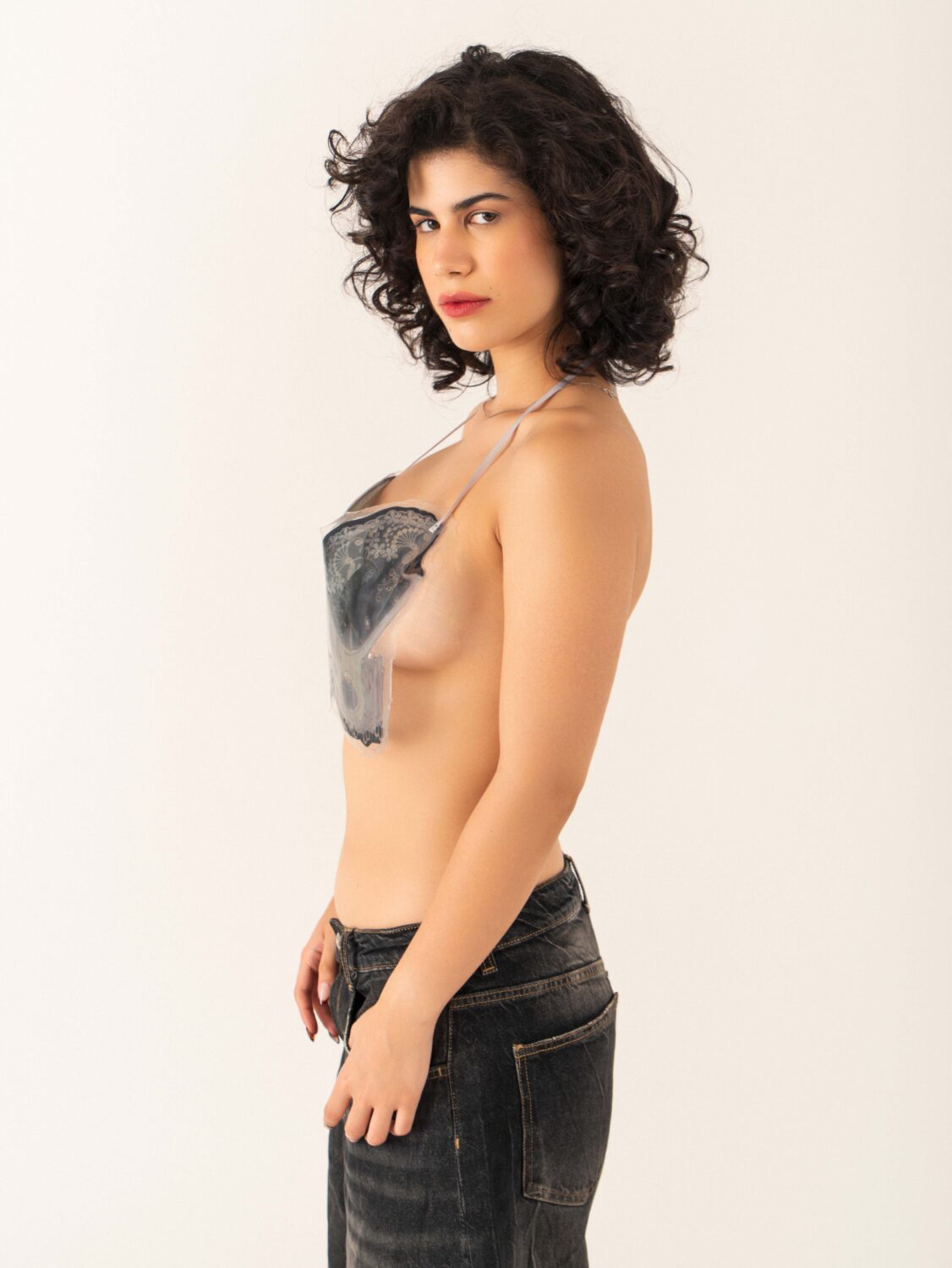
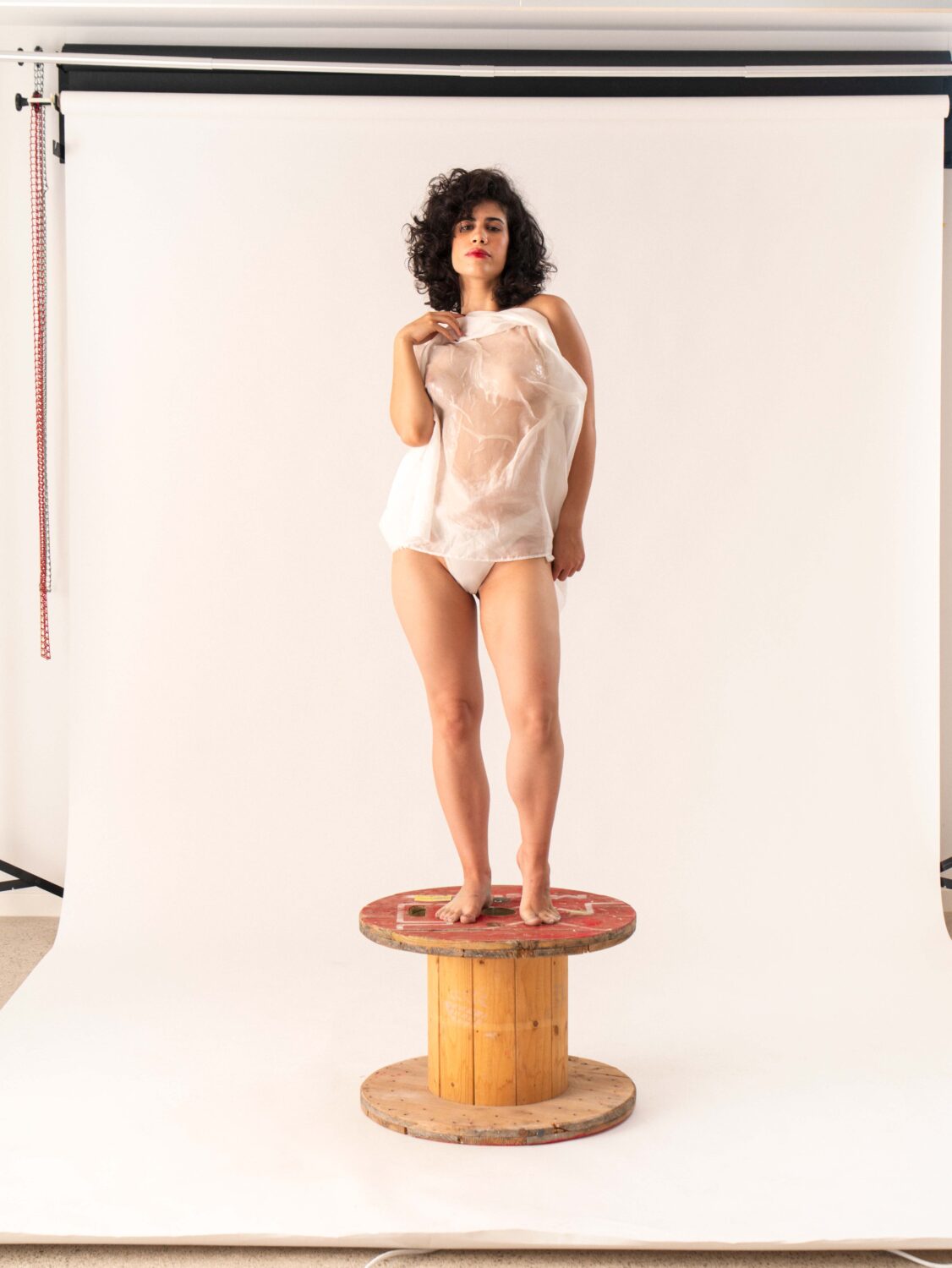
Silicone refers to body modification. Do you see parallels between how we transform the body and how we consume fashion?
Silicone reminds me of plastic surgery and therefore allows me to talk about a practice that transforms the body from within. For me, plastic surgery is part of a series of (future) trends that have much more influence than fashion trends. In my practice, I use silicone to cover the copies I make and as a material that “builds” volume and the tool. By using transparent silicone, it functions as an element that covers and protects the images, something that I find symbolically very beautiful: it is an element that softens and also helps to create an archive of the images I collect.
By transforming the garment into an image through photocopying, you deactivate its original function. What is gained and what is lost in this process of dematerialization?
Reproducing or copying a garment means making the original more important. This connects to how trends work: we wear what we see on celebrities, etc., creating a more meaningful original. It’s like saying: your garment is so important that I want to copy it. At the same time, I turn an object into an image and question what images we wear. Especially today, when we are inundated with images on social media, it is important to reflect on the “images” we put on our bodies. Furthermore, when I copy someone’s clothes, they always come with a story or a memory; they become a kind of photographic memory, like a contemporary archive of intimate moments.
If clothing no longer serves its purpose of covering the body, what is really left exposed?
When clothing no longer serves the purpose of simply covering the body, what remains is the authentic expression of the self. My vision is a utopian freedom in which the act of dressing does not arise from an obligation dictated by shame, but from a conscious choice to adorn oneself or to communicate with others. Ultimately, this would provide a radical response to the issue of sustainability, as it would transform our consumption at its root: clothing would thus become an artifact.
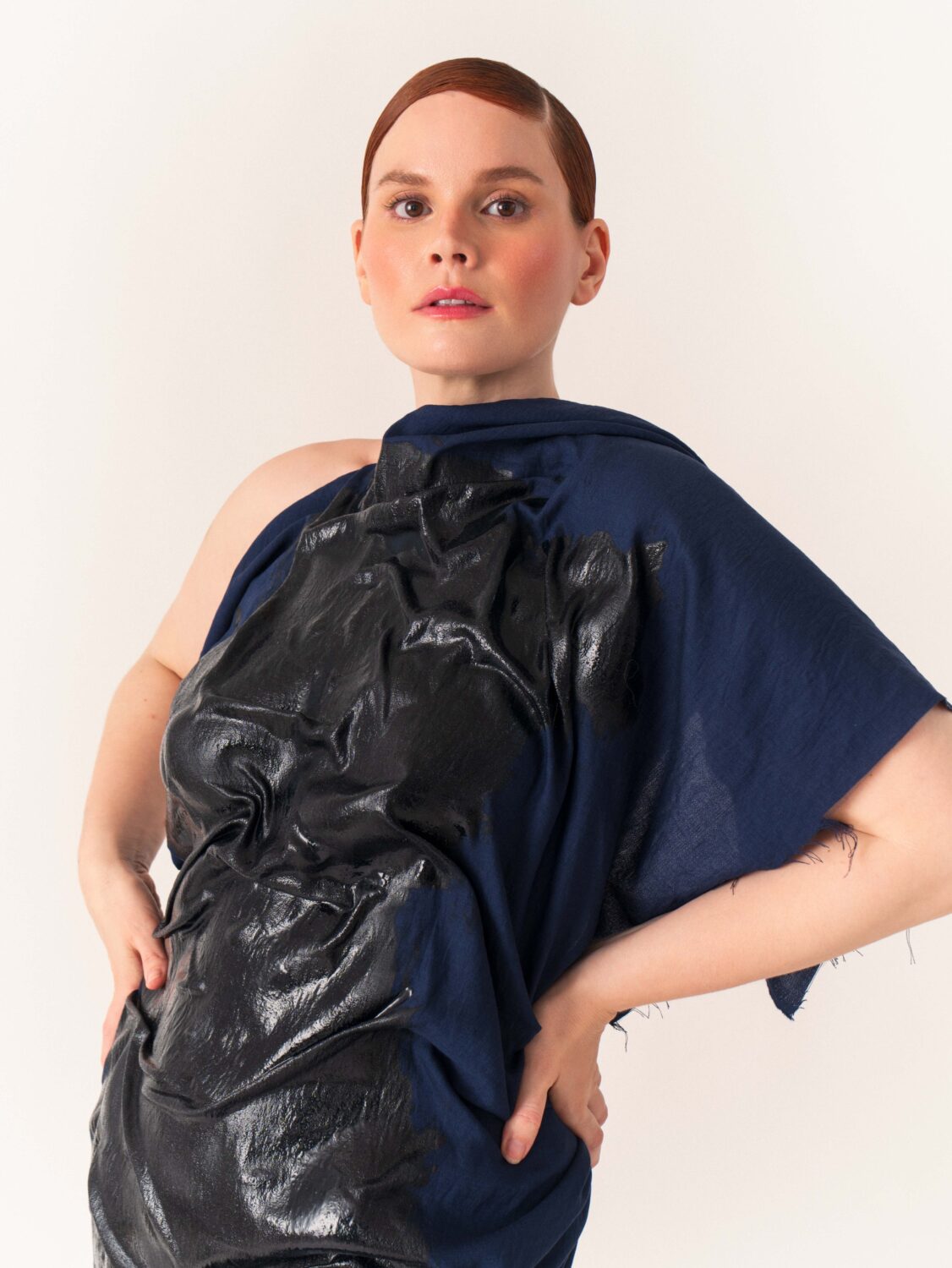
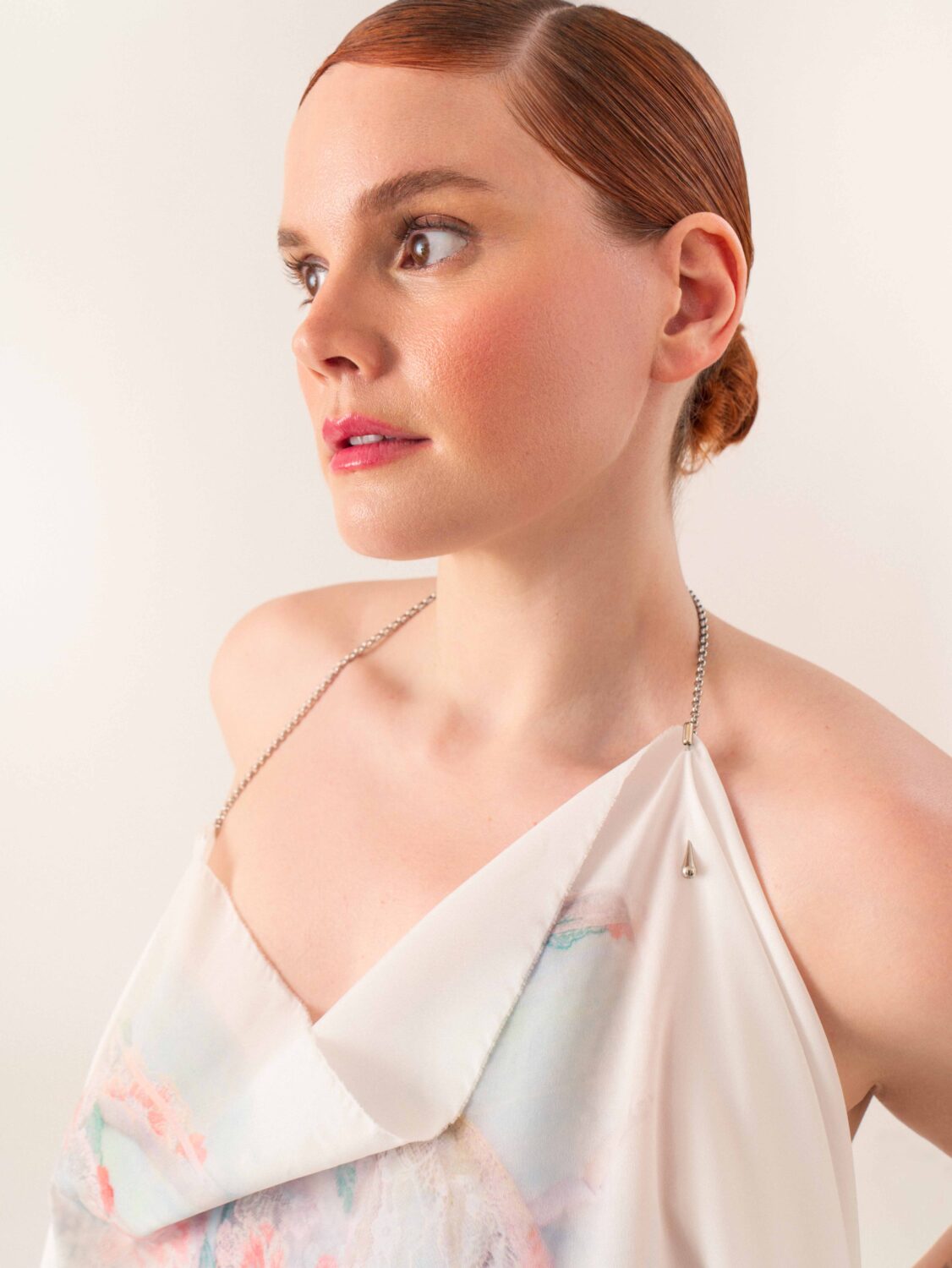
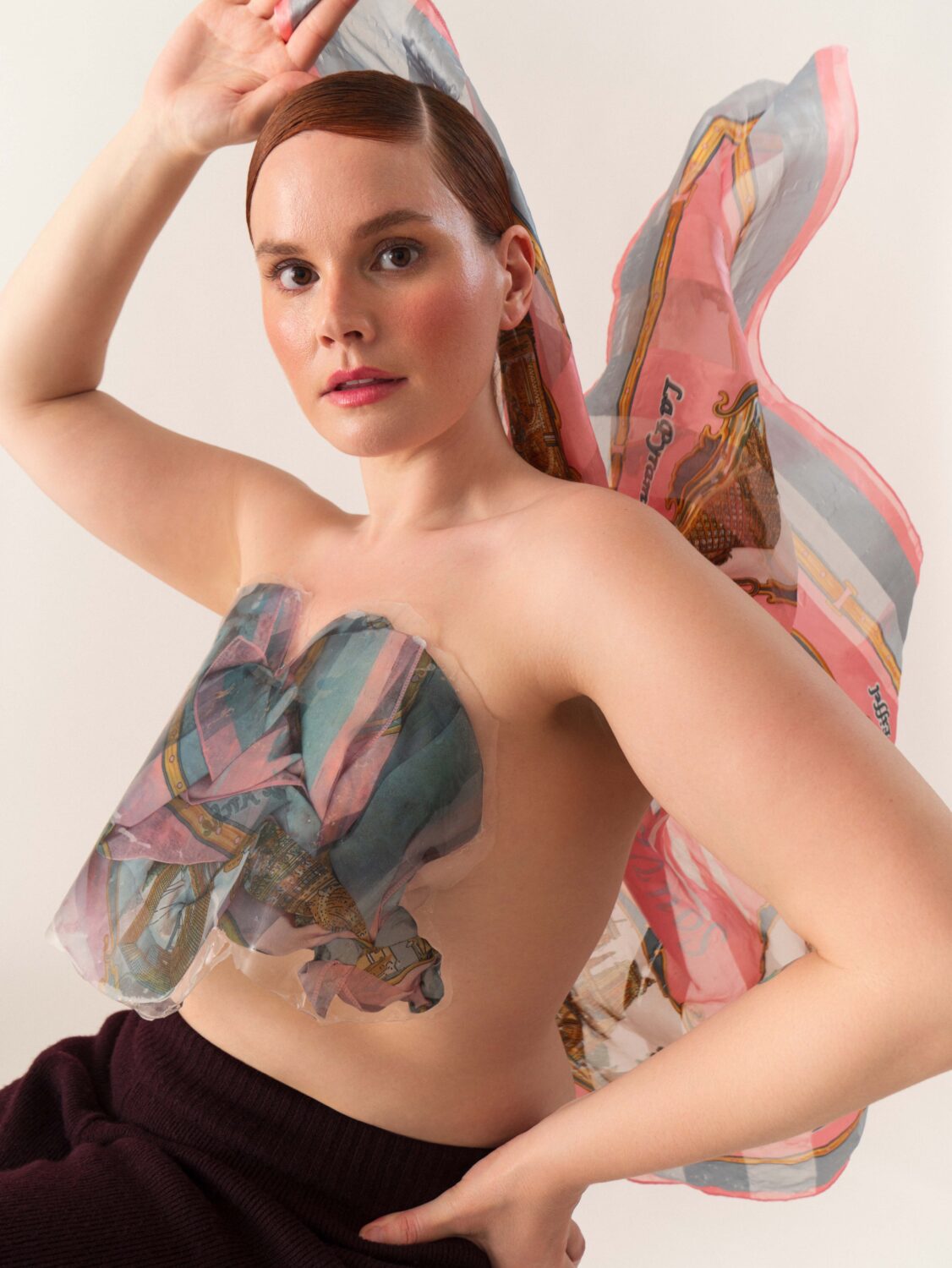
The project takes on multiple formats (wearable image, exhibition, performance, archive). How does each one transform the meaning of the work?
Each format allows me to focus on an important aspect that, depending on the context, may take a back seat. I see it as a whole: copying a garment and exhibiting it in a gallery or placing it on the body is equally important to the project, as all the elements feed into each other.
What kind of experience would you like to activate in the viewer within this universe?
It’s about transforming the everyday into something unique and revealing the profound relevance of what we wear directly on our skin. In the end, it shouldn’t just be an object, but the certainty that our vulnerability is not a weakness, but the source of our strongest connection to ourselves and others. Copy Station is an invitation to shed our protective layers and celebrate, in a radically new way, the beauty of fragility.