
For three decades, Cao Fei has mapped the fault lines between reality and imagination. As Testimonies to the Near Future arrives in Basel, the artist invites us into a world where technology, identity, and desire continuously reshape one another.
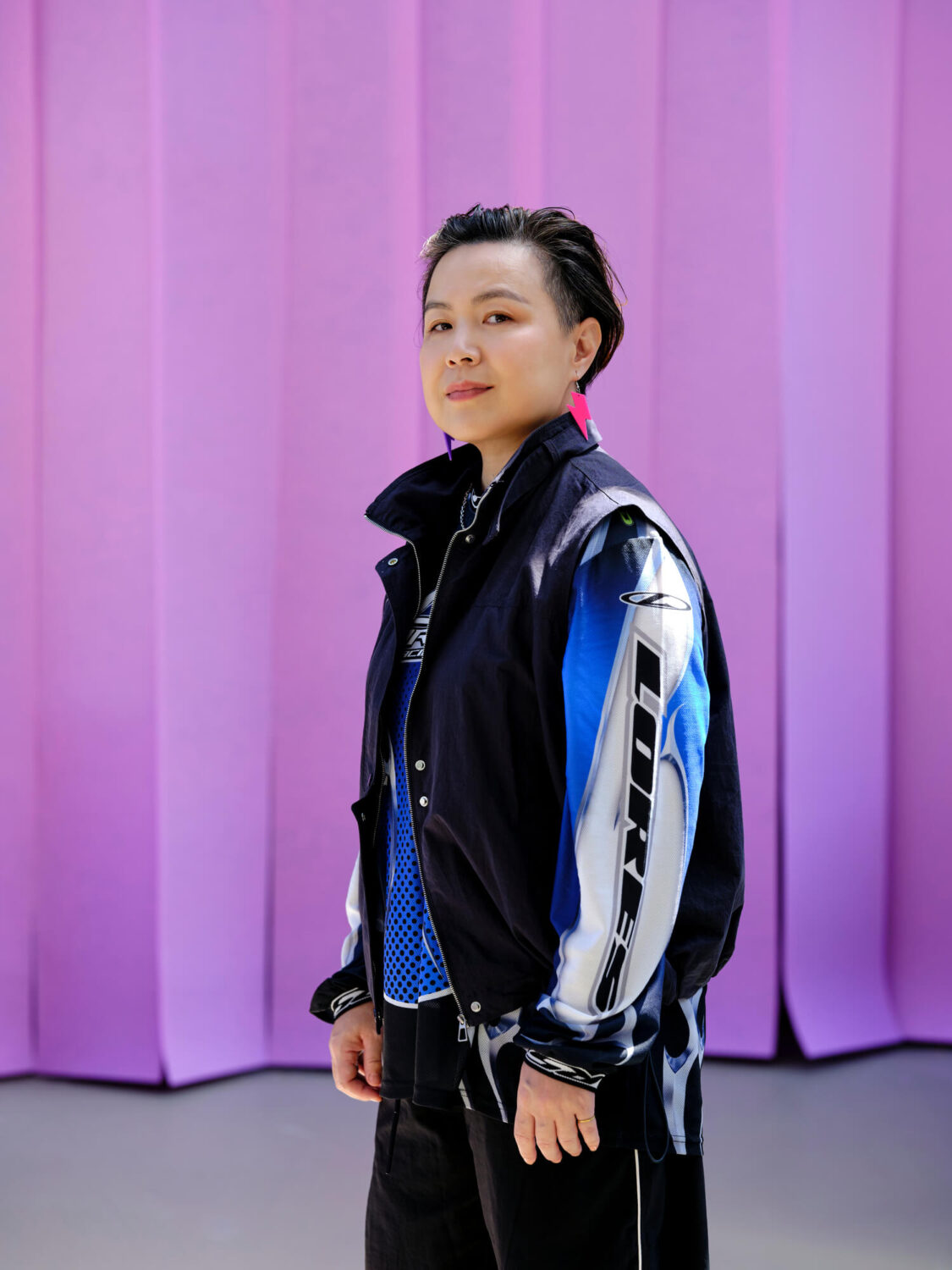
Portrait Credit: Cao Fei at Kunstmuseum Basel | Gegenwart photo by Samuel Bramley
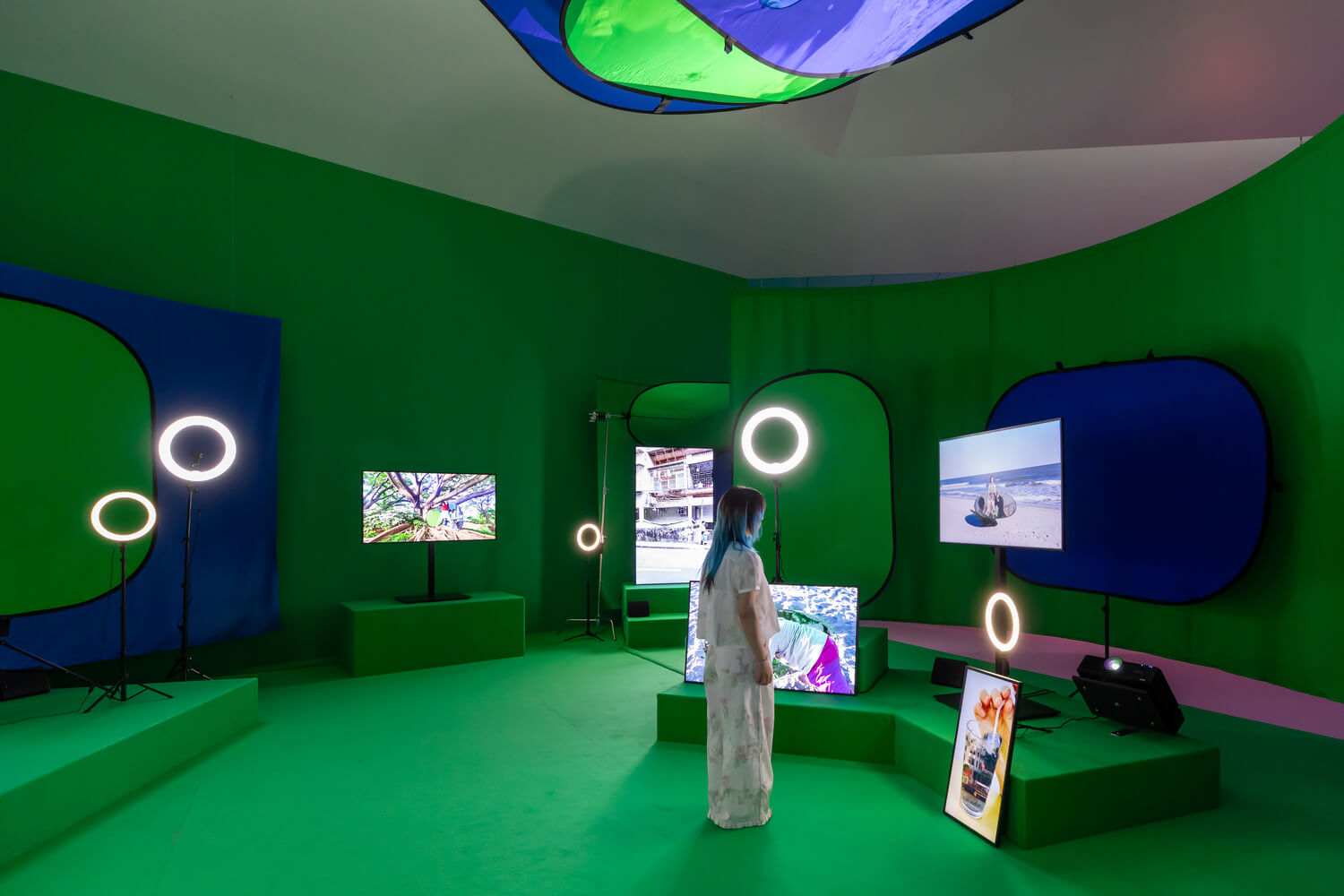
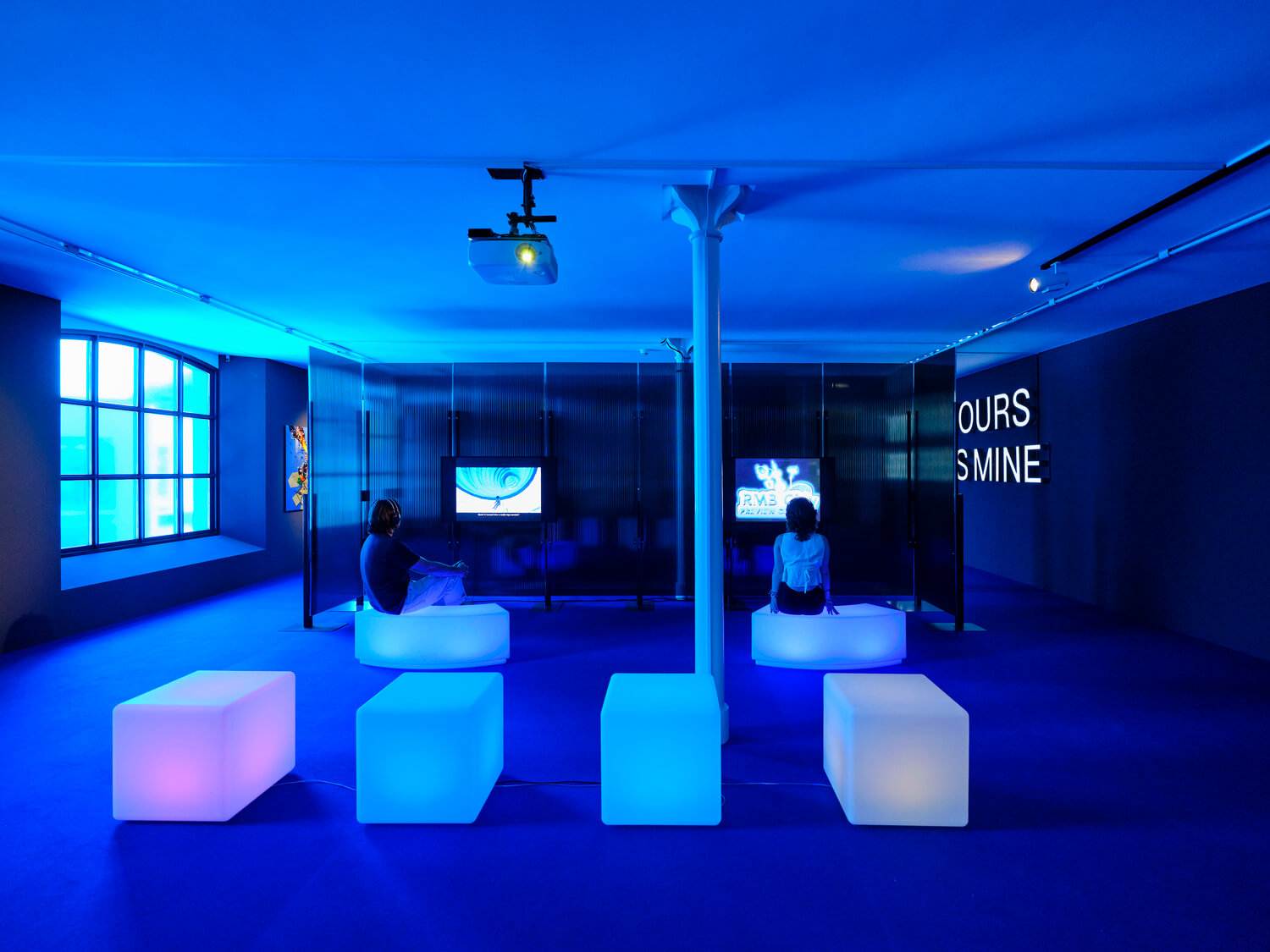
Ahead of my conversation with Cao Fei, I visited Testimonies to the Near Future at Kunstmuseum Basel, the artist’s first solo exhibition in Switzerland and the largest European retrospective of her career to date. Spanning three decades of work across four floors, the exhibition brings together video, installation, sculpture, photography and digital media to explore the intersections of technology, identity and contemporary life.
Born in Guangzhou in 1978, Cao has long examined the social and technological transformations shaping modern China, from factory workers’ aspirations in Whose Utopia to the virtual worlds of her avatar China Tracy and the pioneering digital project RMB City. Conceived as an immersive city-like environment, the exhibition invites visitors to move freely between factories, streets, offices and imagined futures. While celebrated in the contemporary art world, she has also maintained a notable presence within fashion and luxury culture, having received the Hugo Boss Prize in 2010 and collaborated with Prada on the 2019 project Code Human, bringing her exploration of digital identity to a wider audience.
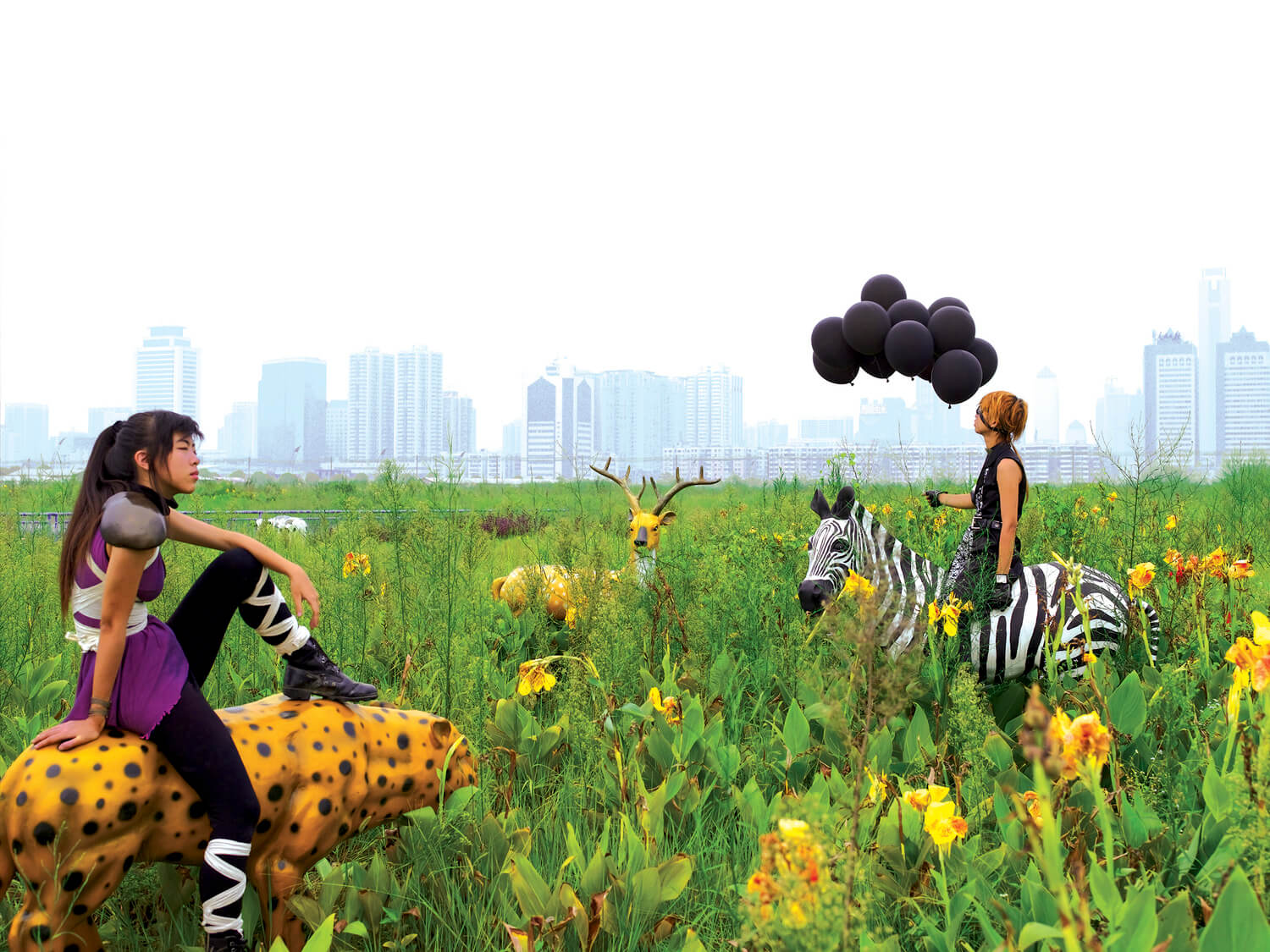
Cosplayers – A Mirage, Cao Fei 2004 Courtesy of the artist, Creative Vitamin Space, and Sprüth Magers
Testimonies to the Near Future brings together works spanning three decades. Looking back across that period, what surprised you most about seeing these pieces in conversation with one another, especially considering that the exhibition isn’t chronological?
I still consider myself «young,» so I don’t need to arrange a retrospective in a strictly chronological way. Even though this is a «retrospective,» it uses a completely fresh layout and organizational structure.
When you place early and recent works side-by-side, like Hip Hop: Guangzhou (2003) and Hip Hop: Sydney (2024), you realize that the early sense of humor, absurdity, and energy have carried straight through to the present. Those valuable traits were never lost.
Another example is the dialogue created between San Yuan Li (2003), which reflects an urban village in Guangzhou, and Hongxia (2019), which looks at a workers’ community in Jiuxianqiao, Beijing. They are separated by nearly twenty years, yet under the same country, a powerful conversation emerges between the different vitalities surging across the North and South, their differing community resilience, different historical backgrounds, and different urban renewal policies.
You can also see this when pairing China Tracy, the avatar from the RMB City project in 2007, with Oz, the metaverse avatar from Duotopia in 2022. Seeing how these characters reflect different eras and technologies made me realize they share the same ‘digital soul.’
Sometimes we think that once a project is done, it’s over—the issues are resolved and put away. But looking back ten or twenty years later, you realize they aren’t. Some things we thought were outdated are actually just beginning to come back to life.
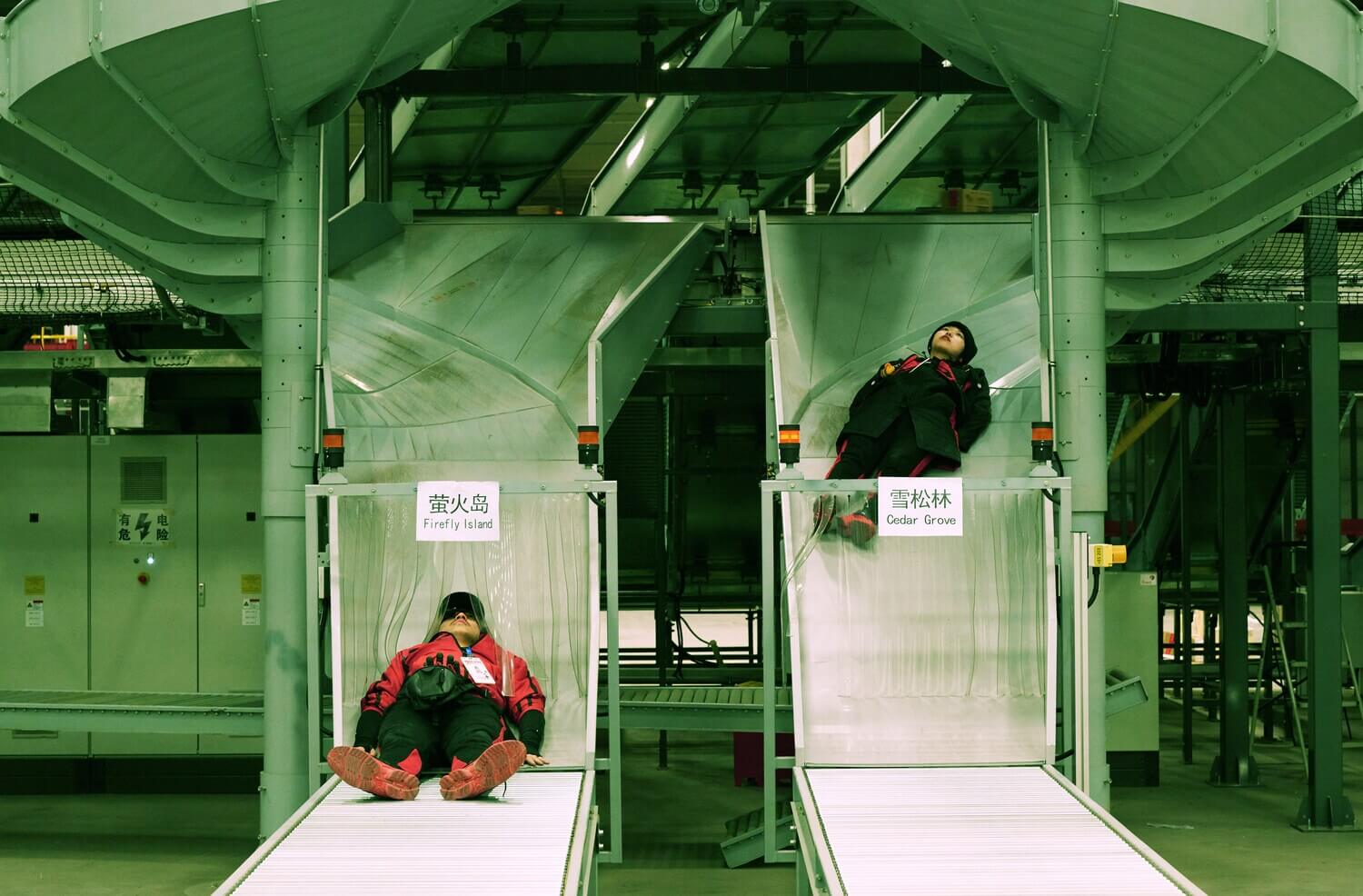
Asia One 02, Cao Fei 2018 Inkjet print on paper, aluminum plastic plate mounting, Image: 90 x 135 cm Commissioned by the Solomon R. Guggenheim Museum, New York, for The Robert HN Ho Family Foundation Chinese Art Initiative. Courtesy of the artist, Vitamin Creative Space and Sprütth Magers.
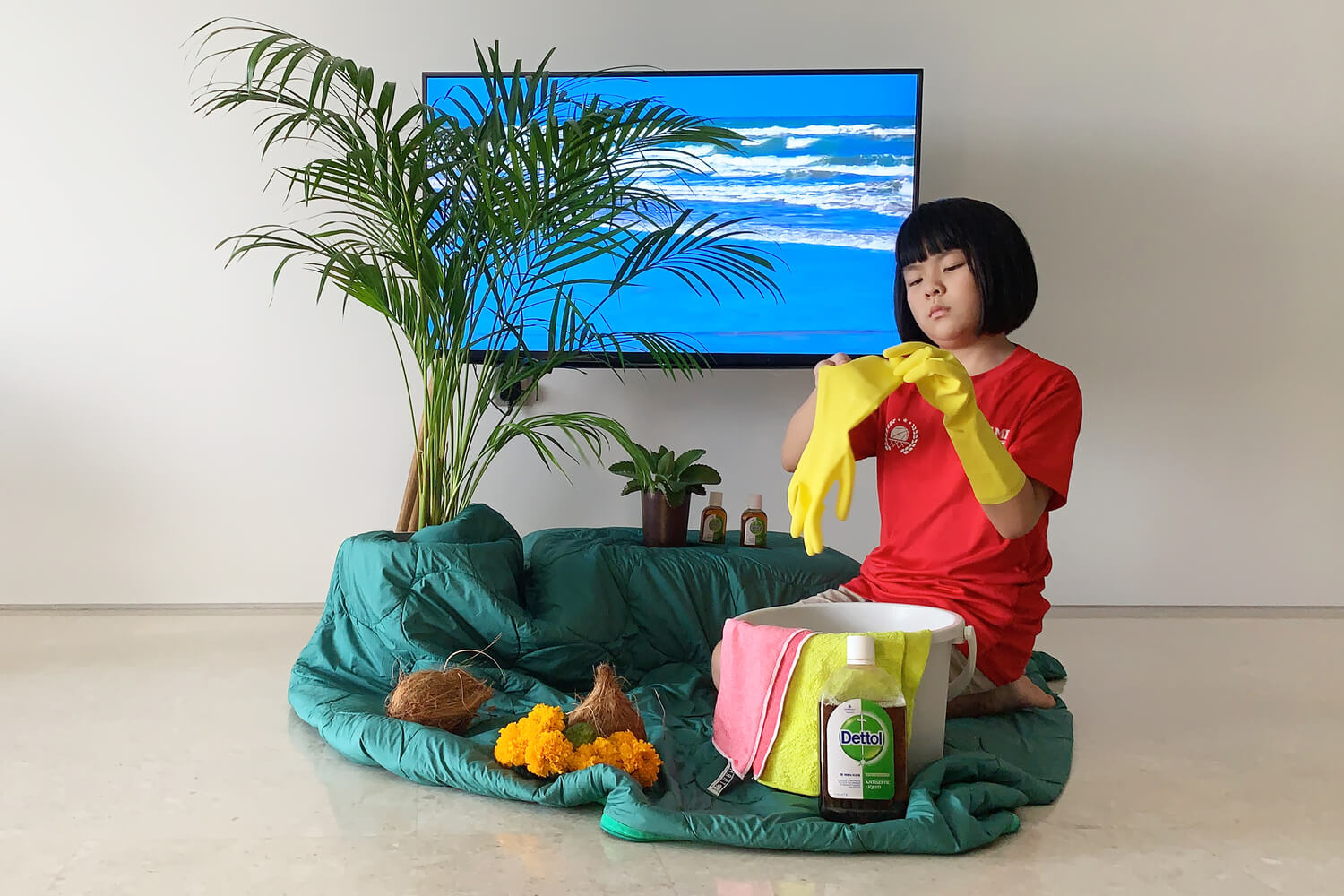
Isle of Instability, Cao Fei 2020 Courtesy of the artist, Creative Vitamin Space, and Sprüth MagersCommissioned by Audemars Piguet Contemporary
Why did Basel feel like the right place for this exhibition and how involved were you in shaping the exhibition?
Basel is a global hub for art exchange, with the Art Basel fair right at the center of all the excitement. At the same time, Switzerland itself offers a relatively neutral yet international context—it gives you a bit of distance to observe things.
This exhibition isn’t a traditional retrospective. I was deeply involved in the entire process, working alongside the spatial designers, graphic designers, and curatorial teams on everything from selecting the pieces and conceptualizing the space, to arranging the layout, planning visitor flow, and setting up the lighting and sound.
I wanted visitors to step into the exhibition as if they were entering an urban labyrinth made out of the themes I focus on. For instance, you encounter a “pool of technology” inside “The Playground”; the dreams and realities of workers within factories and manufacturing; the cities, citizens, and migrants found throughout streets and public spaces; a doomsday world overrun by zombies; and the romantic utopias of the digital world…
Matryoshkaverse has stayed in my imagination, I have never even heard of Manzhouli before and now I can stop thinking about it. During your travels across China, was there a place or community that genuinely surprised you or challenged your assumptions?
Thank you for bringing up Manzhouli. That place is honestly like something out of a surreal fairytale, full of bizarre juxtapositions. You have this massive Matryoshka Doll Square, signs written in a mix of Chinese, Russian, and Mongolian, and duty-free stores that feel stuck in a 1990s time warp. Loud Russian music comes blaring across the border line. And right there in the square, underneath a golden troika carriage, young kids are scrolling through short videos and hosting cross-border livestreams, while in the distance, you can see smoke rising from run-down Russian villages. Being there made me realize that “the margins” aren’t just synonymous with being left behind. The periphery is often a melting pot for completely unique, hybrid cultures.
What surprised me just as much was finding such a profound sense of history and humanity out in China’s northwestern border regions. It might appear barren and sparsely developed, but right beneath that exterior, it is quietly hosting things you’d never expect—like invisible smart agriculture, bio-industries, and cutting-edge national rocket launch tests. The most marginal places are actually becoming the most intense hotbeds for technological growth.
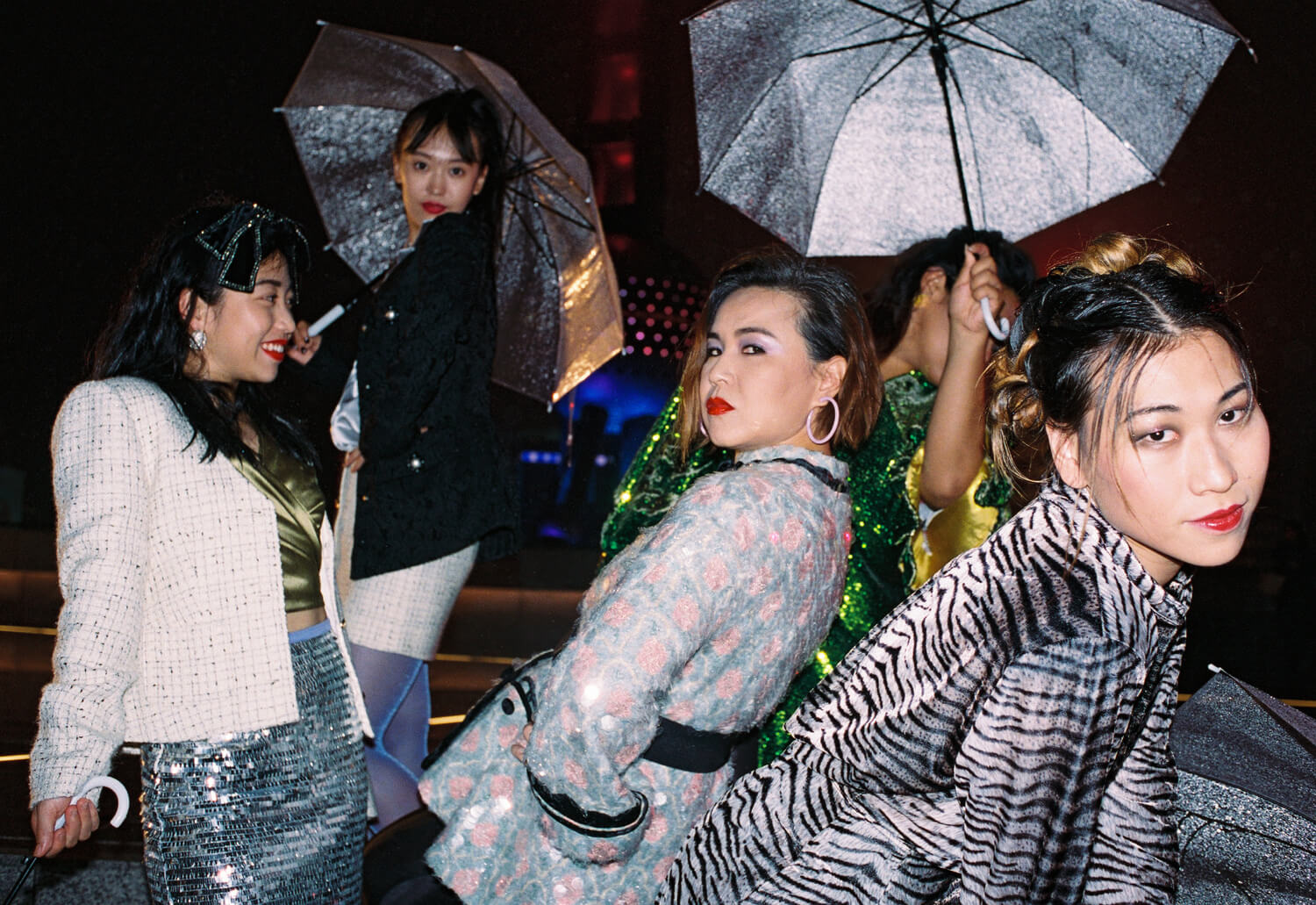
Hip Hop: Shanghai, Cao Fei 2025 Produced by nowness. Courtesy of the artist, Vitamin Creative Space, and Sprüth Magers
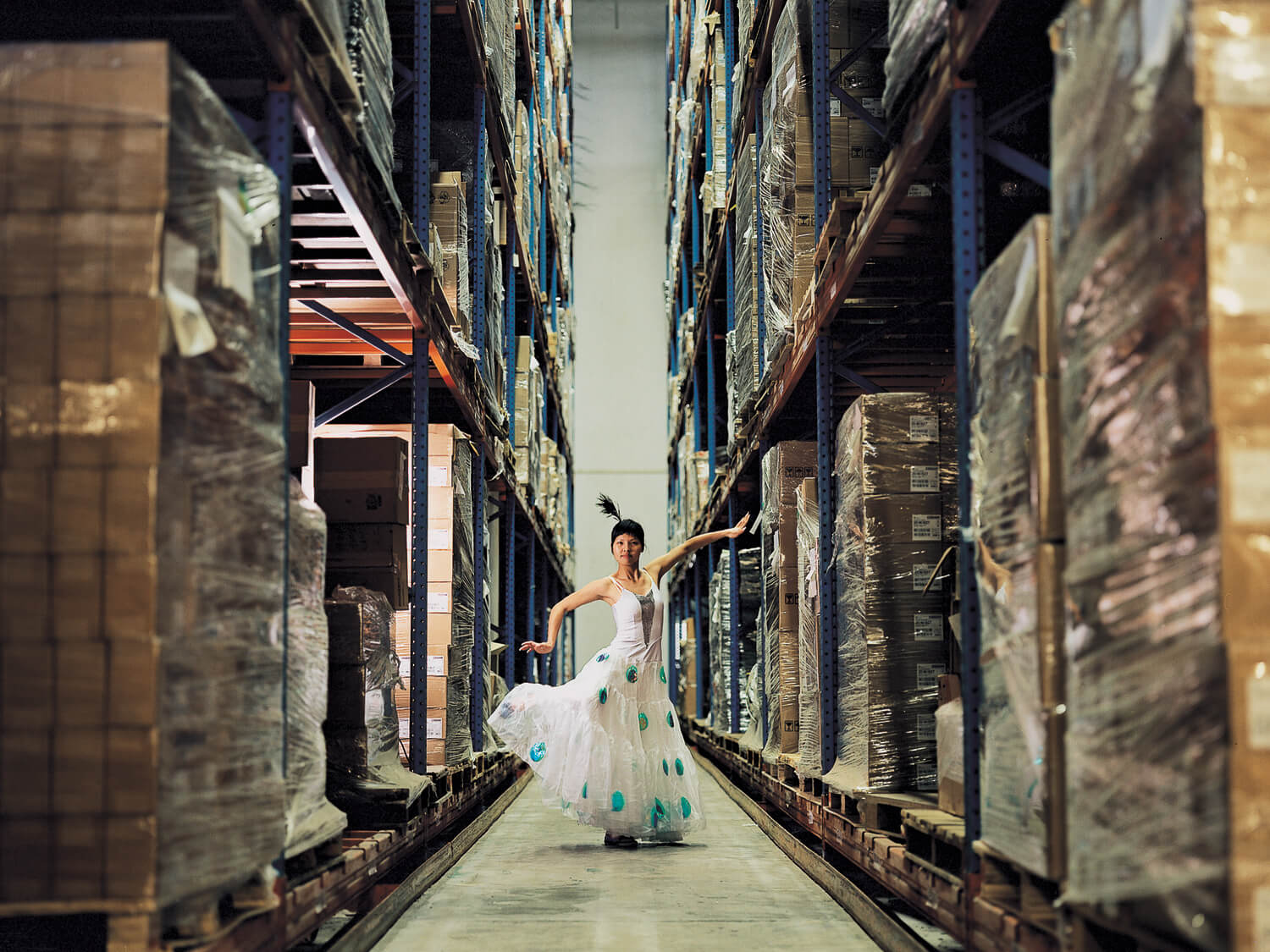
Whose Utopia, Cao Fei 2006 Courtesy of the artist, Creative Vitamin Space, and Sprüth MagersCommissioned by Siemens Art Program
Much of your practice feels rooted in close observation, often capturing moments of rapid social and technological change. What are you paying attention to in China today that you think the rest of the world hasn’t noticed yet?
I’m fascinated by how our daily lives have become hyper-digitalized, yet intensely physical—manifesting as a search for spirituality and a deep urge to return to our roots, with all of this happening all at once.
On one hand, young people are living through virtual socializing, photo filters, algorithms, and AI. On the other hand, there is a massive surge in camping, hiking, yoga, spiritual retreats, and even people moving back to their hometowns to farm the land. I don’t see this as a simple «escape from reality,» nor is it just a modern-day revival of post-WWII hippie culture. Instead, it’s a form of self-adjustment as people try to navigate a multi-layered reality made up of the virtual, the physical, and the smart tech around them.
This love-hate relationship between humans and technology, where things feel intimate yet deeply fractured, is bringing a profound collective anxiety to the surface. And it is quickly becoming a truly global phenomenon.
There is over 20 hours of footage in the exhibition that moves between film, installation, photography, virtual reality, and digital platforms. Do ideas usually arrive tied to a specific medium, or does the medium emerge later?
For me, the medium and the inspiration are born at the exact same time. Take the RMB City project (2007–2011), for instance, the Second Life platform itself was both the medium and the actual subject of the artwork.
A medium isn’t just a toolbox; it’s an organic part of how I think. I simply use whatever medium best fits the concept I’m working through at that moment. That being said, I still find myself recording and presenting most of my ideas through moving images.
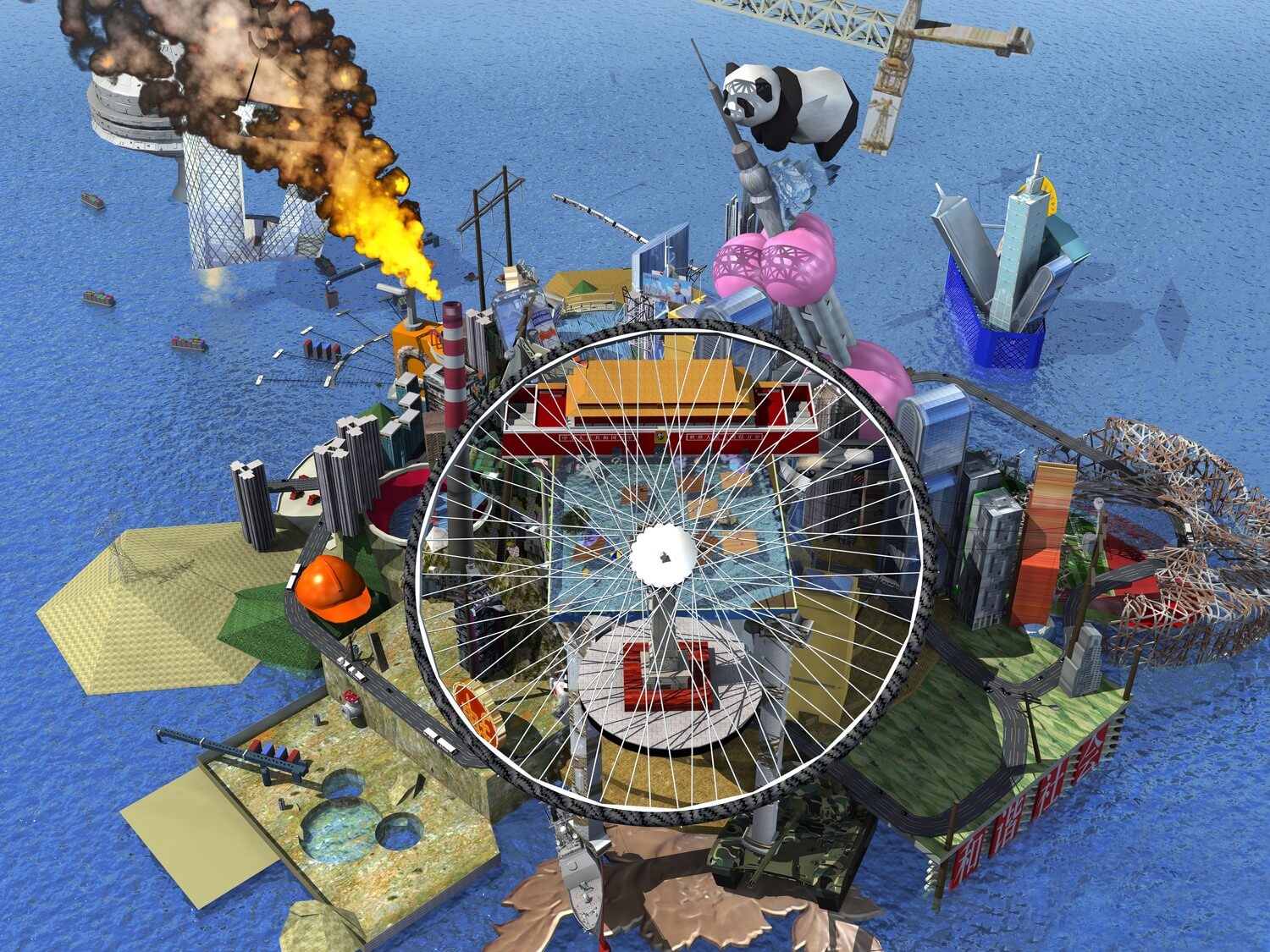
RMB City: a Second Life city planning, Cao Fei 2007 Courtesy of the artist, Creative Vitamin Space, and Sprüth Magers
You’ve spent years imagining possible futures. Are you naturally optimistic about what’s ahead, or has that outlook shifted over time?
Optimism and pessimism are intertwined. Even in our optimistic moments, we might secretly worry about what’s ahead, reminding ourselves not to let overjoy lead to sorrow. And when we are pessimistic, we celebrate our small wins and look for a glimmer of hope in difficult times.
This sense of “security” and “anxiety” is rooted in the traditional Chinese concept of wuchang (impermanence). I don’t offer a conclusion on whether to be optimistic or pessimistic. Instead, I just hope these complex emotions and perceptions can be understood, seen, and met with empathy.
Music often plays a subtle but powerful role in creating atmosphere. How do you approach music and soundscapes? Some can be more obvious and play a central theme like HIP HOP.
Sound is almost as important to me as moving images. For instance, in the Hip Hop series, the street energy, venting, and self-expression—along with that uncompromising beat—serve as a vital language within the visuals.
In contrast, the sound in Asia One (2018) becomes low, oppressive, or even absent altogether, before suddenly giving way to a frantic retro dance track. It functions as a way to set up the emotional landscape and the narrative plot.
I have collaborated with many musicians and often have sound recordists collect environmental audio. For Whose Utopia (2006), the musician Zafka recorded white noise produced by machines inside a factory. He edited it into a rhythmic background drone for the film to highlight how a closed factory environment physically oppresses the workers.
Zafka also captured digital environmental sounds within Second Life. It created a looped, slice-of-life digital soundscape where everything from flowing rivers and birdsong to screams, pants, and groans was infinitely amplified, closing in on our real-world physical senses. Because of this, score and sound design become an independent narrative thread across my work.
What advice would you give to young women entering the art world today who are trying to find their own voice or vision?
You don’t have to feel pressured to become a “successful artist.” The most valuable insights often stem from our own sensitivity, vulnerability, inner contradictions, and struggles—or even thoughts that feel entirely out of step with the times. When you gather these pieces and back them up with real action, you don’t need to overthink it. There is no need to fear being naive or facing failure. Even if your ideas seem tiny or strange, what matters most is simply holding onto them and keeping going.
Finally, what keeps you making art?
Curiosity, a sense of childlike wonder, and an innate desire to express myself. Over the years, I’ve gradually developed a continuous visual archive, realizing that my creations can be seen as an alternative form of documentation that records social transitions and the shifts of our era. This conscious awareness of archiving has slowly integrated into my thinking and continues to drive my practice—whether I am looking at the past or toward the future.
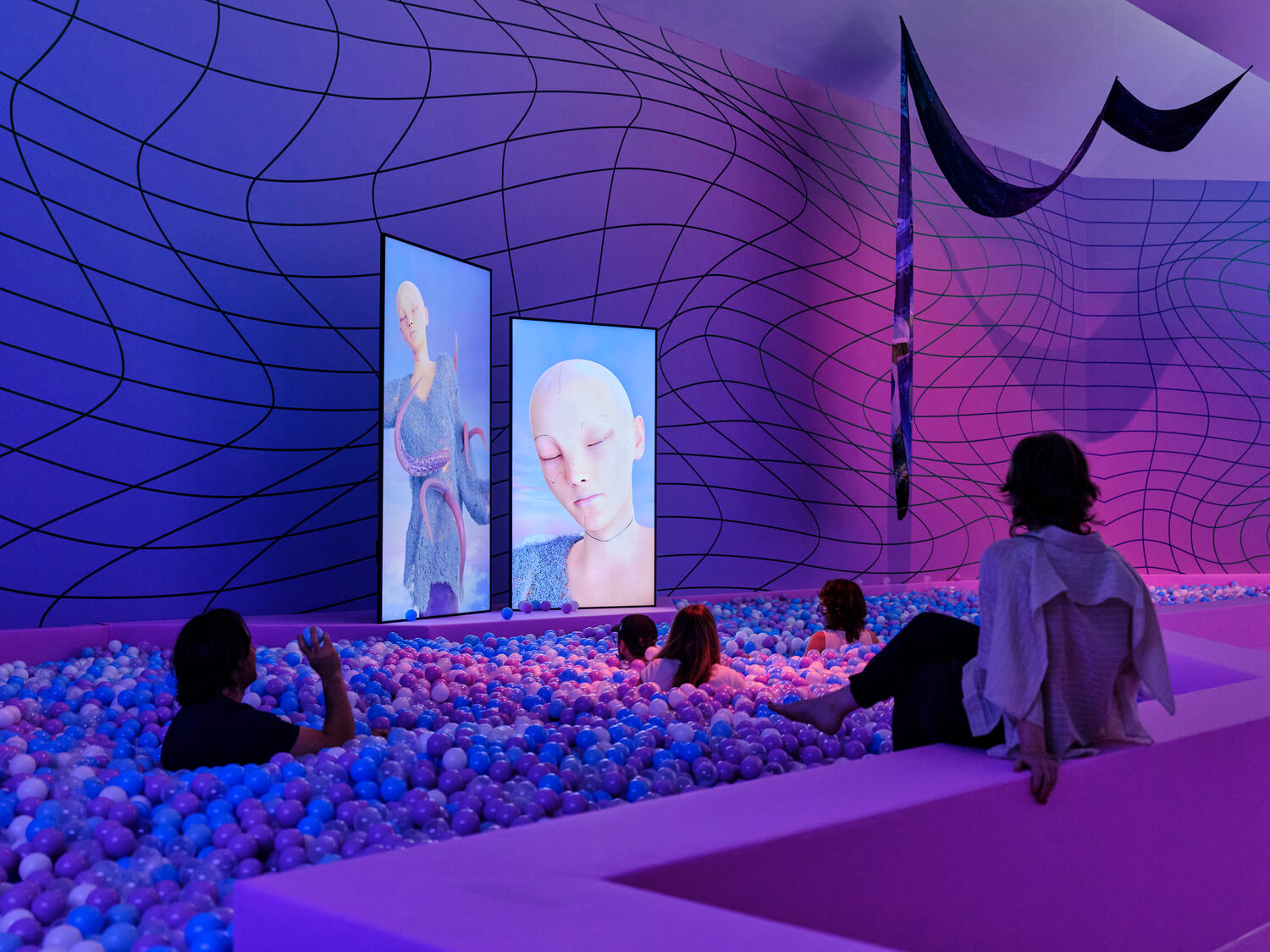
Installation view Kunstmuseum Basel Cao Fei: Testimonies to the Near Future courtesy of the artist, Vitamin Creative Space, and Sprüth Magers; photo by Samuel Bramley
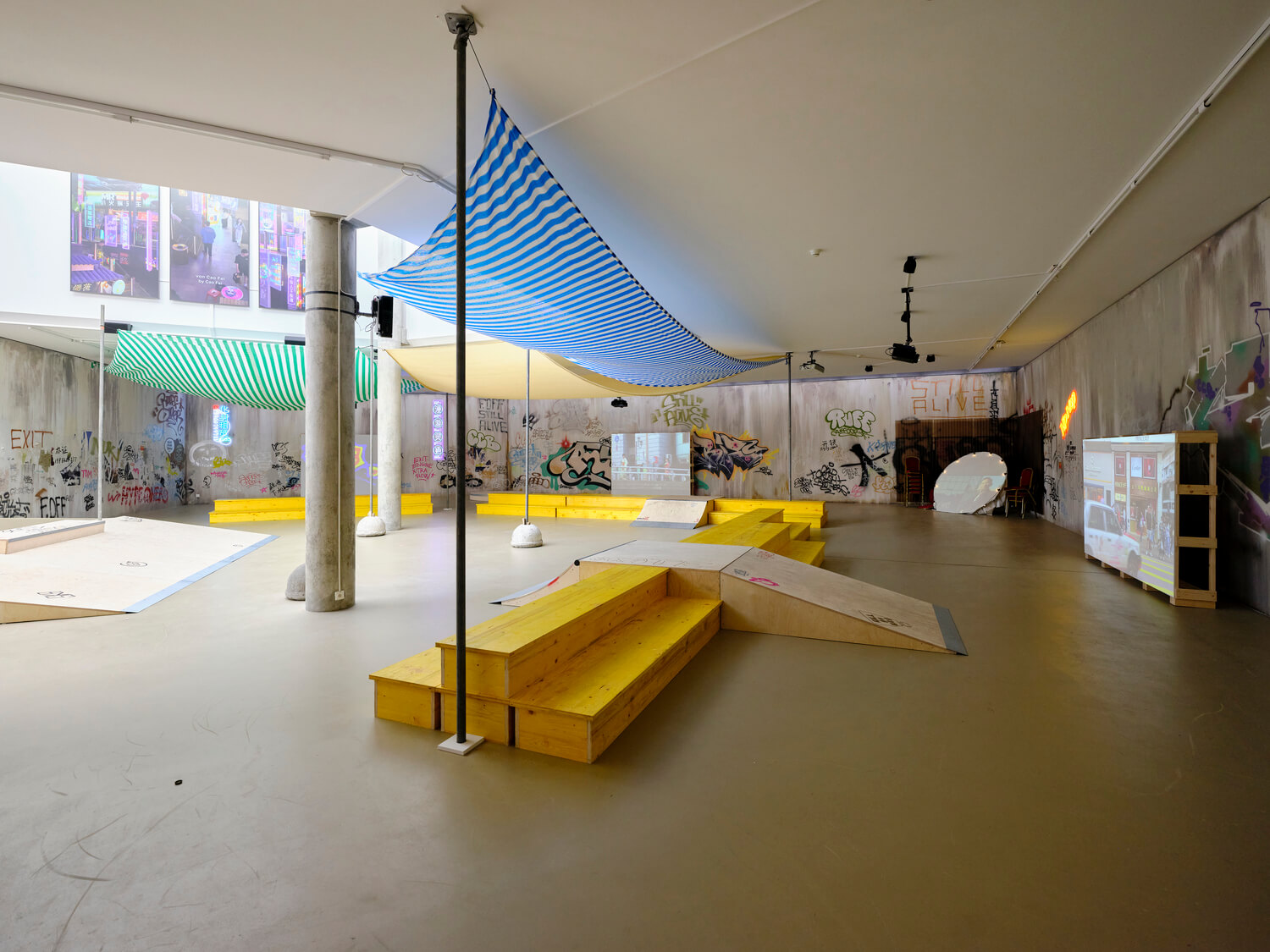
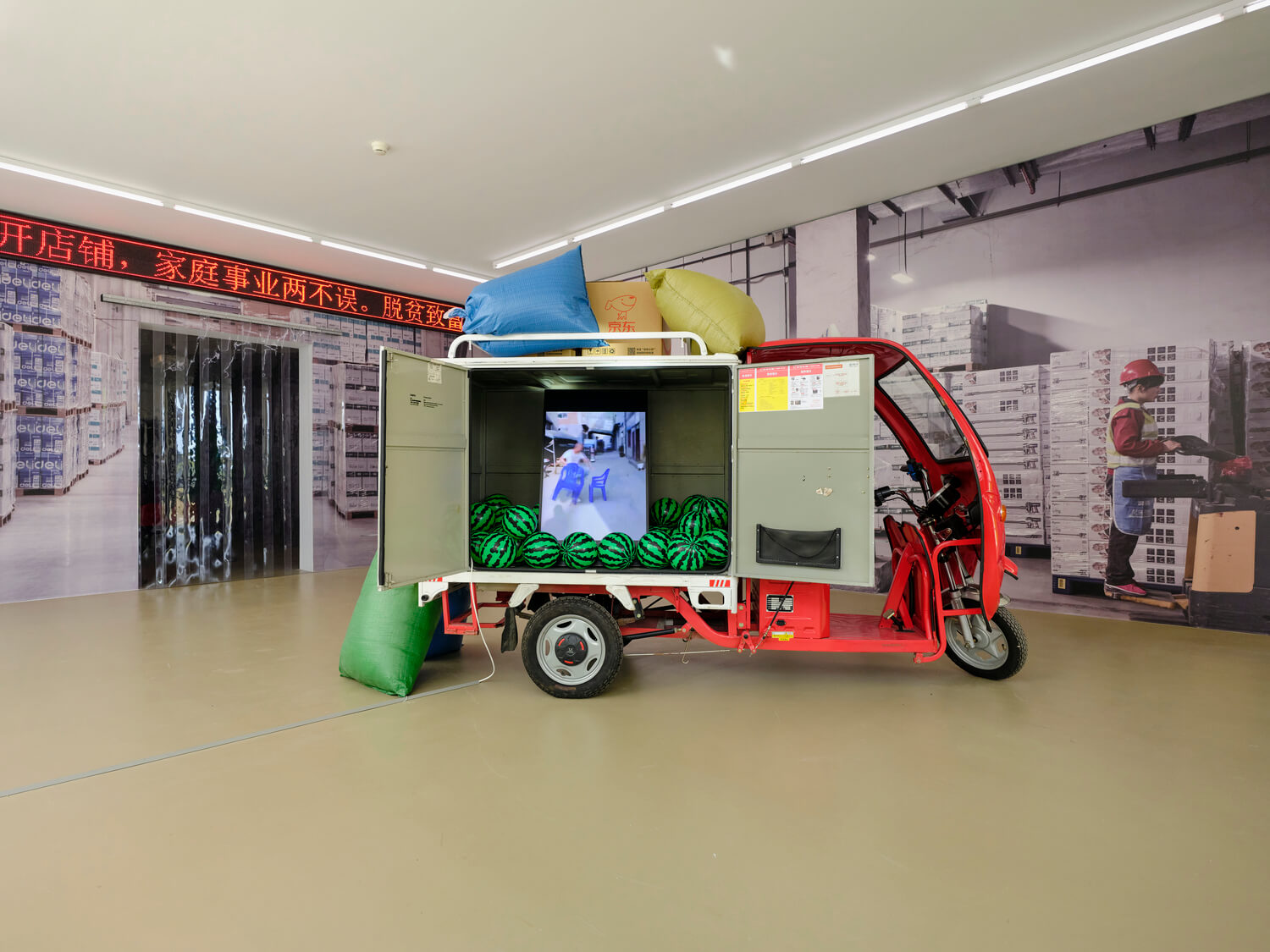
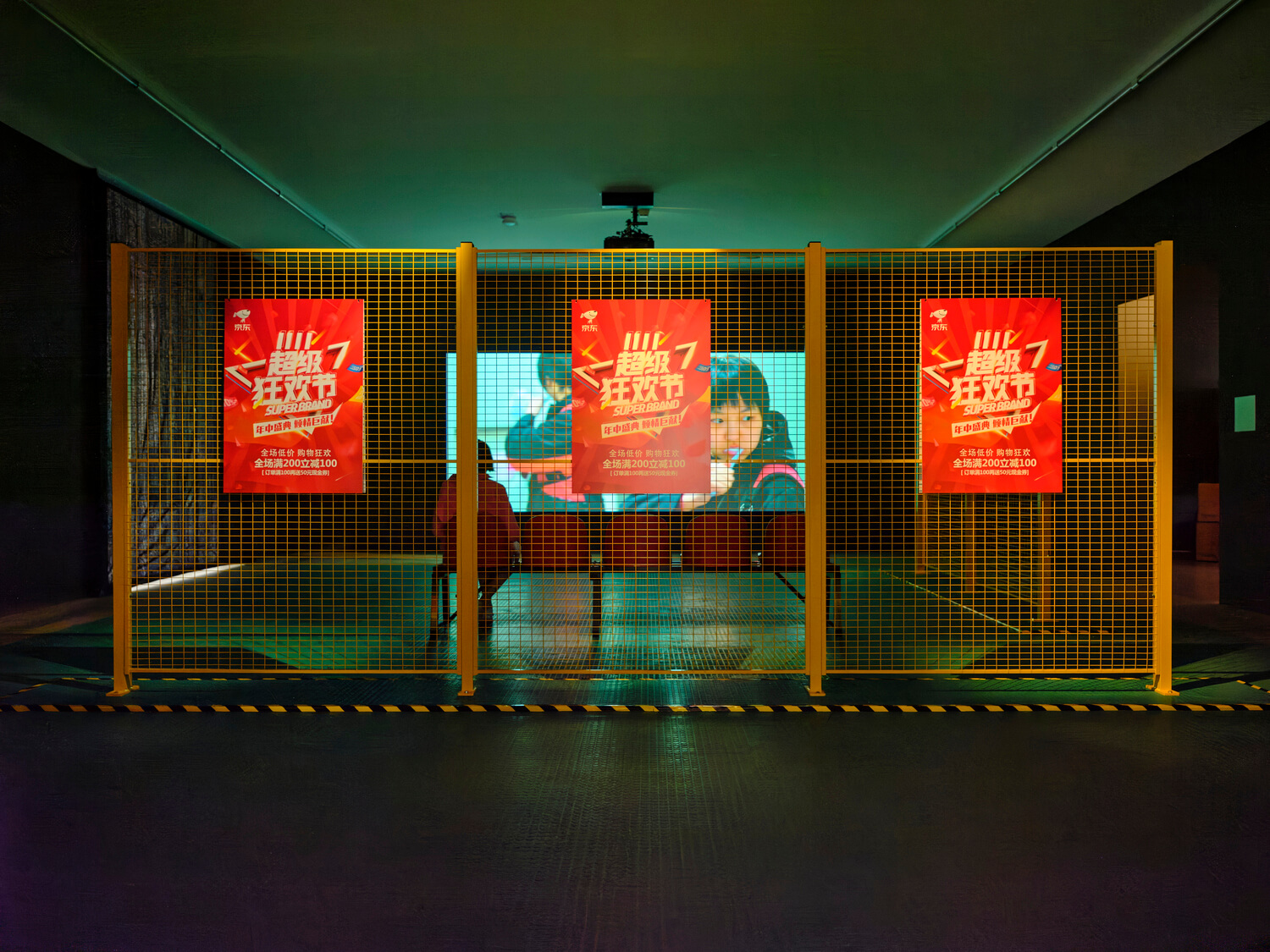
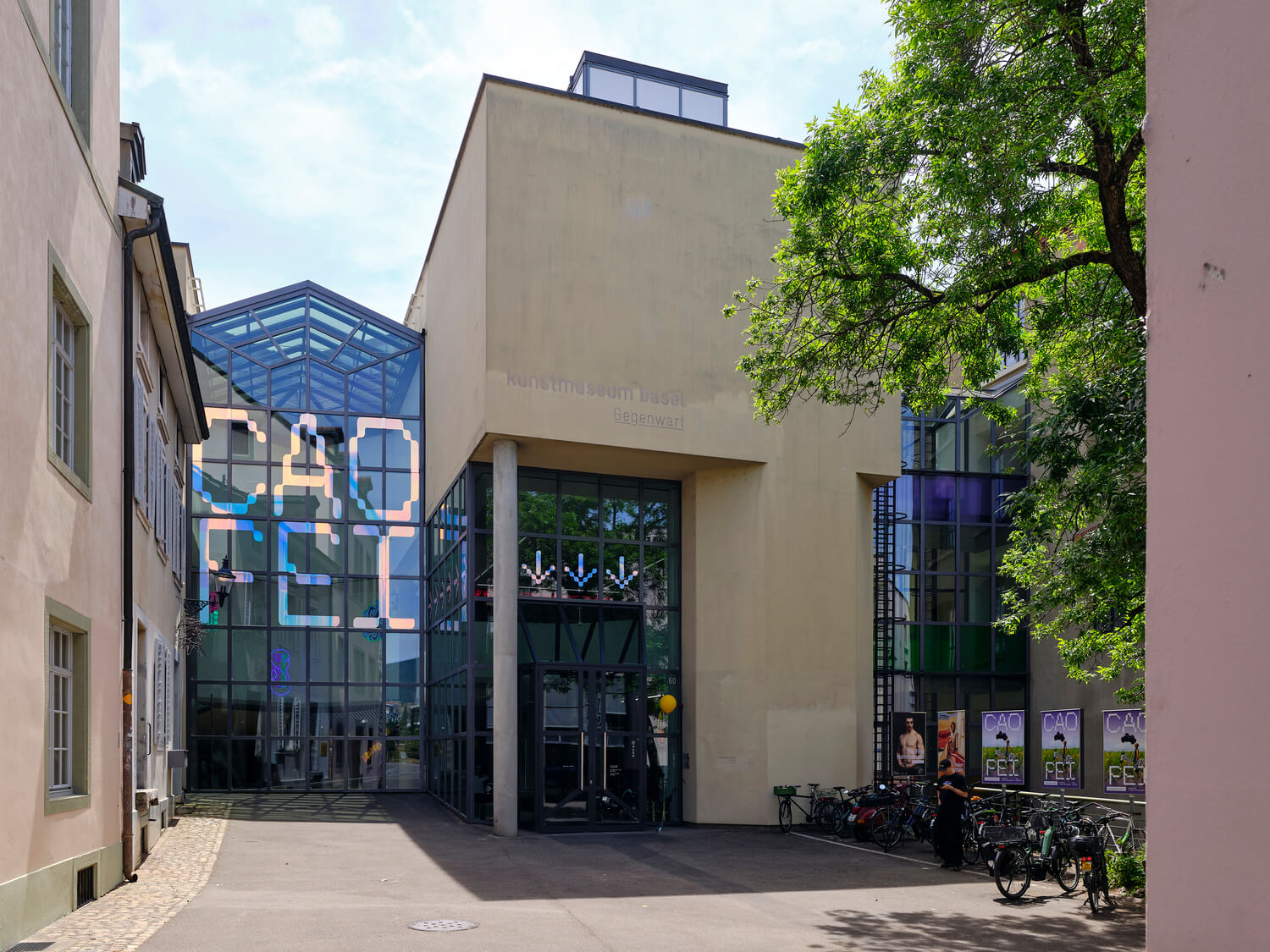
Testimonies to the Near Future at Kunstmuseum Basel | Gegenwart until 11 October 2026