



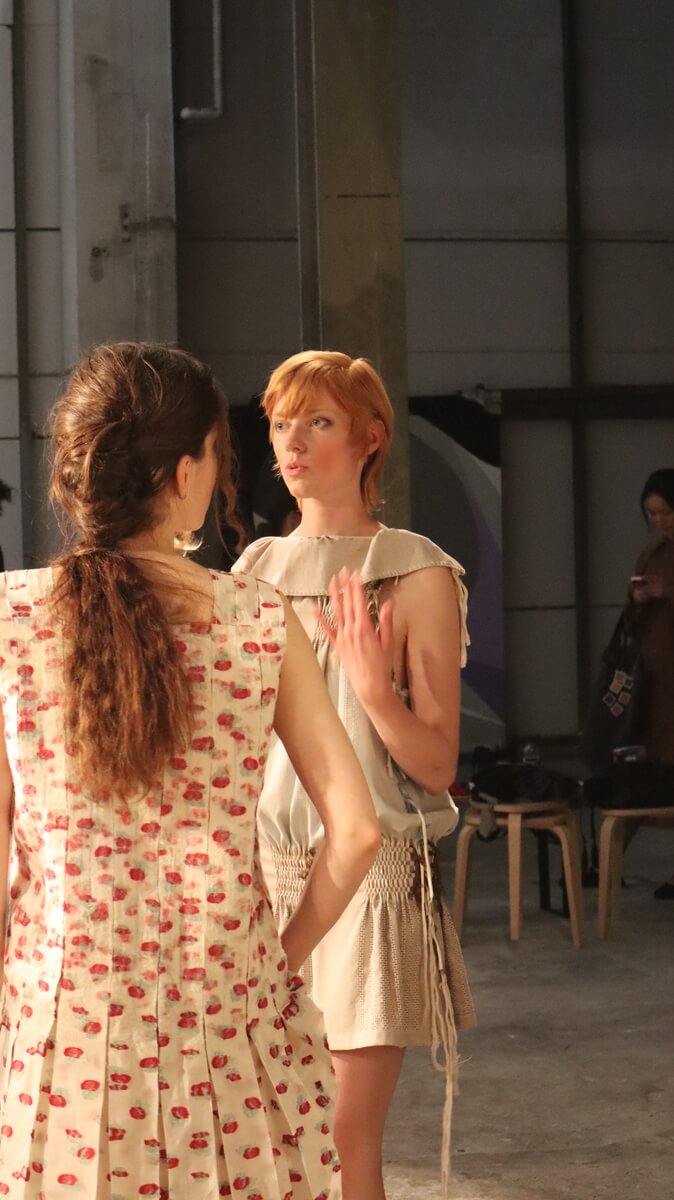
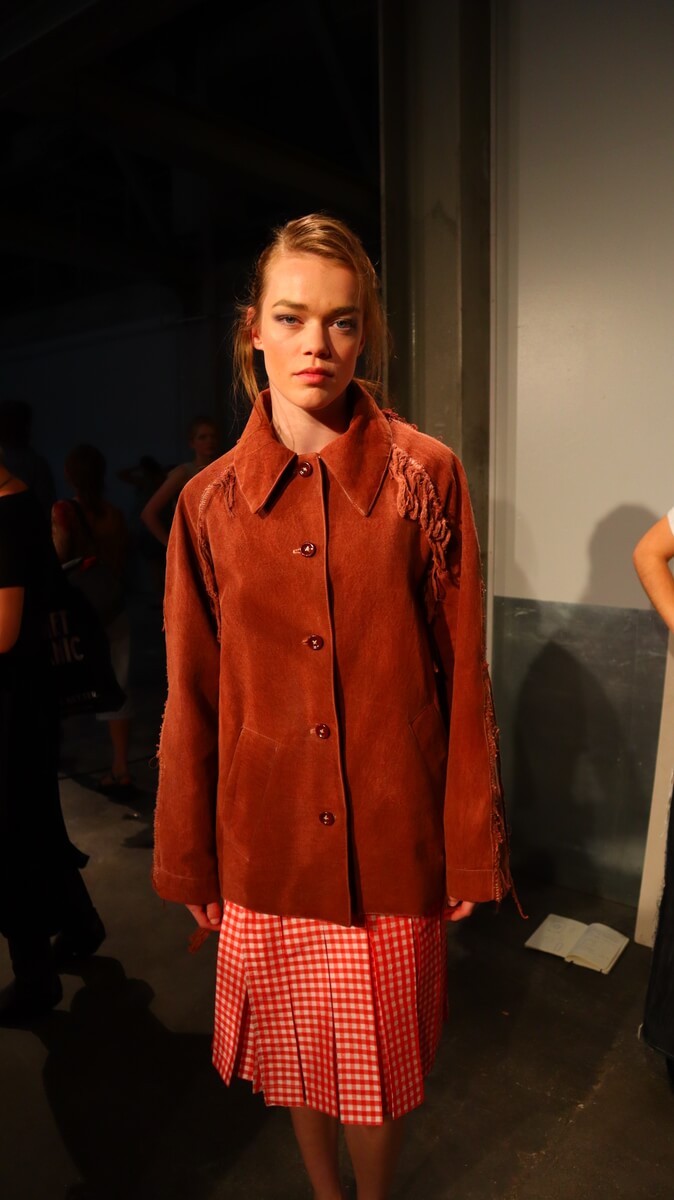
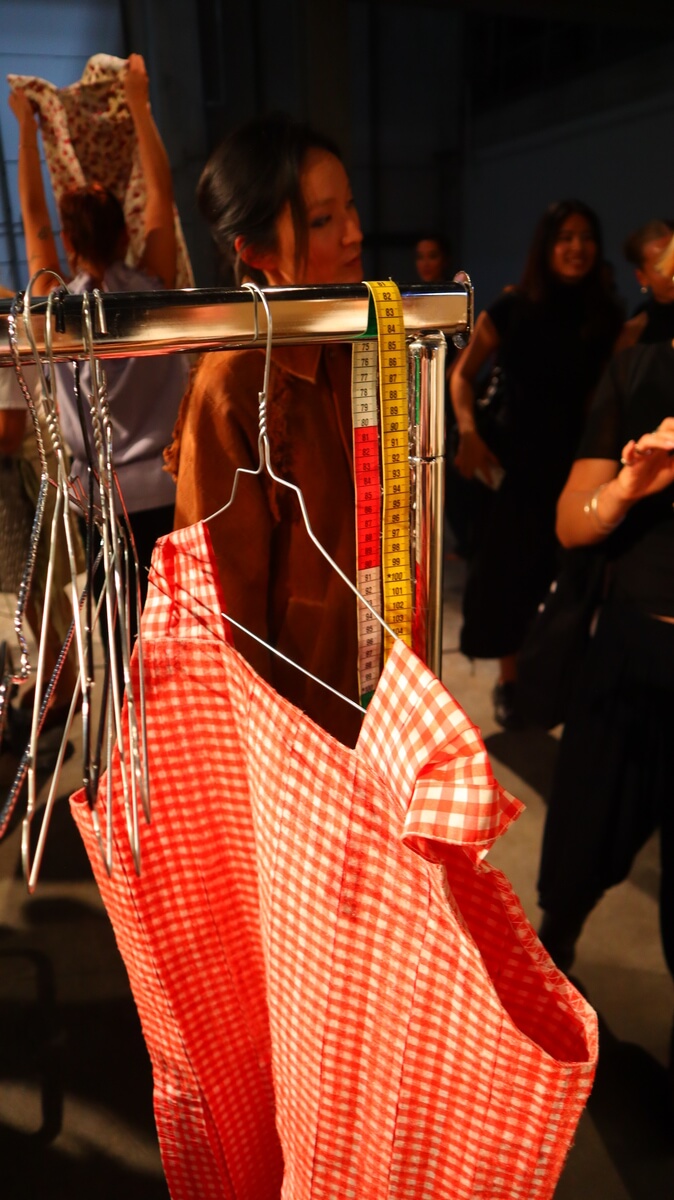
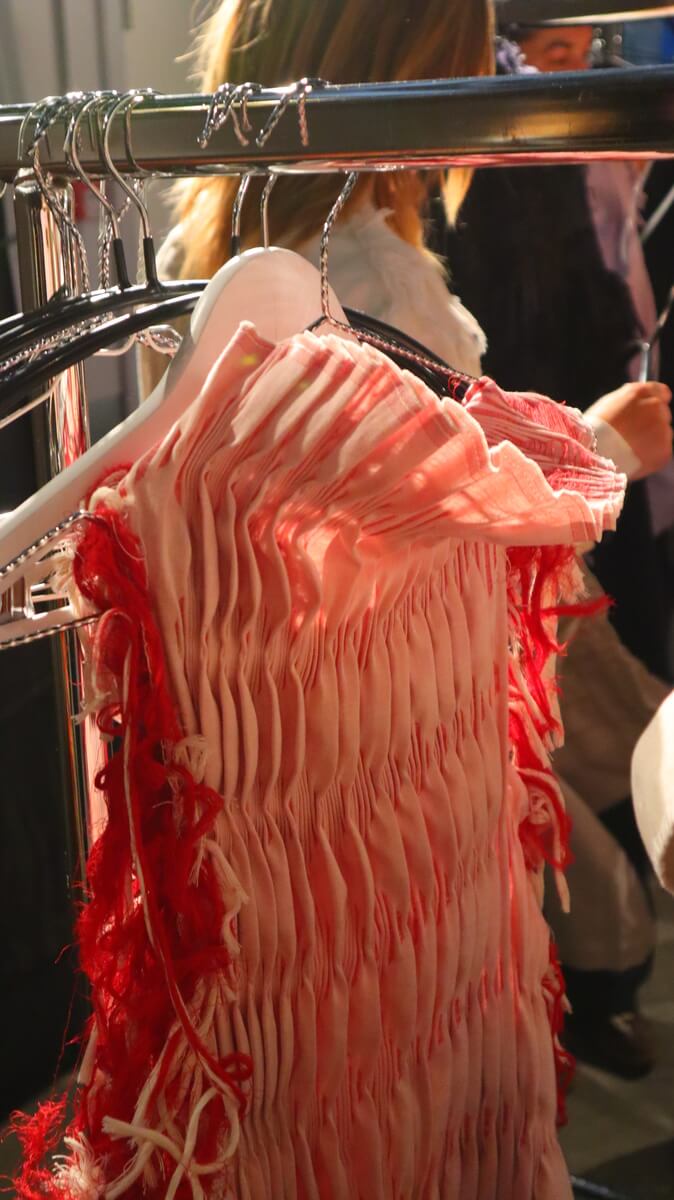
Photographer Ionela Bona went behind the scenes for VEIN Magazine at Copenhagen Fashion Week, capturing Stem’s radical take on fashion, where the hands making the clothes became part of the show itself.
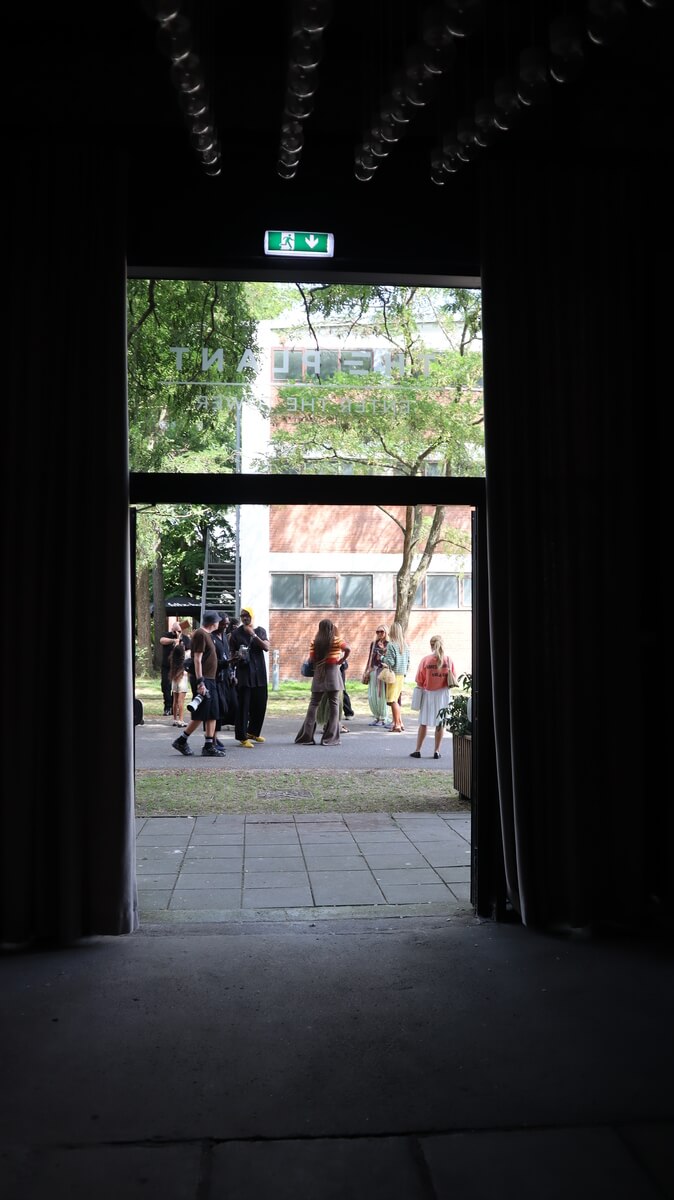
A circle made by the sewing machines and the seamstresses. Behind them, the clothes.
Stem has done something remarkably appropriate at precisely the right moment in fashion’s current crisis. And by crisis, I mean the way we have become conditioned by fast fashion — and increasingly by ultra-fast fashion — to expect clothes to cost very little and arrive almost immediately.
Stop.
Look.
It is a factory.
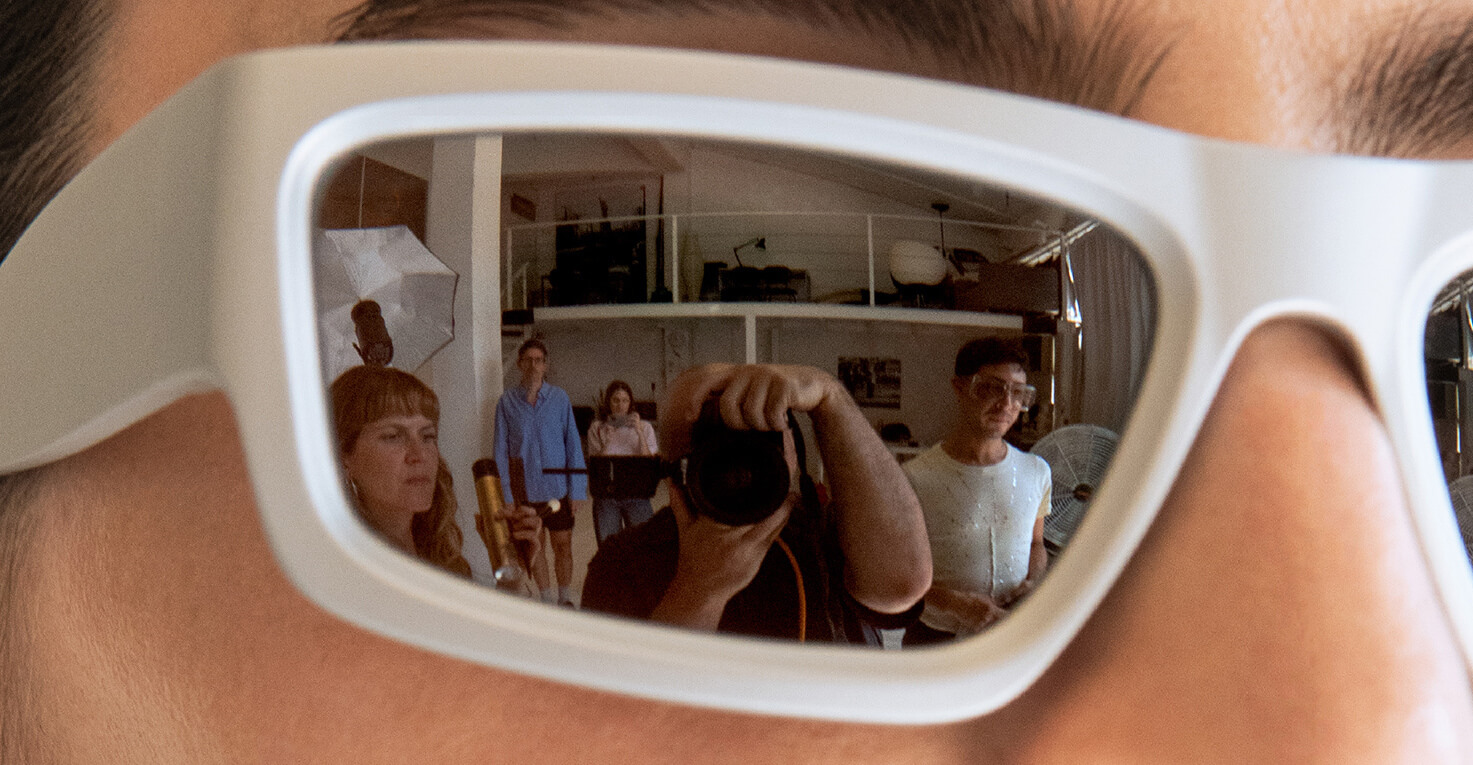
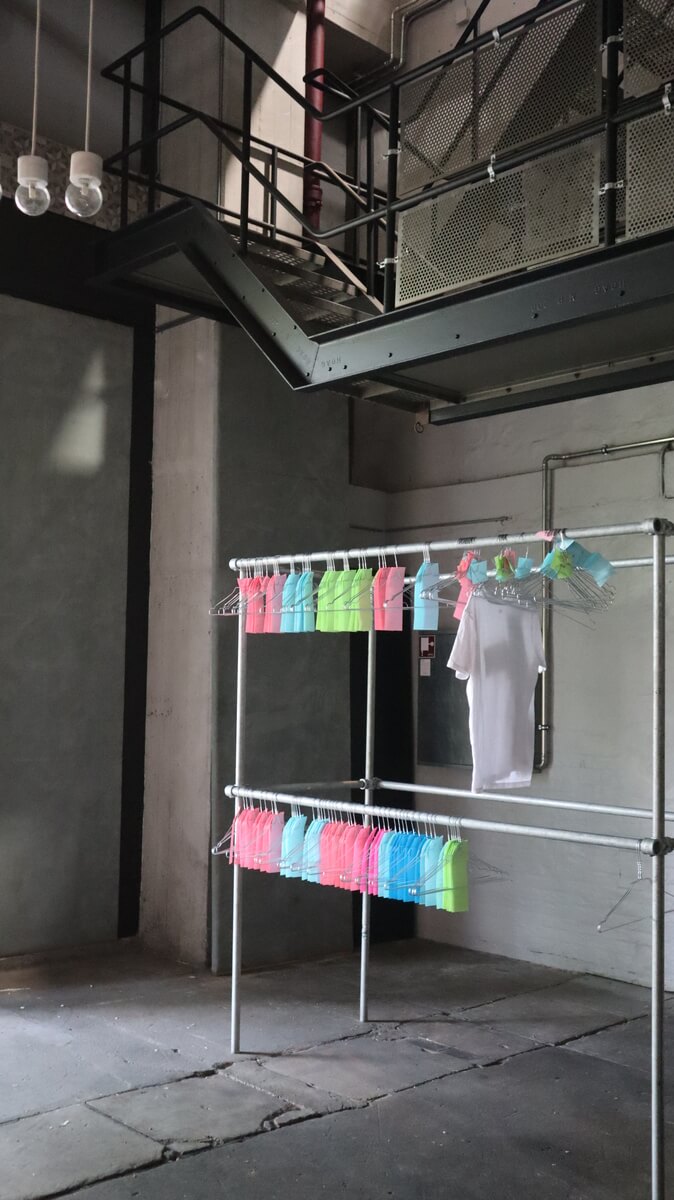
At the centre of the space, resting on a smooth blue rubber-like floor, a series of tables hold industrial sewing machines. The makers are already working before the guests even arrive. Positioned in a circle and facing the audience, they do not stop for a second. Their task is continuous: sewing Stem patches onto T-shirts brought in by the guests, each garment carefully arranged on the clothing racks standing behind them.
At its heart, Stem is an ongoing experiment in rethinking how garments and textiles are made and how stories of production can be made tangible.
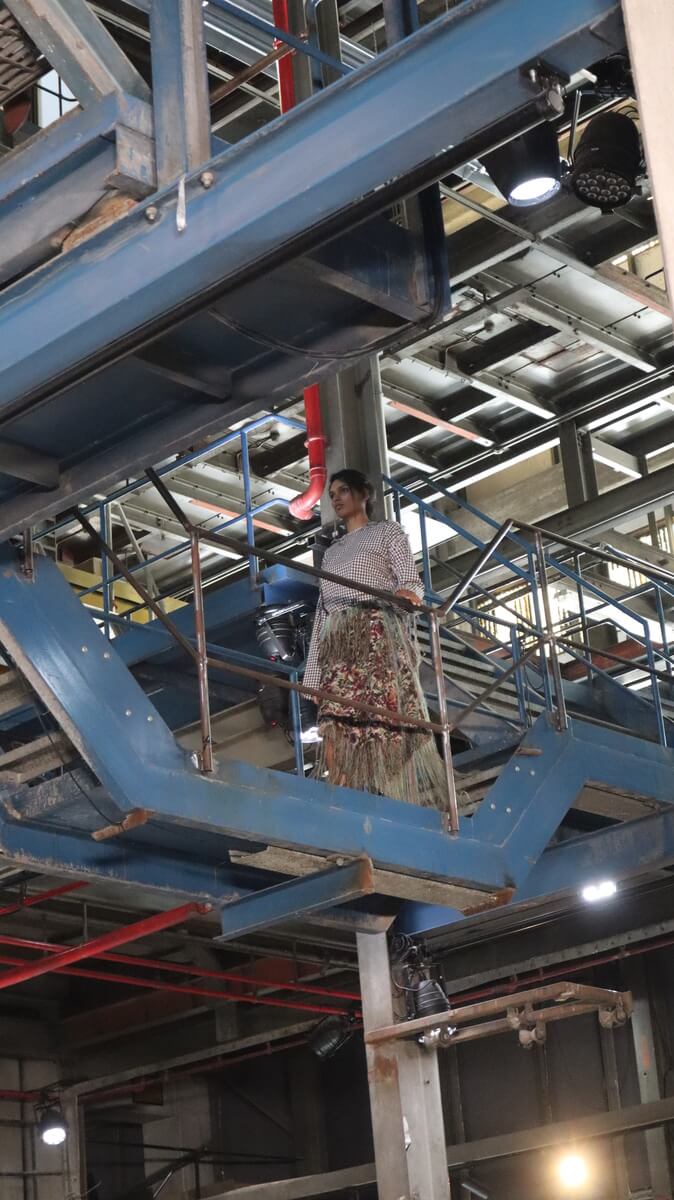
Then, from the dizzying, labyrinthine structure above us, a woman begins to descend the stairs in a rather peculiar outfit.
She is a model.
The show has begun.
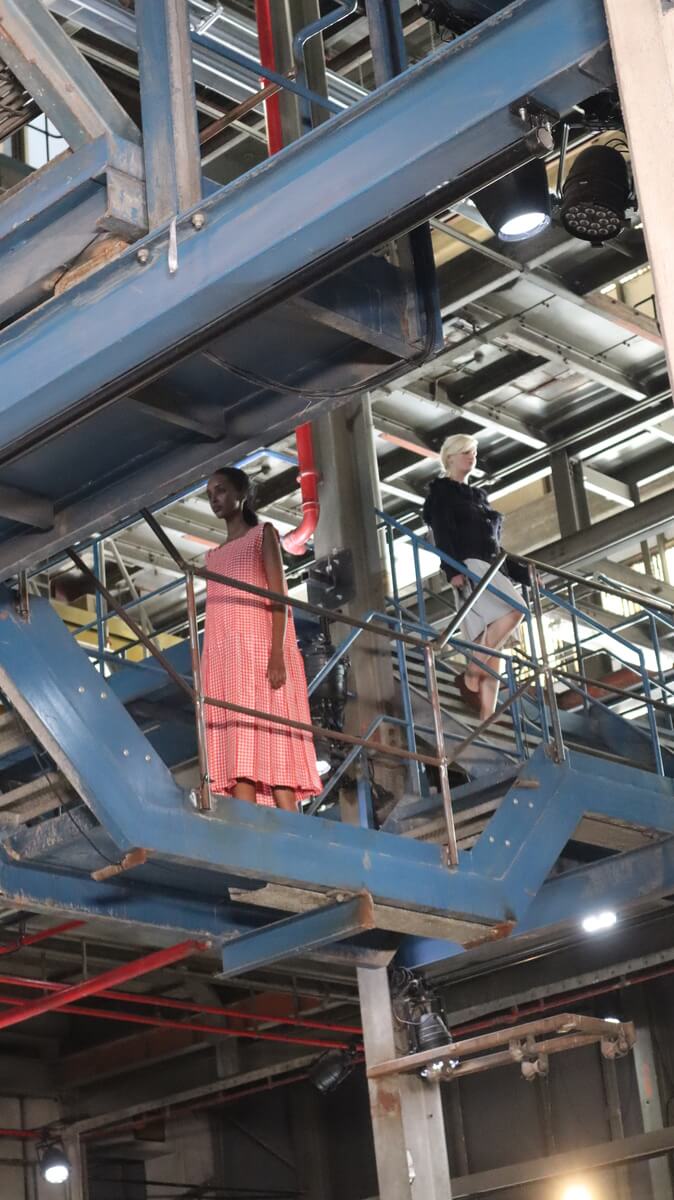
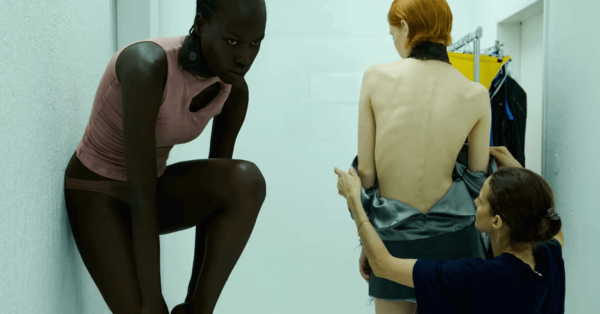
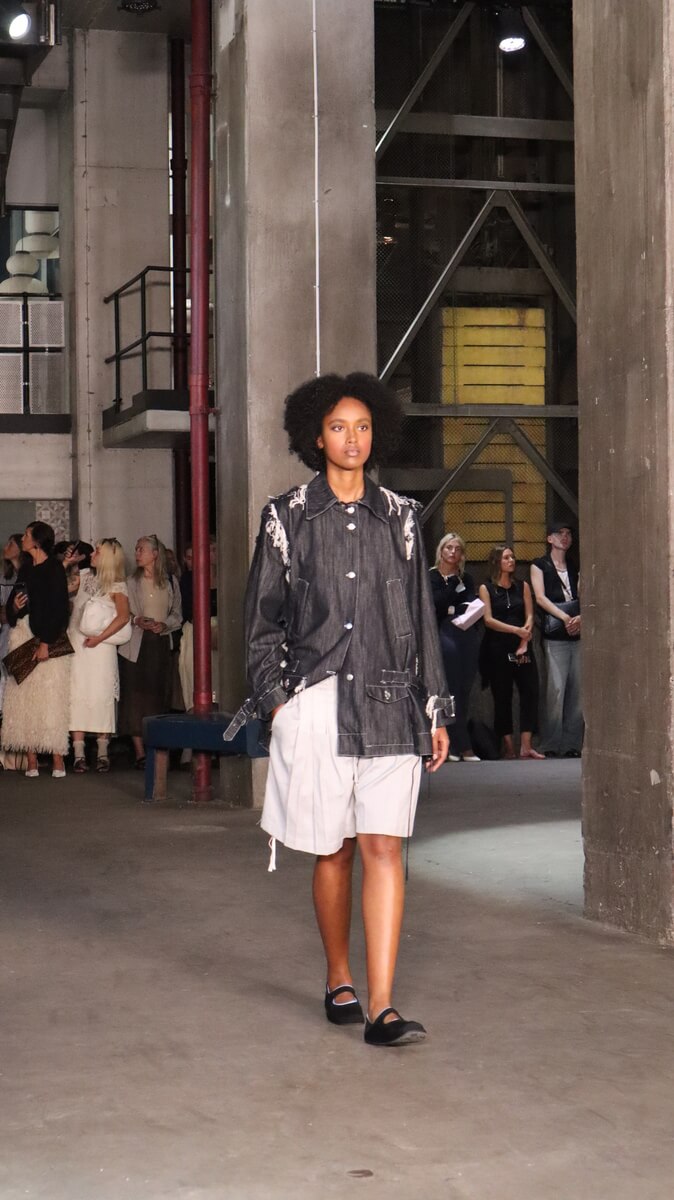
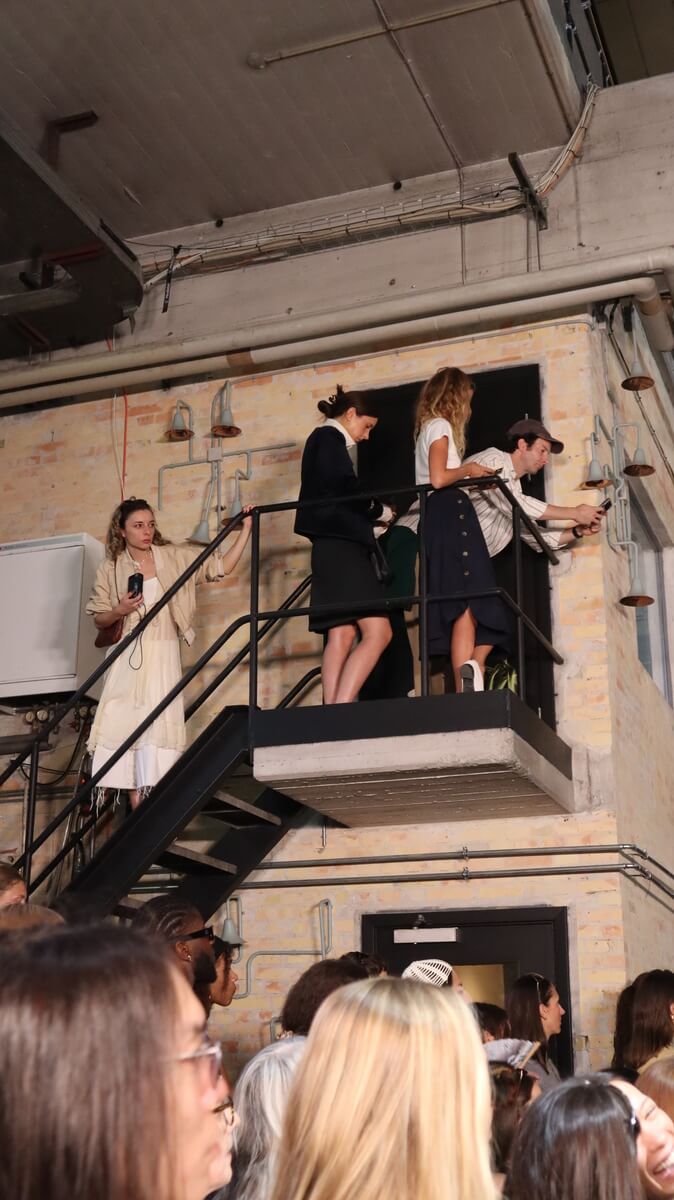
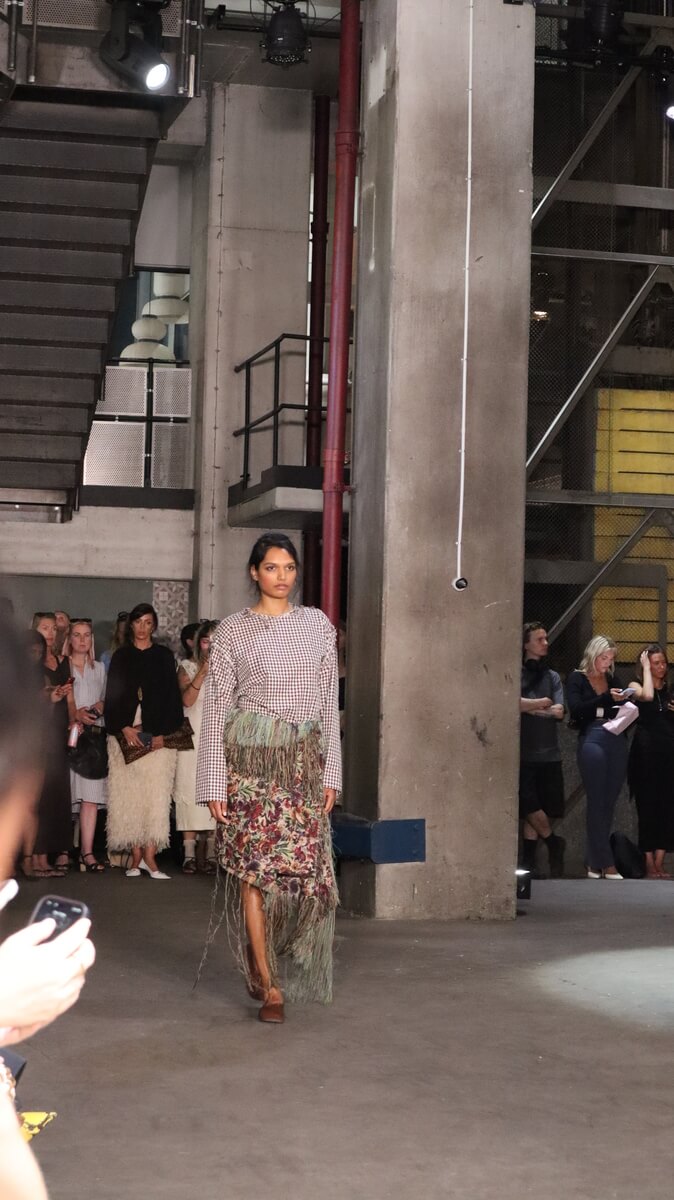
One by one, the models appear, descending the staircases, climbing them again, turning, vanishing, and reappearing elsewhere. Eventually, they emerge onto the same level as the audience and begin to walk around the circle of garment workers at the centre of the room.
It is an almost literal metaphor, as though the makers are materialising the designer’s ideas before our eyes: ideas that descend from somewhere above and eventually become physical garments.
Stem has quite literally taken the part of fashion that is normally hidden from view and placed it at the point where everybody has their eyes set: the fashion show — the industry’s most glamorous, spectacular and commercially seductive moment.
That matters because somewhere along the way, we have lost touch with the reality of how clothes are actually made. We live under the illusion that clothing simply comes “from a factory”, as though it were the product of a completely automated industrial process.
But whether or not the label says handmade, clothing is still made by human hands.
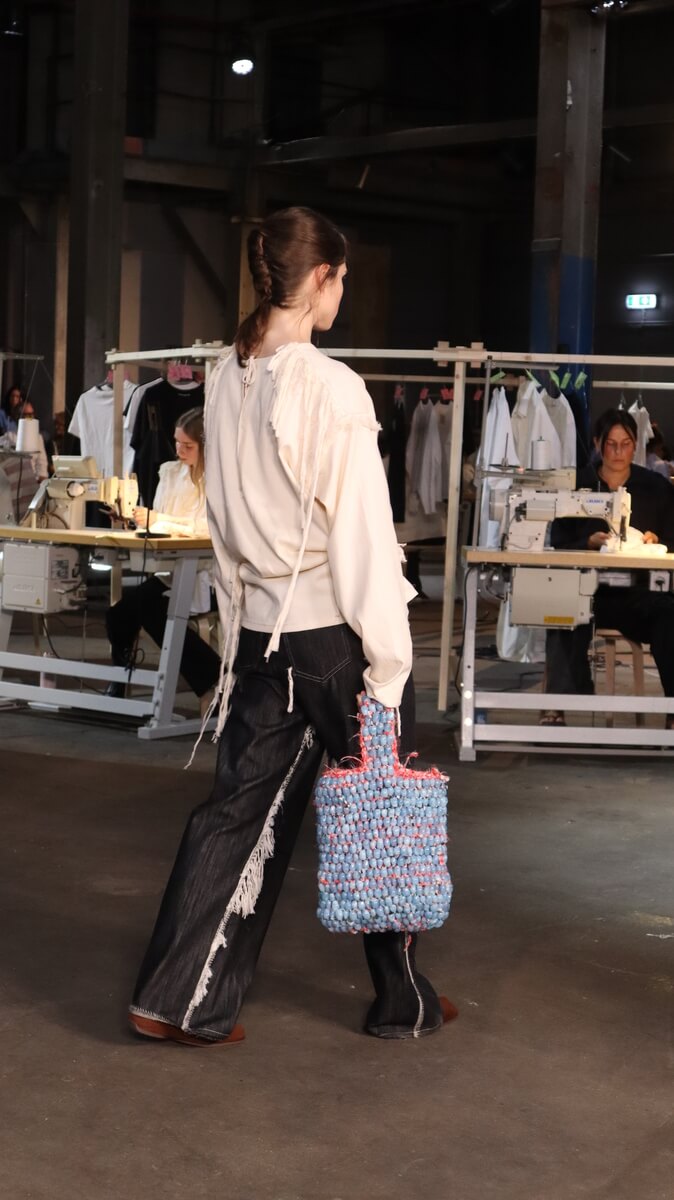
There are people behind every garment.
AI cannot simply sit at a sewing machine and make you a T-shirt.
And that is something we seem to have forgotten as a society: the real price of making clothes, and the real process behind making them.
Try making a T-shirt yourself, and you will very quickly understand what it actually costs.
The designer herself makes this position clear in the interview after the show: she would rather people buy Stem patches and use them to repair and transform the clothes they already own. Fashion, in this sense, should be limited rather than infinite. A designer creates within boundaries: a finite number of pieces, a finite amount of material, a finite set of resources.
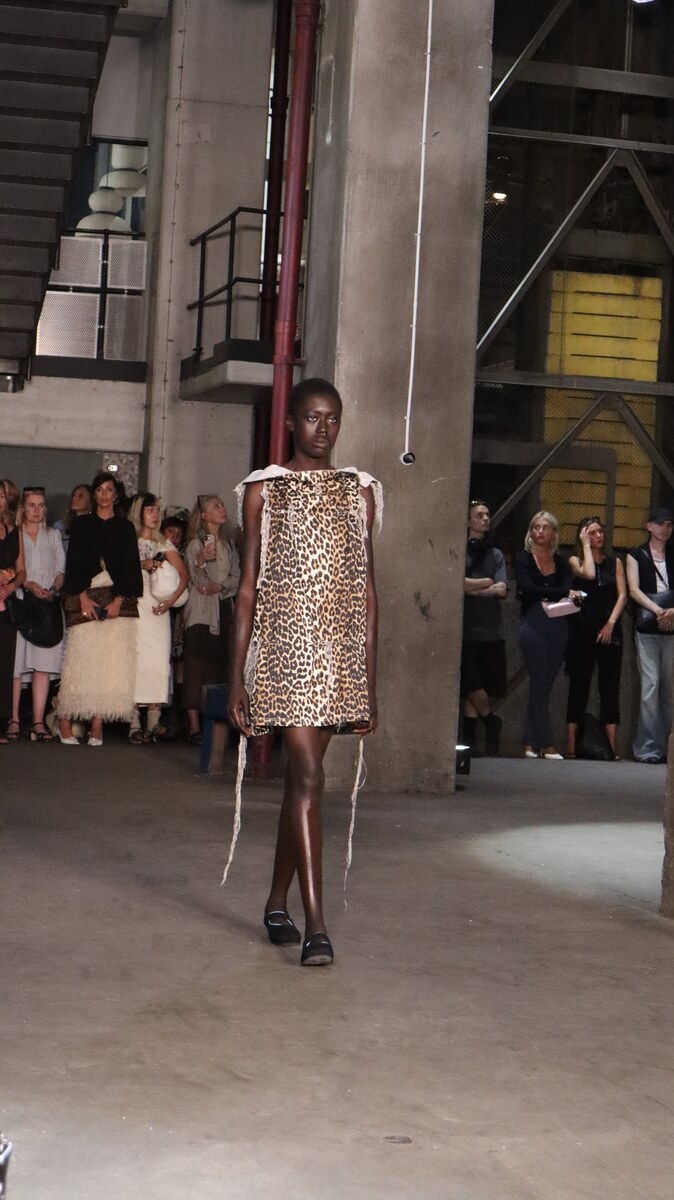
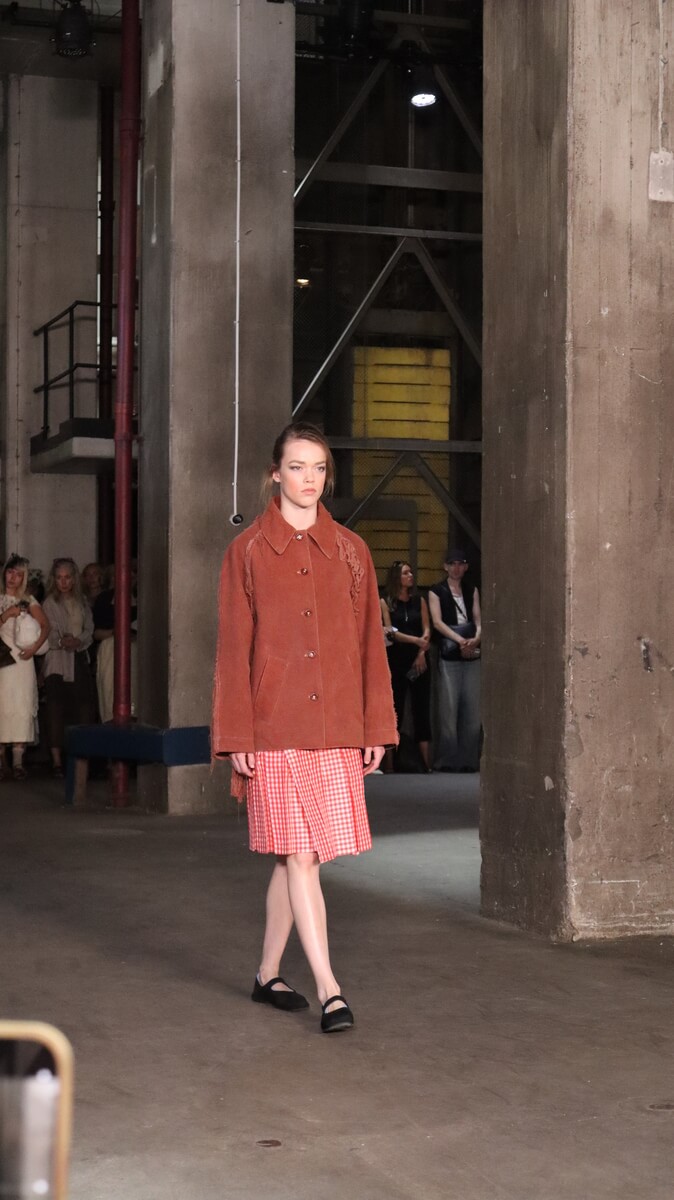
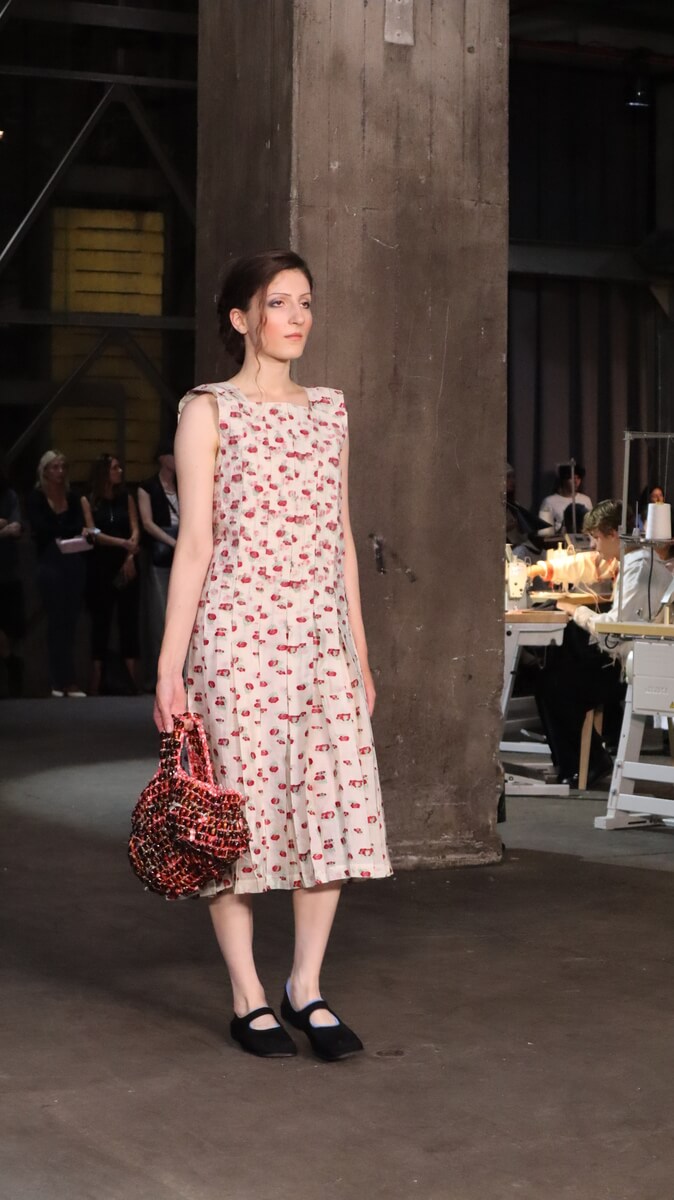
For this collection, Stem worked with deadstock fabric from Ganni, and that became one of the defining creative challenges of the project. Rather than treating scarcity as a restriction, the collection turns it into a methodology.
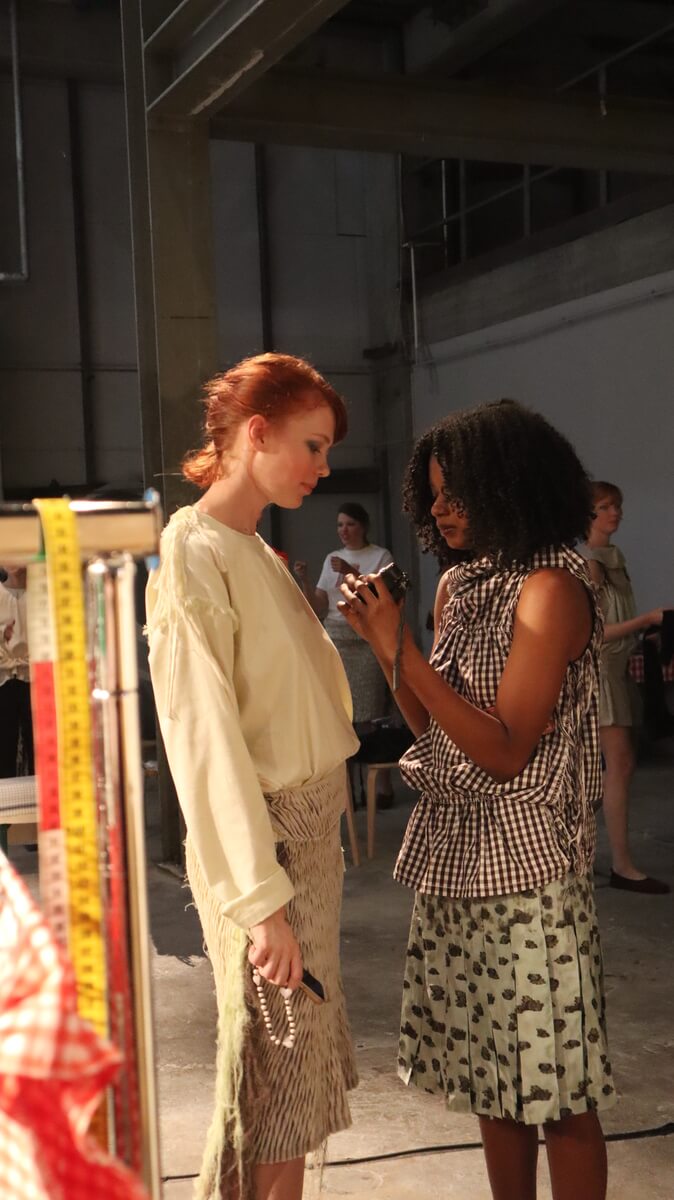
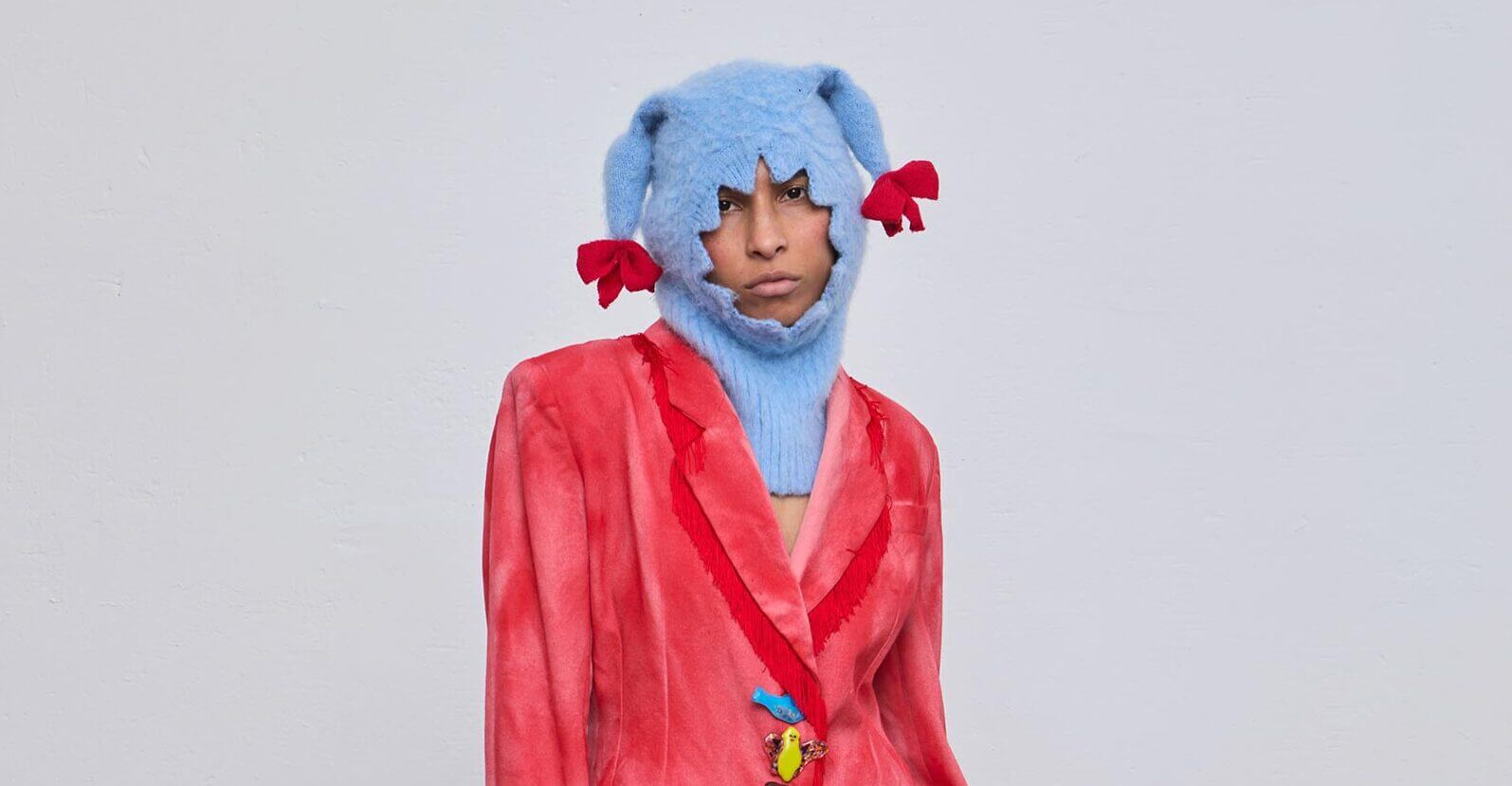
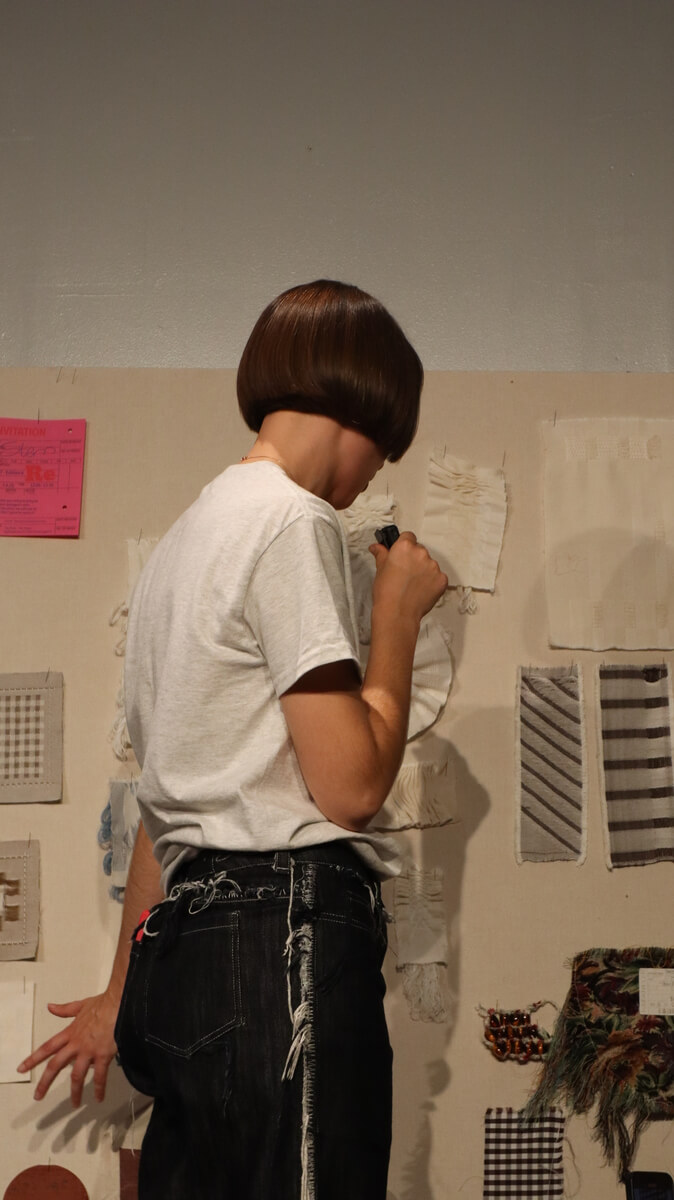
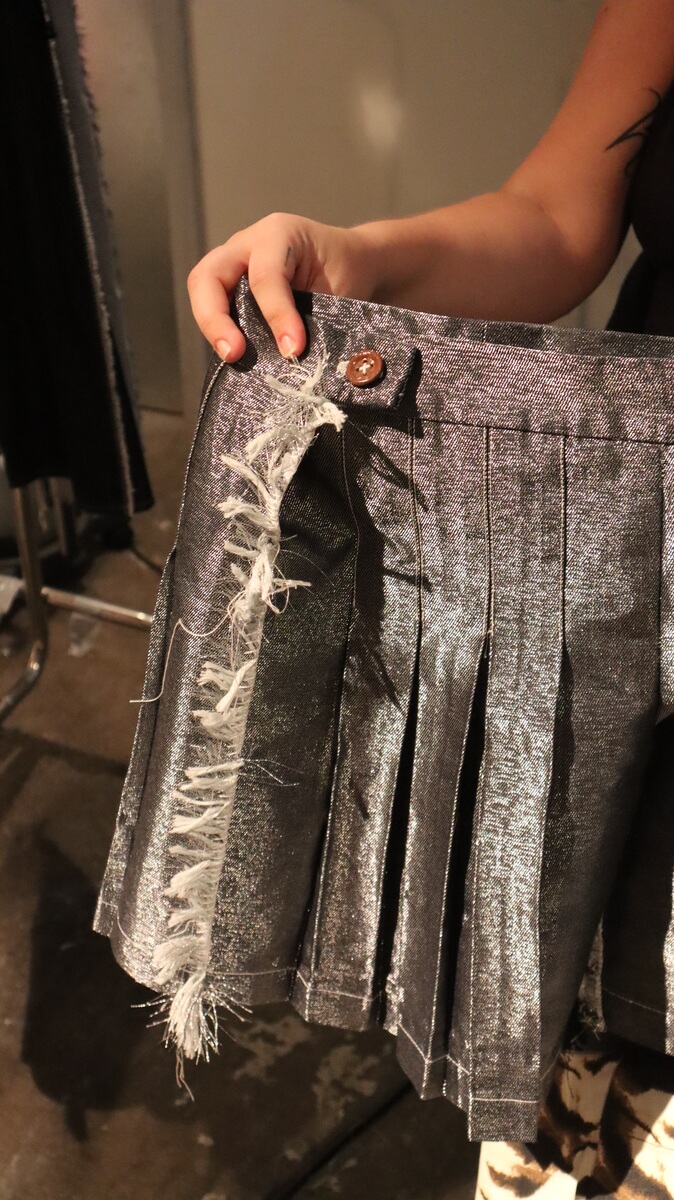
The simple, geometric silhouettes carry the distant echo of the 1960s. But nothing feels nostalgic. Frayed edges, exposed seams, and deliberately unfinished surfaces pull the garments into the present, as though the clothes were revealing their own construction rather than trying to conceal it.
There is something strangely moving in that tension between precision and rawness — as if the garment were allowing us to see the effort, the imperfections, and the hands that brought it into existence. The garments are complex enough for every loose thread and visible seam to feel intentional, almost precious. The elaborate hair and make-up push the image further into a retro-futurist world, suspended somewhere between past and future. Much like in MKDT, the simplicity of the silhouette becomes a quiet canvas for something far more intricate to happen on the surface.
This show therefore places the people who make clothes at the centre both literally and metaphorically.
They are not invisible.
And they are certainly not dispensable.
By placing them physically in the middle of the show, Stem makes a statement that feels increasingly necessary in an industry in which production workers are continually pressured to work faster and more cheaply, while manufacturing is repeatedly displaced towards wherever labour can be obtained at the lowest possible cost.
The spectacle usually hides the labour,
Here, the labour becomes the spectacle.
And it is a great way to make people rethink fashion at its core.
Text and images by Ionela Bona for VEIN MAGAZINE