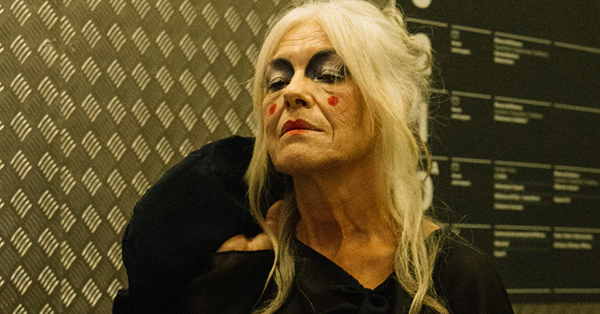
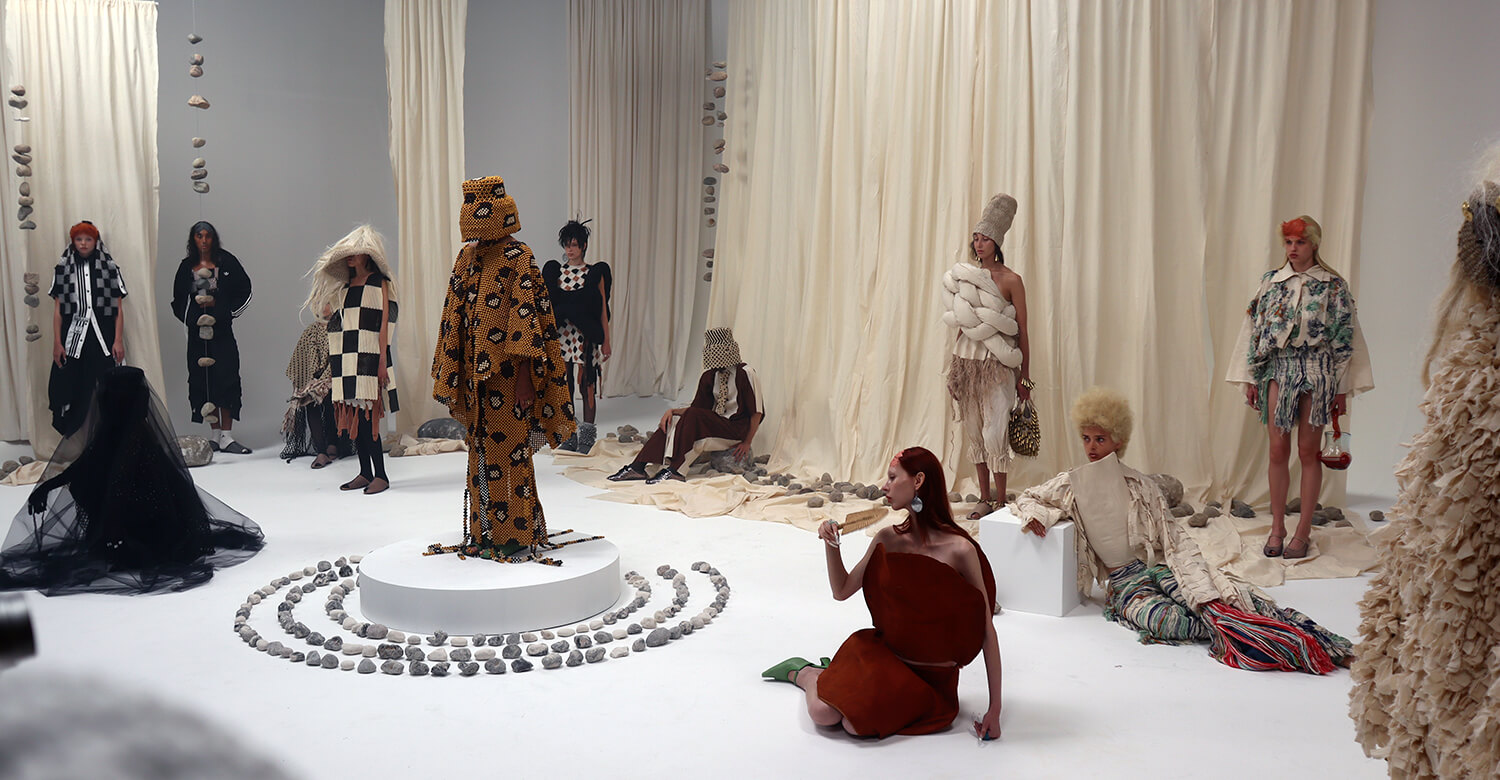
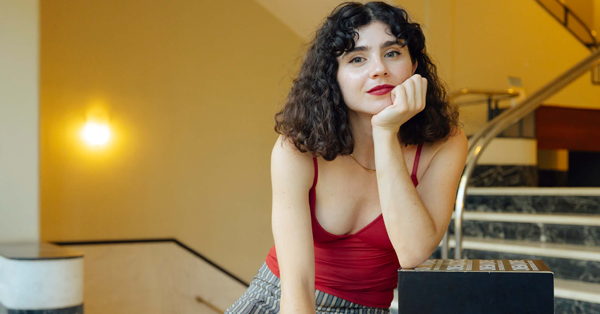


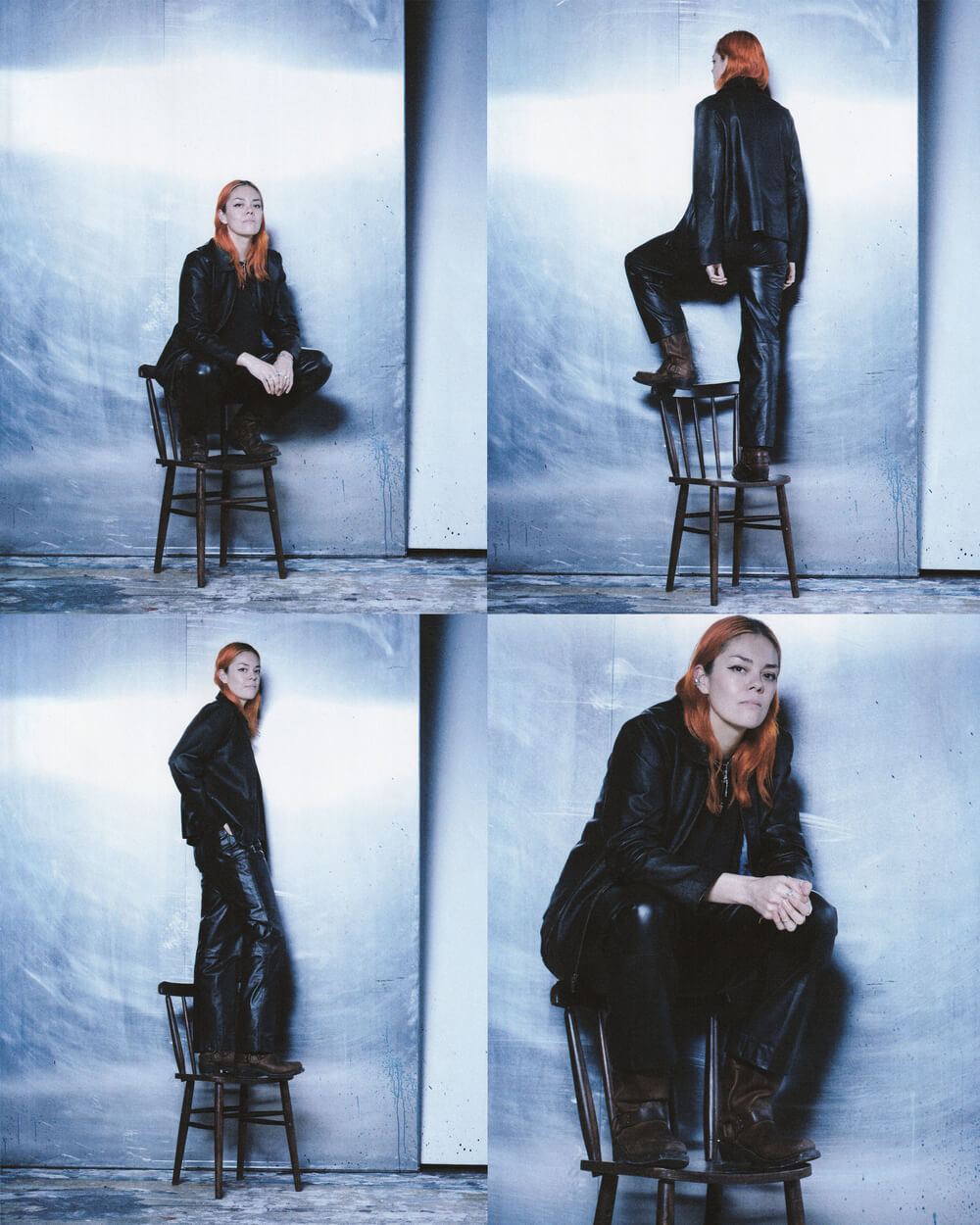
Fresh from being named one of the recipients of the 2026 CHANEL Next Prize, Colombian-born choreographer Andrea Peña is entering a new chapter in her career. Andrea has built an international reputation for creating immersive performances that draw on choreography, industrial design and Colombian ancestral memory to challenge conventional ideas of the body and movement. We spoke with Peña about receiving one of the art world’s most prestigious honours, her interdisciplinary practice and what lies ahead before touring in Spain with BOGOTÁ.
Winning the CHANEL Next Prize is a huge moment. Where were you when you found out, and what was your first reaction?
I was in Paris. Interestingly, just a week before receiving the call, I had asked the universe for a bit of a sign. I had recently decided to move to Paris and I remember questioning : what am I doing starting over again, in a new city and country, for what feels like the sixth time in my life?
A week later, I received a call from Yana Peel, director of the CHANEL Arts and Culture. The CHANEL Next Prize isn’t something you apply for; you’re nominated without knowing. So there was no anticipation, no expectation. It was a shock, followed by a deep sense of gratitude and responsibility.
You’re the first Colombian and Canadian artist to receive the award. Awards can validate your work, but they can also bring pressure. Has receiving this kind of recognition changed the way you think about your practice?
More than changing my practice, it has reaffirmed it. Recognition like this can create pressure to expand, produce more, or move faster. But for me, the challenge is the opposite: to root even deeper into the questions that make the work necessary during these times.
My focus now is on honing in the philosophical and radical core of the practice, the complexity, the contradictions, the difficult conversations that my work offers. The award hasn’t changed what I make; it has strengthened my commitment to why I make it.
You were born in Colombia and now work between Montreal and Paris. How have those places shaped the way you move and create?
Each place has given me a different lens through which to understand the world. Colombia through early childhood gave me an understanding of complexity, contradiction, and resilience. It is a place where Indigenous, colonial, and contemporary realities coexist in ways that deeply inform my work. Montreal, during my adults years gave me the freedom to experiment. It has an extraordinary culture of artistic risk-taking and interdisciplinarity, which allowed me to develop a practice that sits between choreography, design, performance, and visual art. Paris reconnects me to a different history. It places me in dialogue with centuries of philosophy, architecture, and artistic thought while simultaneously forcing me to question who gets to belong within those histories.
My work exists somewhere between all three places. I have always understood myself as fluid, and that fluidity is deeply embedded in the spirit of the work.
Are there choreographers or performance makers who fundamentally changed how you think about movement?
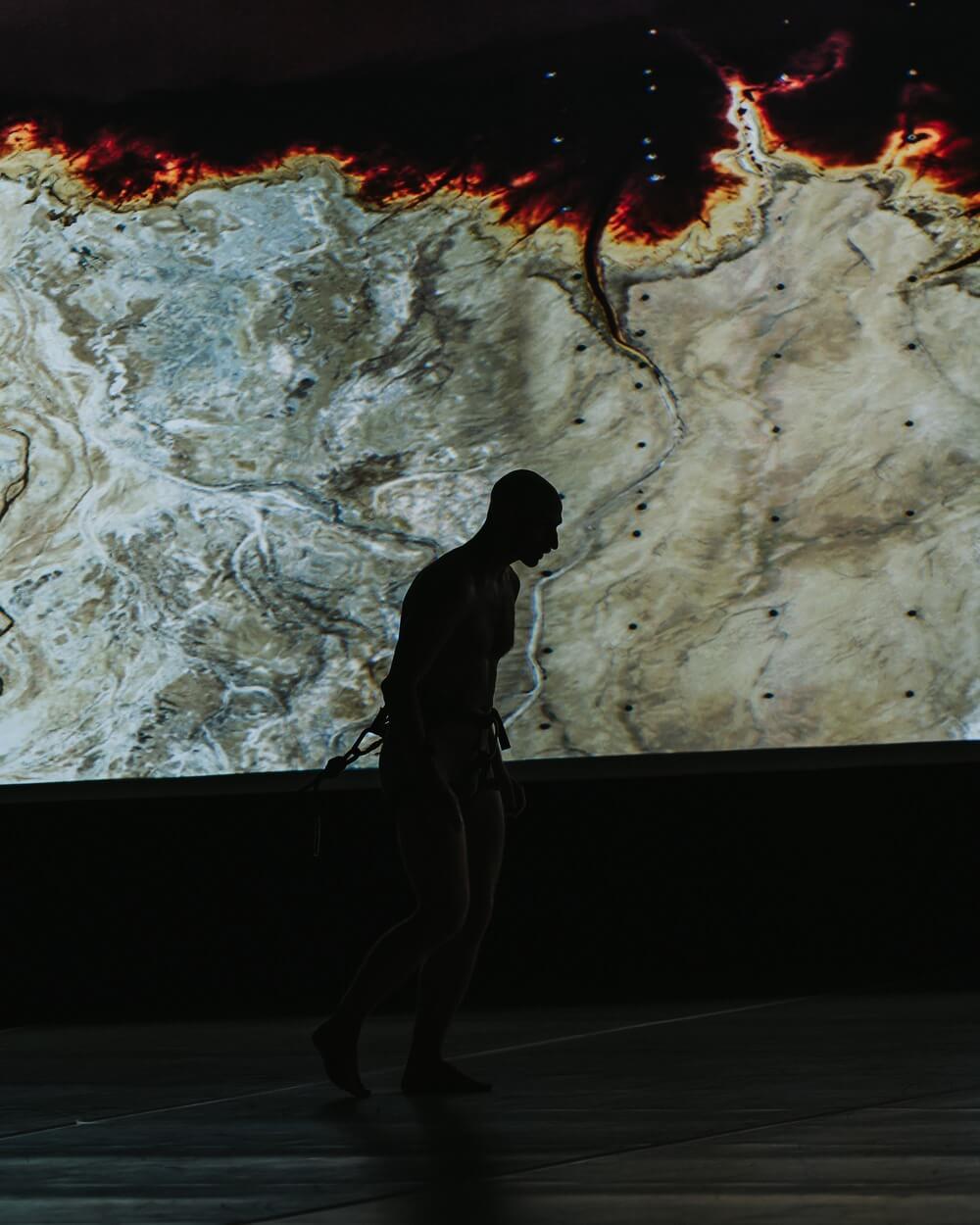
Romeo Castellucci and Dimitris Papaioannou have been profoundly influential for me. I often joke that they are my artistic fathers.
What inspires me is not choreography or movement itself, but other forms of art and in the case of Castelucci and Papaioannou their ability to sculpt time, space, and meaning. They create worlds that operate on a deeply human and psychological level. Castellucci, in particular, is fearless in confronting the darker and more complex dimensions of human existence.
Outside of performance, artists like Anish Kapoor have had an enormous impact on my visual language. His work exists in this fascinating space between the sublime and the visceral, something I constantly seek in my own practice.
“Ancestral memory” is a key thread in your work. Was there a moment early on when you realized dance could be more than performance?
Absolutely. As a performer working with major dance companies back in the day, I often felt frustrated by how dancers were treated as highly skilled movement machines. We were expected to execute, but rarely invited to contribute as thinkers, collaborators, or human beings with our own point of view. I remember asking myself: I am more than just a movement technician. I have questions about what it means to be human.
That realization became the foundation of my choreographic practice. I wanted to create spaces where performers could bring their histories, vulnerabilities, and perspectives into the process. Over time, philosophy became just as important to me as choreography. Dance stopped being about movement alone and became a way of investigating human existence itself.
Ancestry on the other hand, came at a time when my family was decolonizing our own indigenous ancestry, and realizing how far we have been removed from this ancestry through colonization. Through this very intimate and vulnerable process with my sister, I came to the realization of the significance of connecting with this ancestry in my works and humbly reclaiming it.
So the works are really vehicles for critical thinking. Vehicles not for answers or singular ways of seeing the world, but spaces for questions and pluriversal perspectives.
You’ve spent time in residency in Vancouver. What did that period unlock for you creatively?
Returning to Vancouver to create for the 20 dancers at Ballet BC was deeply transformative because it brought me back to a company where I had once been a dancer.
There was something profoundly moving about returning to a place I once called home, but from an entirely different position. Instead of interpreting someone else’s vision, I was able to bring my methodology and way of thinking into the studio. To meet these artists so close to my past, with the tools and inclusive practices of performative agency I have been developing across the last 10 years. So this felt like a full-circle, an opportunity to revisit my past while recognizing how much my artistic voice has evolved and bring this more radical practices into large companies like that of BalletBC.
We created a work that required immense technical rigour from the dancers as they were attached in two via harnesses. This required a radical capacity to play and negotiate in real time someone else’s movement, weight and nuances, while keeping an incredible attention to technical capacities.
As though my two worlds of design and technical rigor were coming together in a new form.
What artists, images, or ideas have been shaping your visual world lately?
Lately I’ve been thinking a great deal about machines and the image of the Pietà. I’m interested in what happens when a symbol traditionally associated with care, grief, and devotion is reimagined within our contemporary technological reality.
I’m also thinking about the tensions between centers and peripheries, particularly how the Global South has historically been positioned as a site of extraction, whether of labour, resources, or cultural knowledge. And questioning this paradigm, through rescuing values and non folkloric aesthetics of the Global South on stage.
At the same time, I’m fascinated by what I call mytho-industrial monuments. I’ve recently premiered a new creation for the Ballet da Cidade de São Paulo that includes a monumental scenographic structure, and I’ve become increasingly interested in how architecture, mythology, and industry can collide to produce new collective imaginaries.
You’re about to tour Spain, what kind of energy are you bringing into these performances and can you tell us more about it?
We’re touring BOGOTÁ, a work that directly engages with the entangled histories between Colombia and Spain. For me, this tour is much more than a series of performances. It’s an opportunity to place these histories in conversation with contemporary audiences and to ask how we might relate to one another across time, geography, and inherited narratives.
I’m incredibly curious to see how the work resonates in Madrid, Tenerife, and Barcelona. BOGOTÁ is also unapologetically queer, and Spain feels like a place where audiences are ready to engage with the work’s complexity, sensuality, and political undertones.
Does a work change once it starts travelling, or does it take on a life of its own when new audiences encounter it?
Absolutely. A work becomes transformed by every place it visits. Touring reveals that performance is never fixed; it exists in relationship to the audience encountering it. Each city teaches us something new about the work’s relevance, blind spots, and potential.
BOGOTÁ has often become a mirror reflecting different understandings or misunderstandings, of Latin American histories. Those encounters have reinforced for me how important it is to continue creating spaces where stories from the Global South can be seen on their own terms rather than through inherited colonial narratives. In that sense, touring is not simply dissemination; it is part of the work itself and how it continually evolves.
Have audiences reacted differently to your work depending on where you perform it?
Very much so. Some audiences engage immediately with the emotional and historical layers of the work, while others approach it through a more formal or aesthetic lens.
London was particularly revealing. It highlighted for me how uneven knowledge can be around Indigenous histories, colonialism, and the complexity of Latin American identities. Those experiences reinforced the importance of continuing the conversation. Sometimes the most challenging reactions teach you the most about why a work needs to exist.
Do you think queerness offers a different way of imagining bodies, desire, and space in performance?
For me, queerness is not so much an aesthetic; it is a lens through which we perceive, relate, and inhabit the world. Sara Ahmed writes beautifully about this in Queer Phenomenology, particularly around how queer bodies navigate space differently because they have historically existed at its margins.
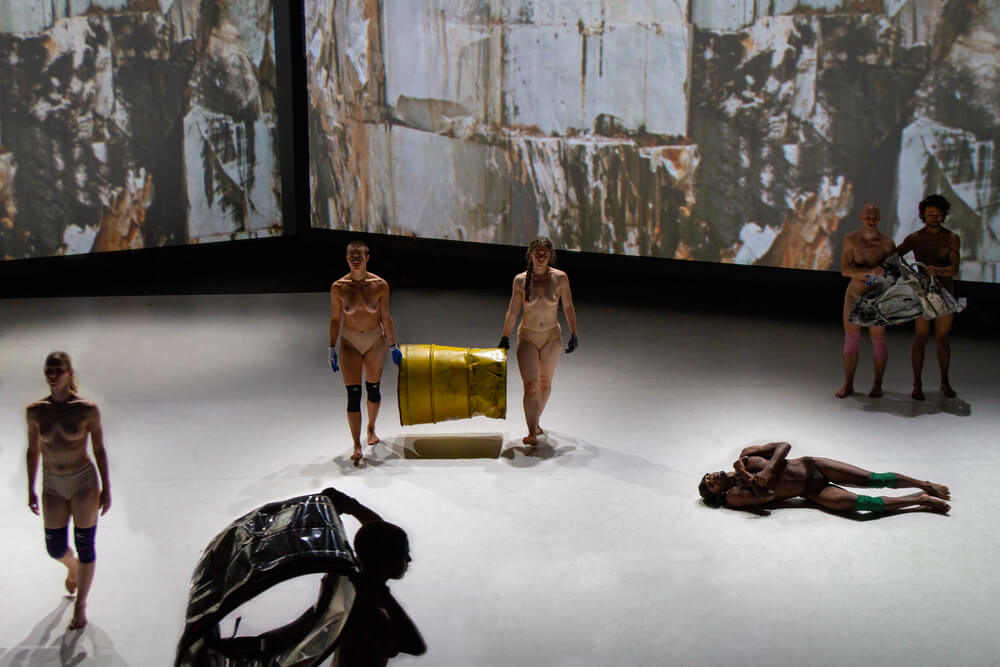
I think my collaborators and I embody queerness not through representation alone, but through how we work together, how we understand intimacy, how we hold difference, and how we imagine collective forms of existence. That inevitably produces different possibilities for desire, touch, gender expression, and community that my team and I bring on stage.
What does success look like to you now, beyond awards and institutional recognition?
Success for me is making work that matters, in a way that leaves a deeply profound impact on my collaborators, the audiences and myself. Its about continuously transforming as human being.
It’s creating art that is rigorous, profound, and capable of shifting how people perceive themselves and the world around them. Awards and recognition are meaningful, but they are ultimately structures built around the work.
The work itself is so precious, the artists who dedicate their lives to it, the audiences who encounter it, and the possibility that, for a brief moment, a performance can transform how we understand our shared humanity.
In a time marked by political, social, and economic instability, to me this feels like a profound responsibility and privilege to be creating art that creates impact. Works that are to be felt and experienced in real time with a community and not online.
Photo credit: Mariana Maltoni @maltoni