



I.AM.ISIGO turned Copenhagen Fashion Week into a ritual. In Sacred Ecologies, darkness, ancestral craft and radical silhouettes collide, creating a world where fashion becomes a language for land, memory and power.
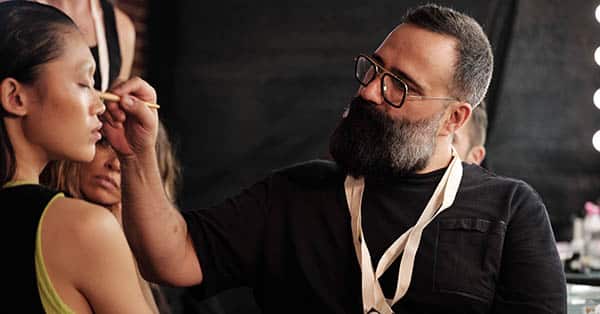
They did not allow us to go backstage. I mean, we could go backstage, but only into the rooms where the action had already taken place. All the models were dressed and kept in another, separate room. No one could access that point. Only the team already inside were allowed to move in and out.
I.AM.ISIGO is a nomadic fibre-based practice founded by Bubu Ogisi, rooted in the craft traditions of the African continent. Through a collaboration with artisans, reviving ancestral techniques and focusing on locally sourced materials, the label creates garments that exist between clothing and object. The brand´s vision has earned international recognition, including the Zalando Visionary Award 2025, the S+T+ARTS Prize 2024, and selection as a LVMH Prize semifinalist in 2026.
A woman leading the whole operation took care of this and brought us (press) over to a table with drinks and chocolate. “Take care of them,” she ordered before leaving. The perfect distraction, but we desperately needed to see the backstage. Would we ever see it?
People started arriving, and some members of the team stood by the doors, handing each guest a flyer and a bracelet.
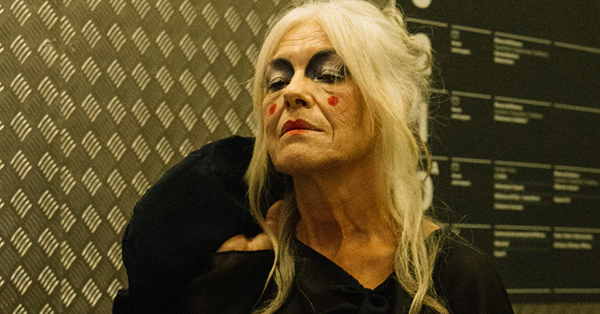
In the luminous space, a woman began pole dancing. At the end of her dance, she stretched herself out with her arms open, face down. Suddenly, she gripped the pole and froze there, suspended upside down. The woman in charge called out: “The green ones, come here.”
The flyers given at the entrance were marked by colours. They were gamifying the presentation. Brilliant!! There were two levels: the entrance, with the pole dance, and the main room. Access from one level to the next was determined by colour. Press and photographers entered first- we had already been there for almost an hour.
Inside, there was complete and infinite darkness. Occasionally, the light from someone’s phone would illuminate the face of whoever was holding it, but no one turned on their flashlight. We remained like that for a minute. People were swarming around the entrance, curious, trying to get inside. The image from inside was a rectangle of light and hands, heads, colour. The woman leading the whole operation pulled two more people from the crowd, pushing into the room, and then completely shut off access to the real world.
Now we were in the in-between. Everyone was half silent, half whispering, expectant. Curiosity and excitement kept growing. We understood absolutely nothing, and that was precisely what made it fun. The waiting, the curiosity, the game, and the secrecy of something no one was allowed to see.
Until now.
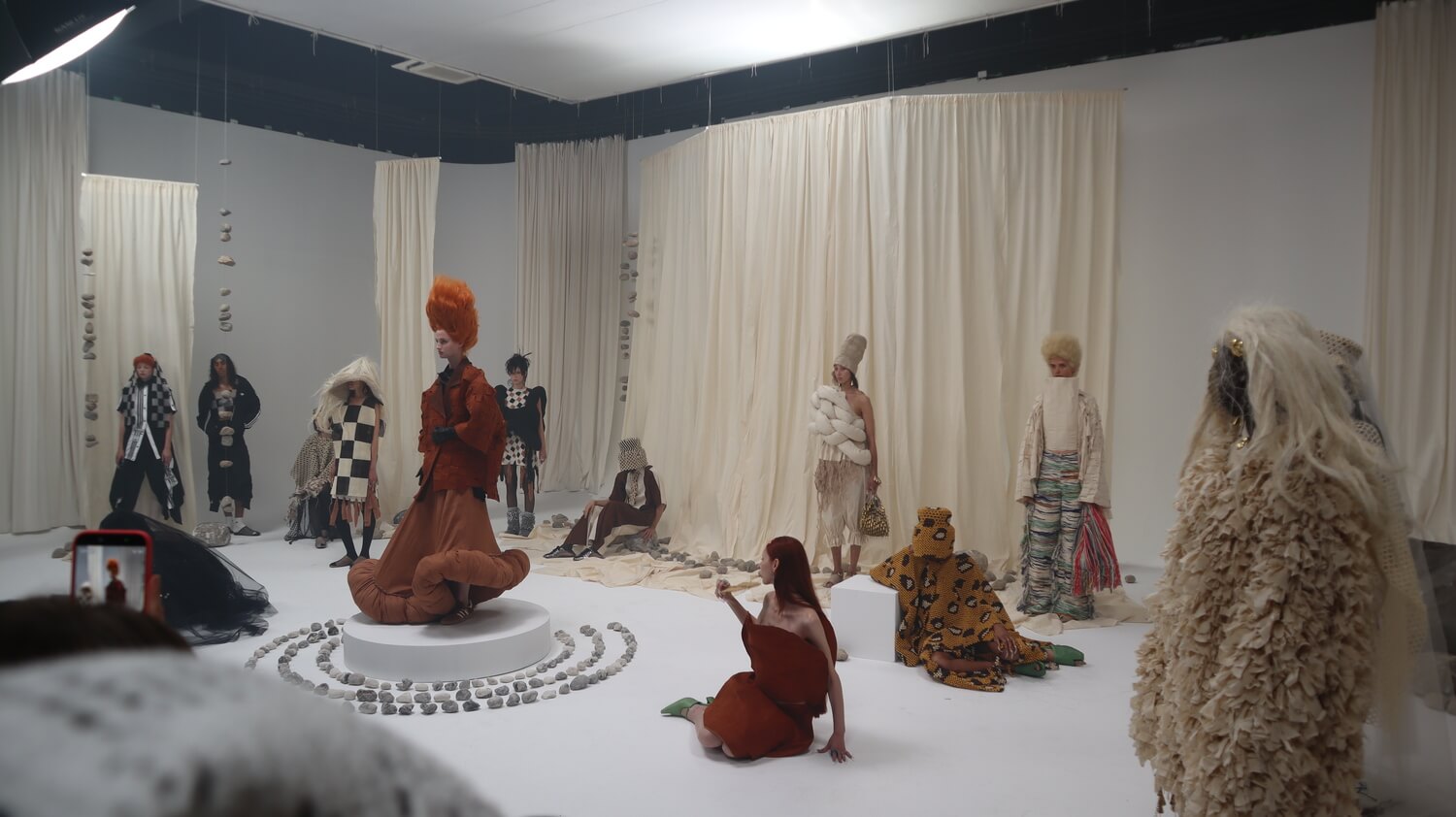
The blackness split in two. A black velvet curtain slowly began to open, revealing a pristine white stage surrounded by mist at the back. The crowd surged forward, almost aggressively, like people spotting an idol in the street.
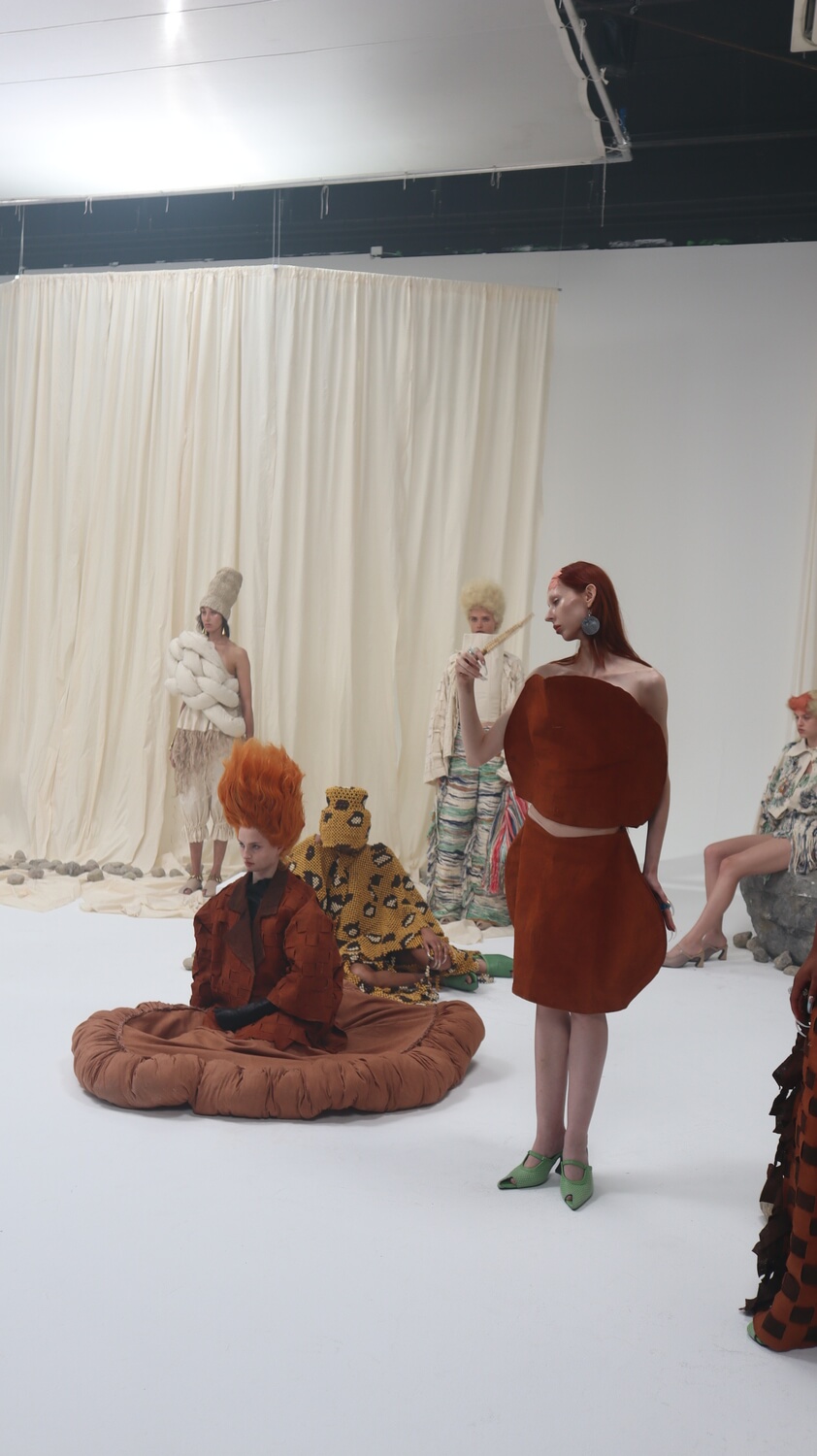
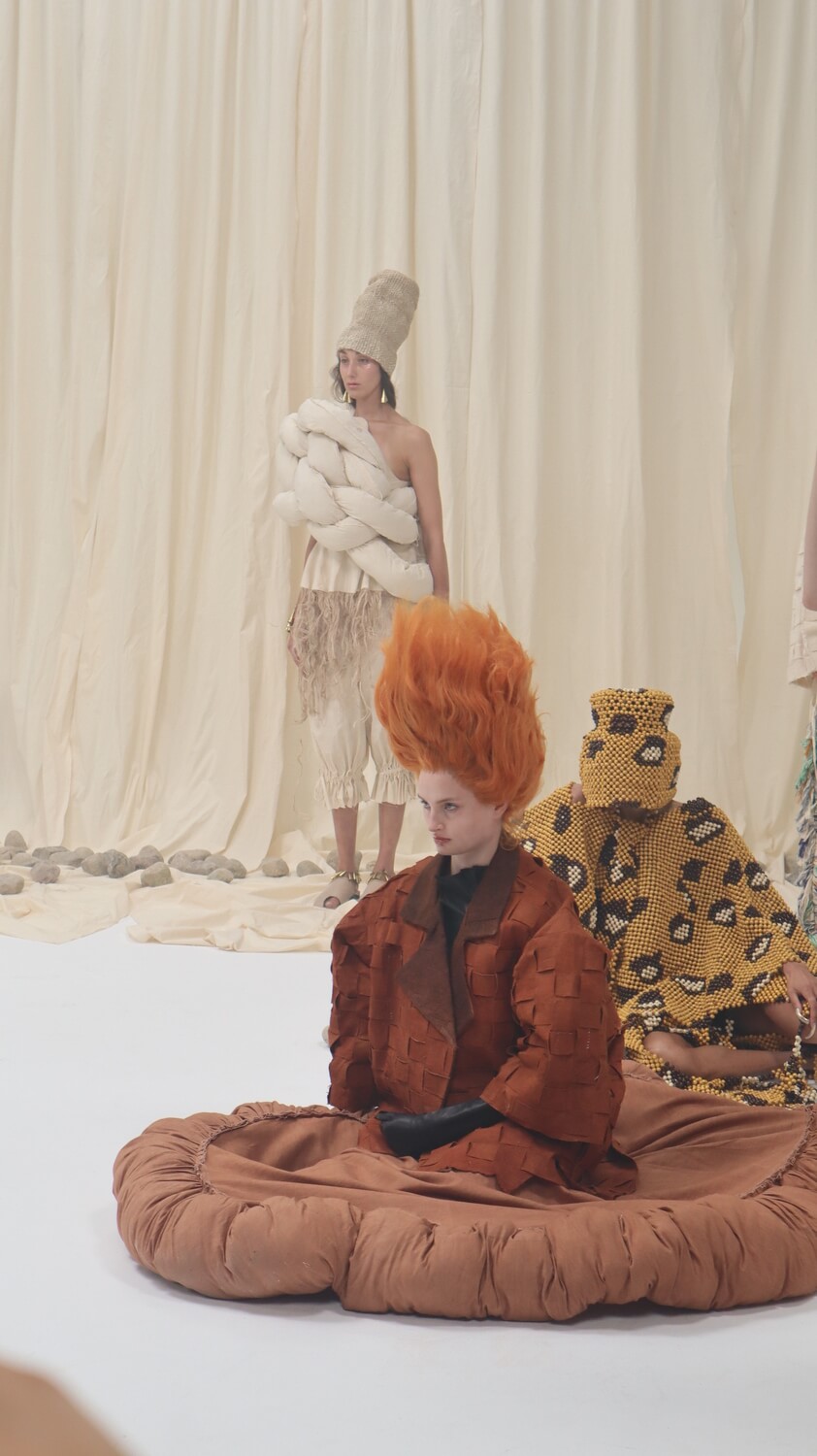
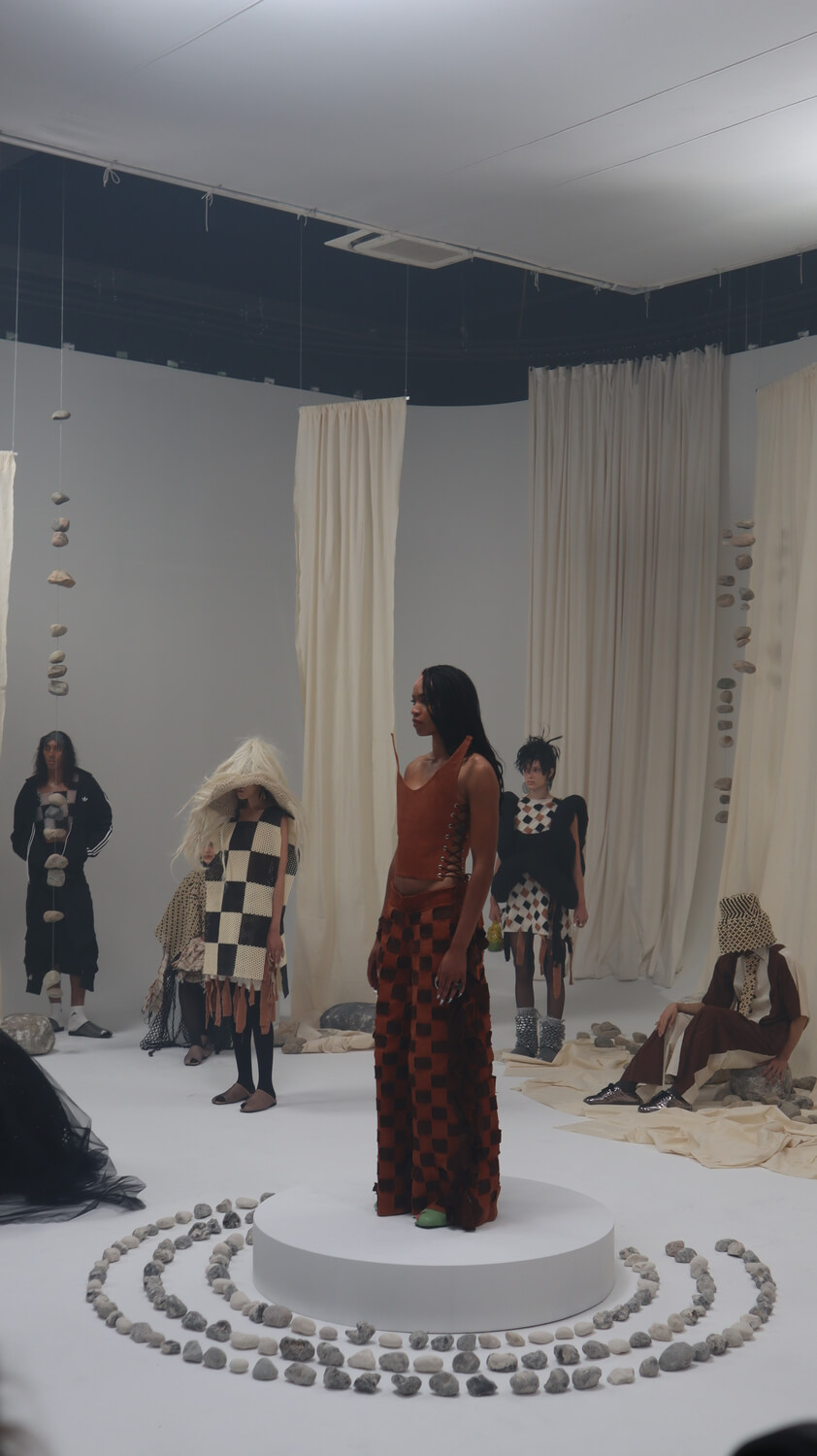
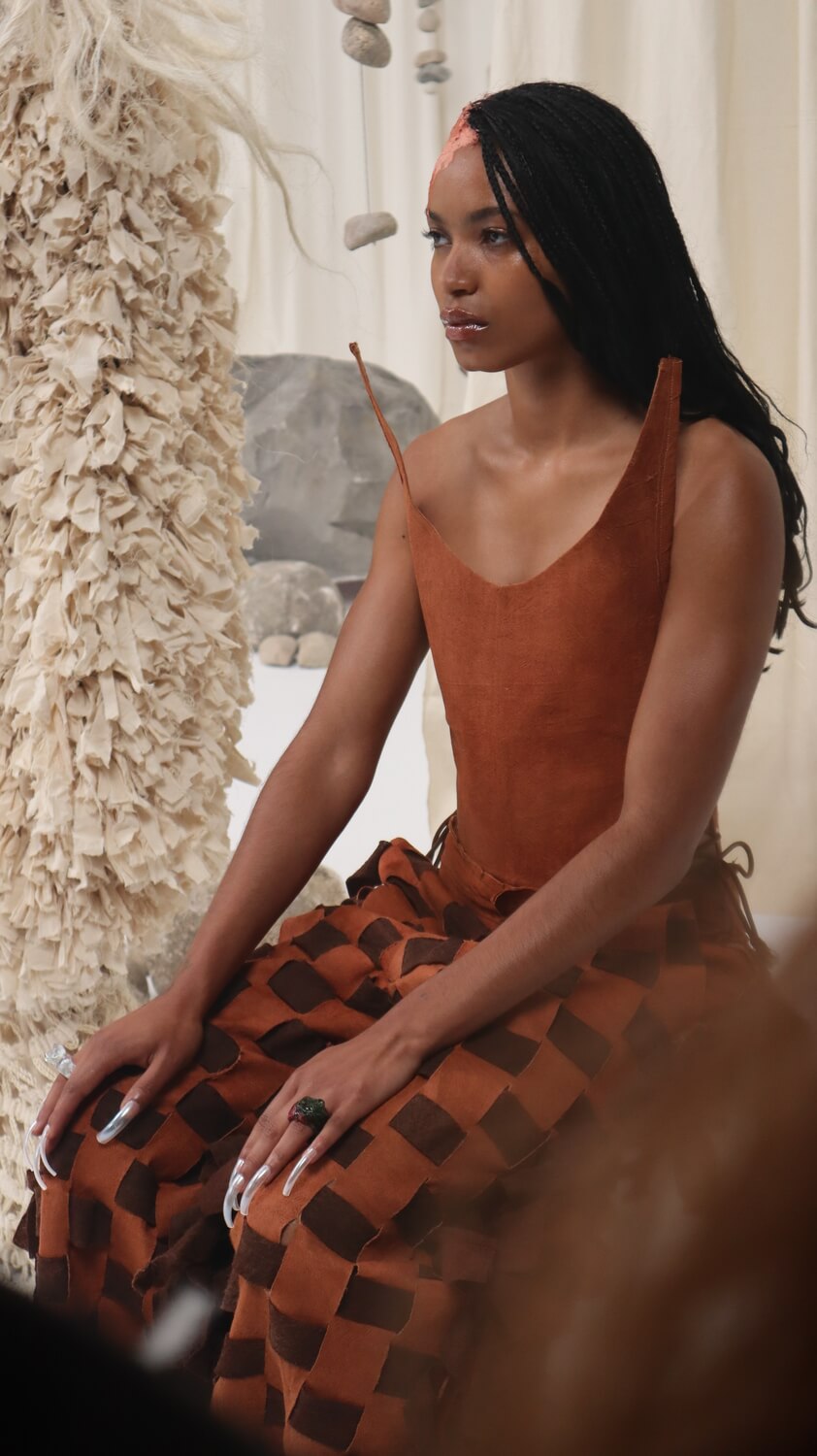
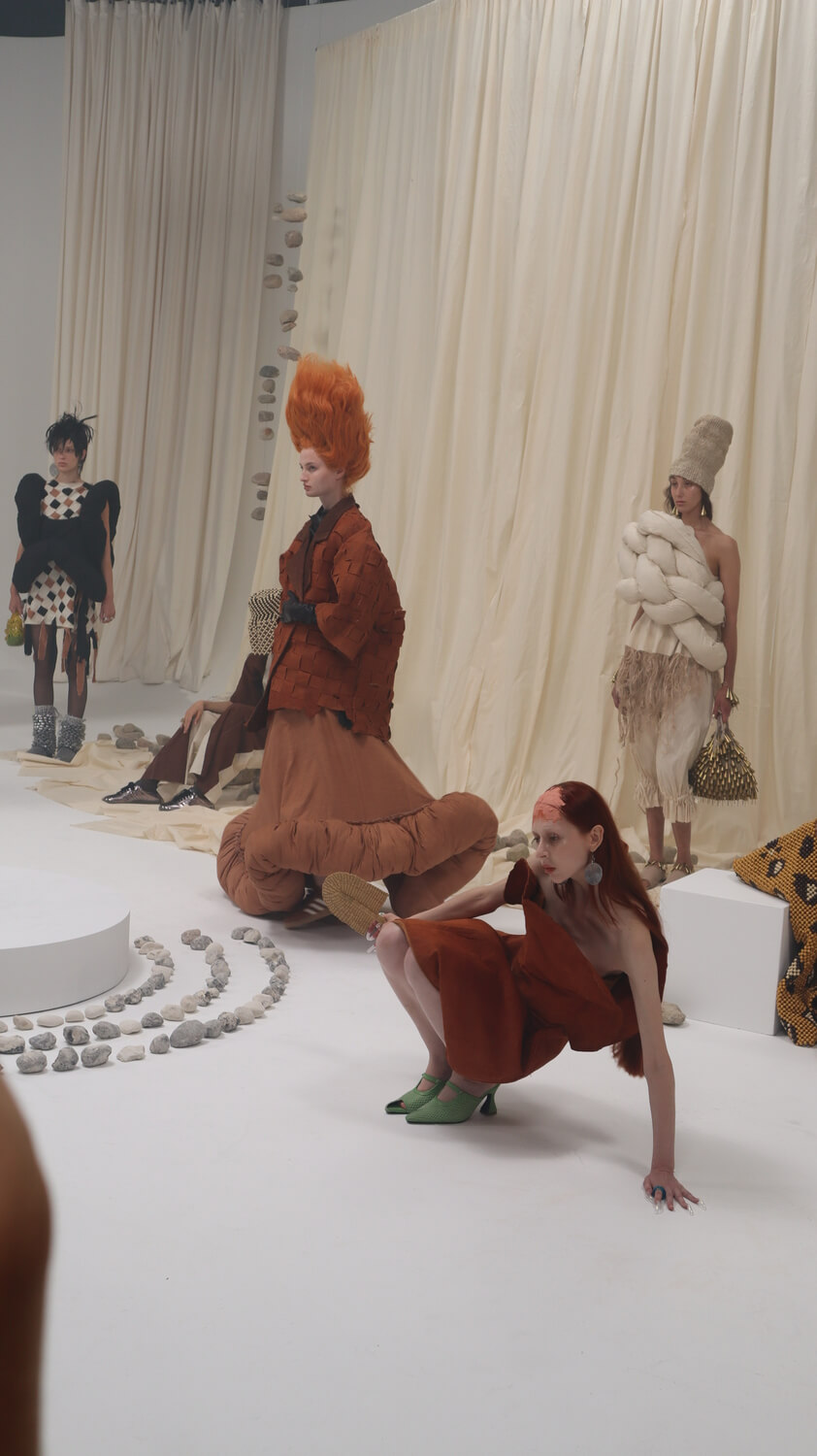
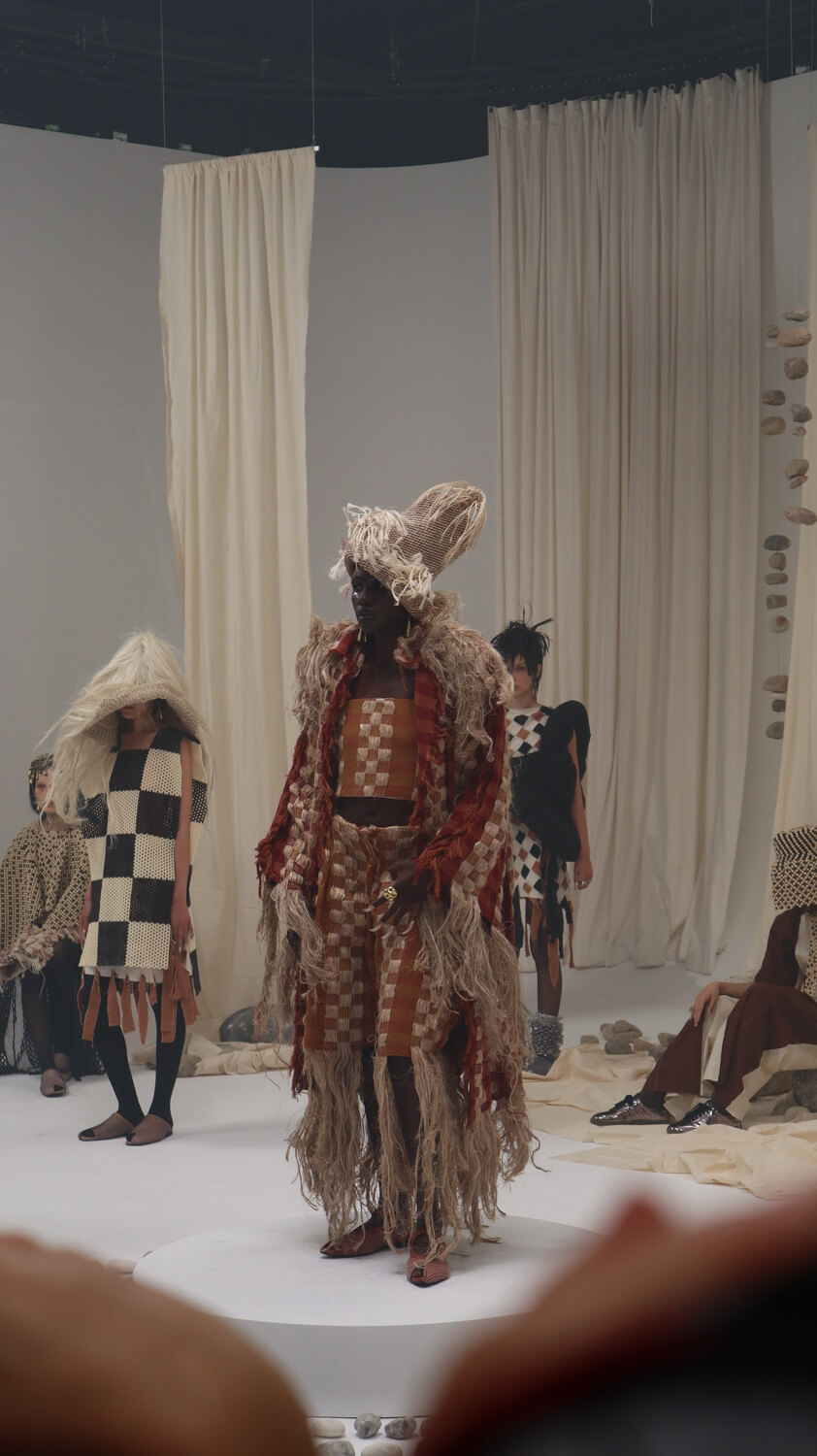
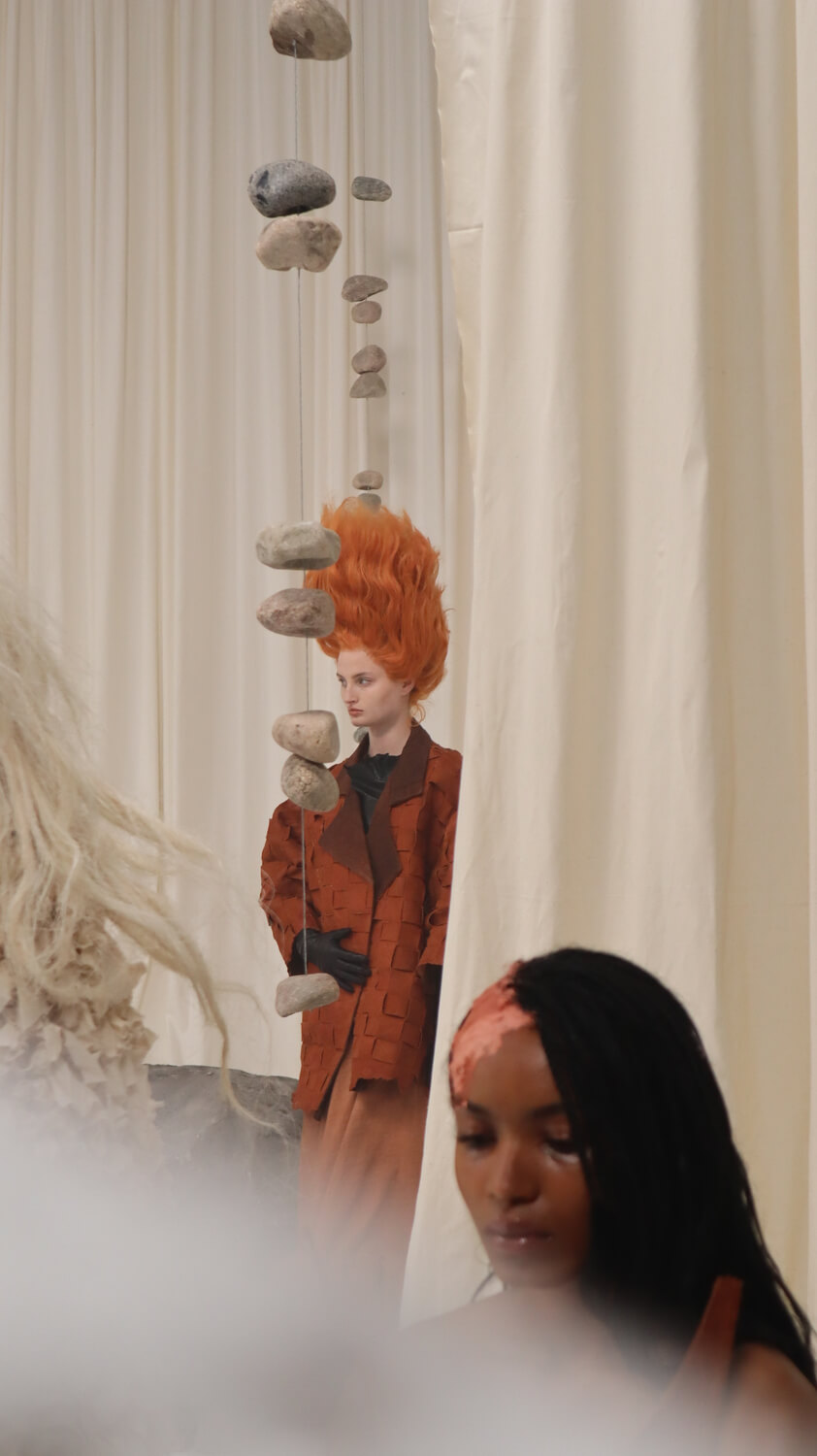
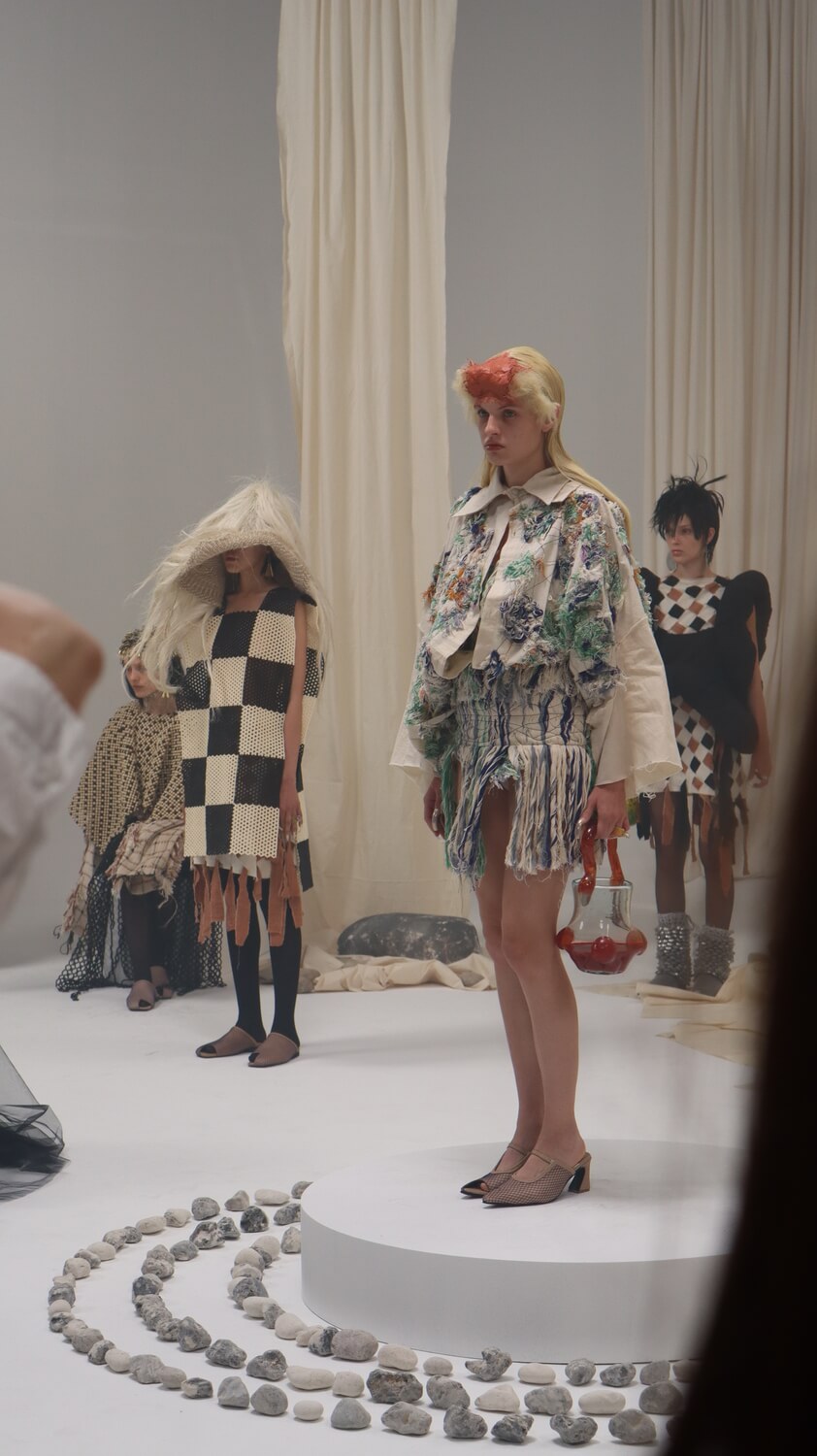
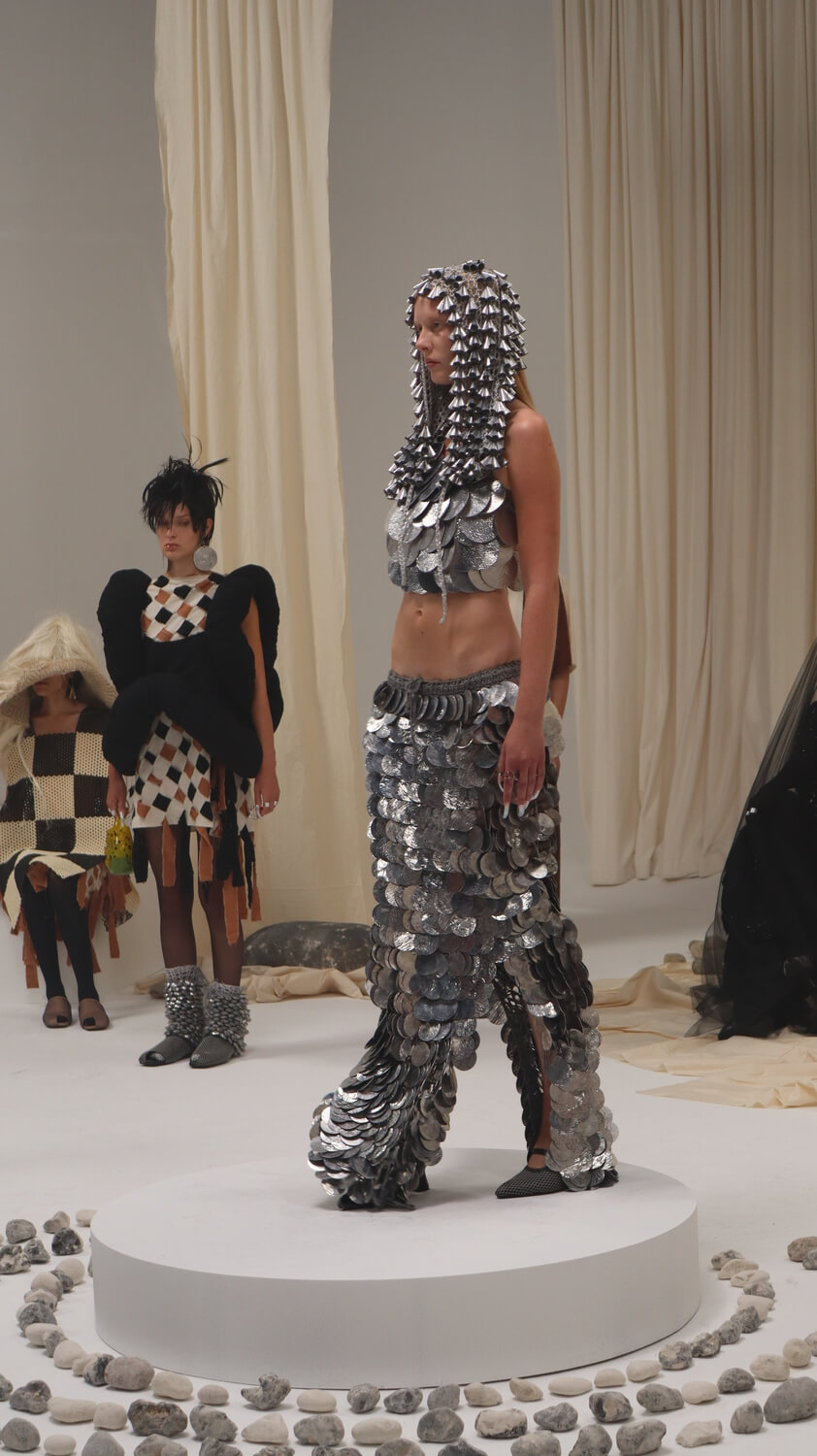
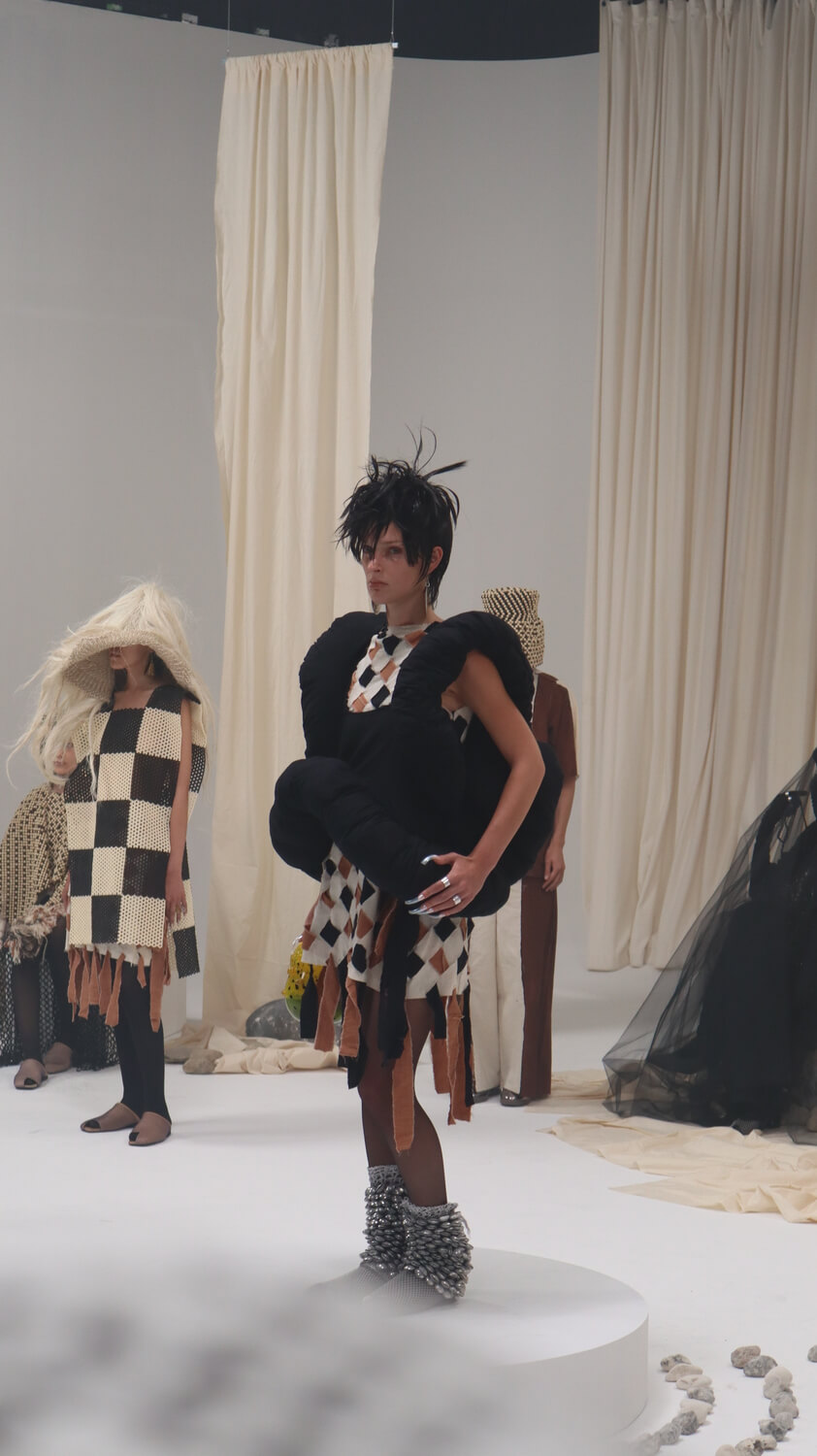
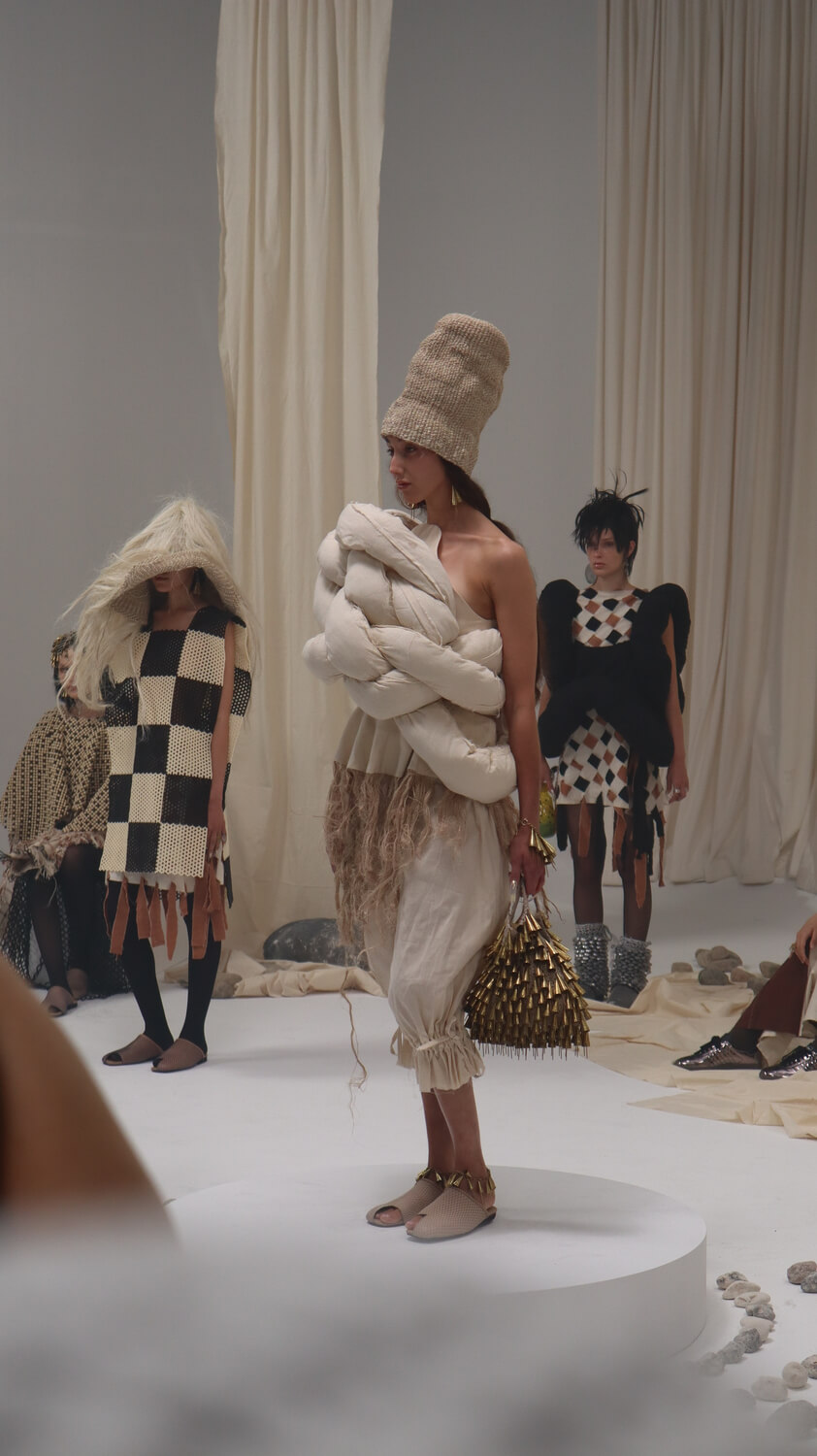
Figures were distributed across the stage in powerful poses. One by one, beginning from the right, they moved towards the centre and stepped onto a circular platform. The collection, Sacred Ecologies, raises questions about how the body stands in relation to the land, and the models were significantly existing in different ways within the space.
As those figures strolled around the stage, accompanied by sounds that were almost guttural, a woman’s voice gradually emerged. She was delivering a statement. She spoke of the earth, of the body, of how the tree had become a symbol of democratic power…
“Initially, the work was difficult because historically our people had been persuaded to believe that because they were poor, they lacked not only capital but also the knowledge and skills to address their challenges. Instead, they had been led to believe that the solution had to come from outside.”
“The tree became our symbol for our democratic power.”
“Nairobi’s trees were planted to demand a peaceful transition to democracy. To empower people to take action. To overcome a sense of hopelessness.”
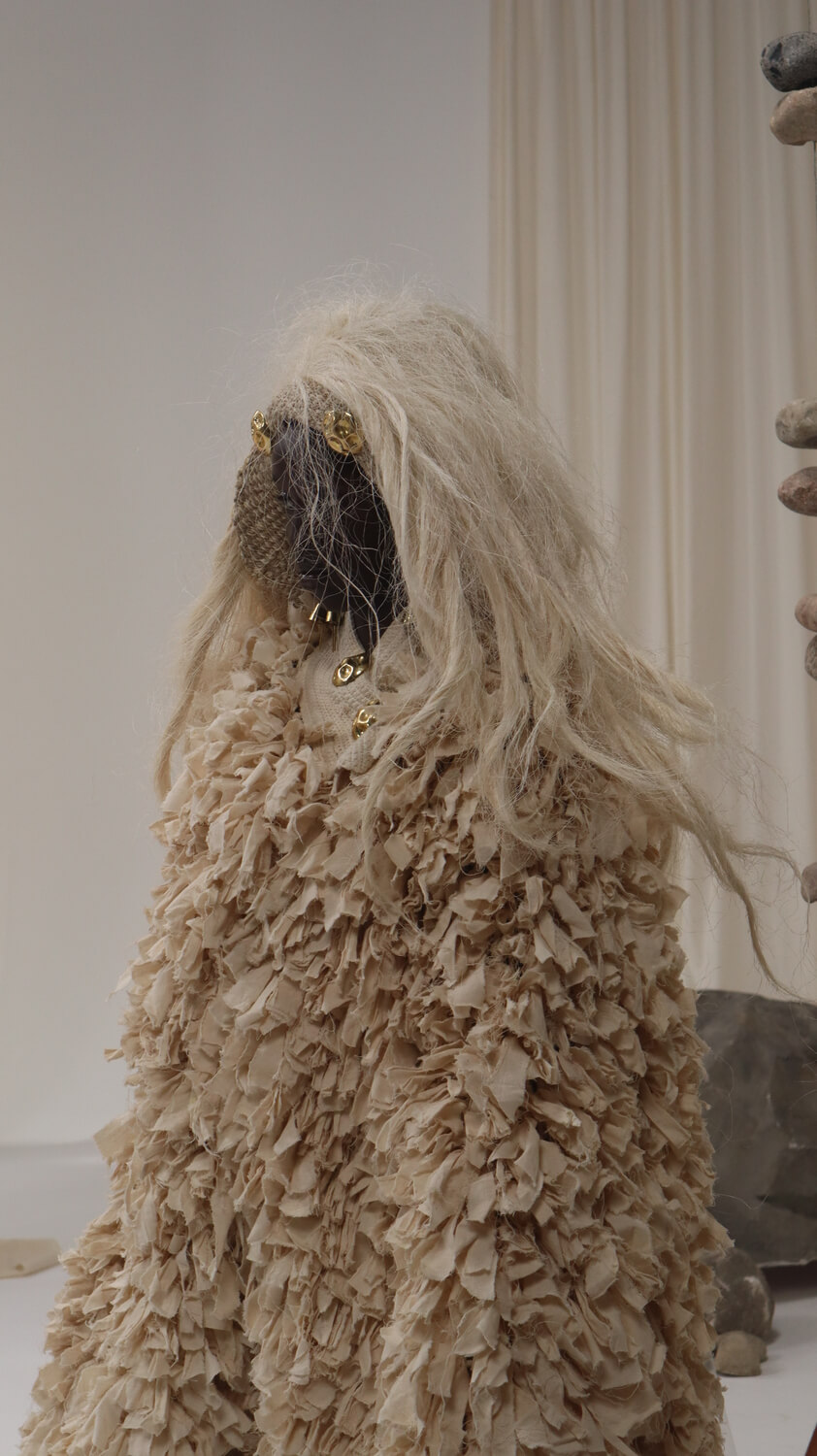
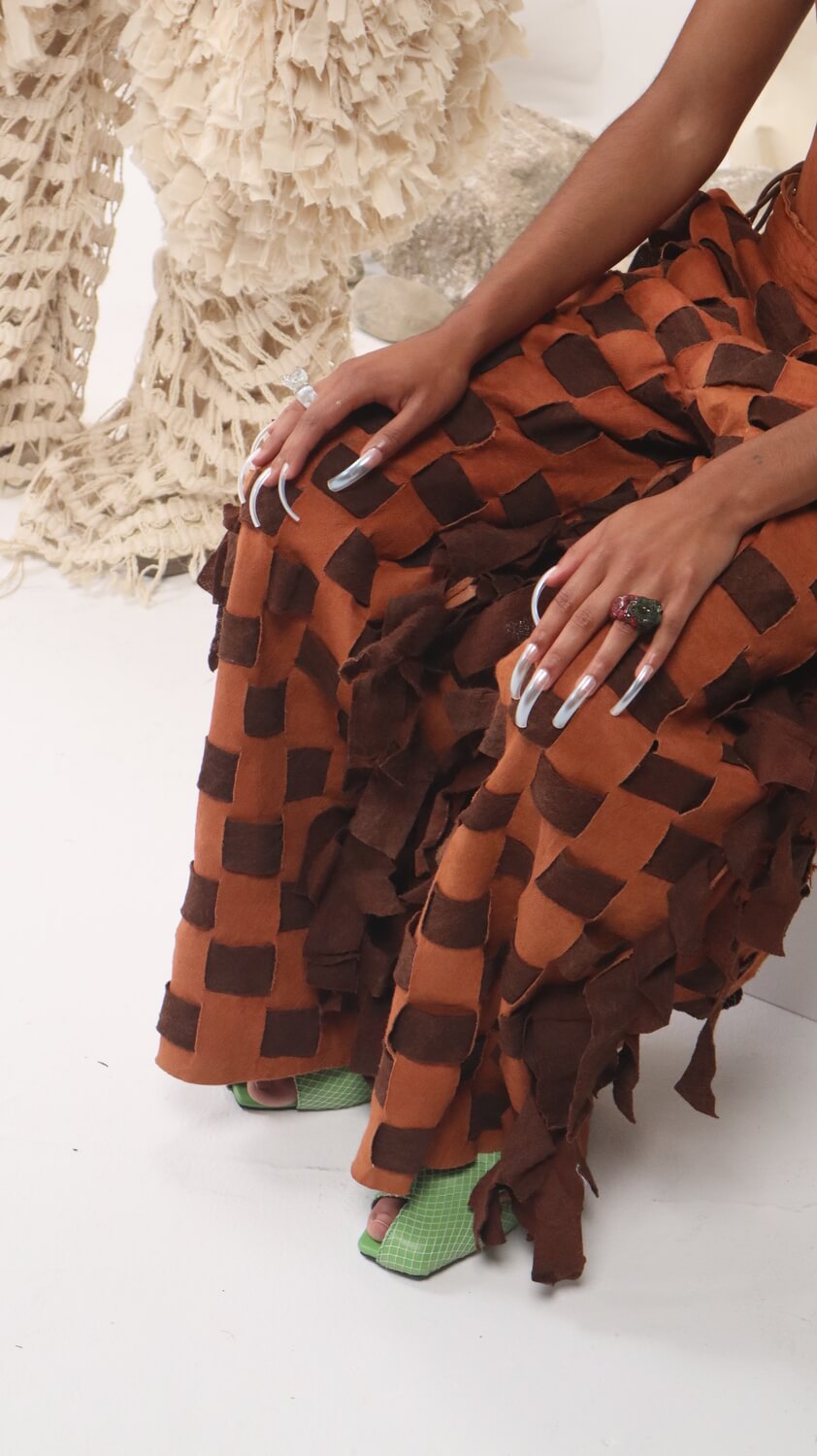
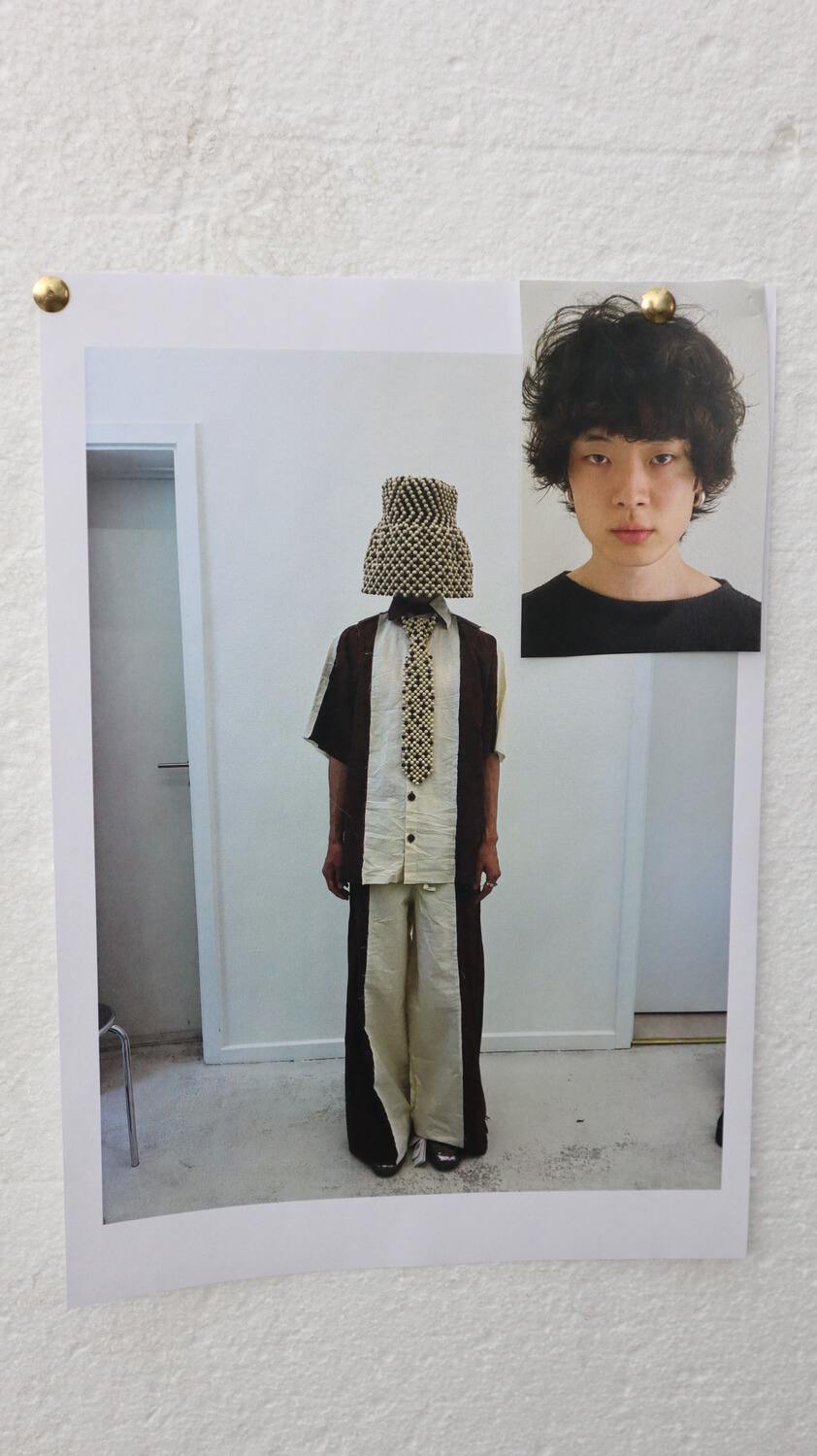
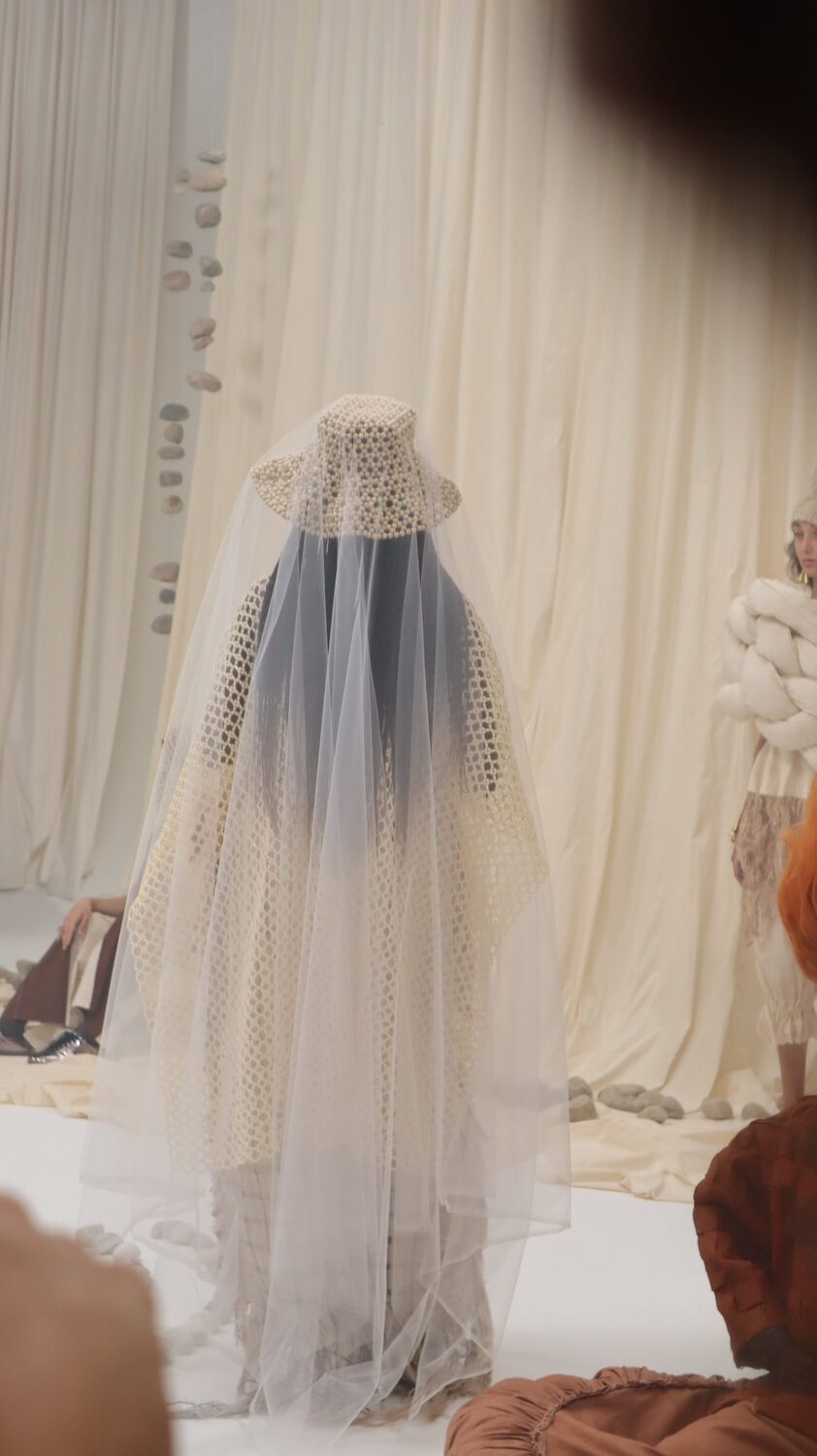
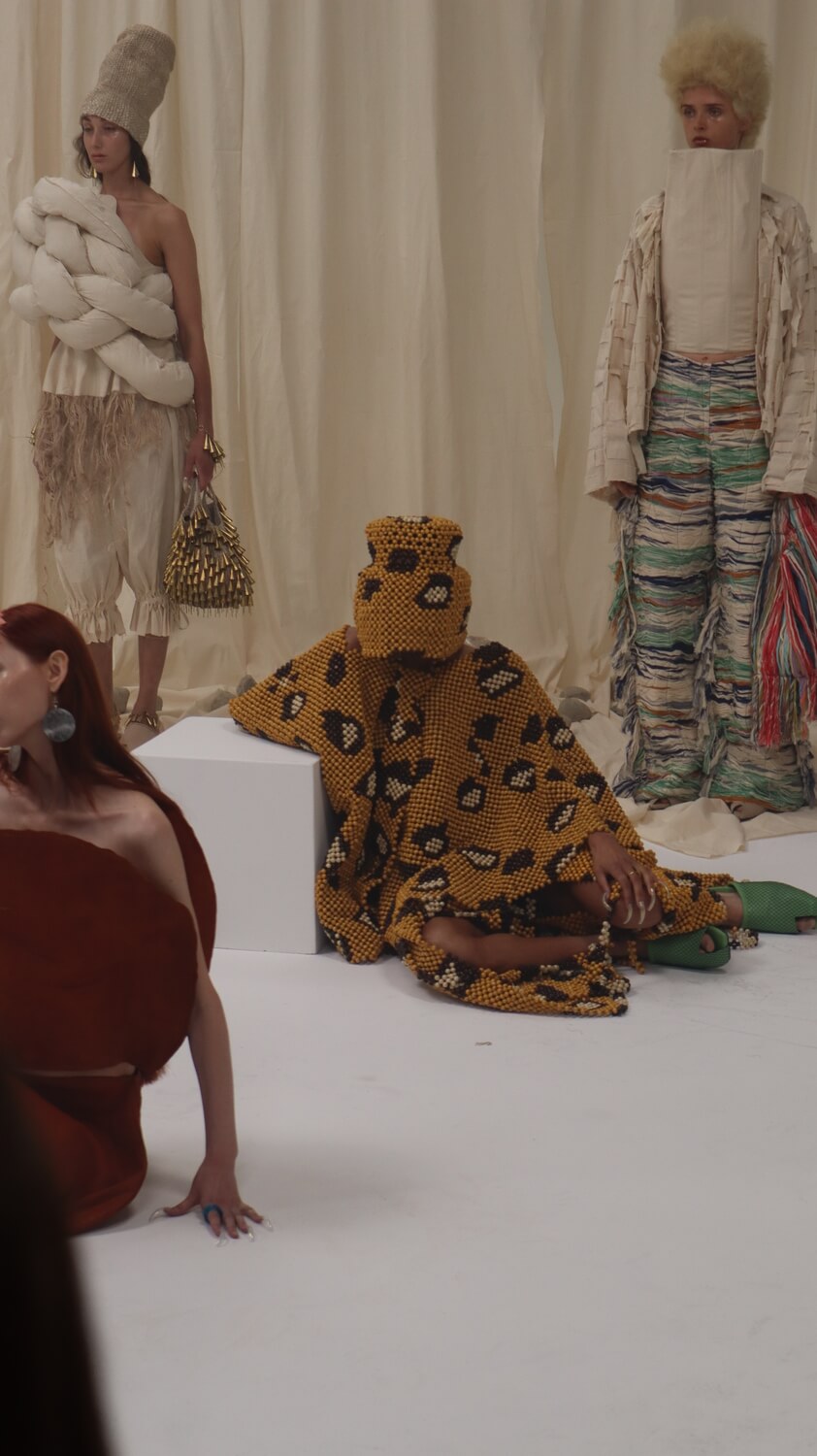
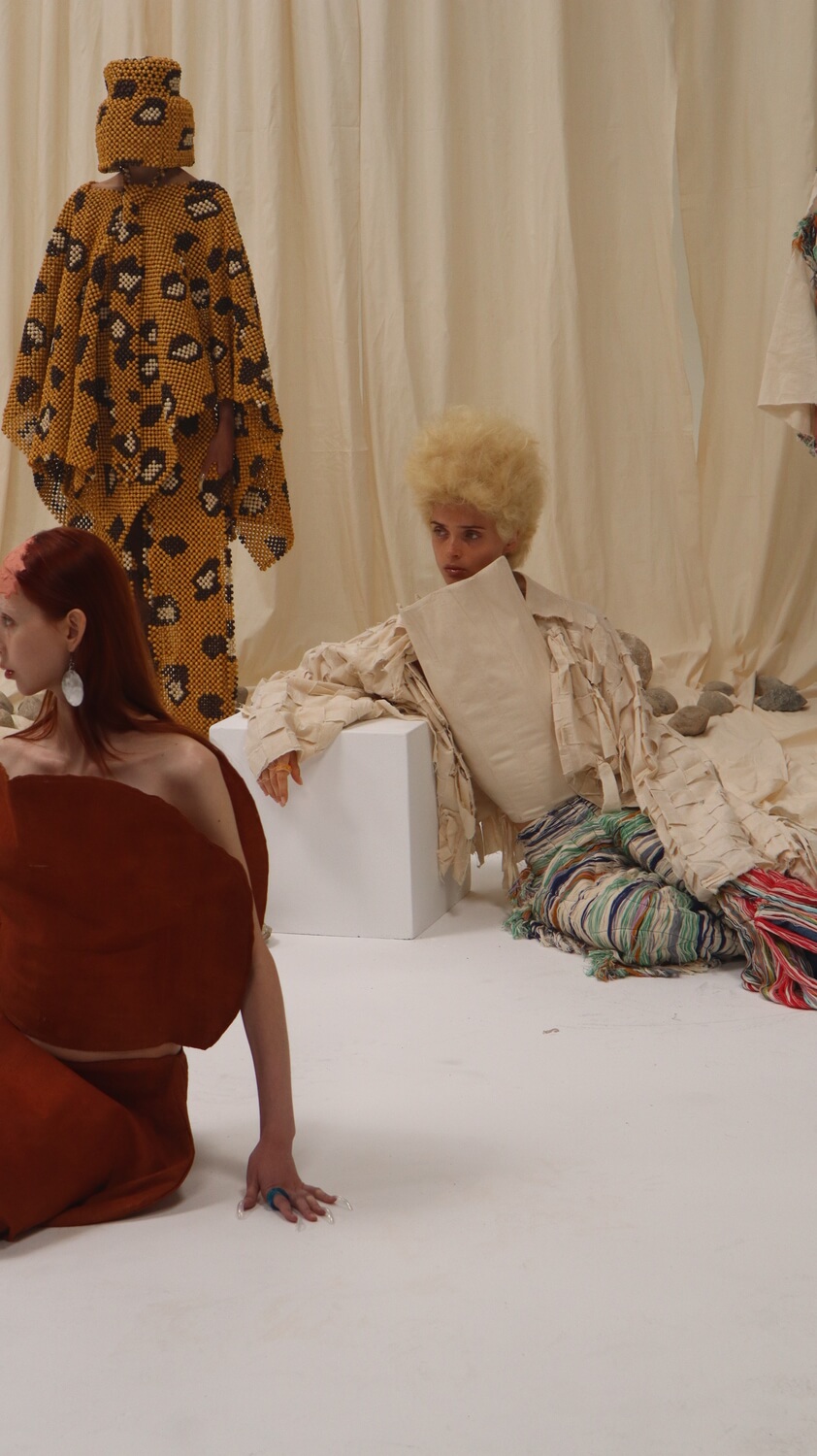
This context opened the eyes to actually see the collection and travel to its roots in Africa: the outfits made by banana fibre from Uganda, cotton and wooden beads from Nigeria, sisal from Tanzania, and recycled aluminium from Kenya, alongside recycled glass, natural dyes, and other recovered fibres, with the weaving itself carried out in Kenya. Design shapes that expand the bodies, shapes that create creatures which blur reality from magic; as the brand states, there is no difference between these two. And actually, that structure comes from two concepts related to knowledge. One of them is the Lukasa, a board of wisdom made of beads and shells. The other one, messengers of the king carrying his voice.
And there I was, inside this new universe that genuinely refuses to separate fantasy from reality, immersed in I.AM.ISIGO’s universe, in Africa, in its history and in its heritage of that history. I could feel the power of the designs to transmit something inherited, ancestral, almost bodily.
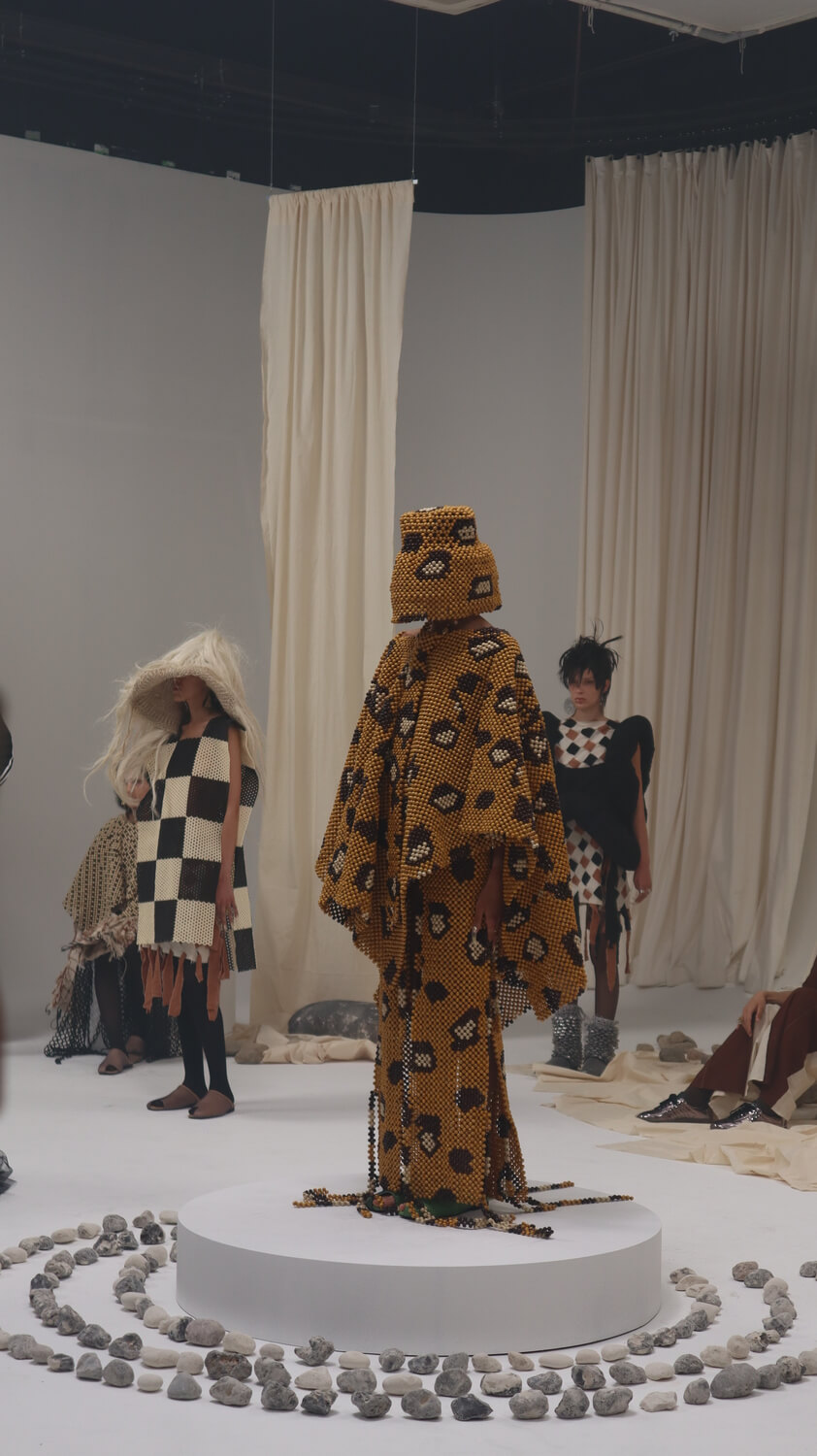
Chills ran through me. Goosebumps. It reminded me of the shows I would play on repeat at home, the ones that the great fashion houses used to stage in Paris in the 2000s. Confrontational, ideologically charged, uncompromising.
Coinciding with Stine Goya, IAMISIGO states that «we are entering a new world, and will need to speak, breathe and believe in new languajes». We might actually be on the verge of a new era. Fashion at Copenhagen Fashion Week is taking its guesses of whom we will have to become in order to navigate that.
This is how you do fashion.
Text and photography by Ionela Bona for VEIN MAGAZINE