

On view at Helsinki’s Ateneum Art Museum, ‘Arcana Borealis’ explores how women artists across the North approached esotericism beyond symbols. We speak with curators Nina Kokkinen and Marja Lahelma about making as a form of knowledge.
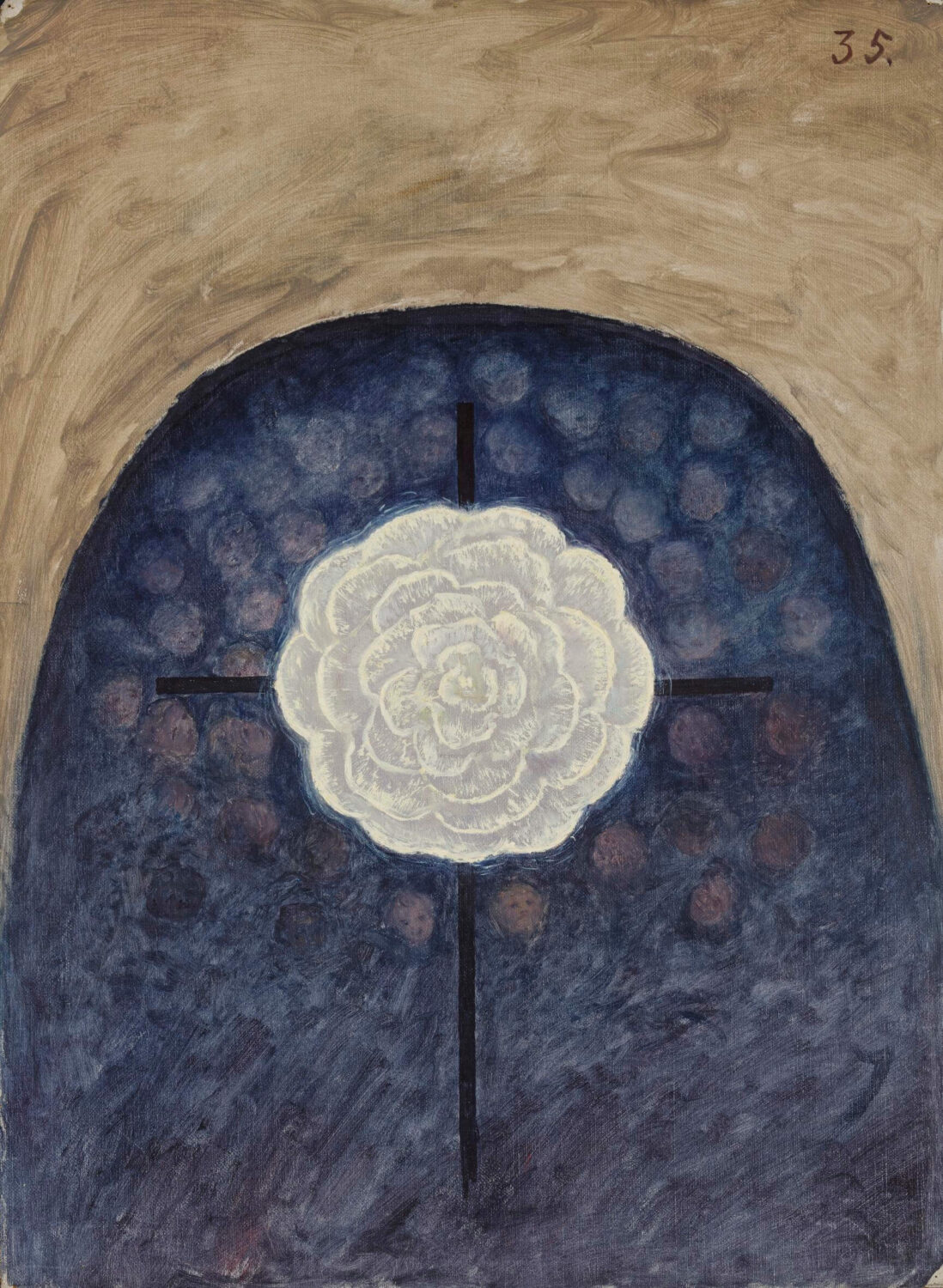
Anna Cassel, ‘Untitled II, No. 35’. Hilma af Klint Foundation. Photo: Anders Fredriksen.
The relationship between women artists and esotericism has come back into focus in recent years, especially through renewed attention to Hilma af Klint’s work, challenging a canon traditionally dominated by male names. Her growing visibility also reveals that she was not an isolated exception, but part of a wider genealogy of women exploring similar paths.
‘Arcana Borealis – Northern Women and Esotericism’ explores that wider constellation. On view at the Ateneum Art Museum in Helsinki until 28 February 2027, it brings together artists including Anna Cassel, Meri Genetz, Laila Pullinen and Ellen Thesleff, tracing different ways spirituality and esotericism entered artistic practice across the North.
The research led by Nina Kokkinen and Marja Lahelma shifts attention from individual exceptionalism to art making as spiritual practice. From the meaning of the North to knowledge passed between women, the curators guide us through the ideas shaping ‘Arcana Borealis’.
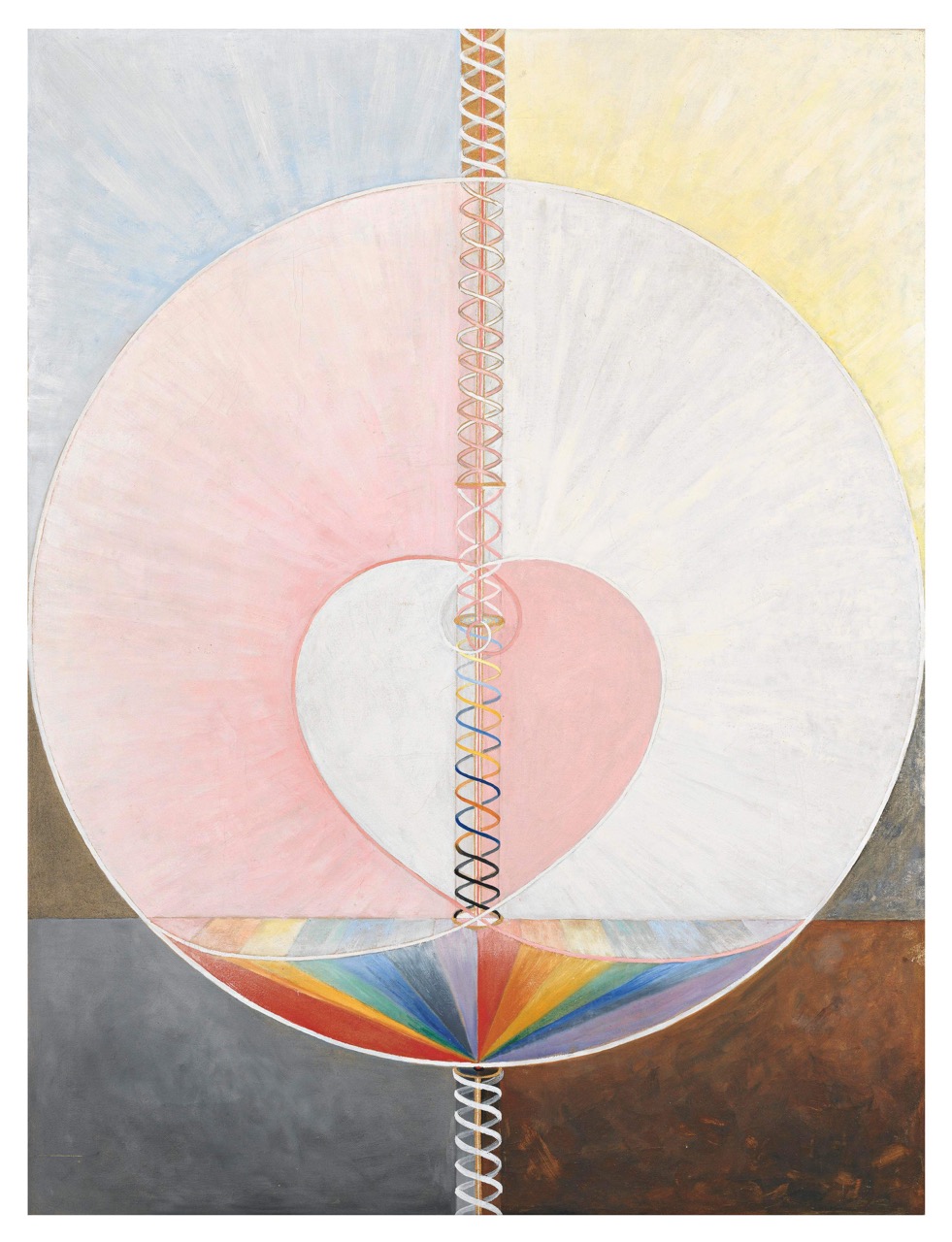
Hilma af Klint, ‘The Dove, No. 1’. Hilma af Klint Foundation.
Why did you choose the title ‘Arcana Borealis’? Why ‘Arcana’, and why ‘Borealis’?
The exhibition title is in Latin, which reflects the aura of hidden mystery often associated with esotericism. Arcana refers to secret or hidden knowledge and, in this context, to esotericism itself, which the exhibition approaches from the perspective of current academic research. Borealis, in turn, points to the North.
How does the idea of the North operate in the exhibition beyond a purely geographical definition?
The North is also an imagined region, shaped by myths, cultural hierarchies, and relations of power. It has often been presented as a remote, mysterious place associated with magic and witchcraft. Our intention is not to reproduce these myths, but to recognise the ways in which they have been used to marginalise and exoticise. Northern artist women have been able both to draw on these associations and to challenge them. The North also raises a question about art history itself: what becomes visible when we look beyond its traditional centres?
Hilma af Klint has become central to the rediscovery of the relationship between women, abstraction and esotericism. How does ‘Arcana Borealis’ expand that story beyond her?
Hilma af Klint worked under the guidance of the spirit world and as part of shifting constellations of artist women. In the exhibition, we foreground Anna Cassel, one of her important collaborators. To our knowledge, the works by Cassel included in the exhibition have never previously been exhibited. By giving af Klint this context, we show that she was not an isolated exception. Many other artist women explored similar ways of working. This also challenges the myth of the solitary artistic genius.
One of our starting points is that simply adding artist women to existing narratives of modern art is not enough. We need to test the very foundations of those narratives, including their emphasis on individual achievement and the development of abstraction. Rather than asking whether a work is abstract or figurative, we direct attention to the process of making art as spiritual practice. For these artist women, making art was a means of studying, seeking to understand, and articulating the hidden nature of reality.
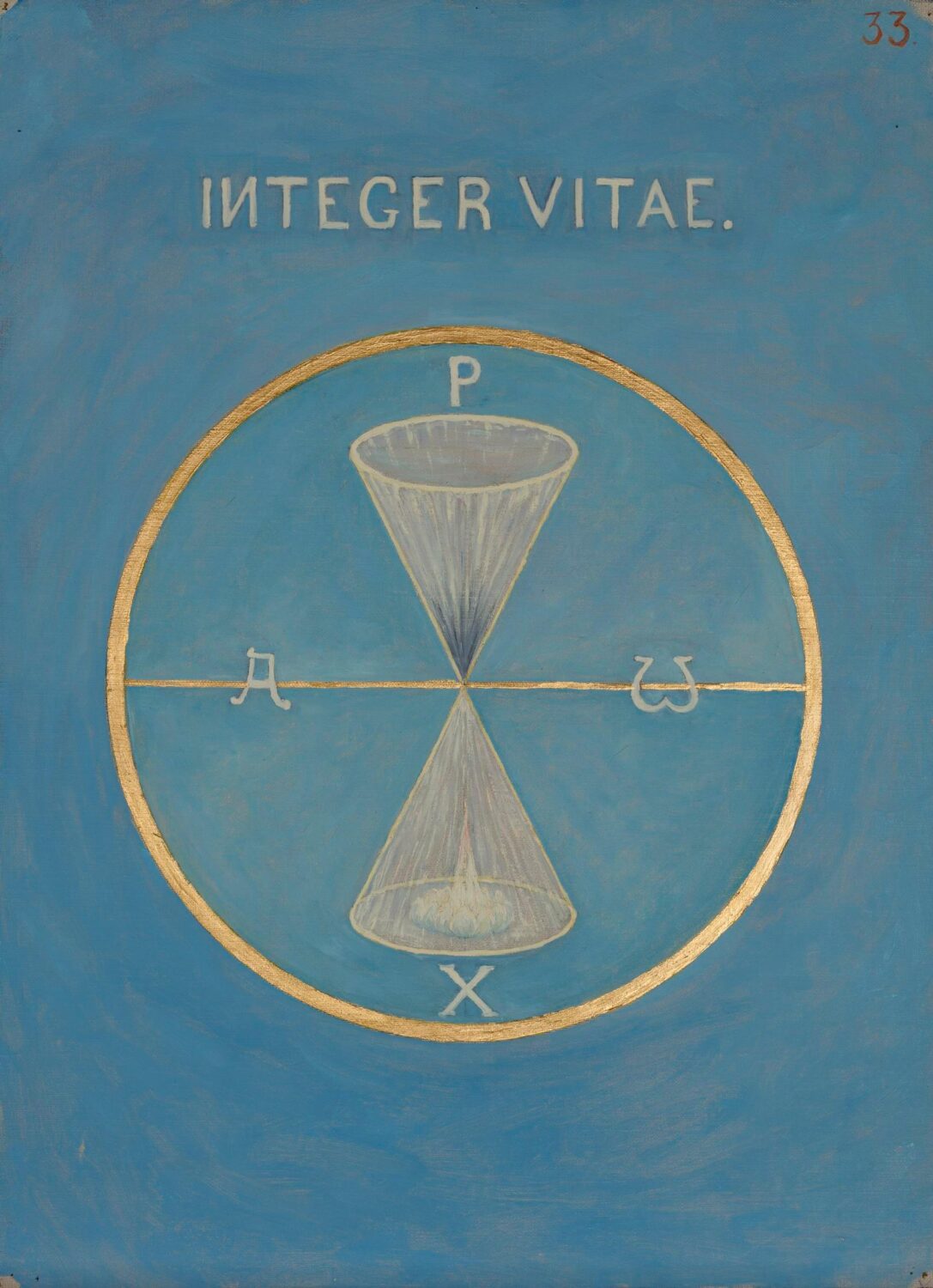
Anna Cassel, ‘Untitled II, No. 33’. Hilma af Klint Foundation. Photo: Anders Fredriksen.
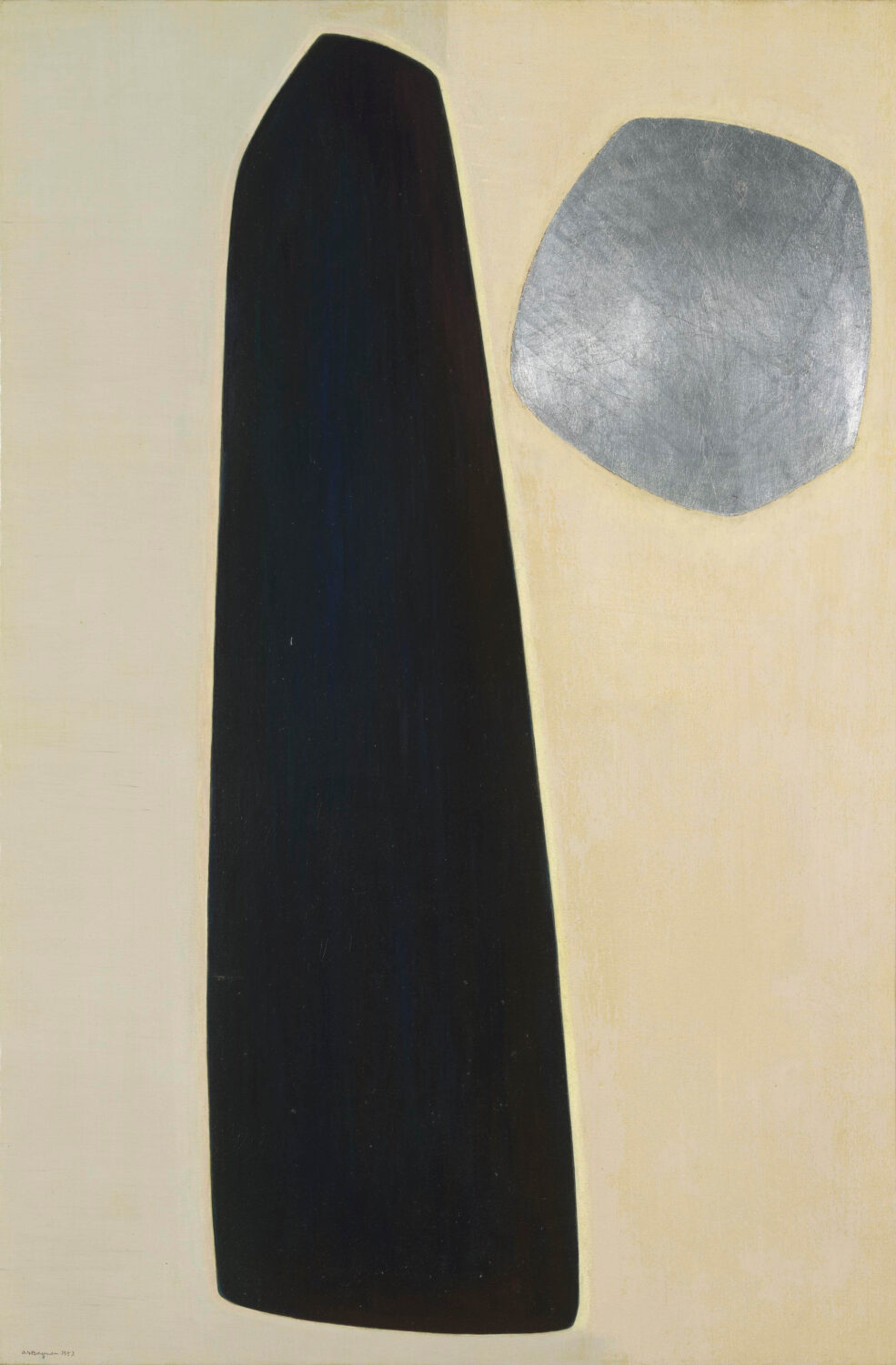
Anna-Eva Bergman, ‘Nr. 2-1953, Stele with Moon’. Nasjonalmuseet. Photo: Børre Høstland.
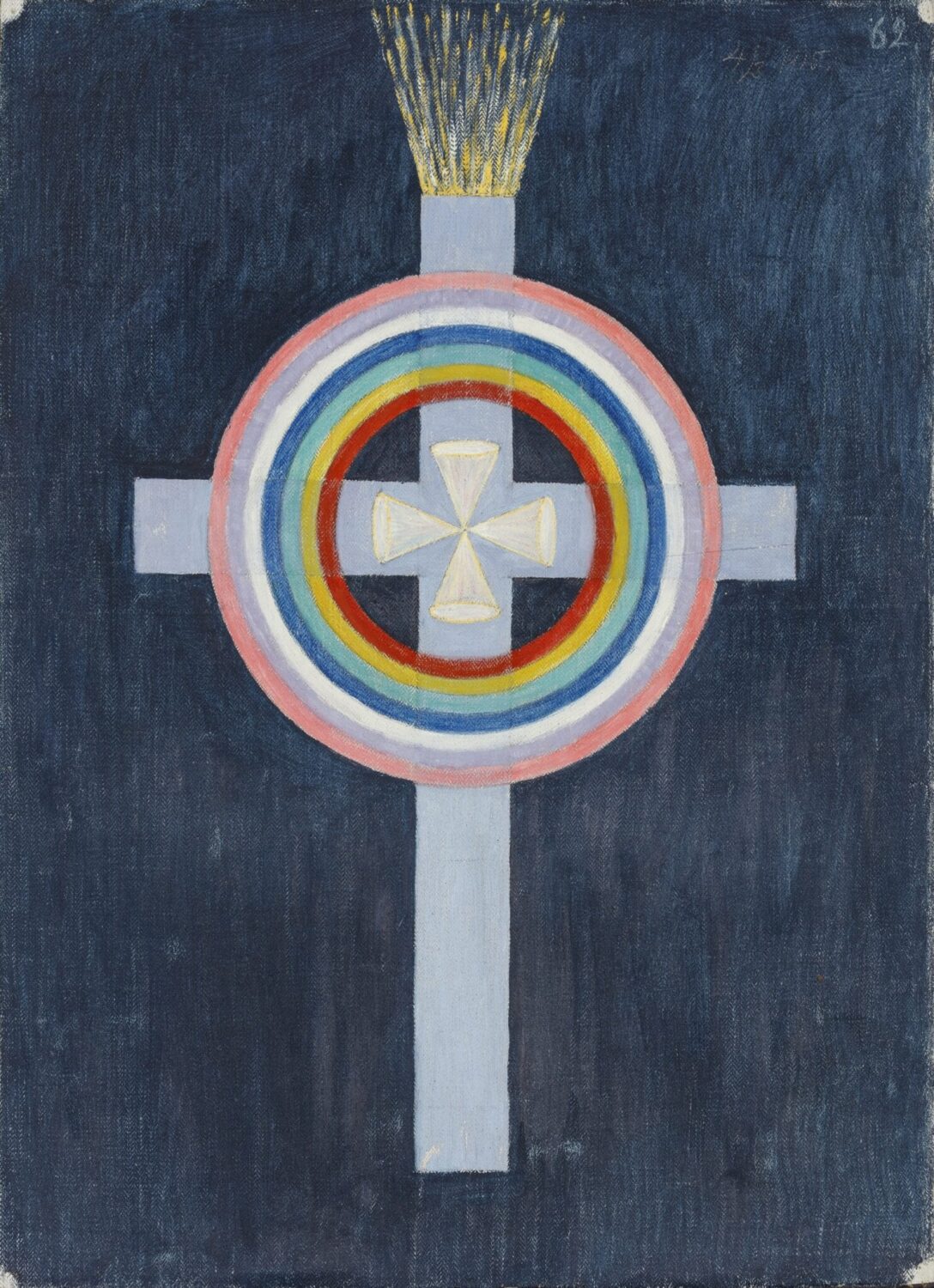
Anna Cassel, ‘Untitled II, No. 62’ (1915). Hilma af Klint Foundation. Photo: Anders Fredriksen.
How did the artists represented in the exhibition give material form to the spiritual, the invisible or the intangible?
There was no single visual language for exploring and expressing the spiritual or the invisible. Some artist women worked with symbols, such as flowers and spirals, or motifs drawn from established religions, while others explored the qualities of materials themselves.
In Kristín Gunnlaugsdóttir’s paintings on wood, icon painting techniques using tempera and gold leaf give the works a sacral quality. In Laila Pullinen’s sculptures, polished bronze suggests an immaterial dimension. Sámi art offers another perspective through the notion of duodji, or Sámi craft, in which art, spirituality, and everyday life are interwoven. Materials, forms, and the rhythms of making carry memory and meaning, while knowledge passed down through generations can take material form in embroidery and protective motifs. Across the exhibition, materials emerge as more than vehicles for spiritual ideas. Working with them could itself become a form of spiritual inquiry.
Meri Genetz explored esotericism through practices such as astrology, dreams, fasting and reading. What does her example reveal about the way spirituality entered an artist’s everyday life as well as her work?
Meri Genetz became deeply engaged with esotericism and occultism from the mid-1920s onward. Evidence of her studies survives in the artist’s notebooks, where she made extensive notes on subjects such as Theosophy, Kabbalah, and Tarot, and even recorded dialogues with various spiritual entities.
What makes Genetz particularly interesting, however, is that this profound engagement with esoteric ideas is not readily visible on the surface of many of her artworks. Her case demonstrates that even a deep involvement in esotericism does not necessarily manifest itself in ways that are immediately recognizable in an artist’s visual output. In this sense, Meri Genetz serves as an important reminder that the esoteric dimensions of artistic practice may come to light only through careful archival research.
What does matrilineal transmission mean within the exhibition, and how does it challenge the traditional distinction between art and craft?
Tradition plays a central role in esotericism, as hidden knowledge has often been understood to pass from master to disciple. In developing the exhibition, Sámi art opened up a different perspective on how knowledge is transmitted, drawing our attention to matrilineal traditions, or knowledge passed down through women. In Sámi duodji what is transmitted includes not only technical skills but also memory, values connected to nature, and protective motifs. Such knowledge can be carried through materials, gestures, and the rhythms of making, bringing into view women’s roles as bearers and interpreters of knowledge.
It shows that the process of making is itself a form of knowledge. A woven or embroidered object can carry memory, ethical values, and spiritual meaning, rather than merely serving a practical or decorative purpose. The distinction between art and craft has often undervalued precisely these dimensions, particularly in practices associated with women. Bringing duodji and other craft practices into the exhibition challenges that hierarchy and broadens our understanding of artistic creation.
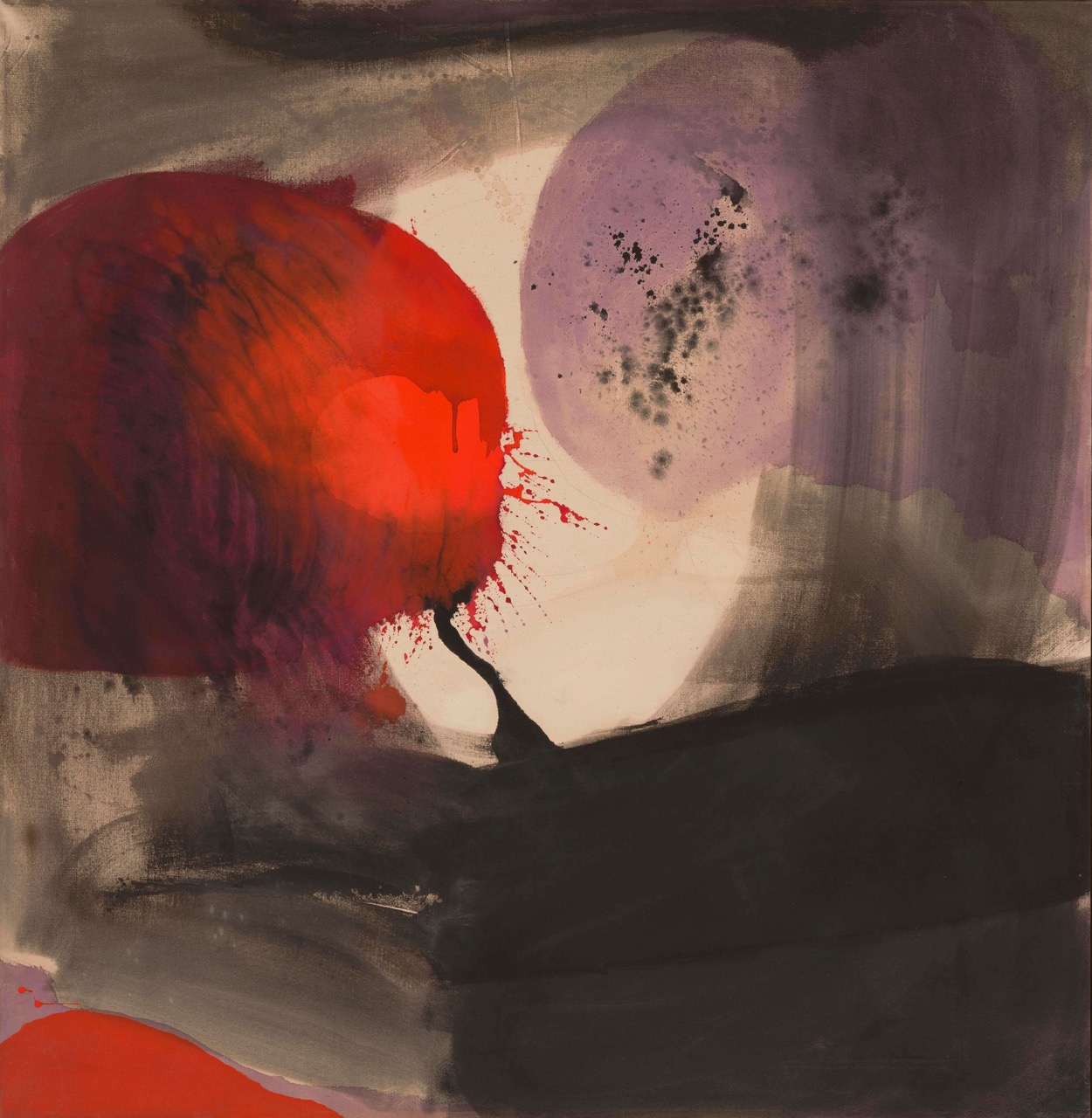
Iria Leino, ‘Mehevä hedelmä’. Kansallisgalleria. Photo: Aleks Talve.
The body also becomes a vehicle for spiritual or cosmic connection, as we see in Laila Pullinen’s relationship with dance and movement. How is this expressed in her sculptures?
The exhibition includes two sculptures by Laila Pullinen, ‘Mata Hari IV’ (1965) and ‘Spiral I’ (1967), both of which are rooted in dance, and more specifically in forms of dance closely intertwined with spirituality.
Pullinen drew a parallel between artistic practice and this kind of spiritual dance, seeing both as paths toward connection with the divine. In her sculptures, a more spiritual and immaterial dimension is often conveyed through the highly polished bronze surfaces, whose reflective qualities evoke a reality beyond the material world.
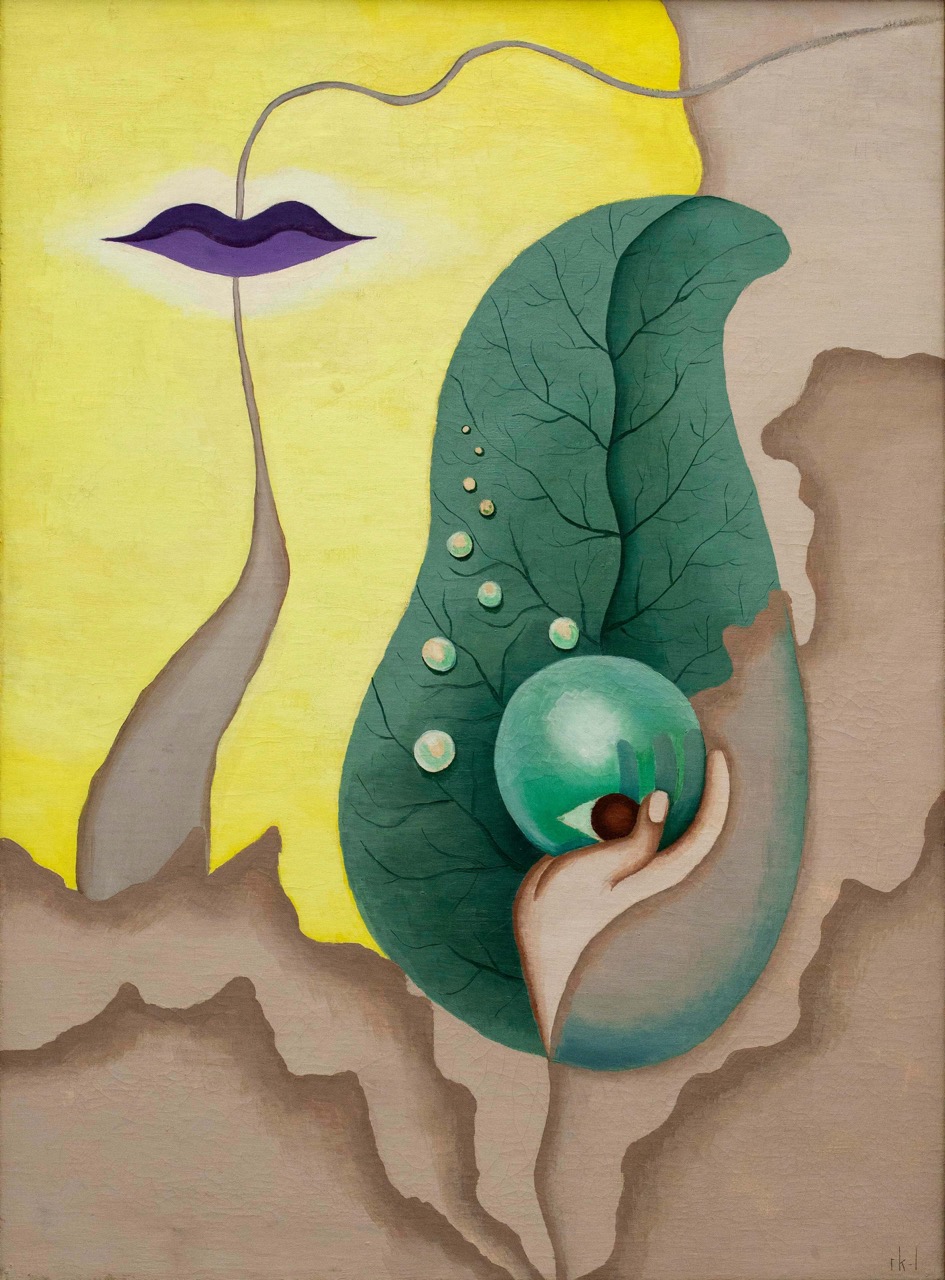
Rita Kernn-Larsen, ‘Oasis’. Randers Art Museum. Photo: Randers Art Museum.
Nature also appears as spiritual knowledge, as in Ellen Thesleff’s idea of listening to the ‘heartbeat of the earth’. How does this shape her work, and where else does it appear in the exhibition?
For Ellen Thesleff, art became a way of attuning herself to what she described as the heartbeat of the Earth. This idea manifested in her work through a heightened sense of movement, energy, shimmering light, and vibrant colour. Her paintings seem animated by a vital force, expressing the rhythms that connect human beings and nature. Thesleff sought to translate these life-giving energies into visual form.
Her working method also involved a degree of openness and receptivity that has often been associated with mediumistic art. Rather than surrendering to the guidance of spirits, however, Thesleff tuned in to the rhythms of nature and the vital forces she perceived within it. A similar sensitivity and surrender to nature’s primordial creative forces can also be found in the work and artistic practice of Sonja Ferlov Mancoba.
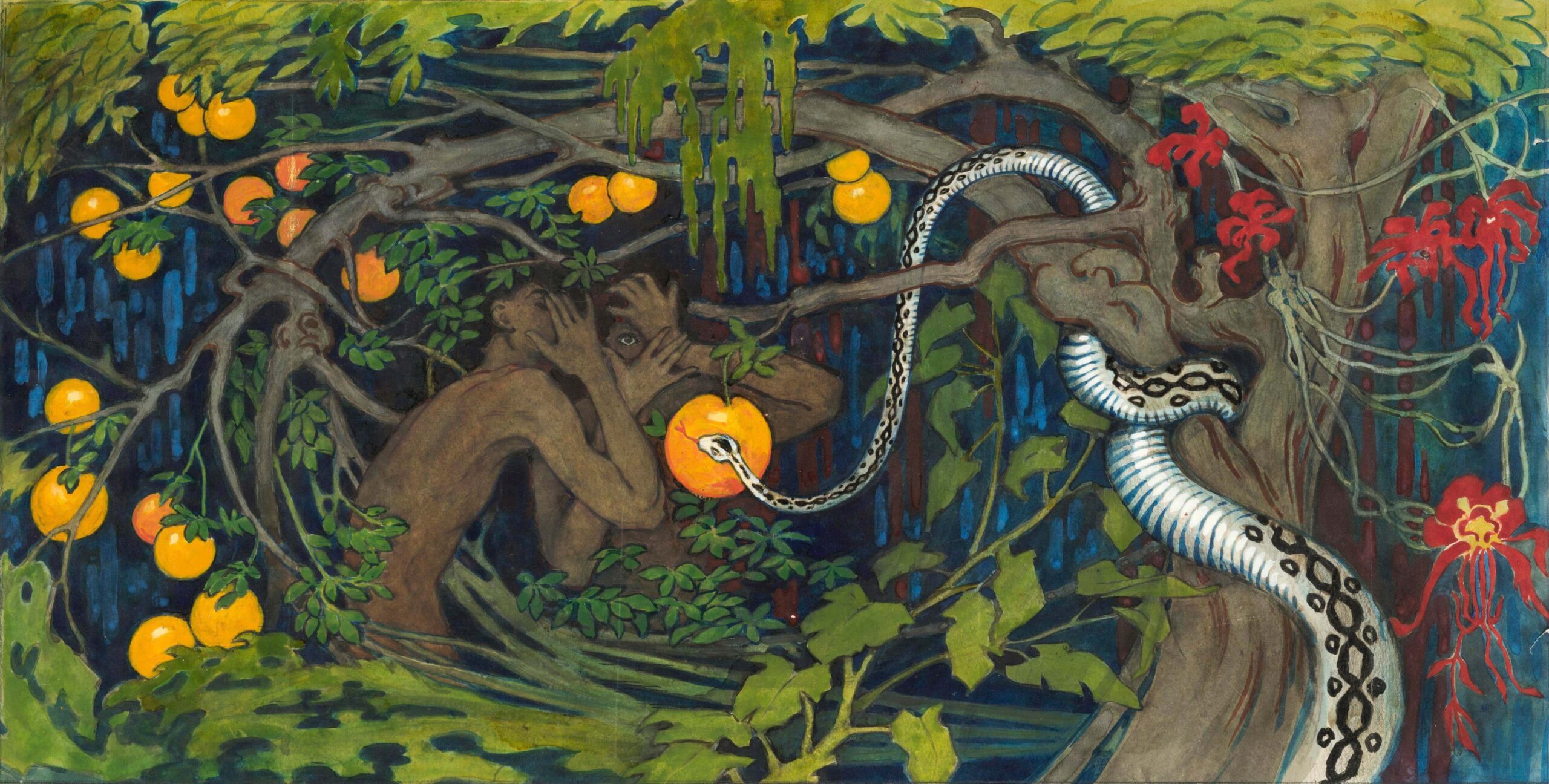
Tyra Kleen, ‘Forbidden Fruit’. Photo: Bobo Lindblad / Lindblad Studio.
.
–
Follow us on Instagram @veinmagazine
«`